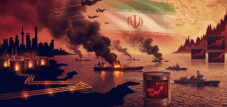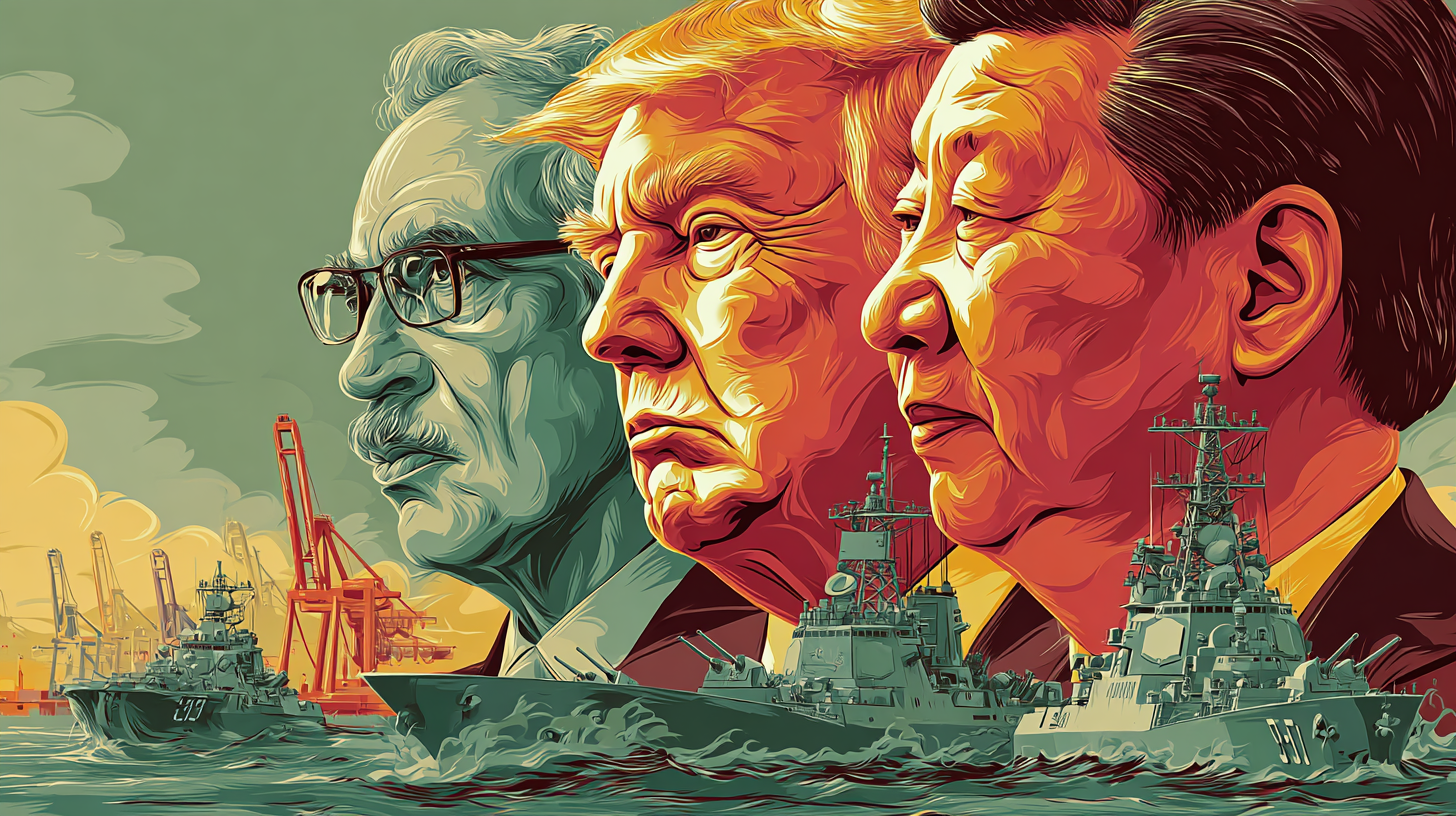
Trump's Hormuz blockade: Why the real target of the US Navy is not Iran, but China? – Image: Xpert.Digital
China's shadow fleet under pressure: The end of cheap oil from the Persian Gulf?
China's weak point: How a 54-kilometer strait could bring the Asian superpower to its knees
In the spring of 2026, the situation in the Middle East escalates: Following massive military strikes and Tehran's de facto closure of the Strait of Hormuz, the US responds with an unprecedented maritime blockade. Global energy markets panic, and the price of oil skyrockets. But a closer analysis of the geopolitical situation quickly reveals that the true target of the American warships in the Persian Gulf is not the regime in Tehran. Washington's strategic calculations are aimed instead at industrial facilities thousands of kilometers away in the Chinese province of Shandong. Beijing, the world's largest energy importer and Iran's only remaining major customer for sanctioned oil, finds itself in a geopolitical predicament of historic proportions. The following analysis shows why a strait only 54 kilometers wide is sufficient to ruthlessly expose the limits of China's energy sovereignty—and how the United States is using Beijing's economic dependence as the ultimate weapon in a global power struggle.
Related to this:

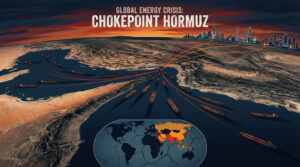
The Hormuz Blockade: Washington's geopolitical lever against Beijing
The Strait of Hormuz is 54 kilometers wide at its narrowest point and connects the Persian Gulf with the Gulf of Oman. No other geographical point on Earth concentrates more energy flow into a smaller area. Up to 20 million barrels of crude oil and significant quantities of liquefied natural gas pass through it daily, accounting for roughly 20 percent of global maritime oil and gas trade. When the US announced a naval blockade in April 2026, the markets reacted immediately: the price of Brent crude oil rose by more than seven percent to over $102 per barrel, an increase of more than 40 percent compared to pre-war levels. But the real story behind this blockade is less about Iran than about China.
How it all began: War, Ceasefire and a failed summit
On February 28, 2026, the US and Israel launched military strikes against Iranian nuclear facilities and infrastructure, prompting Tehran to respond with a de facto blockade of the Strait of Hormuz. The news caused global energy markets to collapse. Within days, shipping traffic through the strait plummeted from an average of 79 ships per day to a mere seven. Saudi Arabia's, Kuwait's, and Qatar's energy exports were suddenly stranded in the Persian Gulf. Oil prices had already climbed above $100 per barrel by March 2026.
On April 7, Washington and Tehran agreed to a 14-day ceasefire, contingent on Iran immediately reopening the Strait of Hormuz. However, negotiations in Islamabad on April 11 and 12 collapsed after more than 21 hours without an agreement. US Vice President JD Vance stated that Iran had refused to accept the core US demand – the complete abandonment of its nuclear program. That same day, President Trump announced via social media a US naval blockade of the Strait of Hormuz: The US military would henceforth intercept any ship entering or leaving Iranian ports. Formally, Central Command clarified that the blockade applied exclusively to shipping to and from Iranian ports – not to all transit traffic through the strait.
The energy policy anatomy of dependency
To understand why this blockade is causing more nervousness in Beijing than in Washington or Tehran itself, one must understand the trade structure of Iranian oil exports. China buys between 80 and 91 percent of total Iranian crude oil exports. In 2025, this amounted to roughly 1.38 million barrels per day—a value of approximately $31.2 billion annually, even after deducting the usual discount of eight to ten dollars per barrel that Beijing pays compared to market prices. Just a decade ago, Iran had more than 20 customer countries. Round after round of Western sanctions has shrunk this pool of buyers to virtually a single state.
This concentration is not merely a statistical anomaly, but the true strategic lever of the entire situation: oil finances roughly 45 percent of the Iranian state budget. According to IMF calculations, the fiscal break-even price lies between $121 and $124 per barrel. However, Chinese buyers pay only around $60, due to sanctions discounts. Iran was therefore already structurally in deficit before the war began. The Iranian rial lost approximately 15 percent of its value in March 2026 alone. Tehran is caught in a bind: without Chinese willingness to buy, there is no functioning state budget; without a state budget, the regime cannot survive.
China as Iran's only paying customer
This fact gives Beijing theoretically enormous negotiating power vis-à-vis Tehran – and Washington knows it. Every US warship patrolling the strait primarily sends a message not to Tehran, but to Beijing: China should use its unique influence and pressure Iran into making concessions. The Pentagon's logic is simple: Iran has ignored American threats for decades. Iran listens when its only major customer calls and says – deal or no more oil.
That this message reached Beijing became clear as early as March 2026, when China began negotiations with Iran to secure safe passage for crude oil tankers and Qatari LNG vessels. The Chinese Foreign Ministry publicly appealed to all parties to immediately cease military operations and guarantee safe navigation through the strait. Beijing did not portray itself as a neutral party, but rather as directly affected. China is the world's largest energy importer, and approximately 45 to 50 percent of its crude oil imports and nearly 30 percent of its LNG shipments pass through the Strait of Hormuz.
The Shadow Fleet Network: Sanctions Circumvention as a Business Model
The logistical structures through which Iranian oil flows to China despite sanctions have developed over years and are remarkably complex. Iran exports crude oil from Kharg Island in the Persian Gulf. The cargo is then transshipped via ship-to-ship transfers in the Gulf of Oman or off the coast of Malaysia, reflagged, and re-declared as Malaysian or Indonesian oil—before arriving in Chinese ports such as Dalian or Zhoushan. The tankers operating this network are often old, poorly insured vessels sailing under flags of convenience, operating with deactivated AIS transponders, carrying falsified manifests, and controlled through shell companies.
The figures speak for themselves: China's customs authorities have officially reported zero imports from Iran since 2022. At the same time, China's "Malaysia imports" in 2025 amounted to approximately 1.3 million barrels per day – more than double Malaysia's total domestic production. In Malaysian waters alone, the number of illegal ship-to-ship transfers of Iranian oil rose from 280 in 2023 to 679 in 2025. Between 50 and 70 shadow fleet tankers passed through Malaysian waters monthly in 2025. The US Treasury Department (OFAC) sanctioned another twelve shadow fleet vessels in February 2026; however, the networks remain operational.
Strategic reserves: China's buffer against shock
A crucial factor mitigates the immediate economic consequences for China: the world's largest strategic oil reserve. According to the geospatial analysis company Kayrros, as of March 2, 2026, China possessed approximately 1.39 billion barrels in state and commercial storage capacity – sufficient for 120 days of net crude oil imports at 2025 levels. This is in addition to more than 46 million barrels of Iranian oil stored in floating storage structures in Asia, as well as further quantities in the customs warehouses at the ports of Dalian and Zhoushan. The Chinese government gave state-owned refineries the green light in April 2026 to also draw on commercial reserves.
This buffering capacity, however, has its limits. Analysts at OCBC assessed China as "less vulnerable to a prolonged closure of the Strait of Hormuz than many of its Asian neighbors"—but not immune. China obtains roughly 40 to 45 percent of its oil imports via the Hormuz route; further quantities come from Saudi Arabia, Iraq, the UAE, and Kuwait, which also rely on the strait. Rush Doshi, director of China strategy at the Council on Foreign Relations, emphasized to CNBC that China has spent the last two decades reducing its dependence on maritime oil—but the Hormuz corridor remains structurally essential.
Teapots: The vulnerable nerve center of Chinese industry
The societal impact of a prolonged oil shock in China will initially affect the so-called teapot refineries – independent small refineries concentrated primarily in Shandong province. These operations process an estimated 90 percent of all Iranian crude oil reaching China. Their business model relies almost entirely on cheap, sanctioned oil: each barrel of Iranian oil is eight to twelve dollars cheaper than oil on the open market. If this price difference disappears, or if the cost of sourcing alternatives like Russian or Saudi oil increases, margin collapses and production cuts threaten one of China's most industrially densely populated provinces.
The economic importance of these refineries far exceeds their own value creation: they are part of an energy-intensive industrial and chemical cluster landscape that supplies thousands of downstream companies. Energy price increases are directly passed on to China's industrial costs for transportation, power generation, petrochemicals, and manufacturing. The chain of effects from the strait directly to the industrial region of the Shandong Peninsula is short and immediate.
Washington's geopolitical calculations
Since the shale oil revolution, the US has imported virtually no oil from the Persian Gulf. Washington is hardly affected directly by a disruption of the Hormuz corridor. The blockade is therefore primarily an instrument for projecting power and pressure onto its main target, China, not its military adversary, Iran. If every US warship in the strait is intended to trigger a single political line of communication—the one between Beijing and Tehran—then the strategy is consistent: Washington is attempting to use Beijing as diplomatic leverage against its own energy security interests.
At the same time, the situation serves as a stark lesson for China about the limits of its own energy security. For years, Beijing has emphasized its strategic autonomy and portrayed itself as an emerging global superpower with worldwide interests. But as soon as a single 54-kilometer-wide strait is blocked, China effectively finds itself in the role of supplicant: It must either pressure Tehran for concessions, accept higher oil prices and modernization costs, or risk open confrontation with the US Navy. All three options are extremely costly.
Our global industry and economic expertise in business development, sales and marketing

Our global industry and economic expertise in business development, sales and marketing - Image: Xpert.Digital
Industry focus areas: B2B, digitalization (from AI to XR), mechanical engineering, logistics, renewable energies and industry
More information here:
A thematic hub offering insights and expertise:
- Knowledge platform covering global and regional economies, innovation and industry-specific trends
- A collection of analyses, insights, and background information from our key areas of focus
- A place for expertise and information on current developments in business and technology
- A hub for companies seeking information on markets, digitalization, and industry innovations
Hormuz Crisis: How China navigates between energy dependence and strategic diversification
China between conformity and confrontation
Beijing has four basic options for responding. The first would be direct military intervention: allowing tankers to pass through the strait anyway and responding to US boarding attempts. This would cause global energy markets to collapse and carries the risk of a direct military clash – an option Beijing avoids for structural reasons. The second option: abandoning Iran and buying replacement oil. This is painful. Russian oil to replace Iranian supplies would cost an estimated ten to twelve dollars more per barrel; moreover, Russia's production capacity is limited. The third option: diplomatic pressure on Iran – precisely what Washington is aiming for. China is already exerting this pressure but wants to appear as a neutral mediator, not as an instrument of US foreign policy. The fourth and longer-term option is structural decoupling from the sea route through diversification.
Related to this:
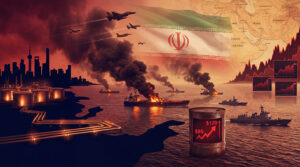
China's diversification strategy: pipelines, renewables and the buffer
The Hormuz crisis is accelerating Beijing's ongoing diversification strategy. In the natural gas sector, the "Power of Siberia 2" project, debated for years, is once again taking center stage. This 2,600-kilometer pipeline is intended to transport gas from the Yamal fields in western Russia, via Mongolia, to northern China and would have an annual capacity of 50 billion cubic meters. In September 2025, Russia and China signed a legally binding memorandum, but pricing issues remained unresolved. China's Five-Year Plan, published in March 2026, included, for the first time, explicit provisions for preparing this central route – a signal that energy analysts interpreted as a clear political prioritization.
For crude oil, China is also relying on overland pipelines. The existing pipeline from Eastern Siberia – "Power of Siberia 1" – is to be expanded from 38 to 44 billion cubic meters of annual capacity, according to the agreement. Russia has already increased its oil deliveries to China, but this is not a complete replacement for Gulf oil volumes. The Kazakhstan-China pipeline and the Myanmar-China pipeline complete the picture as further terrestrial corridors.
In parallel, China is undergoing a structural transformation of its energy system. Investments in clean energy reached a record high of 7.2 trillion yuan (around $1 trillion) in 2025 – roughly four times the amount invested in fossil fuels. Clean energy contributed more than a third to the country's GDP growth. The "new three" sectors alone – electric vehicles, batteries, and solar panels – accounted for two-thirds of the value added in the energy sector. According to a study by the Rhodium Group, electric cars have already reduced China's oil demand by over one million barrels per day, a figure that is expected to increase by another 600,000 barrels per day by 2026. Nevertheless, fossil fuels still cover over 80 percent of China's primary energy needs and over 60 percent of its electricity generation. The transformation is underway, but far from complete.
China and the Middle East: More than oil
The energy dimension is only one aspect of China's exposure to Hormuz. Since 2005, China has injected over $269 billion in investment and construction contracts into the Middle East region. Saudi Arabia is the largest recipient, with approximately $82 billion, followed by the UAE with $48 billion and Iraq with $40 billion. In Iran alone, China's project investments amount to roughly $25 billion. Under the Belt and Road Initiative (BRI), the Middle East saw $39 billion in investment in 2024—a 102 percent increase over the previous year—making it the largest BRI recipient. For the entire year of 2025, BRI activity reached a record $213.5 billion globally, with $93.9 billion of that going to energy projects.
Total trade between China and the Middle East has more than doubled since 2017, reaching approximately $317 billion in 2024 – compared to only around $85 billion in US trade with the region over the same period. For China, the Middle East is not a crisis region on the periphery of the world order, but a core economic zone. This makes the Hormuz blockade a threat to Beijing on several fronts simultaneously: energy supply, investment protection, and trade corridors.
The Shadow Fleet under pressure – and its limits
Since the start of the war in February 2026, the shadow fleet has demonstrated remarkable resilience. BBC Verify identified several Iranian-linked and sanctioned vessels that continued to transit the strait even after the US blockade began. No Chinese ship was boarded, seized, or fired upon by the US Navy. The shadow fleet's infrastructure—false flags, manipulated transponders, and ship-to-ship transfers off the Malaysian coast—was built precisely for this scenario.
Nevertheless, structural limitations are becoming apparent. While optimized routes have already reduced the transit times of Iranian oil tankers from 85-90 days to 50-70 days, the tightened US sanctions policy and increasing diplomatic pressure campaigns in Malaysia, Singapore, and other transit states are raising operational risks for the network. Insurance costs for shadow fleet tankers have skyrocketed; part of the fleet lay idle in Malaysian waters at the beginning of 2026. At the same time, Iran has strategically built up oil reserves outside the strait – the export rate in February and March 2026 was around 26 percent higher than the 2025 annual average. This proactive stockpiling serves as protection against the blockade.
The global shockwaves: From Hormuz to the world
The closure or severe restriction of the Strait of Hormuz would not only affect China. A complete disruption of the strait would remove approximately 20 million barrels of oil per day from global oil flows—the largest energy supply shock in history. Bloomberg analysts reported in March 2026 that industry experts were already discussing the possibility of an oil price of $200 per barrel should the blockage last three to four months. Patrick Pouyanné, CEO of TotalEnergies, stated at the CERAWeek conference in Houston: “I cannot imagine a world in which 20 percent of the world’s exported crude oil and 20 percent of LNG capacity are permanently trapped in the Gulf without systemic consequences.”
Those Asian economies that lack Chinese reserves and pricing power were particularly hard hit: Thailand, Pakistan, the Philippines, and India suffered fuel shortages; some countries had already implemented shorter workweeks and energy rationing. Europe faced potential diesel shortages and price increases for refinery products. The International Energy Agency (IEA) authorized massive releases from strategic reserves. The national average US price of gasoline exceeded four dollars per gallon at the end of March 2026.
China's economic resilience: Nuanced, not inexhaustible
It is an oversimplification to portray China as the immediate victim of the Hormuz crisis – but it is equally wrong to describe it as immune. The reality is more nuanced. Unlike Japan or South Korea, for example, China has built up considerable structural buffers: strategic reserves, long-distance pipelines, EV penetration, and state-coordinated energy policy. These buffers allow for short-term resilience. A shock lasting three to four months would be absorbable; a structural outage of six months or more would severely damage Chinese industrial production, electricity generation, and ultimately, economic growth.
Overall economic sensitivity remains high. China's GDP growth was already under pressure in 2025, caused by trade conflicts with the US, deflationary tendencies, and a real estate crisis. A sustained energy shock, which increases production costs and reduces industrial capacity, would come at the worst possible time. Chinese state-owned refineries received permission in April 2026 to use commercial reserves, which provides short-term relief but reduces buffers in the long term. At the same time, inflation in China's energy sector is counteracting the effects of deflation in its already deflationary economy—an unusual and potentially destabilizing combination.
The Ceasefire clock and the negotiation dynamics
On April 17, 2026 – the date of this analysis – the ceasefire clock is set to expire: the existing Ceasefire agreement ends on April 22. Both sides negotiated the previous week about a possible two-week extension. Trump signaled optimism: "It looks very good that we will make a deal with Iran." Iran has signaled in principle that it will renounce nuclear weapons – however, this position was also its official stance before the war. Crucially, the parties will need to agree on a verifiable mechanism for the nuclear program, whether the blockade will be formally lifted, and whether the economic pressure exerted by China will be sufficient to compel Tehran to cooperate.
The incentive calendar plays a crucial role. Every day without an agreement costs Iran more in oil revenue than it can politically gain from the conflict. At the same time, every day increases China's indirect negotiating costs—rising oil purchase prices, growing uncertainty for teapot refineries, and heightened shadow fleet risks. Washington has deliberately created a situation in which time is an enemy of both sides: Iran's fiscal budget is not sustainable indefinitely, and China's tolerance for the costs of maintaining the status quo is finite.
Structural conclusions: The limits of Chinese energy sovereignty
The Hormuz crisis of 2026 is a high-pressure test for China's long-term energy strategy – and the result is sobering for Beijing. Despite massive investments in reserve capacity, pipelines, renewable energy, and a global procurement network, China remains structurally dependent on a single 54-kilometer-wide strait. Around 40 to 50 percent of China's crude oil imports pass through Hormuz; the only significant supplier of cheap oil is politically isolated, fiscally unstable, and under considerable military pressure.
The paradox of China's energy strategy is becoming increasingly clear: the more China buys Iranian oil, the more vulnerable it becomes to geopolitical pressure from the US; the more it reduces its reliance on Iranian oil, the more expensive its energy supply becomes, and the more it harms Tehran, its strategic partner. It is a classic security dilemma that has no purely economic solution. The structural answer lies in the long transformation process that Beijing has already begun: overland pipelines from Russia and Central Asia, a drastic acceleration of the EV transition to reduce oil demand, the development of domestic renewable energy sources, and a gradual diversification away from maritime energy routes. But this process takes time—time that is scarce in an acute crisis.
The Strait of Hormuz thus remains the clearest symbol of a key weakness in Beijing's strategic calculations: China's global ambitions and energy security are on a collision course with US maritime dominance. Whoever controls the waters controls the pulse of Chinese industry – and no one knows this better than President Trump, whose decision to block the strait is not merely a military gesture, but a clearly calculated message to its intended recipient: the leadership in Beijing.
Your global marketing and business development partner
☑️ Our business language is English or German
☑️ NEW: Correspondence in your native language!

Konrad Wolfenstein
I and my team are happy to be available to you as your personal advisor.
You can contact me by filling out the contact form here wolfenstein@xpert.digital:or simply call me at +49 7348 4088 965. My email address is
I'm looking forward to our joint project.
☑️ SME support in strategy, consulting, planning and implementation
☑️ Creation or realignment of the digital strategy and digitization
☑️ Expansion and optimization of international sales processes
☑️ Global & Digital B2B trading platforms
☑️ Pioneer Business Development / Marketing / PR / Trade Fairs
🎯🎯🎯 Data-driven B2B industry hub as a quasi-in-house solution


The quasi-in-house solution: How Xpert.Digital closes operational gaps in B2B marketing and sales – Smart Content-Driven Business - Image: Xpert.Digital
Xpert.Digital is a data-driven B2B industry hub led by Konrad Wolfenstein . The company acts as an external, quasi-in-house solution for industrial partners, closing operational gaps in marketing, content, and sales – without requiring additional resources on the client side.
More information here: