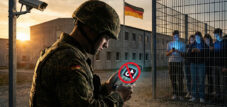
Twenty years of hesitation, one minute of detonation: How a homegrown administrative scandal is endangering the backbone of the German Armed Forces – Creative image: Xpert.Digital
Why the German Armed Forces suddenly imposed a promotion freeze: This ignored ruling is now plunging the German Armed Forces into career chaos
Promotions halted: How a 20-year-old file error is breaking the backbone of the German Armed Forces
New recruits receive bonuses, veterans get nothing: The new salary frustration in the German Armed Forces
It is an unprecedented event that shakes the very core of the armed forces: As of July 1, 2026, the Ministry of Defense is pulling the plug and halting automatic promotions for Master Sergeants and Chief Petty Officers. What is soberly declared in internal ministry documents as a "maintenance measure" means the abrupt end of firmly planned career paths for thousands of experienced non-commissioned officers and significant financial losses affecting their life plans. Triggered by a court ruling on the merit principle for civil service promotions that was ignored for decades, the Bundeswehr now faces a genuine, self-inflicted administrative scandal. While new recruits are lured with lucrative bonuses, long-serving soldiers feel cheated out of their life plans. A profound breach of trust that comes at a particularly inopportune time – because without a highly motivated corps of non-commissioned officers, the Inspector General's proclaimed goal of "combat readiness" becomes a distant prospect.
When the state breaks its promise to its own soldiers
With the promotion freeze for Master Sergeants and Chief Petty Officers effective July 1, 2026, the Ministry of Defense has made a decision whose institutional implications extend far beyond a mere administrative adjustment. It is the consequence of two decades of inaction regarding a clearly foreseeable legal problem – and simultaneously a textbook example of how bureaucratic procrastination, coupled with political cowardice, escalates into serious personnel crises that occur precisely when they are least acceptable.
The core problem: Constitutional law versus the seniority principle
To understand what triggered the promotion freeze in mid-2026, one must delve far back into legal history. As early as October 2004, the Federal Administrative Court issued a landmark ruling that established for civil servants: Promotions based solely on length of service violate the merit principle enshrined in Article 33, Paragraph 2 of the Basic Law. Access to public office must be based on suitability, competence, and professional performance – not on the number of years of service. This decision was applied to civil servants at the time, but the Federal Ministry of Defense was aware from the outset of the significant risk of its application to military law.
The German Armed Forces nevertheless maintained their promotion practices for the sergeant career path unchanged. Under the system in effect until 2026, those who joined the Bundeswehr as sergeants could, in principle, be promoted to pay grade A8 after 16 years of service since their appointment as sergeants, and after a further six years to the rank of master sergeant (A9). For thousands of non-commissioned officers, this system was not merely a bureaucratic career advancement model, but an explicit promise regarding their life plans – made by superiors, enshrined in career regulations, and deeply rooted in the organizational culture of the armed forces.
As early as 2018, negative first-instance rulings increased, with administrative courts across Germany almost unanimously deciding that purely waiting-period models, even for soldiers, were incompatible with constitutional law. A 2022 ruling by the Würzburg Administrative Court made it unequivocally clear: The minimum service periods stipulated in the relevant central service regulation were incompatible with the merit principle of Article 33, Paragraph 2 of the Basic Law. Length of service and age are simply not performance-related criteria, and other interests of the employer—such as a balanced age structure—have no constitutional status and therefore cannot justify an infringement on the merit principle.
The final, irrevocable impetus came from the Higher Administrative Court of North Rhine-Westphalia with its rulings of July 25, 2025. The court rejected the Federal Ministry of Defense's appeal, thereby confirming with legal force that the minimum service period of 16 years from appointment as sergeant for promotion to staff sergeant is incompatible with Article 33, Paragraph 2 of the Basic Law. This removed any legal basis for the Bundeswehr to continue the previous practice for even a single day longer.
The "orderly halt": What applies from July 2026
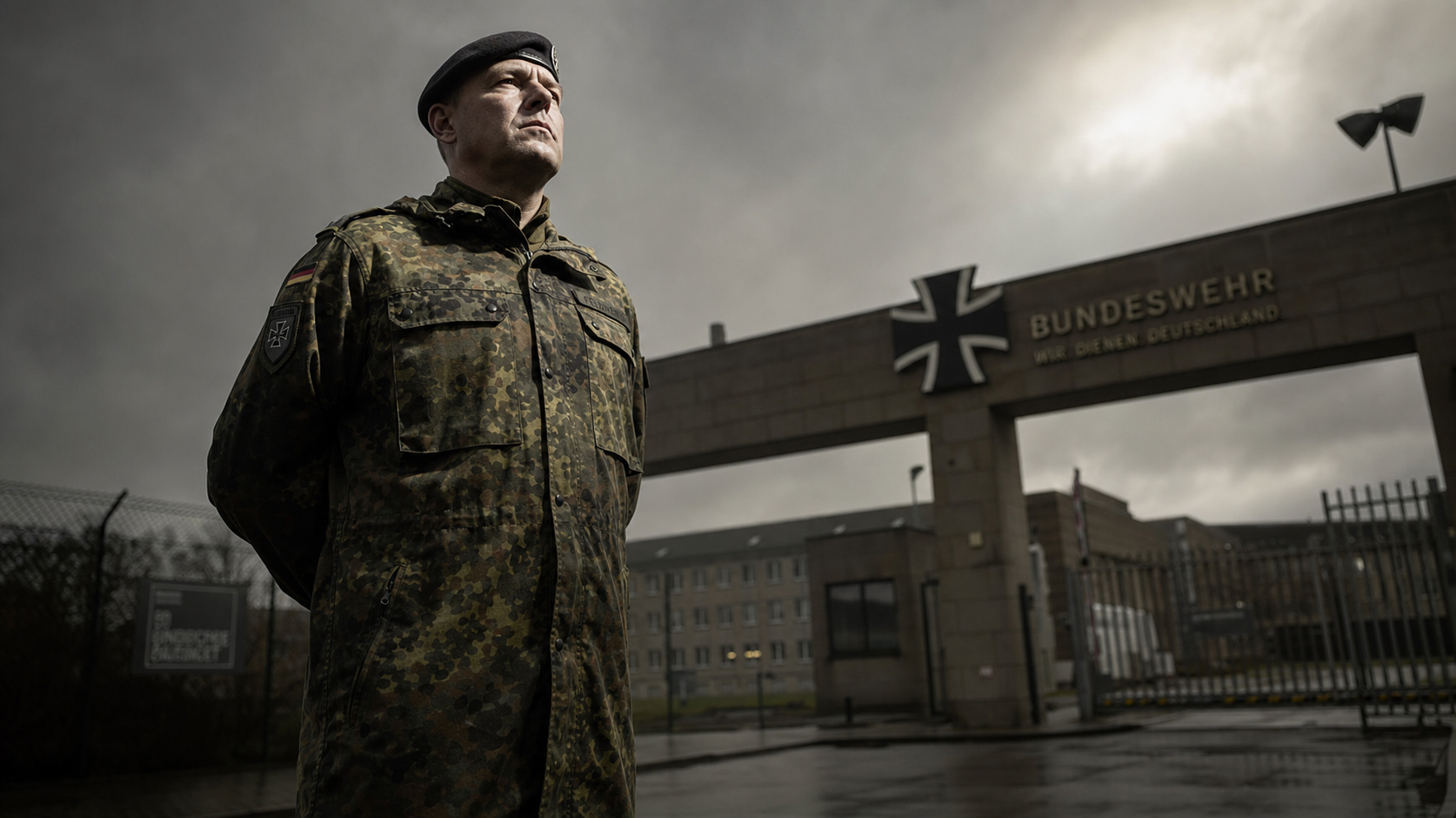
Inspector General Carsten Breuer announced the consequence via the Bundeswehr's social media channels: As of July 1, 2026, all appointment decisions for the ranks of Staff Sergeant and Chief Petty Officer will be temporarily suspended. The Ministry of Defense refers to this situation internally as a "pause in order." During this transitional phase, a completely new promotion system is to be developed – under self-declared high pressure – which is scheduled to come into effect by the beginning of 2027.
Specifically, this means that it will no longer be possible to advance from sergeant to staff sergeant in a single position. The previous practice of the so-called "large clustering" of positions, which allowed soldiers to complete their entire career path at one location without being transferred, will be significantly disrupted. In the future, performance—measured by job evaluations and proven aptitude—will be the decisive criterion for promotion to staff sergeant, not simply the passage of time.
A high-ranking project group, led by the Deputy Inspector General, Lieutenant General Dr. Nicole Schilling, and the Head of the Infantry Division, Ministerial Director Dr. Alexander Götz, is responsible for designing the new system. Behind the scenes, an internal ministry document soberly states what hardly anyone in politics wanted to say aloud: the situation cannot be resolved "painlessly or quietly." Ultimately, Breuer—not Minister Boris Pistorius personally—became the one to announce this unpopular measure.
The economic dimension: What a rank means
To understand the material significance of the promotion freeze, it's worth looking at the actual salary differences. A 26-year-old Master Sergeant with one child is in pay grade A8, experience level 4, and receives a gross salary of approximately €3,921, including family allowance. A 50-year-old Senior Master Sergeant with two children, on the other hand, receives a gross salary of over €5,117 in pay grade A9, experience level 8, including official allowance and family allowance. The difference between a Master Sergeant and a Senior Master Sergeant thus amounts to a monthly gross difference of around €1,200 or more – over the remaining ten to fifteen years of service, this adds up to a considerable lifetime income disadvantage.
For a soldier in his mid-thirties who could expect to reach pay grade A9 within five years, the promotion freeze is not an abstract administrative measure – it is a concrete financial loss and a disruption to life plans. Career plans, mortgages, family plans, and location decisions were often based on this seemingly secure career prospect. The German Armed Forces Association (DBwV) aptly describes it: Almost all sergeants began their service or accepted their transfer to career soldiers with the firm conviction that they would achieve the general career goal of promotion to staff sergeant after 16 years of service. This expectation was actively reinforced by superiors for years.
The German federal pay scale A demonstrates that the gap between A8, level 4 (approximately €3,523 basic salary) and A9, level 1 (approximately €3,354) is not merely quantitatively significant. The transition from A8 to A9 marks a crucial status-related threshold in a Bundeswehr career: The Staff Sergeant is the highest-ranking non-commissioned officer in the intermediate service and part of the so-called "Portepee" NCO corps – the leadership class of the NCO ranks. This status entails not only salary entitlements but also leadership responsibility, official authority, and social recognition within the troop hierarchy. The promotion freeze therefore affects not only their finances but also the institutional standing of thousands of experienced NCOs.
Systemic failure: The self-inflicted crisis
The Federal Chairman of the German Armed Forces Association (DBwV), Colonel André Wüstner, described the situation as an "accident in slow motion." This characterization hits the nail on the head with surgical precision. The legal risks were known, court rulings were piling up, and, according to its own statements, a working group within the Federal Ministry of Defense had been addressing the problem for about 15 years. Nevertheless, the need for a structural adjustment was passed from one term of office to the next, delegated from one management level to the next, and ultimately left unaddressed for years without any consequences.
This pattern is not uncommon in German administrative practice, but it takes on particular significance in a military context. Armed forces thrive on trust – both internally, between leadership and troops, and externally, towards the society they serve. When an institution maintains a promise to its own members for over two decades, a promise it should no longer have upheld after the Supreme Court ruling of 2004, it is more than an administrative error. It is an institutional breach of trust, actively created by the silence of the political and military leadership.
Furthermore, there was a structural communication failure: The Inspector General announced the promotion freeze via Instagram – a medium that seems utterly unsuitable for strategic personnel decisions of such magnitude. Thousands of affected soldiers were informed via a social network before a formal order could be issued to the troops. This reinforced the impression of a lack of institutional seriousness in dealing with a career group that the Inspector General himself described as indispensable for the Bundeswehr's combat readiness.
Hub for Security and Defense - Advice and Information


Hub for Security and Defense - Image: Xpert.Digital
The Security and Defence Hub offers expert advice and up-to-date information to effectively support companies and organizations in strengthening their role in European security and defence policy. Working closely with the SME Connect Defence Working Group, it particularly promotes small and medium-sized enterprises (SMEs) that wish to further develop their innovative capacity and competitiveness in the defence sector. As a central point of contact, the Hub thus creates a crucial bridge between SMEs and European defence strategy.
Related to this:
Promotion freeze in the German Armed Forces: How trust and recruitment are at stake
The justice gap: New hires versus existing staff
A particularly acute aspect of the crisis concerns the relationship between long-serving, established soldiers and newly recruited personnel. In recent years, the Bundeswehr (German Armed Forces) has made considerable efforts to recruit new soldiers. In 2025, it enlisted approximately 25,000 soldiers – the best recruitment result for an all-volunteer force since the suspension of conscription – and received around 56,000 applications. This growth was accompanied by a range of attractive financial incentives for new recruits.
The new conscription system, whose legal basis came into effect on January 1, 2026, stipulates that conscripts are paid at the same level as career soldiers – at least around €2,700 gross per month. Volunteers receive subsidies for their driver's licenses of up to €3,500. These benefits, which did not exist for older recruits upon entering service, create a double injustice in the eyes of many long-serving sergeants: On the one hand, career promises for existing personnel are being withdrawn, and on the other hand, new recruits are being lured with bonuses that undermine the principle of equal conditions.
This imbalance is not a new phenomenon. A Bundestag document from 2017 already described how renewal bonuses for some and the influx of career changers created a feeling of being "forgotten" among some existing personnel. The promotion freeze in 2026 adds to this perception as another, particularly painful chapter. Tobias Brösdorf of the Association of German Armed Forces Soldiers (VSB) put it clearly: The freeze is a blow to the already damaged trust and unacceptable with regard to existing personnel.
Political reactions: Cross-party alarm
The political reactions to the promotion freeze are unusually uniform across party lines – and that is noteworthy. CDU defense expert Kerstin Vieregge described the non-commissioned officer corps as the "undisputed backbone" of the armed forces and warned of a "looming loss of trust" that would inevitably render the personnel strengthening of the Bundeswehr ineffective. Thomas Erndl, defense policy spokesman for the CDU/CSU parliamentary group, spoke of potentially "fatal consequences" and urged the Ministry to quickly develop more attractive conditions for all career paths.
From the governing coalition, SPD member Christoph Schmid expressed understanding for the troops' discontent, but nevertheless described the promotion freeze as "probably unavoidable" and called on the ministry to create the legal basis for its lifting as quickly as possible. Niklas Wagener of the Greens showed little diplomatic tact, openly asking why it had taken ten months after the Higher Administrative Court's ruling of July 2025 for the ministry to react – implicitly pointing to Minister Pistorius's political responsibility for the hesitant response.
Parliamentary Commissioner for the Armed Forces Henning Otte (CDU) warned of "enormous potential for conflict within the armed forces" and emphasized that prospects must not be destroyed and trust must not be betrayed. His SPD predecessor, Reinhold Robbe, demanded that the promotion freeze be lifted as quickly as possible, as required by the principles of "Innere Führung" (internal leadership), and explicitly warned of the lasting demotivation of the sergeant corps as a threat to personnel growth. The parallel nature of these warnings from across the political spectrum is a clear indication that the institutional damage has already entered the parliamentary consciousness.
Strategic consequence: combat readiness versus career stagnation
The promotion freeze comes at a time when the Bundeswehr is being reoriented towards its combat readiness to a degree not seen in decades. Inspector General Breuer himself has declared "war readiness" as the new guiding principle and focused the Bundeswehr on national and alliance defense. Defense Minister Pistorius has formulated the strategic goal of increasing troop strength from the current 184,200 soldiers to a projected 460,000 by the mid-2030s – an ambitious target that simultaneously puts all personnel recruitment and retention mechanisms under strain.
Breuer publicly acknowledged the contradiction in his own situation: He emphasized that the Bundeswehr needed sergeants to be combat-ready, and that the postponement of promotions was unfortunate and something he personally disliked. But this is precisely the strategic crux of the problem: Anyone who wants to attract and retain soldiers for the most demanding and dangerous roles in national defense must offer them reliable career prospects. A system that betrays its own promises and openly suspends career goals undermines the intrinsic motivation of long-serving career officers in a way that cannot be compensated for by higher pay alone.
Because temporary and career soldiers make their enlistment decisions – often in early adulthood – based on a cost-benefit analysis that extends far into the future. The competitiveness of the Bundeswehr as an employer compared to the civilian job market depends not only on the monthly net salary, but also significantly on the reliability of long-term commitments, the availability of clear career paths, and the perceived respect shown for years of service. Anyone who has dedicated 16 years of their professional life to an institution rightly expects that institution to honor its promises – or at least communicate any changes in the legal framework transparently and in a timely manner.
Opportunities in chaos: When crisis becomes a catalyst for reform
Despite all the justified criticism, it would be analytically incomplete to view the promotion freeze solely as a catastrophe. The German Armed Forces Association (DBwV) itself states in its position paper that the current personnel structure and pay system of the Bundeswehr have long ceased to meet the specific needs of modern armed forces. This forced rethinking thus offers a genuine, albeit painful, opportunity to address structural deficiencies that would otherwise have persisted for decades to come.
A performance-based promotion system that prioritizes evaluations by superiors and defines transparent performance criteria can, in principle, produce fairer results than a rigid seniority model. A non-commissioned officer who delivers outstanding performance should not have to wait for time to pass before being promoted. Conversely, however, a new system will only be accepted if the evaluation processes are truly valid, consistent, and free from arbitrariness—a high bar to clear for a bureaucracy that has historically rewarded both seniority and personal connections.
The German Armed Forces Association (DBwV) also calls for seizing the opportunity to substantially improve the pay and pension regulations for sergeants and to make the career path of the intermediate service competitive with the civilian job market. Given that the Bundeswehr itself has recognized that the sergeant career path is already not fully competitive for technically demanding tasks, a mere reorganization of promotion regulations without a substantive upgrade of the career path would be a missed opportunity.
Overall economic assessment: The fiscal dilemma
From a financial perspective, the promotion freeze is part of a larger context of tension. On the one hand, Germany has provided substantial funding for its armed forces through the special Bundeswehr fund and the gradual increase of the defense budget to the NATO target of 2 percent of gross domestic product. On the other hand, the example of the 900 officers who could not be promoted in 2024/2025 due to budgetary problems demonstrates that simply increasing funding does not automatically lead to improved personnel structures if the institutional mechanisms remain dysfunctional.
Depending on its implementation, the new performance-based promotion system will necessitate a more differentiated personnel planning approach in the medium term, where not all sergeants with 16 years of service will automatically be promoted to positions in pay grade A8 and above. This can have a budgetary impact, provided the proportion of staff sergeants in the overall sergeant career track is reduced. However, the German Armed Forces Association (DBwV) explicitly warns against using the reform as a disguised cost-cutting measure: If fewer promotions lead to lower costs, but the resulting flexibility in personnel positions is not used to improve pay models, the result would be fiscal efficiency optimization at the expense of existing service members – politically toxic and strategically counterproductive.
The fiscal aspect of the reform is particularly sensitive because the Bundeswehr (German Armed Forces) is simultaneously spending considerable resources on recruitment measures. Every soldier who leaves the Bundeswehr prematurely due to disappointed career expectations or refuses to extend their service generates opportunity costs: lost training investments, replacement needs, selection procedures, and the onboarding costs for new recruits. These indirect costs are difficult to quantify, but their total amount is substantial – especially since the Bundeswehr has only just begun to stabilize its personnel growth.
Outlook: The critical parameters for 2027
The success or failure of the reform will be measured by a few, but crucial, parameters. First, by speed: Every month that qualified sergeants remain without promotion prospects worsens personnel retention and increases their willingness to switch to the civilian job market. Second, by reliability: If the new system is again overturned by legal rulings—for example, because evaluation procedures are not sufficiently standardized and legally sound—the next institutional breach of trust would be inevitable.
Thirdly, regarding the material substance: A reform that merely reorganizes the promotion regulations without simultaneously and noticeably improving the pay situation of the sergeant career path will not increase the attractiveness of the intermediate service – it will further reduce it. Fourthly, regarding communication: The way the Federal Ministry of Defense communicates with the affected soldiers in the coming months will be a decisive factor in whether the damage to trust can be at least partially repaired or whether it solidifies into a permanent motivational deficit within the sergeant corps.
The German Armed Forces are facing a crucial security policy test, in which the non-commissioned officer corps is indispensable as the core of military competence and operational capability. Anyone who permanently damages this corps through institutional hesitancy, delayed action, and broken promises risks far more than bad headlines – they risk the operational substance of an army that is urgently needed.
Consulting - Planning - Implementation

Markus Becker
I would be happy to serve as your personal advisor.
Head of Business Development
Chairman SME Connect Defense Working Group
Consulting - Planning - Implementation
Konrad Wolfenstein
I would be happy to serve as your personal advisor.
You can contact me at wolfenstein∂xpert.digital or
Just call me on +49 7348 4088 965 .