
GEO instead of SEO: Google Core updates and SEO priorities for the future-an analysis of March 2025 updates
Xpert pre-release

Available in 27 languages 📢
Prefer Xpert.Digital on GoogleⓘPublished on: March 30, 2025 / update from: March 30, 2025 - Author: Konrad Wolfenstein

Google Core updates and SEO priorities for the future: An analysis of March 2025 updates and the effects of KI-Image: Xpert.digital
Google Core Update March 2025: Effects and opportunities for website operators
Generative Engine Optimization (GEO): The next step for SEO strategists
The world of search engine optimization (SEO) is constantly changing. Algorithm updates from Google, the dominant player in the search engine market, have a profound influence on how websites do in the search results. The Google March 2025 Core Update, which was rolled out from March 13th to 27th, 2025, is another example of this continuous adaptation.
This update aims to improve the quality of the search results by better emphasizing more relevant and more useful content. At the same time, artificial intelligence (AI) in the search engine landscape is becoming increasingly important. This leads to the development of new optimization paradigms such as generative engine optimization (GEO) and Answer Engine Optimization (AEO).
This report analyzes the effects of the latest core update, examines the future SEO priorities for 2025 in view of the growing role of AI and offers implementable recommendations for SEO experts in order to successfully position themselves in this changing environment.
Suitable for:

The Google March 2025 Core Update in detail
Google sees March 2025 Core Update as a “regular update” that aims to better emphasize more relevant and satisfactory content from all types of websites. It is the first core update of 2025 and follows the update of December 2024. Google emphasizes its ongoing efforts to present more content from copyrights in the course of the year.
This statement indicates a continuous refinement of the algorithm, whereby the focus is on rewarding valuable content manufacturers, possibly also smaller and independent websites. The continuous further development of the algorithm and the potential new weighting of ranking factors aim to achieve this goal. The explicit mention of the support of authors indicates a conscious effort to diversify the search results beyond established sizes.
In addition, the update aims to improve the quality of the search results by showing more content that users perceive as really useful, and less content that has only been created for search engines. This underlines Google's long-term emphasis on user-oriented content and signals a continued procedure against manipulative SEO tactics. If the focus is on really useful content, content that put the needs of users in the foreground will probably be preferred. Conversely, content that is thin are probably punished with keywords or exclusively on the ranking.
Effects on the search results
The rolling out of the update lasted about two weeks, from March 13th to 27th, 2025. The initial roll out showed both positive and negative fluctuations in the rankings for some websites. The influence did not seem to be as wide as with some earlier core updates, but was still significant for the websites concerned. This indicates that the core update contained fundamental changes, but its effects compared to comprehensive updates in the past were possibly more targeted or nuanced. The fact that some websites experienced significant changes while others were less affected could indicate that the update targeted specific types of content or optimization techniques. It could also indicate that Google makes its algorithm adjustments more precisely.
Tracking tools had some difficulties due to changes to Google's search results. This illustrates the dynamic nature of the Serps and the challenges with which SEO experts are confronted with monitoring the immediate effects of updates. Changes to SERP functions can influence how organic results are displayed and clicked, which makes it more difficult to isolate the effects of the core ranking algorithic changes.
After a phase of increased visibility as a result of the “Hidden Gems” update from Google in mid-2023, some forum websites recorded considerable loss of visibility. This indicates a possible re-calibration of the evaluation of forum content by Google, which indicates that the mere existence of a forum is no longer sufficient for high ranking. The initial upswing for forums could have been an experiment or an adaptation that Google has now refined. This underlines how important it is not to rely on temporary ranking gains based on specific updates.
Websites that create large quantities of programmatically generated pages for SEO purposes also recorded considerable declines. This is confirmed by Google's attitude against automatically generated or inferior content that aims to manipulate rankings. Programmatic content, although scalable, often lacks the depth and originality that Google prioritizes. This update has probably further punished such content.
Some members of the SEO community reported a significant decline in the indexed pages during the update. This could indicate a stricter assessment of content quality and relevance for indexing, which may remove thin or useless pages from the index. If Google focuses on quality and relevance, it is plausible that they could de-indexing pages that do not correspond to their standards, even if these pages were previously indexed.
SEO experts found considerable volatility in the SERPS during the rolling. Consideration regarding the potential direction of the update on small websites and shops was expressed. Some users reported traffic losses and reduced AdSense revenue, while other improvements saw. The update seemed to affect different sectors, including retail, authorities, forums and content publishers. This broad effect underlines the basic nature of core updates that influence the ranking in various industries and website types. Core updates usually do not concentrate on specific niches; They contain changes to the core ranking system that can have far-reaching effects.
Suitable for:

Google's recommendations
Google did not give new specific advice for March 2025 update, but repeated earlier recommendations. The most important recommendation remains to create helpful, reliable and user -oriented content. There are no specific measures for immediate restoration; The biggest changes could be visible after future core updates. Google advises website operators to check your list of questions that you should take into account when your website is affected by a core update, with the focus on content quality, expertise, presentation and comparison with top ranking websites. A negative impact on the rankings does not necessarily mean that something is wrong with the sides; Other websites could simply be classified as relevant.
Google recommends using the Search Console to check traffic burglaries and analyze top pages and search inquiries in order to understand the effects. “Fast solutions” should be avoided; Instead, the focus should be on long -term, sustainable improvements that benefit users. Deleting content should be the last remedy and only be considered if the content is no longer considered to be saved and was mainly created for search engines. Google's consistent message underlines a fundamental principle: to put the utility over everything else. The recovery of core updates is a long -term process that requires a deep understanding of user needs and the creation of high -quality content. Google's advice does not aim to chase after specific algorithm signals, but to build up a website that offers its audience real added value. This is in accordance with your goal of delivering helpful and reliable results.
SEO priorities for 2025
Google's core updates consistently aim to prioritize content that are useful, informative and meet the search intention of the users. Contents should be original, well researched and answer the questions of the users comprehensively. The focus should be on creating content that offer users real added value to understand their intentions and ensure relevance. High -quality, user -oriented content remains the foundation of successful search engine optimization, especially since algorithms are becoming increasingly sophisticated in order to evaluate content quality and user satisfaction. Since AI plays a greater role in the evaluation of search results, the ability to create content that is well received by human users and offer real added value will become even more important. AI can probably recognize patterns of engagement and satisfaction that correlate with high -quality content.
Google increases the general user experience, including seamless navigation, faster loading times and an intuitive user interface. Technical SEO aspects such as mobile-friendliness, side speed, indexability and website security (https) remain crucial for the evaluation of a website by Google. It is important to ensure mobile optimization with responsive design and touch -friendly navigation. The charging speed should be improved by compressing large images and optimization of the code. A positive user experience not only serves to satisfy visitors; It also signals search engines that a website is valuable and trustworthy. Technical SEO offers the basis that search engines can effectively crawl, index and understand content. Google's focus on Page-Experience metrics indicates that you use user signals to evaluate the quality and user-friendliness of websites. A quick, safe and user -friendly website will probably do better in the search results.
The concept of EEAT (Experience, Expertise, Authoritative Center, and Trustworthiness) is still a decisive factor in the evaluation of content by Google, especially for “your money or your your life” (YMYL) topics. Expertise should be demonstrated by well -researched content, clear authorship and the reference to reliable sources. Authority is built up by the preservation of backlinks from reputable websites and the establishment of a strong online reputation. Trust is strengthened by guaranteeing website security, transparency and accuracy of the information. It is advisable to create or update author biographies with relevant qualifications and experiences and to implement a fact check process for all content. In a time of increasing misinformation, Google places great emphasis on content that comes from credible sources and demonstrate specialist knowledge. The structure of EEAT is crucial in order to gain and maintain both users and search engines. The emphasis on Eeat, especially in view of the increase in AI generated content, indicates that Google wants to ensure that users receive reliable information from expert sources. This is particularly important for topics that can affect people's health, finance or security.
The search develops beyond traditional text-based search queries on Google, with the advent of AI-based answer machines, language search and visual search. It is necessary to optimize content for several platforms such as YouTube, Tiktok, Amazon and Social Media, each of which has their own search functions and ranking factors. The language search should be taken into account by using natural language and long-tail keywords. For visual searches, it is important to provide high quality images and use descriptive old text. The SEO landscape is becoming increasingly fragmented, which requires a multi-layered approach that takes into account where users are looking for and how they interact with information on various platforms and in different formats. Since user behavior diversified, SEO strategies must go beyond the pure optimization for the traditional Google website. Understanding the user generation in different contexts and the corresponding optimization of content will be crucial to achieve a wider audience.
Suitable for:

The influence of AI on the search
AI-based chatbots and generative search engines change the interaction of users with search platforms; You now expect the understanding of intentions and dialog -oriented, detailed answers. Users are increasingly using AI overviews and LLMs for their search activities and expect synthesized information from various sources. There is a growing expectation of personalized search results that are tailored to the preferences and behaviors of the users. Ki drives a change from the Keyword overtake to a more nuanced understanding of the user dation, which leads to expectations of more comprehensive and more personalized viewfinder experiences. The ability of the AI to process natural language and understand the context enables search engines to provide more direct and relevant answers, which changes the way users formulate their search queries and interact with the results.
AI-based reply machines and chatbot-controlled search tools are being used more and more frequently in addition to traditional search engines. Search engines move away from the traditional keyword agreement to AI-supported discovery systems that better understand and anticipate the user generation. AI enables users to search for text, language, images and videos, which requires optimization for this diverse formats. AI facilitates a shift from the simple keyword-based query to more intelligent systems that understand complex inquiries, synthesize information and present them in various formats. The ability of the AI to analyze and recognize huge amounts of data enables Proactive and context -related viewfinder experiences in which the engine anticipated user needs and provides relevant information before a specific search request is entered.
SEO must adapt to the optimization for several platforms and search formats, which requires a wider range of competence and a deeper understanding of different algorithms. The focus shifts from pure visibility towards commitment, whereby it must be ensured that content offers a meaningful added value, the user stimulates further research. AI tools can help with keyword research, the creation of content and the identification of optimization options. Understanding how AI interprets content and prioritizes information is crucial for effective optimization. The structure of brand authority and credibility becomes even more important because AI systems prioritize reliable sources. KI represents both challenges in terms of adaptation to a more complex search landscape and opportunities to use AI tools for improved optimization and content creation. The rise of AI requires a fundamental change in SEO thinking, away from manipulating algorithms to understanding how KI understands information and presents users. This requires a deeper understanding of the processing of natural language, mechanical learning and user dation.
🎯🎯🎯 Benefit from Xpert.Digital's extensive, fivefold expertise in a comprehensive service package | R&D, XR, PR & SEM

AI & XR 3D Rendering Machine: Fivefold expertise from Xpert.Digital in a comprehensive service package, R&D XR, PR & SEM - Image: Xpert.Digital
Xpert.Digital has in-depth knowledge of various industries. This allows us to develop tailor-made strategies that are tailored precisely to the requirements and challenges of your specific market segment. By continually analyzing market trends and following industry developments, we can act with foresight and offer innovative solutions. Through the combination of experience and knowledge, we generate added value and give our customers a decisive competitive advantage.
More about it here:
Geo instead of SEO: The future of online visibility in the Ki era
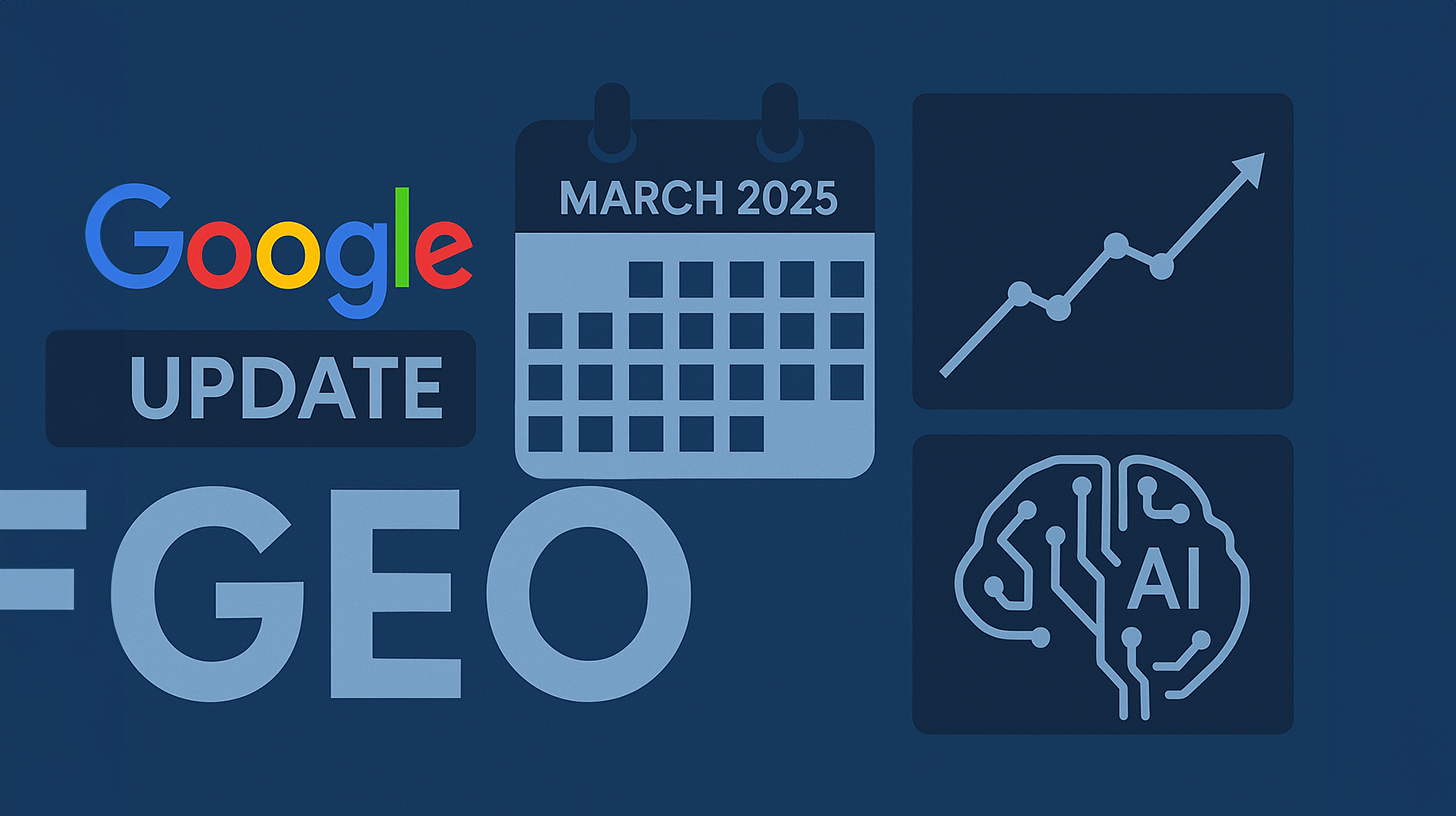
Geo instead of SEO: The future of online visibility in the Ki era-Image: Xpert.digital
Generative Engine Optimization (GEO)
Generative Engine Optimization (GEO) is the practice of optimizing content especially for AI-based generative search engines in order to improve visibility and relevance in AI-generated answers. Geo aims at AI-supported platforms instead of traditional search engines and focuses on the AI updability and content relevance instead of keyword-centered approaches. The aim is to ensure that the brand message in AI-generated answers is correctly presented and effective. Geo includes understanding and focus on the developing algorithms and criteria of AI engine. Geo represents a significant further development of search engine optimization and requires a shift of the focus from the ranking to traditional SERPs towards inclusion and citation in AI generated content. Since AI becomes a primary method for users to search for information, the optimization of content so that they can be understood and used by AI models is crucial for maintaining visibility and the brand presence.
In order to optimize content for AI-controlled generative models, it is important:
To focus on the user system
Create comprehensive content that clearly and precisely answer user inquiries, offer added value and respond directly to your needs.
To use relevant keywords
Integrate long-tail and semantic keywords in a natural and context-related way to take into account the user diligence and priorities of the AI search.
To optimize the content structure and clarity
Use a clear and simple language, dividing complex information with list signs and lists and ensuring a smooth, logical flow in the entire content.
To build brand authority and credibility
Ensure consistency across all brand units, develop an industry-focused backlinking strategy and use PR measures.
To monitor and adapt continuously
Analyze power metrics continuously and adapt strategies to keep up with the developing AI algorithms and user behavior.
Technical optimization for AI accessibility
Make fast loading times, mobile-friendliness and clean code so that Ki-Engine's content can discover, read and include.
Suitable for:

Optimization for AI: The key to better findability
Geo requires a holistic approach that combines traditional SEO principles with a deep understanding of how AI models process and generate information. The optimization for AI not only includes the findability of content, but also the ensuring that they are structured and written in such a way that AI can easily understand, synthesize and use answers.
It is crucial to understand how AI interprets and generates content. Generative AI models identify patterns and relationships within extensive data records using Reinforcement Learning from human feedback. It is crucial to understand how AI platforms represent a brand. Geo includes ensuring that AI systems understand the wider context of the content, its relationship with the brand and other detail levels. Brand quotes from relevant sources can significantly improve contextualization for AI models. Effective GEO requires an understanding of the underlying mechanisms of AI models, including the way you learn, interpret and generate answers. By understanding SEO experts how Ki processes language and identifies relevant information, you can better match your content and optimization strategies to these processes and thus increase the likelihood that your content appears in AI generated expenses.
The development of the search results: from left to AI-generated answers
Google is increasingly using AI overview (formerly Search-generative experience-SGE) to provide direct answers and summaries in the search results. AI overviews are becoming more and more sophisticated and use models to answer complex inquiries with high quality answers and several sources. Google also tests functions that link from AI overviews to additional search results. The traditional SERP with ten blue links is supplemented by AI generated answers and possibly replaced, which is fundamentally changed the way users find information.
The rise of AI-generated answers could lead to a decline in clicks to traditional organic search results and thus impair organic traffic for websites. The focus for SEO may have to shift from pure traffic generation to ensure the brand presence and authority within AI generated answers. SEO experts have to prepare for a search landscape in which Zero-Click search searches are more common and success is not only measured on traffic, but also in influence and visibility within AI editions. If users receive satisfactory answers directly from AI overview, you may need fewer clicks on individual websites. This requires a re -evaluation of the SEO goals and metrics.
In order to optimize content in order to be displayed in AI-supported search expenses, it is important:
Structure content in question-answer format
Use clear headings that use questions as titles to optimize for AI overviews.
To write concise answers
Write answers from 40 to 60 words that summarize important information and at the same time indicate additional added value on your website.
To give direct answers to search queries
Place the direct answer in the first paragraph or section of the content.
Using the list, numbered lists and tables
Make information for AI algorithms easily digestible.
To integrate relevant keywords and semantic variations
Use this naturally in the content.
To ensure that the content is correct, relevant and trustworthy
Quote sources and demonstrate specialist knowledge.
To implement relevant schema-markup
Use FAQ scheme and HowTo scheme to help search engines understand the context of the content.
The optimization for AI-supported search expenditure requires a focus on the provision of clear, concise and structured answers that answer user inquiries directly and make AI easier to extract and present the information. In order to be displayed in AI overviews, content must be formatted in such a way that they match how AI models extract and synthesize information. This means prioritizing direct answers and a clear organization.
Answer Engine Optimization (AEO)
Answer Engine Optimization (AEO) is the process of optimizing content to ensure that AI-based platforms, voice assistants and search engines can easily extract and display direct, relevant answers to user inquiries without the necessary click on a website (zero-click answer). AEO focuses on optimization for featured snippets, response boxes and AI generated answers. In view of the rise of language search and AI assistant, AEO is becoming increasingly important for visibility. AEO is a crucial strategy to attract users' attention in a search landscape in which direct answers are becoming increasingly common. Since users are increasingly dependent on voice assistants and expect immediate answers, the optimization of content for direct answers is essential in order to achieve them effectively.
Include the best procedures for AEO:
Target specific questions
Do thorough keyword research to identify popular user inquiries, in particular question-based search queries with modifiers such as “what is” and “how to”. Use tools such as ISWOBLIC and Google's “People So ASK”.
Give concise and clear answers
Answer the user's question directly and succinctly, aiming for a brevity (approx. 40-60 words for featured snippets) and at the same time offer valuable information. Avoid unnecessary explanations and technical language.
Use structured data markup
Implement Schema-Markup (e.g. FAQ scheme, Howto-Scheme, Q & A-Scheme) to help search engines and AI systems to understand the context of the content and to increase the likelihood of appearing in fast response formats. Valide the Markup with Google Rich Result's test.
Write high quality content
Create well -researched, informative content that is tailored to the needs of the target group and contain relevant keywords naturally.
Create comprehensive FAQ pages
Develop special FAQ pages that answer frequently asked questions in a structured manner that improve user-friendliness and offer opportunities for featured snippets.
Optimize sales length
Keep paragraphs briefly and easily readable, as featured snippets often use short text cuts.
Improve the quality of the content
Make sure that the content is thoroughly, relevant, correct and easy to understand for search engines and users.
Effective AEO requires a strategic approach to the content of the content, which focuses on answering user questions directly, clearly, clearly, concise and structured and using the performance of structured data in order to improve the findability through response machines. By anticipating the questions, asking users and providing high -quality, easy -to -understand answers, you can increase your visibility in response boxes and language search results, even if users do not click on the website.
Language search engines use machine learning to understand and react to naturally language inquiries. Optimize content in such a way that you correspond to the conversational tone and the set structure of language queries by using long-tail keywords and a natural language. Take into account “near” optimizations for local search results and make sure that answers are clearly understandable when reading out by voice assistants. Since the use of the language search increases, the optimization for natural language inquiries and the provision of clearer answers will be decisive in order to achieve users via language assistants. Language search inquiries are usually longer and more conversation than text -based search queries. Optimization for language search requires an understanding of how people speak and a corresponding structuring of the content.
Suitable for:

User -oriented content: The secret behind the Google Core Update
The Google March 2025 Core Update underlines the continuous importance of user -oriented, high -quality content in the constantly developing search engine environment. The increasing integration of artificial intelligence not only transforms user behavior and expectations, but also leads to the development of new optimization strategies such as GEO and AEO. The shift in search results towards AI-generated answers question traditional SEO approaches and requires an adaptation of the strategies to be successful in this new landscape.
Recommendations for SEO experts
In order to successfully position yourself in this changing landscape, SEO experts should take the following recommendations into account:
Continuously monitor core updates
Analyze their effects on website performance.
Priorize high -quality content
Create user -oriented content that comprehensively answer the search intention.
Improve user experience and technical SEO
Invest in these aspects of your website.
Build and demonstrate EAT
Win the trust of users and search engines.
Adjust SEO strategies
Consider various platforms and search formats beyond the traditional Google search.
Implement generative engine optimization (geo)
Optimize content for AI-based generative models.
ANSWER Engine Optimization (AEO) focus
Target specific questions and provide concise, clear answers.
Use structured data markup
Improve the visibility of content in response machines.
Optimize for language search
Use natural language and long-tail keywords.
Use AI-based tools
Simplify keyword research, content creation and performance analysis.
Continuously check and adapt strategies
React to algorithm updates and AI progress.
The SEO landscape continues to develop. It is crucial to remain informed about the latest trends and algorithm changes in order to be successful in the long term. Experience and willingness to adapt strategies are essential to find your way around in the future of search engine optimization.
We are there for you - advice - planning - implementation - project management
☑️ SME support in strategy, consulting, planning and implementation
☑️ Creation or realignment of the digital strategy and digitalization
☑️ Expansion and optimization of international sales processes
☑️ Global & Digital B2B trading platforms
☑️ Pioneer Business Development

Konrad Wolfenstein
I would be happy to serve as your personal advisor.
You can contact me by filling out the contact form below or simply call me on +49 7348 4088 965 (Munich) .
I'm looking forward to our joint project.
Write to me

Xpert.Digital - Konrad Wolfenstein
Xpert.Digital is a hub for industry with a focus on digitalization, mechanical engineering, logistics/intralogistics and photovoltaics.
With our 360° business development solution, we support well-known companies from new business to after sales.
Market intelligence, smarketing, marketing automation, content development, PR, mail campaigns, personalized social media and lead nurturing are part of our digital tools.
You can find out more at: www.xpert.digital - www.xpert.solar - www.xpert.plus
Keep in touch








