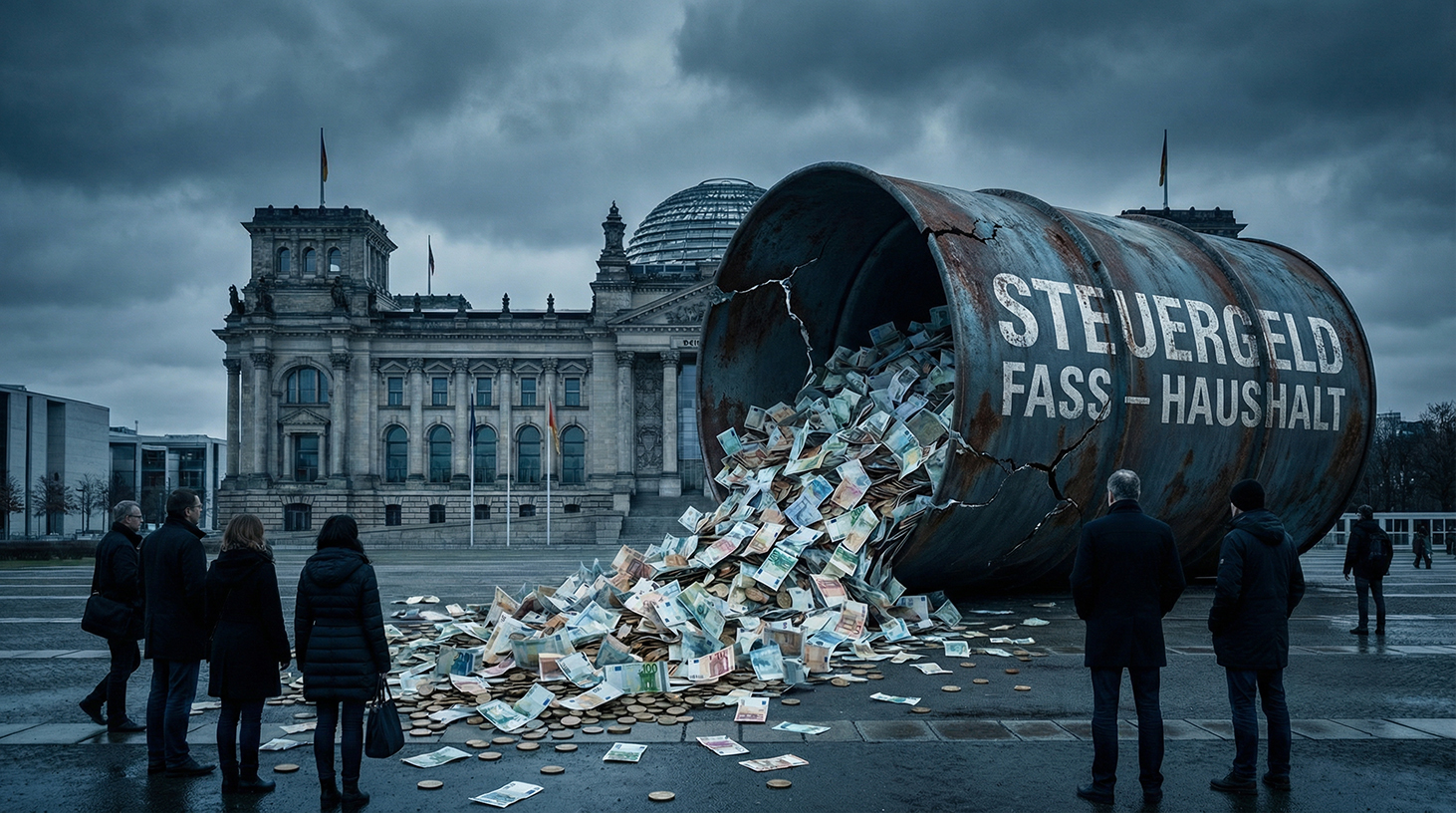
The money is there, but nothing is happening: Germany's 500 billion illusion – Why the largest investment program is in danger of failing – Image: Xpert.Digital
Is the government cheating? Where are the 500 billion in infrastructure funds really disappearing?
"Misappropriation": Federal Court of Auditors dismantles the government's 500 billion euro plan
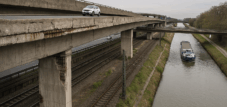
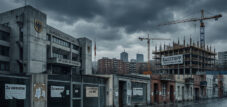
With an unprecedented special fund of €500 billion, Germany aimed to rescue its crumbling infrastructure and pave the way for climate neutrality. But a year after the historic decision to relax the debt brake, the interim assessment is devastating. Instead of a tangible modernization offensive, a bureaucratic fiasco has emerged: the funds are disbursed far too slowly, municipalities crippled by austerity measures are stifled by complex application processes, and the Federal Court of Auditors accuses the government of misappropriating some of the billions to plug budget gaps. While bridges, schools, and rail networks continue to deteriorate, the Finance Ministry resorts to a purely numbers-driven communication strategy that fosters distrust among citizens rather than instilling much-needed confidence. An analysis of the fatal design flaws of the largest investment program in postwar history – and why a lot of money alone does not guarantee a functioning state.
Germany's 500 billion euro bet on the future: A special fund caught between rhetoric of new beginnings and fiscal reality
Why the largest investment program in post-war history is in danger of failing due to its own ambitions
A year after the historic amendment to the Basic Law (Germany's constitution) to relax the debt brake, the interim assessment of the special fund for infrastructure and climate neutrality is sobering. What was celebrated as the largest investment offensive in postwar history reveals, upon closer inspection, serious structural weaknesses in its implementation, a worrying lack of transparency in the use of funds, and a communication strategy that undermines rather than strengthens public trust. Nearly 39 billion euros have been disbursed so far, but where exactly this money has gone remains difficult to trace, even for experts. The Federal Court of Auditors speaks of recurring deficiencies, the German Economic Institute diagnoses misappropriation in every second euro, and Federal Finance Minister Lars Klingbeil himself is urging faster action. The question that arises a year after the parliamentary vote is no longer whether Germany needs to invest, but whether the federal government is capable of spending half a trillion euros wisely.
The genesis of a historic decision
In the spring of 2025, the CDU/CSU, SPD, and the Greens jointly voted for an amendment to the Basic Law, enshrining the Special Fund for Infrastructure and Climate Neutrality in Article 143h. With a total volume of €500 billion over a period of twelve years, this is the largest debt-financed investment program in the history of the Federal Republic. The structure of the special fund is divided into three parts: €100 billion goes to the federal states, another €100 billion feeds the Climate and Transformation Fund, and the remaining €300 billion is available to the federal government for additional investments in transport, energy, education, and digital infrastructure.
What was remarkable was the broad public acceptance of this borrowing. Several polls at the time showed a majority of the population supporting the decision, even among voters of the Christian Democratic Union (CDU/CSU), whose chancellor candidate, Friedrich Merz, had signaled his opposition to a rapid relaxation of the debt brake during the election campaign. The public's openness to new debt was particularly high where an urgent need seemed obvious, and with dilapidated bridges, crumbling school buildings, and an unreliable rail network, this need was hardly debatable. The conditions for the CDU/CSU-SPD coalition could therefore hardly have been better.
A country on the brink of collapse: The extent of the investment backlog
To understand the scale of the challenge, it's worth looking at Germany's structural investment gap. The KfW Municipal Panel quantified the perceived investment backlog of municipalities in 2024 at €215.7 billion, a record high and an increase of 15.9 percent compared to the previous year. Municipalities see the largest backlog in school buildings, with a shortfall of €67.8 billion, representing 31 percent of the total investment backlog. This is followed by road and transport infrastructure with €53.4 billion, or 25 percent of the backlog. According to the survey, nine out of ten municipalities are pessimistic about the future.
The situation is even more dramatic in international comparison. Germany's public investment rate is a mere 2.12 percent of gross domestic product, significantly below the OECD average of over three percent. An ifo study commissioned by the INSM calculated that the German government would have to increase its investment activity by at least 40 percent to reach the OECD average. In the area of research and development, the shortfall is even greater, at 70 percent. Net investment, the difference between gross investment and depreciation, has hovered around zero since 1997. This means that for almost three decades, Germany has only invested just enough to maintain the existing public capital stock – there has been no expansion.
A joint study by the IMK (Institute for Macroeconomics and Business Cycle Research), which is affiliated with trade unions, and the IW Cologne (Institute for Economic Research), which is affiliated with employers, concluded as early as 2024 that Germany would need to invest an additional 60 billion euros annually for ten years, totaling 600 billion euros, to make its infrastructure, economy, and society fit for the future. This rare agreement between two ideologically different institutes underscores the urgency of the situation.
The slow outflow of funds: Money alone doesn't solve problems
A year after the parliamentary decision, it has become clear that simply allocating budget funds does not produce renovated schools or modernized rail networks. By the end of 2025, the federal government had only disbursed €24 billion from the special fund, including allocations to the Climate and Transformation Fund. This was significantly below projections. While the federal government invested a total of €86.8 billion in 2025, 17 percent more than the previous year, the planned investment capital was €115.6 billion.
Federal Finance Minister Lars Klingbeil openly acknowledged the discrepancy and urged faster action at the start of 2026. Every euro must be used as quickly, efficiently, and effectively as possible. The federal and state governments need to develop a different pace. The special fund's budget for 2026 projects expenditures of €58.9 billion, a significant increase compared to the previous year's €37.3 billion. An additional €80.4 billion is to be committed to spending in subsequent years.
The reasons for the slow disbursement of funds are multifaceted. For the federal states, a major problem was that the legal framework governing the use of these funds was not finalized until mid-December 2025, meaning that virtually no money could flow to the states and municipalities in 2025. Added to this are structural obstacles: complex application procedures, lengthy planning and approval processes, a shortage of skilled workers in the construction industry, and overburdened administrations at the municipal level. Many municipalities are still stuck in the planning and approval processes. So the money is there, but the absorption capacity of the public sector is proving to be the real bottleneck.
The shunting yard: When every second euro is not additionally invested
The most significant criticism of the special fund does not concern the size of the funds or the speed of their disbursement, but rather the question of additionality. The law stipulates that the special fund's resources may only be used for additional investments. However, a study by the German Economic Institute entitled "A Multi-Tracked Shunting Yard" concludes that, depending on the calculation method, between 26 and 49 percent of the funds are not used for additional investments, but instead replace already planned expenditures in the core budget.
Of the €271 billion in new loans planned by 2029, only around €122 billion will actually be invested, according to calculations by IW economist Tobias Hentze. Approximately €133 billion, or nearly 49 percent, would be used for other purposes or simply reallocated. €42 billion of this alone will go to the federal states, although it is unclear whether these funds will actually be used for additional projects. The Bundesbank calculated that of the additional €69 billion in new debt in 2025, only about €16 billion would actually be allocated to defense and infrastructure.
The Federal Court of Auditors substantiated this criticism with concrete examples. In a report to the Budget Committee of the Bundestag, the authority diagnosed recurring deficiencies in the planning and concluded that the Federal Ministry of Finance was unable to define concrete economic growth targets and assess the contribution of the special fund to achieving them. A particularly striking example: The Federal Government transferred the construction cost subsidies for railway maintenance, amounting to approximately €16 billion for 2026, entirely to the special fund. However, from the Court of Auditors' perspective, these are ongoing maintenance expenditures and not additional investments. Similarly, the Research Ministry's 1,000-person program for recruiting international talent is not an investment item but a consumption expenditure that should not be financed from the special fund.
In February 2026, the president of the Federal Court of Auditors intensified his criticism, openly accusing the federal government of misappropriating the special infrastructure fund. This pattern—the shifting of regular budget expenditures into the special fund—creates additional leeway for the government in the core budget for consumption-related spending, thereby undermining the actual purpose of the historic debt accumulation.
Our EU and German expertise in business development, sales and marketing


Our EU and German expertise in business development, sales and marketing - Image: Xpert.Digital
Industry focus areas: B2B, digitalization (from AI to XR), mechanical engineering, logistics, renewable energies and industry
More information here:
A thematic hub offering insights and expertise:
- Knowledge platform covering global and regional economies, innovation and industry-specific trends
- A collection of analyses, insights, and background information from our key areas of focus
- A place for expertise and information on current developments in business and technology
- A hub for companies seeking information on markets, digitalization, and industry innovations
Bottomless pit: Why nobody knows where Germany's infrastructure billions are really going
The Investment Clock: Communication that sows distrust instead of building trust
The analysis of the Federal Ministry of Finance's communication strategy reveals a fundamental problem that goes beyond technical errors and points to a deeper misunderstanding of political communication. In response to growing criticism of the use of funds, the Ministry launched a communication offensive in early 2026, featuring videos, brochures, and a new section on its website. A central element of this campaign is a so-called investment clock, a digital counter that displays in real time how much money has already been disbursed from the special fund. At the time of the analysis, this counter stood at over 39 billion euros.
From a communication psychology perspective, the investment clock is a remarkable tool, but not in a positive sense. It reduces a 500-billion-euro program to a single metric: the outflow of funds. This sends the message that the program's success is primarily measured by how quickly money is spent, not by what is achieved with that money. Despite supplementary tables and charts, it remains astonishingly unclear exactly where the more than 39 billion euros have flowed, which projects have been started or completed, which bridges have been renovated, which schools modernized, and which digital networks have been expanded.
This type of communication almost inevitably creates the image of a bottomless pit for critical observers: large sums of money are flowing, but no one can say exactly what the outcome will be. Political consultant and communication scientist Johannes Hillje, who studied at the London School of Economics and, as an expert on political communication, comments for publications including Der Spiegel and the Frankfurter Allgemeine Zeitung, diagnoses a fundamental failure in this. Communication psychology provides clear indications of how a political program can strengthen confidence and trust. Three building blocks are indispensable for this: a vision, a roadmap, and democratic self-efficacy.
The missing vision: Why abstract billions offer no hope
A target image describes the desired outcome in a way that creates a visual representation in people's minds. From a neuroscientific perspective, this is relevant because visual representations are processed in the brain's limbic system, which is also responsible for processing emotions. An effective target image, therefore, combines factual information with emotional resonance.
The advantage of infrastructure investments lies precisely in the fact that their results are visible and tangible in people's everyday lives. Renovated schools, punctual trains on new tracks, high-speed internet in rural areas, accessible train stations, new sports halls and swimming pools – all these are images that can inspire confidence. But instead of focusing on such concrete goals, the federal government primarily communicates about abstract sums of money and the outflow of funds. The rolling and noisy excavators that Klingbeil likes to cite as evidence of progress are, from a communication psychology perspective, the wrong symbol, because they represent the process (noise, dust, closures) and not the result.
What's missing is a plausible implementation plan that clearly shows citizens the stages involved in the modernization process. Such a roadmap wouldn't need to be a detailed project calendar, but it should identify the key milestones so people know when to expect what. The idea of strengthening trust in the multi-year process with a readily available special budget—for example, for 1,000 new swimming pools or 10,000 modernized community spaces—would have the advantage of delivering short-term, visible results that would demonstrate the state's ability to act.
Civic participation and modernization patriotism: The untapped democratic dimension
The third element, democratic self-efficacy, is largely ignored in the current implementation of the special fund. Involving citizens in decisions about the use of funds, insofar as this is objectively possible, could be an effective instrument against the growing distrust in government action. What is most urgent locally? Roads and bridges, daycare centers, community spaces, public transportation, high-speed internet, or climate-neutral energy grids? Asking these questions locally and incorporating the answers into project planning would foster identification and lend the program democratic legitimacy beyond parliamentary approval.
Around 60 civil society organizations, including the Amadeu Antonio Foundation and the Federal Association of Mobile Counseling, demanded in a joint position paper that the billions of euros in infrastructure funding should not only be used to repair dilapidated bridges and rusty railway tracks, but also to strengthen people's trust in democratic institutions. Specifically, the signatories called for at least five percent of the total funding to be allocated to spaces relevant to democracy, including youth centers, neighborhood forums, and community meeting places. Binding participatory processes should ensure that local measures are legitimate, needs-based, and effective.
Not only co-decision-making, but also participation fosters identification. Tradespeople, project managers, and engineers who contribute to modernization experience agency and self-efficacy. Working together builds community, and the feeling of contributing to something important can generate pride. Such modernization patriotism would be an effective counter-emotion to the mistrust and perceived decline that increasingly characterizes political debate. It is a bitter irony that the government of a chancellor who, during his election campaign, promised a country we could once again be proud of, so completely neglects the emotional and democratic dimension of its largest investment program.
The economic opportunities: What the special fund could achieve
Despite all the justified criticism of its implementation, the economic potential of this special fund should not be overlooked. The German Institute for Economic Research (DIW) calculated that economic output should increase by about one percent in 2026 as a result of the €500 billion investment package, and by an average of more than two percent per year from 2027 onward. In the German government's economic forecast, the expansion of government spending accounts for roughly half of the projected growth in 2026. The chief economist of Commerzbank predicted that the money would quickly find its way into the real economy and represent a substantial fiscal stimulus of more than one percent of gross domestic product.
The economic plan for 2026 sets clear priorities. The lion's share of the funding, at €21.3 billion, is allocated to transport infrastructure, with €16.3 billion earmarked for maintaining the rail network. Digitalization follows with €8.5 billion, including €5 billion for the newly planned promotion of microelectronics and €2.3 billion for nationwide broadband expansion. This focus is fundamentally sound, as transport and digital infrastructure form the backbone of a modern economy.
The structural dilemma: Between urgency and capacity constraints
The special fund faces a fundamental dilemma. On the one hand, the need for investment is so urgent that any delay further accelerates the deterioration of infrastructure and increases modernization costs. On the other hand, the institutional and personnel resources are lacking to invest the allocated funds effectively at the planned pace. Of the €48 billion in municipal investments planned for 2024, only €30 billion were actually spent, according to projections. The gap between the willingness to invest and the ability to implement it is significant.
A large portion of the funds risks getting bogged down in the maze of funding programs. The existing federal structures, with their multi-stage application processes, co-financing requirements, and reporting obligations, are not designed to absorb investments on the scale of the special fund. Municipal administrations are chronically understaffed. The shortage of skilled workers in the construction industry further limits implementation capacity. And the planning and approval processes, notoriously lengthy in Germany, cannot be accelerated simply by increasing budgets.
This problem is not trivial and cannot be blamed solely on the current government. It is the result of decades of neglect not only of physical infrastructure but also of the state's institutional capacities. Those who underinvest for decades also erode their ability to invest efficiently. The Green Party put it succinctly: billions are promised for investment on paper, but in reality, the money flows far too slowly or not at all. The federal government is blocking itself.
A paradigm shift that isn't one
The fundamental weakness of the special fund does not lie in its size, which is quite appropriate given the investment backlog. It lies in the discrepancy between the historical significance of the decision and the bureaucratic routine of its implementation. A €500 billion program, made possible by an amendment to the Basic Law and which has altered the fiscal architecture of the Federal Republic, is being handled within the existing administrative structures as if it were a routine increase in the investment budget.
What's missing is an institutional paradigm shift. We need accelerated planning legislation, streamlined funding processes, the development of municipal investment capacity, and transparent, results-oriented reporting that shows citizens what's happening with their money. Instead, the Federal Ministry of Finance's website features an investment clock that measures how quickly money is spent, not the results. It's like measuring the success of a treatment by how many pills a patient swallows, not by whether they get better.
The coming years will show whether the federal government can reverse course. If it succeeds in translating the allocated funds into tangible improvements in people's lives—into renovated schools, reliable trains, high-speed internet, and modern energy grids—then this special fund could go down in history as a turning point. If, however, implementation fails due to bureaucracy, lack of transparency, and inadequate communication, the largest investment offensive in postwar history will be forever tainted by the image of a bottomless pit, and public trust in the government's ability to act will suffer further, perhaps irreparable, damage.
Your global marketing and business development partner
☑️ Our business language is English or German
☑️ NEW: Correspondence in your native language!

Konrad Wolfenstein
I and my team are happy to be available to you as your personal advisor.
You can contact me by filling out the contact form here wolfenstein@xpert.digital:or simply call me at +49 7348 4088 965. My email address is
I'm looking forward to our joint project.