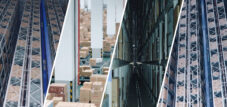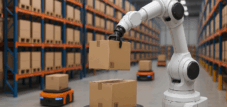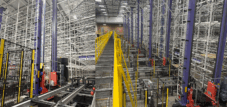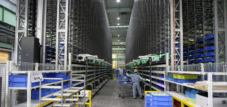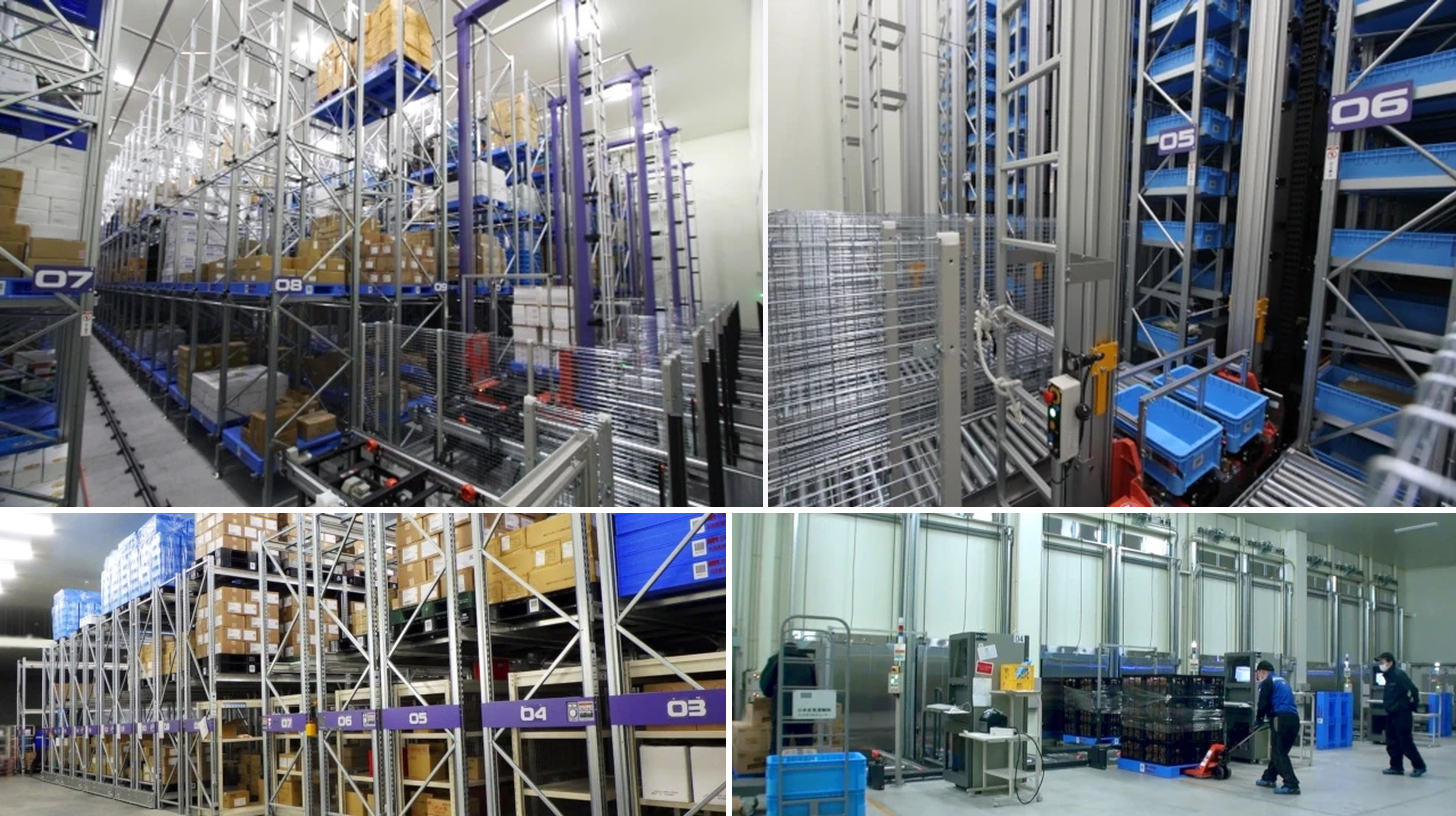
Nikko Sangyo Transport: Full automation in the cold storage facility with Daifuku – A look inside Japan's most modern cold storage warehouse – Images: Daifuku
No more work in the freezer: How automation protects lives and reduces costs at the same time
The future of the cold chain is ice-cold, fully automated, and devoid of people
The Japanese logistics industry faces an unprecedented challenge: a rapidly aging population, a severe labor shortage, and strict new labor laws (the so-called "2024 problem") threaten the country's highly sensitive supply chains. But where the problem is greatest, the solution is also emerging. On the island of Hokkaido, Japan's agricultural heartland, the company Nikko Sangyo Transport is impressively demonstrating what the food logistics of tomorrow looks like. With its state-of-the-art Ishikari No. 2 distribution center, a facility has been created that combines cutting-edge technology with profound social responsibility. Fully automated storage systems at -25°C and innovative sorting techniques using projection mapping not only maximize efficiency but also remove people from a hostile working environment. The following article delves deeply into why automating the cold chain is far more than just a business calculation – and why the Japanese model will serve as a blueprint for the global industry.
When the robot takes over the cold: How a Hokkaido logistics expert shows that humans have no place in the freezer
Japan's food logistics sector is under extreme pressure. Demographic change, regulatory cutbacks, and increasing quality requirements are forcing companies to fundamentally reinvent their operating models. Nikko Sangyo Transport, based in Ishikari City on Hokkaido, provides an exemplary case study of how complete automation of the cold chain is not only technologically feasible but also economically essential. The company's Ishikari No. 2 distribution center, opened in 2020, is among the most advanced automated refrigeration facilities in Asia, combining end-to-end automation with innovative sorting logistics across a 36,364-square-meter site.
Hokkaido: Japan's essential cold chamber
Hokkaido is far more than just a picturesque island province in northern Japan. The region bears the entire burden of Japan's food supply, providing both fresh and chilled products. Around 55.9 percent of Japan's total raw milk production comes from Hokkaido, and over 61 percent of the country's dairy cows live there. The connection between the agricultural production region of Hokkaido and the densely populated metropolitan areas of Kanto and Kansai is therefore a vital logistical artery that must function flawlessly every day – in all weather conditions, at any time of year, 365 days a year.
Nikko Sangyo Transport specializes in precisely this critical transport route. The company operates regular truck routes between Hokkaido and the Kansai and Kanto regions, transporting milk and other products from Hokkaido and returning with food supplies for restaurant chains and wholesalers in Hokkaido. In its distribution sector, the company serves approximately 4,500 locations in Hokkaido. Its warehousing operations include two distribution centers where the company handles inventory control, thawing, and packaging. This integrated three-pillar structure—transport logistics, distribution, and warehousing—makes Nikko Sangyo Transport one of the few providers in Japan that covers the entire value chain of chilled food supply from a single source.
The Japanese cold chain market offers a growing target market for this business model. Various market analyses estimate the Japanese cold chain logistics market at between US$16.65 billion (FY2024) and US$21.7 billion (2025), depending on the methodology used. Mordor Intelligence forecasts a market volume of US$25.5 billion by 2031, with an annual growth rate of 6.11 percent. Other forecasts are considerably more optimistic: IMARC Group expects the expanded Japanese cold chain market to reach a volume of over US$101 billion by 2034, with an annual growth rate of 18.29 percent, when considering all cold chain-relevant segments, including pharmaceutical logistics and healthcare. In every scenario, growth is fundamentally driven by the increasing demand for temperature-controlled products, the expansion of energy-efficient infrastructure, and government incentive initiatives.
Japan's demographic time bomb and the logistics problem of 2024
No company in the Japanese logistics sector operates in a vacuum. There are two structural conditions that are fundamentally reshaping Japan's entire supply chain industry and making automation pressure virtually unavoidable: the demographic erosion of the working-age population and the regulatory cutbacks of the so-called 2024 problem.
Japan has been experiencing a chronic, structural labor shortage for years. The working-age population between 15 and 64 is shrinking by approximately one percent annually, according to estimates from the Japanese Ministry of Health, Labour and Welfare. This equates to a decline of roughly 3 million people in the labor force by 2029 – from around 68 million in 2024 to a projected 65 million. This development is particularly dramatic for the logistics sector, which relies heavily on physical presence. Industry reports indicate that by 2026, approximately 600,000 industrial jobs will be vacant. The pressure on companies to replace manual labor with automation is therefore not a strategic option, but an operational necessity.
The second structural burden is the regulatory 2024 problem. Since April 1, 2024, a legal limit of 960 overtime hours per year or a maximum of 80 hours per month has been in place for truck drivers in Japan. This regulation, introduced as part of Japan's labor reform laws, ends decades of excessive overtime being the norm in the freight sector—a practice that was systemically widespread despite well-known health risks. Nearly 84 percent of truck drivers who suffer a stroke or heart attack collapse while on the job; in 2021, truck drivers accounted for approximately 34.3 percent of all recognized karoshi (deaths from overwork) cases in Japan. While the new regulations fundamentally improve drivers' quality of life, they simultaneously reduce available transport capacity at a time when the driver shortage is already critical. According to industry simulations, up to 400 million tons of transportable freight – around 14 percent of the total national volume – could no longer be transported if the staff shortage persists.
For Nikko Sangyo Transport, which relies on long-distance shuttle services between Hokkaido and mainland Japan, this represents a double threat: shrinking driver pools and regulatory limits on driver capacity. Under these conditions, the consistent automation of warehousing and logistics is not a mere operational gimmick, but the only rational response to a systemic problem.
The Ishikari No. 2 Center: Architecture of a new operational logic
In April 2020, Nikko Sangyo Transport opened the Ishikari No. 2 distribution center on a 36,364-square-meter site, just a five-minute drive from its headquarters. The center is conceptually multi-layered: it offers three temperature zones—deep-freeze, refrigerated, and ambient—and provides storage for approximately 30 companies, including well-known food manufacturers. This multi-tenant approach is extremely economically sound. By simultaneously serving different industries and product categories, the company achieves consistent utilization throughout the year, as seasonal fluctuations in one customer segment are offset by the corresponding increases in other categories.
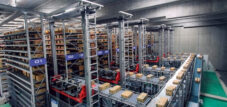
The core of the center is a fully automated storage solution based on Unit-Load and Mini-Load AS/RS (Automated Storage and Retrieval Systems). This technology, first introduced in Japan in 1966 by Daifuku – Japan's leading provider of intralogistics systems – and adapted for cold storage applications in 1973, has since become the backbone of industrial cold chain logistics. The Unit-Load system is designed for pallet-based storage, while the Mini-Load system specializes in the rapid handling of smaller units such as cartons, containers, and trays. Both systems can operate in freezing environments down to -30°C and enable continuous operation without breaks or recovery times.
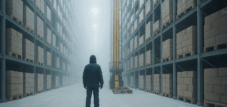
The outstanding conceptual achievement of the Ishikari Center lies in the separation of the thermal work areas. Storage and order picking are completely decoupled both spatially and thermally: The automated storage area maintains a deep-freeze temperature of -25 °C, eliminating the need for human personnel. The AS/RS systems handle storage and retrieval fully automatically. In contrast, the actual goods handling area, where order picking (case and piece picking) takes place, is kept at 0 °C. This difference of 25 Kelvin is not insignificant – it marks the boundary between a hostile industrial environment and a workplace that is permanently tolerable for humans.
The invisible danger: Health risks in cold working environments
To fully understand the importance of temperature separation, it is essential to consider the medical consequences of prolonged exposure to cold. Working at -25°C is not a matter of personal toughness or protective clothing – it is a serious health risk with documented cumulative effects.
Cold stress occurs when the body loses heat faster than it can produce it. In cryogenic environments, the consequences are varied and serious. Studies of workers in refrigeration facilities show that those permanently exposed to cold are significantly more likely to suffer from musculoskeletal disorders—particularly in the neck, hands, wrists, and upper back. In one study of 24 workers in dry freezers at temperatures between -43°C and -62°C, 50 percent exhibited episodic finger symptoms such as Raynaud's phenomenon (circulatory disturbances), and 20 percent suffered from other peripheral circulatory symptoms. Beyond musculoskeletal disorders, wet or frozen floors significantly increase the risk of falls, refrigerant gases pose toxicological hazards, and the combination of physical exhaustion and cold exposure can rapidly lead to life-threatening conditions such as hypothermia or frostbite.
Kimio Asai, CEO of Nikko Sangyo Transport, succinctly summarizes the company's philosophy: The goal of fully automating all refrigerated areas is not primarily a cost calculation, but a decision for the dignity and well-being of employees. The principle is: No one should work permanently where the temperature is hostile to life. In this understanding, automation does not create unemployment, but rather reasonable working conditions.
AS/RS technology as the core of the operating strategy
The technological foundation of the Ishikari Center – the combined unit-load and mini-load AS/RS systems – represents the current state of intralogistics automation. AS/RS systems can increase storage density by up to 85 percent compared to conventional racking systems and achieve inventory accuracy of 99.9 percent and higher at throughput rates exceeding 1,000 transactions per hour. In cold storage environments, they offer another key advantage: Because automated cranes do not require door openings and operate continuously within the closed cold storage room, they significantly minimize thermal losses. Every door opening in a freezer room means energy input, temperature fluctuations, and potential condensation damage to the stored products.
The decision to use a mini-load system also enables particularly granular warehouse management. Daifuku's mini-load system is specifically designed for piece-picking applications with a wide range of frozen foods and small individual quantities – precisely the profile that Nikko Sangyo Transport requires for supplying restaurant chains and retail locations. The systems can be operated in high-bay mode, utilize vertical space more efficiently than conventional racking, and integrate seamlessly into existing material flow systems.
At the Ishikari Center, the AS/RS layout was also optimized for earthquake resistance. The racks were given a reduced height and increased depth. This compromise is essential in the Japanese context: Japan is one of the most earthquake-prone countries in the world, and Hokkaido lies in a seismically active zone. Daifuku has developed a tiered system for its range of earthquake-resistant solutions, ranging from simple fixing stops and vibration-damping racks to fully seismically isolated racking systems based on oil dampers. The decision for lower, deeper racks at the Ishikari Center is a pragmatic combination of increased stability and capacity retention—while reducing the risk of collapse in the event of an earthquake. This is economically indispensable given the high value of the stored products and the security of supply for customers.
Receiving and shipping: The power of fully automated goods movement
The real proof of the operational concept lies in the practical implementation of the receiving and shipping processes. At the Ishikari No. 2 center, goods receipt and dispatch are fully automated, and product quality is continuously monitored. This is not an end in itself, but rather the answer to one of the fundamental challenges of food logistics: ensuring cold chain integrity under the dual pressure of speed and accuracy.
Barcodes are attached to pallets and transport carts and linked to the respective products as soon as they enter the facility or are brought into the warehouse. This seamless digital tracking enables an inventory accuracy that manual systems simply cannot achieve. Human errors during storage, misallocations, or forgotten corrections after returns are inherent weaknesses of manual warehousing; they do not exist in an AS/RS-based system.
The company is going a step further: It has implemented a demand-driven inventory counting system that enables inventory checks during ongoing picking processes and allows for immediate corrections in case of discrepancies. This integration of inventory control into the operational workflow eliminates the traditional need for time-consuming periodic inventories and continuously improves the data quality of the inventory management system. The economic value of this function lies not only in error prevention but also in optimizing ordering policies: The more accurate the inventory picture, the more precise the replenishment planning can be.
Expert partner in warehouse planning and construction

Automated cold storage: Nikko Sangyo's blueprint for efficient cold chains
Cold chain meets cinema: Projection mapping as a sorting revolution
One of the most technologically innovative decisions at the Ishikari Center concerns not the cold storage facility itself, but the upstream sorting area. Nikko Sangyo Transport uses projection mapping technology to sort batch-picked products according to their destination locations. This method, originally known from the event and presentation technology sectors, is being implemented here in a highly industrial sorting process.
Projection picking systems, first commercially introduced worldwide by AIOI Systems in 2016, project wayfinding information, quantity details, barcodes, or sorting instructions directly onto shelves, floors, walls, or work surfaces. They allow for dynamically changing sorting logics without physically rearranging the shelving structures. In the context of Nikko Sangyo Transport, this means the system allows the sorting layout configuration to be adapted immediately to new customer needs, delivery routes, or assortment changes without any physical modifications. This enables the sorting process itself to be organized in a significantly larger and more flexible space.
This approach solves a classic problem in distribution logistics: the rigidity of physical sorting infrastructure. Conventional conveyor systems and herringbone sorters require fixed installation structures and are expensive to adapt. Projection mapping-based systems, on the other hand, are software-controlled and therefore correspondingly flexible. For a company like Nikko Sangyo Transport, which serves a wide variety of customer structures – from food producers and restaurant chains to wholesalers – this flexibility is not a convenience, but a competitive advantage.
Twenty years ahead: Innovation as an institutional tradition
It would be a mistake to view the Ishikari Center's automation measures as an isolated modernization project. They are an expression of a corporate culture that cultivates technological pioneering as a strategic constant. Twenty years ago—around the year 2000—Nikko Sangyo Transport was one of the very first companies in the Japanese logistics industry to implement a system that allowed clients to track the location of trucks and their goods, as well as the temperature in the warehouse, in real time. At a time when the internet was not yet a mass phenomenon and mobile communication had barely taken hold in logistics, this was a radical step toward transparency.
This early focus on visibility and data availability in the supply chain, which anticipated what is now a central paradigm of the entire industry known as supply chain visibility, demonstrates that Nikko Sangyo Transport does not react to market changes, but rather anticipates them. In this light, the current automation project is not an outlier, but a logical continuation. Companies that invested early in transparency and data availability are now in a better position to operate complex automation infrastructures – because they have already completed the organizational learning curve for data-driven management.
The market rewards this principle. By providing warehousing services for around 30 different clients from various food categories, the company has achieved a natural smoothing of demand. Seasonal peaks in individual product categories are compensated for by the broad customer base, resulting in more consistent facility utilization and thus a more efficient return on investment.
Economic calculation: What automation really costs – and what it saves
The business logic behind the complete automation of a refrigeration distribution center is complex and cannot be reduced to a simple ROI calculation. Nevertheless, the basic financial structure is clear: Automation investments typically pay for themselves within two to three years, driven by savings in personnel costs, increased throughput, and reduced error rates. According to industry surveys, automation can reduce labor costs by around 20 percent, while increasing productivity by 30 to 50 percent.
Refrigeration systems offer specific additional returns that are not available in ambient temperature storage. First, personnel costs for refrigerated areas are systematically higher than for normal warehousing – protective clothing, mandatory breaks, sick leave, and staff turnover in unattractive work environments drive up effective unit labor costs. Second, automation allows for a dramatic reduction in door openings in refrigerated areas, which stabilizes insulation and reduces energy consumption. Modern refrigeration systems, where energy typically accounts for 9 to 18 percent of operating revenue, can significantly reduce their energy consumption through automation: a single measure such as variable frequency drives for compressors can achieve energy savings of 10 to 35 percent. Third, the temperature stability provided by AS/RS improves product quality and reduces rejects and customer complaints.
Case studies from comparable environments illustrate the scale of the benefits: A Malaysian frozen food carrier with 8,000 pallet spaces achieved a reduction in staff from 60 to 16, a 39 percent decrease in energy consumption (from 2.8 to 1.7 kWh per pallet per month), an improvement in inventory accuracy from 97.2 to 99.98 percent, and an increase in pallet spaces per square meter from 1.2 to 4.1 after switching to a shuttle ASRS system. This 71 percent space saving represents a considerable added value, especially in Japan, where land prices are high even in peri-urban areas.
The Japanese logistics automation market as a whole reached US$5.76 billion in 2025, according to industry surveys, and is expected to grow to US$19.23 billion by 2034 – an annual growth rate of 14.35 percent. This makes Japan one of the most dynamic automation markets worldwide, and companies like Nikko Sangyo Transport, which invested early, are positioning themselves for significant competitive advantages over competitors who have yet to make the transformation.
Mobile rack systems and multi-level storage solutions
In addition to the AS/RS systems, the Ishikari Center uses mobile racking systems for its refrigerated areas. The bottom shelf level of these mobile racks is equipped with medium-weight shelving technology, enabling efficient piece picking. Mobile racking is particularly valuable in refrigerated areas because it can significantly increase floor space: by pushing all the rack rows together, leaving only a single aisle, the static aisle space of conventional fixed racking is eliminated. In practice, this translates to a floor space utilization that is up to 50 percent higher than conventional solutions – an effect that is especially valuable in refrigerated operations due to the energy-intensive cooling of every unused square meter.
The combination of mobile shelving in the refrigerated area and AS/RS systems in the frozen food area forms a tiered automation architecture that assigns the technologically appropriate and economically optimal solution to each area. This is not a compromise solution, but rather a systematic engineering achievement.
Supply chains beneath the volcano: Japan's seismic vulnerability as a planning parameter
Japan has learned throughout its modern industrial history that technological excellence only creates value when it is protected against the country's systemic risks. The most significant of these is seismicity. Japan experiences earthquakes daily, and Hokkaido lies in a high-risk earthquake zone. For a distribution center that serves as critical infrastructure for the food supply of an entire region, earthquake resistance is not an optional feature, but a requirement.
Japanese building regulations have repeatedly tightened their seismic standards following the earthquakes of 1968, 1995, and 2011. The New Earthquake Resistance Standards, introduced in 1981, require buildings to withstand earthquakes of magnitude 6 (JMA scale) without collapse. In practice, the problems in industrial high-bay warehouses during earthquakes typically arise not from rack collapse, but from falling loads, damage to conveyor systems from fallen goods, and lengthy operational disruptions due to cleanup efforts. The reduced height profile of the AS/RS facility at the Ishikari Center addresses precisely these risks.
Daifuku's product portfolio for earthquake-resistant AS/RS ranges from simple fixing stops for moderate seismicity (25-80 gal) to vibration-damping racks and fully seismic-isolated systems, where the entire racking system rests on a vibration-decoupled floor and is protected by oil dampers and ball-bearing isolators. The Ishikari Center's decision for a lower, deeper rack geometry thus reflects a conscious trade-off between maximum storage density and resilience against local seismic risk profiles.
The 0°C workplace as a socio-political statement
Perhaps the most significant dimension of the Ishikari Center lies beyond the key business figures. Nikko Sangyo Transport's decision to set the working temperature in the order picking area at 0°C is not a technical detail – it is a socio-political decision. In an industry known for its physically demanding and often unhealthy working conditions, the company is sending a clear message: improving the working environment is not a consequence of growth, but a prerequisite for it.
The importance of this positioning cannot be underestimated in the context of the Japanese labor market. Over 90 percent of the Japanese companies surveyed cited the shortage of qualified applicants as their biggest recruitment obstacle. In such a market, a reputation as an attractive employer is a tangible competitive advantage. Companies that invest in humane working conditions find it easier to recruit employees, retain them longer, and reduce costs associated with employee turnover and sick leave. In this sense, the automation of refrigeration areas serves both as protection against demographic risks and as a tool for a conscious employer brand.
Japan's government has recognized the significance of this development. The Ministry of Economy, Trade and Industry has announced plans to build a domestic industry for physical AI and robotics, aiming to capture 30 percent of the global market. Robots and automation systems are explicitly not intended to replace workers, but rather to perform tasks that are unattractive or pose health risks for humans – precisely the situation in the deep-freeze areas of warehouses like the Ishikari Center.
Scalability and transferability: What others can learn from Nikko Sangyo
The Ishikari model is not an exclusive, isolated case for a niche player in northern Japan. It is a generalized solution pattern transferable to any cold storage operator with a similar profile – multiple temperature zones, a broad customer base, and combined case and piece picking requirements. The core conceptual elements are:
First, the consistent separation of the thermally stressed storage zone and the temperature-controlled work zone, achieved through AS/RS automation in the deep-freeze area. Second, the combination of complementary storage technologies (unit load for pallets, mini load for individual items, mobile racks for refrigerated goods), which assigns the appropriate solution to each product type. Third, the use of software-controlled sorting infrastructure based on projection mapping, which flexibly adapts the sorting area to changing requirements without physical reconfiguration. Fourth, seamless inventory tracking through barcode integration and demand-driven inventory counting, ensuring real-time transparency of stock levels.
None of these elements are technologically unattainable – they are all commercially available. The difference lies in the strategic determination to consistently combine them and implement them operationally. The example of Nikko Sangyo Transport shows that end-to-end automation in refrigeration operations is not a futuristic vision, but a lived reality – and that the path to achieving it is clearly mapped out for companies that want to take this step.
The automated cold chain as the standard of the future
The forces that drove Nikko Sangyo Transport to fully automate its cold storage facility are not unique to Japan. Demographic shifts, rising labor costs, stricter employee protection regulations, and increasing quality requirements for temperature-controlled food logistics are global trends. In Europe, the US, and other developed economies, identical forces are playing the same role—albeit with a time lag. Japan is not an exception in this regard, but rather a leading indicator.
The global market for intelligent cold storage automation is growing accordingly. Systems that were considered technological oddities for pioneering companies just ten years ago are evolving into industrial standards. Four-way shuttle systems triple storage density compared to conventional solutions; AI-based warehouse management systems optimize storage decisions and picking paths in real time; predictive maintenance algorithms reduce unplanned downtime, which is particularly costly in cold storage facilities because every failure jeopardizes product quality.
Nikko Sangyo Transport has proven that fully automated cold storage facilities are operationally viable, economically sound, and socially responsible. For a logistics market facing similar global transformation pressures, this is a message with far-reaching implications.
Your intralogistics experts

Consulting, planning and implementation of complete solutions for high-bay warehouses and automated storage systems - Image: Xpert.Digital
More information here:
Your global marketing and business development partner
☑️ Our business language is English or German
☑️ NEW: Correspondence in your native language!

Konrad Wolfenstein
I and my team are happy to be available to you as your personal advisor.
You can contact me by filling out the contact form here wolfenstein@xpert.digital:or simply call me at +49 7348 4088 965. My email address is
I'm looking forward to our joint project.
☑️ SME support in strategy, consulting, planning and implementation
☑️ Creation or realignment of the digital strategy and digitization
☑️ Expansion and optimization of international sales processes
☑️ Global & Digital B2B trading platforms
☑️ Pioneer Business Development / Marketing / PR / Trade Fairs
Our global industry and economic expertise in business development, sales and marketing

Our global industry and economic expertise in business development, sales and marketing - Image: Xpert.Digital
Industry focus areas: B2B, digitalization (from AI to XR), mechanical engineering, logistics, renewable energies and industry
More information here:
A thematic hub offering insights and expertise:
- Knowledge platform covering global and regional economies, innovation and industry-specific trends
- A collection of analyses, insights, and background information from our key areas of focus
- A place for expertise and information on current developments in business and technology
- A hub for companies seeking information on markets, digitalization, and industry innovations