
The secrets behind Japan's refrigerated logistics success: Smart, fresh and sustainable right to the door - how high-tech drives refrigerated logistics
Xpert pre-release

Available in 27 languages 📢
Prefer Xpert.Digital on GoogleⓘPublished on: December 25, 2024 / Update from: December 25, 2024 - Author: Konrad Wolfenstein
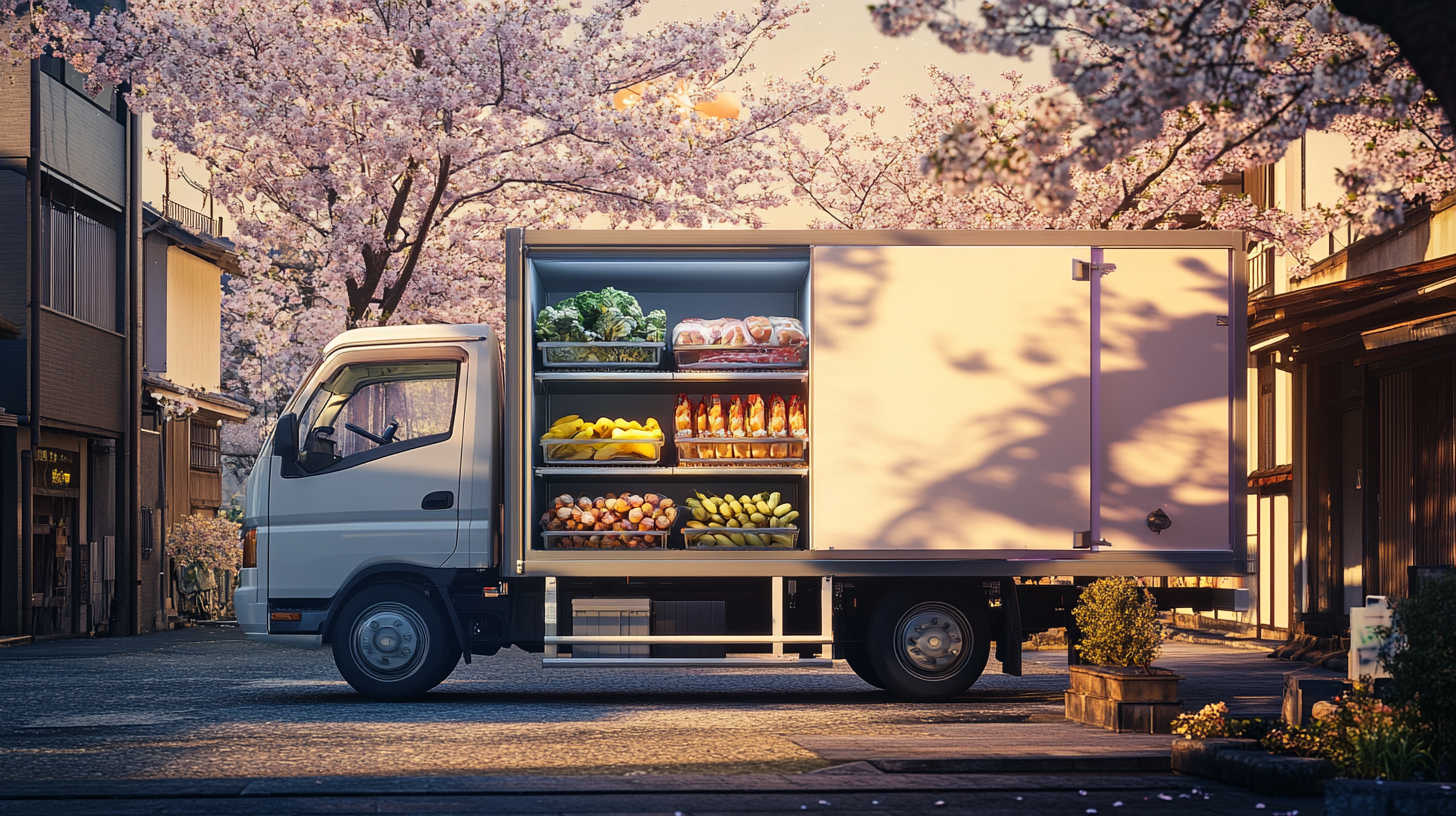
Smart, fresh, sustainable: The secrets behind Japan's refrigerated logistics success - Freshness to the door: How high-tech is driving Japan's refrigerated logistics - Image: Xpert.Digital
Japan: A pioneer in fresh and refrigerated logistics
Japan's pursuit of perfection and quality in refrigerated logistics
Japan has developed a top position in the global market for fresh and cooling logistics and is considered a pioneer in this area for many observers. "Quality in Japan is not a mere expectation, but an indispensable promise," it often says in industry circles. The country is characterized by an exceptionally high appreciation for fresh and high -quality food, which is particularly reflected in the food trade, in the catering trade and in the entire service sector. This striving for quality has led to the entire logistics industry, especially the cooling logistics, continuously develops. Innovative technologies, highly developed infrastructure and a pronounced awareness of efficiency and sustainability are just a few of the building blocks that Japan's leadership role in cooling logistics are underpin. The growing e-commerce market plays a special role in this because it drives the continuous improvement of supply chains and warehousing.
Innovations as the key to success: Technology dominates Japanese logistics
A decisive factor for Japan's success in cooling logistics is the focus of technical innovations. In a country in which automation is already part of everyday work, work is continuously worked on making all transport and warehouse processes as efficiently as possible. This starts with warehousing, in which automated shelf and sorting systems are used, and continues with complex temperature monitoring systems, which measure in real time whether the cooling chain remains intact at each station. The companies also integrate robotic solutions into their loading stations in order to accelerate the process of loading and unloading. Not only more goods can be handled in a shorter time, but damage and temperature fluctuations can also be minimized. "In Japan, you value perfection: every handle in the logistics process counts," emphasize insiders when it comes to the fine -tuning of these state -of -the -art chains.
Efficient infrastructure: The basis for the distribution of temperature-sensitive goods
In addition to the technological aspects, the infrastructure also plays a key role. Japan may not be a large country geographically, but cities like Tokyo and Osaka are extremely densely populated. That's why it's important to have a carefully thought-out structure to organize the distribution of temperature-sensitive products in the best possible way. Modern cold storage facilities that maintain a constant temperature are well distributed across the country, although in some regions there is still a need to expand capacity and distribute it evenly. Nevertheless, the country is already reflecting the logistics of the future in its urban centers. Environmentally friendly refrigeration units, complete temperature controls and associated quality controls make it possible to deliver even sensitive products such as fresh seafood, meat products or pharmaceutical items in perfect condition.
Convincing numbers: The growth of the Japanese refrigerated logistics market
The figures speak for themselves: The Marktlogistik market in Japan was estimated at around $ 19.54 billion in 2023, and the trend is rising. According to forecasts, the market could grow to over $ 31 billion in the coming decade. This growth is favored by a variety of trends, including increased demand for fresh food, convenience products and frozen goods. At the same time, the pharmaceutical industry attaches great importance to chilled transports, for example for vaccines or sensitive medication. Here the timing is crucial: the health industry in Japan relies on high -precision deliveries, in which the temperature must never be outside the defined framework. "Uninterrupted cold chains are the lifeline of modern health care," emphasize representatives of Japanese logistics companies.
E-commerce as a driver of refrigerated logistics
Another growth engine in the industry is e-commerce, which drives the demand for fast and reliable deliveries of temperature-critical products. Mobile internet penetration in Japan is remarkably high, which makes online shopping for many people a comfortable alternative to inpatient retail. In the meantime, it is common for fresh food, frozen ready meals and even medical devices to be ordered via online platforms. This development brings with great challenges because consumers not only expect rasp but also terminating deliveries. "Online shopping in Japan has long been more than just a trend-it is an integral part of everyday life," say experts. As a result, logistics service providers must be able to quickly pick and deliver even small individual orders without making cutting back on the cold chain.
Highly automated warehouses for precise and fast deliveries
In order to meet these expectations, many companies in Japan rely on highly automated warehouses that are in operation around the clock and can master enormous amounts of package per day. Especially in cold chain logistics, it is important to adhere to temperature zones so that different products are stored in exactly the temperature range that you need. Meat and fish products have different requirements than vegetables or dairy products, and in a modern logistics center there are numerous specialized zones in which every type of goods are optimally stored and managed. With the help of robots and AI systems, the products are automatically sorted, recorded and prepared for shipping. "Technology does not replace people here, but supports him in achieving precision and speed at the highest level," is a frequently cited statement from the industry.
Looking into the future: Drones and robotics as groundbreaking innovations
The large parcel services in Japan also make it clear that the next generation of cooling logistics is already approaching. Some have invested in the latest sorting robots in recent years, which work reliably and quickly even under demanding cooling conditions. Others are here to cover the last delivery lines in rural regions with drones, where the street infrastructure is not so well suited. This could bring enormous relief, especially for sensitive medical products. In this way, Japan tries to master the balancing act between a highly industrialized, densely populated metropolitan company and remote regions that also want to be supplied with fresh products and pharmaceutical goods. "The supply chain does not end at the city limits," clarifies a spokesman for a logistics company. "We have to find solutions for every corner of the country."
Challenges: Skilled labor shortage and sustainability
Despite all these positive developments, there are also challenges that Japanese cold chain logistics have to face. One of them is the shortage of skilled workers: In a country with increasing aging society, it becomes more difficult to find sufficiently qualified workers. Automation and robotics can take on many tasks, but specialist staff who are waiting, controls and optimizes the facilities are still needed. Another important point is the question of sustainability. Japanese companies attach great importance to minimizing their ecological footprint in order to meet both the expectations of the population and the global climate goals. For example, this means installing energy -efficient cooling systems, reducing packaging waste and using delivery vehicles with alternative drives. "Sustainability is no longer an option, but an obligation," loud voices from the industry.
Environmentally friendly cooling technologies and logistical optimization
This focus on environmental friendliness is reflected in the choice of cooling technologies. Modern systems increasingly rely on natural refrigerants, which are less harmful to the environment and use less energy. In addition, the cold storage facilities are being increasingly insulated to reduce heat loss. There are sensors in the transport vehicles that continually check whether the temperature and humidity correspond to the specifications and issue warning signals as soon as even a slight deviation is detected. In addition, companies often organize deliveries in such a way that transport routes are minimized and empty trips are avoided. This represents a logistical masterpiece, especially in the Tokyo metropolitan area, because not only customer needs but also the inner-city traffic volume have to be taken into account.
High investments and economic challenges
Another challenge is financing and capital deployment. Building the most modern refrigerated logistics infrastructure requires high investments. Warehouses need to be extensively equipped, IT systems need to be developed and maintained, and ongoing modernization is essential to stay ahead in international competition. Companies that specialize in refrigerated logistics are always faced with the question of how they can maintain their innovative strength while remaining economically profitable. The good news, however, is that increasing demand is allowing appropriate capital to be channeled back into the sector. After all, fresh, high-quality goods are essential to people's everyday lives, and the trend towards convenient online ordering is constantly growing.
Growing importance of certain product groups
If you look at the share of certain product groups, you can see clear growth signals. Frozen foods in particular are becoming increasingly popular. Many consumers have found that frozen products offer high nutritional quality and at the same time have a long shelf life. In Japan, this convenience component is particularly important because many people in urban areas lead work-intensive lifestyles. The popularity of frozen foods increased by about 20% between 2019 and 2021. The healthcare sector is also seeing a growing need for cold chains, be it for vaccines or temperature-sensitive medicines that need to be offered via e-commerce platforms or quickly available in pharmacies.
Omnichannel strategies as a future model
In order to use the growth in e-commerce even better, many Japanese retailers rely on omnichannel strategies. This means that customers can view and buy products in a inpatient shop while at the same time has the opportunity to order all articles online and either have them delivered or to pick them up in a shop near you. This means an increased complexity for cooling logistics: different sales channels require flexible systems that cover both large volume requirements and enable precise individual deliveries. "Today we have to think multi -dimensional: the customer decides where and when he receives his goods and we have to organize it," emphasizes a leading logistician.
Future prospects and technological progress
The future prospects for refrigerated logistics in Japan remain extremely positive despite certain challenges. There are already efforts to increasingly integrate autonomous delivery vehicles and drones into everyday life in order to shorten delivery routes and make up for the shortage of personnel. Some pilot projects have shown that delivery times in urban areas can be significantly reduced when automatically navigating vehicles are used. In addition, artificial intelligence produces improved forecasting models that can better predict market fluctuations and consumption behavior. This is essential for refrigerated logistics, because those who better assess demand developments can optimally plan their capacities and reduce losses due to spoilage.
Japan's pioneering role in global refrigerated logistics
"We see a new age of logistics in which efficiency, technology and sustainability are equally in focus," is the conviction of many industry representatives. In this context, Japan is expected to further expand his position as one of the global leaders. The combination of first -class infrastructure, high consumerness in terms of quality products and constant innovation spirit should ensure that the country set standards in the coming years. Whether it is about the transport of food, pharmaceuticals or other temperature -critical goods: Japan's cooling logistics is continuously developed in order to meet the changing market requirements.
Importance of urbanization and age-appropriate services
In addition to pure number of numbers, the country is in the foreground for the country, how to ensure the usual quality in the future. Especially with regard to the large metropolitan regions, it is a logistical challenge to provide millions of people with fresh products every day. Urbanization will not lose weight in the next few years, but will continue to increase, which leads to further increasing delivery quantities. At the same time, there are more and more older people who are increasingly using services such as home deliveries for food and medication. These trends will fuel the demand for flexible and reliable cooling logistics solutions. "Our goal is to provide everyone with fresh, safe and high -quality products - regardless of where he lives," an industry insider summarizes the claim.
The uniqueness of Japanese refrigerated logistics
Ultimately, it is precisely this requirement that makes Japan's refrigerated logistics so unique. It's not just about the use of modern technologies or an impressive infrastructure, but also about a deeply rooted attitude that puts quality at the center. Be it in the everyday delivery service for fresh food or in the highly specialized transport for the pharmaceutical industry - Japan sets high standards and continuously optimizes the processes. The combination of awareness of tradition, joy of innovation and a strong sense of quality and safety can be seen as the foundation for the sustainable success of Japanese refrigerated logistics. It is expected that this foundation will be further strengthened in the future, which should further demonstrate Japan's pioneering role in global refrigerated logistics.

Xpert partner in warehouse planning and construction

Xpert.Plus warehouse optimization - high-bay warehouses such as pallet warehouses consulting and planning
We are there for you - advice - planning - implementation - project management
☑️ SME support in strategy, consulting, planning and implementation
☑️ Creation or realignment of the digital strategy and digitalization
☑️ Expansion and optimization of international sales processes
☑️ Global & Digital B2B trading platforms
☑️ Pioneer Business Development

Konrad Wolfenstein
I would be happy to serve as your personal advisor.
You can contact me by filling out the contact form below or simply call me on +49 7348 4088 965 (Munich) .
I'm looking forward to our joint project.
Write to me

Xpert.Digital - Konrad Wolfenstein
Xpert.Digital is a hub for industry with a focus on digitalization, mechanical engineering, logistics/intralogistics and photovoltaics.
With our 360° business development solution, we support well-known companies from new business to after sales.
Market intelligence, smarketing, marketing automation, content development, PR, mail campaigns, personalized social media and lead nurturing are part of our digital tools.
You can find out more at: www.xpert.digital - www.xpert.solar - www.xpert.plus
Keep in touch











