
In Great Britain: Food security and automation in food supply through intralogistics
Xpert pre-release

Available in 27 languages 📢
Prefer Xpert.Digital on GoogleⓘPublished on: August 20, 2025 / Updated on: August 20, 2025 – Author: Konrad Wolfenstein
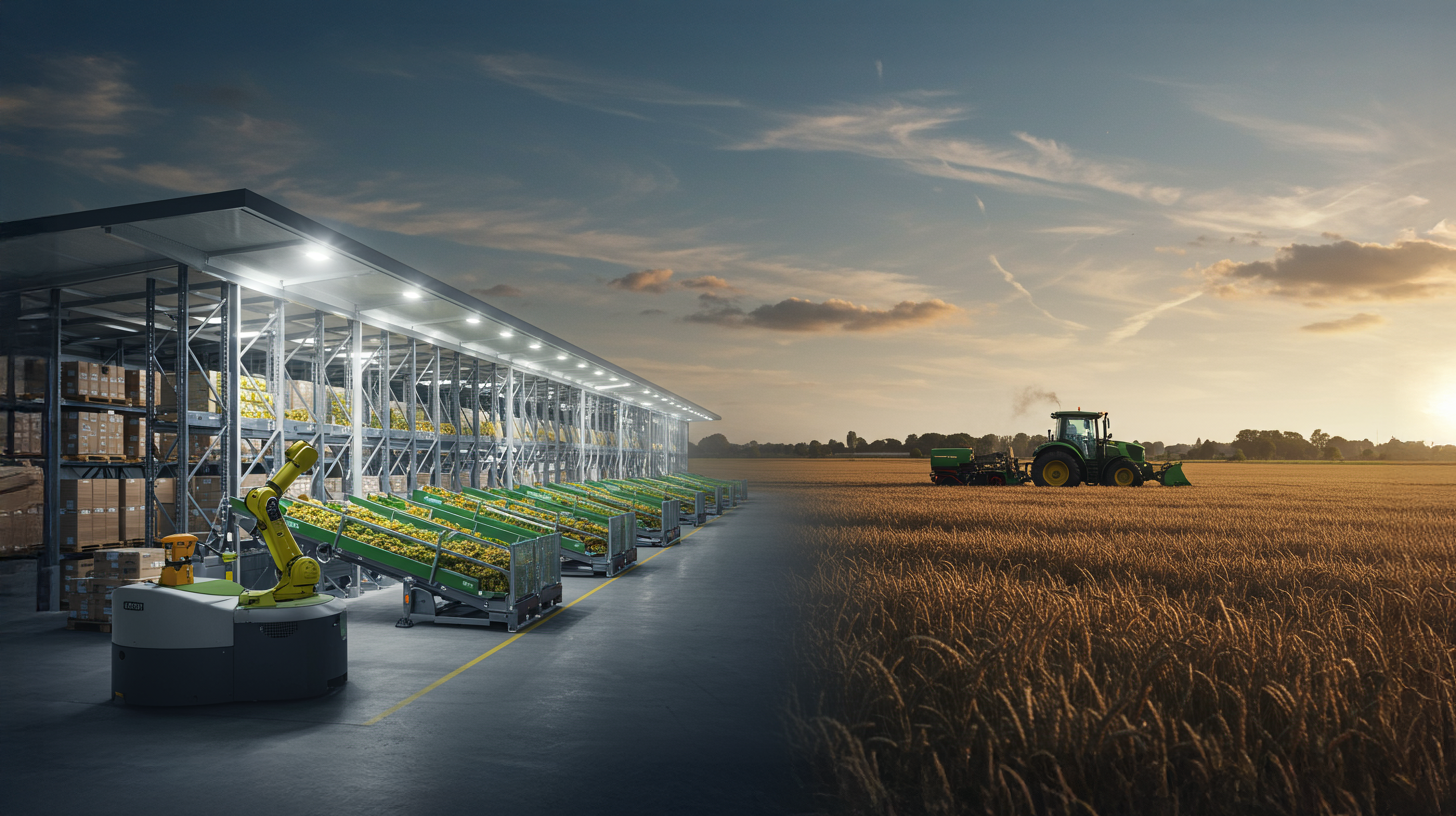
In Great Britain: Food security and automation in food supply through intralogistics – Image: Xpert.Digital
The current state of British food security
How has food security in Great Britain developed since the Second World War?
The development of food security in Britain shows a dramatic change over the last few decades. After the end of the Second World War, the British government recognized food security as a matter of national importance. This led to the passage of the Agriculture Act in 1947, which established a system of guaranteed payments for farmers. These measures were intended to promote the production of essential foodstuffs and ensure the supply for the growing population.
However, the situation has fundamentally changed. At the end of 2024, current statistics show that the UK was only 62 percent self-sufficient in terms of food production. This figure illustrates the country's dependence on imports. To put this into perspective: if the UK had to rely solely on domestically produced food, supplies would be exhausted by mid-August each year.
What factors contributed to this decline in self-sufficiency?
Several developments have contributed to the current situation. Brexit and the associated end of the EU's Common Agricultural Policy have changed the framework for British agriculture. The war in Ukraine has further disrupted global supply chains and created uncertainty. General global instability is also contributing to the deteriorating supply situation.
The November 2024 budget has further exacerbated the situation by placing additional financial pressure on farmers. Many farmers perceive the new tax regulations as a threat to the already fragile rural economy, leading to protests. These developments suggest that the self-sufficiency rate could deteriorate further in the coming years.
Strategic considerations regarding food supply
What strategic approaches should the British food industry pursue to ensure security of supply?
Given the current challenges, the British food industry must adopt a pragmatic approach. A well-thought-out import-based strategy is needed to keep supermarket shelves consistently stocked. This should be combined with the ability to maintain sufficient buffer stocks to offset fluctuations in supply and demand.
Targeted investments in cold chain logistics represent a strategically sound step. While domestically produced goods will continue to play a vital role, the UK must leverage the advantages of a resilient system based on overseas products. This requires a modern and efficient infrastructure capable of handling and storing large volumes of imported goods.
Why has building resilience in the supply chain become so important?
The need to build resilience into the supply chain has become a critical concern for the entire industry. Retailers are increasingly forced to hedge against various risks. These include infrastructure risks such as disruptions to transportation routes or storage facilities, as well as environmental risks such as extreme weather events or natural disasters.
The experiences of recent years have shown how quickly global events can disrupt supply chains. The COVID-19 pandemic, geopolitical tensions, and climate change have exposed the vulnerability of traditional supply systems. As a result, companies are increasingly investing in technologies and systems that can respond more flexibly to disruptions.
The role of automation in cold chain logistics
What are the particular challenges of cold storage compared to conventional storage?
The cold chain industry faces unique challenges that go beyond normal warehousing. It encompasses a wide range of products, including perishable goods such as dairy products, frozen foods, and fresh produce. These products require precise temperature control throughout the entire storage and transport process.
Strict inventory management is another critical aspect. Products must be managed based on expiration dates, best-before dates, and delivery information. This requires a continuous flow of pallet storage, retrieval, and picking based on specific requirements. Fast order fulfillment is also essential to ensure product quality and safety standards.
Cold storage facilities that supply supermarkets and restaurant chains must cope with a high product mix, small batches, and rapidly changing inventory. This complexity makes manual processes inefficient and prone to errors.
How has the situation for manual labor in British cold storage facilities developed?
The reliance on manual labor in cold storage facilities has proven increasingly problematic. In the United Kingdom, labor costs have risen steadily, increasing the operating costs of storage facilities. At the same time, occupational safety requirements have become stricter, placing additional burdens on food manufacturers, importers, and retailers.
Traditionally, cold storage facilities relied heavily on manual labor for tasks such as order picking, packing, and inventory management. However, this approach led to several problems: workflow inefficiencies, increased labor costs due to necessary surcharges for working in cold environments, and a higher risk of errors due to the demanding working conditions. Working in cold environments is physically taxing and can lead to health problems, making it difficult to recruit and retain employees.
Automated Storage and Retrieval Systems (AS/RS)
What are AS/RS systems and how do they work in cold storage?
Automated storage and retrieval systems (AS/RS) represent a cornerstone of modern warehouse automation. These systems utilize a sophisticated combination of storage racks, automated shuttles, and cranes to store and retrieve goods with the highest precision and speed. The focus is on handling high volumes with maximum storage efficiency.
The system operates using a computer-controlled mechanism that determines the optimal storage location for each pallet or container. Automated cranes or shuttles then transport the goods to this location or retrieve them as needed. The entire system is coordinated by warehouse management software that processes real-time data on inventory levels, expiration dates, and order information.
What specific advantages do AS/RS systems offer for the cold chain industry?
AS/RS systems offer several key advantages for the cold chain industry. Temperature control is paramount. These systems are specifically designed to operate seamlessly in refrigerated environments. They ensure that temperature-sensitive goods are maintained at the required temperatures throughout the entire storage and retrieval process, without requiring employees to work in cold environments for extended periods.
Optimized space utilization is another significant advantage. AS/RS systems utilize vertical space more effectively than traditional storage methods. This allows cold chain warehouses to maximize their storage capacity without having to expand their physical footprint. This feature is particularly valuable in urban areas where land prices are high and available space is limited.
The improved inventory management offered by AS/RS systems is also noteworthy. These systems boast advanced inventory tracking and management capabilities. Warehouse managers can monitor stock levels in real time and optimize inventory turnover. This is particularly important for perishable goods, as it helps minimize waste and ensure adherence to the first-in, first-out (FIFO) principle.
Increased throughput represents another significant advantage. Through automated retrieval processes, AS/RS systems considerably reduce the time required for order processing. This not only improves the overall warehouse throughput but also leads to greater customer satisfaction through faster and more reliable deliveries.
Sorting and transfer vehicles (STVs) and their importance
What are STVs and what role do they play in modern cold storage facilities?
Sorting and transfer vehicles, abbreviated STVs, are rail-guided transport systems that are an important complement to AS/RS systems. They play a crucial role in improving the efficiency and flexibility of cold chain warehouse operations. STVs are specifically designed to transport goods between different areas of the warehouse, particularly between storage racks and picking stations, with minimal human intervention.
These vehicles move along fixed tracks through the warehouse and can navigate autonomously. They are equipped with sensors and control systems that allow them to perceive their surroundings and operate safely. Integrating STVs into the warehouse infrastructure enables a continuous and efficient flow of goods.

Xpert partner in warehouse planning and construction
Automation in cold chains: Efficiency and scalability through STVs and AS/RS
How exactly do STVs transform cold storage?
STVs bring several transformative elements to cold storage. Dynamic warehouse access is a key factor. STVs seamlessly transport goods to and from AS/RS systems. They can autonomously navigate narrow aisles and confined spaces to deliver pallets to precisely defined drop-off points. The AS/RS can then retrieve these pallets for storage. This flexibility enables faster retrieval times and smoother workflow orchestration.
Collaborative operation is another important aspect. STVs do not operate in isolation but can be used in conjunction with human operators and other automated equipment such as robotic arms and conveyor systems. This collaboration streamlines the entire order fulfillment process. The collaborative approach optimizes resource utilization and minimizes bottlenecks in the flow of goods.
Of particular note is the improvement in working environments. By delivering goods to operators outside of refrigerated areas, order picking tasks can be carried out in well-lit, safe, and comfortable temperatures. This has a direct positive impact on employee well-being and satisfaction. Healthier and more satisfied employees lead to safer and more productive operations.
The scalability and modularity of STVs offer additional advantages. These systems are inherently scalable, allowing cold chain warehouses to gradually expand their automation capabilities as demand grows. This modular approach to automation ensures that investments remain flexible and can be aligned with evolving business needs.
The practical implementation of automation
How can AS/RS and STVs be practically integrated into existing warehouse structures?
Integrating automation systems into existing warehouse structures requires careful planning and phased implementation. First, a comprehensive analysis of current processes and requirements must be conducted. This includes evaluating the product mix, throughput requirements, available space, and specific temperature requirements.
Physical integration often begins with the installation of the necessary infrastructure. For AS/RS systems, this means constructing high-bay warehouses and installing cranes or shuttles. For STVs, rail systems must be laid to connect the different areas of the warehouse. This work can often be carried out in phases to minimize disruption to ongoing operations.
Software integration is equally important. The automation systems must be connected to the existing Warehouse Management System (WMS) and other IT systems. This enables seamless data flow and coordinated control of all warehouse activities. Implementation also requires extensive testing and adjustments to ensure that all systems work together optimally.
What challenges need to be overcome during implementation?
Implementing automation systems in cold storage facilities presents specific challenges. The extreme temperature conditions place special demands on the technology used. All components must be designed for operation at low temperatures, which requires special materials, lubricants, and electronics.
The investment costs are often substantial and require a careful cost-benefit analysis. Companies must weigh the long-term savings from reduced labor costs, increased efficiency, and lower error rates against the initial investment. Financing such projects often requires strategic planning over several years.
Employee training is another critical factor. The introduction of new technologies fundamentally changes the way we work. Employees must be trained in the operation and maintenance of the new systems. This requires time and resources, but is essential for successful operations.
Integrating existing processes can be complex. Many warehouses have workflows that have evolved over years and need to be adapted to the new automated systems. This often requires redesigning processes and can encounter resistance from long-term employees.
Future prospects and strategic implications
How will automation in cold chain logistics develop in the coming years?
The future of automation in cold chain logistics promises further significant developments. Artificial intelligence and machine learning will play an increasingly important role. These technologies can further increase the efficiency of AS/RS and STVs by recognizing patterns in demand and optimizing warehouse organization accordingly.
Robotics will continue to evolve and find even more diverse applications in cold storage facilities. Advanced gripper systems and sensor technologies will enable robots to handle a wider variety of products, including delicate fresh goods. Human-robot collaboration will be further enhanced through improved safety systems and more intuitive interfaces.
Networking and the Internet of Things (IoT) will revolutionize the monitoring and control of cold chain processes. Sensors can continuously monitor temperature, humidity, and other critical parameters and immediately sound an alarm in case of deviations. This increases product safety and reduces losses due to spoilage.
What strategic implications does increasing automation have for the British food supply?
Increasing automation has far-reaching strategic implications for the UK's food supply. Given the structural challenges facing British agriculture, it seems likely that reliance on imported food will increase over the next decade. This development makes smart investments in efficient, scalable, and reliable automation systems all the more crucial.
Automation makes it possible to handle and store larger quantities of imported goods more efficiently. This is crucial for maintaining stable supply chains and avoiding shortages. At the same time, automation can reduce costs, which can have a positive impact on consumer prices.
Improved traceability and quality control through automated systems enhance food safety. At a time when consumers increasingly value the origin and quality of their food, this offers a significant competitive advantage. The ability to respond quickly to quality issues and identify affected batches is considerably improved through automation.
How can companies successfully manage the transition to automation?
A successful transition to automation requires a strategic and holistic approach. Companies should begin with a clear vision of how automation can solve their specific challenges. This requires an honest assessment of current processes and the identification of areas where automation can deliver the greatest benefits.
Choosing the right partner is crucial. Companies should collaborate with experienced providers who have proven expertise in cold chain automation. Providers like Daifuku, who have been supplying logistics systems for refrigerated environments since 1973, bring valuable experience and proven solutions.
A phased implementation approach is often the most successful. Instead of trying to automate the entire warehouse at once, companies can start with pilot projects and gradually expand automation. This allows them to learn from experience and make adjustments before making larger investments.
Involving employees from the outset is critical for success. Transparent communication about the goals and benefits of automation can alleviate anxieties. Investments in training and professional development demonstrate to employees that they are part of the automated future, not its victims.
The transformation of food supply
What role will automation ultimately play in the UK's food security?
Automation will play a central role in ensuring the UK's food security. While it does not directly solve the fundamental challenges of declining domestic production, it provides the necessary tools to effectively manage this reality. By optimizing warehousing and distribution processes, automation can ensure that imported food is handled efficiently and that the population remains supplied.
The integration of AS/RS and STVs into the cold chain infrastructure represents a paradigm shift. These technologies make it possible to manage the growing complexity of food supply while simultaneously reducing costs and improving quality. The ability to safely and efficiently store and distribute large quantities of perishable goods is becoming increasingly critical for security of supply.
Transformation through automation goes beyond mere efficiency gains. It creates more resilient supply chains that can respond better to disruptions. In a time of global uncertainty and changing trade relations, this resilience is invaluable. Automated systems can react quickly to changing demand patterns and help avoid supply shortages.
For companies in the food industry, investing in automation is no longer optional, but a strategic necessity. The combination of rising labor costs, stricter regulations, and growing customer expectations is making traditional manual processes increasingly unprofitable. At the same time, automation offers the opportunity to develop new business models and gain a competitive edge.
However, the successful implementation of automation solutions requires more than just technical investment. It demands a fundamental shift in mindset across the entire organization and a willingness to question and redesign established processes. Companies that successfully navigate this transformation will be better positioned to meet future challenges and contribute to the UK's food security.

Xpert.Plus warehouse optimization - high-bay warehouses such as pallet warehouses consulting and planning
We are there for you - advice - planning - implementation - project management
☑️ Our business language is English or German
☑️ NEW: Correspondence in your national language!

Konrad Wolfenstein
I would be happy to serve you and my team as a personal advisor.
You can contact me by filling out the contact form or simply call me on +49 7348 4088 965 (Munich) . My email address is: wolfenstein ∂ xpert.digital
I'm looking forward to our joint project.










