Container transport 2027: Fleet size alone is no longer enough – why the logistics revolution will be decided in the warehouse – Image: Xpert.Digital
Ocean Oligopoly: How MSC, Maersk and Co. Dictate Global Logistics
Space constraints in the port: This brilliant technology solves shipping's biggest problem
Mega-ships are overwhelming our ports: Why Europe's terminals are now demanding a halt to expansion
Global container shipping is at a historic turning point in 2026. While industry giants like MSC dominate the market through unprecedented fleet expansions, effectively transforming shipping into an oligopoly, shipping companies face a massive problem: structural overcapacity is causing freight rates to plummet and forcing smaller players to their knees. But fleet size alone is no longer a guarantee of profitability. In a market battered by geopolitical crises and new environmental regulations, network reliability – exemplified by the Gemini Cooperation – is becoming increasingly important.
At the same time, an even greater challenge is looming: the ever-increasing size of mega-ships is pushing traditional ports worldwide to their absolute physical and spatial limits. The era of land-intensive, horizontal port expansion has reached its end. To prevent the global flow of goods from collapsing, port logistics must literally grow into new spheres – through fully automated high-bay container warehouses. This article examines the new hierarchy of competitive advantages and explains in depth why it is not the largest ship, but rather the most efficient throughput capacity on land that determines victory or defeat in global trade.
Container transport 2026: The new hierarchy of competitive advantages – port expansion alone is no longer the solution
Global container shipping will undergo a structural reorganization in 2026 that goes far beyond the usual fluctuations of the freight market. The pivotal date in this transformation is not the opening of a new terminal or the signing of a trade agreement – it is the gradual but inexorable concentration of capacity in the hands of a few. The Mediterranean Shipping Company (MSC) now leads the global ranking of container shipping companies with a fleet of over 7.33 million TEU, holding a market share of 21.5 percent. The gap to second-placed Denmark's Maersk, which operates 4.72 million TEU, is more than 2.6 million TEU – a gap larger than the entire fleet of Hapag-Lloyd just a few years ago.
Compared to January 2025 alone, MSC has increased its capacity by approximately 824,000 TEU, equivalent to adding an entire Yang Ming fleet. This growth momentum is no accident, but rather the result of a consistent investment strategy over many years: MSC purchased large numbers of used vessels at low valuations, ordered newbuilds early in the cycle, and used pandemic profits to fill its order books. With a current order backlog of 2.05 million TEU, there is no end in sight to MSC's growth.
The three largest shipping companies – MSC, Maersk, and CMA CGM – together control almost 48 percent of total global container capacity. This level of market concentration is historically unprecedented. The top 30 carriers hold 93.4 percent of all available capacity, and the top 10 still control 84.1 percent. Container shipping has thus effectively become an oligopoly, in which market access is becoming increasingly difficult for smaller providers and in which price competition is structurally dominated by the supply policies of the major players.
Growth or contraction: Market polarization is intensifying
Not all market participants benefit equally from this trend. The industry exhibits a pronounced bipolarity in 2026: While MSC, CMA CGM, COSCO, and Evergreen continue to expand their capacities, shipping companies with lean fleets and less diversified networks come under considerable pressure. Hapag-Lloyd is a particularly vivid example of this development. The Hamburg-based shipping company posted a net loss of €219 million in the first quarter of 2026, after having earned €446 million a year earlier. Revenue fell by almost 17 percent to €4.2 billion. The company cites declining transport prices, stagnant sales, and external shocks such as the blockage of the Strait of Hormuz and unusual weather events as the reasons.
The situation is even clearer for ZIM Integrated Shipping Services. The Israeli shipping company, whose total revenue fell by 18 percent to $6.9 billion in 2025, is attempting to stabilize itself through a sale to Hapag-Lloyd. The agreed transaction values ZIM at $4.2 billion and, provided the necessary approvals are granted, is expected to be completed before the end of 2026. The combined company would have a fleet of over 400 ships and a capacity of more than three million TEU. However, both the Israeli Ministry of Defense and Prime Minister Netanyahu have indicated that they may not approve the deal, which significantly complicates Hapag-Lloyd's strategic planning.
Behind this wave of consolidation lies an inherent market logic: larger fleets allow for greater flexibility in network design, better control over operating costs per TEU, and a stronger negotiating position with port operators and shippers. Shipping companies below a critical mass cannot structurally escape these economies of scale – unless they merge or specialize in niche markets.
Structural overcapacity: The curse of new orders
The massive increase in capacity has a downside that is noticeable to all market participants. In 2025, an average of 180,000 TEU of new ships were delivered monthly, while only 6,000 TEU were scrapped for the entire year. The global order book currently represents around 34 percent of the existing fleet, the highest figure in over a decade. This surge in capacity is coinciding with moderate demand growth: Global container volumes are projected to increase by only three percent in 2026, while fleet capacity is expected to grow by 3.6 percent – a small but economically significant gap that is putting sustained pressure on freight rates and margins.
Spot prices on key east-west routes have plummeted by more than 50 percent year-on-year in some cases. Maersk's Ocean division posted an operating loss of $153 million in the fourth quarter of 2025, while Japan's ONE reported an operating loss of $84 million in the same period. These losses are forcing a return to fundamental business principles: profitable capacity utilization, rather than maximum capacity utilization, is taking center stage. According to Jefferies, the total cost threshold for efficient operation for the most efficient carriers, such as Maersk and Hapag-Lloyd, is around $1,100 per TEU – a level only slightly below current spot prices.
The structural overcapacity is not a temporary phenomenon, but rather the result of years of order-buying activity, financed by record profits during the pandemic. Since delivery times for new builds extend over several years, this capacity glut will persist until at least 2028 or 2029. This poses existential challenges, particularly for smaller carriers: those who have not built up sufficiently large liquidity buffers and do not operate a diversified business model risk being eliminated from the market during the next consolidation.
Network reliability as a strategic differentiation factor
In a market characterized by structural overcapacity and freight price pressure, competition is shifting from sheer size to service quality. The Gemini Cooperation, the alliance model launched in February 2025 between Maersk and Hapag-Lloyd, is the most prominent example of this strategic shift. The network, comprising 29 joint main lines and 29 shuttle services, and encompassing approximately 340 vessels with a capacity of 3.7 million TEU, has focused on punctuality as its primary competitive advantage from the outset.
The result after one year of operation is remarkable: Gemini achieved a schedule reliability of over 90 percent on its main services, while Maersk alone reached 76.7 percent and Hapag-Lloyd 75.2 percent. For comparison, the global industry average for schedule reliability was 62.4 percent in April 2026 – Gemini thus surpasses this figure by almost 30 percentage points. For shippers with critical supply chains – such as in the automotive, consumer goods, or pharmaceutical industries – this reliability premium is worth its weight in gold: Fewer surprises mean lower safety stocks, reduced storage costs, and more stable production schedules.
Nevertheless, the Gemini model is not a panacea. It follows a hub-and-spoke approach, relying on a few central transshipment ports and utilizing feeder services for secondary ports. While this increases mainline reliability, it can mean longer overall transit times for shippers who depend on direct calls at smaller ports. The strategic question, therefore, is: Is maximum punctuality more important than maximum direct connection? In many industries, the answer is a resounding yes – and that makes network design the key strategic variable.
The end of horizontal thinking: Port areas are reaching their limits
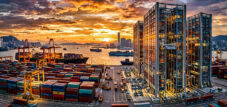
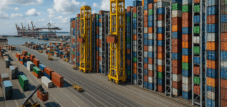
While the debate in the shipping industry often revolves around fleet size, alliances, and freight rates, a challenge is brewing in the background whose structural dimension is underestimated: the acute shortage of space in global port logistics. The conventional container port is based on a simple principle – containers are stacked in rows on asphalt or concrete surfaces, a maximum of five to six units high. This horizontal stacking system has worked since the invention of the standard container in the 1950s. Today, it is systematically reaching its physical and economic limits.
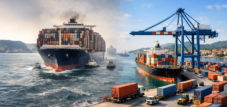
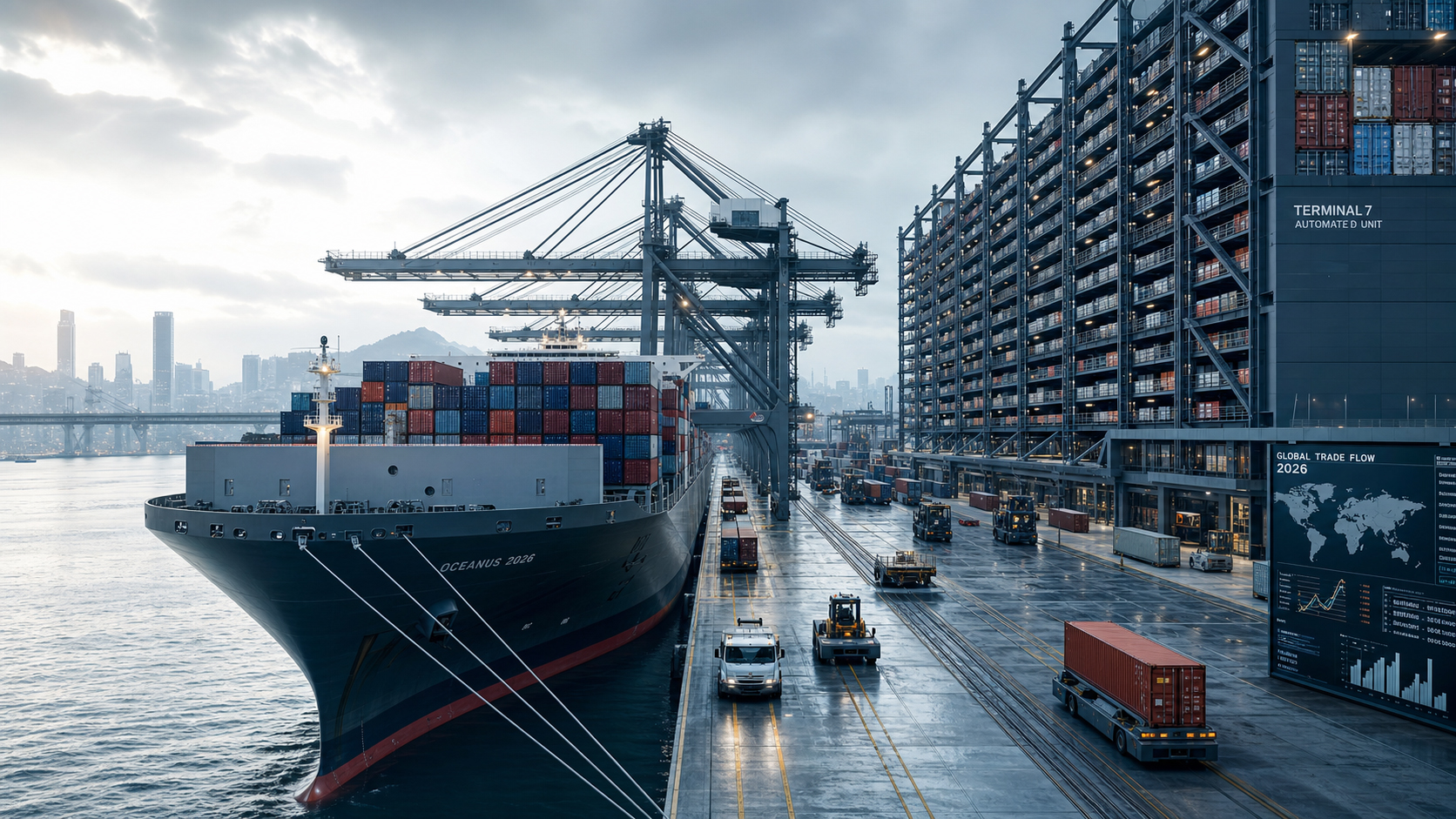
The reason is simple: Ships are getting bigger and bigger, but port areas aren't growing proportionally. Currently, ships with a capacity of more than 20,000 TEU are standard on the Far East-Europe route. The largest vessels currently sailing are around 400 meters long, over 60 meters wide, and have a draft of up to 16.5 meters. European port authorities are already calling for the EU to freeze ship sizes at this standard – and are explicitly warning against the next generation of ships with a capacity of up to 30,000 TEU, a length of 460 meters, and a width of 68 meters, which would simply overwhelm the existing infrastructure.
Even today, a single arriving mega-ship has the effect of unloading a large number of containers in a short time, simultaneously pushing quay capacity, storage space, and transport by truck or rail to their limits. When three or four such ships arrive within a short period—which has become the norm on busy routes—a bottleneck develops that stretches from the quayside, through the terminal area, and into the hinterland. The port becomes a chokepoint in the global flow of goods, not despite, but precisely because of its central importance.
The container high-bay warehouse: When logistics grows vertically
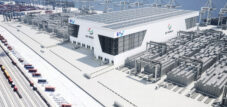
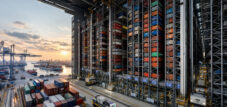
The structural answer to the lack of space is vertical integration. The idea of storing containers not side-by-side on one level, but stacked on top of each other in an automated high-bay warehouse, is not new – but its industrial implementation has been gaining momentum rapidly since 2020. The decisive boost to this development came from the joint venture Boxbay, a joint project of the German plant engineering company SMS Group and the port operator DP World.
The first Boxbay high-bay warehouse went into operation at the Jebel Ali port in Dubai at the end of 2020. The eleven-level pilot facility handled over 63,000 container movements during its test phase, thus proving the technology's practicality. According to Boxbay, more than three times as many containers can be stored on the same footprint as a conventional warehouse, reducing the terminal's space requirements by up to 70 percent.
The next stage of development is marked by the project at the Port of London Gateway, for which DP World signed a €91.7 million contract with Boxbay in October 2025. The facility is part of a broader €1.15 billion investment that aims to make London Gateway the UK's largest container port. The new high-bay warehouse stacks containers on up to 16 levels – other conventional systems reach a maximum of six – and, at a height of 55 meters, offers a capacity of 27,000 TEU. On the waterside, the system can handle over 200 container movements per hour – three times more than the benchmark for automated stacking crane systems.
The key technological advantage lies not only in the sheer capacity density, but also in the elimination of so-called shuffling. In a conventional port, up to 65 percent of all container movements are simply re-sorting – containers are moved because the required one is buried under others. In a high-bay warehouse, however, every single container is directly accessible without having to move other units. This saves time, energy, wear and tear, and personnel. The London facility is fully electrically powered, utilizes energy recovery from the storage and retrieval machines, and thus creates the conditions for virtually climate-neutral operation.
LTW Intralogistics Solutions

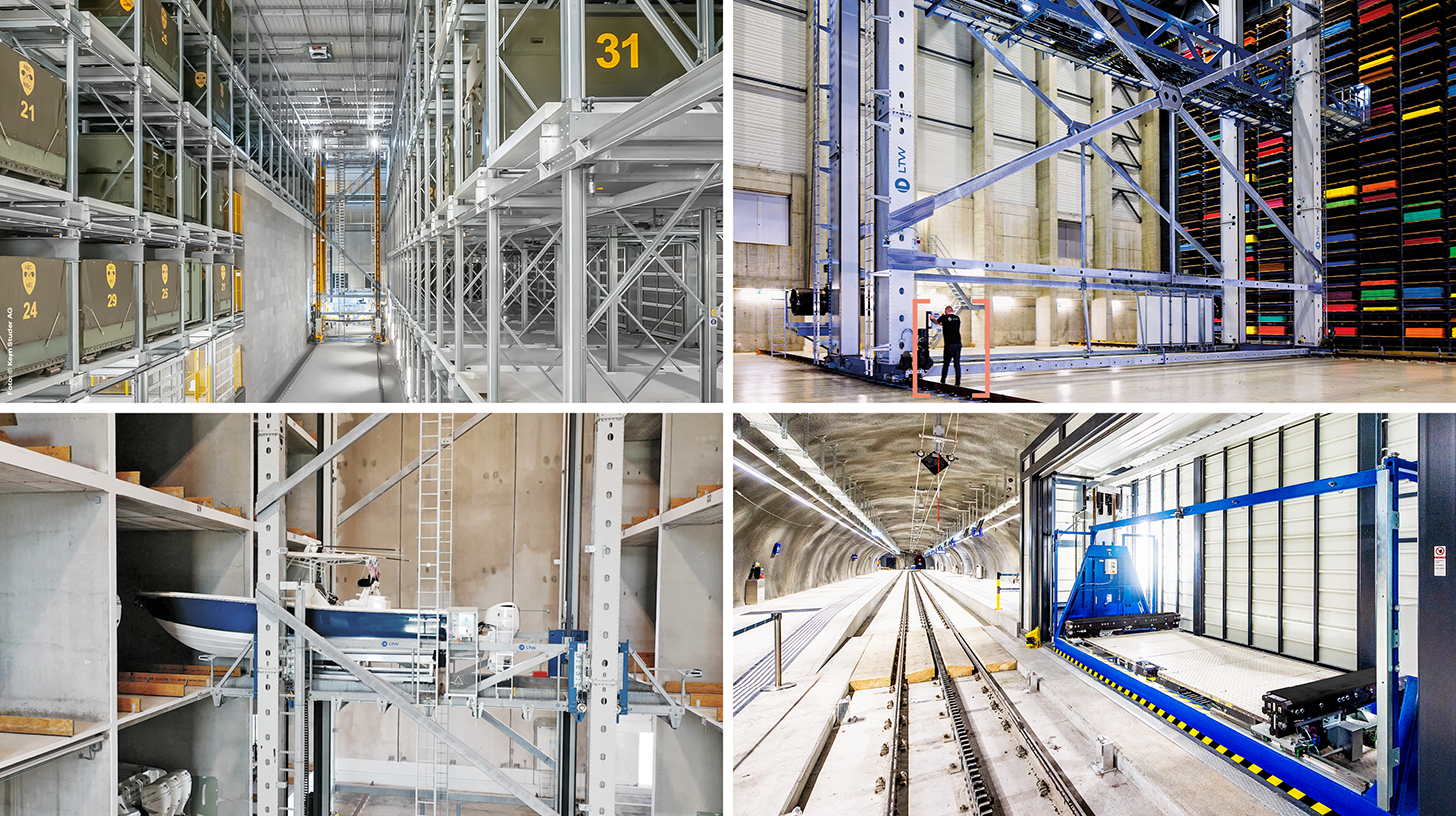
LTW Intralogistics – Engineers of Flow - Image: LTW Intralogistics GmbH
LTW offers its customers not individual components, but integrated complete solutions. Consulting, planning, mechanical and electrotechnical components, control and automation technology, as well as software and service – everything is networked and precisely coordinated.
In-house production of key components is particularly advantageous. This allows for optimal control of quality, supply chains, and interfaces.
LTW stands for reliability, transparency, and collaborative partnership. Loyalty and honesty are firmly anchored in the company's philosophy – a handshake still means something here.
Related to this:
Vertical ports: How container high-bay racking relieves congestion in cities
More than just a port solution: Vertical warehouses as logistics hubs near cities
The social and economic implications of high-bay container storage are not limited to seaports. While the need is greatest there and the willingness to invest is highest, it is logical that the first industrial pilot projects were established in major ports. However, the fundamental logic of the problem – too many containers in too little space with growing transport volumes and stagnant infrastructure – is a universal phenomenon.
This is especially true for logistics hubs in and around cities. With the growth of e-commerce and the densification of urban areas, the availability of logistics space in and around cities is steadily decreasing, while the demand for fast delivery is increasing. Containers now function as mobile storage units, shuttling between production facilities, ports, intermodal transshipment points, and distribution centers. Any delay at one of these points propagates throughout the entire system. By establishing vertical container storage facilities at strategic hubs in the hinterland of ports—so-called Inland Container Depots (ICDs) or Dry Ports—some of the congestion can be alleviated from the seaport.
Vietnam, which is massively expanding its logistics infrastructure in Bac Ninh province with investments exceeding $175 million, demonstrates how emerging economies can consistently implement this logic. In this industrial province north of Hanoi, integrated container terminals (ICDs) with a total capacity of ten to twelve million tons of freight per year are being built – as integrated logistics centers with their own container yard, solar power plants, and infrastructure for electric trucks. The port, as the sole location for container storage, will thus be complemented in the long term by a network of vertical storage hubs in the hinterland, increasing the overall throughput of the system without requiring any physical expansion of the port itself.
The capitalism of cranes: Who invests, who hesitates
Vertical container storage facilities are expensive. The Boxbay facility at London Gateway was budgeted at nearly €100 million, with a total investment framework of £170 million for all the new technologies at the port. The London project requires over 5,000 precast concrete piles, each 28 meters long, to support a 1.2-meter-thick reinforced concrete base slab; the steel requirement is over 15,000 tons. These are construction projects that, even for experienced engineering firms, are at the extreme end of the complexity scale.
At the same time, economic analyses show that these investments pay for themselves in the long term through lower operating costs, higher capital productivity, and reduced emissions. Fully automated storage and retrieval systems require significantly less personnel than conventional terminal operations. Energy recovery reduces electricity demand. And a terminal that achieves 300 percent higher throughput per hectare has a fundamentally different land-use economy than its conventional counterpart. The real question is not whether this technology works—the field test in Jebel Ali, with almost 500,000 TEUs handled, has impressively demonstrated that. The question is how quickly port operators, financial investors, and public authorities are prepared to make the necessary capital decisions.
Port expansion alone is no longer a solution
The traditional approach in port management was: if cargo volume increases, expansion takes place. New quays, wider fairways, deeper waters, new container cranes. The deepening of the Elbe River in Hamburg, which ultimately cost around 780 million euros, is a prime example of this linear approach. It works as long as ship sizes remain in a reasonably manageable proportion to the expansion requirements.
The next generation of ships, currently on order at major shipyards, throws these calculations into disarray. Ships with a potential cargo capacity of 30,000 TEU would require shipping channels that are physically impossible to create in many European ports. Faced with this dilemma, European port associations have petitioned the EU to deny access to European ports to ships larger than the currently operating size class. A freeze on the size race, limiting it to the current standard – a maximum of 23,000 TEU, 400 meters in length, and a draft of 16.5 meters – is being discussed in Brussels as a realistic possibility.
This scenario makes one thing clear: the answer to the shipping industry's race for size cannot simply be infrastructure expansion that grows with the ships. Each generation of larger vessels generates a disproportionately large investment requirement that must be financed primarily with public funds – while the profits from this capacity expansion are reaped by the private sector. The societal debate about internalizing these external costs has only just begun, but it is unavoidable from an economic policy perspective.
Throughput capacity as the real strategic resource of the decade
The four frequently discussed competitive factors in container transport – fleet size, network reliability, capital efficiency, and infrastructure development – are all relevant. But none of these dimensions is sufficient on its own. A carrier with the world's largest fleet that cannot handle its containers at an overloaded terminal loses its capacity advantage in seconds. A network with 90 percent on-time performance is worthless if the hinterland cannot absorb the volume.
What is systematically underestimated in this debate is throughput capacity – that is, the ability of the entire system not only to transport containers but also to efficiently process, temporarily store, and forward them. The horizontal storage capacity of the world's ports is effectively at its limit. Land is the scarcest resource in ports worldwide: In Singapore, Rotterdam, Shanghai, or Los Angeles, port land costs many times more than normal industrial land, and even if money were no obstacle, expansions are spatially limited by waterfront locations, residential development, and environmental regulations.
Vertical storage – container high-bay warehouses in ports, at intermodal hubs, and as buffer capacity near cities – is no longer a future technology under these conditions, but an urgent operational necessity. It is the key to resolving existing bottlenecks without the need to develop coastlines, fill in waterways, or wait for decades of planning processes. A 70 percent reduction in land use while simultaneously tripling capacity, an elimination of 65 percent of unnecessary container movements, and a threefold increase in waterside handling capacity – these are transformative, not incremental.
Geopolitics and climate policy as catalysts for systemic change
Container transport in 2026 is not only under economic pressure. The ongoing Red Sea crisis, which has forced ships to take the long route around the Cape of Good Hope since the end of 2023, ties up six to eight percent of global fleet capacity simply due to longer transit times – which on the one hand alleviates overcapacity pressure, but on the other hand lengthens supply chains and increases planning uncertainty. In addition, there are geopolitical factors such as the blockade of the Strait of Hormuz, which has further destabilized the flow of trade between Asia and Europe.
Added to this is the growing regulatory pressure from the European Emissions Trading System (ETS). From 2026, carriers will have to surrender certificates for 70 percent of their emissions, and from 2027 for 100 percent, with methane and nitrous oxide also being included. Hapag-Lloyd has already warned that its EU ETS surcharges will almost double due to the new requirements. Those who invested early in alternative propulsion systems are now benefiting from structural cost advantages. MSC already operates almost 90 LNG-powered vessels, making it the world's largest operator of this technology, followed by CMA CGM with 76 LNG units. These early investments in alternative propulsion systems will prove to be a strategic advantage in an increasingly regulatory environment.
The new logic of competition
The question of what will be more important in container transport in 2026 – fleet size, network reliability, capital efficiency, or infrastructure expansion – has no simple answer, but a clear hierarchy. Fleet size creates structural market power and economies of scale, but is no guarantee of profitability on its own. Network reliability is the new differentiating factor, shifting market share from cost to quality. Capital efficiency will determine which carriers survive the inevitable consolidation phase. And infrastructure expansion is necessary, but not sufficient – because the need for expansion is growing faster than the societal and political willingness to finance it.
However, a fifth, and previously underrepresented, dimension is emerging: throughput capacity. The ability to efficiently handle, buffer, sort, and forward containers—not just from port to port, but throughout the entire system to the recipient—is becoming the decisive logistical competency of the decade. High-bay container warehouses mark the transition from horizontally organized, space-intensive logistics to a vertically conceived, space-efficient, and fully automated infrastructure capable of meeting the growth imperatives of the shipping industry. Anyone investing in these capacities today—whether as a port operator, logistics service provider, or investor in port-adjacent locations—is positioning themselves for a world where space is the scarcest commodity. This is not a technological gamble; it is an economic certainty.
Consulting - Planning - Implementation

Konrad Wolfenstein
I would be happy to serve as your personal advisor.
You can contact me at wolfenstein∂xpert.digital or
Just call me on +49 7348 4088 965 .
Your intralogistics experts

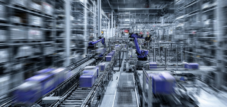
Consulting, planning and implementation of complete solutions for high-bay warehouses and automated storage systems - Image: Xpert.Digital
More information here: