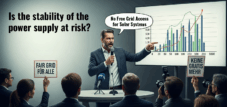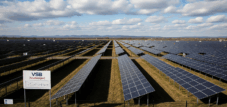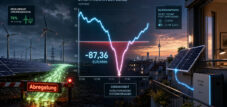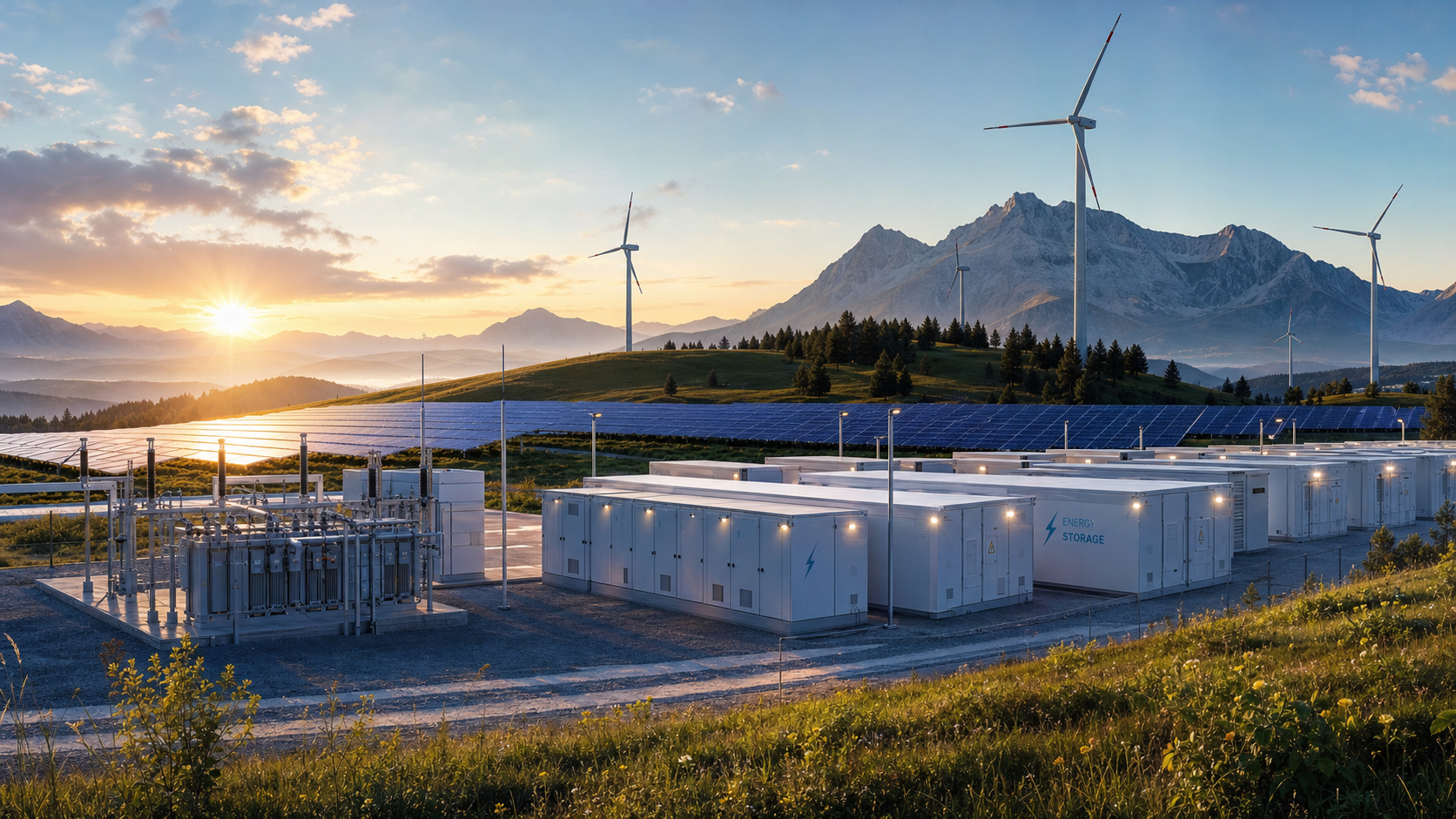
EVN and the myth of the "luxury problem"? The real core issue: Too much electricity or too little grid capacity? – Image: Xpert.Digital
EVN: Billions for the energy infrastructure of the future – Why we don't actually have too much green electricity
Better than RWE and E.ON? How this regional energy supplier is saving the energy transition
5.5 billion euros for the future: This plan solves the real problem of our electricity grids
A persistent myth pervades the current energy debate: we supposedly have too much green electricity, which is overloading our grids. But while lobbyists for established corporations use this so-called "luxury problem" as a pretext to keep lucrative fossil fuel power plants online, reality paints a far more sobering picture. Europe doesn't have a generation problem, but a massive infrastructure problem – it simply lacks storage facilities and modern power grids. This is precisely where the Austrian energy company EVN AG comes in. With a historically unprecedented investment program of €5.5 billion by 2030, the regional energy supplier is building the grid of the future. In doing so, the company is also demonstrating how to outperform industry giants E.ON and RWE in terms of profitability and sustainability. The following article analyzes why grid expansion is the true key to the energy transition and why EVN's integrated business model could serve as a blueprint far beyond Austria's borders.
Related to this:

While lobbyists argue about overcapacity, one person is simply building the network – and showing what it's really all about
A strange paradox has emerged in the public energy debate. Politicians, associations, and established energy companies regularly warn of a "luxury problem": too much green electricity that cannot be transported, that destabilizes the grids, and for which there is supposedly no storage capacity. The subtext of this argument is always the same: too rapid an expansion of renewable energies is a problem. This perspective serves tangible economic interests. Those who operate fossil fuel or conventional power plants profit when wind turbines are curtailed and gas-fired power plants continue to run. But the real truth is far more sobering: the problem is not too much green electricity, but too little grid infrastructure.
The European electricity grid gap has now been quantified. The European Commission estimates that additional grid investments of around €584 billion will be necessary by 2030. Other studies – such as one by the Boston Consulting Group commissioned by the European Round Table for Industry – arrive at an even larger investment gap of €800 billion by 2030, which could expand to €2.5 trillion by 2050. Sixty percent of this is needed for distribution networks – precisely the infrastructure sector that EVN AG is consistently expanding. Europe therefore has not a generation problem, but an infrastructure problem.
The structural failure becomes particularly clear when looking at individual countries. In Germany, the backlog in power lines already amounts to 6,000 kilometers, while at the same time wind turbines in the north are being curtailed because the electricity cannot be transported to the south. Eleven EU member states are not adequately considering renewable energy targets in their grid plans. The European Parliament explicitly noted this in June 2025, describing power grids as the "backbone of the EU's energy system." Against this backdrop, EVN's investment program takes on significance far beyond the company itself: It is practical proof that the right approach is not to slow down, but to accelerate grid expansion.
Yesterday's profits versus tomorrow's infrastructure
Anyone who takes the warning about "too much electricity" seriously must ask themselves why wind turbines are being throttled back while conventional power plants are operating on the same grid. The answer lies not in physics or grid stability alone, but in market rules and political influence. Established energy companies have invested in conventional capacities for decades, capacities that would have to be written off in the event of a complete switch to renewable energies. The Greenpeace analysis from 2014 remains valid in its diagnosis today: At that time, the eight most powerful European energy companies controlled around half of the European electricity market and over a third of the gas market – with renewable energies accounting for only 13 percent of their own portfolios.
The so-called "luxury problem" of overproduction is in reality a control problem that would largely disappear with sufficiently developed grids and storage facilities. Shutting down wind turbines while allowing conventional power plants to continue running is not in the interest of security of supply, but rather in the interest of fossil fuel plant operators. The German federal government had to admit, in response to parliamentary inquiries, that no comprehensive analysis of surplus electricity from wind and solar PV plants existed, and no reliable forecasts existed regarding their future availability. This is no coincidence, but rather the result of a planning philosophy that still treats renewable energies as "stepchildren," as the EU Environmental Bureau aptly put it.
EVN, as a medium-sized Austrian regional energy supplier, does not bear this burden. It is not entangled in outdated fossil fuel infrastructure. It does not have to cater to powerful lobbying networks that seek to protect coal or gas investments. This gives it a strategic agility that larger corporations lack. It consistently leverages this freedom: its investment program directly targets those areas that have been most neglected in the European energy system – distribution networks, storage, and the integration of volatile generation.
Strategy 2030: A Decade of Transformation
EVN AG, headquartered in Maria Enzersdorf, Lower Austria, has embarked on an ambitious transformation program with its Strategy 2030. The company supplies approximately 3.7 million people in Austria, Bulgaria, and North Macedonia with electricity, heat, and drinking water. Its guiding principle is "More Sustainable. More Digital. More Productive." – three adjectives that are more than just marketing jargon; they describe the three pillars of a fundamental corporate transformation.
The financial core of this strategy is simple: one billion euros will be invested annually until 2030, totaling approximately 5.5 billion euros. This represents another increase in investments compared to the previous year. In the 2024/25 financial year, which ended on September 30, investments exceeded the 900 million euro mark for the first time, reaching 909.8 million euros and significantly surpassing the previous year's figure of 753 million euros. The comparison to earlier investment rounds is striking: a record figure of 700 million euros was reported for the 2022/23 financial year. In just a few years, the investment level has almost doubled.
Geographically, the home market of Lower Austria remains the center of gravity: around 80 percent of total investments flow there. Lower Austria is the nationwide leader in renewable electricity generation. Approximately 50 percent of all wind turbines in Austria and 25 percent of all photovoltaic systems in the country are located within EVN's grid area. This makes the infrastructure task particularly challenging – and especially urgent. The remaining 20 percent of investments flow primarily to Bulgaria and North Macedonia, where the company has been operating since 2005 and 2006, respectively.
Network expansion as a strategic foundation
Around three billion euros are to be invested in the electricity distribution network infrastructure in Lower Austria alone between 2024 and 2030. This amount exceeds the total market value of many other energy companies. However, it is also necessary: The continuously increasing share of renewable energies – with its typical peak generation during storms or sunshine and lulls at night or under cloudy skies – places different demands on a distribution network than the constant feed-in from a coal-fired power plant.
EVN is investing on several levels simultaneously. New substations and transformer stations are increasing transmission capacity at critical nodes. Low- and medium-voltage lines are being expanded to accommodate the increasing and volatile feed-in from wind and solar PV plants. At the same time, the digitalization of the grid infrastructure is being driven forward. Intelligent control systems optimize load management and thus the feed-in of renewable energy, especially during peak production. This is not an optional luxury, but a technical necessity: A grid that has to accommodate the generation of 50 percent of all Austrian wind turbines needs real-time digital control.
EVN's CFO, Alexandra Wittmann, succinctly summarizes the strategic core: Beyond more efficient grids and energy storage, the investment program creates greater independence through regional energy production, thereby reducing dependence on international markets. This statement deserves attention. In the aftermath of the 2022/23 energy price crisis, triggered by the Russian invasion of Ukraine, which suddenly transformed Europe's reliance on gas imports into a political problem, regional energy sovereignty is no longer an ideological aspiration but an economic imperative.
Battery storage: The key to market integration of volatile energy
A particularly innovative aspect of EVN's program is the strategic use of battery storage – not only for grid stabilization, but also as an active market instrument. By 2030, EVN plans a total battery storage capacity of 300 MW, of which around 200 MW will be in Lower Austria. This is a capacity that significantly exceeds what would be required for a purely grid-buffering approach.
Two sites are at the heart of this storage strategy: the former Dürnrohr coal-fired power plant and the Theiß energy hub in the Krems district. Dürnrohr, once a symbol of conventional power generation and the last EVN coal-fired power plant to be decommissioned in 2019, is being gradually transformed into a modern energy center. In May 2026, EVN began construction of a large-scale battery storage facility with a capacity of 16 MW and 64 MWh – enough to supply around 6,700 households for a day. At the Theiß site, the first phase of a hybrid storage system, combining battery and thermal storage, was opened in May 2025. A battery storage system with a capacity of up to 70 MW and at least 140 MWh is planned there.
What distinguishes these storage facilities from purely grid-oriented projects is their dual approach. On the one hand, they provide balancing power, thus stabilizing the grid – large batteries can react in fractions of a second, significantly faster than conventional power plants. On the other hand, they enable active energy trading: surplus electricity from wind and solar PV plants is stored during periods of low prices and sold as soon as demand rises again and better prices can be achieved. This model transforms the supposed "luxury problem" of overproduction into a profit opportunity. While Europe installed 27.1 gigawatt-hours of new battery storage capacity in 2025 – a 45 percent increase compared to the previous year and a tenfold increase since 2021 – 750 gigawatt-hours would be necessary to meet the EU's energy transition targets by 2030. EVN is positioning itself here as a pioneer, not a laggard.
District heating and geothermal energy: The underestimated energy transition
While electricity and batteries dominate public attention, an equally significant transformation is taking place in the heating sector. EVN is Austria's largest supplier of renewable energy and intends to further expand this position. Around €450 million is earmarked for expanding the district heating business by 2030. These funds will be invested in new large-scale heat pumps, biomass-fired power plants, and the densification of existing district heating networks.
The geothermal energy program has a particularly strategic focus. Together with the University of Vienna, EVN is researching suitable locations for deep geothermal plants as part of the "GeoWärme Niederösterreich" program. Over an area of approximately 220 square kilometers in the southern Vienna Basin, 240 seismic sensors have been distributed underground. These sensors measure natural ground noise and provide information about water-bearing rock strata several kilometers below ground. Additional research boreholes at the Sooßer Lindkogel in Bad Vöslau are providing data on the rock's permeability under realistic pressure conditions. The investment volume for this research program amounts to around €100 million, with the goal of connecting two deep geothermal plants to the district heating network by 2035.
Geothermal energy has decisive advantages over other renewable energy sources: it is not weather-dependent, provides baseload heat, and does not require large-scale wind farms or photovoltaic arrays. This could be a real game-changer, especially for the heat supply of urban regions – the southern Vienna Basin includes the catchment areas of Vienna, Mödling, and Schwechat. EVN is thus testing an energy pathway that is hardly mentioned in the public debate but could be crucial for achieving climate targets in the heating sector.
Innovative photovoltaic solution for cost reduction (up to 30%) and time savings (up to 40%)

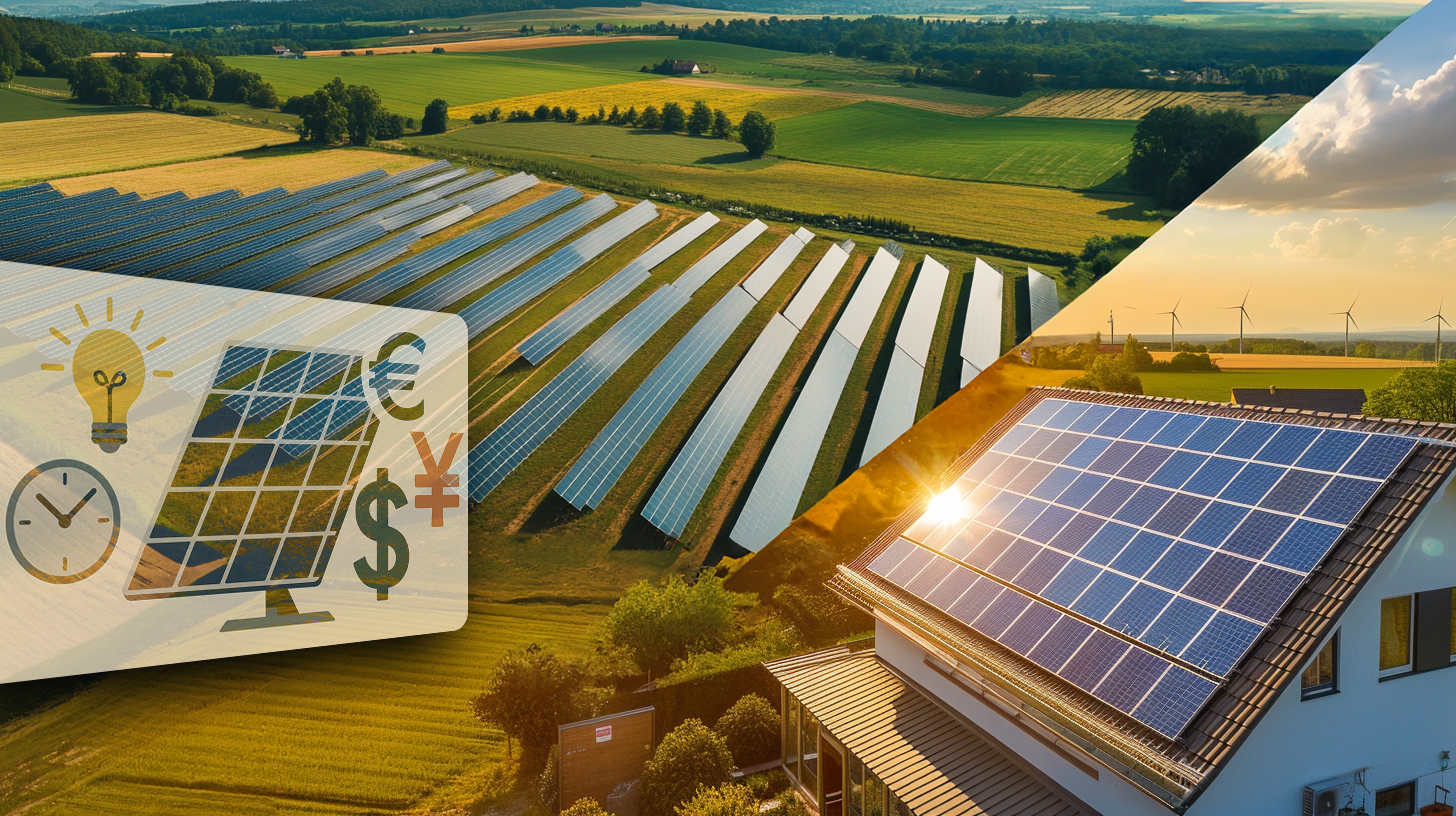
Innovative photovoltaic solution for cost reduction and time savings - Image: Xpert.Digital
More information here:
EVN as a hidden champion: How Southeast Europe and battery storage are driving growth
International engagement: Southeast Europe as a growth market
Bulgaria and North Macedonia are not peripheral markets for EVN, but rather key contributors to its earnings. Around 60 percent of the Group's net income comes from its operations in Bulgaria, North Macedonia, and its domestic subsidiaries. In the first half of fiscal year 2025/26, the Southeast Europe segment contributed approximately €928.6 million to Group revenue, with operating profit (EBITDA) reaching €103.7 million. The investment program in the region is correspondingly ambitious: around 15 percent of the Group's total investments are allocated to Bulgaria and North Macedonia.
In North Macedonia, EVN commissioned the country's first battery storage system in April 2026. Shortly before, a new photovoltaic plant in Kumanovo was completed. A total of approximately €166.2 million was invested in the company's Southeast European operations. The strategic importance of these markets stems not only from their current profitability but also from their development potential: North Macedonia and Bulgaria are in an early stage of the energy transition, their grid modernization needs are high, and EVN possesses two decades of institutional expertise and established market positions there.
This international presence also protects EVN against concentration risks. If Lower Austria's generation or grid regulation falters, the Southeast European segments can have a stabilizing effect. Conversely, lessons learned from the technologically advanced domestic market can be transferred to growth markets. The commissioning of the first battery storage system in North Macedonia is a prime example of this: technologies and operating concepts developed in Lower Austria are being introduced in Southeast Europe as pioneering products.
Related to this:

Financial discipline as a competitive advantage
A multi-billion euro investment program is no guarantee of economic success. The crucial factors are whether the invested capital generates sufficient returns and whether the company can maintain its credit rating. EVN provides convincing answers to both questions.
The rating agencies recently reaffirmed their assessments: Moody's awarded an A1 rating with a stable outlook in April 2026, followed by Scope Ratings in May 2026 with a confirmation of its A+ rating, also with a stable outlook. Ratings in the solid A range are crucial for energy suppliers with significant investment needs, as they secure access to capital on favorable terms. The investment program is expected to increase net debt by approximately €200 million annually, doubling the current debt-to-equity ratio of 17 percent by 2030. This is a deliberate calculation and not a loss of control: the EBITDA growth trajectory is designed to keep the higher debt manageable.
For the current fiscal year 2025/26, EVN expects consolidated net income in the range of €430 million to €480 million. The first half of the year was already very promising: consolidated net income rose by 24.7 percent year-on-year to €312.4 million. As a long-term target, management has set an EBITDA of €1.1 billion to €1.2 billion for fiscal year 2029/30. Based on the EBITDA of €909.1 million for fiscal year 2024/25, the lower end of this range corresponds to average annual growth of four percent – a conservative projection that nevertheless allows for considerable upside potential if investments generate returns early on.
Profitability in European comparison: More than just cheaply valued
The valuation discussion surrounding EVN shares is revealing because it highlights the structural differences between various business models in the European energy sector. With a 2027 P/E ratio of under 12, EVN shares are significantly more attractively valued than their German counterparts RWE (P/E 18) and E.ON (P/E 16). This alone might suggest a company that is justifiably undervalued by investors. However, a look at the profitability figures paints a different picture.
In the 2024/25 financial year, EVN achieved an operating EBITDA margin of 30 percent. RWE reached 28 percent in the same period, while E.ON achieved only 12.5 percent. E.ON is particularly interesting for this analysis: As one of the largest European energy suppliers with a business model heavily focused on networks, its structure is similar to EVN's – yet it achieves a significantly lower operating margin. One possible explanation: Size does not automatically protect against inefficiency. Regulatory complexity, legacy issues, and excessive corporate bureaucracy can erode margins that would be maintained by a leaner, mid-sized utility.
The valuation gap between EVN and RWE and E.ON cannot be fully explained by risk factors. It may reflect the lower profile of an Austrian mid-cap company among international investors. Considering the Strategy 2030, the strong balance sheet, and the above-average profitability as a whole, one finds a company that should be valued higher in its category than it currently is. The dividend yield of around 3 to 3.9 percent further supports this argument.
| Key figure | EVN | RWE | E.ON |
|---|---|---|---|
| 2027 P/E ratio (approx.) | under 12 | 18 | 16 |
| EBITDA margin 2024/25 | 30% | 28% | 12,5% |
| Moody's rating | A1 | – | – |
| Scope rating | A+ | – | – |
| Taxonomy conformity | 89,1% | significantly lower | significantly lower |
Taxonomy compliance: More than just a compliance obligation
A previously overlooked aspect of EVN's investment program is its exceptionally high taxonomy compliance. In the 2024/25 financial year, 89.1 percent of all investments were already taxonomy-compliant – meaning they were environmentally sustainable as defined by the EU Taxonomy Regulation. This is a very high figure within the European energy sector. By comparison, many of the largest energy suppliers are still struggling to even demonstrate that the majority of their investments are taxonomy-compliant.
This metric is not only relevant for ESG-oriented investors, but also has strategic consequences for the cost of capital. Green bonds can be issued at more favorable terms if the issuer can demonstrate a demonstrably high sustainability rate. Since EVN finances a significant portion of its investment program through debt capital markets, a high taxonomy rate is a direct factor in returns. It also protects the company from regulatory risks: Should the EU tighten its sustainability requirements for publicly traded companies – which all indications suggest – EVN is structurally better positioned than competitors with mixed portfolios.
The systemic value of the EVN model for the energy transition
Beyond all the company figures, the EVN model deserves attention from a systemic perspective. Europe faces a fundamental problem: Renewable energy generation capacity is growing faster than the grids, storage facilities, and digital control infrastructure needed to reliably utilize this energy. This creates frustrations—wind power that has to be curtailed or PV systems that wait months for a grid connection—which are then politically exploited against the energy transition.
EVN demonstrates that this circular reasoning is not inevitable. A decisive, integrated investment program that simultaneously expands generation, grid, and storage can resolve system tensions. The status achieved in Lower Austria—50 percent of all Austrian wind turbines within the EVN grid area, combined with increasing battery storage capacity and digitized grid management—is not an exception, but a reproducible model. Other regions could follow this path if the political will and regulatory framework allow it.
While European battery storage capacities have increased tenfold since 2021, achieving the climate targets by 2030 would require another tenfold increase to 750 gigawatt-hours. EVN, with its planned 300 MW, is both an exception and a role model. It demonstrates that large-scale storage projects at former conventional power plant sites are technically feasible, economically viable, and ecologically sound – a winning combination that is too rarely discussed in the energy debate.
Risks and limitations of the model
An honest analysis cannot ignore risks. EVN's investment program has an inherent vulnerability: it relies on regulatory-driven returns in the network business. In Austria and Europe, network charges are set by regulatory authorities – and these could change the permitted returns. More restrictive regulation would jeopardize the EBITDA growth path, which forms the basis of financial planning.
The second risk lies in the dependence on a single major market. Eighty percent of investments go to Lower Austria. Should the grid expansion be delayed due to permitting issues, material shortages, or political resistance, this would have an immediate impact on EBITDA growth. The construction of substations and power lines is always a permitting marathon – a structural problem that can disrupt the timelines of even well-capitalized companies.
Finally, there is a technological risk inherent in battery storage strategy. Lithium-ion technology currently dominates the market, but the costs of other storage technologies – such as sodium-ion or redox flow batteries – are falling rapidly. Investors who choose a particular technology model today could find themselves with outdated infrastructure tomorrow. EVN is partially addressing this risk with its hybrid strategy at its Theiß site, which combines different storage methods. However, the extent to which the company can respond to technological change will become clear in the coming years.
A model for the energy transition in the center
With its Strategy 2030, EVN AG has positioned itself in a niche that receives too little attention in the European energy debate: It is neither a pure "renewables pure play" like a wind farm operator, nor a politically paralyzed large corporation burdened with fossil fuel liabilities. It is an integrated, mid-sized energy service provider – and that is precisely what makes its model systemically relevant.
The core thesis of this analysis is clearly proven: The "luxury problem" of overproduction of renewable energy is in reality an infrastructure problem that can be solved through consistent investment in grids, storage, and digital control. EVN is tackling this problem – not because it's easy, but because it's the only thing that works. The combination of above-average profitability, a solid balance sheet, a high degree of taxonomy compliance, and a clear growth trajectory makes the company one of the most attractive mid-caps in the European energy sector – and a practical counterargument to those who claim that the energy transition has failed due to grid issues.
🎯🎯🎯 Data-driven B2B industry hub as a quasi-in-house solution


The quasi-in-house solution: How Xpert.Digital closes operational gaps in B2B marketing and sales – Smart Content-Driven Business - Image: Xpert.Digital
Xpert.Digital is a data-driven B2B industry hub led by Konrad Wolfenstein . The company acts as an external, quasi-in-house solution for industrial partners, closing operational gaps in marketing, content, and sales – without requiring additional resources on the client side.
More information here:
Your global marketing and business development partner
☑️ Our business language is English or German
☑️ NEW: Correspondence in your native language!

Konrad Wolfenstein
I and my team are happy to be available to you as your personal advisor.
You can contact me by filling out the contact form here wolfenstein@xpert.digital:or simply call me at +49 7348 4088 965. My email address is
I'm looking forward to our joint project.