Everything you always wanted to know about football in digital format

Language selection 📢
Published on: August 22, 2018 / Updated on: September 9, 2018 – Author: Konrad Wolfenstein
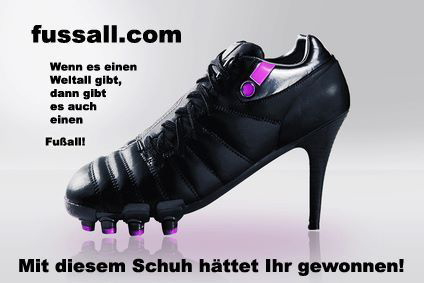
fussall.com
+++ TV & Apps are the most popular football information channels +++ Football is best watched on free-to-air TV +++ Is football a women's issue? +++ Current Sports Studio and Sports Show are the most popular football formats +++ Football as an advertising machine +++ Who profits from the jersey? +++ King Football rules the world +++ Krombacher is the most advertised brand +++ Billions in reach bring FIFA billions +++ The World Cup trophy is becoming increasingly valuable +++ FC Bayern is worth around $3.1 billion +++ Where do the fans stand politically? +++ FC Bayern and RB Leipzig are the most hated clubs +++ FC Bayern and Borussia Dortmund are the most popular clubs +++ Bayern and Hoffenheim compared in terms of image +++ Bayern and Dortmund fans can be found everywhere +++ Lucrative stadium names +++
TV and apps are the most popular football information channels
 You can find more infographics at Statista
Television and apps are the most common channels for football information. This is according to the Statista European Football Benchmark, for which 3,030 football fans were surveyed. One truly old-school medium, however, seems to be holding its own: 17 percent use teletext to stay up-to-date on Bundesliga action.
I prefer to watch football on free TV
When the Bundesliga kicks off its new season this weekend, fans should prepare for some changes. Besides new kick-off times – for the first time, matches will also be played on Mondays in the top flight – the restructuring of TV broadcasts has caused particular confusion. For the first time since Arena's brief stint in the 2006/2007 season, not all matches will be shown live on the pay-TV channel Sky.
Since the DFL, in consultation with the Federal Cartel Office, committed itself during the rights renewal process not to award all live TV rights to the same provider, 40 Bundesliga matches will be broadcast exclusively by Eurosport, available only via a paid subscription. While this caused an uproar among Sky customers, it's likely of little concern to most football fans: as a survey by the trade magazine Horizont revealed, the majority of fans follow the Bundesliga on free-to-air TV or radio anyway.
 You can find more infographics at Statista
Football: A Women's Issue?
Traditionally, football is considered a man's domain: drinking beer, discussing the game, and going to the stadium. However, this perception seems to be changing; according to a recent survey by the market research institute mafo.de, young men in particular are losing interest in the Bundesliga. Among women, on the other hand, interest is increasing across all age groups.
A total of 30 percent of women stated that they had become more interested in the Bundesliga over the past three years. Among men, this figure was only 21.9 percent. For 29.2 percent, however, interest had decreased. This was particularly true for young men between 18 and 30 years old. Among women, interest had only decreased for 19.5 percent, as the Statista graphic shows. Overall, interest remained unchanged for half of all football fans, both male and female.
 You can find more infographics at Statista
Aktuelles Sportstudio and Sportschau are the most popular football formats
According to Statista European Football Benchmark, Aktuelles Sportstudio and Sportschau are the most popular TV programs among football fans. They are followed by Bundesliga Aktuell on Sport1, which garnered a 34 percent audience share over the past twelve months. Sport1 also broadcasts two other programs – Bundesliga Pur and Doppelpass. The Sky format “Wontorra – der Fußball Talk” performed the worst.
 You can find more infographics at Statista
Football as an advertising machine
Football is a huge business: in addition to the actual sports deals, the advertising market is also massive and a lucrative side income for the players. Accordingly, Bastian Schweinsteiger enjoys eating chips, Manuel Neuer shaves, drinks cola, or washes his hair to remove dandruff, and the entire national team prefers hazelnut spread for breakfast and jogs to the Commerzbank. Brands are clearly backing the right horse with these sports stars, as a survey by Innofact AG shows: 5.8 percent of respondents stated that Manuel Neuer had particularly stood out to them as a celebrity in advertising, followed by Thomas Müller and Jürgen Klopp. Overall, eight of the top 12 most recognizable advertising faces are involved in the football industry, as the Statista graphic illustrates. Besides the footballers, only Heidi Klum, Dirk Nowitzki, Mario Barth, and comedian Bully made it into the ranking.
 You can find more infographics at Statista
Who profits from the jersey?
Anyone wanting to buy a fan jersey for this year's World Cup had to dig even deeper into their pockets than last time: While the German national team jersey cost €85 at the 2014 World Cup in Brazil, this year it sold for €90. As the Statista graphic shows, the lion's share of that goes to sporting goods retailers. However, this is by no means pure profit – after deducting store rent and costs for staff and advertising, only about €3 to €4 profit remains, calculates Dr. Peter Rohlmann . The marketing expert has broken down who earns how much from the jersey. According to his analysis, €5.50 goes to the German Football Association (DFB), while manufacturer Adidas receives €17 in gross profit, as the Statista graphic illustrates.
 You can find more infographics at Statista
King Football rules the world
The FIFA World Cup is one of the world's biggest sporting events, second only to the Olympics. Every four years, the tournament attracts millions of viewers; according to FIFA, 3.2 billion people worldwide watched at least one minute of football during the 2014 World Cup in Brazil – a figure easily matched at this year's tournament in Russia.
According to Nielsen data, 60 percent of the population in Germany is (very) interested in football. This puts Germany near the bottom of the ranking of 20 countries: the United Arab Emirates takes first place with 80 percent, followed by Thailand with 78 percent, as the Statista graphic shows.
 You can find more infographics at Statista
Krombacher receives the most advertising
For many, football and beer go hand in hand – so breweries are likely to be pleased with the World Cup. Beer consumption in Germany has been declining for years. Consequently, some brands are trying to counteract this trend with advertising, most notably Krombacher. As the Statista graphic shows, their advertising expenditure in 2017 amounted to around €71.5 million. Bitburger follows in second place by a considerable margin with just over €45 million in advertising spending.
 You can find more infographics at Statista
FIFA's reach of billions brings it billions
Few sporting events generate as much global attention as the FIFA World Cup. In terms of global reach, only the Summer Olympics can rival this most important tournament in football, which also takes place every four years. According to FIFA, around 3.2 billion people watched the 2014 World Cup on television; only the 2012 London and 2008 Beijing Summer Games achieved a greater reach, with 3.6 and 3.5 billion viewers respectively.
FIFA, of course, charges handsomely for this enormous reach. The marketing of World Cup TV rights is by far the world football governing body's largest source of income. For example, the broadcasting rights for the World Cup in Brazil brought in more than US$2.4 billion, almost half of FIFA's total revenue from 2011 to 2014. The second largest source of income for FIFA is marketing rights. Here, too, the global appeal of the World Cup naturally plays a crucial role.
 You can find more infographics at Statista
The World Cup trophy is becoming increasingly valuable
As the Statista graphic shows, the trophy was worth just under €15,500 in 1974. Since then, the price of gold has risen significantly, meaning the trophy is worth more than €125,000 this year.
 You can find more infographics at Statista
FCB is worth approximately $3.1 billion
Forbes values FC Bayern Munich at approximately $3.1 billion . This puts the German record champions just outside the top 10. The Dallas Cowboys American football team tops the ranking with a value of $4.8 billion. Manchester United and Real Madrid football clubs follow. The valuation is based on the company value calculated from equity plus debt.
 You can find more infographics at Statista
Where the fans stand politically
According to the Statista European Football Benchmark, the majority of football fans in Germany identify as politically centrist. Most Bundesliga fans consider themselves politically centrist, while 23 percent see themselves as left-leaning – particularly fans of SV Werder Bremen, Hertha BSC, and VfB Stuttgart. At the other end of the political spectrum, 19 percent of respondents place themselves. The clubs with the most right-leaning supporters and sympathizers are RB Leipzig, Borussia Mönchengladbach, and 1. FC Köln.
 You can find more infographics at Statista
FCB and RBL are the most hated clubs
FC Bayern Munich (FCB) and RB Leipzig are the most unpopular clubs in Germany. This is a finding of the Statista European Football Benchmark, for which over 3,000 football fans in Germany were surveyed. Of those surveyed, 41 percent said they dislike or even hate FCB. In contrast, RB Leipzig, often derided as a "fizzy drink club," fared relatively well. SC Freiburg has the fewest "enemies." Over the years, the club from Baden has managed to cultivate a predominantly positive image among Germans.
 You can find more infographics at Statista
FCB and BVB are the most popular clubs
Bayern Munich are both the most popular and the most unpopular Bundesliga club. Borussia Dortmund follows in second place, some distance ahead of RB Leipzig. The latter also rank among the top three most hated clubs.
 You can find more infographics at Statista
A comparison of Bayern Munich and Hoffenheim's image
The new Bundesliga season kicks off on August 24th. FC Bayern Munich (FCB) will host TSG 1899 Hoffenheim in their opening match. The Statista European Football Benchmark already provides insights into the match's image. The record champions are clearly superior in many areas. FCB is perceived far more frequently as "rich in tradition" (FCB: 31% – TSG: 4%) and "glamorous" (FCB: 18% – TSG: 3%). TSG 1899 Hoffenheim, on the other hand, performs well in the areas of "young" (TSG: 17% – FCB: 5%) and "regionally rooted" (TSG: 15% – FCB: 13%). Overall, the match ends, at least according to the benchmark, with a score of 15:2, resulting in a clear victory for FC Bayern Munich.
 You can find more infographics at Statista
Bayern and Dortmund fans can be found everywhere
Borussia Dortmund and FC Bayern Munich are no longer just local clubs. Their fans are spread across the globe, or at least across their respective countries. YouGov investigated the percentage of fans who come from the same German state as their club. Within the YouGov panel, VfB Stuttgart, FC Köln, and Eintracht Frankfurt are particularly regionally rooted. Only 38 percent of BVB fans are from North Rhine-Westphalia, and only 37 percent of Bayern Munich fans are from Bavaria. Only the clubs from Hamburg and Bremen have lower figures. However, if you also include fans from the states bordering each city-state, the local roots are actually stronger than those of the two top Bundesliga teams.
 You can find more infographics at Statista
Lucrative stadium names
 You can find more infographics at Statista
Keep in touch