
When your closest ally becomes the aggressor | Europe's wake-up call: The post-war order is crumbling – what must happen next
Xpert Pre-Release

Available in 27 languages 📢
Prefer Xpert.Digital on GoogleⓘPublished on: January 18, 2026 / Updated on: January 18, 2026 – Author: Konrad Wolfenstein
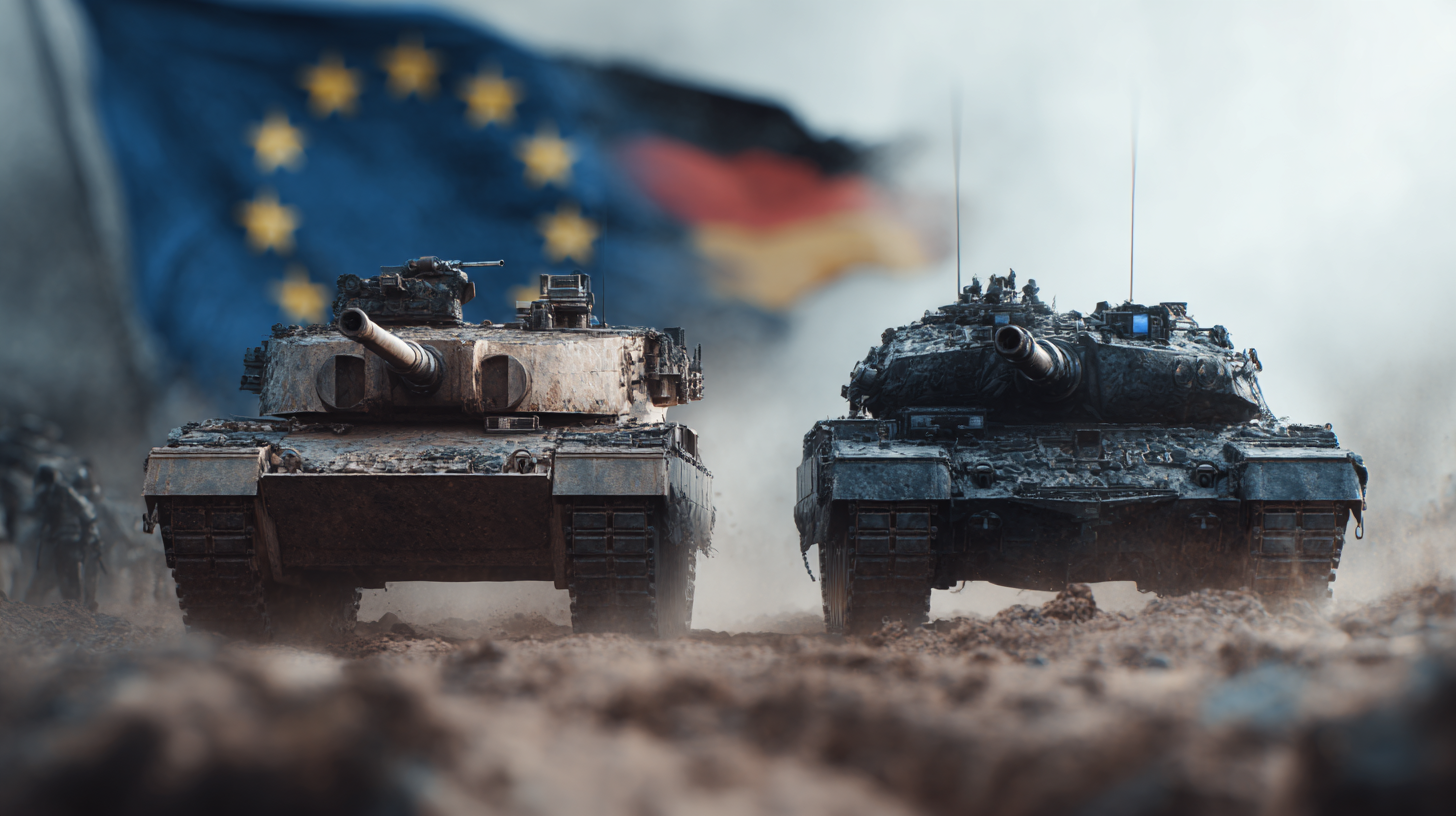
When your closest ally becomes the aggressor | Europe's wake-up call: The post-war order is crumbling – what must happen next – Creative image: Xpert.Digital
From protector to blackmailer: Why the USA is now Europe's most dangerous adversary
The unthinkable scenario: If the West goes to war against itself
For decades, it was the unwritten law of the Western world: Europe and the USA stood side by side, united by values, trade, and NATO's nuclear umbrella. But what happens when this foundation not only crumbles but is deliberately destroyed? The following analysis paints a disturbingly realistic picture of the years 2025 and 2026 – a time when the masks fall and geopolitics once again becomes a pure question of power.
At the center of this storm is not Eastern Europe or the Pacific, but the ice of Greenland. Once a peaceful periphery, the Arctic is becoming the stage for a bitter conflict over resources and strategic dominance, in which Washington no longer acts as an ally, but as an aggressive claimant.
This article is more than just a stocktaking; it is an autopsy of the dying postwar order. It illuminates how Europe, under immense pressure, is being forced to shed its naiveté. From the activation of the SAFE instrument for massive rearmament to the risky deployment of economic bazookas against US banks: learn how the continent is preparing for a fight for survival in which economic dependencies become weapons and the line between friend and foe blurs in the Arctic Ocean. Read why the rift over Nuuk marks the beginning of a new, dangerous era.
Suitable for:


The end of Pax Americana: Europe's 800 billion plan against the US trade war
The global order as it has existed since the end of the Second World War is in a state of irreversible disintegration. What for decades was considered the unshakeable foundation of the transatlantic partnership was fundamentally shaken by the events of 2025 and 2026. The European Union now faces a reality in which economic interdependence is increasingly being weaponized and the line between allies and adversaries is blurring. The end of the Pax Americana is no longer a gradual process, but an abrupt rupture, fueled by an aggressive transactional foreign policy of the United States and the simultaneous threat posed by autocratic actors such as Russia and China.
In this context, the Greenland crisis functions not merely as an isolated territorial dispute, but as the final catalyst for a fundamental realignment of European sovereignty. Since December 20, 2025, the geopolitical architecture of the Arctic Circle has transformed from a theater of historical cooperation into a primary point of friction in global power politics. The economic analysis of this development reveals profound shifts in global supply chains, defense priorities, and the legal defense mechanisms of the European single market. This is the moment of geolegal rearmament, in which the European Union is compelled to relinquish its role as a mere trading power and mature into an independent security policy actor.
Suitable for:

The Arctic Turning Point: Geopolitical Tectonics After the Nuuk Fracture
Greenland's strategic repositioning is the epicenter of current instability. Long considered a peripheral ice desert, climate change, coupled with technological advancements, has brought the island into the focus of world powers. Greenland now represents an indispensable high ground for integrated early warning systems and the defense against hypersonic glide vehicles. The geographical reality of an oblate-spheroidal Earth makes the Arctic Circle the shortest path for ballistic trajectories between continents, thus making Greenland the crucial front line of the North American defense periphery.
The economic impetus for American claims to the territory, however, runs deeper. The ongoing deglaciation of the Greenland ice sheet is exposing trillions of dollars' worth of resources, including rare earth elements, uranium, and substantial hydrocarbon deposits. Estimates from the U.S. Geological Survey in 2025 put the undiscovered, technically recoverable resources of the West Greenland-East Canada province alone at around 7.8 billion barrels of oil and 91.9 trillion cubic feet of gas. These mineral resources are not only economic assets but also strategic levers for achieving the desired autonomy in semiconductor and high-tech manufacturing.
The following table illustrates the strategic importance of Greenland's mineral resources compared to its current global market leadership:
| resource | Importance for high technology | Estimated deposits in Greenland | Greenland's (potential) global market position |
|---|---|---|---|
| Heavy rare earth elements | Permanent magnets for electric vehicles, F-35 fighter jets | ~1.5 million tons (proven) | Ranked 8th worldwide |
| uranium | Nuclear energy, strategic deterrence | ~270,000 tons (Kvanefjeld) | Ranked 8th worldwide |
| gallium | Semiconductors for 5G technology and radar systems | Significant by-products in Tanbreez | Crucial for diversification |
| Hydrocarbons | Energy security | ~7.8 billion barrels of oil | Strategic Reserve for North America |
The diplomatic rift between Copenhagen and Washington reached a critical point on January 6, 2026, when the Nordic Council officially designated the United States as a threat to national sovereignty. This followed a report by the Danish Defence Intelligence Service, which, for the first time in history, listed the US alongside Russia and China as an actor endangering Arctic stability through aggressive economic coercion and the threat of military force. Reactions in Greenland itself are characterized by deep mistrust. While the island seeks greater independence from Denmark, 85 percent of the population opposes integration into the US. The fear of a new colonialism outweighs the desire for short-term economic prosperity through US investment.
Fiscal Upgrading: The Transition to Autonomous Security Architecture
The end of the US security umbrella is forcing Europe to undertake a fiscal effort that dwarfs the post-war reconstruction programs. For decades, the continent benefited from a peace dividend, which for Germany alone meant savings of over two trillion euros since 1990. This era has now ended. The new threat landscape requires not only an increase in defense budgets, but also a fundamental transformation of the European economy toward a partially military-oriented industrial structure.
In March 2025, the European Commission presented an initiative with its White Paper on Preparedness 2030 and the Plan to Rearm Europe, aiming to mobilize up to €800 billion for defense investments. The backbone of this financing is the Security Action for Europe (SAFE) instrument, a new financial mechanism backed by €150 billion in joint EU bonds. This program allows member states to take out low-interest loans for the joint procurement of defense equipment, subject to strict requirements regarding the European value-added content. To guarantee strategic sovereignty, products financed under SAFE must contain at least 65 percent European components.
The economic implications of this military buildup are massive. By 2035, European NATO states are expected to increase their direct defense spending to 3.5 percent of their GDP annually, amounting to approximately €770 billion per year. These investments will act as a massive economic stimulus program. They could secure or create around 2 million jobs annually in Europe, with the gross value added in NATO Europe alone estimated at approximately €150 billion.
The following table provides information on the planned additional expenditure and the fiscal leeway resulting from the activation of the national escape clause of the Stability and Growth Pact:
| Country / Region | Additional fiscal leeway (1.5% of GDP) | Estimated annual GWS through armaments | Job potential |
|---|---|---|---|
| EU-27 Total | ~650 billion euros | ~150 billion euros | 2,000,000 jobs |
| Germany | ~75 billion euros | ~39 billion euros | 360,000 jobs |
| Poland | Highest share of SAFE funds (29.2%) | Focus on military AI | Significant reindustrialization |
| France | Focus on nuclear deterrence | ~12 billion euros | Focus on high-tech exports |
The transition from small-scale, artisanal manufacturing to serial production of defense equipment presents European industry with enormous structural challenges. The order backlogs of European defense companies have almost tripled since 2017, leading to massive shortages of skilled workers and raw materials. Nevertheless, this transformation is considered essential to gradually reduce dependence on US supplies, which currently account for a third of defense procurement. A particular focus is on modern air defense technologies, for which investments of around €500 billion are projected by 2035 alone.
Hub for security and defense - advice and information

Hub for security and defense - Image: Xpert.digital
The hub for security and defense offers well-founded advice and current information in order to effectively support companies and organizations in strengthening their role in European security and defense policy. In close connection to the SME Connect working group, he promotes small and medium -sized companies (SMEs) in particular that want to further expand their innovative strength and competitiveness in the field of defense. As a central point of contact, the hub creates a decisive bridge between SME and European defense strategy.
Suitable for:
Attack among allies: How the dispute over Greenland threatens to tear NATO apart
The legal arsenal: Brussels' strategic realignment against economic coercion
In a world where trade relations are increasingly being misused as a geopolitical weapon, the European Union has created a new form of defense architecture with the Instrument Against Coercive Measures (ACI). Entering into force in December 2023, this instrument allows Brussels to respond to economic blackmail attempts by third countries with a precision and force that goes far beyond conventional tariffs. The ACI is often referred to as an economic bazooka because it allows the Commission to take countermeasures without requiring a formal violation of WTO rules. The decisive factor is solely the third country's intention to influence the sovereign decisions of the EU or its member states through economic pressure.
The ACI operates according to a clearly defined process: After a maximum four-month investigation, the Commission determines whether economic duress exists. The Council then decides on this determination by qualified majority, thus overriding the previously customary national veto powers in foreign policy. If a subsequent six-month dialogue process aimed at de-escalation fails, the EU can choose from a comprehensive range of countermeasures. These include not only tariffs, but also restrictions on access to public procurement, limitations on financial services, the suspension of intellectual property protection, and targeted measures against natural or legal persons linked to the government of the country exercising duress.
The potential application of the ACI against the United States is particularly sensitive. Given the threat of blanket tariffs of up to 30 percent on European goods, French President Macron has already called for the activation of the ACI. Massive use of this instrument could deny US banks access to the two trillion euro European public procurement market or severely restrict US tech giants' access to the single market by linking it to the Digital Markets Act (DMA) and the Digital Services Act (DSA).
The following overview shows the range of possible reactions under the ACI regime:
| Area of countermeasure | Specific effects | Strategic goal |
|---|---|---|
| Public procurement | Exclusion of US suppliers from EU tenders | Protection of domestic industry; retaliation for pro-American policies |
| Intellectual property | Suspension of patent protection for US technologies | Increased political pressure on IP-intensive sectors |
| Financial services | Restriction of access to EU capital markets | Targeted harassment of the US financial sector |
| trade in services | Restrictions for digital platforms | Synergy with DMA/DSA to discipline Big Tech |
| Goods traffic | Targeted import bans or transit restrictions | Disruption of the aggressor's supply chains |
Although the ACI was primarily conceived as a deterrent, its mere existence is already a geopolitical signal. It marks the EU's transition from a naive, rules-based trade policy to a geolegal strategy that acknowledges and leverages power relations. Nevertheless, the risk of an escalation spiral remains. Its application against the US could lead to further retaliatory measures, targeting, for example, the dependence of European companies on US cloud infrastructure. Europe is thus engaged in a highly dangerous game of poker for economic sovereignty.
Economic fallacies: The asymmetric vulnerability of the United States
The economic logic behind the US administration's aggressive tariff announcements rests on the assumption that trade deficits are inherently a sign of weakness and can be remedied through protectionist measures. However, in-depth analysis reveals that a full-blown trade war could structurally harm the United States more severely than the European Union. The US trade deficit with the EU, which amounted to approximately $161 billion in 2024, is less a result of unfair competition than an expression of robust US demand for high-value European goods. Since these goods often represent critical intermediate inputs for US industry, tariffs effectively act as a tax on domestic production.
Simulations suggest that a full escalation of the tariffs could cause the US economy to experience a decline in real GDP of approximately 0.7 percent, while the EU would fare better with a decline of around 0.3 percent. This difference stems from the fact that the EU, as a more diversified bloc, is less dependent on a single export market, whereas the US relies heavily on imports of consumer goods and industrial inputs. Furthermore, the US tariffs have inflationary effects: higher import costs drive up prices for end consumers and may force the Federal Reserve to adopt a more restrictive monetary policy, further dampening growth.
One example of the counterproductive effect of US tariffs is the agricultural and spirits sectors. Tariffs of 15 percent on EU imports of spirits threaten an estimated 25,000 jobs in the US restaurant and bar industry and result in a loss of two billion dollars in revenue. At the same time, European retaliatory measures are specifically targeting Republican-leaning states, for example, through tariffs on Kentucky bourbon. This political manipulation of EU trade policy aims to maximize the domestic political cost of Trump's protectionism in the US.
The following table compares the economic indicators of both economic regions in the context of the trade war:
| indicator | Impact on the USA | Impact on the EU | Analysis of the discrepancy |
|---|---|---|---|
| GDP growth (simulation) | -0.7% to -1.2% | -0.3% to -0.8% | The US economy is more dependent on imports for consumption |
| inflation | Significant increase due to import costs | Moderate increase; dampened by declining demand | Tariffs act as an indirect consumption tax in the USA |
| Currency dynamics | Dollar depreciation (up to 14% YTD 2025) | Euro deprecation against third currencies | The devaluation of the dollar only partially compensates for tariffs |
| labor market | Losses in the hospitality and retail sectors | Losses in automotive and mechanical engineering | Sectoral impact varies greatly by region |
| trade balance | Minimal effect on the global deficit | Increase in the surplus with third countries | Trade diversion minimizes the effect of bilateral tariffs |
The framework agreement concluded in August 2025, also known as the Scotland Agreement, represents only a fragile truce. While the threatened 30 percent tariffs were reduced to a cap of 15 percent, this remains more than three times the pre-2025 level. In return, the EU committed to massive energy purchases of $750 billion and investment pledges of $600 billion. However, many experts doubt the feasibility of these commitments, as they are largely based on private sector decisions that Brussels cannot directly control. Ultimately, this deal solidifies a new trading order in which tariffs are accepted as a permanent tool of geopolitical blackmail.
The Reorganization of the North Pole: Resource Conflict and Military Escalation Dynamics
The race in the Arctic has reached a dynamic reminiscent of the Cold War era, but exacerbated by resource scarcity and technological advancements. Russia has systematically expanded its military presence north of the Arctic Circle to secure the strategic depth of its nuclear deterrent and to control the Northeast Passage as a national waterway. The Russian Northern Fleet regularly practices breaching the GIUK Gap to sever transatlantic supply routes between North America and Europe in the event of conflict.
In this context, the Greenland crisis becomes an existential threat to the NATO alliance. Should the US make good on its threats and effectively bring the territory under its control, or undermine Danish sovereignty through hybrid operations, this would shatter the alliance from within. An attack by one NATO state on another would render the mutual defense obligation under Article 5 meaningless. Greenland is currently the most important early warning sensor for Russian hypersonic weapons, which is why the US considers control of the island non-negotiable.
At the same time, China is pushing into the region with its Polar Silk Road initiative. Through investments in Greenlandic mining projects, Beijing attempted early on to gain a foothold in the Arctic, but this was largely blocked by massive US pressure on the Danish government. Nevertheless, Beijing's interest in Arctic sea routes remains strong, as these could significantly shorten trade routes to Europe. The strategic cooperation between Russia and China in the Arctic presents Europe with the challenge of developing an independent Arctic policy that goes beyond simply supporting Danish claims.
The following overview shows the military and infrastructural upgrades in the region:
| actor | Strategic priority | Key projects / bases | Potential for escalation |
|---|---|---|---|
| USA | Missile Defense & Annexation | Pituffik Space Base (Thule); Tanbreez Mine | High due to territorial claims |
| Russia | Dominance of the Northeast Passage | Expansion of the Northern Fleet; hypersonic weapons | Permanent due to proximity to NATO's eastern flank |
| Denmark | Preservation of sovereignty | Arctic Command; Thetis-class ships | Medium; focus on hybrid defense |
| China | Resources & Trade Routes | Polar Silk Road; mining cooperations | In the long term, through economic infiltration |
| EU | Ecology & Resource Security | Satellite surveillance; REE supply chains | Low; focus on geolegality |
In response to US pressure, Denmark has increased its defense spending on Greenland to $1.5 billion to strengthen surveillance capabilities through drones and new ships. However, it remains questionable whether a small state like Denmark can withstand the combined burden of American blackmail potential and Russian aggression in the long term. The Arctic Endurance project, in which several European NATO partners are participating, is an attempt to underscore Denmark's territorial integrity through an international presence without directly confronting the US. Nevertheless, Greenland remains the most dangerous geopolitical flashpoint of 2026.
The need for a continental paradigm shift
The comprehensive analysis of the years 2025 and 2026 leads to only one conclusion: Europe must abandon the illusion that transatlantic security is an unconditional good. The collapse of the post-war order is a systemic event, rendered irreversible by the geographical shift of conflict zones to the Arctic and the instrumentalization of global trade. The Greenland crisis has revealed that even the closest allies are prepared to challenge the sovereignty of European states when their own strategic interests—particularly access to critical resources and military high ground—are at stake.
From an economic perspective, the continent has reached a turning point. The introduction of military Keynesianism through programs such as the rearmament of Europe and the SAFE instrument is the only rational response to the looming US withdrawal from the European security architecture. This fiscal policy offers not only security but also the opportunity for technological reindustrialization, provided the transformation from manufacturing to mass production in the defense industry succeeds. At the same time, the EU must further strengthen its geolegal defense through the instrument against coercive measures in order to avoid being lost in the global scramble for market access and resources.
The asymmetric vulnerability of the US in the trade war demonstrates that Europe possesses considerable leverage, but must use it unanimously and decisively. The fragmentation of national defense markets and the reluctance of some member states to implement tough economic countermeasures remain the biggest obstacles to strategic autonomy. Ultimately, Denmark's steadfastness on the Greenland issue will become a test case for the entire European Union. If it fails to protect this territory and its resources from foreign powers, the dream of a sovereign European power will be over.
Europe is not facing a simple wake-up call, but an existential decision about its role in world history. The cold of the Arctic and the harshness of transatlantic trade diplomacy constitute the new climate in which the continent must prove itself. The instruments for resistance—fiscal, legal, and military—have been created. Now, what is needed is the political will to use them consistently in order to defend an order defined not by Washington's grace, but by European strength.
Advice - planning - implementation

Markus Becker
I would be happy to serve as your personal advisor.
Head of Business Development
Chairman SME Connect Defense Working Group
Advice - planning - implementation
Konrad Wolfenstein
I would be happy to serve as your personal advisor.
contact me at wolfenstein ∂ xpert.digital
Just call me on +49 7348 4088 965 (Munich) .
Your dual -use logistics expert

Dual -use logistics expert - Image: Xpert.digital
The global economy is currently experiencing a fundamental change, a broken epoch that shakes the cornerstones of global logistics. The era of hyper-globalization, which was characterized by the unshakable striving for maximum efficiency and the “just-in-time” principle, gives way to a new reality. This is characterized by profound structural breaks, geopolitical shifts and progressive economic political fragmentation. The planning of international markets and supply chains, which was once assumed as a matter of course, dissolves and is replaced by a phase of growing uncertainty.
Suitable for:
Our EU and Germany expertise in business development, sales and marketing

Our EU and Germany expertise in business development, sales and marketing - Image: Xpert.Digital
Industry focus: B2B, digitalization (from AI to XR), mechanical engineering, logistics, renewable energies and industry
More about it here:
A topic hub with insights and expertise:
- Knowledge platform on the global and regional economy, innovation and industry-specific trends
- Collection of analyses, impulses and background information from our focus areas
- A place for expertise and information on current developments in business and technology
- Topic hub for companies that want to learn about markets, digitalization and industry innovations





