
Europe's security architecture under pressure: threats and strategic challenges
Xpert pre-release

Language selection 📢
Published on: May 9, 2025 / update from: May 9, 2025 - Author: Konrad Wolfenstein
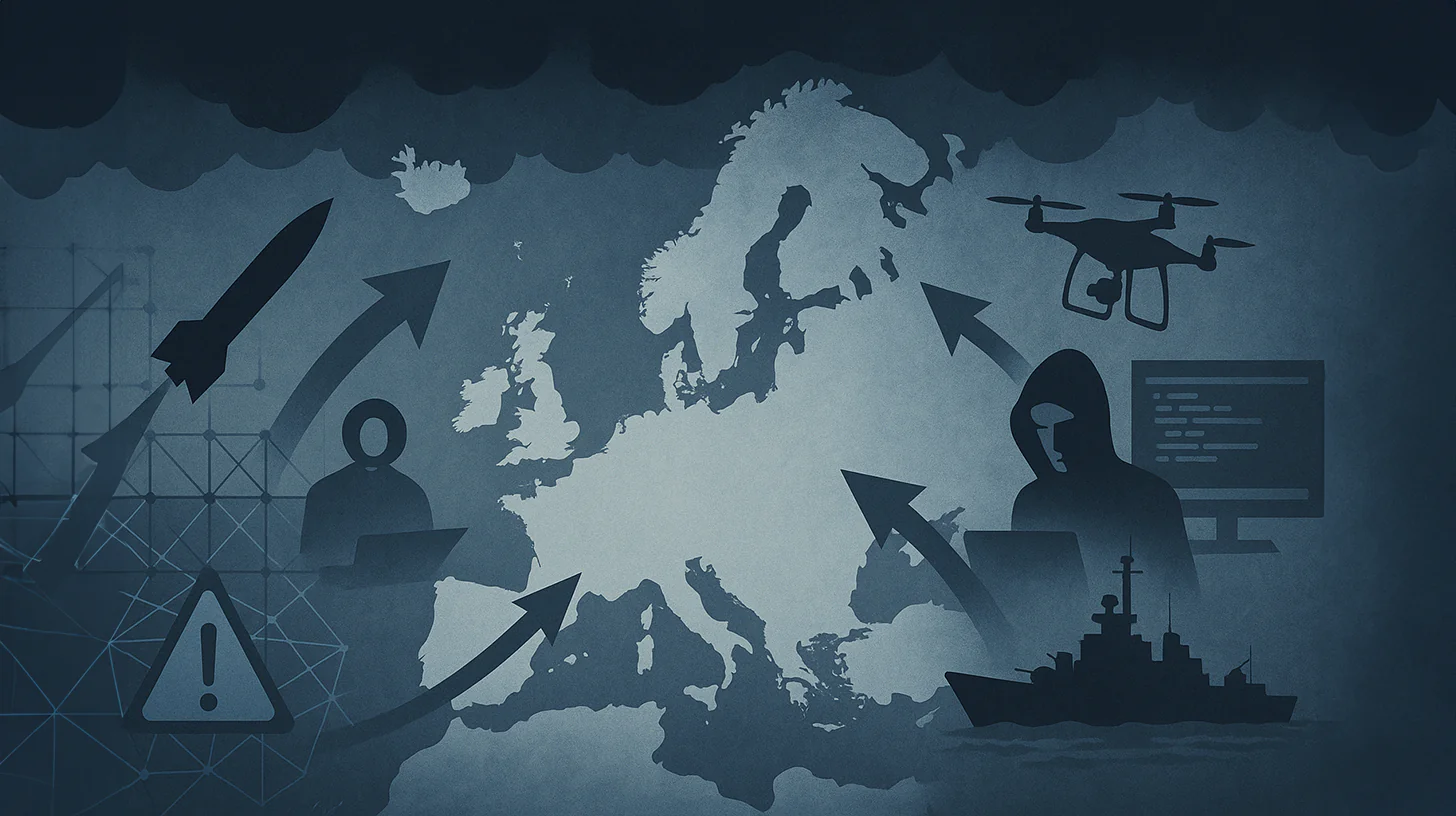
Europe's security architecture under pressure: threats and strategic challenges - Image: Xpert.digital
Europe's security crisis: new threats and missing strategies
Strategic reorientation: Europe's answer to global instability
Europe sees itself exposed to a stricter threat situation, which is characterized by Russian aggression, China's military advancement, increasing hybrid threats and instability in adjacent regions. At the same time, the most important security partner, the USA, is increasingly moving its strategic focus away from the European continent. This complex mixture fundamentally challenges the European security architecture and requires new strategic answers.
Russia's aggression as a central threat to Europe
Russia is currently the largest and most direct security threat to Europe. Federal Defense Minister Boris Pistorius unmistakably emphasized: "Putin's Russia is and will remain the greatest security threat to Europe for the foreseeable future." The threat goes beyond Ukraine-for Putin, the freedom-democratic lifestyle of Europe is the real enemy image.
Security experts and Western politicians warn of a possible further war of Russia in Europe in this decade. According to the Federal Intelligence Service, "Russian armed forces should be able to attack NATO at the end of this decade at the latest." This warning underlines the need for Europe to significantly strengthen its defense skills.
Three years after the start of the Russian invasion of Ukraine, the European security situation has further deteriorated. The gradual withdrawal of the United States from its defense policy leadership in Europe could accelerate after the recent change of power in Washington, which further tightens the already tense situation.
Changed safety environment through hybrid warfare
The threat of Russia is not only manifested in conventional military form. In a changing geopolitical landscape, hybrid threats from enemy foreign states and state -funded actors increase. These include cyber attacks, disinformation campaigns and hidden influence with the aim of destabilizing European democracies.
The Federal Government explicitly warns: "In particular, hybrid threats, also through disinformation and cyber attacks, have the potential to sustainably endanger the potential, the cohesion of member state societies, democratic processes in the EU and its Member States, as well as the unity of the member states in the joint decision-making."
China's military advancement as a strategic challenge
China's military advancement is a second, structurally growing challenge for European security. Within a few years, the Chinese military has developed into an important factor, the influence of which goes far beyond the indopacific region.
China has given up his former reserved foreign policy. Instead of Deng Xiaopings Maxim to "hide its strength and nourish its strength", or Hu Jintao's concept of a "peaceful advancement", Chinese state and party leadership under XI Jinping relies on the demonstration of military strength, massive upgrading, aggressive "wolf warrior" diplomacy and open threatening against neighboring countries.
Strategic coordination between China and Russia
The increasing strategic coordination between China and Russia is particularly worrying for Europe. China is present worldwide, also in the context of joint military exercises with Russia in the Mediterranean, in the Indian Ocean or in the Baltic Sea - i.e. in direct European neighborhood.
The tensions in the South China Sea and in Taiwanstrasse mount the risk of a hot conflict that could potentially lead to a military confrontation between China and the USA. Such a scenario would have enormous costs for Germany and Europe. Europe therefore has to deal with both direct and indirect effects of China's military rise.
Hybrid threats and the new European security strategy
In view of this complex threat situation, the European Union has developed a new strategy of internal security. The so-called "Proteceu" strategy aims to promote cultural change in the field of internal security and to improve the responsiveness of the Union to new and traditional security threats.
EU Vice Commission President Henna Virkkuns warned: "Our security environment has changed dramatically. Today's threats are big, global and increasingly in the digital world." She cited organized crime, terrorist networks, hybrid threats and attacks on critical infrastructure as concrete examples - often committed by enemy state actors.
Prevention and data exchange as a key elements
The new security strategy focuses on early detection and prevention. In the future, there will be regular EU-internal risk analyzes and increased data exchange between the Member States-including secret service information.
Another focus is on the protection of critical infrastructures against hybrid attacks such as cyber attacks that could paralyze hospitals or power grids. The fight against false information and illegal activities on the Internet was also classified as priority, since some of the most severe hybrid attacks on European security and democracy aimed at these areas.
🎯🎯🎯 Benefit from Xpert.Digital's extensive, fivefold expertise in a comprehensive service package | R&D, XR, PR & SEM

AI & XR 3D Rendering Machine: Fivefold expertise from Xpert.Digital in a comprehensive service package, R&D XR, PR & SEM - Image: Xpert.Digital
Xpert.Digital has in-depth knowledge of various industries. This allows us to develop tailor-made strategies that are tailored precisely to the requirements and challenges of your specific market segment. By continually analyzing market trends and following industry developments, we can act with foresight and offer innovative solutions. Through the combination of experience and knowledge, we generate added value and give our customers a decisive competitive advantage.
More about it here:
EU security architecture: paths to more autonomy and resilience
Strengthening the European security authorities
As part of the security strategy, European authorities are to be significantly strengthened. The border protection agency Frontex is to be expanded from currently around 10,000 to 30,000 employees. The Europol police authority is facing a “massive upgrade” and is to be converted into an “operational law enforcement authority”.
According to the plans of the EU Commission, Europol should double its number of employees and receive more powers in hidden investigations and witness protection programs. These measures are intended to improve the EU's ability to react more effectively to cross -border threats.
Instability to Europe's periphery
The security of Europe is also endangered by instability in adjacent regions. The President of the European Commission explained in its political guidelines 2024-2029 that a more comprehensive strategy of the EU requires the Middle East.
The Middle East is characterized by persistent conflicts and uncertainty. Hamas' terrorist attacks in October 2023 and the subsequent wars in the Gaza Strip and in Lebanon have left major devastation despite the ceasefire reached. The persistent hostility between Israel and Iran, which resulted in mutual direct attacks, arouses fears of further escalation.
Effects of the Ukraine War on the Middle East
The raid of Russia to Ukraine threatens to further tighten the problems of the Middle East. Many poorer countries in the region are already suffering from the high prices for grain and energy, which could continue to rise and inevitably lead to unrest. Such a development would further increase instability to Europe's periphery and could lead to new escape movements.
Europe's commitment in Africa
In Africa, the EU increasingly relies on the European peace facility (EPF) to support African partners in the field of peace and security. The latest decision to deliver nigrical armed forces shows an increase in EU efforts to build military capacities in partner countries.
However, such a one -sided focus on the construction of military capacity also harbors dangers. If he is not embedded in a comprehensive political strategy, there is a risk that he will not contribute to sustainable peace in fragile and conflict -affected countries.
The changed transatlantic security partnership
A central factor for European security architecture is the changing role of the United States. The United States increasingly shift their strategic focus towards the Indo-Pacific-a trend that started under President Obama and has strengthened in the following years.
The bidding administration has identified China as a primary security policy challenge, which leads to ever louder demands that other world regions should take part in this competition. This shift in US priorities has a direct impact on the security situation in Europe.
Preparation for less US support
European states have to prepare for less US support in the long term. After the change of power in Washington, the United States could be withdrawn from its defense policy leadership in Europe.
Even if NATO output is not up for debate, the ability to act could be severely restricted. In view of existing ability gaps and massive investment needs, the in -depth cooperation between EU and NATO can only partially mitigate this.
Europe's path to more safety autonomy
In view of these multi -layered challenges, Europe faces the urgent task of strengthening its safety autonomy. The European strategy of internal security is intended to improve the ability of the EU to ensure the security of its citizens.
Europe faces a historical challenge: the geopolitical tensions are piling up, the economic situation remains tense, and political instability is difficult to reform in defense policy. The steps towards a coherent European security strategy have so far remained too hesitant.
Structural challenges
The European security landscape has changed drastically. So far, NATO has been the foundation of collective defense, but there are great gaps in military skills and in the defense industry. Delivery bottlenecks in ammunition and air defense systems as well as outdated procurement policies show the need for action in Europe.
A robust European security architecture requires extensive investments, an independent defense budget of the EU and a reform of the principle of unanimity in the common security and defense policy (GSVP). However, in contrast to the need for funds and contract reforms, important reform steps are slowed down by nation -state interests.
The way to a safer Europe
Europe is in a critical phase of its security development. Russian aggression, China's military advancement, hybrid threats and regional instability are an unprecedented challenge in combination with the relocating US focus.
The EU has taken the first steps with initiatives such as the "Proteceu" strategy to counter these challenges. However, further determined measures are needed to make European security architecture future -proof.
Germany and France, the traditional engines of European integration, are currently unable to take a leadership role in European security and defense policy. As a result, multilateral formats of states in Eastern and Northern Europe are becoming more important.
In the coming years, the security of Europe will depend on to what extent to expand military skills, strengthen resilience against hybrid threats and to develop a more independent strategic position - without endangering the transatlantic partnership. A Herculean task that requires political will, sufficient resources and strategic foresight.
Advice - planning - implementation

Markus Becker
I would be happy to serve as your personal advisor.
Head of Business Development
Chairman SME Connect Defense Working Group
We are there for you - advice - planning - implementation - project management
☑️ SME support in strategy, consulting, planning and implementation
☑️ Creation or realignment of the digital strategy and digitalization
☑️ Expansion and optimization of international sales processes
☑️ Global & Digital B2B trading platforms
☑️ Pioneer Business Development
Konrad Wolfenstein
I would be happy to serve as your personal advisor.
You can contact me by filling out the contact form below or simply call me on +49 7348 4088 965 (Munich) .
I'm looking forward to our joint project.
Write to me

Xpert.Digital - Konrad Wolfenstein
Xpert.Digital is a hub for industry with a focus on digitalization, mechanical engineering, logistics/intralogistics and photovoltaics.
With our 360° business development solution, we support well-known companies from new business to after sales.
Market intelligence, smarketing, marketing automation, content development, PR, mail campaigns, personalized social media and lead nurturing are part of our digital tools.
You can find out more at: www.xpert.digital - www.xpert.solar - www.xpert.plus
Keep in touch











