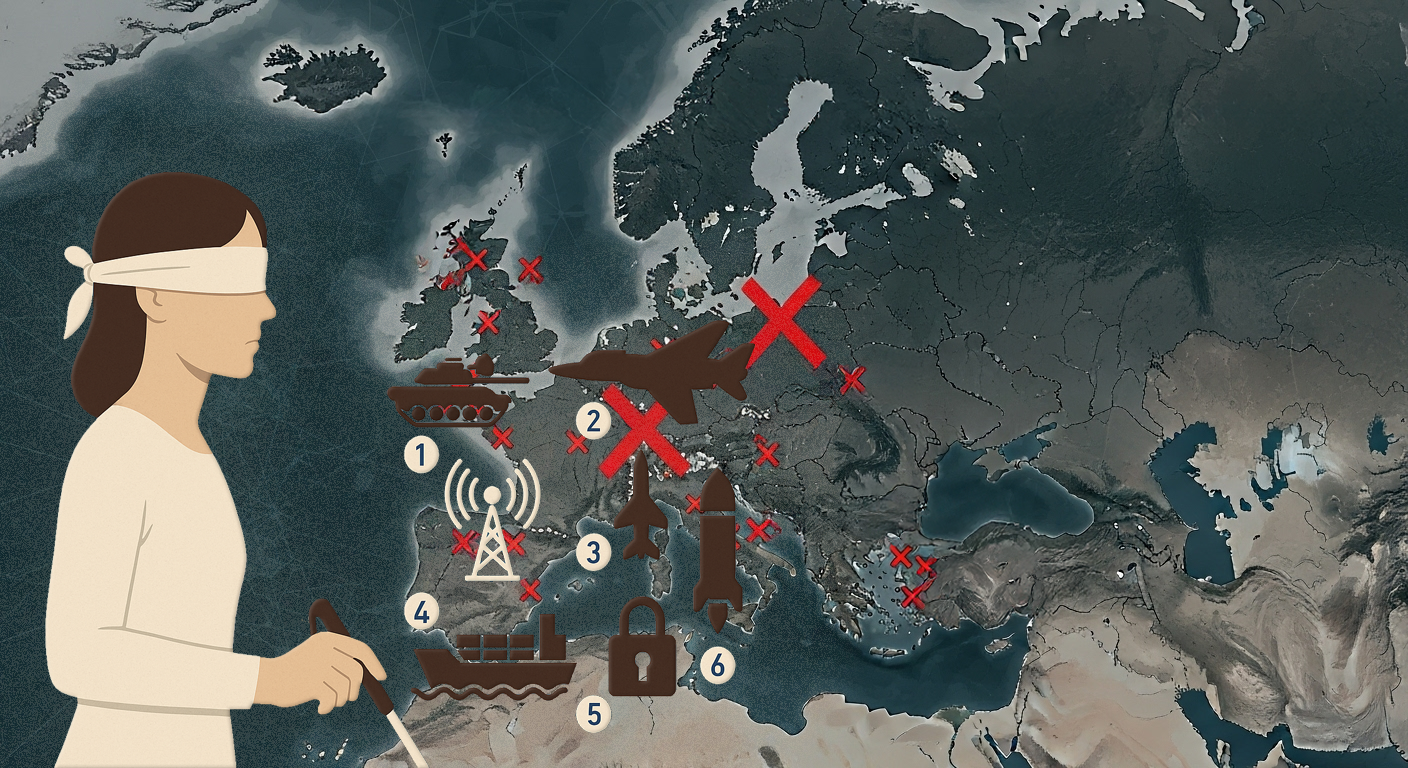
Blind and defenseless? Europe's dangerous dependence on the USA exposed – Without the USA: 6 fatal gaps – Image: Xpert.Digital
The decline in European support for the US reveals key gaps in Europe's defense
Strategic autonomy or illusion? Europe must now solve 6 key problems
The decades-long certainty that the United States would act as Europe's military protector is a thing of the past. As American focus shifts and transatlantic support diminishes, Europe is confronted with a stark reality: its own defense capabilities are riddled with dangerous dependencies and profound structural weaknesses. The crumbling US security shield serves not only as a political wake-up call but also, like a magnifying glass, exposes the critical gaps that fundamentally threaten Europe's security.
A detailed analysis of European defense architecture without US compensation reveals six key areas where urgent action is needed. These deficiencies are not superficial shortcomings, but rather strike at the heart of modern military capability. They range from the lack of independent reconnaissance and communication capabilities—the digital eyes and ears of any army—to dependence on American technology for command and control systems, and an alarming lack of offensive and defensive capabilities against modern threats such as hypersonic weapons and cyberattacks.
This article examines each of these six vulnerabilities – from intelligence and cyber warfare to precision weapons and missile defense, and from strategic mobility to the complex issue of nuclear deterrence. It is about more than just acquiring new weapons systems; it is about the strategic autonomy of an entire continent. This analysis demonstrates why Europe stands at a critical crossroads and what monumental efforts are required to safeguard its sovereignty in an increasingly uncertain world.
Related to this:

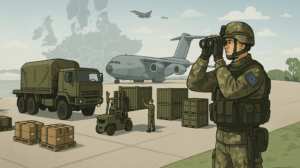
Six measures Europe needs to become militarily independent
- Intelligence, Surveillance and Communication (ISR)
- Strong dependence on US systems such as satellite communication (e.g. Starlink) and GPS, which makes Europe strategically “blind” and vulnerable to blackmail.
- Command, control and cyber skills (C2)
- Lack of proprietary, AI-supported command and control systems (Multi-Domain C2) and insufficient defense capabilities against cyber and electronic attacks on critical infrastructure.
- Offensive capabilities and precision weapons
- Significant investment backlog in long-range precision weapons, which are crucial for enemy air defense suppression (SEAD/DEAD) missions.
- Defensive systems, especially air and missile defense
- Lack of defense capabilities against modern threats such as hypersonic weapons and ballistic missiles, which makes critical infrastructures vulnerable.
- Logistics and Strategic Mobility
- Lack of ability to move troops and equipment quickly and efficiently over long distances and across national borders, as well as deficiencies in general operational readiness.
- Nuclear deterrence
- Nuclear deterrence lies solely in the hands of France and (former EU member) Great Britain, without a common European doctrine or strategy.
Related to this:
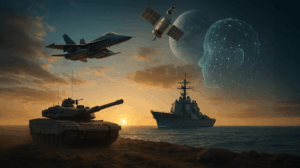
Europe's army at a crossroads: These weaknesses pose an existential threat
What fundamental weaknesses does European defense reveal when American support declines? Xpert.Digital is intensively studying this question, as it forms the basis for all further strategic considerations. Analysis of the available data reveals that Europe has significant shortcomings in six critical areas.
What does it mean, specifically, that Europe lacks its own intelligence, surveillance, and reconnaissance capabilities? This dependence on American systems represents a fundamental weakness. Europe has no independent access to satellite-based communications and relies on American systems like Starlink and GPS. This dependence means that European defense operations can be hampered at any time by US political decisions.
How serious is the lack of modern intelligence systems? The high demand for advanced systems like the CSO-3 shows that Europe urgently needs to develop its own capabilities. Without independent intelligence capabilities, Europe remains strategically blind and unable to make autonomous security decisions.
Command and control systems as a strategic weakness
Why is the heavy reliance on American providers for AI-powered battlefield command and control systems so problematic? This reliance touches the very core of modern warfare. Multi-domain C2 systems coordinate operations across land, sea, air, space, and cyberspace. Without its own systems, Europe cannot conduct independent military operations.
How can hybrid and electronic attacks increase the need for cyber and electronic warfare capabilities? The modern threat landscape shows that traditional kinetic attacks are increasingly being supplemented or replaced by cyber operations and electronic warfare. Critical infrastructures such as power grids, communication systems, and transport networks are becoming primary targets. Europe must therefore develop robust defense systems against these new forms of threat.
What does the term Multi-Domain-C2 mean in practical application? These systems must seamlessly integrate different operational domains and make real-time decisions based on complex data analysis. Artificial intelligence plays a central role in processing enormous amounts of data and identifying threat patterns.
Offensive capabilities and investment backlog
What are the implications of the significant investment backlog in long-range precision weapons? Europe faces the challenge that modern conflicts are increasingly fought over long distances. SEAD and DEAD missions to suppress enemy air defense systems require highly advanced weapons systems, which Europe currently does not possess in sufficient quantities.
How are SEAD and DEAD missions defined, and why are they so important? SEAD stands for Suppression of Enemy Air Defenses, while DEAD stands for Destruction of Enemy Air Defenses. These missions are crucial for air superiority and enable the neutralization or destruction of enemy air defense systems. Without these capabilities, air operations cannot be successfully conducted.
What makes long-range precision weapons so important for modern military operations? These weapon systems make it possible to engage strategic targets from a safe distance without exposing friendly troops to unnecessary risks. They offer a cost-effective alternative to large-scale ground operations and can end conflicts more quickly and with fewer casualties.
Defensive challenges and threat scenarios
Why do Russia's and China's advances in low-level strikes and hypersonic weapons necessitate a rapid EU air and missile defense system? These new weapon systems are fundamentally altering the strategic balance. Hypersonic weapons can bypass traditional defense systems and reach strategic targets in a very short time. Europe must therefore fundamentally modernize its defense systems.
How vulnerable is Europe's critical infrastructure really? Telecommunications systems and power plants are inadequately protected and urgently require air and missile defense systems. A failure of these systems would not only hinder military operations but also significantly disrupt civilian life.
What does it mean when critical infrastructure becomes a military target? In modern conflicts, the lines between civilian and military objectives are blurred. Power plants, communication networks, and transportation infrastructure are vital for both the civilian population and military operations. An attack on these systems can have devastating consequences.
Logistics and strategic mobility
What problems arise from the lack of modernization of strategic mobility? The ability to transport troops and equipment quickly and efficiently is crucial for any modern army. Europe is lagging behind in modernizing its transport and logistics systems, which significantly limits its ability to respond to threats.
How is strategic mobility defined in the context of modern warfare? Strategic mobility encompasses the ability to move large quantities of personnel, equipment, and supplies over long distances. This includes not only the transport itself, but also the coordination of complex logistical operations across national borders.
Why are personnel readiness and combat capability critical factors? Even the best equipment is useless without well-trained and ready personnel. Europe must invest in both the technical equipment and the training and preparation of its armed forces.
Nuclear deterrence and European sovereignty
What challenges arise from the fact that only France and the United Kingdom possess nuclear deterrents? This situation creates an imbalance within Europe and raises questions about collective security and strategic autonomy. Most EU member states depend on the nuclear guarantees of other countries.
How is British-French nuclear cooperation and coordination developing? Despite the deepened cooperation between these two nuclear powers, EU-wide discussions on a common nuclear strategy are still pending. This situation is further complicated by Brexit, as the United Kingdom is no longer a member of the EU.
What does it mean for the European security architecture if nuclear discussions at the EU level are still pending? The absence of a common nuclear doctrine weakens Europe's position in international negotiations and makes its deterrence strategy unpredictable. Potential aggressors can exploit this uncertainty.
Strategic Implications of the American Support Reduction
Why does the decline in American support pose such fundamental challenges for Europe? Decades of dependence on American security guarantees have led Europe to neglect its own defense capabilities. This strategy was cost-effective but created dangerous dependencies.
How can Europe regain its strategic autonomy? The path to strategic autonomy requires massive investments in all six identified areas: intelligence and communication, command and control, offensive capabilities, defensive systems, logistics and mobility, and deterrence. This is not only a technical challenge, but also a political and economic one.
What timeframes are realistic for building independent European defense capabilities? Developing complex weapons systems and military infrastructure takes years or even decades. Europe therefore faces the challenge of closing short-term gaps while simultaneously building long-term capabilities.
Intelligence and communication as cornerstones of defense
How critical is the lack of EU-owned ISR capabilities for European security? Intelligence, Surveillance, and Reconnaissance form the nervous system of modern armed forces. Without these capabilities, armies operate virtually blind and can neither detect threats early nor respond appropriately.
What does it mean in practical terms that Europe has only limited access to American systems like Starlink and GPS? This dependence can be disastrous in critical situations. If the US restricts access for political reasons or if technical problems arise, Europe is left without alternative communication channels.
Why is the high demand for modern reconnaissance systems like the CSO-3 so significant? The French CSO reconnaissance satellite system demonstrates that Europe is indeed capable of developing state-of-the-art systems. However, the high demand for such systems underscores that existing capacities are far from sufficient.
Cyber warfare and electronic threats
What new dimensions do hybrid and electronic attacks open up for potential aggressors? These attack methods make it possible to inflict significant damage without using traditional military means. Cyberattacks can cripple infrastructure, while electronic warfare disrupts communication systems.
How can European armed forces prepare themselves against these new forms of threat? Protection against cyber and electronic attacks requires entirely new approaches. Traditional defense strategies fall short here. Instead, specialized systems and training programs are needed.
What makes defending against cyberattacks so complex? Cyber threats are constantly evolving and can appear out of nowhere. Attackers often exploit civilian infrastructure and technologies, which complicates defense. Furthermore, attributing attacks to specific actors is often difficult.
Hub for Security and Defense - Advice and Information

Hub for Security and Defense - Image: Xpert.Digital
The Security and Defence Hub offers expert advice and up-to-date information to effectively support companies and organizations in strengthening their role in European security and defence policy. Working closely with the SME Connect Defence Working Group, it particularly promotes small and medium-sized enterprises (SMEs) that wish to further develop their innovative capacity and competitiveness in the defence sector. As a central point of contact, the Hub thus creates a crucial bridge between SMEs and European defence strategy.
Related to this:
Critical infrastructure: Europe's vulnerable backbone
Precision weapons and modern warfare
Why do long-range precision weapons represent such a decisive advantage? These weapon systems make it possible to engage strategic targets with minimal collateral damage and low risk to friendly troops. They can quickly resolve conflicts and achieve political objectives with limited military expenditure.
How do SEAD and DEAD operations work in practice? These operations are highly complex and require precise coordination of various weapon systems. First, enemy radar installations are identified and located, then they are either temporarily jammed or permanently destroyed.
What impact does an investment backlog in this area have on overall defense capabilities? Without modern precision weapons, Europe is forced to either exert massive pressure on allies in conflicts or resort to outdated, less effective methods. This weakens its negotiating position in international crises.
Related to this:
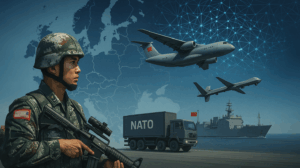
Hypersonic weapons and the future of missile defense
What makes hypersonic weapons so revolutionary and threatening? These weapons fly at more than five times the speed of sound and can change their trajectory mid-flight. Traditional missile defense systems are virtually ineffective against them because they are too fast and unpredictable.
How are Russia's and China's advances in low-level strikes changing the strategic balance? These countries can now attack strategic targets deep within Europe's interior without Europe possessing effective countermeasures. This forces Europe to completely reassess its defense strategy.
What technological breakthroughs are needed for effective hypersonic defense systems? Developing effective defense systems requires revolutionary advances in sensor technology, data processing, and weapon systems. Directed-energy weapons such as lasers could offer a solution, but are not yet sufficiently mature.
Critical infrastructures as strategic vulnerabilities
Why are telecommunications systems and power plants so vulnerable and yet so vital? These systems form the backbone of modern societies and armies. A failure can lead to a complete collapse of civil and military order within hours or days.
How can air and missile defense systems protect critical infrastructure? Modern defense systems must be strategically positioned to protect vital facilities. This requires a comprehensive risk analysis and the prioritization of the most critical installations.
What role does civil-military cooperation play in protecting critical infrastructure? Protecting these facilities requires close cooperation between military and civilian authorities. Private companies operating critical infrastructure must be included in defense planning.
Strategic mobility and logistical challenges
What exactly does the modernization of strategic mobility entail? This includes not only new means of transport, but also improved command and control systems, standardized equipment, and streamlined logistics processes. The ability to rapidly deploy troops and equipment is crucial.
How does a lack of strategic mobility impair military effectiveness? Without rapid deployment capabilities, armed forces cannot respond to threats in a timely manner. This gives aggressors a crucial time advantage and can lead to the creation of a fait accompli.
What specific challenges arise from Europe's geographical structure? Europe consists of many different countries with varying standards, infrastructures, and bureaucratic processes. Coordinating troop movements across national borders is therefore particularly complex.
Related to this:
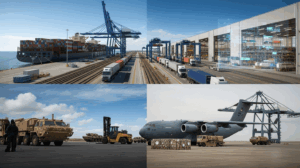
Personnel and combat readiness
Why are personnel readiness and combat capability such critical factors? Modern weapons systems are highly complex and require intensive training. Without well-trained personnel, even the most advanced technologies are useless. Furthermore, troop motivation and morale are crucial for success.
How can European armed forces solve their personnel problems? This requires a multi-pronged approach: better pay and working conditions, modern equipment, meaningful missions, and public recognition. The digitalization of the armed forces can also attract young people.
What impact do demographic changes have on personnel recruitment? Europe is facing an aging society, which makes recruiting young people more difficult. At the same time, the qualification requirements for military personnel are constantly increasing.
Nuclear complexities and European integration
How does Brexit affect nuclear cooperation between France and the United Kingdom? The UK's withdrawal from the EU significantly complicates the coordination of nuclear strategies. While the UK remains a NATO member, it is no longer involved in EU decision-making processes.
Why are EU-wide discussions on nuclear deterrence so difficult? Nuclear weapons are the ultimate instrument of state sovereignty. France is understandably reluctant to share control over its nuclear arsenal. At the same time, non-nuclear EU states have differing views on nuclear strategies.
What alternatives exist to developing a common European nuclear doctrine? Europe could develop enhanced deterrence guarantees without necessarily striving for full integration of nuclear arsenals. Strengthening conventional deterrence could also reduce the importance of nuclear weapons.
Market opportunities and industrial implications
What business opportunities arise from the identified defense gaps? Each of the six critical areas offers significant market potential for companies that can develop innovative solutions. From satellite communications to hypersonic defense systems, new technologies are in demand.
How can companies benefit from the necessary modernization of European defense? Closing the identified gaps requires massive investments in research and development. Companies with the relevant expertise can enter into long-term contracts and partnerships with European governments.
What role does Franco-German defense cooperation play in addressing these challenges? Germany and France are already working on joint projects such as the Future Combat Air System. This cooperation could serve as a model for further European defense projects and reduce costs.
Time urgency and prioritization
Which of the identified gaps should be addressed as a priority? Reconnaissance and communication, as well as cyber defense, likely have the highest urgency, as they are relatively quick to develop and offer immediate benefits. Hypersonic defense and nuclear integration are longer-term projects.
How can short-term solutions be combined with long-term strategies? Europe needs to develop interim solutions while simultaneously working on permanent capacities. This could mean initially licensing American or other systems while developing its own alternatives.
What factors determine the speed at which Europe can close its defense gaps? Political will, available financial resources, technological expertise, and industrial capacity are the decisive factors. The international security situation can also act as a catalyst or an obstacle.
Technological sovereignty and dependency reduction
Why is technological sovereignty so crucial in defense? Dependence on foreign technologies can be exploited in critical situations. Supply disruptions, sanctions, or technical backdoors can jeopardize national security.
How can Europe find a balanced approach between cooperation and autonomy? Complete self-sufficiency is neither possible nor desirable, but critical dependencies must be reduced. Europe should focus on key technologies and forge strategic partnerships with trusted allies.
Which industries and technologies are most important for European defense autonomy? Semiconductors, AI systems, satellite technology, cybersecurity, and advanced materials are likely the most critical areas. These technologies have both civilian and military applications.
Financial challenges and investment strategies
What are the financial dimensions of the necessary investments to close the defense gaps? The costs will likely amount to hundreds of billions of euros over several decades. This necessitates a fundamental reassessment of the defense budgets of European countries.
How can the enormous costs be distributed among European countries? A common European defense fund could distribute the costs fairly and create synergies. Alternatively, countries could specialize in specific capabilities and share them with others.
What economic side effects can be expected from defense investments? Military research and development often leads to civilian innovations. The investments could strengthen European technology companies and create new jobs in high-tech sectors.
International dimensions and alliances
How does the changing geopolitical situation affect European defense requirements? The rise of China, the increasing aggression of Russia, and the uncertainty surrounding long-term American commitment are fundamentally altering the security landscape.
What role can partnerships with countries outside the EU play? Cooperation with countries like Japan, South Korea, or Australia could close technological gaps and reduce costs. These countries face similar challenges and could be valuable partners.
How can Europe coordinate its defense efforts with NATO commitments? European defense integration must be complementary to NATO membership, not competitive. This requires careful political and military coordination.
Strategic Recommendations
What are the key findings from the analysis of European defense gaps? Europe faces its greatest security policy challenge since the end of the Cold War. The identified gaps in six critical areas not only jeopardize military capability but also political sovereignty.
What steps should Europe prioritize? First, the most pressing gaps in intelligence and cybersecurity must be closed. In parallel, work should begin on long-term solutions for hypersonic defense and nuclear integration. This will require unprecedented political resolve and financial resources.
How can a crisis be turned into an opportunity? The necessary investments can make Europe a leading center for defense technologies. Developing its own capabilities will not only strengthen security but also improve technological and economic competitiveness.
This analysis clearly shows that while the decline in American support creates challenges, it also offers Europe the opportunity to finally achieve strategic autonomy. The path will be long and costly, but the alternative—permanent dependence and vulnerability—is unacceptable for a region of Europe's economic and political importance.
Consulting - Planning - Implementation

Markus Becker
I would be happy to serve as your personal advisor.
Head of Business Development
Chairman SME Connect Defense Working Group
Consulting - Planning - Implementation
Konrad Wolfenstein
I would be happy to serve as your personal advisor.
You can contact me at wolfenstein∂xpert.digital or
Just call me on +49 7348 4088 965 .