
From “Readiness 2030” to SAFE: 19 of 27 EU member states want billions in loans for armaments projects – for security and defense
Xpert Pre-Release

Available in 27 languages 📢
Prefer Xpert.Digital on GoogleⓘPublished on: August 30, 2025 / Updated on: August 30, 2025 – Author: Konrad Wolfenstein
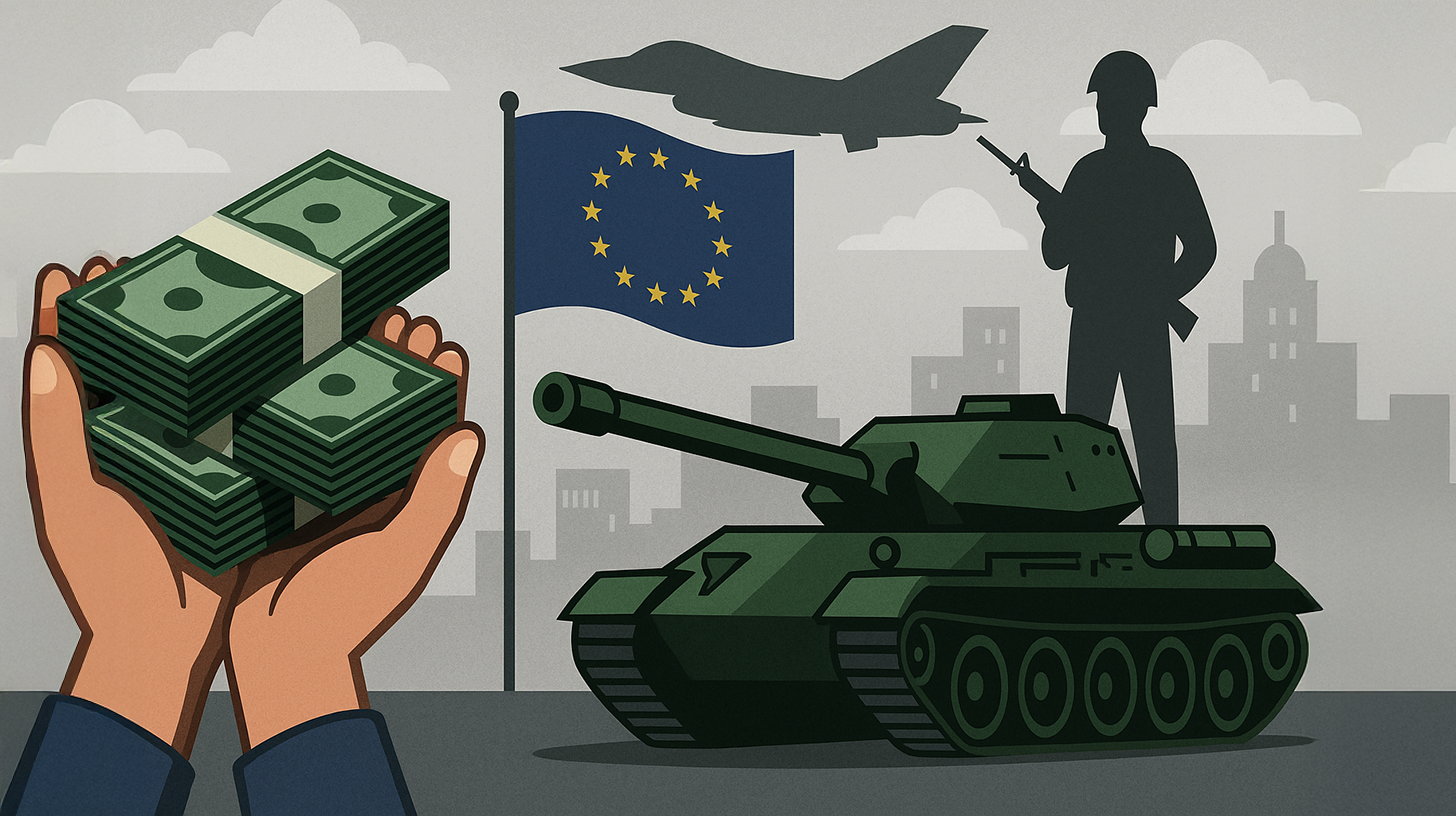
From “Readiness 2030” to SAFE: 19 of 27 EU member states want billions in loans for armaments projects – for security and defense – Image: Xpert.Digital
Europe's future strategy for security and defense: EU pools resources for security, armaments and geopolitical independence
Europe's New Defence Strategy: The SAFE Programme and the Reorganization of Security Policy
The emergence of European defense financing
The European Union has ushered in a new era of joint defense financing with the introduction of the SAFE (Security Action for Europe) financing instrument. According to European Commission President Ursula von der Leyen, 19 of the 27 member states have already signaled their interest in this groundbreaking program. This high level of demand indicates a fundamental shift in the European security architecture, driven by the ongoing Russian threat and uncertainty surrounding American security guarantees.
The SAFE instrument forms the core of a broader plan, originally called “ReArm Europe” but later renamed “Readiness 2030.” This initiative aims to mobilize a total of €800 billion for European defense. Of this sum, €150 billion will be provided through direct loans via the SAFE program, while a further €650 billion is to be made available by activating national escape clauses in the Stability and Growth Pact.
The European Commission will issue bonds backed by the EU budget and then pass these funds on to interested member states as long-term loans on favorable terms. This structure allows participating countries to benefit from the EU's strong credit rating and reduce financing costs, which would be higher with national borrowing.
Suitable for:
- Institutional dispute over Europe's arms program: 150 billion euro arms program SAFE (Security Action for Europe)

- An analysis of the logistical dimensions - strengths and weaknesses to joint white paper for European Defense Readiness 2030


Strategic background and threat analysis
The urgency of this financing initiative is underscored by alarming assessments from European intelligence agencies. The president of the German Federal Intelligence Service (BND), Bruno Kahl, warned as early as October 2024 that Russian armed forces would likely be capable of launching an attack on NATO by the end of the decade at the latest. This assessment is supported by a joint evaluation of the situation by the BND and the German Armed Forces, which concludes that Russia will probably create all the necessary conditions to wage a “large-scale conventional war” by the end of the decade.
EU Defense Commissioner Andrius Kubilius reinforced these warnings, noting that Russia now produces more tanks than are deployed on the front lines. The systematic stockpiling of military equipment suggests that Moscow is preparing for future conflicts that could extend beyond Ukraine. Experts view Russia as being in a fundamental systemic conflict with the West and attest to the country's willingness to pursue imperialist goals through military force.
This threat analysis leads to the conclusion that Europe is no longer debating whether higher defense spending is necessary, but rather how quickly and decisively action can be taken. The SAFE initiative is therefore not just a financial measure, but a political signal for a new European responsibility in security policy.
Functioning and structure of the SAFE program
The SAFE instrument, adopted by the EU Council in May 2025, is based on the principle of joint procurement to maximize efficiency and interoperability. In principle, projects must be undertaken by at least two countries, although a transitional arrangement allows for national projects to address geopolitical urgency. This flexibility enables member states to close critical defence gaps in a timely manner while simultaneously promoting long-term cooperation.
A key component of the program is the European preferential procurement scheme. At least 65 percent of the value of the procured defense equipment must originate from the European Union, Ukraine, or a country within the European Economic Area. The remaining 35 percent can be sourced from third countries, with certain partners through security and defense partnerships receiving preferential status. The EU has already concluded seven such partnerships, including with Norway, Moldova, South Korea, Japan, Albania, North Macedonia, and, most recently, the United Kingdom.
Ukraine occupies a special position in this context. In SAFE projects, it is treated on the same level as EU member states, analogous to the EEA countries. This integration goes far beyond ordinary cooperation and reflects the EU's strategic interest in closely integrating the Ukrainian defense industry into the European defense architecture. Ukraine's progress, particularly in areas such as drone technology and artificial intelligence, makes it a valuable partner for the European defense industry.
German position and industrial impacts
Germany occupies a special position within the SAFE program. The Federal Republic does not intend to take advantage of the offered loans for the time being, as its strong financial position allows it to obtain loans on the capital market at very favorable conditions even without EU support. This reluctance distinguishes Germany from other large EU countries such as France, Italy, and Spain, which have already expressed their interest in the SAFE loans.
Nevertheless, Germany could indirectly benefit significantly from the program. German defense companies are well-positioned to secure contracts financed through the SAFE program. The German defense industry, with its technological expertise and production capacity, is likely to profit from the increased demand for European defense equipment without requiring the German government itself to take out loans.
Supporting small and medium-sized enterprises (SMEs) is another important aspect of the SAFE program. Innovative SMEs and start-ups are to be more actively involved in research and development in order to diversify the technological base of the European defense industry. The European Investment Bank has already announced that it will triple its financing program for European defense suppliers to three billion euros, thereby also giving smaller companies better access to financing.
Legal controversies and parliamentary opposition
The SAFE program was not introduced without controversy. The European Parliament has strongly criticized the way it was implemented, as it was adopted without direct parliamentary involvement. Parliament President Roberta Metsola warned Commission President von der Leyen in a letter that MEPs could consider taking legal action before the European Court of Justice (ECJ).
The point of contention lies in the chosen legal basis. The European Commission relied on Article 122 of the Treaty on the Functioning of the European Union (TFEU), which has already been used several times for emergency measures. This article allows the Council, on a proposal from the Commission and in the spirit of solidarity between member states, to adopt decisions without involving the Parliament. Parliamentarians argue that this legal basis is unsuitable for an arms program, as it jeopardizes the democratic legitimacy and oversight function of the Parliament.
A legal opinion commissioned by the German Bundestag has also reportedly concluded that SAFE, in its current form, may violate EU treaties. These legal concerns could lead to lengthy legal proceedings, potentially delaying the program's implementation. Members of the FDP (Free Democratic Party) have already threatened that, in addition to filing a lawsuit with the European Court of Justice, Parliament could use other means against the Commission, including blocking the EU budget.
Hub for security and defense - advice and information

Hub for security and defense - Image: Xpert.digital
The hub for security and defense offers well-founded advice and current information in order to effectively support companies and organizations in strengthening their role in European security and defense policy. In close connection to the SME Connect working group, he promotes small and medium -sized companies (SMEs) in particular that want to further expand their innovative strength and competitiveness in the field of defense. As a central point of contact, the hub creates a decisive bridge between SME and European defense strategy.
Suitable for:
SAFE program: Europe's strategic defense transformation with an investment volume of 800 billion euros
The SAFE (Security and Action for Europe) program is a key component of the current strategy for transforming European defence, but the program's investment volume itself currently amounts to up to €150 billion. The often-cited figure of €800 billion refers to the overall target of all defence-related investments by EU member states by 2030 within the framework of various initiatives such as "ReArm Europe" and "Readiness 2030", to which SAFE contributes as a financing instrument.
Implementation and initial experiences
The practical implementation of the SAFE program has already begun. By July 2025, 18 EU member states had formally expressed their interest. Belgium, Bulgaria, Estonia, Finland, France, Greece, Italy, Croatia, Latvia, Lithuania, Poland, Portugal, Romania, Slovakia, Spain, Czech Republic, Hungary, and Cyprus signaled interest in loans intended to mobilize investments of at least €127 billion.
EU Commissioner for Defence and Space, Andrius Kubilius, described the strong interest as a symbol of the EU's unity and ambitious goal in the areas of security and defence. The early expression of interest allows the Commission to assess demand and prepare for raising funds on the capital markets. The deadline for formal applications is set for 30 November 2025.
The SAFE program also includes innovative tax provisions. A new VAT exemption has been introduced, exempting supplies, intra-Community acquisitions, and imports of defense goods from VAT, provided they were acquired under the SAFE program. This genuine tax exemption does not restrict the right to deduct input tax and is intended to further reduce defense procurement costs.
Suitable for:

European defense industry in transition
The SAFE program is part of a broader transformation of the European defense industry. The White Paper on European Defence, presented alongside SAFE, identifies Russia as an existential threat and emphasizes the need to develop strategic military capabilities such as air and missile defense, artillery, drones, and military artificial intelligence.
A key objective is to reduce dependence on third countries for arms procurement. National markets are to be consolidated, and areas of innovation such as drone technology and AI are to be promoted. Joint arms procurement is seen as the key to a more efficient and cost-effective defense policy. Instead of each member state arming itself in isolation, a coordinated system is to be created that avoids duplication of structures and leverages synergies.
Strengthening the European Defence Technology and Industrial Base (EDTIB) is at the heart of these efforts. The program aims to close critical capability gaps, increase industrial capacity, and foster a more resilient and competitive European defence industry. This will benefit not only large corporations but also, and especially, the integration of innovative SMEs and start-ups into the value chains.
Suitable for:

Geopolitical implications and alliances
The SAFE program signals a new phase in European foreign and security policy. The initiative reflects the recognition that Europe must assume greater responsibility for its own security in an increasingly multipolar world. Uncertainty surrounding American security guarantees, exacerbated by the policies of the Trump administration, has underscored the need for European strategic autonomy.
Ukraine's special integration into the SAFE program has far-reaching geopolitical implications. It signals not only long-term support for Ukraine, but also the EU's willingness to expand its security architecture beyond traditional borders. Close cooperation with the Ukrainian defense industry could set a precedent for future partnerships with other strategically important countries.
Security and defense partnerships with third countries such as the UK, Japan, and South Korea demonstrate that the EU is developing a new alliance strategy. These partnerships allow for the pooling of technological expertise and production capacities without pursuing the political integration that would be required for EU membership. Similar points of contact could be offered to countries like Canada, Turkey, or even India in the future.
Financial mechanisms and market effects
The financing structure of the SAFE program leverages the EU's strong credit rating to provide member states with access to favorable long-term loans. This structure is similar to other EU financial instruments, such as the Recovery and Resilience Facility, which was introduced to address the COVID-19 pandemic. The EU bonds are backed by the EU budget, providing additional security for institutional investors.
The effects on financial markets are already being felt. The announcement of the SAFE program has led to increased demand for securities of European defense companies. At the same time, the coordinated activation of the national escape clauses of the Stability and Growth Pact allows member states additional fiscal flexibility for defense spending of up to 1.5 percent of gross domestic product.
This fiscal flexibility is particularly important for countries that have previously struggled to increase their defense spending due to EU debt rules. The Commission expects this to unlock €650 billion in additional military spending, with 15 member states reportedly already having requested the escape clause.
Technological innovation and future viability
The SAFE program places particular emphasis on promoting future technologies. Areas such as cybersecurity, artificial intelligence, drone technology, and space capabilities are the focus of its funding. This focus reflects the understanding that future conflicts will increasingly be decided by technological superiority.
The integration of dual-use technologies is another important aspect. Many of the supported technologies have both civilian and military applications, which increases investment efficiency and strengthens the overall innovative capacity of the European economy. Programs such as EUDIS (EU Defence Innovation Scheme) and the European Defence Fund are already revolutionizing the support of such technologies for SMEs and start-ups.
Collaboration with leading technology companies is becoming increasingly important. For example, the European Investment Bank has signed a €385 million financing agreement with the Spanish technology group Indra Group to advance research, development, and innovation for cutting-edge technologies in the defense and space sectors. Such partnerships demonstrate how the SAFE program can strengthen industrial champions while simultaneously promoting technological sovereignty.
Challenges and criticisms
Despite political support for the SAFE program, significant challenges remain in its implementation. The European Parliament's legal concerns could lead to delays and call into question the program's democratic legitimacy. The fact that such a substantial financial instrument was introduced without parliamentary involvement raises fundamental questions about democratic processes in EU defense policy.
Another point of criticism concerns the risk of fragmentation in the European defense market. Although the SAFE program is intended to promote joint procurement, there is a risk that national interests and industry lobby groups will hinder coordination. Experts warn that without a truly integrated approach, efficiency gains could remain limited.
The economic sustainability of the program is also being questioned. The planned €800 billion in defense spending over four years represents a massive fiscal burden that could negatively impact other policy areas. Critics argue that such a militarization of EU policy could come at the expense of investments in education, climate protection, and social programs.
From civilian to military: Europe's geopolitical repositioning
The SAFE program marks a turning point in European integration. For the first time in the EU's history, such a large-scale financing instrument is being used for defense purposes. This development could pave the way for further integration in security and defense policy and ultimately lead to the creation of a genuine European defense union.
The industrial impact will be felt in the long term. The massive funding is expected to lead to a consolidation of the European defense industry, potentially giving rise to globally competitive European champions. At the same time, the program offers smaller companies the opportunity to grow in niche areas and develop innovative solutions.
The geopolitical implications extend far beyond Europe. The SAFE program signals to other world powers, particularly the US, China, and Russia, that Europe is prepared to assume greater responsibility for its own security. This could contribute to a rebalancing of the global security architecture and make Europe a more independent actor in international crises.
The coming years will be crucial in determining whether the SAFE program can achieve its ambitious goals. Successful implementation depends on the EU's ability to overcome national particularities, foster genuine cooperation, and simultaneously guarantee democratic oversight. If the program proves successful, it could serve as a blueprint for further European integration steps in strategically important areas.
The transformation of Europe from a primarily civilian actor to one capable of military action is being significantly accelerated by the SAFE program. This development reflects the changed geopolitical realities of the 21st century and demonstrates the EU's commitment to addressing the security challenges of a multipolar world. The success or failure of this ambitious undertaking will decisively shape the future of European integration and Europe's role in global politics.
Legal dispute over SAFE arms program: Status of the lawsuit still open (as of August 30, 2025)
In June 2025, the European Parliament filed an action for annulment against the €150 billion SAFE (Security Action for Europe) defense program with the European Court of Justice (ECJ). However, a final ruling has not yet been issued – the proceedings are still pending.
Background of the legal dispute
The European Commission under Ursula von der Leyen proposed the SAFE program in March 2025 as part of its broader “ReArm Europe” plan, which aims to mobilize a total of €800 billion for defense investments by 2030. The €150 billion loan package was adopted by the EU member states at the end of May 2025 on the basis of Article 122 of the EU Treaty – an emergency clause that excludes parliamentary involvement.
Legal disputes
The European Parliament's Legal Affairs Committee unanimously decided to file a lawsuit, as both the committee and the parliament's legal service consider the application of Article 122 to be legally incorrect. The main points of criticism are:
Procedural objections:
- The Commission failed to provide a convincing explanation as to why it did not choose a legal basis that would have involved Parliament
- The complete exclusion of parliamentary involvement in the use of taxpayers' money is "unacceptable"
- The conditions for the emergency clause were “simply not met”
Institutional power struggles:
René Repasi (SPD), the coordinator of the Legal Affairs Committee, criticized a “comprehensive pattern” of power consolidation by von der Leyen: “During President von der Leyen’s second term, parliament was increasingly treated not as a democratic partner, but as an obstacle.”.
Current status and impact
The proceedings continue
Despite intensive research, no evidence was found of a previous ECJ ruling on the SAFE program. The legal proceedings are still pending.
The program remains active
Despite the ongoing legal challenge, the SAFE program is operational. Nineteen of the 27 EU member states have already expressed interest in the low-interest loans. The European Commission describes the demand as so high that the entire €150 billion has already attracted interest.
Possible consequences
Should the ECJ uphold the complaint, the SAFE program would be “legally invalid” and would have to be relaunched in accordance with the judicial requirements – possibly with greater involvement of the EU Parliament.
Political dimensions
The dispute highlights fundamental tensions between efficiency and democratic control within the EU. While the Commission points to the urgency of the security situation – intelligence agencies estimate that Russia could be ready for conflict again by 2030 – Parliament insists on its rights of participation.
Germany occupies a special position: Although it has applied for a temporary exemption from EU debt rules for defence spending, it is not expected to make use of the SAFE loans, as it can obtain more favorable financing conditions on the capital market.
The legal dispute surrounding the SAFE program is still unresolved. The European Parliament is fighting for its democratic participation rights before the European Court of Justice, while the controversial arms program continues in parallel and is experiencing high demand. A ruling from the European Court of Justice is still pending.
Advice - planning - implementation

Markus Becker
I would be happy to serve as your personal advisor.
Head of Business Development
Chairman SME Connect Defense Working Group
Advice - planning - implementation
Konrad Wolfenstein
I would be happy to serve as your personal advisor.
contact me at wolfenstein ∂ xpert.digital
Just call me on +49 7348 4088 965 (Munich) .





