
High-tech instead of bureaucratic red tape: How the Erding Innovation Center is finally supposed to make the German Armed Forces more combat-ready
Xpert pre-release

Language selection 📢
Published on: January 1, 2026 / Updated on: January 1, 2026 – Author: Konrad Wolfenstein
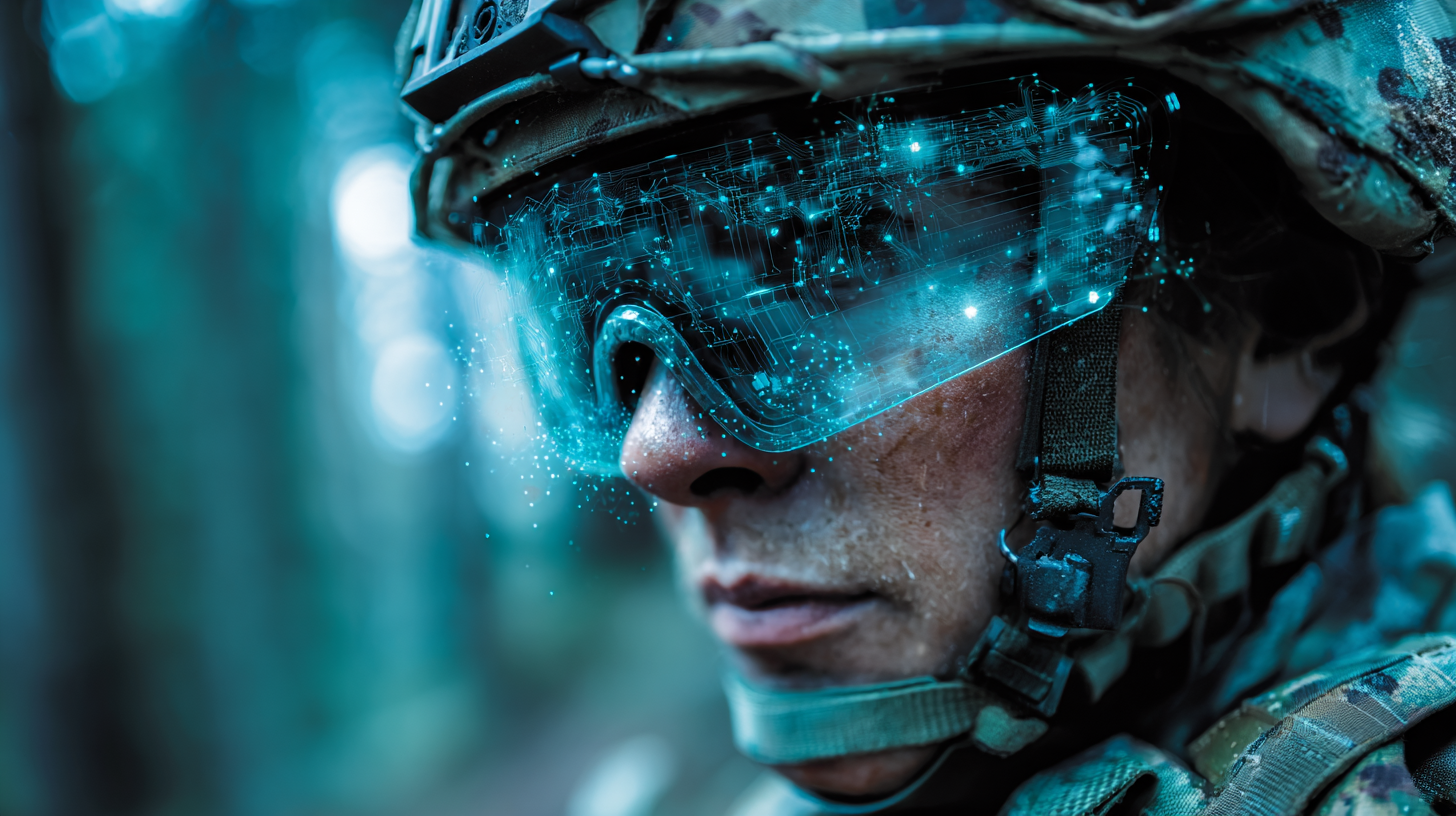
High-tech instead of bureaucratic red tape: How the Erding Innovation Center is finally supposed to make the German Armed Forces more combat-ready – Image: Xpert.Digital
Valley of death for DefTech start-ups: Can the Erding Innovation Center close the gap between prototype and troops?
Six players, one center: How Erding aims to unite the fragmented innovation landscape of the German Armed Forces
While Ukraine is building a state-of-the-art drone army in just a few months and Israel is seamlessly merging defense and high technology, Germany's paradigm shift is threatening to founder on its own regulations. An analysis of lost innovations, frustrated founders, and a center in Erding that is supposed to be the solution – but is itself still in its infancy.
It sounds like a bad joke from the corridors of the procurement office: A German start-up develops a revolutionary camouflage system, wins innovation awards, and impresses in NATO tests in Canada. But instead of equipping the troops with it, the Bundeswehr (German Armed Forces) cites a lack of "references with government agencies"—a hurdle that is, by definition, insurmountable for young companies. The result? The start-up is now trying its luck in Israel, while German soldiers remain stuck with outdated technology.
This case is not an isolated incident, but rather a symptom of a systemic deadlock. Despite the €100 billion special fund and Defense Minister Boris Pistorius's vocal demand for "combat readiness," the Bundeswehr (German Armed Forces) is bogged down in bureaucratic minutiae. The planned innovation center in Erding is supposed to bring about a breakthrough and consolidate the fragmented responsibilities. However, a year after its announcement, instead of a sense of optimism, there is primarily uncertainty about structures, budgets, and powers.
Time is running out. 71 percent of defense tech founders now rate Germany's defense capabilities as low. They are not failing due to a lack of ideas, but rather because of the so-called "Valley of Death"—the funding gap between prototype and series production order, for which the German government, unlike the US or France, has no solution.
The six actors who currently carry out the innovation tasks of the German Armed Forces and are to be brought together in the planned innovation center in Erding to form a network of operations

The six actors who currently bear the innovation tasks of the German Armed Forces and are to be brought together in the planned innovation center in Erding to form a network – Image: Xpert.Digital
- Planning Office of the German Armed Forces (PlgABw)
- Center for Digitalisation of the German Armed Forces (ZDigBw)
- Federal Office for Equipment, Information Technology and In-Service Support of the German Armed Forces (BAAINBw)
- Research and Innovation Hub (FIH)
- The armed forces (Army, Air Force, Navy, and Cyber and Information Domain)
- Cyber Innovation Hub of the German Armed Forces (CIHBw) as part of the “Digital Lab Network” and innovation ecosystem
The following report sheds light on how deep the structural problems really run, why the parliamentary threshold of 25 million euros is becoming a bottleneck for security, and what radical reforms would now be necessary to avoid losing touch with the world's leading countries.
A procurement fiasco: What Ukraine does better than us when it comes to arms
The German armed forces face a fundamental innovation dilemma: While startups like Oberon Systems are developing technologically groundbreaking solutions with adaptive camouflage systems, and Ukraine is building a powerful drone army within months, Germany's army is hampered by structural obstacles that systematically block innovation. The planned innovation center in Erding is intended to remedy this, but its unclear structures and lack of financing mechanisms reveal the core problem: The armed forces are attempting to generate innovation through new institutions without removing the bureaucratic hurdles that prevent startups from accessing the market.
71 percent of the DefTech founders surveyed rate Germany's defense capabilities as low or very low – and only a third would choose to start a business in Germany again. These alarming figures document not only a procurement problem, but a systemic innovation blockage that ranges from reference requirements and parliamentary thresholds to fragmented responsibilities.
The Erding Innovation Center: A concept without a breakthrough
Announcement and status
In February 2025, at the Innovation Night of the Munich Security Conference, Defense Minister Boris Pistorius announced the establishment of a Bundeswehr innovation center in Erding. The location appears to have been strategically chosen: The Wehrwissenschaftliches Institut für Werk- und Betriebsstoffe (WIWeB) in Erding has already housed the Innovation Laboratory System Soldat (InnoLabSysSdt) since 2022, which serves as a pilot project for new experimental approaches in defense technology research.
The vision of BAAINBw President Annette Lehnigk-Emden: A “network of effectiveness” that brings together the currently fragmented innovation actors – the Bundeswehr Planning Office, the Center for Digitalization, BAAINBw, the Research and Innovation Hub, and the armed forces. These actors currently work “inconsistently in terms of processes” and “strictly separately,” which leads to a lack of coordination in the development of innovations and often leaves the end user – the troops – out of the loop.
Structural ambiguities
One year after its announcement, the project is still in an "early phase with unresolved structural issues." A development team is working on the organizational and content-related aspects, but neither the timeline, costs, nor the specific structure have been defined. It also remains unclear whether the established InnoLabSysSdt will be integrated into the innovation center or continue to exist in parallel.
This delay is symptomatic: While other nations – Israel, the USA, Ukraine – make innovation centers operational within months, the German Armed Forces get bogged down in planning loops. The "System Soldier" innovation lab itself demonstrates that it can work: There, troops, industry, and research are already successfully integrated, for example, in the testing of small and micro drones. But instead of rapidly scaling this model, a new structure is being built – without any clarity regarding its powers and budget.
The missing link: Early financing
Brigadier General Michael Bender, head of the setup team, succinctly summarizes the central shortcoming: “Rapidly securing contracts from the budget is the second step.” The problem: No initial funding is allocated for projects that reach the innovation center. Start-ups are therefore expected to develop, test, and bring innovative solutions to market – at their own risk and without financial backing from the German Armed Forces.
This approach ignores the reality of young technology companies. Without bridge financing between prototype and mass production—the infamous “Valley of Death”—even promising innovations fail. Ukraine solves this problem pragmatically: Since 2023, the Brave1 platform has supported around 1,500 companies and funded 3,200 military-related projects—with direct government funding. Germany, on the other hand, refers startups to the regular procurement system, where the real hurdles begin.
Bureaucratic barriers: Systematic prevention of innovation
The vicious cycle of reference requirements
The most significant obstacle for startups lies in the qualification requirements for public tenders. The German Armed Forces regularly demand that bidders have already completed an "equivalent project for a government agency." This requirement is, by definition, impossible for startups to fulfill: young companies cannot provide comparable references because they are new to the market.
In addition, there are certification requirements: Products must be certified according to various standards or comply with complex NATO regulations. Moritz Sümmermann of Oberon Systems knows this all too well: His adaptive camouflage system, "Erlkönig," achieved a 70 percent lower detection rate compared to uncamouflaged systems during the Army's Land Experimental Series. The system uses e-reader technology, has a modular design, is energy-efficient, and can operate for months without recharging. It proved its capabilities during a NATO field test in Canada.
Despite these impressive achievements and the Game Changer Award at the Defence Innovation Pitch Day 2025, the path to series production remains challenging. The start-up must focus on international markets – such as Israel – because German procurement structures offer little access.
For years, Bitkom has been proposing lowering the minimum requirements in tenders and introducing a quality seal for startups and SMEs, awarded by an independent body. Prequalification – an already permitted instrument for pre-competitive suitability assessment – is hardly used. Instead, current practices remain unchanged: 86 percent of DefTech startups cite easier access to contracts as the most important policy measure.
Parliamentary approval: Political control as a time brake
Every procurement project of the German Armed Forces with a volume exceeding 25 million euros requires the approval of the Budget Committee of the Bundestag (German Parliament). This democratic oversight is constitutionally sound, but it is becoming a bottleneck: According to the Federal Government, around 100 such proposals were submitted to the Budget Committee in 2025 alone – each one delaying the procurement process by several months.
The Federal Court of Auditors and the CDU/CSU parliamentary group are calling for the threshold to be raised to at least €100 million. This would reduce bureaucracy and accelerate processes without relinquishing parliamentary oversight of truly large projects. The Federal Government responded with the Federal Armed Forces Planning and Procurement Acceleration Act (BwPBBG), which was approved by the Cabinet in July 2025 and is scheduled to enter into force at the beginning of 2026.
The problem: The BwPBBG (Federal Armed Forces Procurement Act) is limited to the end of 2026 – and thus expires before the special fund "Bundeswehr" (Federal Armed Forces) is exhausted. Furthermore, many of the intended instruments are not being used in practice. While the president of the BAAINBw (Federal Office of Bundeswehr Equipment, Information Technology and In-Service Support) publicly laments the bureaucracy, structural reforms are lacking. Raising the direct award threshold from €1,000 to €5,000 may affect 20 percent of procurements, but innovative technologies involve entirely different order of magnitude.
Fragmented responsibilities and lack of coordination
The innovation landscape within the German Armed Forces resembles a patchwork quilt. At least six different actors are working on innovation topics – often without sufficient coordination. The Cyber Innovation Hub (CIHBw), founded in 2017 as a “rapid support vessel”, can issue recommendations to the Federal Office of Bundeswehr Equipment, Information Technology and In-Service Support (BAAINBw), but whether these recommendations are received or implemented remains unclear.
This fragmentation leads to a situation where “the various stakeholders involved often communicate inadequately with each other.” A start-up that has successfully developed a prototype with the CIHBw still has to go through the regular procurement process at the BAAINBw – including all its bureaucratic hurdles. Since its founding, the Cyber Innovation Hub has initiated over 170 innovation projects, but only 19 have been “sustained,” meaning adopted by the Bundeswehr.
Army Inspector Lieutenant General Christian Freuding is calling for greater participation in decision-making for the various branches of the armed forces. He welcomes the fact that the Army, Navy, and Air Force are each slated to receive one million euros for innovation in the 2026 budget – a step towards decentralization, but one that does not solve the fundamental problem. One million euros may be sufficient for procuring small drones for training purposes, but not for the systematic integration of innovative technologies into the armed forces.
Hub for security and defense - advice and information

Hub for security and defense - Image: Xpert.digital
The hub for security and defense offers well-founded advice and current information in order to effectively support companies and organizations in strengthening their role in European security and defense policy. In close connection to the SME Connect working group, he promotes small and medium -sized companies (SMEs) in particular that want to further expand their innovative strength and competitiveness in the field of defense. As a central point of contact, the hub creates a decisive bridge between SME and European defense strategy.
Suitable for:
German Armed Forces Dilemma: Billions spent on armaments, but innovation falls by the wayside
The procurement crisis: Delays as the new normal
The structural problems manifest themselves in blatant project delays. The A400M transport aircraft arrived 195 months – 16 years – late and incurred €1.6 billion in additional costs. The Eurofighter project has seen cost overruns of almost €9 billion. Current projects continue this pattern: The F127 frigates are delayed due to IT interface problems, the Skyranger Boxer is 18 months later than planned – now due in 2028 instead of 2026, and the German Armed Forces are struggling with unstable data transmission and insufficient radio range in the D-LBO digital radio system.
These delays cannot be blamed solely on the Federal Office of Bundeswehr Equipment, Information Technology and In-Service Support (BAAINBw). BAAINBw President Lehnigk-Emden rightly rejects the notion that the agency is a “bureaucratic, intellectual obstacle to procurement.” The problem runs deeper: Five years before the BAAINBw became involved, other agencies were already working on the product definition. Additional requirements are constantly being added – the infamous “gold-edged solutions”, where special solutions have to be developed specifically for the German Armed Forces instead of procuring commercially available products.
Staff turnover at the BAAINBw (Federal Office of Bundeswehr Equipment, Information Technology and In-Service Support) is delaying projects: Military personnel change positions every two to a maximum of four years, precisely when they have gained expertise. Several hundred positions are vacant, with a particular shortage of engineers, lawyers, and economists. The significant aging of the workforce and the high rate of sick leave due to overwork exacerbate the situation.
Lehnigk-Emden turns the tables, accusing the arms industry of facing "stronger constraints" and "more bureaucracy" than the BAAINBw (Federal Office of Bundeswehr Equipment, Information Technology and In-Service Support). The industry must ramp up its production capacities – even without long-term purchase guarantees. "We will buy, that much is clear to everyone," the president argues. But this mutual blame game leads to a stalemate, stifling innovation.
The DefTech ecosystem: capital, culture, and structural deficits
The funding gap
Germany may be a leader in DefTech investments in Europe, but the gap is dramatic in a global comparison: While roughly $1 billion in venture capital flowed into German DefTech startups between 2018 and 2024, the US alone invested over $130 billion between 2021 and 2024. Over a longer period, Germany is thus investing only one hundred and sixtieth of what the US invests in four years.
This funding gap has structural causes. ESG (Environmental, Social, Governance) criteria of many institutional investors exclude pure DefTech products. Private venture capital funds shy away from the reputational risk. Bitkom is therefore calling for government seed funding modeled on the French (Fonds Innovation Défense) or Dutch (SecFund) programs to leverage private capital. The German Future Fund could be expanded to include a DefTech module, but concrete steps are still pending.
Meanwhile, two German DefTech startups, Helsing and Quantum Systems, have become unicorns – with valuations exceeding one billion euros. Helsing recently received 450 million euros in funding and is valued at 4.5 billion euros. However, these successes are exceptions. The majority of startups struggle with funding problems, while at the same time the German Armed Forces (Bundeswehr) reported a new record high of 97 approved major defense projects in 2024 – the majority of which went to established defense contractors.
Cultural barriers and lack of networking
Bureaucratic hurdles are exacerbated by cultural shortcomings. 79 percent of the surveyed DefTech founders would like better networking opportunities and a consolidation of the diverse private initiatives and innovation units within the German Armed Forces. 84 percent call for sandbox environments where regulatory requirements are relaxed for testing purposes.
The CIHBw (Center for Innovation and Technology in the German Armed Forces) is attempting to bridge this gap. Its director, Sven Weizenegger, describes the hub as a “change agent” operating on the principle of “from the troops – with the troops – for the troops.” Requirements are sourced directly from the troops, and soldiers are involved in the development process. A partnership has been established with the Ukrainian innovation unit Brave1 to facilitate the rapid and unbureaucratic sharing of ideas and solutions.
However, the CIHBw is reaching its limits: It lacks its own procurement authority and is dependent on cooperation with the BAAINBw (Federal Office of Bundeswehr Equipment, Information Technology and In-Service Support). Bitkom is calling for the CIHBw to be provided with a substantial budget, earmarked as a financial corridor within the BAAINBw, and for it to be granted the authority to largely independently introduce innovations into the armed forces. By 2030, at least 30 flagship collaborations between the Bundeswehr and startups in the defense and dual-use sectors should be in place.
International role models: What Germany can learn from Ukraine, Israel and the USA
Ukraine: Innovation out of necessity
Within two years, Ukraine has built a powerful DefTech industry from scratch. Brave1 supports 1,500 companies and funds 3,200 projects – with direct government funding and without lengthy procurement processes. Ukrainian startups deliver directly to the front lines, test their solutions under combat conditions, and improve them in real time.
The digital solutions of the Ukrainian armed forces are impressive: The “Army+” app enables the digital processing of military procedures that previously required paperwork. Combat results can be reported directly, and reports for signature are submitted within minutes. The “Reserve+” app automates the registration of conscripts and optimizes recruitment. Germany, which prides itself on its digitalization efforts, lags significantly behind in this area.
In July 2025, Germany concluded a digitalization agreement with Ukraine to learn from these experiences. Deputy Defense Minister Kateryna Chernohorenko emphasized: “Technologies will form the basis for a future stable peace. Ukraine is already developing such solutions and can share them with its allies.” The question is: Will the German Armed Forces (Bundeswehr) also be able to adopt these solutions – or will implementation fail here as well due to procurement hurdles?
Israel: The Defense Tech Role Model
Israel boasts the highest density of startups per capita worldwide, and its high-tech sector has always been closely intertwined with the defense sector. The founding of the Israeli Industry Centre for R&D (MATIMOP) in 1970 by an IDF commander was a landmark development. Today, the military and civilian sectors mutually benefit from each other, for example through the active exchange of personnel between the armed forces and startups.
The CIHBw explicitly models itself on the Israeli and US examples. But while Israel focuses on pragmatic solutions and short decision-making processes, Germany remains mired in structural debates. It was no coincidence that Oberon Systems, the adaptive camouflage system startup, traveled to Tel Aviv in December at the invitation of the Israeli Chamber of Commerce – market access is easier there than in Germany.
USA: Capital and Speed
The US not only invests 130 times more venture capital in DefTech than Germany, but also has faster procurement processes. The Defense Innovation Unit (DIU) can conclude contracts with startups within months. In-Q-Tel, the CIA's venture capital arm, invests strategically in technologies with dual-use potential.
Germany is trying to catch up with the BwPBBG (Federal Armed Forces Training and Development Act) and the Innovation Center, but structural constraints remain. While Defense Minister Pistorius emphasizes at events that "speed" is the order of the day, reality paints a different picture: The Erding Innovation Center is still in its "early phase" a year after its announcement, the BwPBBG expires in 2026, and start-ups continue to be hampered by reference requirements.
Decentralization as a solution?
Lieutenant General Christian Freuding, Inspector of the Army, is calling for greater participation of the armed forces in procurement processes. Prior to the reorganization in 2016, procurement was structured decentrally – a model Freuding would like to partially return to. The Army already procures drones for training and exercise purposes decentrally, using the personal allowances of commanders.
“I want the armed forces and industry to communicate more frequently and directly,” Freuding explains. Especially with drones, where development and manufacturing times are extremely short, there are many opportunities. The army has established a test and development unit to evaluate new approaches for their suitability for troop use – the “gateway for innovations directly into the armed forces.”.
This bottom-up approach has potential, but also risks. Without central coordination, renewed fragmentation is likely. Without standards and interoperability requirements, isolated solutions will emerge that are incompatible. The solution lies not in complete decentralization, but in an intelligent balance: central framework guidelines and budget responsibility at the BAAINBw (Federal Office of Bundeswehr Equipment, Information Technology and In-Service Support), but greater operational freedom and procurement autonomy for the individual branches of the armed forces in smaller projects and rapid prototyping.
Structural reform proposals: What needs to happen now
The problems are known, and the solutions are on the table. What's missing is the political will for consistent implementation
First: Reform reference requirements
Tenders need to become more startup-friendly. Instead of completed reference projects, technical feasibility studies, prototypes, and test results should suffice as proof of suitability. A seal of approval for DefTech startups, awarded by an independent body after verification of their technical and financial capabilities, could increase the confidence of procurement officers.
Second: Institutionalize early financing
The Erding Innovation Center needs a substantial budget for bridge financing between prototype and series production. The CIHBw requires a financial corridor registered with BAAINBw, granting procurement authority for projects up to €10 million. Following the French model, a “Defense Innovation Fund” should provide state investment in DefTech startups to leverage private capital.
Thirdly: Raise the level of parliamentary approval
The €25 million threshold is outdated. Raising it to €100 million would drastically reduce bureaucracy without sacrificing democratic control over major projects. The Federal Act on the Promotion of Federal Projects (BwPBBG) must be made permanent, and its instruments must be consistently applied.
Fourth: Clarify responsibilities and strengthen coordination
The Erding Innovation Center must not become just another parallel structure. It needs clear responsibilities, a budget, and decision-making authority – and must act as a central hub for all stakeholders. Integrating the proven InnoLabSysSdt system is beneficial, but should not restrict its operational capabilities.
Fifth: Systematically avoid “gold-edged solutions”
Market-available products must take precedence over custom developments. Requirements should no longer be added arbitrarily during ongoing projects. Functional tenders that describe the problem to be solved, rather than specifying detailed technical specifications, open up opportunities for innovative approaches.
Sixth: Create sandboxes and test fields
84 percent of DefTech founders are calling for areas where regulatory requirements are relaxed for testing purposes. NATO-sponsored Defense Innovation Ecosystem Frameworks, where startups can present themselves and receive a kind of seal of approval, would help them convince investors.
Seventh: Promote lighthouse collaborations
By 2030, there should be at least 30 strategic partnerships between the German Armed Forces and DefTech start-ups – with long-term development and acceptance contracts that create planning security.
Innovation requires determination, not just institutions
The Erding Innovation Center is a necessary but not sufficient step. As long as startups fail to meet reference requirements, parliamentary approval is a monthly hurdle, and early-stage funding is lacking, innovation remains a matter of luck rather than a system. Moritz Sümmermann of Oberon Systems is traveling to Israel because he sees better opportunities there than in Germany. 71 percent of DefTech founders state that Germany is barely able to defend itself – and only a third would choose to start a company here again.
The irony is that the German Armed Forces have €100 billion at their disposal through their special fund, and €108 billion in the 2026 defense budget – more money than ever before. Yet while Pistorius speaks of "speed" at the Leopard 2 A8 rollout event, innovative startups languish in bureaucratic limbo. The money is there, the technologies are there, the startups are there – what's missing is the political will to break the structural chains.
Ukraine shows that there is another way: innovation born of necessity, direct procurement channels, and a willingness to take risks on the state. Israel has demonstrated for decades how defense and high technology can merge. The US invests 130 times more capital in DefTech than Germany. Germany, on the other hand, continues to plan – while time runs out.
“War readiness,” as Pistorius calls it, arises not from institutions, but from determination. The Erding Innovation Center can only succeed if it is equipped with genuine authority, a substantial budget, and the freedom to overcome bureaucratic hurdles. Otherwise, it will become just another well-intentioned initiative that gets bogged down in the thicket of German administrative structures – while elsewhere the future of defense is being written.
Advice - planning - implementation

Markus Becker
I would be happy to serve as your personal advisor.
Head of Business Development
Chairman SME Connect Defense Working Group
Advice - planning - implementation
Konrad Wolfenstein
I would be happy to serve as your personal advisor.
contact me under Wolfenstein ∂ Xpert.digital
call me under +49 89 674 804 (Munich)
Your dual -use logistics expert

Dual -use logistics expert - Image: Xpert.digital
The global economy is currently experiencing a fundamental change, a broken epoch that shakes the cornerstones of global logistics. The era of hyper-globalization, which was characterized by the unshakable striving for maximum efficiency and the “just-in-time” principle, gives way to a new reality. This is characterized by profound structural breaks, geopolitical shifts and progressive economic political fragmentation. The planning of international markets and supply chains, which was once assumed as a matter of course, dissolves and is replaced by a phase of growing uncertainty.
Suitable for:
Our EU and Germany expertise in business development, sales and marketing

Our EU and Germany expertise in business development, sales and marketing - Image: Xpert.Digital
Industry focus: B2B, digitalization (from AI to XR), mechanical engineering, logistics, renewable energies and industry
More about it here:
A topic hub with insights and expertise:
- Knowledge platform on the global and regional economy, innovation and industry-specific trends
- Collection of analyses, impulses and background information from our focus areas
- A place for expertise and information on current developments in business and technology
- Topic hub for companies that want to learn about markets, digitalization and industry innovations





