

USA | AI Gigafactories – America's Digital Arms Race: The True (and Dirty) Price of Artificial Intelligence
Xpert Pre-Release

Available in 27 languages 📢
Prefer Xpert.Digital on GoogleⓘPublished on: April 11, 2026 / Updated on: April 11, 2026 – Author: Konrad Wolfenstein
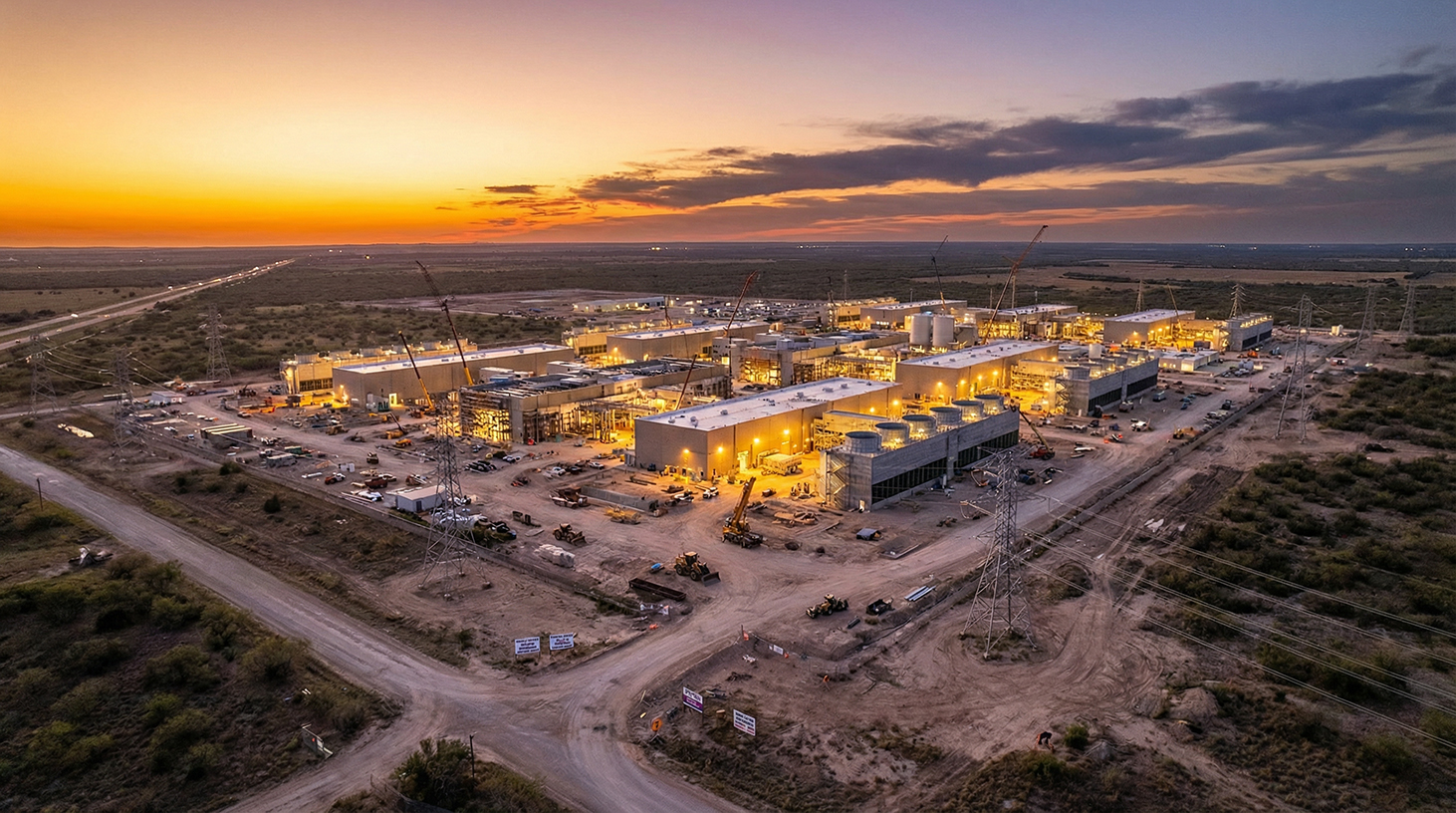
USA | AI Gigafactories – America's Digital Arms Race: The True (and Dirty) Price of Artificial Intelligence – Creative Image: Xpert.Digital
Going online without permission: How Elon Musk and Big Tech are outsmarting US authorities
The Trillion-Dollar Boom: Why America's AI Gigafactories Are Now Breaking the Power Grid
Noise, drought, blackouts: Why all of America is suddenly rebelling against Big Tech
The hype surrounding artificial intelligence is no longer confined to code or the tidy offices of Silicon Valley. The true AI revolution is being forged in colossal factories of steel and concrete. In the US, an unprecedented arms race for so-called AI infrastructure is currently raging. Tech giants like Microsoft, Amazon, Google, and Meta are investing hundreds of billions of dollars in gigantic data centers – the new "AI Gigafactories." But the dream of absolute digital dominance has a massive drawback: it consumes more electricity and water than the aging American power grid can supply. At the same time, the rapid expansion is stalling due to a lack of transformers from China and is encountering unprecedented public resistance. From congested power grids and Elon Musk's secretly installed gas turbines to angry residents and exploding water consumption – a look behind the scenes of the American AI revolution reveals that the path to superintelligence is expensive, dirty, and socially explosive.
Related to this:

Why trillions of dollars are flowing into concrete and electricity – and why this will change the world, whether we like it or not
Before one can grasp the magnitude of the American AI infrastructure boom, one must understand what lies behind the gray facades of these giant factories. A modern AI data center is no longer an ordinary server building. It is a massive industrial facility that consumes more electricity than a small town, requires more water than a regional water supplier, and operates more complex cooling systems than some power plants. The International Energy Agency (IEA) has calculated that a single typical AI data center consumes as much electricity as 100,000 households. Large facilities can consume up to five million gallons of water per day—as much as a city of 50,000 inhabitants.
The industry has coined a new term for these facilities: "AI Factory" or "AI Gigafactory." Elon Musk explicitly uses it for his project in Memphis when he speaks of a "Gigafactory of Compute." The term is not a marketing gimmick. It precisely describes what these facilities do: They mass-produce AI intelligence by bundling vast amounts of computing processes to train and operate large language models. Whoever controls this infrastructure controls the strategic raw material base of artificial intelligence.
This is precisely why an unprecedented wave of investment has emerged in the US within just a few years. The four largest tech companies – Alphabet, Amazon, Meta, and Microsoft – planned to spend a combined total of more than $650 billion on expanding their AI capabilities by 2026, according to Bloomberg estimates. In 2025 alone, Amazon invested $125 billion in capital expenditures. Microsoft announced investments of around $80 billion in AI-enabled data centers for fiscal year 2025, more than half of which would be in the US. Google planned a capital budget of around $75 billion for 2025 and spent $17.2 billion on data center capacity in the first quarter of 2025 alone. These figures exceed the investment programs of some nation-states for critical infrastructure.
Current status: How many plants are there already?
The inventory of the American AI data center market begins with an impressive figure: According to data from the Cargoson platform, the US had a total of 5,427 data centers in November 2025 – by far more than any other country in the world. The analysis firm ABI Research specifically counts 2,396 active data centers for 2025, which together reach an IT capacity of 17.2 gigawatts (GW). Hyperscalers – the large cloud and internet companies that operate their own infrastructure – hold roughly the same amount of capacity as colocation providers that lease their space.
The dominant single player in this market is Amazon Web Services (AWS). Amazon's cloud arm operates 105 data center locations in the US with an active IT capacity of 2.3 GW. It is followed by Meta with 63 locations and 1.5 GW, Microsoft Azure with 55 locations and 1.2 GW, and the colocation provider Equinix with 91 locations and just under one gigawatt. Google Cloud has 22 US locations with 508 megawatts (MW), and Oracle has 28 locations with 470 MW.
Geographically, the market is heavily concentrated in a few regions. According to data from the Synergy Research Group, 13 of the world's 20 largest data center locations are in the USA. Northern Virginia, specifically the area around Ashburn in Loudoun County, is considered the world's largest data center cluster. Loudoun County alone boasts 199 data centers, spread across approximately 45 million square meters and generating 40 percent of the county's total budget. Around 70 percent of global internet traffic passes through this relatively small area of Virginia daily. Other important US markets include Oregon, Iowa, Georgia, and Texas, which attract customers with factors such as favorable energy prices, favorable climates, and generous tax breaks.
The research firm Synergy Research Group notes that hyperscaler capacity has grown particularly rapidly since the end of 2022 – the year ChatGPT was published. Over the past four years, hyperscaler capacity has doubled in both the number and size of individual facilities. The 1,300 large hyperscaler data centers worldwide now account for 44 percent of global data center capacity, and Synergy expects this share to rise to 61 percent by 2030.
Flagship projects: The largest ongoing construction sites
Project Stargate in Abilene, Texas
By far the most closely watched single project in the US AI infrastructure is the so-called Stargate program. President Donald Trump personally announced it shortly after his inauguration in January 2025 as an "overwhelming declaration of confidence in America's potential." The initial announcement envisioned an investment of $500 billion, led by OpenAI, Oracle, and the Japanese SoftBank Group, who together planned to build up to 7 GW of AI computing capacity in the US.
The main site is located in Abilene, Texas, where an initial expansion phase with a capacity of 1.2 GW is being built on a campus spanning over 1,000 acres (approximately 400 hectares). Construction costs for this phase amount to around $15 billion. While two buildings have already been completed and put into operation, work is underway on further construction phases, the so-called Longhorn and Hamby sections. Satellite data confirms active construction activity, and completion of the last planned building is projected to take until 2029.
The Stargate story, however, is also a story of fading ambitions. In March 2026, Bloomberg reported that Oracle and OpenAI had abandoned their original expansion plans for the Abilene campus. Instead of expanding to 2 GW, they would stick with the planned 1.2 GW for this location. OpenAI stated that it preferred to build the additional capacity at other locations. Microsoft then took over the planning of two additional AI factory buildings in the immediate vicinity of the OpenAI campus, which the data center provider Crusoe will build for Microsoft. This effectively creates two adjacent AI megacampus locations in Abilene, sharing an industrial infrastructure. The original partnership dynamics between OpenAI and SoftBank proved problematic: media reports described disagreements over site selection and energy sources as points of contention.
xAI Colossus in Memphis, Tennessee
Elon Musk's AI startup xAI has erected a facility in Memphis, Tennessee, in just a few months, which the company itself calls the world's largest supercomputer. Located on the former Electrolux factory site on Paul R. Lowry Road, the complex already houses over 200,000 Nvidia H100 and H200 chips, powering Musk's AI chatbot Grok. Construction costs to date exceed $400 billion, as evidenced by public planning applications. xAI aims to expand to 1.2 GW and is simultaneously building Colossus 2, an even larger extension of the existing site.
The story of this project vividly illustrates how the hunger for fast computing power overrides regulatory processes. xAI began operations without sufficient permits and entered into non-disclosure agreements with the local utility, Memphis Light, Gas and Water (MLGW), so that even elected city council members only learned about the project through press reports. At one point, the company operated around 30 portable gas turbines, set up locally, which together provided enough electricity for over 200,000 homes—initially without any permits whatsoever. The Tennessee Valley Authority (TVA) finally approved a supply of 300 megawatts from the regular grid in February 2026.
Meta's Louisiana mammoth project
Meta Platforms is building what it claims will be the largest data center in the Western Hemisphere in Richland Parish, in rural northeastern Louisiana. On a former soybean field, known as the Franklin Farm Megasite, a campus spanning over 2,250 acres (approximately 910 hectares) is under construction, with plans to include up to nine buildings with a total capacity of 2 GW by 2030. The investment amounts to $10 billion, financed in part by a $27 billion agreement with the alternative asset manager Blue Owl Capital. Construction began in December 2024 and has been ongoing since then. Local residents and environmental organizations such as Earthjustice have requested regulatory reviews to examine the impact on local household electricity prices and water resources.
Meta Indiana and other US locations
In February 2026, Meta began construction of its second Indiana campus in Lebanon, Indiana, about 30 miles northwest of Indianapolis. The facility, representing an investment of approximately $10 billion, is expected to reach a capacity of 1 GW and become operational by the end of 2027 or the beginning of 2028. This makes the Indiana campus one of the largest single investments in the company's history. Additionally, Meta is building a 700,000-square-foot data center in Beaver Dam, Wisconsin, for approximately $1 billion, which is scheduled to open in 2027. In Cheyenne, Wyoming, the company is constructing another 945-acre campus with a planned building volume of 800,000 square feet. Meta has pledged $1.5 billion for Texas. In November 2025, Meta committed a total of $600 billion over the next three years to US infrastructure and job creation.
Google's Texas offensive and PJM expansion
In November 2025, Alphabet subsidiary Google announced a $40 billion investment in three new data centers in Texas, scheduled for completion by 2027. The sites are located in Armstrong County in the Texas Panhandle and two in Haskell County in West Texas, near Abilene. Texas Governor Greg Abbott described this as the largest single state-specific investment by a company in U.S. history. This followed an earlier $25 billion commitment in July 2025 to the Pennsylvania Jurassic Park (PJM) region—the 13-state network spanning from New Jersey to Kentucky—including a $3 billion investment to upgrade two hydroelectric power plants in Pennsylvania.
Amazon: Government, Indiana and Pennsylvania
Amazon Web Services is active on several fronts simultaneously. In December 2025, the company announced it would invest up to $50 billion to build supercomputing and AI data centers specifically designed for US government agencies, with a total capacity of 1.3 GW. These facilities—distributed across three classified AWS regions: Top Secret, Secret, and GovCloud—are slated for construction starting in 2026 and will, for the first time, form a highly secure AI infrastructure for federal agencies that is completely separate from the commercial cloud. In parallel, Amazon is investing $15 billion in multiple campuses in Northern Indiana for commercial AI workloads and another $20 billion in data centers in Pennsylvania.
The pipeline: What is planned and what has been announced
The project pipeline of the US AI data center industry is so extensive that it is almost impossible to fully survey. According to an exclusive analysis presented to Axios in December 2025, nearly 3,000 new data centers in the US are either under construction or in the planning phase – that's almost 75 percent of the 4,000 facilities currently in operation.
The most ambitious individual plans belong to Stargate. The consortium of OpenAI, Oracle, and SoftBank has announced additional locations besides the Abilene campus in Ohio, New Mexico, Georgia, Michigan, Wyoming, Pennsylvania, and another location in the Midwest. Total capacity is projected to increase to 7 GW, with total investment reaching $400 billion. However, in this market, announcements and reality often diverge significantly.
Elon Musk's xAI is planning another facility in Southaven, Mississippi, under the name MACROHARD, with an announced budget of $20 billion. The Texas-based startup GridFree AI has announced three adjacent sites in South Dallas, which together are expected to provide approximately 5 GW of AI computing capacity. Data center operator Cologic is building a 154-acre campus in Johnstown, Ohio, with eight buildings and a target capacity of 800 MW for around $7 billion. AVAIO Digital Partners is planning a multi-phase campus in Little Rock, Arkansas, with up to 1 GW of capacity for $6 billion.
At the top of the list of announcements is Anthropic, the Claude developer, which announced in the fall of 2025 that it would invest $50 billion in US data centers in Texas and New York. CoreWeave, the cloud provider specializing in AI workloads and an Nvidia partner, has, in addition to its $6 billion project in Lancaster County, Pennsylvania, also begun construction on a $1.2 billion campus in Cheyenne, Wyoming, which is currently under construction and scheduled for completion by the end of 2026. Vantage Data Centers has announced a $25 billion, 1.4 GW gigacampus for Shackelford County, Texas.
Other significant projects include Vantage's Lighthouse Campus in Port Washington, Wisconsin, a $15 billion, 902 MW campus being built for Oracle and OpenAI as part of the Stargate network. Compass Datacenters is constructing a phased $10 billion, 320 MW campus in Lauderdale County, Mississippi. Blackstone is investing $25 billion in AI-focused data centers in northeastern Pennsylvania, which will be powered by on-site gas-fired power plants.
Related to this:
- Comparison of electricity grid expansion: USA, China, EU, Japan, South Korea and Germany at a glance


The energy question: The biggest bottleneck problem for AI infrastructure
No other issue permeates the discussion surrounding American AI data centers as persistently as the question of energy supply. The problem is structural: AI data centers require enormous, reliable amounts of electricity, and the American power grid was never designed for this demand.
The most dramatic example of this congestion is Northern Virginia. Grid operator Dominion Energy has received inquiries from data center builders requesting more than 40 GW of power – roughly double the total Virginia grid capacity at the end of 2024. PJM Interconnection, which provides electricity to 67 million people in 13 states, expects demand to grow by 4.8 percent annually over the next decade and is approaching a supply crisis. Old power plants are being decommissioned faster than new ones are being brought online. In July 2024, a terrifying near-blackout occurred: 60 data centers in Northern Virginia, with a combined load of 1,500 MW, simultaneously switched to their backup generators after a lightning rod failure on the high-voltage grid. Grid operator PJM and utility Dominion had to curtail power from power plants at lightning speed to prevent a voltage spike that could have triggered a devastating domino effect.
The Center for Strategic and International Studies (CSIS) succinctly summarized the situation in an analysis: In Northern Virginia, the waiting time for a grid connection is now up to seven years. For data center planners, this "speed-to-power"—the time until actual power supply is available—is more important than land prices, taxes, or even the availability of chips. Without a guaranteed power supply, you can't operate the world's most expensive Nvidia GPUs.
S&P Global Energy predicts that an additional 44 GW of capacity will be needed by new data centers by 2028. Goldman Sachs estimates that data centers will consume around 8 percent of US electricity by 2030, compared to 3 percent today. This surge in demand is impacting an electricity system whose core infrastructure dates back to the 1960s and 1970s and has seen little expansion for two decades.
In response to this energy supply crisis, the tech giants are pursuing an "all-of-the-above" strategy (utilizing all available energy sources). Microsoft has reached an agreement with Constellation Energy to restart a unit at the Three Mile Island nuclear power plant in Pennsylvania, which is expected to deliver 835 MW – a historic first, as it marks the first time in US history that a decommissioned nuclear power plant has been reactivated. Meta is financing the construction of two TerraPower nuclear energy modules with a capacity of up to 690 MW. Google has secured the world's largest corporate hydropower contract, acquiring 3,000 MW of capacity from Brookfield Asset Management. All the major hyperscalers have now signed or are actively considering deals for small modular reactors (SMRs).
Where a grid connection cannot be implemented quickly enough, companies are building their own power generation facilities – often with gas-fired power plants directly on the data center premises. Blackstone is explicitly planning this for Pennsylvania, and xAI operated portable gas turbines in Memphis for months to bridge the gap in grid capacity. This causes local air pollution problems, but operators see it as the only option if AI computing capacity is to be available quickly.
Our US expertise in business development, sales and marketing

Our US expertise in business development, sales and marketing - Image: Xpert.Digital
Industry focus areas: B2B, digitalization (from AI to XR), mechanical engineering, logistics, renewable energies and industry
More information here:
A thematic hub offering insights and expertise:
- Knowledge platform covering global and regional economies, innovation and industry-specific trends
- A collection of analyses, insights, and background information from our key areas of focus
- A place for expertise and information on current developments in business and technology
- A hub for companies seeking information on markets, digitalization, and industry innovations
Supply chain collapse and local protests: Why America's AI data centers are stalling
The supply chain problem: When Chinese transformers decide on AI dominance
One of the least discussed, yet most serious problems with US AI infrastructure expansion is the dependence on Chinese suppliers for critical electrical equipment. Around 80 percent of American power transformers are imported, and there is already a 30 percent supply deficit. Transformers, switchgear, and battery storage are the bottleneck components without which no data center can go online.
Delivery times have increased dramatically. Before the coronavirus pandemic, order lead times for these components were 24 to 30 months. Bloomberg reports that waiting times have now risen to up to five years. The paradox: The US wants to be five years ahead of China in AI – but the necessary infrastructure cannot be built in time without Chinese components. Imports of electrical equipment from China rose from 1,500 units in all of 2022 to over 8,000 units in the first ten months of 2025.
At the same time, Trump's tariffs on Chinese goods are significantly impacting the calculations of data center builders. In 2025 alone, data center operators paid more than $6 billion in tariffs on imported components. Those who want to accelerate construction projects must accept higher prices for Chinese goods and calculate whether the costs are still justifiable compared to multi-year waiting times for US manufacturers. US manufacturers are simply unable to deliver the required quantities on short notice. This dependency is a strategic weakness that cannot be remedied by presidential decrees.
As a result of these bottlenecks, market researchers at Sightline Climate estimated that at the beginning of 2026, only about a third of the large AI data centers planned for that year were actually under construction. Bloomberg calculated that nearly half of the planned US data center projects for 2026 would face delays or cancellations.
Related to this:

The bureaucratic marathon: Permits as a brake on innovation
Anyone wanting to build a large data center in America faces an obstacle course of federal, state, and local permitting processes that pushes even experienced project developers to their limits. For a new high-voltage transmission line—essential for connecting a gigawatt data center—the federal permitting process takes an average of four years. State permitting processes are added on top of that.
According to data from the energy research institute RMI, the grid connection approval process at PJM, the largest US grid operator, takes an average of more than eight years from application to commercial commissioning. So-called phantom projects – speculative grid connection applications that are never implemented – artificially inflate waiting lists and make realistic capacity planning difficult for grid operators.
Trump declared a national energy emergency by executive order and established a new "National Energy Dominance Council" to expedite permitting processes for AI-related energy infrastructure. More than 36 US states have now implemented specific tax incentive programs for data centers, ranging from full sales tax exemptions and property tax moratoria to direct tax refunds. According to NCSL data, 37 states offer some form of incentive program. Some states, like Iowa, already grant full equipment tax exemptions for investments of one million dollars or more.
These subsidies come at a significant cost to taxpayers. A CNBC analysis revealed that 42 US states grant either full or partial sales tax exemptions to data centers. Iowa alone sees annual tax losses exceeding $150 million due to these exemptions. State competition for data centers has created a dynamic in which public coffers subsidize trillion-dollar corporations with tens of billions of dollars in market capitalization—a distribution issue that is becoming increasingly politically charged.
Related to this:

The resistance: Protests are forming from Virginia to Texas
Perhaps the most surprising phenomenon of the US AI data center boom is the breadth and intensity of the public opposition. Data centers have become the nation's new NIMBY issue. NIMBY stands for "Not In My Backyard"—the rejection of unwanted projects in one's own neighborhood. Where factories, supermarkets, or wind farms once caused an uproar, today it's server farms.
The organization Data Center Watch has systematically documented the scale of this resistance. In an April 2025 report, it documented $64 billion in data center projects that had been blocked or delayed by local activists. By June 2025, according to Business Insider, this figure had risen to $98 billion. Later that same year, The New York Times reported that throughout 2025, at least 48 publicly known projects, totaling $156 billion, had encountered local opposition, leading to potential changes in the original construction plans.
A Morning Consult poll from November 2025 found that 41 percent of US voters support a ban on AI data centers in their residential areas—an increase from 37 percent the previous month. Opposition to such a ban fell from 39 to 36 percent during the same period. These figures are remarkable for an industrial project topic.
The protest knows no ideological boundaries. While one might expect opposition to large-scale industrial infrastructure to be primarily a left-wing phenomenon, reality paints a different picture. In March 2026, the Texas Republican Party passed a resolution demanding a moratorium on the construction of new data centers until the protection of water and agricultural land is guaranteed. In Texas, members of the conservative rural community are organizing resistance in Waco, Harlingen, and other areas. On the other side of the political spectrum, Senator Bernie Sanders is fighting against Big Tech subsidies, while Ron DeSantis and Elizabeth Warren, despite their ideological differences, are united in their skepticism toward uncontrolled expansion.
Virginia is the epicenter of organized opposition. There are now 42 active action groups there fighting against new data centers. The Data Center Reform Coalition, founded in 2023, coordinates environmental, conservation, and homeowner associations in a joint network. Residents of Loudoun County, the world's largest data center cluster, report constant humming and buzzing from server rooms, rising electricity prices, and concerns about property values and health risks from diesel generators. One mother described in a BBC report how, while walking with her newborn, she came across a sign announcing a planned data center directly across the road from her driveway.
In Memphis, Tennessee, a TIME investigation documented direct links between the operation of xAI's Colossus data center and rising air pollution in a historically Black neighborhood. The company had installed and started operating 30 mobile gas turbines before obtaining the necessary environmental permits. City Councilwoman Yolanda Cooper-Sutton reported learning about the project only through the news. Several community groups have since initiated legal action.
The complaints can be summarized in a few categories: energy costs (rising household electricity prices due to grid strain), water consumption (competition with agricultural and municipal users), noise (constant humming of cooling units), health risks from diesel exhaust fumes from emergency generators, and a poor ratio of investment volume to local employment. Meta's Louisiana campus, for example, is projected to create only 500 permanent full-time jobs with a $10 billion investment – a disappointing promise for an economically disadvantaged region that hardly compensates for the associated infrastructure, energy, and environmental burdens.
Water and climate: The underestimated ecological dimension
While the energy consumption of data centers is widely discussed in public, water consumption often remains in the shadows – even though it is of vital importance in water-scarce regions. Large AI data centers consume up to five million gallons of water daily through their cooling systems, equivalent to the annual household water consumption of a city of 50,000 inhabitants. A study by Cornell University calculated that the US AI sector consumes a total of 731 to 1,125 million cubic meters of water per year – equivalent to the annual household water consumption of six to ten million Americans.
The problem is that many of the most popular data center locations are in areas with high water stress. Nevada and Arizona, both extremely dry states, are popular locations due to their energy prices and tax incentives. Even in Northern Virginia, not typically a drought-prone region, water resources are becoming noticeably scarce due to the sheer concentration of facilities. The Cornell researchers recommend locating new facilities preferably in the Midwest and the so-called "Windbelt" of the Great Plains, specifically in Texas, Montana, Nebraska, and South Dakota, where the combined carbon and water profile is most favorable.
Approximately half of the electricity consumed by US data centers still comes from fossil fuels—primarily gas and coal. This directly contradicts the net-zero commitments of all major hyperscalers. Implementing a system based solely on fossil fuels would render these climate protection goals unattainable. Dominion Energy, the utility serving Northern Virginia, relied on natural gas for 44 percent of its electricity needs in 2024.
Related to this:

The geopolitical dimension: Why Trump personally inaugurates data centers
No US president has publicly identified with the issue of data center infrastructure as intensely as Donald Trump. He personally announced the Stargate project in January 2025, framing it as a strategic triumph for American AI dominance. He was present when Google, Blackstone, and CoreWeave unveiled their combined Pennsylvania investments of over $90 billion at a summit at Carnegie Mellon University in July 2025. The message was unmistakable: those who invest in US AI infrastructure receive political backing from the White House.
The reason for this positioning lies in geopolitical competition with China. US security strategists view AI infrastructure as a strategic asset, comparable to military systems. Microsoft President Brad Smith put it directly in a blog post: The US is at the forefront of global AI competition, and this lead must not be squandered. AWS's construction of classified AI data centers for federal agencies reflects the same logic: Intelligence analysis, satellite image processing, and military decision support are to be based on US-controlled AI infrastructure.
At the same time, the previously described dependence on Chinese transformers and switchgear reveals a structural dilemma of this strategy. The goal is technological independence from China, yet this independence is being built using Chinese components. This contradiction is politically inconvenient and economically real.
Investment dynamics and capital concentration: Who pays, who benefits, who bears the risk?
The influx of capital into AI data centers is a phenomenon that is mobilizing the financial world in an unprecedented way. Alongside direct investments by tech companies themselves, alternative asset managers are playing an increasingly important role. Blue Owl Capital is financing Meta's Louisiana project with $27 billion. Blackstone is investing $25 billion in Pennsylvania. BlackRock, together with a consortium, has acquired Aligned Data Centers in the US for $40 billion. These financial investors are seeking long-term, inflation-protected cash flows from leases with creditworthy tech companies—a model similar to infrastructure leasing in logistics or the telecommunications tower market.
This investment boom has a measurable cyclical impact on the overall US economy. Tech capex (capital expenditures) totaling several hundred billion dollars annually stimulates the construction, electronics, energy, and engineering sectors. However, the regional distribution of the employment effects is limited. The average number of permanent full-time positions in a large data center ranges from 100 to 500 people—an extremely lean employment balance for investment volumes often amounting to several billion dollars.
Wall Street has now recognized the structural risk of local resistance. A managing director at Morgan Stanley commented that readily available sites are largely depleted and that new projects are becoming increasingly difficult to realize. Aniket Shah of Jefferies described the growing number of halted projects as an indication of deep-seated resistance with real political blockage potential. Logan Purk of Edward Jones anticipates further construction delays that could reduce the overall volume of new capacity—with direct consequences for companies that supply data center equipment.
Related to this:

The big picture: Between superlatives and disillusionment
What remains when you weigh the euphoria of the announcements, the noise of the political discourse, and the actual challenges? First, the investment boom is real and transformative. The US is indeed building an AI infrastructure on a scale that is historically unprecedented. Hyperscaler capacity has doubled in four years, and according to S&P Global, another 44 GW will be needed by 2028. The US accounts for 55 percent of the total global hyperscaler capacity.
At the same time, reality reveals significant cracks in these maximalist announcements. According to Sightline Climate, of the US data centers planned for 2026, only about a third are actually under construction. Nearly half of the planned projects are delayed or canceled. The Stargate plans in Abilene have been reduced from the original 5 GW to 1.2 GW. Waiting lists for grid connections in Northern Virginia are up to seven years long. Supply chains for critical electrical equipment rely on Chinese imports, the availability of which is threatened by tariffs and geopolitical tensions.
The Pew Research Center shows that Americans generally have more negative attitudes toward AI than the populations of most other countries studied—a cultural climate that fuels local resistance to data centers. This resistance is not insignificant. It has already delayed or altered $156 billion worth of planned projects.
The crucial question raised by all these developments is not technical, but political-economic: How does a democracy distribute the burdens and gains of a technological transformation in which a few corporations reap gigantic profits, while municipalities bear the brunt of rising electricity prices, water scarcity, noise pollution, and air pollution? The answers offered so far—tax breaks for tech companies, expedited permitting processes, and political lip service—are insufficient for those affected. The debate surrounding America's AI Gigafactories is no longer a purely technical matter. It has become a reflection of societal struggles over resources in the digital age.
Your global marketing and business development partner
☑️ Our business language is English or German
☑️ NEW: Correspondence in your native language!

Konrad Wolfenstein
I and my team are happy to be available to you as your personal advisor.
You can contact me by filling out the contact form here or simply call me at +49 7348 4088 965. My email address is : [email protected]
I'm looking forward to our joint project.
☑️ SME support in strategy, consulting, planning and implementation
☑️ Creation or realignment of the digital strategy and digitization
☑️ Expansion and optimization of international sales processes
☑️ Global & Digital B2B trading platforms
☑️ Pioneer Business Development / Marketing / PR / Trade Fairs
🎯🎯🎯 Data-driven B2B industry hub as a quasi-in-house solution

The quasi-in-house solution: How Xpert.Digital closes operational gaps in B2B marketing and sales – Smart Content-Driven Business - Image: Xpert.Digital
Xpert.Digital is a data-driven B2B industry hub led by Konrad Wolfenstein . The company acts as an external, quasi-in-house solution for industrial partners, closing operational gaps in marketing, content, and sales – without requiring additional resources on the client side.
More information here:









