
China's open-source offensive in artificial intelligence: How free software is destroying Silicon Valley's multi-billion dollar business
Xpert Pre-Release

Available in 27 languages 📢
Prefer Xpert.Digital on GoogleⓘPublished on: February 22, 2026 / Updated on: February 22, 2026 – Author: Konrad Wolfenstein
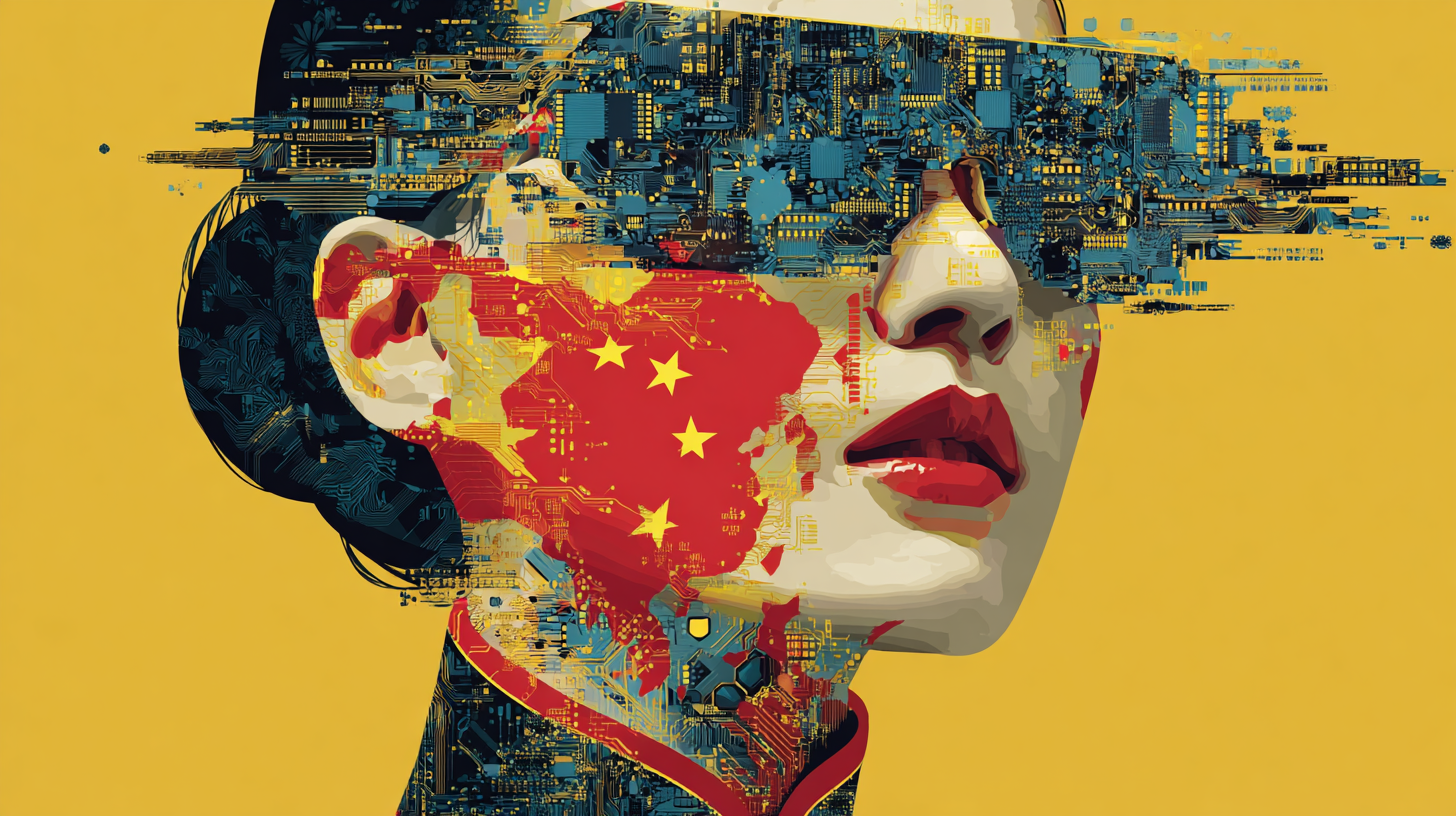
China's open-source offensive in artificial intelligence: How free software is destroying Silicon Valley's multi-billion dollar business – Image: Xpert.Digital
DeepSeek, Qwen & Co.: China's open AI models are secretly taking over the world
The boomerang effect: How US sanctions made China's gigantic AI miracle possible
The global tech world is experiencing a historic upheaval: What was recently considered the unassailable, multi-billion-dollar domain of Silicon Valley is now under immense pressure from an unprecedented open-source offensive from China. With systems like DeepSeek, Alibaba's Qwen, and Kimi K2.5, Chinese developers are not only matching the performance of major US giants like OpenAI, but are also undercutting their prices by up to 95 percent. The result is a fundamental structural shift that is revolutionizing the entire industry: Already, 80 percent of American startups are relying on these extremely resource-efficient models from the Far East. Ironically, restrictive US measures such as export controls on microchips have significantly fueled this surge in innovation and forced China to make architectural breakthroughs. The West – and especially technologically lagging Europe – now faces a huge strategic challenge: How to deal with a new AI world order in which cutting-edge technology suddenly comes from Beijing almost for free, while at the same time creating deep geostrategic dependencies?
Related to this:

When free software from Beijing pulverizes Silicon Valley's billion-dollar bets
The global AI landscape has fundamentally shifted in the past twelve months. What was once the undisputed domain of American technology companies is now increasingly being penetrated by Chinese open-source models that are matching top Western systems in performance benchmarks while costing only a fraction of the price. This structural change doesn't just affect individual products or companies, but calls into question the entire value creation architecture of generative AI. To understand the implications of this development, a systematic examination of the economic, technological, and geopolitical forces driving the rise of Chinese AI ecosystems is worthwhile.
The DeepSeek moment as a catalyst for a new era
In January 2025, the Chinese startup DeepSeek released its R1 reasoning model, triggering a shockwave that extended far beyond technical circles. The news that a relatively small company with around 200 employees had presented a model whose performance rivaled OpenAI's best systems shook the financial markets. DeepSeek's reported training costs of approximately $5.6 million for the pure GPU processing time of the V3 base model quickly became a symbol of a new cost dynamic, even though analysts estimated the actual total costs, including research, personnel, and infrastructure, to be in the hundreds of millions. The crucial point was not the exact figure, but the message: high-performance AI models could be developed with significantly fewer resources than the American industry had previously assumed. DeepSeek leveraged a number of architectural innovations to achieve this, including the Mixture of Experts architecture, where only 37 billion of the 671 billion total parameters are active per token, and FP8 training with halved memory requirements. These efficiency gains had immediate economic consequences: The R1 model was offered at inference prices of $0.55 per million input tokens and $2.19 per million output tokens, representing a 90 to 95 percent discount compared to OpenAI's similar offerings.
Alibaba's Qwen and the quiet conquest of developer platforms
While DeepSeek dominated the headlines, an equally significant shift was taking place on the platforms crucial for practical AI development. Alibaba's Qwen model family surpassed 700 million downloads on the collaborative AI platform Hugging Face by January 2026, becoming the most widely used open-source AI system globally. Qwen had already overtaken Meta's Llama models in cumulative downloads by October 2025, and by December 2025, monthly Qwen downloads exceeded the combined total of the next eight largest model families, including Meta, DeepSeek, OpenAI, Mistral, Nvidia, and Zhipu.AI. Independent trackers showed cumulative downloads of approximately 385 million for Qwen compared to 346 million for Llama by mid-December 2025. This dominance stems from a deliberate strategy: Alibaba offers a wide range of model variants, from lightweight versions with 600 million parameters to systems with tens of billions of parameters, all under permissive licenses that allow commercial use and individual customization. Qwen also scores particularly well with multilingual tasks, especially in Chinese and Arabic, which drives its use in Asia, the Middle East, and Latin America.
Kimi K2.5 and the new cost reality for top-of-the-line models
The latest chapter in this development was written by Moonshot AI at the end of January 2026 with the release of Kimi K2.5. This open-weight model with approximately one trillion parameters achieved a score of 50.2 percent on the demanding Humanity's Last Exam benchmark using tools, surpassing GPT-5.2, Claude Opus 4.5, and Gemini 3 Pro. On the Artificial Analysis rating platform, K2.5 achieved an Elo score of 1309 for agent-based tasks, placing it ahead of GLM-4.7, DeepSeek V3.2, and Gemini 3 Pro. What makes Kimi K2.5 particularly compelling from an economic perspective is its cost-effectiveness: Inference costs are approximately $0.60 per million input tokens compared to $5 for Claude Opus 4.5, and $3 per million output tokens compared to $25. In practice, this translates to cost savings of eight times over with comparable performance. Furthermore, it offers a technical innovation of high relevance for enterprise use: K2.5 can orchestrate up to 100 subagents in parallel and execute workflows with up to 1,500 coordinated tool calls, reducing processing time for parallelizable tasks by a factor of 4.5. The fact that K2.5 is also the first leading open-weight model to offer native multimodal capabilities for image and video processing removes one of the last remaining obstacles that previously held open-source models back compared to proprietary systems.
Related to this:

The global market share jump in concrete figures
The sum of these individual developments manifests itself in an unprecedented leap in market share. According to an analysis by OpenRouter, which evaluated over 100 trillion tokens of real-world usage data, the share of Chinese AI models in global usage rose from 13 percent at the beginning of 2025 to nearly 30 percent by the end of the year. A joint study by MIT and Hugging Face found that Chinese open-source models achieved a download share of 17.1 percent between August 2024 and August 2025, surpassing the US for the first time, which had 15.8 percent. DeepSeek led the open-source ecosystem with 14.37 trillion tokens processed, followed by Qwen with 5.59 trillion and Metas Llama with 3.96 trillion. Nikkei reported that the global market share of Chinese generative AI was around 15 percent in November 2025, up from just around one percent a year earlier. The total download figures by region show the shift particularly clearly: China has around 540 million downloads, the USA 474 million and the European Union only 118 million.
Why 80 percent of US startups rely on Chinese models
The market shift is not an abstract phenomenon, but directly impacts the business decisions of technology companies. Martin Casado, a partner at the renowned venture capital firm Andreessen Horowitz, succinctly summarized the scale of this shift: Approximately 80 percent of the startups seeking funding from the firm and relying on open-source models utilize Chinese technology. The reason is simple business calculation. Startups using DeepSeek-based models pay between $0.10 and $0.20 per million tokens, while comparable workloads from leading proprietary providers cost $20 to $60—a difference of 100 to 300 times. For a seed or Series A company processing 50 to 100 million tokens monthly, this translates to the difference between spending $1,000 to $2,000 and $100,000 to $600,000 per month. In the current funding environment, this difference can mean 15 to 24 months of liquidity reserves versus three to six months. Performance is no longer a barrier: Several Chinese open-source models are matching or exceeding the results of earlier GPT-4 versions on standard programming and logic benchmarks. This leads to a secondary effect of strategic importance: when inference and fine-tuning become virtually free at the startup scale, specialization becomes economically viable again. Founders who previously relied on generic prompting from closed APIs can now train domain-specific, high-precision models.
A new dimension of digital transformation with 'Managed AI' (Artificial Intelligence) - Platform & B2B solution | Xpert Consulting

A new dimension of digital transformation with 'Managed AI' (Artificial Intelligence) – Platform & B2B solution | Xpert Consulting - Image: Xpert.Digital
Here you will learn how your company can implement customized AI solutions quickly, securely and without high entry barriers.
A managed AI platform is your all-inclusive, worry-free solution for artificial intelligence. Instead of dealing with complex technology, expensive infrastructure, and lengthy development processes, you receive a ready-made solution tailored to your needs from a specialized partner – often within just a few days.
The key advantages at a glance:
⚡ Rapid implementation: From idea to ready-to-use application in days, not months. We deliver practical solutions that create immediate added value.
🔒 Maximum data security: Your sensitive data stays with you. We guarantee secure and compliant processing without sharing data with third parties.
💸 No financial risk: You only pay for results. High upfront investments in hardware, software, or personnel are completely eliminated.
🎯 Focus on your core business: Concentrate on what you do best. We take care of the entire technical implementation, operation, and maintenance of your AI solution.
📈 Future-proof & scalable: Your AI grows with you. We ensure continuous optimization and scalability, and flexibly adapt the models to new requirements.
More information here:
The end of expensive AI? How China's open-source strategy is turning the tech world upside down
Beijing's open-source calculation as an industrial policy tool
China's open-source offensive is not a random market development, but rather the result of a deliberate industrial policy strategy. Beijing actively promotes the publication of open model weights through grants, tax incentives, and special regulatory arrangements that allow Chinese labs to publish complete model weights, while many Western counterparts keep their top-tier models closed. This strategy follows a clear economic logic: by distributing capabilities across the entire ecosystem, China can compensate for the difficulty of competing directly with tightly controlled American market leaders like OpenAI and Anthropic. This diffusion logic is particularly effective in a system where government planners, large technology platforms, and startups alike have incentives to demonstrate visible progress in AI. In August 2025, China's State Council presented a draft law encouraging universities to reward open-source contributions and allowing students to have contributions to platforms like GitHub or Gitee recognized as academic credit. Leading institutions like Tsinghua University have begun systematically integrating AI development and open-source engagement into their educational programs. Internationally, China is consciously positioning itself as a multilateral, open, and development-oriented actor in AI governance, a rhetoric that resonates increasingly, particularly in the Global South, while the Trump administration focuses on American dominance and an "America First" approach.
Related to this:

The export control trap and its paradoxical effects
A key catalyst for China's open-source success was, ironically, the very measure intended to hinder it: American export controls on advanced AI chips. Excluding Chinese companies from accessing Nvidia's most powerful semiconductors forced Chinese labs to innovate at the architectural level. Nvidia CEO Jensen Huang declared the export controls a failure in May 2025, pointing out that Nvidia's market share in China had fallen from 95 percent under the Obama administration to 50 percent under Biden, while Chinese companies simultaneously shifted to semiconductors from domestic manufacturers like Huawei and accelerated their own supply chains. In January 2026, the Trump administration, under new conditions, authorized the export of Nvidia's H200 chips to China, stipulating a 25 percent revenue share for the US government and that exports could not exceed 50 percent of the quantity sold to US customers. This policy reveals a fundamental dilemma: While restricting chip access has slowed China in the short term, it has led to long-term architectural breakthroughs that erode the advantage of more expensive Western models. The Asia Society Policy Institute has already warned that an overfocus on closed, proprietary systems could undermine America's lead and advocated for a strategy of smart openness.
Europe's strategic vulnerability in the AI race
For Europe, the shift in power within the AI sector presents a particular challenge. With only 118 million downloads of Hugging Face, the EU lags far behind China and the US and risks becoming doubly dependent: on American proprietary systems on the one hand and Chinese open-source models on the other. An analysis by the Bruegel Institute in Brussels has argued that the cheaper AI models simultaneously offer European companies an opportunity to develop smaller, more specialized AI applications based on the larger language models. The EU, for its part, has announced a €200 billion AI investment initiative. At the same time, the European AI Office faces a delicate balancing act: robust regulatory frameworks under the AI Act must be reconciled with the need to strengthen the lagging European AI ecosystem. Companies and governments in Southeast Asia, the Middle East, and Latin America are increasingly choosing Chinese open-weighted models as the basis for on-premises deployments, not least for reasons of data sovereignty. This trend could create long-term technological dependencies that run counter to European interests.
The economic paradigm shift in the AI industry
The developments of the past year have ushered in a fundamental paradigm shift in the economics of artificial intelligence. The previous business model of the American AI industry relied on massive investments in proprietary, top-of-the-line systems, monetized through subscriptions and enterprise contracts. This model presupposes a substantial technological advantage that justifies the price premiums. This very advantage is now being systematically eroded. The Chinese strategy normalizes the expectation that high-performance AI models should be available cheaply or even for free. This is unwelcome news for investors who have bet on the value creation of closed models. The release of DeepSeek R1 was seen as one of the triggers for a trillion-dollar sell-off in the US technology sector, as it signaled deep investor fears regarding the commodification of AI and China's growing competitiveness. The underlying economic dynamic is clear: when training costs for competitive models fall by one order of magnitude and inference costs by two orders of magnitude, the entire industry structure changes. Companies like Airbnb are already using Alibaba's Qwen models for their customer service interface, an example of how even established Western companies are integrating the cost advantages of Chinese open-source models into their value chains.
The next wave will be more specialized and powerful
The next generation of Chinese open-source models will be even more differentiated and powerful. Alibaba's Qwen has evolved into one of the most diverse open model families, with variants ranging from individual laptops to data centers, optimized for specific tasks such as structured instruction following or programming. DeepSeek is apparently working on a new project codenamed MODEL1, which has surfaced in the open-source community. At the same time, other Chinese players are positioning themselves: Zhipu AI with its GLM image trained on domestic chips, ByteDance with Seedream 4.0, and Alibaba's Qwen Image-2512, which is establishing itself as a free, open-source model for high-quality image, landscape, and text generation. Simplified Chinese now accounts for almost five percent of the global token volume, making it the second-largest language after English, which holds 82.87 percent. The growing diversity of models means that developers worldwide are increasingly gaining access to specialized tools that were previously reserved only for the largest technology companies.
The power question behind the open-source model
Behind the technological and economic dynamics lies a deeper question of power politics. The way AI models are disseminated and controlled determines who shapes the infrastructure of the next technological revolution. Chinese models typically publish their model weights—the numerical values set during training that determine the model's behavior. Anyone can download, run, study, and modify these systems. This is by no means standard practice for US models, even those nominally open. OpenAI, despite its name, keeps its most advanced systems proprietary, and even Meta's Llama is subject to terms of service that restrict unrestricted modification. Chinese providers calculate that complete openness will not only earn them prestige in the developer community but also create an army of volunteer improvers who will further develop the technology at their own expense. Data from Stanford HAI confirms this effect: since January 2025, derivative models based on Qwen and DeepSeek have overtaken those built on large Western foundational models. Approximately 40 percent of the AI models developed by Chinese companies are used for demanding tasks such as programming and design.
The uncomfortable bill for the West
The strategic challenge for the West can be reduced to an uncomfortable calculation: If Chinese open-source models permeate 80 percent of the American startup infrastructure and reach over 10 percent of users in more than 30 countries, as current trends suggest, then a technological dependence on a geostrategic rival will emerge. At the same time, millions of developers, companies, and research institutions worldwide will benefit from unprecedented access to powerful AI technology. The question of whether the democratization of AI infrastructure through Chinese open-source models represents a net gain or a net security risk will shape the technology policy debate of the coming years. The answer will depend on whether the West develops its own coherent strategy that combines the advantages of open innovation with a credible industrial policy agenda, or whether it continues to oscillate between protectionism and belated liberalization. One thing is certain: The days when cutting-edge AI was the privilege of financially powerful American corporations are irrevocably over.
Your global marketing and business development partner
☑️ Our business language is English or German
☑️ NEW: Correspondence in your native language!

Konrad Wolfenstein
I and my team are happy to be available to you as your personal advisor.
You can contact me by filling out the contact form here or simply call me at +49 7348 4088 965. My email address is: [email protected]
I'm looking forward to our joint project.









