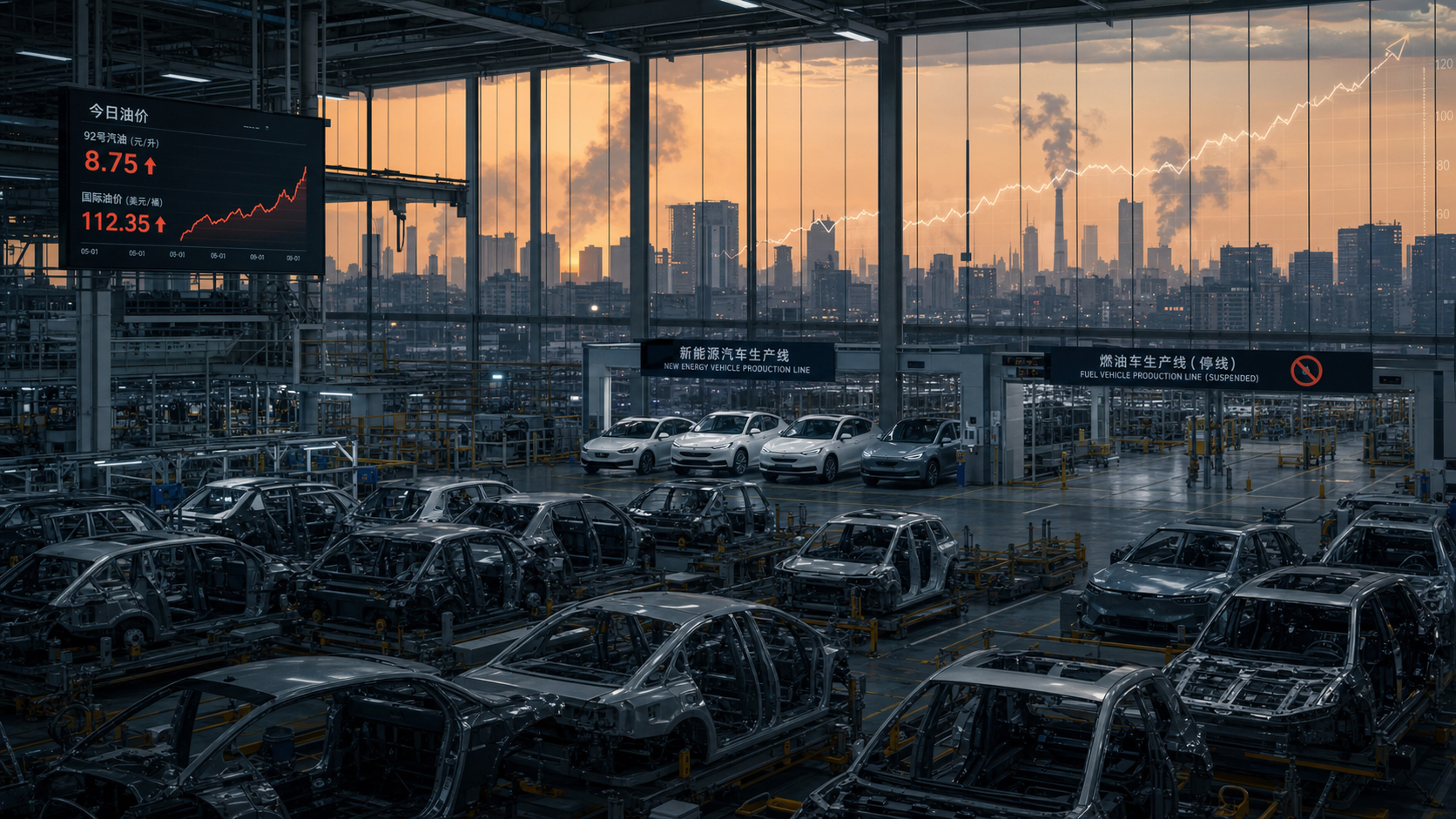
How a distant war brings China's most important industry to a standstill: Historic collapse in the world's largest car market – Image: Xpert.Digital
Shocking figures from Beijing: How the Iran war is bringing China's auto industry to its knees
How the Iran war is driving China's automotive industry into crisis
Oil price shock and the consequences of war: Why China's car market suddenly collapsed
A historic slump is shaking the world's largest automotive market: In April 2026, passenger car sales in China plummeted dramatically – sending shockwaves as far as Europe. Triggered by exploding oil prices as a result of the armed conflict in Iran, sales of combustion engine vehicles in particular collapsed virtually overnight. But the crisis runs deeper: Despite the shift away from gasoline engines, sales figures for new energy vehicles (NEVs) are also paradoxically declining. A persistent structural slump in consumer spending, growing fears of inflation, and the end of massive government subsidies are drastically dampening Chinese domestic demand. This development poses an immense threat to the global – and thus also the European – automotive industry: To reduce their enormous overcapacities, Chinese manufacturers like BYD are now flooding international export markets with unprecedented aggression. Is this April shock merely a temporary dip or the definitive turning point for the global automotive industry?
Related to this:

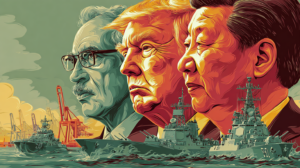
When a distant war brings a multi-billion dollar market to a standstill
Shock in numbers: April as a historical milestone
The Chinese automotive market suffered one of the most severe slumps in its recent history in April 2026. With only 1.4 million passenger cars delivered, the month marked the lowest April figure since 2022 – when Covid lockdowns paralyzed entire industrial cities and brought production to a physical standstill. Back then, the reason for the sales slump was immediately apparent: closed showrooms, locked-down factories, empty streets. Today, four years later, the cause is more subtle, but no less brutal in its economic impact: it is the oil price shock resulting from the Iran-Iraq War that is shaking the market.
The China Passenger Car Association (PCA) published data on May 12, 2026, showing a year-on-year decline of 21.5 percent. Cumulatively, over the first four months of the current year, this amounts to a decrease of 18.5 percent compared to the same period last year. These are no longer statistical outliers – this is a trend reversal. The market has now recorded declines for seven consecutive months, a pattern last observed during the worst disruptions of the pandemic. The figures exceeded even the most pessimistic expectations of industry analysts, as PCA Secretary General Cui Dongshu explicitly acknowledged: The slump in internal combustion engine vehicle sales was relatively severe and far surpassed the association's internal forecasts.
To understand the scale of this: With annual sales recently exceeding 28 million vehicles, China is by far the world's largest automotive market. Any significant shift in this market sends shockwaves through global supply chains, stock market valuations, and industry strategies. What transpired in Chinese showrooms in April is therefore far more than a national statistic – it is a geopolitical and economic signal of global relevance.
Related to this:


The Strait of Hormuz and its consequences for Beijing car buyers
To understand the slump in sales, one must take a detour through geopolitics. The armed conflict in Iran—triggered by Israeli and American military operations—led to the de facto closure, or at least massive disruption, of the Strait of Hormuz, the world's most important oil passage. Around 20 percent of global oil trade and an even higher proportion of Asian oil imports pass through this narrow strait at the entrance to the Persian Gulf. China is particularly affected: Over 70 percent of its oil needs must be imported, and around 90 percent of that by sea. Most recently, the People's Republic purchased more than 80 percent of all Iranian crude oil—thus indirectly financing Tehran's war chest.
The consequences of the conflict were foreseeable, but their speed was nonetheless surprising: Oil prices rose by up to nine percent per day at their peak, and China's National Development and Reform Commission was forced to adjust state-regulated fuel prices upwards several times. A liter of diesel became more than 30 percent more expensive, and gasoline prices overall rose by around 20 percent compared to pre-war levels. For a country where incomes and purchasing power are significantly below Western European levels, this represents a substantial shift in everyday household budgets – with direct implications for the decision of whether and which car to buy.
The behavior of car buyers followed an economically rational logic: those wanting to buy a new car, faced with rising fuel costs, are much more concerned than before with the operating costs over the vehicle's lifetime. And in this calculation, a combustion engine vehicle suddenly loses its appeal. What has been promoted in Europe for years as a theoretical argument for electromobility – lower operating costs – became an immediate economic reality for Chinese consumers in April 2026. The oil price shock acted like a forced crash course in energy economics.
The internal combustion engine in free fall: Sales down by a third
The extent of the decline in combustion engine vehicles is spectacular. Deliveries of vehicles with conventional gasoline or diesel engines fell by around a third in April compared to the previous year – more precisely, by 37 percent in the retail sector, to just 530,000 units. This vehicle category, which just a few months ago accounted for the lion's share of the Chinese car market, has become a minority within a single calendar month. It accounted for 84 percent of the total sales decline in April – even though it now holds a significantly smaller market share.
The geographical and segmental distribution of the decline is revealing. The compact segment was hit particularly hard, the vehicle class favored by the middle and lower middle classes. For this group of buyers, increased operating costs are most noticeable, as their disposable income is the most limited. Premium manufacturers and luxury segments can more easily absorb fuel costs in their calculations – mass markets, on the other hand, react immediately. This dynamic explains why the decline in compact combustion engine vehicles was disproportionately high, while the luxury segment remained comparatively stable.
In the long term, the oil price shock is accelerating a structural transformation that has been underway for years. Since mid-2024, more electric vehicles than combustion engine vehicles have been sold monthly in China. The NEV market share of domestic passenger car sales was already nearly 49 percent in 2024. By 2025, it had risen to 53.3 percent. In April 2026, the NEV share of total sales reached 60 percent – not because the electric car market was booming, but because the combustion engine market collapsed. This is an important distinction that is often obscured in public reporting.
Electric cars disappoint: Why NEV demand is also stalling
Herein lies the real analytical surprise of April: Despite the massive rise in oil prices and the associated theoretical advantage for electric vehicles, sales of New Energy Vehicles (NEVs) also declined. NEV sales figures fell by around 6.8 to 7 percent compared to the previous year. Electric cars and plug-in hybrids were therefore unable to compensate for the losses in the combustion engine market – not even close.
This apparent contradiction is explained by the interplay of several factors. First, general consumer sentiment in China is subdued. The Iran war, through its impact on oil prices, has burdened the entire Chinese economy: commodity prices rose, production costs climbed, wages stagnated, and workers were laid off. Weak domestic consumption is a chronic problem for the Chinese economy, further exacerbated by external shocks such as the current war. Retail sales grew by only 1.7 percent in March 2026 – far below expectations. Those worried about their financial future are postponing major purchases, such as buying a car, regardless of its type.
Secondly, changes in government incentive programs play a significant role. China's electric vehicle subsidy system and the so-called scrappage scheme for replacing old vehicles are complex and subject to change. At times, at least six cities and municipalities suspended their purchase incentives because the funding ran out sooner than expected. The change to the NEV purchase tax exemption was particularly significant: China signaled its intention to gradually reduce the tax advantage for electric vehicles, thereby weakening a key selling point. In the current five-year plan for 2026 to 2030, electric vehicles were removed from the list of strategic industries for the first time in over a decade – a striking political signal for the normalization of the sector and the end of massive direct government subsidies.
Thirdly, a structural saturation effect exists. After years of explosive growth, the Chinese NEV market is in a phase where the most easily accessible buyers have already been won over. The market share of the NEV segment is already over 50 percent. This means that the remaining new buyers who do not yet own an electric car are statistically more difficult to convince – either due to a lack of charging infrastructure in rural areas, greater price sensitivity, or specific usage requirements that electric drives do not optimally meet. Further growth will be more arduous and costly to achieve.
Our China expertise in business development, sales and marketing

Our China expertise in business development, sales and marketing - Image: Xpert.Digital
Industry focus areas: B2B, digitalization (from AI to XR), mechanical engineering, logistics, renewable energies and industry
More information here:
A thematic hub offering insights and expertise:
- Knowledge platform covering global and regional economies, innovation and industry-specific trends
- A collection of analyses, insights, and background information from our key areas of focus
- A place for expertise and information on current developments in business and technology
- A hub for companies seeking information on markets, digitalization, and industry innovations
April demolition in China: Temporary shock or long-term upheaval?
Deflation reverses: New inflation risks in the Chinese economy
The Iran war is hitting China at a particularly unfavorable economic moment. For years, the People's Republic has struggled with a persistent deflationary trend – falling prices as a symptom of weak domestic demand, excess production capacity, and a deep-seated deficit in consumer confidence. This deflation is now beginning to reverse into inflation, forced by the external energy price shock. A commentator on the Chinese state broadcaster CGTN succinctly described it: People can buy less for the same amount of money than before.
This inflationary turn is a double-edged sword from a macroeconomic perspective. On the one hand, it ends the price stagnation that hampered investment. On the other hand, rising inflation hits already weakened consumer demand head-on. In a country with significant income inequality, energy price inflation acts like a tax on the lower and middle income brackets, who have to spend a disproportionately high share of their budget on transportation and basic services. China's National Development and Reform Commission is trying to mitigate fuel price increases through government-imposed maximum price caps – but the room for maneuver is limited.
At the same time, China's exporters are suffering. Plastic prices have risen by about 50 percent as a result of the increase in oil prices, and fabric costs for textile manufacturers have risen by 10 to 20 percent. This is increasing production costs for Chinese manufacturers at a time when global competitiveness is already under pressure from rising Western import tariffs. The export momentum that still stabilized China's economy in 2025—with a trade surplus of $1.2 trillion and exports growing by 5.5 percent—is expected to weaken noticeably in 2026. Export growth slowed significantly as recently as March 2026.
Related to this:

China's car manufacturers caught between domestic market slump and export boom
The crisis at home is shaping the strategies of Chinese automakers in a paradoxical way: While domestic sales are plummeting, exports have recently boomed with extraordinary momentum. In April, the Chinese automotive industry exported a total of 769,000 vehicles – with NEVs accounting for more than half of total exports for the first time, at 52.7 percent. The rise in oil prices is fueling global demand for electric vehicles – but only outside of China, where purchasing power is higher and government subsidies increase their attractiveness.
Morgan Stanley revised its forecasts accordingly: The US investment bank now expects domestic sales to decline by 11 percent for the full year 2026, but simultaneously raised its export growth forecast from 15 to 33 percent. This gap – the domestic market is shrinking, while the export market is growing – poses fundamental questions for Chinese manufacturers regarding capacity planning, pricing, and strategic direction.
BYD, the world's largest electric vehicle manufacturer, exemplifies this divide. The company suffered a profit decline of almost 19 percent in 2025, falling to around 32.6 billion yuan. At the same time, it raised its export target for 2026 to up to 1.5 million vehicles – an increase of approximately 43 percent compared to the 1.05 million overseas sales of the previous year. In the first two months of 2026, half of BYD's sales were already generated abroad. BYD CEO Stella Li stated that the long-term goal is to permanently generate half of the company's sales outside of China – a dramatic strategic shift for a company long considered a champion of the domestic market. For the European and global automotive industry, this means that Chinese production capacity, no longer finding sufficient demand at home, is aggressively seeking new markets.
Structural crisis or economic downturn? A nuanced assessment
It would be analytically too simplistic to attribute the April downturn solely to the Iran war. In fact, short-term external shocks overlapped with a profound structural transformation that was already underway before the outbreak of the conflict.
The chronic weakness of Chinese domestic consumption is one of Beijing's key economic policy challenges, evidenced by numerous macroeconomic indicators. The real estate and debt crisis has significantly reduced the private wealth of Chinese households since 2021, thereby sustainably weakening consumer spending. The Purchasing Managers' Index for the manufacturing sector has remained below the growth threshold of 50 points since April 2025. Capital investment has declined year-on-year. These are all structural characteristics, not an isolated geopolitical event.
At the same time, the automotive industry itself is undergoing an accelerated transformation. The transition from combustion engines to electric drives is more advanced in China than in any other major market, and this transition naturally brings disruptions: Manufacturers and dealers specializing in combustion engines are losing market share faster than expected, while newcomers from the technology sector are gaining it. This structural shift is not proceeding smoothly, and the current oil price shock is accelerating it even further.
Morgan Stanley predicted at the beginning of 2026 that the Chinese automotive market would decline by five to eleven percent – the first drop after several years of growth. The slump in April far exceeded these forecasts. This means that even without the war in Iran, 2026 would have been a difficult year for the Chinese automotive market. The war did not cause this downturn, but it exponentially amplified it.
Government incentive policy: Between exhaustion and realignment
The role of government subsidies should not be underestimated – neither their historical contribution to the electric car boom nor their current withdrawal as a hindrance. For over a decade, China massively subsidized the NEV market with a comprehensive system of purchase incentives, tax breaks, and scrappage programs. The result was impressive: from a niche product to over 50 percent market share in less than ten years.
But now the state is gradually withdrawing. Scrapping premiums have been partially suspended because the subsidies were exhausted early. The exemption from purchase tax for new electric vehicles (NEVs) is being phased out. In the new five-year plan for 2026 to 2030, electric vehicles no longer appear as a strategic priority. This sends a signal: Beijing considers the market mature enough to manage without intervention. Whether the market shares this expectation is an open question – April sowed seeds of doubt.
The incentive structure hasn't disappeared, but merely been restructured. The scrappage program was officially continued for 2026: When purchasing a new electric vehicle after scrapping the old one, the subsidy amounts to 12 percent of the vehicle price, up to a maximum of 20,000 yuan. Government support of 10 percent, up to a maximum of 15,000 yuan, also continues for combustion engine vehicles with an engine displacement of less than 2.0 liters. These funds were therefore fundamentally available – the fact that the market nevertheless collapsed demonstrates the limitations of direct purchase incentives in an environment of structural consumer restraint and geopolitical uncertainty.
Global implications: What the Chinese crisis autumn means for the global automotive industry
The slump in Chinese sales is not an isolated event – it has direct repercussions for the global automotive industry. European and American premium manufacturers, which still hold substantial shares of Chinese sales in their balance sheets, will feel the consequences immediately in their quarterly reports. Volkswagen, BMW, and Mercedes – all heavily reliant on China – face a further erosion of their market position there, while at the same time, Chinese competitors with excess capacity are becoming more aggressive in European and Asian markets.
The export boom of Chinese NEV manufacturers is a direct consequence of the slump in the domestic market. Chinese automobile exports reached 769,000 vehicles in April, with NEVs accounting for the majority of exports for the first time at 52.7 percent. NEV exports even jumped by 111.8 percent. BYD, Geely, SAIC, and others are leveraging the economies of scale and technological expertise they have built up domestically to expand globally – in Europe, Southeast Asia, Latin America, and the Middle East. What began as Chinese domestic market dominance is evolving into global market conquest.
This raises a strategic question for the entire global automotive industry: if the world's largest market experiences structural weaknesses and Chinese manufacturers with surplus capacity and technological maturity enter the global market, competition intensifies at a time when the transformation to electromobility is simultaneously putting all manufacturers under investment pressure. April 2026 in China is therefore also a warning sign for the European automotive industry – not because of the sales slump itself, but because of the export offensive it will trigger.
Outlook: Temporary shock or permanent paradigm shift?
The crucial analytical question is: Is the sales slump of April 2026 a temporary, exogenously caused shock that will resolve itself with a calming of geopolitics – or does it mark a permanent turning point in the development of the Chinese automotive market?
The shock scenario is supported by the fact that oil price movements are historically reversible. Geopolitical tensions escalate and de-escalate. Should a diplomatic solution be found in Iran, fuel prices would likely fall again, and some of the postponed purchases of combustion engine vehicles could be made up for. Furthermore, China has strategic oil reserves and the political will to counteract price fluctuations through state regulation.
However, structural factors point to a more lasting shift. The combustion engine is steadily losing market share in China, and this trend is not only being exacerbated by the oil price shock but also firmly entrenched in consumers' minds. Anyone who has experienced how an oil price shock can cause the operating costs of a combustion engine to skyrocket will calculate energy costs differently when purchasing their next vehicle. The move away from the combustion engine is not solely a technological impetus – it is also the result of painful economic experiences.
Furthermore, China's structural weakness in consumer spending remains a long-term challenge that is not easily resolved politically. The real estate crisis has not been overcome, household confidence has not been sustainably strengthened, and domestic consumption is structurally underdeveloped compared to export-driven growth. Goldman Sachs forecasts GDP growth of 4.8 percent for 2026 – below the official target of 5 percent. Deutsche Bank sees only 4.5 percent. In this macroeconomic environment, any recovery in the automotive market remains fragile.
April 2026 will be remembered in China's economic history as the month in which several crises simultaneously impacted the world's largest automotive market: a geopolitical oil price shock, structural weakness in consumer spending, expiring government subsidies, and the accelerated structural change in powertrain technology. Each of these factors would have been manageable on its own. Their simultaneous occurrence, however, created a crash that will occupy the industry and its observers for a long time to come.
Your global marketing and business development partner
☑️ Our business language is English or German
☑️ NEW: Correspondence in your native language!

Konrad Wolfenstein
I and my team are happy to be available to you as your personal advisor.
You can contact me by filling out the contact form here wolfenstein@xpert.digital:or simply call me at +49 7348 4088 965. My email address is
I'm looking forward to our joint project.
☑️ SME support in strategy, consulting, planning and implementation
☑️ Creation or realignment of the digital strategy and digitization
☑️ Expansion and optimization of international sales processes
☑️ Global & Digital B2B trading platforms
☑️ Pioneer Business Development / Marketing / PR / Trade Fairs
🎯🎯🎯 Data-driven B2B industry hub as a quasi-in-house solution


The quasi-in-house solution: How Xpert.Digital closes operational gaps in B2B marketing and sales – Smart Content-Driven Business - Image: Xpert.Digital
Xpert.Digital is a data-driven B2B industry hub led by Konrad Wolfenstein . The company acts as an external, quasi-in-house solution for industrial partners, closing operational gaps in marketing, content, and sales – without requiring additional resources on the client side.
More information here: