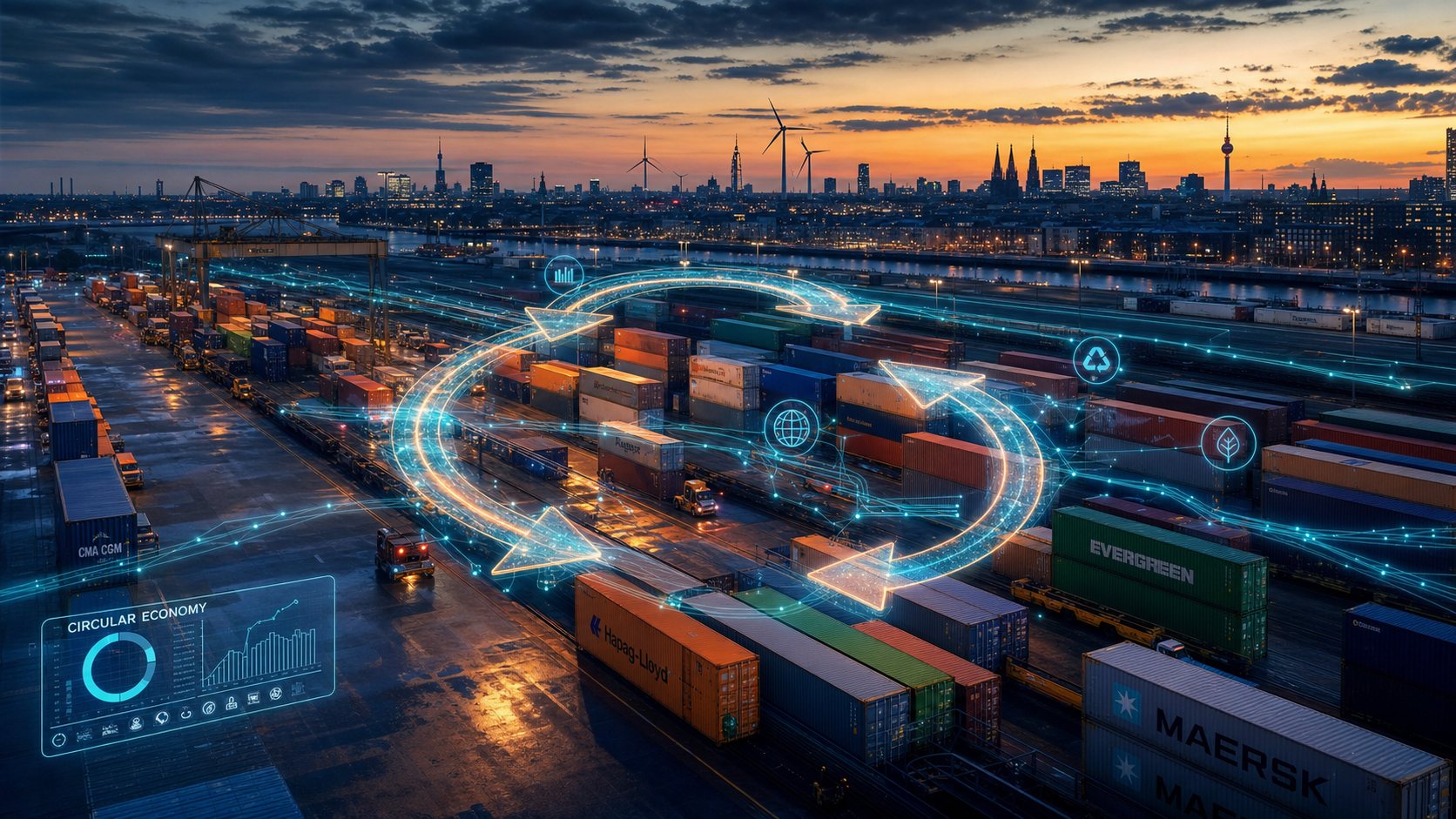
The EU Circular Economy Act and the reorganization of European logistics – Image: Xpert.Digital
From cost factor to profit machine: That's why "reverse logistics" is the new core business
Nearshoring is becoming mandatory: Why the global market is losing importance for Europe's logistics companies
The end of the one-way street: How the Circular Economy Act is revolutionizing the entire logistics industry
The EU's proposed Circular Economy Act (CEA) is far more than just another environmental law – it marks a radical paradigm shift in industrial policy. Faced with global crises and a dangerous dependence on raw materials from third countries, Europe is forcing its economy to transform: away from the resource-intensive, linear, throwaway model and towards a strategically autonomous circular economy. For B2B logistics and supply chain management, this means a fundamental reorganization. Approaches such as reverse logistics, nearshoring, and the digital product passport will quickly evolve from abstract concepts into stringent regulatory obligations. Those who want to remain competitive in the future must now establish circular and data-driven supply chains and container logistics. This article examines the strategic, economic, and geopolitical dimensions of the new EU framework and demonstrates why a closed-loop circular economy is the decisive competitive advantage of the coming decade.
From throwaway model to circular economy power – why Europe must act now or fall permanently behind
The European Union's proposed Circular Economy Act (CEA) is no ordinary piece of environmental legislation. It is a structural program for the competitiveness of a continent that has recognized its linear economic model has led to a strategic dead end. Building on the recommendations of reports by Mario Draghi and Enrico Letta, and complemented by the Clean Industrial Deal and the Competitiveness Compass, the CEA is intended to play a central role in strengthening European industrial resilience and strategic autonomy. What at first glance sounds like regulation is, on closer inspection, a paradigm shift in industrial policy – with profound consequences for supply chains, container logistics, and the entire B2B ecosystem.
The strategic background: Why Europe needs the circular economy
Europe's structural vulnerability has been quantified since the Draghi report of September 2024: the EU needs at least €750 to €800 billion in additional investment annually to close productivity gaps and achieve its environmental and social goals. The core of the problem is well-known: weak growth momentum, a lack of innovation, and a dangerous dependence on raw materials, especially critical minerals, on China. While the US and China are systematically building their industrial ecosystems, Europe's lag in strategically crucial sectors is widening.
The Draghi report identifies three areas that urgently need to be changed: first, closing the innovation gap; second, more closely linking decarbonization and competitiveness; and third, reducing dependence on critical raw materials and digital technologies from third countries. This is precisely where the circular economy comes in, forming the connecting link in this triangle. The circular approach decouples economic growth from linear resource consumption, reduces import dependence on primary raw materials, and creates the foundation for new, innovation-driven business models within the European single market.
The European Commission's Competitiveness Compass, adopted in January 2025, translates this vision into operational priorities: The CEA is explicitly named as an instrument to facilitate the free movement of circular economy products, secondary raw materials, and waste within the internal market, to offer high-quality recycled materials, and to strengthen demand for them. Formal legislative action is scheduled for the third or fourth quarter of 2026, meaning that companies must begin their strategic preparations now.
The end of the linear supply chain: Structural change as a regulatory obligation
The previous logic of global supply chains followed a simple principle: raw materials are imported, products are manufactured, delivered, consumed, and disposed of. This linear model optimized itself for decades for cost efficiency and global division of labor. The CEA breaks with this logic not gradually, but systemically.
The foundation for this transformation has already been laid through accompanying regulations that precede the CEA. The new Packaging and Packaging Waste Regulation (PPWR), in force since February 2025, sets the first structural marker with its mandatory application from mid-2026: 40 percent of all transport packaging used in the EU must circulate in reusable systems by 2030, and all packaging on the EU market must be recyclable by 2030. This is not a recommendation – it is a legal obligation with direct consequences for investment and procurement decisions.
The Ecodesign Regulation for sustainable products (ESPR), in force since July 2024, complements this with product-related minimum requirements and the gradual introduction of the Digital Product Passport. Together with the Carbon Border Adjustment Mechanism (CBAM), which becomes fully mandatory from 2026 and imposes CO₂ prices on imports from third countries, a regulatory framework is created that systematically increases the cost of linear procurement models and structurally favors circular alternatives. Companies sourcing steel, aluminum, cement, or fertilizers from third countries will pay real CO₂ prices from 2026 onwards – a cost driver that fundamentally alters nearshoring calculations in several sectors.
From one-way street to roundabout: Reverse Logistics as a new core business
The transformation to a circular economy necessitates the development of so-called closed-loop supply chains, in which reverse logistics is no longer considered a peripheral issue but a strategic core business. Reverse logistics refers to the systematic return of products, components, and recycled materials from the consumer or end user back into the economic cycle – be it for reuse, refurbishment, recycling, or energy recovery.
Traditionally, reverse logistics was considered a cost center to be minimized. This view is outdated. Research shows that reverse logistics costs can be reduced by up to 19 percent through automated sorting and shared return networks. At the same time, returned materials and components generate measurable value: In the automotive sector, for example, each reused part saves between 80 and 120 euros in raw material costs. Logistics is transforming from a pure cost factor into a value-added element within a regenerative production system.
For B2B companies, this means a fundamental redesign of transport planning. Delivery routes must be systematically designed to be bidirectional: the delivery of new goods and the collection of used products, packaging, or recyclables will no longer be planned as separate, isolated processes, but as an integrated system service. Empty runs when collecting secondary materials represent one of the biggest operational and environmental challenges – a problem that can only be effectively solved through cross-industry cooperation and shared logistics infrastructures.
Scientific studies confirm that while reverse logistics concepts in the circular economy are complex and can be hampered by a lack of knowledge and customer inertia, they are demonstrably environmentally friendly and economically sustainable because they reduce transport and storage costs. Companies that implement elements of the circular economy, such as remanufacturing and reverse logistics, achieve measurable improvements in their economic, environmental, and social sustainability performance.
Domestic market instead of global market: Nearshoring as a geopolitical strategy
The geopolitical upheavals of recent years – the pandemic, the energy crisis, Russia's attack on Ukraine, growing dependence on China, and US tariff policies under President Trump – have produced a key insight: Optimizing global supply chains based solely on the lowest purchase price is strategically risky. The CEA, embedded within the Clean Industrial Deal and the Competitiveness Compass, addresses this finding and actively promotes nearshoring effects by establishing a European single market for secondary raw materials.
By pooling raw material demand, creating regional recycling and raw material exchanges, and gradually harmonizing waste classifications and recycling standards within the EU, transport flows are successively shifting from transcontinental supply chains to intra-European exchange relationships. This creates a twofold effect: On the one hand, shorter, more resilient supply chains with less vulnerability to external disruptions are emerging; on the other hand, intra-European freight transport is becoming denser and more complex, placing new demands on logistics infrastructure.
The CBAM exemption for intra-EU supply chains is a key economic driver for this development: Companies sourcing their intermediate products within the EU are not subject to the carbon border tax – a significant cost advantage that shifts the nearshoring calculation in favor of European sources. Combined with the requirements of the EU Supply Chain Due Diligence Directive, which considerably complicates compliant supplier screening outside the EU, this sends a consistent political signal: The EU aims to regionalize its industrial value creation, using the circular economy as a core component.
Nearshoring will no longer be a trend by 2026 – it will be a regulatory reality. By 2026, nearshoring will be firmly established as a structural strategy, enabling regions to build self-sufficient, resilient production ecosystems with shorter supply chains, greater flexibility, and improved responsiveness to global disruptions.
Container logistics in structural change: From transport container to strategic interface
Container logistics is at the heart of systemic change. What previously functioned as a passive transport container is becoming an active, data-driven infrastructure component in the circular economy. This shift is not metaphorical – it is driven by concrete regulatory requirements and technical necessities.
Stricter regulations for the separation of waste by type – a key element of both the PPWR and the upcoming CEA – significantly increase logistical complexity. The differentiation of containers by size, material, and usage characteristics is growing considerably. For container logistics, this means a wider range of container types must be managed, cleaned, maintained, and operated in certified recycling systems. This increases capital requirements and operational complexity – but simultaneously opens up new service opportunities for pooling providers and third-party logistics (3PL) providers.
The concept of container pooling is gaining significant importance. Instead of each company maintaining its own proprietary fleet of containers, third-party pooling service providers manage standardized, shared transport packaging, which is collected, cleaned, and made available to the next user after each use. NABU studies show that reusable transport packaging achieves an average of around 35 cycles, which represents a reduction in packaging material of over 90 percent compared to single-use packaging. In the European OEM sector alone, crate pooling platforms can generate savings of €420 million annually.
This creates a strategic turning point for B2B shippers and freight forwarders: those who invest early in shared pooling infrastructures and enter into collaborations with 3PL providers secure access to standardized, cost-sharing systems. Those who cling too long to proprietary, one-way models risk not only compliance issues but also the loss of supplier accreditations, as large shippers are increasingly making ESG criteria a condition of their contracts.
LTW Intralogistics Solutions

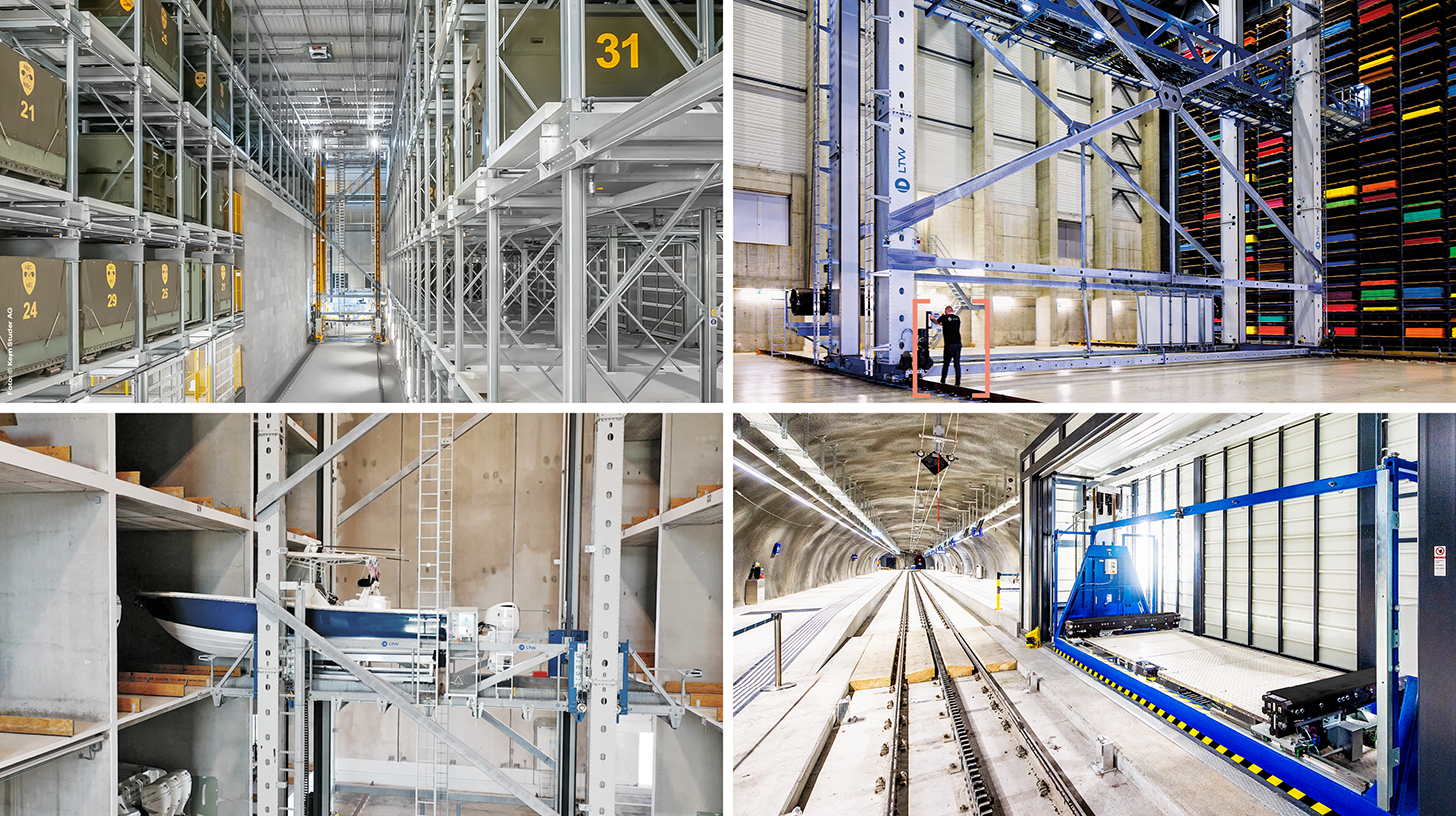
LTW Intralogistics – Engineers of Flow - Image: LTW Intralogistics GmbH
LTW offers its customers not individual components, but integrated complete solutions. Consulting, planning, mechanical and electrotechnical components, control and automation technology, as well as software and service – everything is networked and precisely coordinated.
In-house production of key components is particularly advantageous. This allows for optimal control of quality, supply chains, and interfaces.
LTW stands for reliability, transparency, and collaborative partnership. Loyalty and honesty are firmly anchored in the company's philosophy – a handshake still means something here.
Related to this:
Industrial policy meets logistics: Why the circular economy creates strategic autonomy
Comparison of logistics models: Two worlds in contrast
The following overview illustrates the structural difference between the traditional linear and the circular supply chain in the crucial operational dimensions:
| Logistics dimension | Traditional (linear) supply chain | Circular (circular) supply chain |
|---|---|---|
| Route planning | One-way street from producer to end customer | Bidirectional planning including reverse logistics |
| Container function | Passive transport container for goods | Digital data carrier and strategic sorting interface |
| Procurement channels | Global imports with long supply chains | Intra-European single market with a focus on nearshoring |
| Network structure | Independent, proprietary corporate fleets | Shared infrastructures and cooperatively used networks |
| Cost structure | Optimized for single transaction costs | System optimized across the entire material lifecycle |
| Regulatory requirement | Transactional Compliance | Life cycle documentation and ESG reporting requirements |
| Emissions model | CO₂ as an external cost factor | CO₂ as an internalized operating and allocation parameter |
This comparison shows that the transformation not only changes operational processes but also touches upon the fundamental strategic logic of corporate management. Circular supply chains require a fundamentally different understanding of investment, cooperation, and data management.
The Digital Product Passport: Data as a basic requirement of the cycle
Efficient and legally compliant resource management cannot be achieved without comprehensive digitalization. The key instrument in this regard is the Digital Product Passport (DPP), which is designed as a core component of the ESPR Regulation and will become mandatory for an increasing number of industrial sectors from 2027 onwards.
The DPP is a standardized, machine-readable digital data set assigned to a physical product or packaging unit, containing information on origin, material composition, repairability, recycling instructions, and lifecycle data. From a logistics perspective, the DPP acts as a system integrator: it links physical container management with the digital data stream, enabling, for the first time, seamless, automated traceability of material flows – from production through use to return.
Specifically, for container logistics, this means that every container or packaging unit receives a machine-readable identifier – QR code, RFID tag, or NFC chip – which establishes a direct link to the DPP system. Sensor-based fill level measurements, automated route planning based on real-time data, and integration into central EU registries, accessible to customs authorities, recycling companies, and clients, will become standard operational features. Companies that fail to establish this infrastructure will, in the medium term, neither gain market access nor secure contracts from ESG-compliant main clients.
Germany is particularly active in implementation: The national initiative for the Digital Product Passport relies on blockchain-based identifiers for parts traceability and aims to make circular logistics completely data-transparent by 2030. Large OEM-3PL partnerships, for example between automotive manufacturers and logistics service providers, are already co-investing in recyclable container fleets and real-time asset tracking systems, which are expected to reduce container loss by up to 40 percent and improve the inventory turnover rate by a factor of 1.7.
Economic efficiency and risks: What the transformation costs – and what it brings in
The economic logic of CEA is complex and cannot be reduced to a simple cost-benefit analysis. Companies face real investment needs that may be a burden in the short term, but can generate resilience and competitive advantages in the long term.
On the cost side, one thing is clear: Nearly 60 percent of German companies fear increased documentation efforts due to the transformation to a circular economy. Production costs initially rise due to higher costs for recycled materials compared to primary raw materials, and compliance with recycled material targets sometimes fails simply because of a lack of sufficient secondary raw materials on the market. Investments in new container types, pooling systems, digital infrastructure, and compliance reporting are additional factors.
The benefits are substantial: Companies pursuing at least one circular strategy are, on average, more successful than those without circular approaches, as demonstrated by the German Economic Institute. Closed-loop supply chain models reduce CO₂ intensity by up to 44 percent and lower logistics waste by up to 35 percent. AI-supported route optimization and digital twins reduce empty mileage by up to 22 percent. In the automotive sector alone, Germany generates 37 percent of regional investment through battery reverse logistics and ESG-certified material flows.
In addition, there is the financing effect: Green financing instruments, including loans linked to the EU taxonomy, reduce the weighted cost of capital for compliant companies by up to 60 basis points. Those who invest early therefore benefit not only from lower raw material costs and operational optimizations, but also from more favorable financing conditions – a competitive advantage that accumulates over the entire business cycle.
The German Chamber of Industry and Commerce (DIHK) generally views the CEA as an opportunity for new business models, more efficient material flows, and increased raw material resilience, but also points to the risks: additional bureaucracy, potential interference with existing business models, and the danger that strict recycling targets will simply be impossible to meet due to a lack of available secondary raw materials. A realistic strategy must take both sides of this equation seriously.
The industrial policy dimension: Strategic autonomy through a circular economy
The CEA is more than environmental policy – it is an element of European industrial strategy. The link between the circular economy and strategic autonomy is being made increasingly explicit in academic and political debate: circular economy solutions can directly contribute to the EU's Open Strategic Autonomy by reducing dependencies on critical raw materials. This is particularly relevant for key industries such as battery technology, semiconductors, and green technologies, where Europe is currently still heavily reliant on external supply chains.
The Clean Industrial Deal, presented on February 26, 2025, explicitly enshrines circularity as one of its six pillars. It aims to minimize waste, extend material lifecycles, and promote recycling, reuse, and sustainable production in order to maximize the use of Europe's limited resources and reduce its dependence on third countries for raw materials. For supply chain strategists, this means that the logistical transformation mandated by the CEA is simultaneously an investment in geopolitical resilience.
The Industrial Accelerator Act, presented in March 2026, complements this picture by specifically stimulating demand for European-made, circular technologies and products through preferential rules in public procurement and low carbon requirements. The regulatory framework is thus complete: from product design and product passports to supply chain documentation and state procurement law – all policy levels are aligned.
Recommendations for action: What strategically minded companies need to do now
Given the multi-stage regulatory framework – PPWR from mid-2026, CBAM fully implemented from 2026, DPP from 2027, CEA legislative initiative Q3/Q4 2026 – the time horizon for strategic decisions is limited. Companies must take action in three areas:
The first area of action concerns infrastructure and partnership strategy. Participation in or co-design of container pooling systems and cross-industry reusable infrastructures is not a future option, but an operational requirement for 2026. Cooperation with 3PL partners who manage standardized, recyclable container pools must now be evaluated and contractually secured. Companies that rely on proprietary systems for too long risk higher operating costs and compliance gaps.
The second area of action is the digitization of material flows. The integration of track-and-trace systems, sensor-based level measurement, and preparation for DPP data exchange must be addressed immediately. Those who view DPP merely as a bureaucratic burden are squandering its strategic value: Those who possess and can analyze material flow data have an informational and negotiating advantage over less digitized competitors.
The third area of action involves recalibrating the procurement strategy. The CBAM exemption for intra-EU supply chains, combined with the requirements for nearshoring-compliant supplier assessment, necessitates a systematic review of procurement sources. Secondary raw materials and recycled materials should be included in the strategic supplier portfolio as a serious alternative to primary raw materials, not least because a functioning EU internal market for secondary raw materials makes this procurement increasingly reliable and cost-efficient.
The logistics of the circular economy is the industrial policy of tomorrow
The Circular Economy Act, together with the already effective regulatory framework of the PPWR, ESPR, CBAM, and Clean Industrial Deal, is transforming the European supply chain and logistics landscape to an extent whose strategic depth is not yet fully understood. Container logistics is evolving from a passive transport sector to an active enabler of industrial circular systems.
For B2B platforms and logistics service providers, the following applies: Those who build the digital and physical infrastructure for circular material flows early on will participate in the growing internal market for secondary raw materials, secure ESG-compliant supply chain partnerships, and unlock financing advantages through EU taxonomy-compliant investments. The strategic question is not whether, but how quickly this transformation will be implemented – and who will help shape the rules of the new game, instead of merely following them.
Consulting - Planning - Implementation

Konrad Wolfenstein
I would be happy to serve as your personal advisor.
You can contact me at wolfenstein∂xpert.digital or
Just call me on +49 7348 4088 965 .
Your container high-bay warehouse and container terminal experts

Container high-bay warehouses and container terminals: The logistical interplay – expert advice and solutions - Creative image: Xpert.Digital
This innovative technology promises to fundamentally change container logistics. Instead of stacking containers horizontally as before, they will be stored vertically in multi-story steel racking structures. This not only allows for a drastic increase in storage capacity within the same area, but also revolutionizes all processes at the container terminal.
More information here: