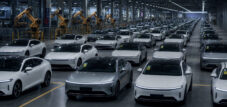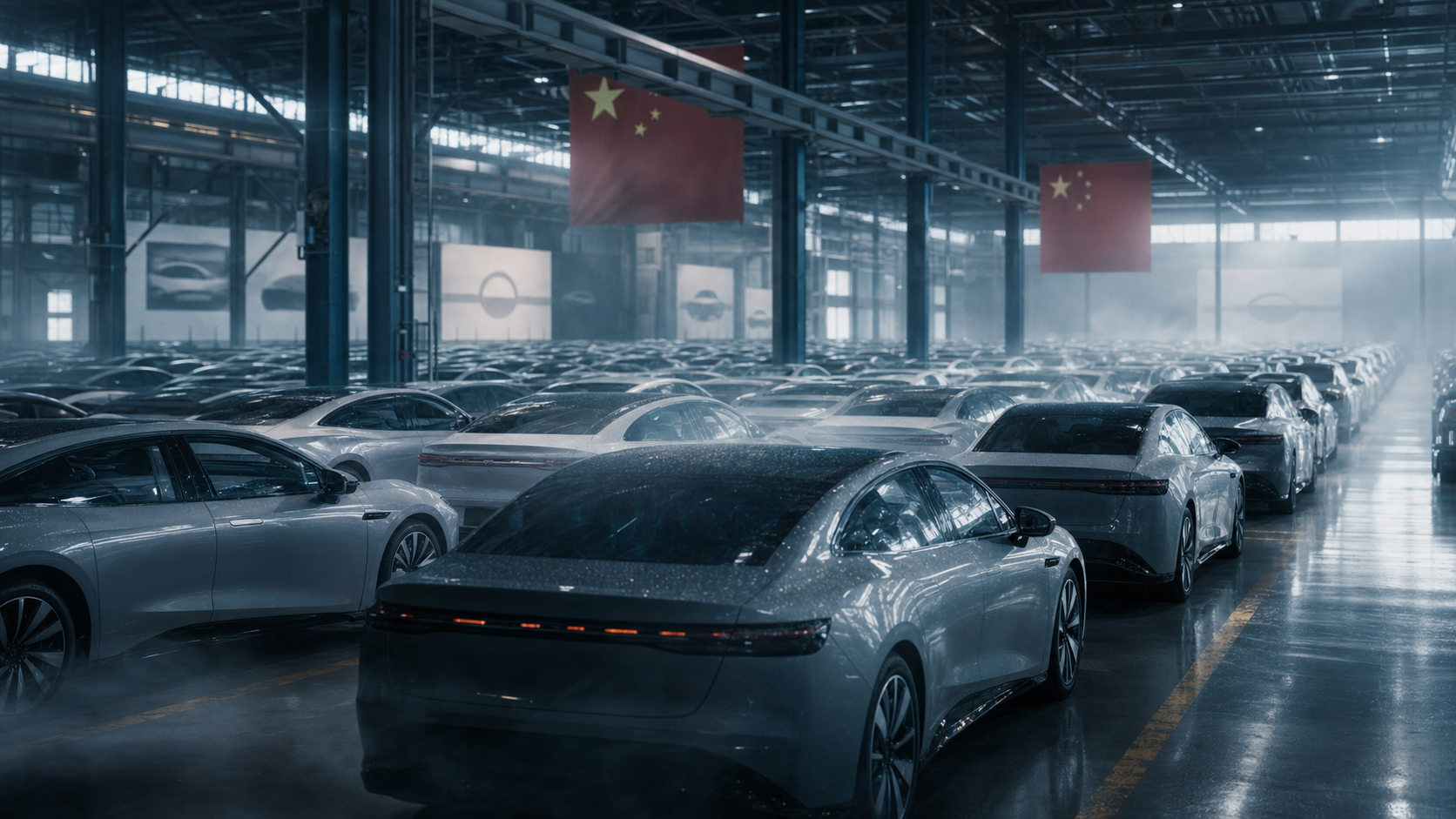
China's electric car bubble bursts: Price shock at BYD, XPeng & Co. – The bitter end of the Chinese electric car miracle – Creative image on the topic, with AI: Xpert.Digital
The electric car illusion: Why China's flagship manufacturers are suddenly burning through billions and low prices are becoming a deadly trap for BYD and others
Despite record sales: Why the Chinese electric car industry is now threatened with collapse
For years, China's rapid development in electromobility was considered the gold standard. With seemingly unstoppable growth, enormous production capacities, and innovative technology, brands like BYD, XPeng, and Li Auto struck fear into the hearts of their Western competitors. But this glittering facade is increasingly deceptive: behind the impressive sales and export figures lies a ruthless price war that is drastically shrinking manufacturers' profit margins. State-subsidized overcapacity has led to a massive imbalance, which, lacking domestic demand, is now being desperately shifted onto international markets. But growth without profitability is a gamble. The following article examines why sheer volume is misleading in the current market phase, why even profitable premium niches are faltering, and why the Chinese electric vehicle industry is soon to face a painful but inevitable wave of consolidation.
Related to this:

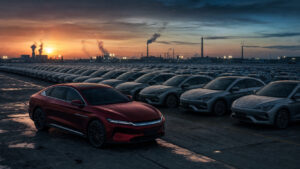
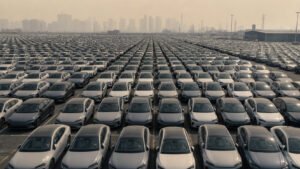
The illusion of the Chinese electric car miracle: When market leadership is no longer worth anything
For years, the Chinese electric vehicle industry was considered a prime example of a successful industrial policy model, outperforming Western manufacturers both technologically and in terms of price. However, it has since become clear that growth in unit sales and economic success are two very different things. While companies like BYD, XPeng, and Li Auto continue to deliver impressive sales figures, their stock market performance and financial statements reveal an increasingly fragile foundation.
The situation is reminiscent in some ways of the crisis currently facing German automakers like Volkswagen, but structurally it is even more ambivalent. While Volkswagen is struggling with a delayed transformation and high cost structures, the Chinese industry is suffering primarily from a self-inflicted problem: a price war resulting from years of state-subsidized overinvestment and a massive capacity surplus. China has built up more production capacity for electric vehicles and more competing brands than the domestic market can ever profitably absorb, and this surplus doesn't simply disappear when demand weakens; instead, it is shifted abroad.
A price war without a winner
The figures for the first quarter of 2026 illustrate the extent of the strain. Sales in the Chinese domestic market fell by more than 20 percent year-on-year, while the industry's average profit margin plummeted from 4.1 percent in 2025 to just 2.9 percent in the first two months of 2026. Even BYD, by far the largest manufacturer by volume, reported a 19 percent decline in profit to 32.6 billion yuan for fiscal year 2025, despite a 3.5 percent increase in revenue to 804 billion yuan. The trend worsened dramatically in the first quarter of 2026: operating revenue fell by 11.8 percent, and net profit collapsed by 55 percent to a mere 4.08 billion yuan, the weakest figure in more than three years.
Competitive pressure is affecting virtually all market participants equally. Analysts estimate that of the numerous Chinese electric vehicle manufacturers, only three are now sustainably profitable: BYD, Xiaomi, and Leapmotor, while the overall market shrank by 13 percent in sales. Even the state-owned automaker Guangzhou Automobile Group, despite increased volumes, had to report its first-ever annual loss of 8.8 billion yuan. This widespread wave of profit warnings demonstrates that these are not isolated problems of specific companies, but rather a structural industry phenomenon.
The way out via the export ramp
Faced with plummeting domestic margins, the industry has shifted dramatically to exports, as these generate significantly higher margins on average than the struggling domestic market. BYD's gross margin in its international business recently stood at 19.5 percent, compared to just 16.7 percent domestically, and the company shipped more than one million vehicles abroad for the first time last year. Overall, Chinese automotive exports surged by 56.7 percent in the first quarter of 2026 to 2.23 million units, now representing more than 30 percent of all vehicles sold. Analysts predict Chinese vehicle exports will reach approximately ten million units for the full year 2026, an increase of 41 percent compared to the previous year.
This export drive, however, does not solve the underlying problem, but merely shifts it geographically. In July 2026, China exported approximately 540,000 electric vehicles per month for the first time, while around 980,000 units were sold domestically. This means that for every second car sold domestically, one vehicle is now exported, compared to a ratio of one to five the previous year. The inventory situation in the target market is particularly worrying: According to the International Energy Agency, more than one million electric vehicles shipped from China in the past 18 months remain unsold, and only about two-thirds of this year's exports have actually found a buyer so far. This development suggests that the domestic price war is now spreading to international markets such as Brazil, Thailand, and the Gulf States, where distributors are facing declining residual values and increasing pressure to offer discounts.
Li Auto loses its premium cushion
Within this tense market environment, Li Auto is experiencing a particularly pronounced turnaround, as the company was previously considered one of the most stable segments. Li Auto specializes in so-called range-extender vehicles, i.e., electric cars with small combustion engines to extend their driving range, and positions itself in the premium segment with spacious family cars and vans. This niche concept had ensured continuous sales growth for years, but the latest quarterly figures now reveal significant cracks here as well.
Li Auto's revenue fell 10 percent year-over-year to $3.78 billion in the most recent quarter, although earnings slightly exceeded analysts' estimates by $10 million. The decline was primarily due to an 11.5 percent drop in sales, with the company delivering a total of 98,330 vehicles. Looking solely at vehicle sales revenue, excluding other income, the decline was even more pronounced at 16.7 percent.
From winner to loser of the margin
Particularly noteworthy is the reversal in operating profitability, which demonstrates how quickly the business model can change. On an adjusted basis, excluding special items, Li Auto recorded a loss of $0.22 per share, compared to a profit of $0.19 per share a year earlier. The total net loss attributable to shareholders amounted to $251.2 million, a three-figure million-dollar sum that underscores the magnitude of the turnaround.
Additionally, the company recorded a cash outflow of $191.7 million during the reporting period. However, this outflow does not pose an immediate balance sheet threat, as Li Auto continues to have liquid reserves of approximately $13 billion and is thus exceptionally well-capitalized compared to its peers. This capital cushion buys the company time, but does not postpone the structural margin problem.
🎯🎯🎯 Data-driven B2B industry hub as a quasi-in-house solution


The quasi-in-house solution: How Xpert.Digital closes operational gaps in B2B marketing and sales – Smart Content-Driven Business - Image: Xpert.Digital
Xpert.Digital is a data-driven B2B industry hub led by Konrad Wolfenstein . The company acts as an external, quasi-in-house solution for industrial partners, closing operational gaps in marketing, content, and sales – without requiring additional resources on the client side.
More information here:
China's electric car industry: Why sales growth won't save margins
Weak forecasts further cloud the outlook
For the coming quarter, Li Auto's management expects vehicle sales of between 95,000 and 100,000 units, representing an increase of 1.9 to 7.3 percent compared to the same quarter last year, signaling a partial recovery from the weak previous quarter. However, the revenue forecast is considerably more subdued: The company anticipates revenue of approximately $3.9 billion, which corresponds to a change of between -2.8 and +2.3 percent. This forecast is significantly below the $4.8 billion expected by analysts and indicates that, from management's perspective, the pressure on margins has not yet been overcome.
This situation exemplifies the dilemma facing the entire industry: unit sales can recover without an improvement in the underlying price and margin structure. An increase in deliveries coupled with stagnant or declining revenue indicates that average selling prices remain under pressure, a direct result of the industry-wide price war.
Related to this:

The stock market reaction and its limits
Investor reaction to the latest figures was relatively muted. Li-Auto shares fell by around 1.5 percent in US pre-market trading, which, given the declining revenues and weak sales forecast, can be considered a rather subdued reaction. This is because much of the negative news was already priced into the stock: Before the figures were released, the share price had already lost 27.5 percent of its value this year alone, and almost 46 percent compared to the same period last year.
From a technical chart perspective, the stock is in a fragile position. Recent price declines have solidified its position below the 50-day moving average, while new 52-week lows, considered a classic technical sell signal, are not far off. A similar pattern is evident with BYD, whose stock temporarily lost more than half its value from its all-time high last year before a brief recovery rally began, which could now be stalled by the disappointing XPeng and Li-Auto figures.
XPeng shows that margins and growth can be contradictory
A look at XPeng further illustrates the contradictory nature of the current situation. The manufacturer reported an 8 percent year-on-year increase in revenue to 19.74 billion yuan for the second quarter of 2026, along with a seemingly impressive improvement in the gross margin to 20.7 percent, compared to 17.3 percent in the same quarter of the previous year. However, closer examination reveals that the pure vehicle margin actually declined from 14.3 percent to 12.1 percent, while the improved overall margin was primarily driven by strong growth in service revenues, such as those from technical development services for Volkswagen.
XPeng's net loss widened year-on-year from 480 million yuan to 1.34 billion yuan, although losses decreased sequentially compared to the particularly weak first quarter. Furthermore, the third-quarter forecast of 21.7 billion to 23.4 billion yuan fell significantly short of market expectations of 27.26 billion yuan, explaining the disappointing investor reaction. This discrepancy between recovering sales and continued loss expansion is symptomatic of an industry where economies of scale are systematically eroded by price competition.
Structural causes instead of a cyclical downturn
The causes of the crisis run deeper than a simple cyclical decline in demand. For years, China has systematically built up enormous production capacity and a multitude of competing car brands, a result of state industrial policy, generous regional subsidies, and an extremely fragmented competitive landscape. This capacity surplus cannot be profitably absorbed by the domestic market structurally, even if demand recovers in the short term. At the same time, the government in Beijing is scaling back its support: tax breaks for electric vehicles have already been reduced, and from January 2027, tax credits for electric, plug-in hybrid, and range-extender vehicles are set to shrink further. This combination of dwindling government support and persistent capacity surplus suggests that a market shakeout is inevitable. Industry experts expect consolidation to just five to seven major manufacturers by 2030, which is likely to pose existential challenges for many of the currently active brands.
It is also striking that the shift of excess capacity abroad is not merely a byproduct of a bad year, but, according to industry experts, a permanent strategic realignment. The internal price war is essentially traveling with the vehicles and is beginning to be repeated in the target markets, which is likely to put pressure on margins and price levels there as well in the long term.
Where the market still harbors illusions
From a valuation perspective, Li Auto exhibits a pattern typical of much of the industry. Only a small profit is expected for the current fiscal year, resulting in a price-to-earnings ratio of nearly 500 – a figure that, at first glance, defies all fundamental valuation logic. For 2027, however, analysts are forecasting a veritable profit explosion, which would push the P/E ratio down to around 11. Given the ongoing weakness in sales and margins already indicated in current forecasts, this optimistic outlook appears questionable and more an expression of hope than of sound business planning.
At the same time, several key figures mitigate the downside risk of the stock. Li Auto's enterprise value to operating profit before interest, taxes, depreciation, and amortization (EBITDA) ratio is only 2.0, roughly 80 percent below the industry average, primarily due to the company's substantial liquidity. The price-to-book ratio of 1.2 also appears favorable in historical and industry comparisons. This combination of a high P/E ratio and a low EV/EBITDA ratio suggests that the market views the company's operating profitability with skepticism but rewards its substantial assets and capital base.
A structural reassessment
Overall, it can be said that the Chinese electric vehicle industry is at a turning point where pure growth narratives are no longer sufficient to convince investors. The market is increasingly evaluating the actual profitability and capital discipline of individual companies, rather than solely focusing on sales records. For Li Auto, as well as for many other Chinese manufacturers, many indicators point to a volatile sideways trend as long as no significant and sustainable margin expansion is achieved.
For long-term investors, this environment currently offers few compelling reasons to enter the market, as the crucial question of sustainable profitability remains unanswered. Short-term market participants, on the other hand, could benefit from the pronounced volatility, while the industry's fundamental structural challenge—namely, the massive capacity overhang and the resulting price war—is likely to persist for years before a profound market correction occurs.
📈🚀 From visibility to trust 👀🤝 Your scalable path with Xpert.Digital


From visibility to trust: Your scalable path with Xpert.Digital - Image: Xpert.Digital
In industrial B2B, sustainable business relationships rarely emerge overnight. They develop step by step – through visibility, professional relevance, recurring touchpoints, and growing trust. Xpert.Digital's 4-stage model addresses precisely this: It offers a structured path that begins with a manageable entry point and can evolve into deeper collaboration in business development if needed.
Instead of relying on loud marketing promises, this model puts the relationship at the forefront. Companies start with clearly defined, easily calculable measures and then decide, based on their own experience, how far they want to expand the collaboration. A key factor for this undisturbed trust-building process: The platform completely avoids annoying advertising ads, so the editorial focus remains solely on the companies' expertise.
More information here:
Your global marketing and business development partner
☑️ Our business language is English or German
☑️ NEW: Correspondence in your native language!

Konrad Wolfenstein
I and my team are happy to be available to you as your personal advisor.
You can contact me by filling out the contact form here wolfenstein@xpert.digital:or simply call me at +49 7348 4088 965. My email address is
I'm looking forward to our joint project.