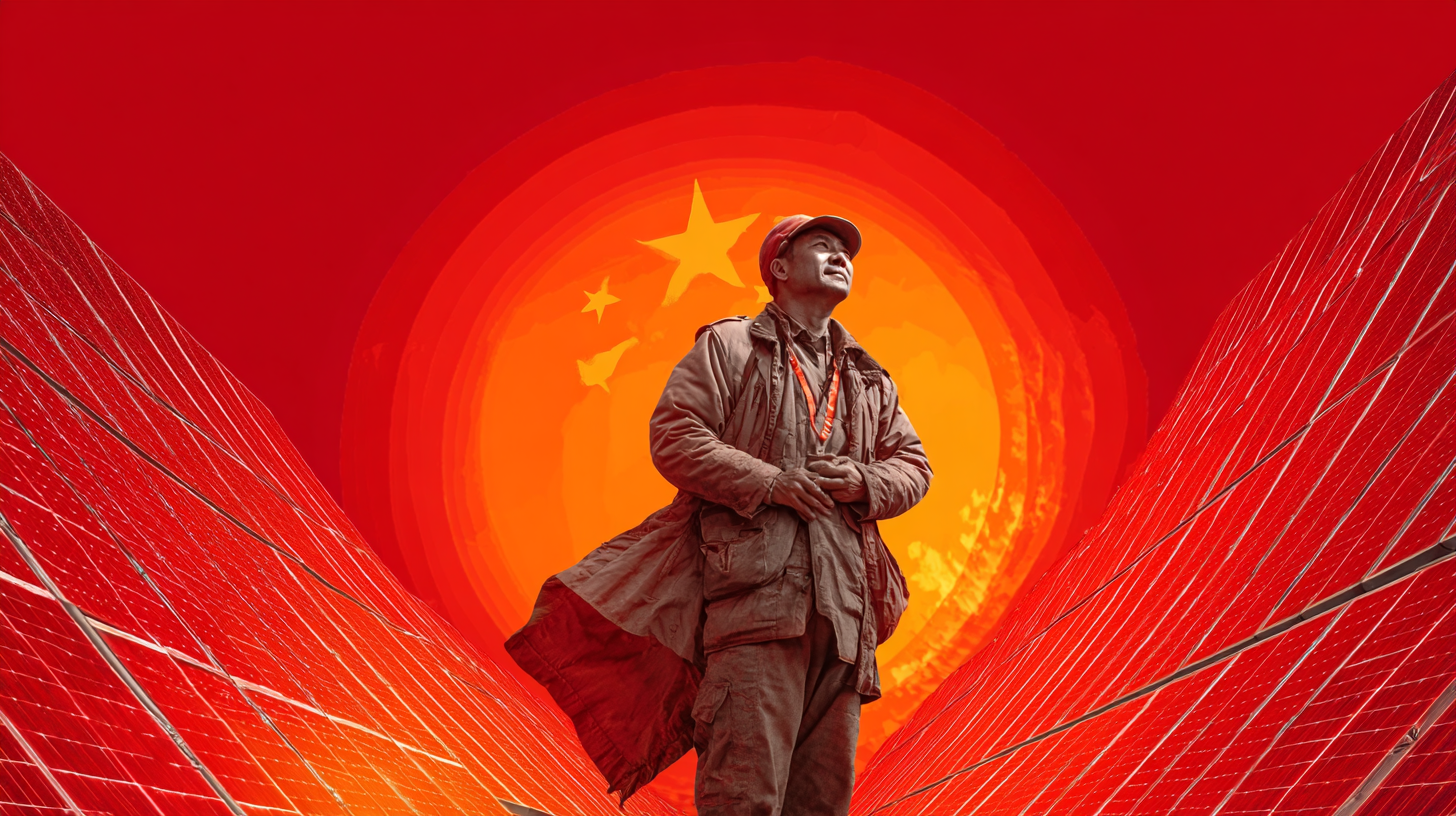
China's solar crisis escalates: billions in losses and "Neijuan" – The real reason for China's solar emergency brake – Image: Xpert.Digital
End of the cheap era: Why China will drive up solar prices from April 2026
Export advantages eliminated – are solar modules about to undergo a price reversal?
On April 1, 2026, an era will end in the global photovoltaic industry. With the complete elimination of VAT breaks for solar exports, the Chinese government is pulling the emergency brake on a market that has increasingly spiraled out of control. For years, the global market – and thus end customers in Europe – benefited from artificially low prices, driven by massive Chinese overcapacity and government incentives. But what long appeared to be an aggressive expansion strategy has turned into an existential nightmare for China's industry.
Behind the bureaucratic decision to abolish the existing tax refund without replacement lies a dramatic rescue operation. The Chinese solar industry is mired in what experts call "neijuan"—a ruinous competition in which players cannibalize each other. With production capacities far exceeding global demand and sales prices that often don't even cover manufacturing costs, even the industry giants are incurring losses in the billions.
The new directive from Beijing is therefore far more than a fiscal correction; it is an attempt to save an industry from self-inflicted collapse through enforced price increases and market consolidation. For the global market, this means that the days when Chinese solar panels were sold far below their value are likely over for good. The following article examines the background to this decision, the extent of China's overproduction crisis, and the strategic goals that Beijing is pursuing with this radical change of course.
Related to this:

Photovoltaics: Price times are changing – China's export concessions end on April 1, 2026
With the abolition of VAT breaks on April 1, 2026, the Chinese government is signaling the end of an era of artificially low export prices. This measure is not a temporary adjustment, but rather the escalation of a comprehensive rescue strategy for an industry that is destroying itself.
Related to this:
What specific changes will occur from April 1, 2026?
The Chinese government will completely abolish VAT breaks for photovoltaic products on April 1, 2026. This measure affects the entire value chain of the industry, from polysilicon to fully assembled solar modules. The rates are not decreasing, as one might expect, but rather being eliminated entirely. In practical terms, this means that the current nine percent VAT refund will be eliminated, resulting in a significant increase in export prices.
But why would a measure that makes exports more expensive come from a government that otherwise aggressively pushes its industry abroad? The answer lies in an industry crisis of unprecedented proportions, driven by pure economic logic.
Why does China really need to act? The dimensions of the overproduction crisis
The Chinese solar industry is suffering from massive structural problems that can no longer be solved through export promotion. On the contrary, previous subsidy measures have accelerated the crisis.
The oversupply is enormous. China has built up a production capacity of over 800 gigawatts, while global demand is around 600 gigawatts. This represents an oversupply of over 30 percent. This massive overcapacity arose in recent years from an investment boom that is now proving to be an economic disaster. Instead of closing facilities, industry tried to offload the excess capacity on the world market through price dumping. This has led to a vicious cycle from which there is no escape.
The financial losses are unprecedented. The six largest Chinese solar module manufacturers recorded combined losses of €2.42 billion in the first half of 2025 alone. In the third quarter of 2025, the losses mounted further: the top six generated additional losses of US$2.8 billion. The industry forecast for the entire year of 2025 is particularly alarming. Nine major companies anticipate total losses exceeding US$9 billion. In the first ten months of 2025, industry losses totaled RMB 31 billion, equivalent to approximately €4 billion. These figures paint a picture of an industry in freefall.
A particularly important aspect is the pricing situation itself. The production costs for a 400-watt solar module are approximately US$42 to US$43. Actual selling prices are often only US$39 to US$44, and sometimes even lower. This means that large portions of production are sold below or at the lower end of the cost price. Every additional module sold increases these losses. This price-cost ratio is unsustainable and can only be maintained temporarily through subsidies.
The job cuts demonstrate the extent of the crisis. The largest solar companies reduced their workforce by almost a third in 2024. This is not a temporary adjustment process, but a massive downsizing that reveals the dire state of the business. Hundreds of thousands of jobs are at risk. The social consequences of this development are significant.
In Chinese technical jargon, this phenomenon is called Neijuan – a term meaning "involution" or "ruinous competition." Both the government and industry representatives refer to it as disorderly low-price competition. This is not random price competition, but a coordinated collapse of profitability that benefits no company. The industry is destroying itself.
Look, this little detail saves up to 40% installation time and reduces costs by up to 30%. It comes from the USA and is patented.

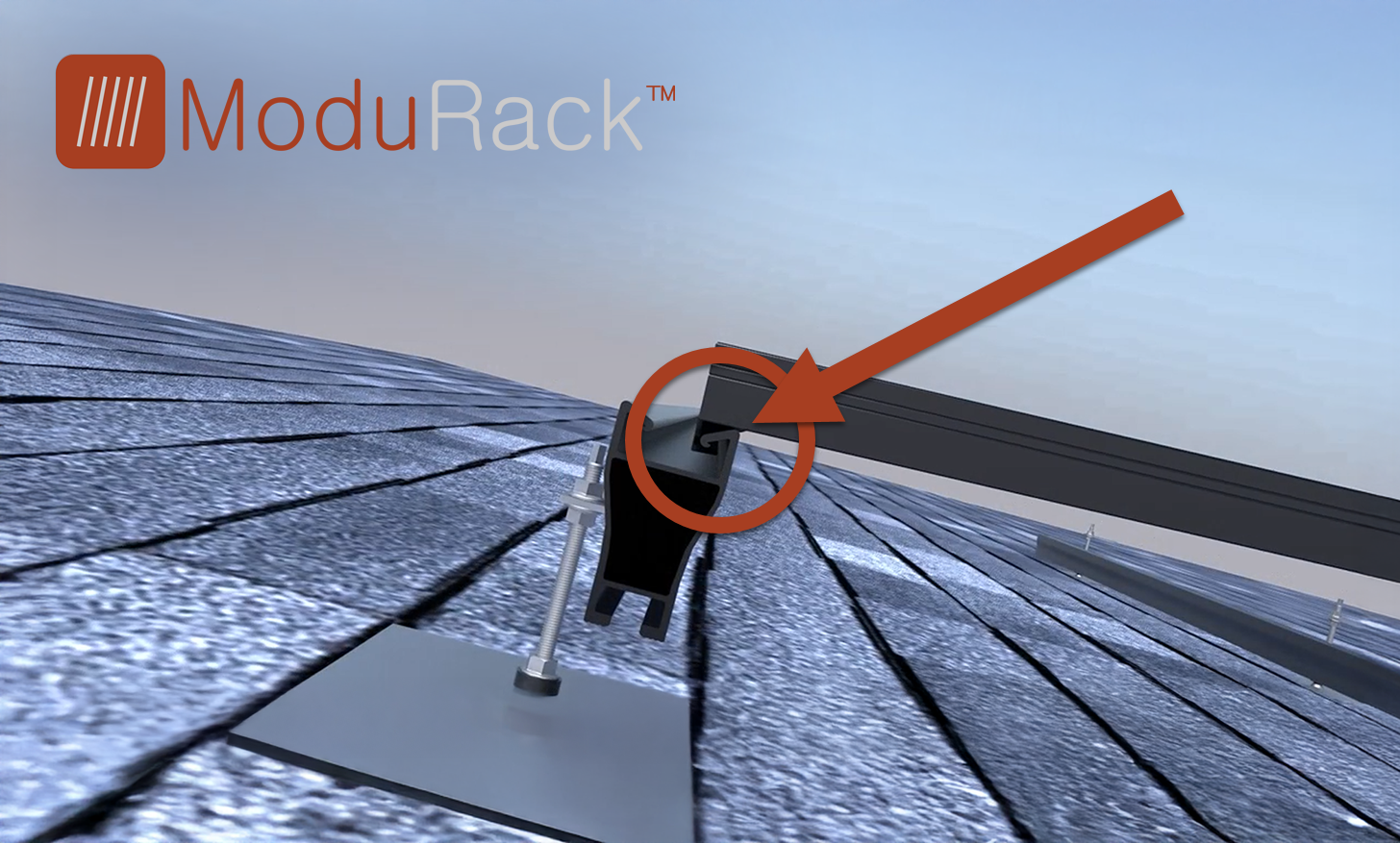
NEW: Ready-to-install solar systems! This patented innovation significantly accelerates your solar construction project
The core of ModuRack 's innovation lies in the departure from conventional clamp fastening. Instead of clamps, the modules are inserted and held in place by a continuous support rail.
More information here:
Self-destruction stopped: How China wants to save its solar industry from collapse
What strategic goals is China pursuing with this measure?
The abolition of VAT breaks is not a single step, but the culmination of a series of interventions with one clear goal: to save the Chinese solar industry through enforced consolidation and discipline.
The first strategic goal is industry consolidation. Inefficient, uncompetitive manufacturers are to be driven out of the market. Only those who produce cost-effectively can bear the higher export prices. Small and medium-sized enterprises with high cost structures will run into difficulties. This will lead to takeovers, mergers, or closures. The industry will become smaller, but stronger.
The second objective is the implementation of production quotas based on the OPEC model. At the end of 2024, over 30 leading companies agreed to voluntary commitments to limit production. This is not a voluntary association, but a government-driven agreement on quantity control. The aim is to reduce overcapacity and thereby stabilize prices.
A third aspect is consolidation at the raw material level. The six largest polysilicon producers are planning a seven-billion-dollar consolidation fund for acquisitions and shutdowns. Polysilicon is the most critical material in the value chain. Whoever controls these raw materials controls the entire industry. This is a classic vertical integration strategy.
Investment criteria have also been tightened. The minimum equity ratio for new PV projects has been increased from 20 percent to 30 percent. This makes it more expensive and difficult to build new capacity. No more uncontrolled growth, no more overproduction.
A fourth strategic goal is to defuse trade conflicts. The export concessions had a catch: many countries interpreted them as export subsidies. This led to trade disputes with the European Union and the USA, which in turn resulted in anti-dumping investigations and tariffs. By reducing these concessions, China weakens the arguments of its trading partners. The risk of sanctions decreases.
Related to this:

Why did the previous export promotion efforts lead to a dead end?
This measure was based on a crucial realization process. The China Photovoltaic Industry Association came to a painful conclusion: manufacturers were effectively passing on the VAT refund to foreign buyers instead of strengthening their competitiveness.
In practical terms, this means that instead of keeping the refund as profit or investing it in research and development, it was simply passed on to export customers through even lower sales prices. The VAT reduction thus became a de facto subsidy for foreign markets. China paid the tax revenue to enable foreign buyers to offer lower prices.
This led to a triple self-destruction. First, it fueled ruinous price competition. With ever-lower prices, the profitability of all manufacturers declined, regardless of their production efficiency. Second, it concentrated all market power on volume rather than profitability. Companies attempted to offset losses by increasing output—a goal impossible under conditions of oversupply. Third, it increased the risk of trade sanctions. The European Union and the US were unwilling to be flooded with Chinese dumping. Anti-dumping duties were the logical consequence.
The Chinese government therefore realized that the previous export promotion measures were not accelerating the industry's success, but rather destroying it.
How does this measure fit into a larger context?
The abolition of VAT breaks should not be viewed in isolation. It is part of a comprehensive package of interventions that have been implemented gradually since the end of 2024.
In December 2024, the value-added tax (VAT) on solar products was initially reduced from 13 percent to nine percent. This signaled a first step toward a change in direction. At the same time, over 30 leading companies agreed on production quotas based on the OPEC model. The government enforced clear quantity limits.
In November 2024, the government tightened investment criteria. The equity ratio for new PV projects was increased. This signaled a reluctance to encourage new growth.
In July 2025, a summit meeting was held between the Chinese Ministry of Industry and Information Technology (MIIT) and 14 major manufacturers. This was political pressure on the industry to adhere to its voluntary commitments.
In May 2025, a subsidy reform followed, introducing guaranteed prices for domestic demand. The government attempted to dampen domestic demand and force the industry to consolidate.
In April 2026 – very soon – the VAT breaks will be abolished. That's the final adjustment. Export prices will rise, and the industry will have to reorganize.
In January 2027, the measure will be extended to batteries. This signals that this is not just a PV-specific measure, but a new overall strategy for energy-related industries.
Is this statement correct, or is China acting for economic reasons?
The answer is clear: Both are true.
The core facts are correct. The VAT breaks will be abolished on April 1, 2026. This affects the entire PV value chain and will lead to price increases. This is firmly established government policy.
At the same time, China is acting out of economic necessity. However, not out of the simple motive of price control, but out of an existential pressure to save the industry.
The primary goal is to rescue an industry suffering catastrophic losses. If overproduction continues unchecked, mass bankruptcies, loan defaults in the trillions of yuan, and political instability due to mass layoffs are imminent. The forced consolidation is an attempt to prevent this.
The secondary goal is to end export dumping. The realization that export subsidies ruin domestic industry represents a fundamental shift in economic thinking. Instead of "saving" the sector through dumping, China is now attempting to save it through discipline.
The tertiary objective is the reduction of geopolitical risks. Trade sanctions jeopardize market position in the long term. By reducing the dumping aspect, the legitimacy of sanctions decreases.
An industry saves itself through pain
The Chinese government has recognized that its previous export promotion strategy has accelerated a race to the bottom. This price war offers no real advantage to any company but destroys the profitability of the entire industry. Every further price reduction exacerbates the crisis instead of resolving it.
The abolition of the VAT reduction is therefore not primarily about price control, but rather an industrial policy emergency brake mechanism. China is applying the handbrake to prevent the entire industry from collapsing. It is a painful intervention that will force out inefficient companies, but will put the survivors in a more sustainable position.
The era of falling solar prices due to Chinese export subsidies is over. A new phase of industrial policy reality is beginning.
Your global marketing and business development partner
☑️ Our business language is English or German
☑️ NEW: Correspondence in your native language!

Konrad Wolfenstein
I and my team are happy to be available to you as your personal advisor.
You can contact me by filling out the contact form here wolfenstein@xpert.digital:or simply call me at +49 7348 4088 965. My email address is
I'm looking forward to our joint project.
☑️ SME support in strategy, consulting, planning and implementation
☑️ Creation or realignment of the digital strategy and digitization
☑️ Expansion and optimization of international sales processes
☑️ Global & Digital B2B trading platforms
☑️ Pioneer Business Development / Marketing / PR / Trade Fairs
🎯🎯🎯 Benefit from Xpert.Digital's extensive, five-fold expertise in one comprehensive service package | BD, R&D, XR, PR & Digital Visibility Optimization

Benefit from Xpert.Digital's extensive, five-fold expertise in a comprehensive service package | R&D, XR, PR & Digital Visibility Optimization - Image: Xpert.Digital
Xpert.Digital possesses in-depth knowledge across various industries. This allows us to develop tailored strategies precisely aligned with the requirements and challenges of your specific market segment. By continuously analyzing market trends and monitoring industry developments, we can act proactively and offer innovative solutions. The combination of experience and expertise generates added value and provides our clients with a decisive competitive advantage.
More information here: