
Photovoltaic system with storage - BYD power storage: battery modules for HVS or HVM with BCU base control unit

Language selection 📢
Published on: November 27, 2022 / update from: August 21, 2024 - Author: Konrad Wolfenstein
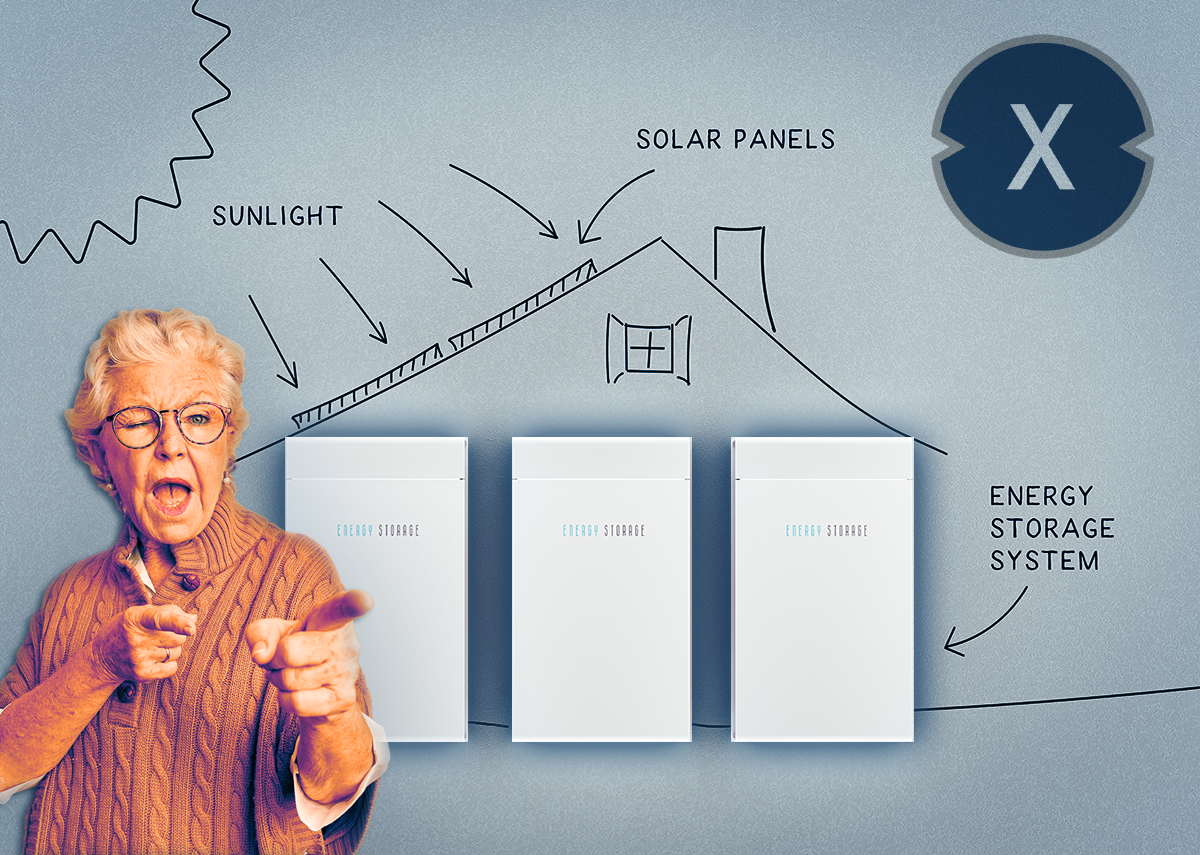
Photovoltaic system with electricity storage – Image: Xpert.Digital
Photovoltaic system with electricity storage
A photovoltaic system with electricity storage is an excellent investment in future technology. This combination of solar energy and electronics offers you the opportunity to store renewable energy and continue to produce electricity even in the dark or during thunderstorms.
A photovoltaic system with electricity storage is also an excellent choice for people who want to reduce their electricity consumption. By using electricity storage, you can often reduce the performance of your system without your household having to go without lights or other electrical devices.
Feeling of independence and security
A photovoltaic system with electricity storage is the best choice if you want to be independent of the public power supply. This system generates clean electricity from sunlight and stores it for use in bad weather or at night.
Such a system can help you reduce costs while protecting the environment. The facility is environmentally friendly and does not disrupt the natural cycle of nature.
BYD power storage with the highest compatibility with the most common inverters
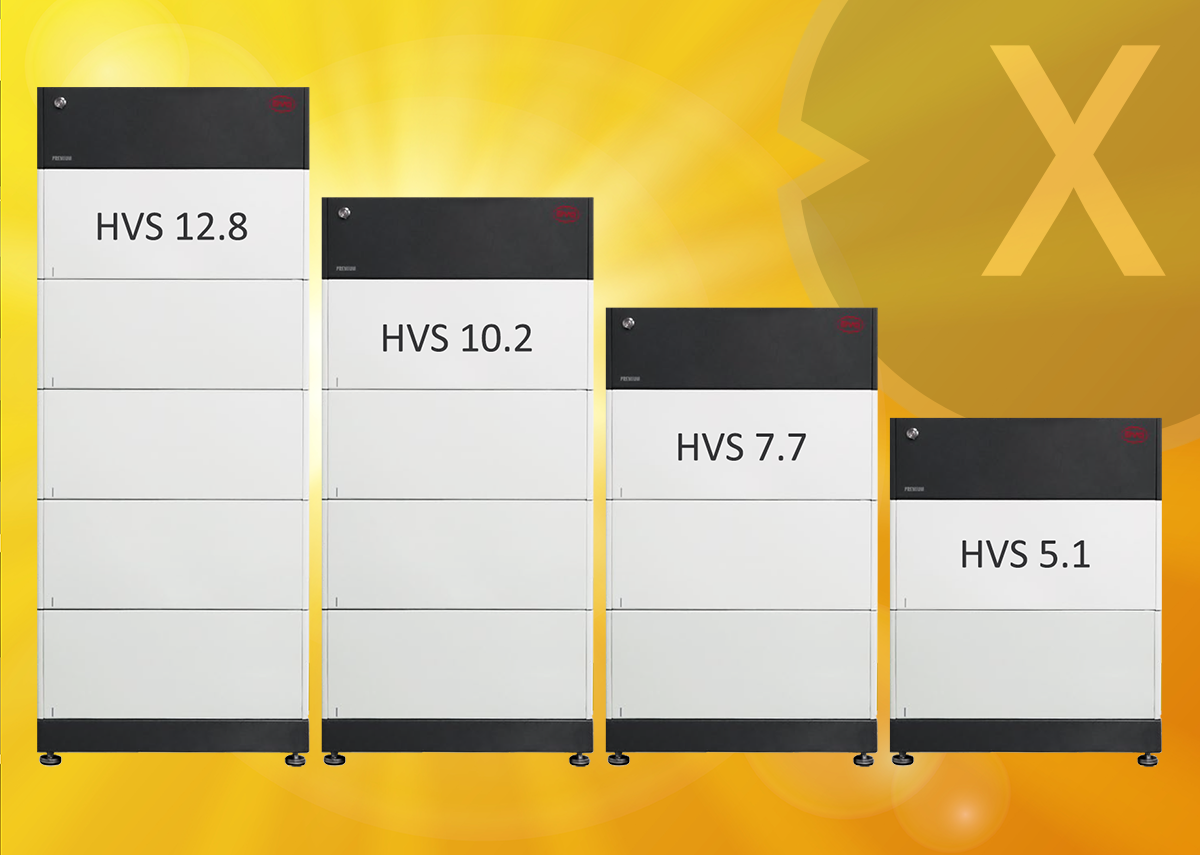
The BYD HVS power storage series – Image: Xpert.Digital
The BYD power storage series is an innovative product that enables the user to be independent of power supply problems. The inverter compatibility of the power storage is high, making it extremely popular with customers. The power storage units are available in several sizes and designs, so that the right product can be found for every need.

- BYD BATTERY-BOX PREMIUM HVS / HVM data sheet
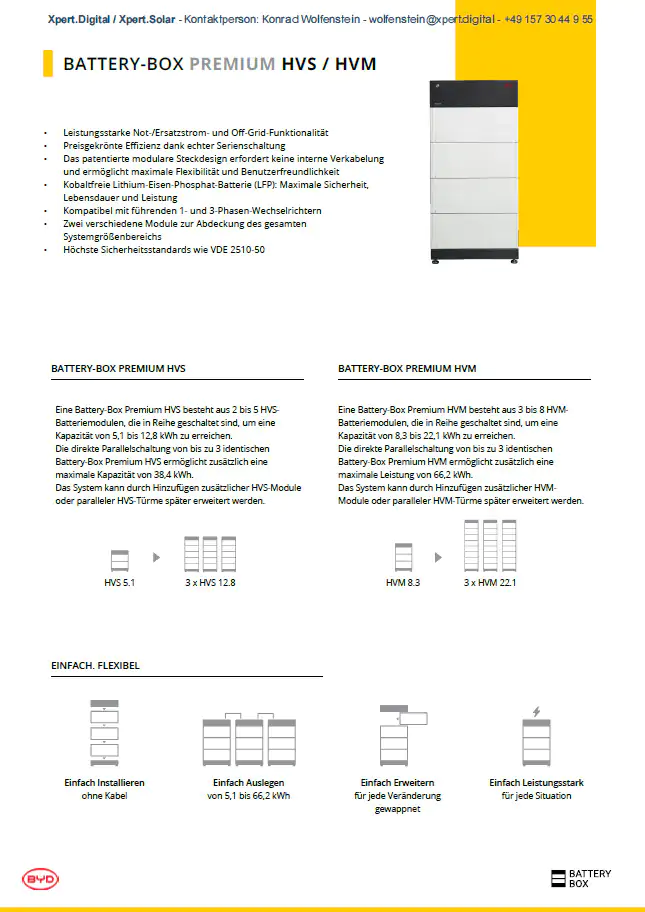
- BYD Battery Battery-Box Premium HVS/HVM compatible inverter list

- BYD battery modules Battery-Box Premium Quick Start Guide


- BYD Battery-Box Premium HVS / HVM service guide and checklist

- PDF – BYD BATTERY-BOX PREMIUM HVS / HVM data sheet
- PDF – BYD Battery Battery-Box Premium HVS / HVM compatible inverter list
- PDF – BYD battery modules Battery-Box Premium Quick Start Guide
- PDF – BYD Battery-Box Premium HVS / HVM service guide and checklist
- PDF – BYD Battery-Box Premium Limited Warranty
- Powerful emergency/backup power and off-grid functionality
- Award-winning efficiency thanks to true series connection
- The patented modular plug-in design requires no internal wiring and allows for maximum flexibility and ease of use
- Cobalt-free lithium iron phosphate battery (LFP): Maximum safety, lifespan and performance
- Compatible with leading 1 and 3 phase inverters
- Two different modules to cover the entire system size range
- Highest safety standards such as VDE 2510-50
BATTERY BOX PREMIUM HVS
A Battery-Box Premium HVS consists of 2 to 5 HVS battery modules connected in series to achieve a capacity of 5.1 to 12.8 kWh.
The direct parallel connection of up to 3 identical Battery-Box Premium HVS also enables a maximum capacity of 38.4 kWh.
The system can be expanded later by adding additional HVS modules or parallel HVS towers.
BATTERY BOX PREMIUM HVM
A Battery-Box Premium HVM consists of 3 to 8 HVM battery modules connected in series to achieve a capacity of 8.3 to 22.1 kWh.
The direct parallel connection of up to 3 identical Battery-Box Premium HVM also enables a maximum output of 66.2 kWh.
The system can be expanded later by adding additional HVM modules or parallel HVM towers.
Xpert power storage shop
BYD Company Limited is a Chinese conglomerate
BYD is the world's leading manufacturer of batteries, especially for mobile phones. In addition, a BYD subsidiary is one of the largest automobile manufacturers in China. An assembly plant was opened in California in 2014 for the BYD ebus battery bus. In 2010, the company was named the best-performing technology company in the world by the US business magazine Bloomberg Businessweek. “BYD” stands for “Build your dreams”.
The company was founded in Shenzhen in 1995 by chemist Wang Chuanfu as a small factory with 20 employees. Initially, only rechargeable batteries were produced, which competed with the imported products from Sony and Sanyo, which dominated the market at the time.
Industrial robots were only used in the production of batteries from 2011. Through a very detailed and precise description of the workflow, the process sections in production could be reduced so much that even young people with little or even no professional qualifications were hired. This allowed semi-automatic production of batteries that were of equivalent quality to the products manufactured by industrial robots: However, due to low wages, which were significantly lower than those in Japan, they could be offered at a much lower price. However, BYD is now also using industrial robots on a large scale.
The Chinese government justified its low wage policy by saying that it could create permanent jobs for millions of young people. These people were often unskilled and moved from the countryside to the cities as China urbanized. The government also saw this as an opportunity to secure exports sustainably. From a Western perspective, however, this policy was criticized primarily because of the tiring, monotonous task performance, the high workload and the lack of further training opportunities for the workers.
Cheap manufacturing costs and high import tariffs on foreign goods in China have helped make BYD the world's largest manufacturer of rechargeable batteries since 2000. In addition, the company has the largest market share in sales of nickel-cadmium accumulators as well as batteries, chargers and keyboards for mobile phones and is the main supplier to major manufacturers such as Nokia, Motorola, Samsung, Sony Ericsson, Kyocera and Huawei.
In 2003, the company bought the ailing Xian Qinhuan Automobile and entered the automobile business; Since then, the production branch and the vehicles have been operating under the name BYD Auto Co. Ltd. The company decided against the quicker route of using licensed buildings from global corporations and instead relied on its own developments. By 2010, over 500,000 vehicles had already been produced. Today BYD Auto is one of the largest automobile manufacturers in China.
At the beginning of 2010, the company continues its activities in the field of environmental technology; for example, the production of solar farms and LED lighting technology for street lighting as well as battery-based electricity storage systems, which are also marketed in Germany. In January 2012, BYD commissioned (according to its own statements) the world's largest battery storage power plant with 36 megawatt hours.
Short version:
Founded in February 1995 and listed on the Hong Kong Stock Exchange on July 31, 2002, BYD Co Ltd began as a rechargeable battery manufacturer competing in the Chinese market with Japanese imports.
In 2022, a news report claimed that BYD has overtaken Tesla for the most electric vehicles sold worldwide. This claim is based on BYD sales figures, which include more than 300,000 plug-in hybrid vehicles sold in the first six months of 2022. Plug-in hybrids with combustion engines are not fully electric vehicles.
Early growth
BYD grew rapidly and within ten years captured more than half of the global mobile phone battery market and became the largest Chinese manufacturer (and one of the top four in the world) of all types of rechargeable batteries. BYD topped the 2010 Bloomberg Businessweek Tech 100 list, a list of large, fast-growing technology companies. Replacing machine labor with cheap, local labor lowered costs, and the company began expanding beyond batteries, adding automotive and cell phone components.
Motor vehicles
A year after the acquisition of Tsinchuan Automobile Co Ltd in 2002, BYD Automobile Co Ltd was founded. One of many Chinese automobile manufacturers, it was the sixth largest company in terms of sales volume in 2010. On April 3, 2022, BYD announced its intention to stop producing internal combustion engine vehicles and focus solely on electric vehicles.
Rail transport – Skyrail Monorail
In 2016, BYD presented a functional single-track railway prototype, which was marketed under the name “Skyrail”, and announced that he would get into the global rail traffic market. The first public Skyrail route was opened in 2018 as a 9.7 km loop railway at the flower exhibition in Yinchuan. Since then, BYD has started building a number of systems all over the world, including the Guang'an Metro and Guilin Metro in China, line 17 in São Paulo and the Skyrail Bahia, both in Brazil. BYD is also part of a consortium that has received a preliminary development contract for the construction of a single railway from San Fernando Valley to the Lax via the Sepepulveda Pass in Los Angeles.
Rubber-tired tram
BYD also has a rubber -lined tram product known as Skyshuttle ”. The rubber -tired Bishan tram in Chongqing is in operation.
Mobile phone components
In the early 2000s, the BYD product range was expanded to include components for mobile phones. However, this division, BYD Electronic, was spun off in 2007.
Electricity storage PDF for free download

- Energy storage – PDF download

- Lithium industry worldwide – PDF download

- Power-to-X – PDF Download

- Energy storage – PDF download

The new generation of electricity storage is revolutionizing the energy market
The new generation of electricity storage is smaller, cheaper and more powerful than its predecessors. These innovations will revolutionize the energy market and fundamentally change the way we consume and generate our electricity.
New developments in electricity storage include lithium-ion batteries, which are now used in many households and companies. These batteries are much smaller and lighter than conventional lead batteries and have a significantly higher energy density. This means they can store more electricity while taking up less weight and space.
Lithium-ion batteries are also much cheaper to produce than lead-acid batteries. Lithium-ion battery prices have fallen sharply in recent years as the technology continues to improve. Experts expect prices to continue to fall, meaning lithium-ion batteries will become increasingly attractive to consumers and businesses.
The improved technology of lithium-ion batteries has also led to an increasing demand for these batteries. In recent years, more and more electric vehicles powered by lithium-ion batteries have been sold. More and more companies are also relying on lithium-ion batteries to cover their electricity needs. This is particularly the case if they do not have access to a regular power grid or their power grid is unreliable.
However, lithium-ion batteries are not the only new developments in electricity storage. There are also a number of other new technologies that could revolutionize the energy market. These include redox flow batteries, supercapacitors and powerwalls.
Redoxflow batteries are a further development of lithium-ion batteries. They have an even higher energy density and can therefore store even more electricity. The service life of redox flow batteries is also longer than that of lithium-ion batteries. This means that they last longer and are therefore cheaper to purchase.
Supercapacitors are another new technology in electricity storage. They have a very high energy density and can therefore store a lot of electricity. The lifespan of supercapacitors is also very long, which means that they last longer and are therefore cheaper to purchase.
Powerwalls are another new technology in electricity storage. Powerwalls are batteries that are mounted on the wall and therefore save space. Powerwalls have a high energy density and can therefore store a lot of electricity.
2020: Renewable energies: Now it's all about energy storage systems
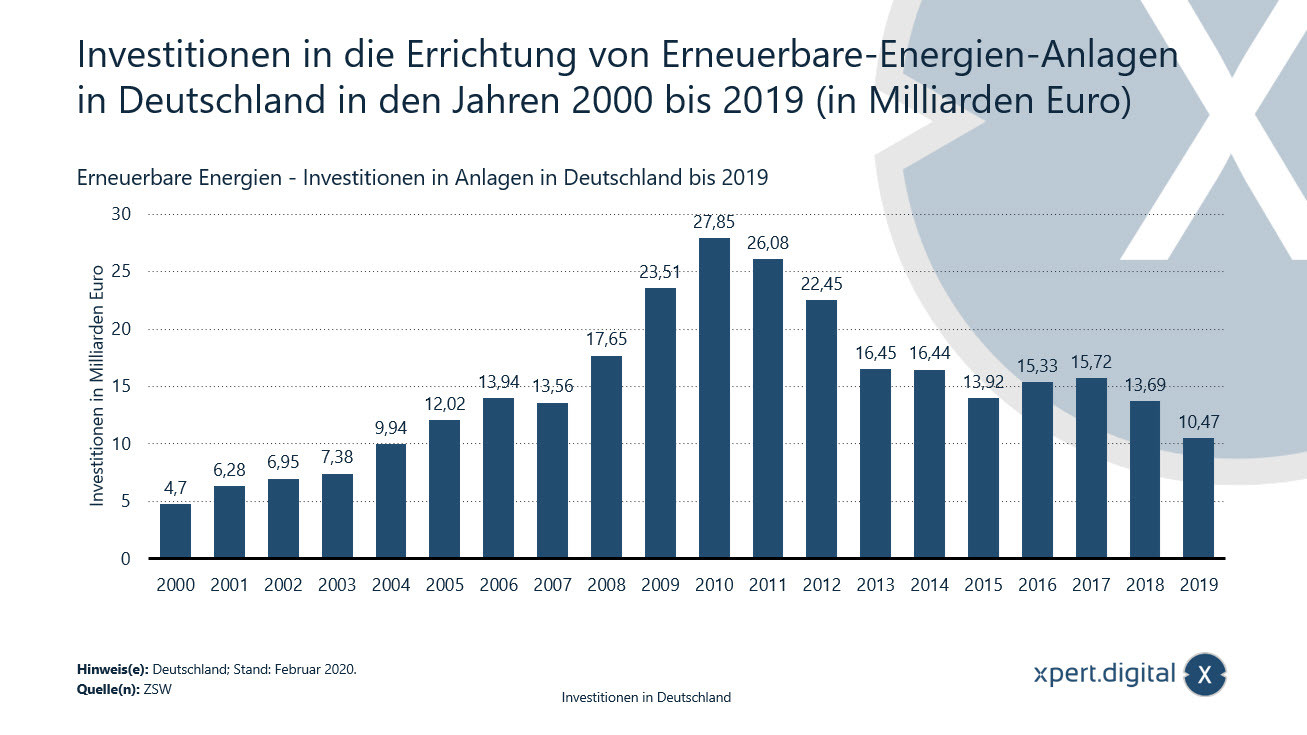
The market for renewable energies is growing. Global investment in renewable energy has almost doubled in the last decade. While we are experiencing the biggest boom worldwide, in Germany they are declining, except for photovoltaics. In 2019, around 11 billion euros were invested in Germany. The focus of these investments was in the area of solar energy.

- Renewable energies: Now it's all about the energy storage systems - Image: petrmalinak|Shutterstock.com
- Investment in the construction of renewable energy systems in Germany – 2000 to 2019 – Image: Xpert.Digital
Suitable for:
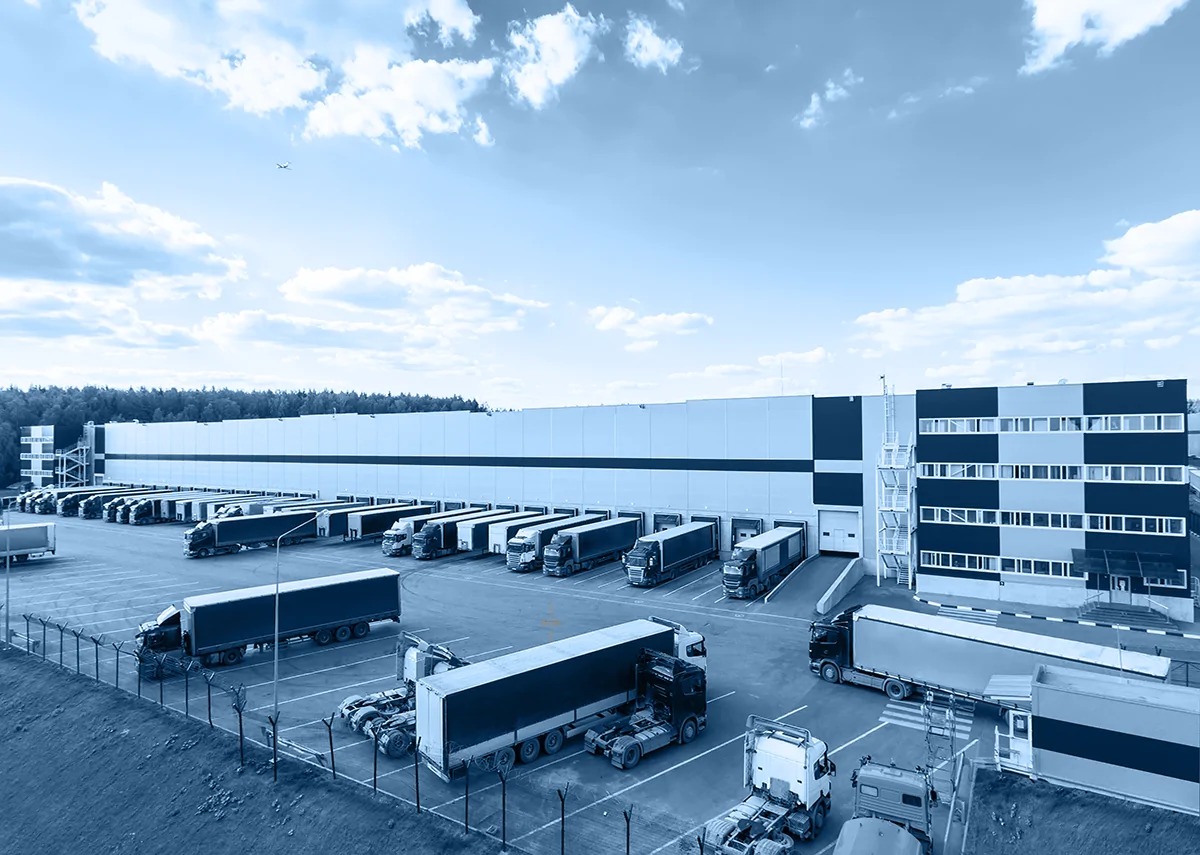
- Warehouses, production halls and industrial halls with their own power source from a photovoltaic roof system - Image: NavinTar|Shutterstock.com

- Industrial plant with its own power source from an outdoor photovoltaic system - Image: Peteri|Shutterstock.com

- Plan solar systems with photovoltaic solutions for freight forwarding and contract logistics
- B2B solar systems and photovoltaic solutions & advice
- Plan photovoltaics for warehouses, commercial halls and industrial halls
- Industrial plant: Plan a photovoltaic open-air system or open-space system
- Plan solar systems with photovoltaic solutions for freight forwarding and contract logistics
- B2B solar systems and photovoltaic solutions & advice
With Xpert.Solar, your individual electricity storage advice for your photovoltaic system

Konrad Wolfenstein
I would be happy to serve as your personal advisor.
You can contact me by filling out the contact form below or simply call me on +49 7348 4088 965 (Munich) .
I'm looking forward to our joint project.
Write to me

Xpert.Digital – Konrad Wolfenstein
Xpert.Digital is a hub for industry with a focus on digitalization, mechanical engineering, logistics/intralogistics and photovoltaics.
With our 360° business development solution, we support well-known companies from new business to after sales.
Market intelligence, smarketing, marketing automation, content development, PR, mail campaigns, personalized social media and lead nurturing are part of our digital tools.
You can find out more at: www.xpert.digital – www.xpert.solar – www.xpert.plus
Keep in touch








