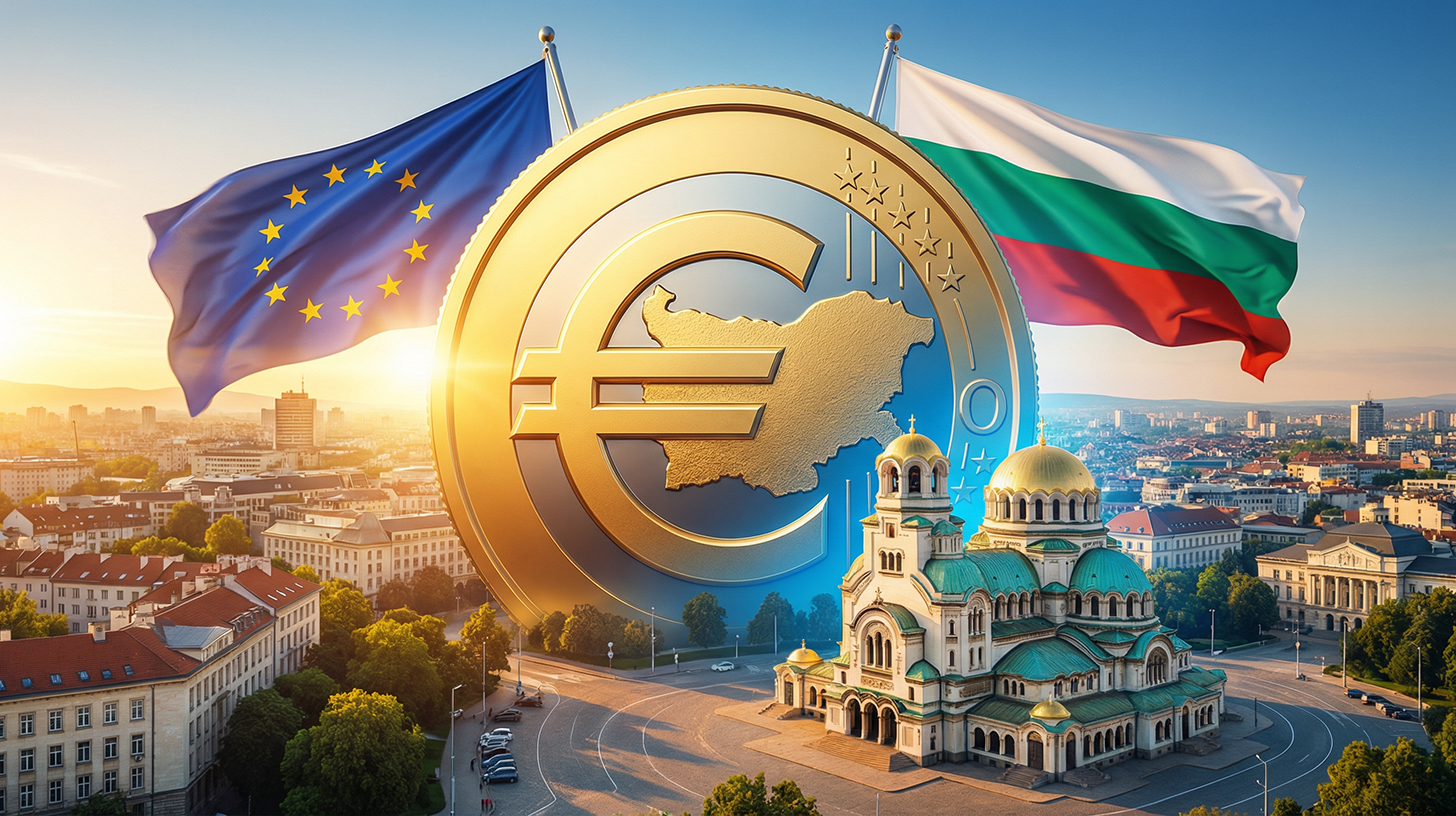
Bulgaria's leap into the Eurozone: How the euro is transforming the poorest EU country – Image: Xpert.Digital
Euro boom or real estate bubble? Fear of price shocks: Why not all Bulgarians are celebrating the new currency
Entry into the "Club of the Rich": Will the Euro be a Segen or a curse for Bulgaria?
On January 1, 2026, Bulgaria made history: as the 21st member state of the European Union, the Balkan nation officially adopted the euro. For the country of 6.5 million inhabitants, this step was far more than just a technical currency change – it was a powerful geopolitical statement and the long-awaited ticket to the economic heartland of Europe. But while foreign investors were already poised to pounce and the government aimed to ignite a new economic miracle with a multi-billion-euro investment plan, many citizens grew increasingly worried about skyrocketing real estate prices and persistent inflation. Could the European single currency sustainably transform the poorest country in the EU, or would the euro ultimately just ruthlessly expose the deep structural flaws in the Bulgarian economy? A detailed look at the opportunities, risks, and future of Bulgaria in the eurozone.
Sofia is currently balancing on a fine line between a spirit of optimism and structural reform gridlock
On January 1, 2026, Bulgaria became the 21st member state to adopt the euro, taking a historic step that binds the country more closely than ever to the economic heart of Europe. For the southeastern European nation of approximately 6.5 million inhabitants, this moment marks far more than a currency change. It is the provisional culmination of an integration process spanning almost two decades, which began with EU accession in 2007 and now reaches its full monetary integration. The European Central Bank and the European Commission gave the country the green light after it met all four Maastricht criteria. However, behind the celebratory mood lie structural weaknesses that could jeopardize the full potential of euro membership.
The long road to Maastricht
Bulgaria's path to the Eurozone was anything but straightforward. Its previous currency, the lev, had been pegged to the euro since its introduction in 1999, providing the country with currency stability but preventing full integration into European monetary policy. In 2018, Sofia officially launched the accession process to the monetary union, and in July 2020, the lev was included in the European Exchange Rate Mechanism. The real challenge, however, lay in the inflation criterion. The twelve-month average rate of harmonized consumer price inflation stood at 2.7 percent in April 2025, just below the reference value of 2.8 percent. Unlike Croatia's accession, Bulgaria did not have to invoke any special exemptions, which bolsters the credibility of the process.
Bulgaria met the criteria for sound public finances with a budget deficit of exactly three percent of gross domestic product in 2024. Public debt stood at just 24.1 percent of GDP, the second-lowest figure in the entire EU. The interest rate criterion was also easily met, with long-term interest rates of 3.9 percent, significantly below the benchmark of 5.1 percent. ECB Executive Board member Philip R. Lane congratulated Bulgaria on its tremendous commitment to implementing the necessary adjustments and emphasized that the positive outcome of the convergence assessment paves the way for the country to join the euro area.
Economic dynamics in uncertain times
Bulgaria's economic development certainly gives cause for cautious optimism. GDP growth in the first quarter of 2025 was a remarkable 3.1 percent year-on-year, making it the fourth-highest-grossing country in the EU. Forecasts for the full year 2025 range from 2.0 to 3.1 percent, depending on the source. The European Commission, in its autumn forecast, projects growth of 2.7 percent for 2026, while the Vienna Institute for International Economic Studies even anticipates 3.0 percent.
Rising incomes and low interest rates have led to strong construction investment, particularly in the capital, Sofia. Private consumption remains a key growth driver, supported by rising real wages, which, however, are expected to slow from a robust increase of 11.2 percent to more moderate growth rates of four percent in 2025 and three percent in 2026. The labor market is proving resilient, with an unemployment rate below four percent, which could fall to 3.7 percent in 2026. The shortage of skilled workers remains one of the biggest challenges, to which companies are increasingly responding by recruiting international workers.
What the Euro really brings
The introduction of the euro promises a number of concrete economic benefits. The elimination of exchange rate risks and transaction costs could, according to several estimates, generate hundreds of millions of euros in annual savings for small and medium-sized enterprises. Businesses and consumers will be able to borrow money in euros more cheaply, as the euro improves the country's creditworthiness. Rating agencies have already recognized this; Fitch has given Bulgaria a positive credit rating. Access to the ECB's monetary policy instruments and financial safety nets significantly reduces the risk of a currency crisis.
The government under Prime Minister Rosen Shelyaskov described the euro as a strategic decision that would strengthen Bulgaria's position in Europe. ECB President Christine Lagarde put it even more clearly: the introduction of the euro would strengthen Bulgaria's economic foundations, increase its resilience to global shocks, and give its voice more weight in the eurozone. Indeed, the data already show initial positive signs. Foreign direct investment rose by around 14 percent year-on-year in 2025, with strategic inflows into the manufacturing, logistics, and technology sectors.
Our EU and German expertise in business development, sales and marketing


Our EU and German expertise in business development, sales and marketing - Image: Xpert.Digital
Industry focus areas: B2B, digitalization (from AI to XR), mechanical engineering, logistics, renewable energies and industry
More information here:
A thematic hub offering insights and expertise:
- Knowledge platform covering global and regional economies, innovation and industry-specific trends
- A collection of analyses, insights, and background information from our key areas of focus
- A place for expertise and information on current developments in business and technology
- A hub for companies seeking information on markets, digitalization, and industry innovations
Bulgaria's Euro gamble: Chance for prosperity or ticket to economic chaos?
The ambitious investment plan
The government, in office since the beginning of 2025, has drawn up an ambitious investment plan for 2026, totaling €4.9 billion. This signals renewed momentum after four years marked by political infighting and six extraordinary elections. The majority of the funds are earmarked for defense and security, as well as infrastructure development. The draft budget from November 2025 also includes higher labor costs, as contributions to long-term care insurance are set to increase by two percent. Bulgaria adopted its first budget in euros at the end of 2025, underscoring the symbolic significance of the currency conversion.
EU funding plays a central role in this. However, without the reforms demanded by the European Commission, less money will flow. The absorption of EU funds has been a chronic problem in the past, and political instability has further slowed this process. The fact that, after seven parliamentary elections in three and a half years, a regular government with a majority in the National Assembly has existed again since January 2025 should strengthen the country's capacity for reform.
Structural risks and downsides
Despite the positive headline figures, significant structural vulnerabilities remain. Food inflation continues to be well above the eurozone average, and property prices have risen sharply, with year-on-year increases of up to 15.5 percent in the second quarter of 2025. In Sofia, price levels in some segments have doubled within three years, increasing the risk of a housing bubble. The introduction of the euro is already stimulating demand for consumer and mortgage loans, which is likely to further intensify the housing market.
Wage growth continues to outpace productivity gains, eroding competitiveness. At the same time, external demand remains stagnant, partly due to the persistently weak economic performance of key trading partners such as Germany and Austria. Germany remains Bulgaria's most important trading partner, accounting for 15.3 percent of exports, but Germany's economic weakness is hindering Bulgarian exports.
Fiscal policy challenges
The national budget will be under pressure in the coming years. Planned defense spending, in particular, is expected to push the deficit up to 4.3 percent of GDP in 2027, while public debt is also set to increase significantly. Rising energy prices resulting from new EU regulations, such as the ETS2 emissions trading system coming into force in 2027, are likely to push inflation back up to 3.7 percent in 2027. While the Commission anticipates a decline in inflation from 3.5 percent in 2025 to 2.9 percent in 2026, the subsequent acceleration could undermine public confidence in the price stability of the euro.
The skeptics and the referendum
Bulgaria's entry into the Eurozone is far from uncontroversial in Bulgarian society. The nationalist party Vazarzhdane, and most recently President Rumen Radev, called for a referendum on the euro, which was rejected as unconstitutional by Parliament Speaker Natalya Kiselová. Public skepticism persists, fueled by disinformation and fears of rising prices. Critics like economics professor Rossitsa Rangelova of the Bulgarian Academy of Sciences warn that joining the club of the wealthy will not automatically raise living standards if the necessary and long-delayed reforms are not implemented. Without fundamental structural reforms, Bulgaria will not be able to be an equal member.
A geopolitical signal in turbulent times
Bulgaria's accession to the euro has not only an economic but also a geopolitical dimension. At a time when European unity is being tested by multiple crises, Bulgaria's integration sends a strong signal of solidarity. With Bulgaria's accession, only six of the 27 EU member states remain outside the monetary union: Sweden, Poland, the Czech Republic, Hungary, Romania, and Denmark. Deeper integration into the eurozone should strengthen Bulgaria's economic and political resilience to external shocks and geopolitical pressure.
In the long term, the euro will revive exports. The Vienna Institute expects a strong increase of six percent in exports for 2026. At the same time, imports will only recover slowly, which should reduce the current account deficit. The tourism sector, the IT industry, and mechanical engineering are proving to be particularly dynamic sectors that will benefit from the improved investment climate and reduced transaction costs.
A crucial decade begins
Bulgaria is at a turning point. Joining the Eurozone is not a guarantee of automatic prosperity, but rather a ticket to a more demanding economic competition. The challenges are manifold: modernizing public administration, combating corruption, expanding infrastructure, and increasing productivity. If the government succeeds in consistently implementing the reform agenda and efficiently absorbing EU funds, Bulgaria could become one of Europe's most dynamic growth markets. However, if the reforms fail once again due to political calculations and institutional weaknesses, the country risks remaining permanently at the bottom of the European prosperity scale, despite its Euro membership. The coming years will show whether Euro membership will truly be the catalyst for the promised catch-up process or whether it merely cosmetically improves the facade of an economy in dire need of renovation.
Your global marketing and business development partner
☑️ Our business language is English or German
☑️ NEW: Correspondence in your native language!

Konrad Wolfenstein
I and my team are happy to be available to you as your personal advisor.
You can contact me by filling out the contact form here wolfenstein@xpert.digital:or simply call me at +49 7348 4088 965. My email address is
I'm looking forward to our joint project.
☑️ SME support in strategy, consulting, planning and implementation
☑️ Creation or realignment of the digital strategy and digitization
☑️ Expansion and optimization of international sales processes
☑️ Global & Digital B2B trading platforms
☑️ Pioneer Business Development / Marketing / PR / Trade Fairs
🎯🎯🎯 Benefit from Xpert.Digital's extensive, five-fold expertise in one comprehensive service package | BD, R&D, XR, PR & Digital Visibility Optimization

Benefit from Xpert.Digital's extensive, five-fold expertise in a comprehensive service package | R&D, XR, PR & Digital Visibility Optimization - Image: Xpert.Digital
Xpert.Digital possesses in-depth knowledge across various industries. This allows us to develop tailored strategies precisely aligned with the requirements and challenges of your specific market segment. By continuously analyzing market trends and monitoring industry developments, we can act proactively and offer innovative solutions. The combination of experience and expertise generates added value and provides our clients with a decisive competitive advantage.
More information here: