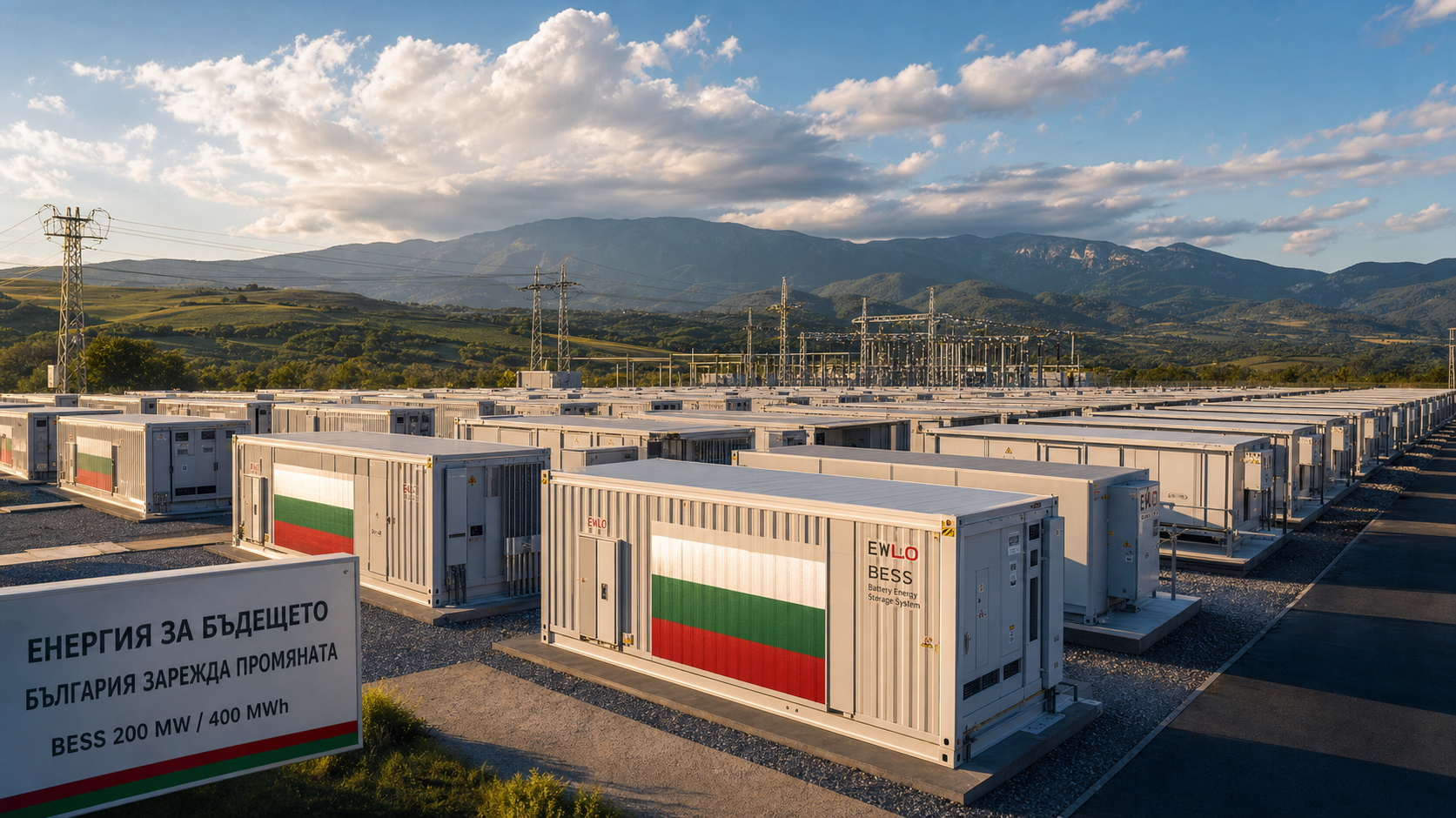
Bulgaria's energy transition: How did the poorest EU country become Europe's battery storage champion? – Creative image: Xpert.Digital
Over 1,100% growth: This small EU country is the world's new energy storage miracle
From coal-based state to battery storage pioneer: Bulgaria's unprecedented energy turnaround
Bulgaria is currently undergoing one of the most spectacular energy policy turnarounds in history. Just a few years ago primarily known as the EU's coal-dependent problem child, the Balkan nation has transformed itself in record time into a global leader in battery energy storage (BESS). With an unprecedented expansion of massive storage facilities and the first European gigafactory built under the Net Zero Industry Act, Bulgaria is even eclipsing economic powerhouses like China and the USA – at least relative to the size of its electricity grid. A clever use of EU funding, bold regulatory reforms, and extremely lucrative electricity markets have triggered a veritable gold rush, attracting billions in private capital. But this rapid rise also presents bottlenecks and risks. Read on to discover how the country with the lowest per capita GDP in the European Union became the undisputed world champion of energy storage, the economic logic behind it, and why the rest of Europe is now watching this unexpected energy laboratory with bated breath.
Bulgaria – World Champion in Battery Storage? How a small EU country is turning the global energy storage rankings upside down
From coal supplier to electricity storage leader: The astonishing transformation
Bulgaria, the poorest country in the European Union in terms of GDP per capita, has undergone one of the most remarkable energy policy turnarounds in the history of modern energy in less than two years. At the beginning of 2024, the Balkan nation had just around 200 megawatt-hours (MWh) of installed battery storage capacity – a rather unremarkable figure by European standards. By the end of 2025, this figure had risen to almost 2,500 MWh, representing an increase of more than 1,100 percent in just one year. In May 2026, the European Network of Transmission System Operators for Electricity (ENTSO-E) reported 3,318 megawatts (MW) of installed storage capacity in Bulgaria, with a total capacity of over 8.6 GWh – and the national grid operator ESO soon reported 3,432 MW.
These figures alone, however, only tell half the story. What truly distinguishes Bulgaria is not the absolute amount of installed capacity, but the relative scale: With over 16 percent of its total installed battery storage capacity relative to its electricity system, Bulgaria took the global lead in May 2026. No other country in the world – not China, not the USA, not Australia – has a comparably high share of battery storage relative to the size of its electricity system. Only the US state of California comes close to Bulgaria in a comparable ratio.
From last place to number three: The EU-wide ranking
To grasp the significance of this development, it is necessary to look at the overall European market. In 2025, the EU installed a total of 27.1 gigawatt-hours of new battery storage capacity – a 45 percent increase compared to the previous year and marking the twelfth consecutive record year. For the first time, utility-scale storage systems surpassed residential storage: 55 percent of all newly installed capacity was accounted for by large-scale installations. This structural market shift is crucial for understanding the phenomenon of Bulgaria, which has focused exclusively on large-scale storage.
In this market, Bulgaria now ranks third in the EU, directly behind Germany (6.6 GWh) and Italy (4.9 GWh), but with a market share of 9 percent. In absolute terms, this position is simply extraordinary for a country with fewer than seven million inhabitants and an economic output of around 100 billion euros. Per capita and relative to its economic size, Bulgaria is therefore not only third in the EU, but the undisputed world leader. SolarPower Europe, the European solar association, explicitly described Bulgaria in January 2026 as "one of the fastest-growing markets in Europe.".
The RESTORE program: European funding policy as a catalyst
The starting point of this transformation can be precisely dated: August 2024, with the launch of the RESTORE program (National Infrastructure for Storage of Electricity from Renewable Sources), financed by the EU's Recovery and Resilience Facility (RRF). Bulgaria's National Recovery and Resilience Plan initially provided €590 million in grants for the development of at least 3,000 MWh of storage capacity, with individual projects eligible to receive up to 50 percent of their approved costs, but no more than €76 million.
The market response exceeded all expectations. By the submission deadline in December 2024, 151 project proposals had been received, representing a total investment volume of almost €2.56 billion – four times the available funding budget. The Bulgarian Ministry of Energy ultimately approved 82 projects with a total capacity of 9,712.89 MWh and a funding value of approximately 1.15 billion Bulgarian lev (BGN). The most significant outcome of this oversubscription: the program mobilized roughly twice as much private capital as public funds. Over the past two years, a total of approximately €2 billion has flowed into the Bulgarian BESS market, the majority of it as private capital. In the second half of 2025, Bulgaria began planning RESTORE 2, which aims to add another 1.9 GWh of capacity, with a commissioning target of mid-2026.
Regulatory decisions: Law creates the market
Subsidies alone do not fully explain the boom. A fundamental restructuring of the legal framework was also crucial. In 2024, Bulgaria's energy law and electricity trading rules were amended to recognize energy storage facilities as independent market participants. This removed regulatory hurdles and created a legal basis for battery storage systems to participate in electricity trading and grid balancing services. Since then, battery storage systems can be operated both as standalone systems and as co-located solutions together with renewable energy generation plants.
Furthermore, in September 2024, the Bulgarian Energy and Water Regulatory Commission (EWRC) introduced mandatory financial guarantees: investors must deposit a security deposit or bank guarantee of BGN 50,000 (approximately EUR 28,400) per MWh of planned capacity before grid connection approval is granted. This measure aimed to prevent speculative capacity reservations and encourage serious investment – a mechanism often lacking in other European markets, where it has led to significant grid connection queues.
The Lovech Power Plant: Symbol of a new energy age
The most tangible symbol of Bulgaria's BESS boom is the system commissioned in May 2025 in the north-central Bulgarian city of Lovech. With a power output of 124 MW and a capacity of 496.2 MWh, it was the largest battery energy storage system in the entire European Union at the time of its inauguration. Built in just six months and financed by Advance Green Energy AD with an investment of approximately 147 million Bulgarian leva (around 75 million euros), the plant consists of 111 battery containers with lithium iron phosphate (LFP) cells. Located directly adjacent to a 106 MW solar park in the Balkan Industrial Park in Lovech, it is designed for price arbitrage: charging at low prices and discharging during peak demand.
At the opening ceremony, Bulgaria's Energy Minister Zhecho Stankov described the system in Lovech as a "first step" towards a total storage capacity of at least 10 GWh, which the country aimed for by the end of 2025. While this target was stretched over time, it was more than achieved in substance. Meanwhile, in May 2026, the Austrian company Enery inaugurated what was then the largest battery energy storage system (BESS) in Central and Eastern Europe in Nova Zagora: 150 MW and 601.8 MWh. A few weeks later, in June 2026, Sungrov and Sunotec commissioned another system, also in Nova Zagora, with a capacity of 150 MW and 600 MWh. The Chinese company Sungrov has since become one of the dominant technology suppliers in the Bulgarian market and plans to operate a total of 3 GWh of storage capacity in Bulgaria by the end of 2026.
The economics of the arbitrage market: Why Bulgaria is so attractive
Behind the investment boom lies a sound economic logic. Rystad Energy, a Norwegian energy research and business intelligence company, analyzed European electricity markets in 2023 and 2024 and reached a clear conclusion: Bulgaria offers the highest profit potential for battery energy storage in all of Europe. Specifically, a battery storage system with a two-hour discharge capacity enables average spot market revenues of around €110 per MWh in Bulgaria through energy arbitrage. This figure significantly surpasses all other European electricity markets.
The structural reasons for this are multifaceted. Bulgaria experiences significant intraday price fluctuations, as a growing solar power generation portfolio leads to oversupply and significantly depressed prices at midday, while coal and nuclear power plants are traditionally more expensive in the morning and evening hours. At the same time, Bulgaria is positioned as a link between the Western and Southeastern European electricity markets: with Greece, Romania, Serbia, North Macedonia, and Turkey as direct neighbors, it has export opportunities in various markets. Atanas Georgiev, a Bulgarian energy scientist, precisely described the resulting effect: during sunny hours, the batteries are already charging at a rate of more than 2.5 to 3 GW – meaning Bulgaria can simultaneously generate more electricity than it consumes and still be a net importer, because the batteries not only absorb the domestic solar surplus but also cheaper electricity from neighboring markets.
Our EU and German expertise in business development, sales and marketing


Our EU and German expertise in business development, sales and marketing - Image: Xpert.Digital
Industry focus areas: B2B, digitalization (from AI to XR), mechanical engineering, logistics, renewable energies and industry
More information here:
A thematic hub offering insights and expertise:
- Knowledge platform covering global and regional economies, innovation and industry-specific trends
- A collection of analyses, insights, and background information from our key areas of focus
- A place for expertise and information on current developments in business and technology
- A hub for companies seeking information on markets, digitalization, and industry innovations
From 50% coal to 16% storage: Bulgaria is changing the grid forever
Geopolitics, market structure and the structural problem of coal
Bulgaria's BESS boom cannot be viewed in isolation from the country's deeper structural problems. Coal has dominated the Bulgarian energy system for decades: in the crisis year of 2022, over 50 percent of Bulgaria's electricity came from coal, and as recently as 2024, coal-fired power plants generated around 40 percent of the national electricity supply, while some 34,000 people were directly employed in coal-fired power plants. Although the country plans to phase out coal by 2038, this timeline is highly controversial: coal workers' unions regularly take to the streets, and in the coal-mining regions of Stara Zagora, Pernik, and Kyustendil, the structural transformation is perceived as an existential threat. In energy policy, as in many other areas, Bulgaria is a divided country.
The parallel dynamics are revealing: While coal-fired power plants reduced their electricity generation by 46 percent in 2023, solar energy increased its production by 141 percent in the same year. The Kozloduy nuclear power plant reliably supplies around one-third of the nation's electricity and is to be supplemented by two new Westinghouse reactors, scheduled to go online by 2034 and 2037 respectively – at a planned total cost of less than US$14 billion. In this scenario, battery storage systems serve as a bridge: They enable the integration of growing renewable energy capacities before the new nuclear power plants can provide baseload power, and they temporarily replace the balancing and regulation functions previously provided by coal-fired power plants.
Europe's first BESS gigafactory: Bulgaria as an industrial location
Perhaps the most profound aspect of Bulgaria's energy storage revolution is the one that receives the least public attention: In October 2025, Bulgaria saw the start of operations at Europe's first gigafactory for battery storage systems, built under the EU's Net-Zero Industry Act (NZIA). International Power Supply (IPS) opened its Factory X1 in the Hemus Hightech Industrial Park near Sofia. The product itself – the EXERON X-BESS system – is one of only six battery and energy storage projects in the entire EU to have been granted strategic status by the European Commission.
The factory is fully vertically integrated: from battery modules and packs to distributed liquid cooling systems, mechanical structures, electronics, battery management systems (BMS), control units, and inverters, virtually all critical components are developed and produced in-house – only the lithium iron phosphate cells themselves are sourced externally. The initial capacity of 3 GWh of annual production is slated to increase to 5 GWh by the second quarter of 2026. Meanwhile, IPS has already begun construction of a second factory in Sofia, which will increase the annual capacity to 4,000 MWh. This industrialization of the BESS value chain in Bulgaria has a dimension that extends far beyond the domestic market: it positions the country as a potential exporter of energy storage technology for the entire Southeast and Eastern European region.
Risks and structural limits of the boom
A serious economic analysis cannot stop at the successes. Bulgaria's BESS boom harbors significant structural risks, both political and economic in nature. On the political front, the well-known political instability must first be pointed out: the country has experienced numerous parliamentary elections and short terms of government in recent years, which makes the consistent implementation of long-term strategies difficult. In December 2024, the European Commission suspended a second disbursement of €653 million from the recovery fund due to insufficient progress in the areas of energy, anti-corruption, and public procurement – a signal that the institutional foundations remain fragile despite progress in energy policy.
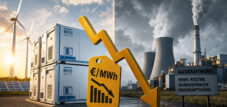
On the economic side, an arbitrage paradox looms: the more battery storage systems are installed, the smaller the intraday price spreads in the market become – and thus the profit prospects for new investors gradually decrease. This self-limiting characteristic of arbitrage markets is internationally recognized and is increasingly affecting Bulgaria, as storage capacity has grown exponentially. Rystad Energy has already forecast tighter spreads in the range of €30 to €70 per MWh for Southeast Europe, compared to the €110 per MWh that was still considered the benchmark in 2023. Added to this is the risk of grid congestion: a system that suddenly charges or discharges 3 to 5 GW simultaneously places high demands on the transmission infrastructure, which is historically underdeveloped in Bulgaria.
The funding period as a pace-setter and Achilles' heel
A critical factor influencing the quality of BESS investments is the RESTORE program's deadline: all funded projects must be commercially operational by July 31, 2026. While this tight deadline creates the acceleration effect that made the expansion possible in the first place, it also increases pressure on supply chains, grid connections, and permitting processes in a way that promotes quality compromises and implementation risks. Projects that miss the deadline lose their funding. This could lead to a partial reversal of the trend if the pace of new installations abruptly ends after the deadline.
The acute dynamics surrounding deadlines also explain why the Bulgarian market in 2026 will be so heavily dominated by large individual projects: Over 10,000 MWh of battery capacity was still under construction at the beginning of 2026. This means that installed capacity will increase dramatically again by mid-2026. Germany and other large EU markets, on the other hand, have the disadvantage of a more fragmented project structure with smaller individual installations on average, but with fewer systemic deadline risks.
Systemic change: What does a 16 percent storage share mean for a power grid?
The fact that over 16 percent of the total electricity system's capacity is comprised of battery storage is not just a statistical curiosity – it fundamentally alters the logic of grid operation. In conventionally designed systems, pumped-storage power plants, gas turbines, and increasingly, demand-response programs handle the balancing function. In Bulgaria, however, batteries can theoretically already cover more than two hours of national electricity consumption entirely from their own storage – a level of flexibility unmatched by any other national electricity system in the world.
Actual operational practice paints an even more fascinating picture: During sunny hours, Bulgarian batteries absorb not only the domestic solar surplus but also inexpensive imported electricity from neighboring markets. They thus function simultaneously as a national balancing tool and a regional price arbitrage engine. Participation in balancing energy markets—both automatic frequency restoration reserve (aFRR) and manual frequency restoration reserve (mFRR)—opens up a third revenue stream alongside arbitrage and the capacity market. This multi-layered revenue model effectively makes Bulgaria the most dynamic laboratory for BESS operating strategies in Europe.
From subsidies to gigafactories: Bulgaria is building Europe's energy storage cluster
Contracts for a total of over 13 GWh of storage capacity are reportedly already signed in Bulgaria, with the overall trajectory pointing towards five gigawatts of capacity by the end of 2026. This means Bulgaria is expected to remain Europe's number one small and medium-sized economy in terms of absolute capacity. However, whether the country will also benefit economically from this development depends on several variables that are currently still unknown.
The market structure will change: With growing capacities, arbitrage margins will narrow, and in the long term, battery storage in Bulgaria will only remain profitable if it focuses more on systemic grid services, cross-border capacity markets, and, looking ahead, hydrogen integration, in addition to pure price arbitrage. At the same time, Bulgaria could benefit from its industrial base: IPS's BESS gigafactory is the core of a developing cluster of manufacturing, engineering, and operations that could secure the country a special role in the European energy storage value chain.
What remains is a structurally remarkable economic fact: A country with the lowest per capita GDP in the EU has achieved a global leadership position in energy storage through a combination of smart use of European funding, bold regulatory reform, favorable market conditions, and a hunger for private investment. Whether one wants to call it a "world champion" or not, the figures are undeniable, and Bulgaria's battery storage story is already one of the most compelling energy transition stories of the 21st century.
🎯🎯🎯 Data-driven B2B industry hub as a quasi-in-house solution


The quasi-in-house solution: How Xpert.Digital closes operational gaps in B2B marketing and sales – Smart Content-Driven Business - Image: Xpert.Digital
Xpert.Digital is a data-driven B2B industry hub led by Konrad Wolfenstein . The company acts as an external, quasi-in-house solution for industrial partners, closing operational gaps in marketing, content, and sales – without requiring additional resources on the client side.
More information here:
Your global marketing and business development partner
☑️ Our business language is English or German
☑️ NEW: Correspondence in your native language!

Konrad Wolfenstein
I and my team are happy to be available to you as your personal advisor.
You can contact me by filling out the contact form here wolfenstein@xpert.digital:or simply call me at +49 7348 4088 965. My email address is
I'm looking forward to our joint project.