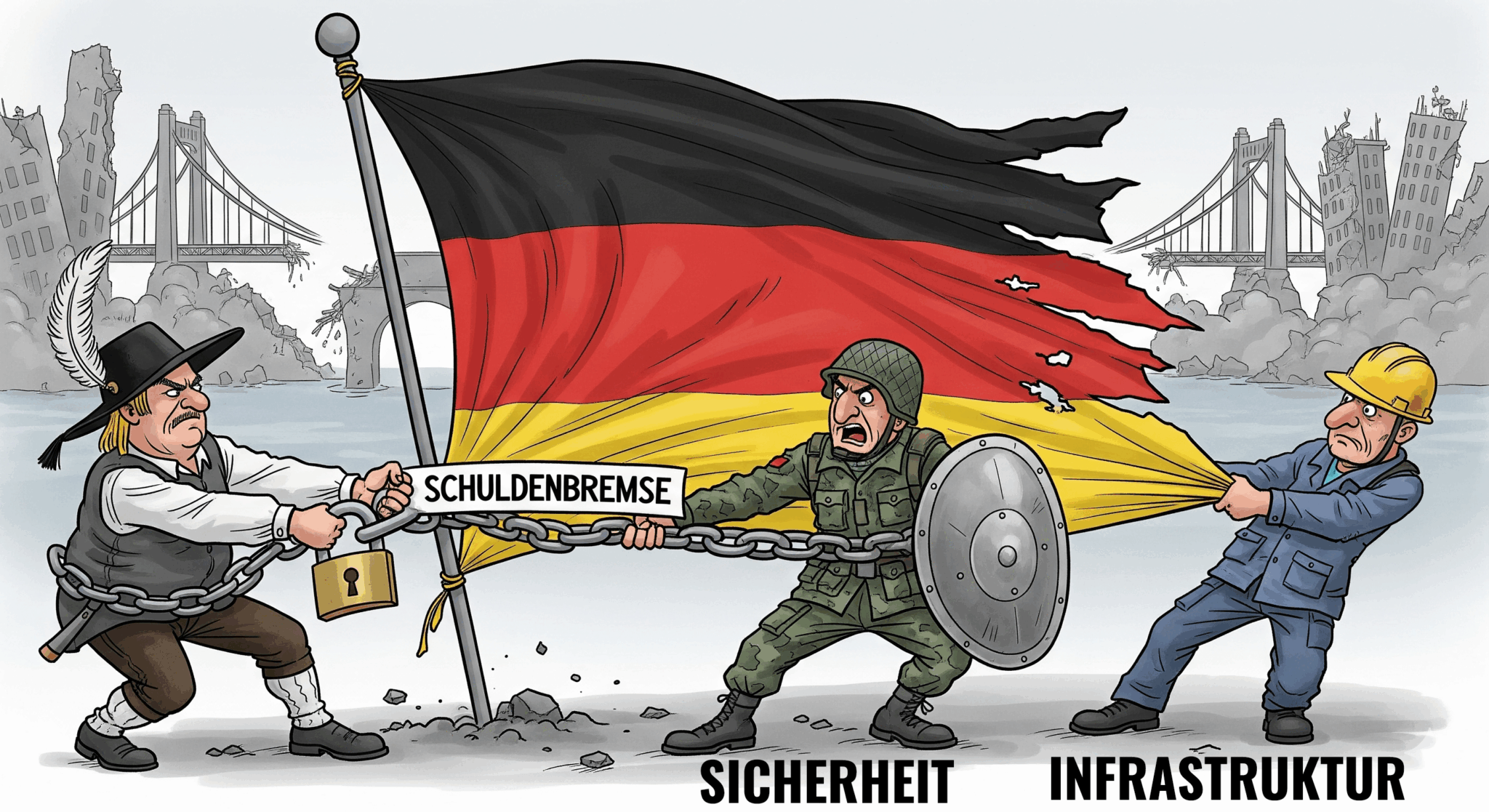
Germany is experiencing one of its most difficult budget crises: between debt brake, security and infrastructure
Germany's future plan costs billions: Is this the salvation for dilapidated roads and the Bundeswehr – or a disaster?
The ongoing budgetary turmoil of the federal government
Germany is experiencing one of the most difficult budget periods in its recent history. Following the collapse of the traffic light coalition in November 2024, the country is once again facing fundamental problems in financing public services. The current situation is strongly reminiscent of the upheavals that contributed to the downfall of the previous government and casts the structural weaknesses of German fiscal policy in a new light.
Since January 1, 2025, Germany has been operating under a provisional budget, as the Bundestag was unable to pass a regular budget for the current year. This exceptional situation is a direct result of the political crisis that led to the dismissal of FDP Finance Minister Christian Lindner and the collapse of the traffic light coalition in November 2024.
The German government's new draft budget for 2025 projects expenditures of €503 billion, an increase of €26.2 billion compared to the previous year. At the same time, the government plans net borrowing of €81.8 billion, a dramatic difference from the €39 billion of the previous year. This massive increase in new debt is made possible by fundamental changes to the debt brake, which were passed in March 2025 with a two-thirds majority from the CDU/CSU, SPD, and Greens.
Constitutional Court ruling as a turning point
The roots of the current budget turmoil reach back to November 2023, when the Federal Constitutional Court delivered a landmark ruling on the budget policy of the coalition government. The judges declared the reallocation of 60 billion euros from the special Corona fund for climate protection measures unconstitutional. This ruling deprived the then-government of the financial basis for numerous planned projects and significantly exacerbated the already existing tensions between the coalition partners.
The court argued that the connection between the coronavirus pandemic as an exceptional emergency and the subsequent use of the funds for climate protection projects had not been sufficiently demonstrated. Furthermore, it ruled that incurring debt as a precautionary measure violated the principle of annual budgeting. The decision marked the first time that Germany's highest court had addressed the debt brake, thereby setting new standards for fiscal policy.
The consequences of this ruling were far-reaching. Federal Finance Minister Lindner immediately imposed a spending freeze on the Climate and Transformation Fund and announced the end of the Economic and Stabilization Fund at the end of the year. The government's electricity and gas price caps subsequently expired, and numerous climate protection projects had to be reviewed.
The ruling exacerbated the already simmering conflicts within the traffic light coalition. While the SPD and the Greens pushed for new debt for investments, the FDP insisted on strict adherence to the debt brake. These irreconcilable positions ultimately led to a deadlock that lasted almost a year before the coalition finally collapsed.
Debt brake reform under new government
Following the snap federal elections in February 2025, the CDU/CSU and SPD agreed in their exploratory talks on a comprehensive reform of the debt brake. Even before the new Bundestag convened, the 20th German Bundestag passed an amendment to the Basic Law on March 18, 2025, with the votes of the CDU/CSU, SPD, and Greens, which provides for three significant relaxations.
The most significant change involves the establishment of a special fund for infrastructure and climate protection, amounting to €500 billion and operating outside the debt brake, with a term of twelve years. This massive investment package is intended to modernize Germany's aging infrastructure and help achieve its climate targets. Of the €500 billion, €100 billion will go directly to the states and municipalities, another €100 billion is available for investments from the Climate and Transformation Fund, while the federal government can draw on €300 billion for additional investments.
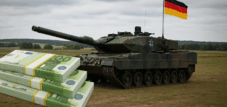
The second important change creates an exemption for defense spending. Expenditures for defense, civil protection, intelligence services, and cybersecurity exceeding one percent of gross domestic product are exempt from the debt brake. This regulation allows the federal government to spend significantly more on security without violating constitutional debt limits.
Thirdly, the states will be granted an additional borrowing option amounting to 0.35 percent of their gross domestic product, which will give them significantly more budgetary flexibility. This change is intended to particularly benefit municipalities, which often suffer from chronic underfunding.
Massive increase in defense spending
The current draft budget foresees a dramatic increase in defense spending. With a total volume of approximately €86.5 billion, Germany's military expenditures are projected to reach a new record high in 2025. This represents an increase of €14.7 billion compared to the previous year and, for the first time in decades, will meet the NATO target of two percent of gross domestic product.
Of the 86.5 billion euros, 62.4 billion are allocated to the regular defense budget, and a further 24.1 billion euros are to come from the special Bundeswehr fund. The largest increase concerns military procurement, which is rising by 5.5 billion euros to 8.2 billion euros in the budget line. An additional 24.1 billion euros from the special fund will be made available for procurement, representing a total increase of 9.8 billion euros compared to the previous year.
Long-term financial planning envisions even more drastic increases. Key figures for the coming years show that the defense budget is projected to rise to €82.7 billion in 2026, €93.4 billion in 2027, €136.5 billion in 2028, and €152.8 billion in 2029. This would mean that defense spending would increase by a factor of 2.45 by 2029, more than doubling its share of the federal budget from the current 12.4 percent to 26.6 percent.
The original €100 billion special fund for the German Armed Forces, created after the Russian attack on Ukraine in 2022, is now almost entirely allocated. According to the Frankfurter Allgemeine Zeitung, exactly €99.999 billion of the €100 billion has already been committed. This demonstrates how quickly the initially perceived as generous financial injection for the German Armed Forces has been exhausted.
Infrastructure investments as a key challenge
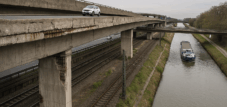
Besides defense, Germany's dilapidated infrastructure represents one of its biggest financial challenges. Experts estimate the investment needed for highways, railways, and energy infrastructure alone at around €400 billion over the next ten years. However, the total need is likely to be considerably higher, as there is currently no comprehensive inventory of all infrastructure expenditures.
The investment required for federal road infrastructure between 2025 and 2028 is estimated at over €57 billion. According to the Federal Ministry for Digital Affairs and Transport, the railways will require €63 billion during the same period. The financial needs for energy infrastructure are particularly dramatic, with the energy transition leading to an investment requirement of up to €270 billion for onshore and offshore installations by 2037.
The new special fund for infrastructure and climate neutrality is intended to help close these enormous funding gaps. As early as 2025, more than nine billion euros will be made available for investments in a reliable rail infrastructure. 6.5 billion euros are earmarked for improving childcare and digital education offerings, while at least four billion euros annually from the special fund are to be invested in digitalization.
The investment package also includes measures for research and development, broadband expansion, and the transformation fund for hospitals. Money will also be allocated to schools and kindergartens to modernize the educational infrastructure, which has been neglected for years. Total transport investments will amount to approximately €166 billion by 2029.
Criticism from experts regarding the budget management
The massive increase in national debt has met with mixed reactions from financial experts. The Scientific Advisory Board to the Federal Ministry of Finance has issued a recent report on the reform of the debt brake, warning of the risks associated with the new regulations. The experts emphasize that while a growth-oriented use of the new borrowing capacity is theoretically possible, such an allocation of funds is not legally mandated.
Critics argue that the Basic Law, due to its prominent position within the legal framework, was drafted too broadly and therefore allows for imprecise applications. The new debt brake should by no means end the discussion about further reforms, as there is likely more, not less, need for reform. The danger lies in the fact that the new borrowing possibilities could be used not specifically for productive investments, but for consumption-based spending.
Economists like Peter Bofinger from the University of Würzburg describe the old debt brake as detrimental to the future, as it hindered necessary investments in railway modernization, building renovation, and semiconductor factories. Jens Südekum from Heinrich Heine University Düsseldorf argues that Germany has never been excessively indebted by international standards and that its debt-to-GDP ratio is very low.
Other experts warn of the long-term consequences of overly lax debt policies. Friedrich Heinemann of the Centre for European Economic Research emphasizes that completely abolishing the debt brake would be disastrous and would leave future generations with a fiscal mess. The challenge lies in finding the right balance between necessary investments and fiscal responsibility.
Our recommendation: 🌍 Limitless reach 🔗 Connected 🌐 Multilingual 💪 Sales power: 💡 Authentic with strategy 🚀 Innovation meets 🧠 Intuition


From local to global: SMEs conquer the world market with a clever strategy - Image: Xpert.Digital
In an era where a company's digital presence determines its success, the challenge lies in creating an authentic, personalized, and far-reaching presence. Xpert.Digital offers an innovative solution that positions itself as the intersection of an industry hub, a blog, and a brand ambassador. It combines the advantages of communication and sales channels in a single platform and enables publication in 18 different languages. Cooperation with partner portals and the ability to publish articles on Google News and a press distribution list with approximately 8,000 journalists and readers maximize the reach and visibility of the content. This represents a crucial factor in external sales and marketing (SMarketing).
More information here:
Intergenerational fairness at risk: Who pays for infrastructure and defense?
Legal uncertainties and constitutional issues
The new interpretation of the debt brake raises significant legal questions. Legal experts doubt whether the exemption for defense spending will remain constitutionally sound in the long run. The regulation, according to which spending above one percent of gross domestic product is exempt from the debt brake, creates incentives for an unlimited expansion of military spending.
The definition of expenditures falling under the sectoral exemption is particularly problematic. In addition to pure defense spending, it also includes civil protection, intelligence services, cybersecurity, and aid to states illegally attacked under international law. This broad definition could lead to an increasing number of expenditures being subsumed under the label of security in order to circumvent the debt brake.
Constitutional law expert Hanno Kube criticized proposals to extend the repayment of emergency loans over very long periods. Repayment must be completed within a reasonable timeframe, and the burden on an entire future generation already seems excessively long. Simply postponing repayment without a sound, independent justification is unacceptable.
The legal uncertainties are exacerbated by the complexity of the new regulations. The special fund for infrastructure and climate neutrality is designed to run for twelve years, but it remains unclear what will happen after this period. There is a risk that policymakers will become accustomed to the higher spending levels and demand further exemptions from the debt brake.
Effects of the provisional budget
The provisional budget, in effect since January 1, 2025, reveals the limits of political action in Germany. According to Article 111 of the Basic Law, expenditures may only be made to the extent necessary to maintain legally existing institutions, fulfill legally mandated obligations, or continue projects that have already been approved.
These restrictions have a concrete impact on government activity. New projects can only be initiated if they are objectively and temporally indispensable. This makes it more difficult for the government to respond to current challenges or launch new policy initiatives. While already approved funding programs or construction projects will continue, the launch of new projects requires stronger justification.
The Federal Ministry of Finance stipulated that, for the preliminary 2025 budget, material expenditures could reach up to 45 percent of the amount budgeted in the original draft budget of the coalition government. This quota was later increased to 70 percent to accommodate the current timeline for the budget preparation process.
According to current plans, the provisional budget is scheduled to end in October 2025, when the new budget is finally adopted and announced. This would be one of the longest periods of provisional budget management in the history of the Federal Republic, underscoring the severity of the current political and financial crisis.
International perspective and NATO commitments
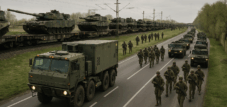
Germany's budgetary turmoil is being closely watched internationally. Germany only managed to meet its NATO commitment to spend at least two percent of its gross domestic product on defense this year, after years of failing to do so. This drastic increase in military spending is also a reaction to the ongoing war in Ukraine and the changed security situation in Europe.
US President Donald Trump has even demanded that NATO partners spend five percent of their gross domestic product on defense. Based on these demands, Germany's defense budget, at current levels, would have to amount to 150 to 200 billion euros annually, making it by far the largest single item in the federal budget. This figure illustrates the enormous financial challenges that Germany could face.
The trend toward increased military spending can be observed worldwide. The United States currently spends around 3.5 percent of its gross domestic product on defense, Poland more than four percent. Germany is moving in a similar direction with its planned expenditures, which fundamentally changes the priorities of its budget planning.
The international dimension is also evident in infrastructure investments. Germany must not only modernize its own dilapidated infrastructure, but also contribute to European integration and competitiveness. The transformation to a climate-neutral economy by 2045 requires massive investments that cannot be managed without additional debt.
Long-term impacts on future generations
The massive borrowing for infrastructure and defense raises fundamental questions of intergenerational fairness. Proponents argue that investments in infrastructure and climate protection benefit future generations and improve their living conditions. A sound and modernized infrastructure is the foundation for economic growth and prosperity.
Critics argue that high levels of debt burden future generations and restrict their fiscal flexibility. Debt servicing costs will consume an ever-increasing share of the federal budget, tying up funds that are then no longer available for other purposes. Rising interest rates could exacerbate this problem.
The debate about the right balance between investment and debt is intensified by demographic trends. An aging society leads to rising costs in healthcare and pensions, while the number of contributors declines. This development increases the pressure on public finances and makes sustainable fiscal policy even more crucial.
The new debt brake attempts to address these challenges through a more differentiated approach to investment and consumption. Whether this succeeds depends on whether the additional funds are actually used for productive investments or whether they flow into general government consumption.
Economic challenges and weak growth
Germany is experiencing a prolonged period of economic weakness, which further complicates budget planning. Growth forecasts are modest, and Germany's international competitiveness is in question. The massive investment offensive is also intended to stimulate economic growth and improve the business environment.
The government is banking on a nationwide modernization drive, financed through a special fund. Investments in digitalization, research, and innovation are intended to prepare Germany for the future and generate new growth. The transformation of the economy towards climate neutrality is seen as an opportunity for technological leadership and new business models.
At the same time, the government is planning structural reforms to strengthen competitiveness and provide relief for citizens and businesses. Faster procedures and less bureaucracy are intended to improve the framework for investment. Strict funding approval and a review of all government tasks for their necessity are also intended to ensure budgetary discipline.
The challenge lies in finding the right balance between investment and consolidation. Too little investment jeopardizes the country's future viability, while too much debt burdens future generations. The new debt brake is intended to facilitate this balancing act, but its effectiveness remains to be seen in practice.
Political stability and democratic legitimacy
The repeated budget crises also raise questions about Germany's political stability. The collapse of the traffic light coalition over financial issues demonstrates how difficult it has become to find viable compromises. The ideological differences between the parties regarding the assessment of debt and investment have proven insurmountable.
The new coalition of the CDU/CSU and SPD has a clear parliamentary majority for its budget policy, but tensions are inevitable. The SPD is pushing for more investment and social justice, while the CDU/CSU traditionally stands for fiscal discipline and debt limitation. The reform of the debt brake was a compromise, but whether it will be sustainable in the long term remains to be seen.
The democratic legitimacy of the massive borrowing is also disputed. The constitutional amendment was passed by the outgoing Bundestag even though it was already clear that new elections would be held. Critics see this as an attempt by the departing members of parliament to commit future governments to a specific policy.
The complexity of the new budget rules makes it difficult for citizens to understand the implications of the decisions. Special funds and sectoral exemptions create a lack of transparency that hinders democratic oversight. There is a risk that more and more spending will be shifted out of the regular budget to avoid political conflict.
Germany's current budget planning is paradigmatic of the challenges facing modern democracies in the 21st century. The debate is shaped by tensions between short-term political cycles and long-term investment needs, between fiscal responsibility and societal demands, and between national priorities and international obligations. The coming years will show whether the new architecture of the debt brake can meet these complex requirements or whether further reforms are necessary.
Your global marketing and business development partner
☑️ Our business language is English or German
☑️ NEW: Correspondence in your native language!

Konrad Wolfenstein
I and my team are happy to be available to you as your personal advisor.
You can contact me by filling out the contact form here wolfenstein@xpert.digital:or simply call me at +49 7348 4088 965. My email address is
I'm looking forward to our joint project.