
Viticulture and solar energy: Agri-photovoltaics (Agri-PV) in viticulture in South Africa - opportunities, challenges and potential
Xpert pre-release

Available in 27 languages 📢
Prefer Xpert.Digital on GoogleⓘPublished on: January 14, 2025 / update from: January 14, 2025 - Author: Konrad Wolfenstein
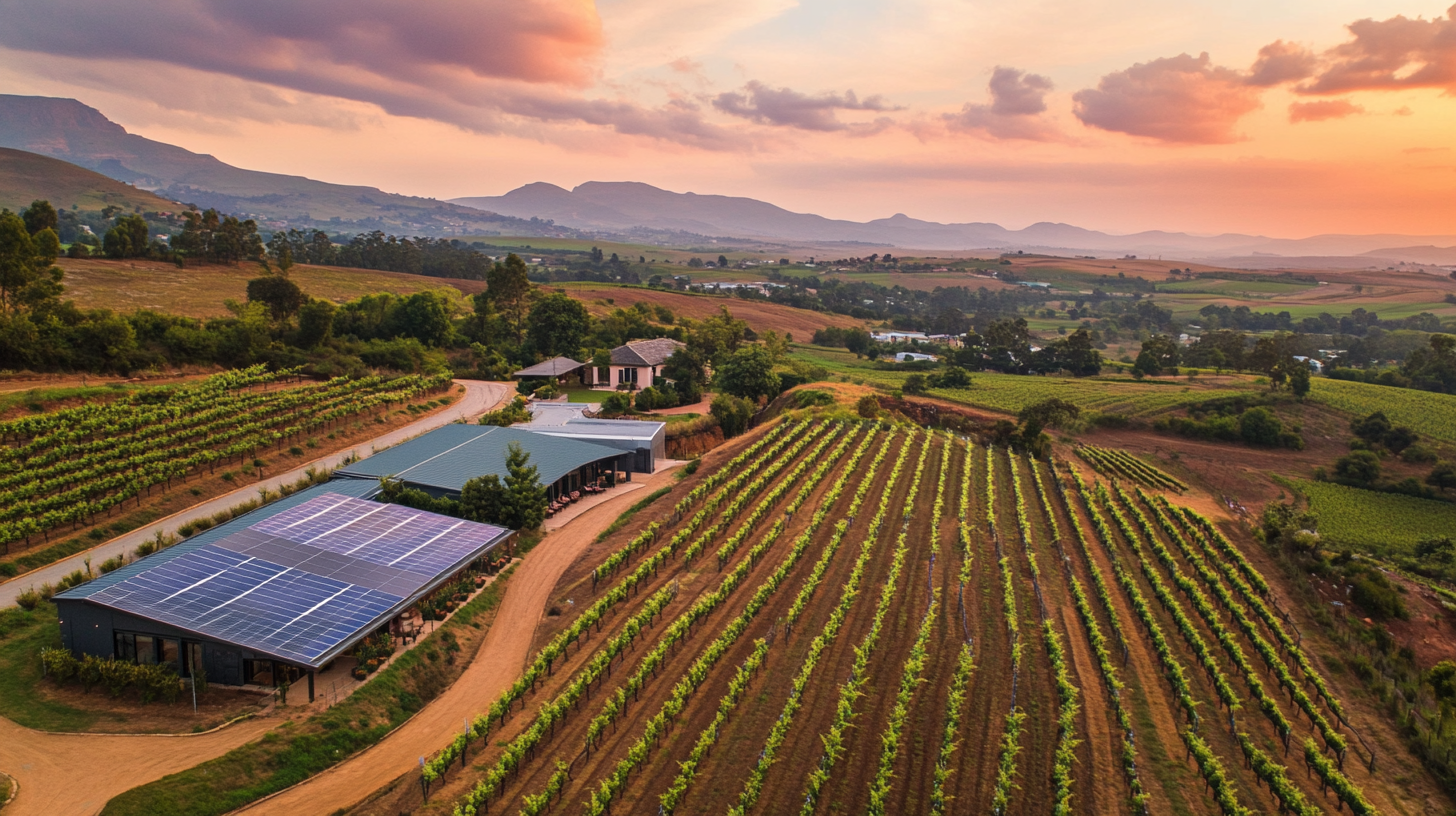
Viticulture and solar energy: Agri-photovoltaics (Agri-PV) in viticulture in South Africa - opportunities, challenges and potential - creative image: Xpert.Digital
Vineyards of the future: Agri-photovoltaics as a sustainable solution in South African cultivation
Grapes under solar panels: Agri-photovoltaics as a key to innovation and sustainability in winegrowing
Agri-photovoltaics (agri-PV) is an innovative technology that makes agricultural land usable for both the cultivation of crops and energy production. In the context of winegrowing in South Africa, this technology holds significant potential to address the challenges of climate change while creating economic benefits for winemakers. But alongside the opportunities, there are also challenges that need to be addressed. Below, a detailed analysis of Agri-PV in South African viticulture is carried out to highlight its advantages and disadvantages as well as the specific effects on grape production.
Suitable for:
Advantages of Agri-PV in South African viticulture
Climate protection and adaptation to climate change
South Africa is facing major challenges due to climate change. Longer periods of drought, higher temperatures and extreme weather events have a significant impact on agriculture and wine growing in particular. Agri-PV systems offer a sustainable solution here:
- Protection against heat stress: The (partially transparent) solar modules reduce direct sunlight on the vines and lower the temperature of the grape surface by up to 5°C. This minimizes heat stress and ensures more even development of the grapes.
- Protection from extreme weather events: The modules act like a protective roof and can protect vines from hail, heavy rain and excessive sunlight. This stabilizes yields and improves the quality of the grapes.
- Extended Harvest Time: Shading allows grapes to ripen more slowly, resulting in a later harvest. This is particularly advantageous in hot growing regions as it allows the grapes to develop a better balance between acid and sugar.
Improved water efficiency
In South Africa, a country with chronic water scarcity, optimizing water resources is critical. Agri-PV can make an important contribution here:
- Reduced evaporation: The shading provided by the PV modules significantly reduces water evaporation from the soil, which can reduce the water requirements of the vines by up to 30%.
- Efficient irrigation systems: In combination with Agri-PV, state-of-the-art drip irrigation systems can be implemented that further optimize water consumption.
- Rainwater harvesting: The PV systems can be designed so that rainwater is collected and used for irrigation.
Energy production and economic efficiency
Agri-PV enables the simultaneous use of agricultural land for cultivation and electricity generation:
- Additional source of income: The solar power generated can either be used directly on the wineries or fed into the power grid. This significantly reduces winemakers' energy costs and creates new income opportunities.
- Independence from the grid: In rural areas where electricity supply is often unreliable, Agri-PV offers a stable and sustainable energy source.
Improvement in grape quality
The controlled shading provided by the PV modules also has a direct impact on the quality of the grapes:
- Balanced ripening: The reduced sunlight leads to slower ripening of the grapes. This can result in wines that are more complex and better balanced.
- Reduction of sunburn: Particularly sensitive grapes benefit from shading, as sunburn and the associated yield losses are minimized.
Sustainability and innovation
The implementation of Agri-PV in viticulture contributes to more sustainable agriculture:
- Reduced CO2 footprint: Using renewable energy reduces fossil energy consumption.
- Promoting Innovation: South Africa is actively involved in researching Agri-PV solutions, resulting in new technologies and practices in the industry.
Suitable for:
- Water and watts make wine: berry cultivation with photovoltaics and a closed water cycle - transparent PV modules solar solutions from BaWü
- Agri-photovoltaics in viticulture - VitiVoltaic: Agri-PV solutions in viticulture - How wine becomes better and generates electricity
- Heilbronn: Viticulture and fruit growing with agri-photovoltaics (AgriPV) - State Fruit Experimental Training and Research Institute (LVWO)
Challenges in implementing Agri-PV
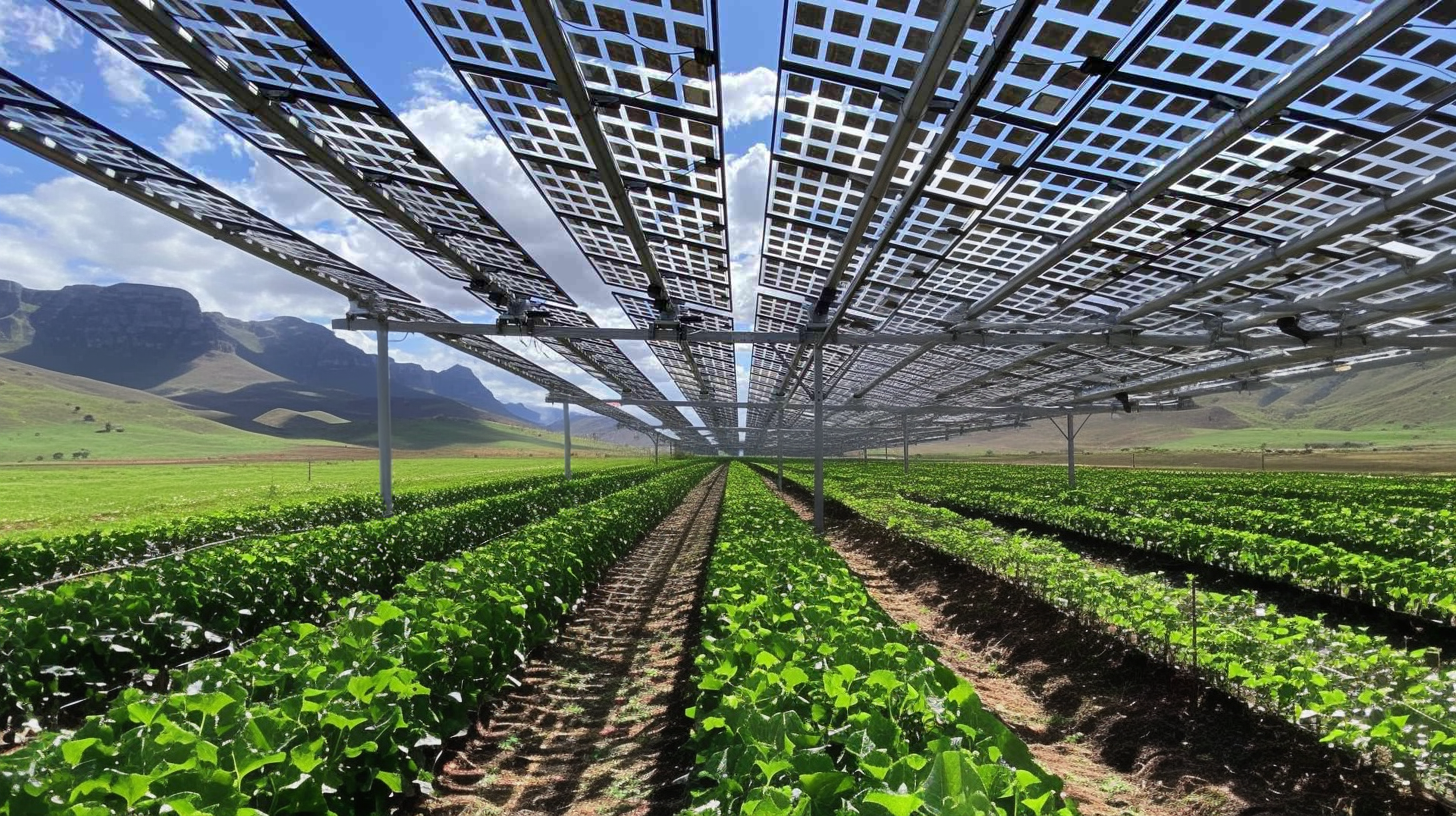
Agri-photovoltaics (agri-PV) solution example in South Africa using wine growing as an example - creative image: Xpert.Digital
Despite the numerous advantages, there are also hurdles that must be overcome when implementing Agri-PV in South African viticulture:
High initial investment
- Cost: Installing Agri-PV systems requires large upfront investments. Many winemakers do not have the necessary financial resources, which hinders the spread of the technology.
- Financing models: Innovative financing models and government funding programs are needed to make the technology more affordable.
Technical challenges
- Adaptation to local conditions: Systems must be adapted to the specific conditions of South African viticulture to achieve optimal results. Factors such as grape variety, soil type and climate play a crucial role.
- Maintenance and operation: The modules require regular maintenance to ensure their efficiency. This requires technical expertise that is often not available in rural areas.
Acceptance and aesthetics
- Traditional appearance: Many winemakers and tourists appreciate the traditional appearance of the vineyards. The integration of PV modules could be perceived as an intervention in the landscape.
- Raising awareness: Targeted education about the advantages of Agri-PV is necessary to reduce prejudices and increase acceptance.
Regulatory hurdles
- Approval process: Lengthy official approval processes can delay the implementation of agri-PV projects.
- Standardization: There is a lack of clear guidelines and standards for the implementation of Agri-PV in viticulture.
Effects of shading from PV modules on grape production
Shading from PV panels affects grape production in different ways. There are both positive and negative effects:
Positive effects
- Protection against extreme weather conditions: The modules act as a protective shield against excessive sunlight, hail and heavy rain.
- Improved grape quality: Shaded grapes often have lower sugar concentrations and higher acid levels, resulting in more balanced wines.
- Reduced water requirements: Shading reduces water evaporation, which can reduce water consumption by up to 30%.
Negative effects
- Reduced photosynthesis: Due to lower sunlight, the photosynthesis performance of the vines could decrease by up to 40%, which in some cases can lead to a reduction in yield.
- Smaller berries: The lower exposure to sunlight can lead to a reduction in berry size.
- Varying Yield Losses: Studies show that yields can decrease by 18-19% depending on environmental conditions and management.
Agri-photovoltaics offers a promising solution for South African viticulture
Despite the challenges that exist – particularly around costs and adoption – the benefits outweigh the negatives in many ways.
The future development of Agri-PV depends heavily on collaboration between winemakers, researchers, policymakers and investors. With targeted funding programs, increased research initiatives and innovative financing solutions, this technology can become a key to sustainable and resilient agriculture in South Africa.
If these challenges are overcome, Agri-PV could make a significant contribution to the energy transition and climate protection while at the same time securing the economic future of South African viticulture.
🎯🎯🎯 Benefit from Xpert.Digital's extensive, fivefold expertise in a comprehensive service package | R&D, XR, PR & SEM

AI & XR 3D Rendering Machine: Fivefold expertise from Xpert.Digital in a comprehensive service package, R&D XR, PR & SEM - Image: Xpert.Digital
Xpert.Digital has in-depth knowledge of various industries. This allows us to develop tailor-made strategies that are tailored precisely to the requirements and challenges of your specific market segment. By continually analyzing market trends and following industry developments, we can act with foresight and offer innovative solutions. Through the combination of experience and knowledge, we generate added value and give our customers a decisive competitive advantage.
More about it here:
Double benefit in detail: How Agri-PV can shape the future of South African viticulture
Agri-photovoltaics in South African viticulture: A promising symbiosis
The integration of agri-photovoltaics (agri-PV) into South African viticulture represents an innovative way to address several challenges of modern agriculture. Given advancing climate change, increasing water scarcity and the global push for renewable energy, Agri-PV offers an interesting prospect for wineries in South Africa. The aim is to use agricultural land for energy production through photovoltaic systems and for growing wine at the same time. This concept has significant potential, but also brings with it specific challenges that need to be overcome.
Suitable for:
- “Model Region Agri-Photovoltaics Baden-Württemberg” shows synergy effects of the double agri-PV land use in Oberkirch-Nussbach
- Agri-Solar for fruit growing: Agri-PV in Baden-Württemberg and Rhineland-Palatinate for CO2-neutral fruit growing (fruit and vegetables)
- Forest PV solar power: “Forest” photovoltaics as protection for young trees with 40% shade (sun protection) and 135 kWp output
- Agri-photovoltaics in BW (Ba-Wü): Third pilot plant in the model region Agri-PV berry cultivation with a closed water cycle
The advantages of Agri-PV in South African viticulture in detail
A central advantage of agri-PV is climate protection and adaptation to climate change. South Africa is already severely affected by the effects of climate change, and winegrowing is particularly vulnerable. Rising temperatures, changing rainfall patterns and an increase in extreme weather events such as heat waves, droughts and hailstorms threaten the yields and quality of grapes. Agri-PV systems can make a valuable contribution here. The solar panels installed above the vines act as a shield against extreme solar radiation, reducing direct sunlight on the plants. Studies have shown that the temperature under the modules can be reduced by a few degrees Celsius, significantly reducing heat stress on the vines. In addition, the modules offer physical protection against hail and heavy rain, which can minimize crop failure and damage to the vines. Given the increasing unpredictability of the weather, this protective mechanism is of great importance for securing crops.
Another important aspect is water saving. Water scarcity is a serious problem in many wine-growing regions of South Africa, which is further exacerbated by climate change. The shading provided by the Agri-PV modules reduces direct sunlight on the ground, which in turn significantly reduces the evaporation of water from the ground. This results in lower water requirements for the vines and can significantly reduce the need for artificial irrigation. This can be a decisive advantage, especially in dry regions, and contribute to the sustainable management of water resources. In addition, there are opportunities to integrate efficient irrigation systems into the Agri-PV systems, for example by using rainwater that is collected by the modules.
Energy production is an obvious and significant benefit of agri-PV. The photovoltaic systems installed on the wineries generate renewable electricity that can be used in a variety of ways. The electricity generated can be used directly in the winery to operate wineries, irrigation systems and other agricultural equipment, reducing dependence on external energy sources and fossil fuels. Excess electricity can be fed into the public grid, providing winemakers with an additional source of income and contributing to the decarbonization of the energy sector. Given rising energy prices and the growing awareness of the need for renewable energy, this represents a significant economic and environmental advantage. It is conceivable that wineries could even become net energy producers through agri-PV.
Surprisingly, Agri-PV can also help improve grape quality. The moderate shading provided by the PV modules can have a positive effect on the ripening process of the grapes. By reducing direct sunlight, photosynthesis is not excessively accelerated, resulting in slower and more uniform ripening. This can lead to a better balance of ingredients in the grapes, such as higher acidity and lower sugar levels. This is particularly beneficial in warmer climates as it helps avoid overripe and high alcohol wines. Controlled aging can result in more complex flavors and improved structure in the wines, ultimately increasing the quality of the final product. Additionally, reduced sunlight can reduce the risk of sunburn on the grapes, which could also affect quality.
In addition to these core benefits, there are other positive effects. Agri-PV can promote biodiversity in the vineyards by creating protective spaces. The structure of the PV systems can provide habitat for various insects and small animals. Reducing water stress on the vines can also indirectly contribute to healthier soil microfauna. In addition, Agri-PV can help reduce the use of pesticides. The improved ventilation under the modules and the shorter leaf wet periods reduce the risk of fungal diseases, which can reduce the need for fungicides.
Challenges and concerns in implementing Agri-PV
Despite the numerous benefits, there are also challenges and concerns that need to be considered when implementing Agri-PV in South African viticulture. The high initial investment is undoubtedly one of the biggest hurdles. The installation of Agri-PV systems requires significant financial resources for the purchase of the modules, the substructure and the installation. For many South African winemakers, particularly smaller businesses, this can be an insurmountable hurdle. Innovative financing models and government funding programs are therefore required to make the technology accessible to a wider range of users.
The technical adjustments are another important aspect. Agri-PV systems must be specifically adapted to the conditions of viticulture. The height and arrangement of the modules must be chosen so that the cultivation of the vineyards is still possible and the solar radiation is optimally controlled. There are different types of systems, such as elevated modules, which are at a greater distance from the ground, or partially transparent modules, which allow some of the sunlight to pass through. Choosing the right system requires careful planning and consideration of the specific conditions of each location and grape variety.
The approval process can prove to be lengthy and complex. In South Africa, various authorities are involved in the approval of construction projects and energy production plants. The need to conduct environmental impact assessments and obtain various permits can significantly delay and make the implementation of agri-PV projects more expensive. Streamlining and simplifying approval procedures would be desirable in order to accelerate the dissemination of the technology.
The acceptance of Agri-PV is another factor that should not be underestimated. The appearance of vineyards is often an important part of cultural identity and tourism. The installation of solar panels can change the traditional landscape and potentially cause concerns among winemakers and tourists. Open communication and the involvement of the local population are therefore crucial in order to create acceptance for the technology. It is important to emphasize that agri-PV systems can also be designed to be aesthetically pleasing and blend harmoniously into the landscape.
In addition, there are concerns about the impact on grape harvests. While moderate shading can have positive effects, there is also the risk of excessive reduction in solar radiation, which can lead to lower photosynthetic performance of the vines and possibly reduced yields. Studies on this topic show mixed results, and the effects depend largely on the specific environmental conditions, the grape variety and the management of the facilities. Careful planning and monitoring are therefore essential to avoid negative impacts. It is important to emphasize that research in this area is ongoing and further knowledge needs to be gained.
Specific benefits of shading from PV modules on the grape harvest in South Africa
As already mentioned, shading through PV modules has a variety of effects on the grape harvest. A key advantage in the often hot and dry wine-growing regions of South Africa is protection from extreme weather conditions. The modules reduce direct sunlight and can significantly reduce the temperature of the grape surface, minimizing the risk of heat damage and sunburn. This is especially important during the hot summer months when extreme temperatures can affect the quality of the grapes. Physical protection from hail and heavy rain protects the grapes from damage that could lead to rot and crop failure.
Another important aspect is the delay in ripening. The reduced sunlight slows down the ripening process of the grapes. This can be beneficial in hot climates as it allows the grapes to ripen on the vine for longer without them gaining excessive sugar content and ripening too quickly. This often results in more balanced wines with more complex flavors. Harvesting later can also help to equalize the harvest time and better distribute the labor effort.
Shading can also lead to an improvement in the quality of the grapes. Shaded grapes tend to have lower sugar content and higher acidity. This ratio is of great importance for the quality of the wine as it leads to better structure, freshness and storability. Wines made from shaded grapes can be more elegant and complex.
Not to be forgotten is the water saving mentioned above. The reduced evaporation under the PV modules results in lower water requirements for the vines, which is crucial in the water-stressed regions of South Africa.
However, there are also potential negative effects of shading. Reducing solar radiation too much can affect the photosynthetic performance of the vines and lead to lower production of sugars and other important ingredients. Yield losses have been observed in some studies, although the magnitude of the loss depends largely on the specific conditions. Berry size can also be influenced by shade, although there is evidence that shaded grapes may tend to have smaller berries. It is therefore crucial to carefully plan the extent of shading and adapt it to the specific needs of the respective grape variety and location.
Agri-PV as an opportunity for South African viticulture
Despite the existing challenges, agri-PV is proving to be a promising approach for South African viticulture. The technology offers innovative solutions to pressing problems such as climate change and water scarcity, while opening up new economic prospects through the production of renewable energy. Successful pilot projects and research initiatives, such as those already carried out in other countries, provide valuable insights and show the potential for wider application in South Africa.
Further efforts are required to realize the full potential of agri-PV in South African viticulture. This includes intensive research to determine the optimal conditions for integrating PV systems into vineyards and studying the effects on different grape varieties and growing conditions. Adapted support programs are crucial to reduce the high initial investments for winemakers and make the technology more accessible. Close collaboration between winemakers, research institutions, technology providers and authorities is essential to exchange knowledge, develop best practices and create regulatory frameworks that facilitate the implementation of agri-PV. Consideration of environmental and social impacts is also of great importance to ensure that agri-PV is implemented sustainably and in accordance with local conditions.
If these challenges are successfully overcome, agri-PV in viticulture can become a sustainable and economically attractive option for South African winemakers, not only strengthening their competitiveness but also making an important contribution to the energy transition and climate protection. The combination of agricultural production and renewable energy production makes Agri-PV a pioneering concept with the potential to make South African viticulture more resilient and sustainable.
We are there for you - advice - planning - implementation - project management
☑️ Construction and advice on photovoltaic open-space systems
☑️ Solar park planning ☑️ Agri-photovoltaic implementation
☑️ Solar outdoor systems with dual-use solutions
Xpert.Solar is your ideal partner for the planning, consulting and construction implementation of ground-mounted photovoltaic systems and agricultural photovoltaic projects due to our many years of experience and expertise in the solar energy industry. Xpert.Solar has an experienced team of professionals that offers tailored solutions to farmers and investors. From location analysis to financial and legal advice to technical implementation and monitoring, Xpert.Solar supports its customers professionally and reliably to ensure successful and sustainable implementation.

Konrad Wolfenstein
I would be happy to serve as your personal advisor.
You can contact me by filling out the contact form below or simply call me on +49 7348 4088 965 (Munich) .
I'm looking forward to our joint project.
Write to me

Xpert.Digital - Konrad Wolfenstein
Xpert.Digital is a hub for industry with a focus on digitalization, mechanical engineering, logistics/intralogistics and photovoltaics.
With our 360° business development solution, we support well-known companies from new business to after sales.
Market intelligence, smarketing, marketing automation, content development, PR, mail campaigns, personalized social media and lead nurturing are part of our digital tools.
You can find out more at: www.xpert.digital - www.xpert.solar - www.xpert.plus
Keep in touch








