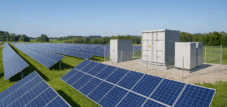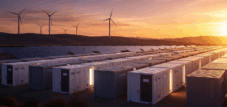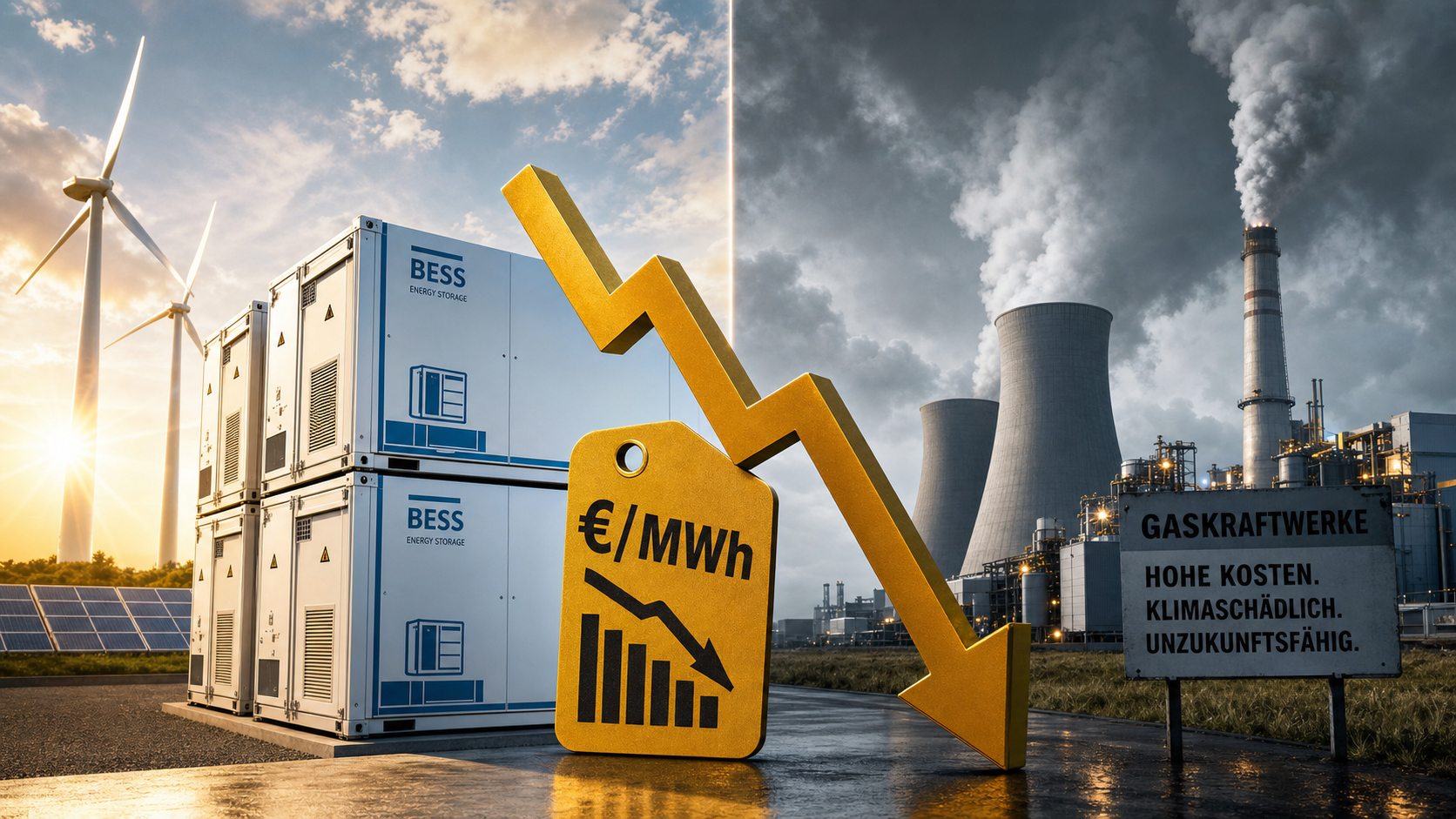
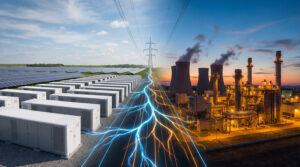
84 percent cheaper: A technology in free fall – The truth about battery storage – Image: Xpert.Digital
Why are politicians ignoring the global battery boom? The big price drop: How battery storage exposes our energy policy
Batteries vs. gas-fired power plants: Germany's fatal miscalculation regarding electricity
Despite historic price drops: Why Germany prefers gas
Prices for battery storage systems are falling to historic lows worldwide – a technological revolution that is fundamentally transforming the global energy market. But instead of harnessing this enormous economic momentum for a cost-effective and clean energy supply, German policymakers are rigidly clinging to an outdated dogma: the multi-billion-euro construction of new fossil gas-fired power plants. While countries like China, Australia, and the USA have long been investing in gigantic storage power plants, regulations in Germany are systematically hindering the technology. This is an in-depth analysis of ignored price drops, industrial policy missteps, and the crucial question of why Germany is on track to miss out on the next major technological shift.
Related to this:
What numbers reveal, politicians ignore
Billions spent on gas instead of affordable storage: What the government is hiding from us
In the history of modern energy technology, there has hardly been a cost collapse as steep, consistent, and economically transformative as that of lithium-ion batteries. According to BloombergNEF's annual battery price study, prices for stationary battery storage systems fell by 45 percent in a single year, between 2024 and 2025, to a record low of $70 per kilowatt-hour. Looking at the longer-term trend since 2016, the overall price decline is around 84 percent—a drop that no other power plant or storage system has even come close to matching. In China, by far the world's largest production market, the first large-scale projects were implemented in early 2025 at system costs of less than $63 per kilowatt-hour—a figure considered absurd just a few years ago.
This price development is not a short-term market phenomenon explainable by temporary fluctuations in raw material prices. It is the result of a technological maturation process, massive investments in production capacities, systematic efficiency gains in cell chemistry, and a global learning curve effect that has gained exponential momentum with the expansion of mass production. BloombergNEF quantifies the real price decline since 2010 at a total of 93 percent. At the same time, new global installations of stationary battery storage systems rose to around 315 gigawatt-hours in 2025—a 50 percent increase compared to the previous year. Installations of over 450 gigawatt-hours are expected for 2026. Against this backdrop, a question arises with increasing urgency: Why, despite this market development, is German economic policy under Minister Katherina Reiche relying almost exclusively on the construction of new gas-fired power plants?
Related to this:

A technology in free fall — upwards
The paradox of the battery storage market is that its economic rise began with a spectacular price drop. While falling prices are considered a symptom of crisis in other industries—for example, in the semiconductor sector when overcapacity suffocates margins—in the storage market they signal the exact opposite: growing demand, technological maturity, and structural competitiveness. The battery storage market is growing so rapidly precisely because it is becoming cheaper, not in spite of it.
Based on pure system costs, stationary large-scale storage systems in the EU reached a value of around €180 to €215 per kilowatt-hour by the end of 2025. Rystad Energy forecasts a further decline to around €170 per kilowatt-hour for 2026. A comparative calculation by the Fraunhofer Institute for Solar Energy Systems shows that a new gas turbine, operating only during peak demand, produces electricity at costs between 15.4 cents and over 30 cents per kilowatt-hour—in an energy crisis like the one in 2022, these costs can rise to as much as 53 cents per kilowatt-hour. By direct comparison, electricity from solar and wind power plants costs less than 5 cents per kilowatt-hour to generate. Intermediate storage via a battery storage system with a system price of €170 per kilowatt-hour increases the cost of this electricity by only about 4 cents. The result—renewable generation plus battery storage at under 10 cents per kilowatt-hour—is thus far below the production costs of any newly constructed gas-fired power plant in Germany.
The comparison becomes even more drastic when considering the total costs. A study by the Forum for Ecological and Social Market Economy (FÖS), commissioned by Green Planet Energy, quantifies the total societal costs of a new German gas-fired power plant at up to 67 cents per kilowatt-hour. This figure includes not only the pure electricity generation costs of between 23 and 28 cents, but also climate damage that is not fully covered by the CO₂ price. Each newly constructed gas-fired power plant emits up to 8.4 million tons of CO₂ over its entire lifespan and generates climate damage of up to seven billion euros, which is not internalized. For the 10 gigawatts of gas-fired power plants planned in the first phase alone, the FÖS estimates direct subsidy costs of around 6.6 billion euros.
Related to this:
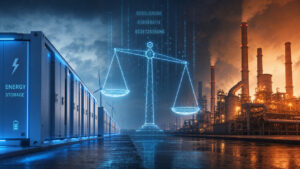
The global market as a reflection of missed opportunities
What is considered a politically controversial future option in Germany has long been a reality internationally. In the Australian state of Victoria, large-scale battery storage systems produced more electricity than gas-fired power plants for the first time in 2025. In California, battery storage systems already covered over 20 percent of evening electricity demand in April 2025—a function that until 2020 was almost exclusively the domain of gas-fired power plants. Worldwide, the installed capacity of battery storage systems exceeded 250 gigawatts in 2025, surpassing for the first time the capacity of conventional pumped-storage hydroelectric plants, which had formed the backbone of global energy storage for decades. In 2025 alone, over 100 gigawatts of new battery capacity were commissioned worldwide—a threefold increase compared to 2023.
The growth geography of this boom is remarkable. China dominates by a margin that can be described more as a planned economy on steroids than a market economy: In December 2025 alone, China installed more stationary battery capacity than the US did in the entire year. Behind China and the US rank Saudi Arabia, Australia, and Chile—all countries that have accelerated battery storage expansion through systematic market design decisions. Europe occupies an ambivalent position in this race: In Germany, the leading European single market to date, legislators are applying the brakes with the Electricity Supply Act (StromVKG) precisely when the global flywheel is gaining momentum.
The strategic dimension of this pattern can hardly be overstated. The history of solar photovoltaics has shown what happens when a pioneering market squanders its competitive position through regulatory errors: Germany, as the world market leader, built up the industry, then lost ground to Chinese manufacturing due to inadequate industrial policy, and today imports the majority of its solar modules. An analogy threatens to unfold with battery storage—but with the difference that installation and system integration generate even greater local value creation than pure module production, and that Germany could still actively defend its lead in the system business.
Related to this:

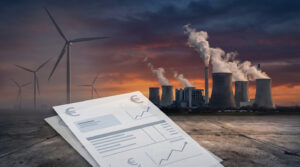
The wealthy versus reality: The gas-fired power plant dogma
Economics Minister Katherina Reiche has clearly structured the German government's capacity expansion policy: Under the Electricity Supply Act (StromVKG), nine gigawatts of so-called long-term capacity with a ten-hour rule are to be tendered in 2026, followed by another two gigawatts in 2027, and then technology-neutral rounds in 2027 and 2029. Electricity customers could face additional annual costs of between one and three billion euros from 2031 onwards, financed through a new consumer levy. This capacity market architecture is internally consistent—for a world in which gas-fired power plants would be the most competitive dispatchable capacity technology. For the real world of 2026, however, it is no longer so.
The ten-hour rule, a key tender requirement, is the technical core of the problem. Battery storage systems, particularly commercially available lithium-ion systems, cannot meet this requirement in its current, more stringent form—which demands that a system be ready for another ten hours of operation within one hour after a ten-hour full discharge. In its statement on the draft legislation, the Federal Cartel Office explicitly pointed out that this technical requirement effectively excludes battery storage systems from the first and highest-volume tender rounds, thereby limiting technological diversity in the future capacity market. The competition authority also criticizes the fact that the draft does not include a limit on the contract volume per supplier—meaning that existing market structures dominated by large energy companies could become permanently entrenched.
The discrepancy between the proclaimed goal and the actual instruments is remarkable. Reiche himself described the agreement on the power plant strategy as an important step towards a "technology-neutral capacity market." In reality, however, the first nine gigawatts of the long-term tenders are anything but technologically neutral—they are, due to the ten-hour criterion, effectively tailored to gas-fired power plants. In this context, the term "technology-neutral" describes a wishful thinking rather than a regulatory reality.
Related to this:
New: Patent from the USA – install solar parks up to 30% cheaper and 40% faster and easier – with explanatory videos!

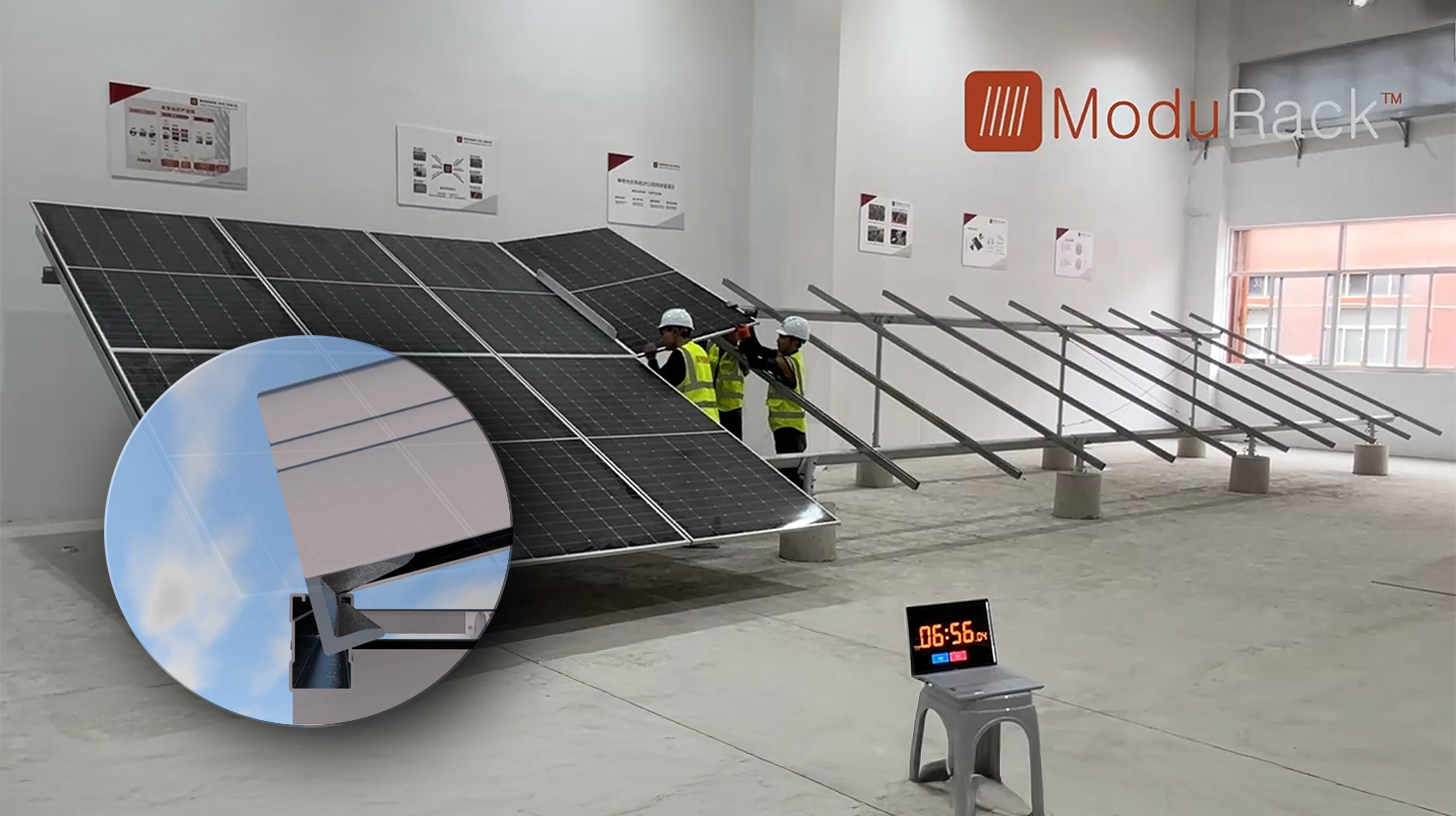
New: Patent from the USA – Install solar parks up to 30% cheaper and 40% faster and easier – with explanatory videos! - Image: Xpert.Digital
The core of this technological advancement is the deliberate departure from conventional clamp mounting, which has been the standard for decades. The new, more time- and cost-effective mounting system addresses this with a fundamentally different, more intelligent concept. Instead of clamping the modules at specific points, they are inserted into a continuous, specially shaped support rail and held securely in place. This design ensures that all forces – whether static loads from snow or dynamic loads from wind – are distributed evenly across the entire length of the module frame.
More information here:
Why batteries make Germany more independent and cheaper than new gas-fired power plants
What the system comparison reveals: Short-term versus long-term
The energy policy debate surrounding battery storage and gas-fired power plants is often framed as a question of security of supply: batteries are good for short-term storage needs, while gas-fired power plants are necessary for periods of low wind and solar output lasting several days. This logic is not fundamentally flawed—but it obscures a crucial complexity. Germany's electricity mix does not require a single technology for all tasks, but rather an intelligent interplay of various technologies, each deployed where its systemic value is greatest. And the current tendering architecture is simply not suited to this differentiated approach.
Battery storage is most valuable where rapid response is required: frequency control, smoothing load fluctuations, absorbing excess renewable energy during peak generation and releasing it again in the evening. A study by LCP Delta concludes that long-term battery storage can already contribute to security of supply more cost-effectively than gas-fired power plants—provided that the tendering rules are tailored to their specific characteristics. Rystad Energy documents that in several regions of Australia and North America, battery storage has already completely taken over the function of gas peaks—that is, power plants that only start up during peak demand. This transition is market-driven, not through government subsidies, but because the economic calculations are clear.
For the remaining use cases—multi-day periods of low wind and solar power generation, severe winter weather events without wind or sun for several days—there is a sound justification for thermal reserve capacities. The German Association of Energy and Water Industries (BDEW) also acknowledges that dispatchable gas-fired power plants remain indispensable as a backup option for extreme events. The crucial point, however, is not whether gas capacity is needed at all, but how much, in what form, and at what price it is compensated. Regulations that primarily target nine gigawatts of capacity for gas-fired power plants and only grant battery storage market opportunities in later, smaller rounds reverse the priorities: they act as if periods of low wind and solar power generation were the norm and short-term flexibility needs the exception—when the opposite is true.
Related to this:
Germany's fossil fuel import bill: What's at stake
Behind the technological debate lies a fundamental economic question: How expensive is import dependency? Germany spends an average of around €81 billion per year on fossil fuel imports, according to KfW Research based on data from 2008 to 2024. This equates to 2.5 percent of its gross domestic product and roughly €1,000 per capita per year. In 2024—a year with comparatively moderate energy prices—net import costs for coal, oil, and gas amounted to €69 billion. While this is considerably less than in the crisis year of 2022, it is still significantly higher than pre-war levels. In 2022, fossil fuel import costs reached €146 billion—a figure deeply etched in the economic memory.
Every new gas-fired power plant capacity contract with a term exceeding 15 years structurally prolongs this dependency. Gas-fired power plants require gas, and 95 percent of gas is imported. In a scenario where Russia has permanently ceased to be a supplier and the global LNG market is under increasing pressure due to geopolitical tensions, the reliability of these supply chains is not a theoretical question but a real-world political challenge that already escalated into an economic crisis in 2022. A capacity market focused on battery storage, on the other hand, requires no fuel imports. The energy that a battery storage system absorbs and releases is domestically generated wind or solar power. Its source is not dependent on any foreign supplier, any tanker, and no pipeline contract.
The economic logic is clear: Every gigawatt of battery storage capacity that replaces one gigawatt of gas-fired power plant capacity not only reduces ongoing gas purchases—it also reduces structural vulnerability to external price and supply shocks. This geopolitical dimension of the storage issue is systematically underestimated in German political discourse, even though the experiences of 2022 should have left no room for forgetting.
Market design as industrial policy - but whose?
The design of the Electricity Supply Act (StromVKG) is not neutral in its economic policy effect. It is industrial policy—industrial policy favoring existing energy companies with existing power plant sites, which structurally benefit from the grid connection requirement for tender bids. The Federal Cartel Office has explicitly pointed out that former coal and nuclear power plant sites could be given preferential treatment, as their grid connections already exist. New market entrants—typically specialized battery storage developers who lack established grid infrastructure—would have no realistic chance of securing a grid connection commitment within the stipulated application period. Thus, in addition to its technological focus on gas, the law also constitutes a structural barrier to market access for disruptive competitors.
This assessment of regulatory policy is difficult to justify for a federal government that regularly professes its commitment to competition and the market economy. When tendering rules are designed in such a way as to effectively exclude certain technologies and systematically favor certain corporate structures, this is not technology-neutral competition, but rather state-directed technological conservatism. The irony lies in the fact that the party that historically defended the market economy against state intervention is creating, with the Electricity Supply Act (StromVKG), a regulatory framework that stifles the market-driven dynamics of a more competitive technology in favor of a technology supported by state capacity payments.
The capacity question re-examined: What true security of supply costs
Security of supply is not an absolute value, but rather a cost-benefit analysis. The question is not whether Germany needs sufficient controllable capacity—it undoubtedly does. The question is which combination of technologies will achieve this goal most efficiently and sustainably. A study by Ember and the Climate-Neutral Germany initiative, which forms the basis of this analysis, shows that a 10.5-gigawatt battery storage pipeline currently under construction or in the planning stages could save around €800 million annually—through avoided redispatch costs and the elimination of gas purchases. This is not a negligible amount, but rather corresponds to more than a quarter of Germany's total grid congestion management costs.
The value of battery storage for the system lies not only in its ability to bridge short-term power gaps. It also lies in its ability to prevent the curtailment of renewable energy. In 2025, around 8 terawatt-hours of wind and solar power had to be curtailed, which corresponds to about 3 percent of total generation. This electricity was produced but found no consumer and disappeared unused. Had the planned storage pipeline already been fully operational, about a third of this could have been utilized—not as handouts to energy suppliers, but as economic efficiency gains. Every kilowatt-hour of curtailed renewable energy is a kilowatt-hour that has to be replaced by gas—gas that has to be imported, which produces emissions and incurs redispatch costs.
What is being considered internationally: Lessons from other markets
The German debate is often conducted with a certain provincialism, as if the challenge of reconciling security of supply with a clean energy system were something that had to be solved for the first time in Germany. In reality, there is a wealth of international experience. Great Britain, for years the second-largest European battery storage market, has introduced separate tender classes for different technologies in its Capacity Market, tailored to their respective technical characteristics. This enables genuine competition within each technology class, without different technologies being measured against criteria that are irrelevant to one of them.
Australia, which suffered severe blackouts as recently as 2016, has created a more stable energy supply than ever before, despite a high share of renewable energy, through a consistent combination of market design reforms and targeted investments in large-scale battery storage. This also included treating storage facilities equally to gas-fired power plants in capacity markets—with adapted requirements for their specific characteristics, not with uniform criteria that are effectively tailored to a particular technology. The lesson from these markets is simple: technological neutrality in a capacity market does not mean that all technologies must meet the same requirements—it means that each technology is deployed where its economic and systemic value is greatest.
The window of opportunity is closing
It's mid-2026, and the first capacity tenders are scheduled to begin this year. The parliamentary process for the Electricity Supply Act (StromVKG) offers the last concrete opportunity to set a new course—before 15-year contracts with gas-fired power plant operators lock in the German energy system structure until the early 2040s. The evidence is clear: Battery storage is more cost-effective, emission-free, and less dependent on energy imports than new gas-fired power plants. It is being expanded worldwide at a pace exceeding all forecasts. It is economically viable without government subsidies and attractive to private investors. And in Germany, a dynamic storage industry has emerged, representing a competitive advantage that could be recklessly squandered through misguided regulation.
The question that Professor Volker Quaschning rightly poses—why, given a historic price drop of 84 percent and a global storage boom, Germany isn't focusing on accelerating the expansion of battery production, but instead discussing new fossil fuel power plants—is not rhetorical. It is a serious economic policy question for a government that must decide between a historic opportunity and regulatory path dependency. The market has already provided its answer. The political response is still pending.
Your partner for business development in the fields of photovoltaics and construction
From industrial rooftop PV to solar parks and larger solar parking lots
☑️ Our business language is English or German
☑️ NEW: Correspondence in your native language!

Konrad Wolfenstein
I and my team are happy to be available to you as your personal advisor.
You can contact me by filling out the contact form here wolfenstein@xpert.digital:or simply call me at +49 7348 4088 965. My email address is
I'm looking forward to our joint project.