Zeiss Solar Window: The window as an energy source and invisible – The way it works is completely different than you would first assume
Xpert pre-release

Language selection 📢
Published on: January 13, 2025 / Updated on: January 21, 2025 – Author: Konrad Wolfenstein
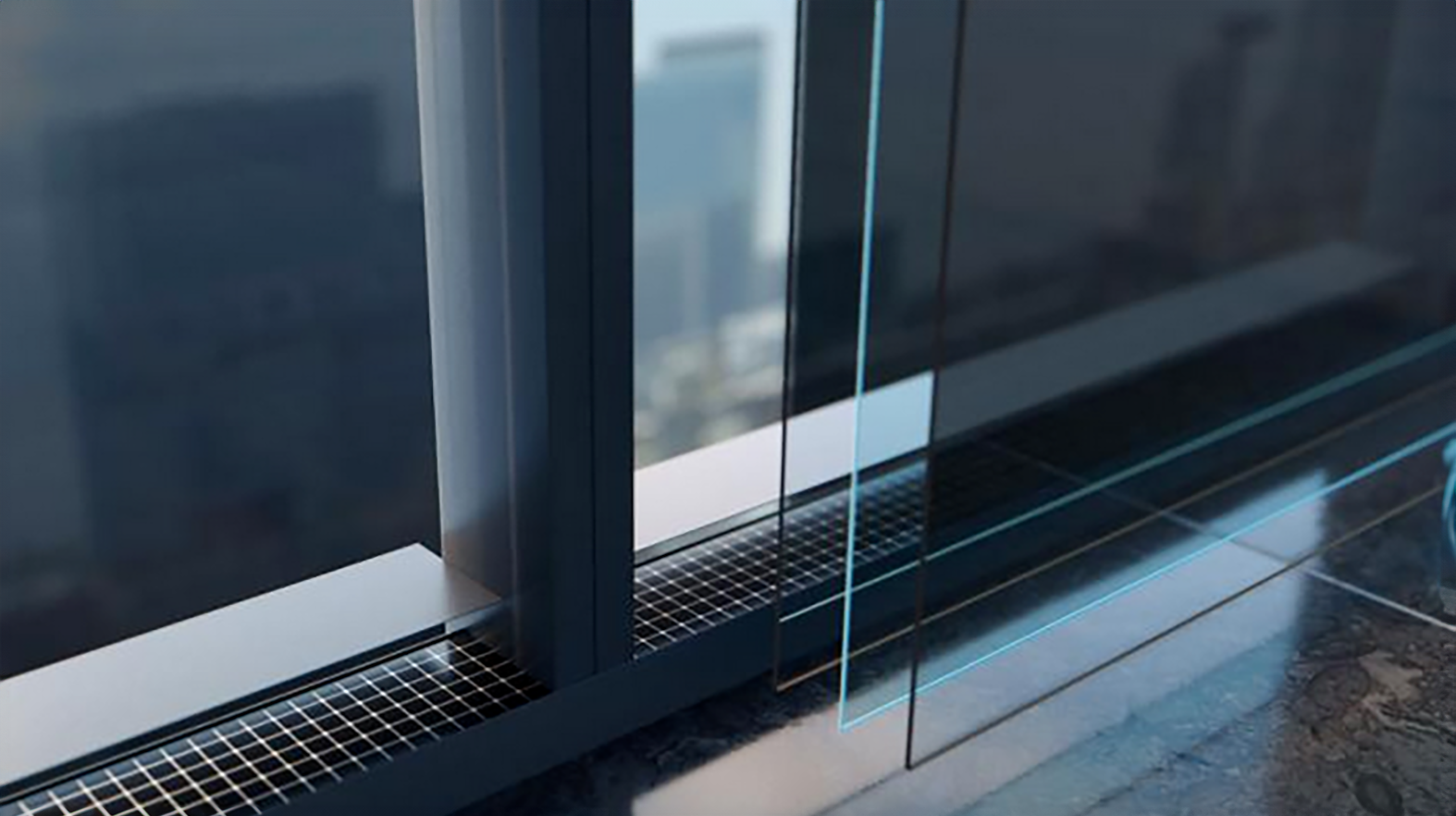
Zeiss Solar Window: The window as an energy source and invisible – The way it works is completely different than you would initially expect – Image: Zeiss
Zeiss Solar Window: The invisible energy source for buildings and more
Solar windows reimagined: Zeiss presents exciting solar technology with a wow factor
"Zeiss Solar Window: The window as an energy source and invisible – its functionality is completely different than you might think." With this in mind, the renowned optics company Zeiss presented a remarkable technology at CES 2025 in Las Vegas that could fundamentally change our perspective on windows, solar technology, and energy efficiency. This innovation uses a combination of holographic and micro-optical elements to precisely direct sunlight onto solar cells in the window frame without significantly altering the appearance and transparency of the glass. In times when the world is working intensively on sustainable energy solutions, the Zeiss Solar Window could be a pioneering step toward making buildings more efficient, environmentally friendly, and aesthetically pleasing. The following sections explain its functionality in detail and highlight its applications, advantages, and potential challenges. Furthermore, examples are provided of how the Zeiss Solar Window can enable diverse innovations in the field of smart glass, extending beyond simply generating energy.
The underlying technology: holography and micro-optics
The key feature of the Zeiss Solar Window lies in the use of a special film integrated into the glass. This micro-optically structured film redirects portions of the incoming sunlight so that light, particularly in the infrared and near-infrared ranges, is directed onto the solar cells in the window frame. Visible light remains largely transparent, so the windows appear almost completely clear from the outside. Holography comes into play by deflecting the light in specific directions through targeted interference patterns. While holographic effects are often known for impressive light displays and color changes, these are virtually invisible in the Zeiss Solar Window because a large portion of the visible light spectrum passes through unchanged.
In conventional solar cells, sunlight is captured over as large an area as possible on a silicon or other semiconductor substrate and directly converted into electrical energy. In contrast, the Zeiss system uses a significantly smaller, but highly specialized solar cell. This cell is integrated into the window frame and, according to Zeiss, achieves up to 20 percent of the efficiency of a conventional solar cell. This is remarkable for this type of application, as the area of the active solar cells is comparatively small. The key lies in focusing and concentrating the infrared light onto a smaller area, which allows for the generation of considerable amounts of energy despite the smaller active area.
Invisibility and transparency
One of the most important questions with any glass innovation is: "Does this new technology impair visibility or design?" Numerous previous attempts to use windows as an energy source often involved a compromise regarding transparency. Either the window was significantly darkened, or it appeared colored under certain lighting conditions. The integration of solar cells also frequently led to visual impairments, for example, through visible conductive traces in the glass.
Zeiss, however, emphasizes that the micro-optical film is virtually invisible and maintains a light transmission of over 95 percent. "We have invested considerable development work to ensure that the appearance of a conventional window is not noticeably altered," according to company sources. From an aesthetic perspective, this is a significant breakthrough, as it is essential for architects and building owners that the building's appearance does not suffer due to technological innovations. If the technology can indeed be integrated as seamlessly as Zeiss suggests, entirely new possibilities for widespread use in buildings could emerge – from modern, glass-clad skyscrapers to smaller residential buildings.
Energy generation and temperature regulation
A key advantage of the Zeiss Solar Window lies in its dual sustainability: it generates electricity and can also regulate room temperature. Infrared light, in particular, contributes to the heating of interior spaces because it carries heat energy. When some of this infrared radiation is deflected onto the solar cells, less heat penetrates the building. The result is an indoor climate that is especially beneficial in hot regions and can reduce the need for air conditioning.
With every ray of sunlight captured and converted into electricity, the building's overall energy efficiency increases. While Zeiss's target efficiency of up to 20 percent of comparable solar cells may not sound breathtaking at first glance, it's important to remember that this technology utilizes vast expanses of glass, which would have to be installed anyway, for electricity generation. In total, this can generate significant amounts of energy – especially when applied in large quantities – and contribute substantially to the building's overall energy balance.
Possible applications in buildings and beyond
In its presentation, Zeiss highlights various applications for the Solar Window. Classic office buildings with large glass facades are ideally suited due to their expansive window areas. In modern cities, skyscrapers or at least multi-story office complexes with extensive glass fronts are commonplace. With each additional floor, the potential surface area that can be used to generate green energy increases. Furthermore, residential buildings, regardless of their size, could now, in combination with other solar technologies (e.g., on the roof), contribute to a greater degree of energy self-sufficiency.
Another exciting area is roofing: canopies, patio roofs, or carports. These surfaces are often designed with transparent or semi-transparent materials to allow light to pass through. Why not generate energy at the same time? Especially where the design calls for a certain lightness and the primary goal is to protect the surface from precipitation, "invisible" solar glass is an attractive option.
Skylights and roof windows are also ideal for this technology, as they offer direct sunlight, usually at a steep angle. Conservatories, on the other hand, could not only be flooded with daylight thanks to this innovation, but also designed to be energy-efficient. While conventional solar cells already achieve good yields on inclined or horizontal surfaces, clear visibility is often desired in conservatories. A holographic film that deflects only infrared light could be perfect in this case.
Technical challenges
As impressive as the technology sounds, the question remains as to its technical feasibility on a large scale. For one thing, the holographic film must be applied evenly to large-format glass panes. So far, holographic elements are primarily known on a smaller scale. A production technique needs to be established that guarantees consistent quality even with high production volumes and large dimensions.
Furthermore, the solar cells used in window frames face particular challenges: they must withstand heat, cold, humidity, and other environmental influences without their performance suffering excessively. Zeiss is aware of this and points to years of research in materials science aimed at enabling robust and durable cell integration. Nevertheless, it will likely be some time before the technology goes into mass production and can be used on a large scale.
Economic aspects and cost efficiency
Another crucial criterion for the market success of the Zeiss Solar Window is its economic viability. Even if the idea is fascinating, building owners, architects, and investors must consider the added value in relation to the costs. According to Zeiss, they plan to make the technology available to other manufacturers as a system supplier. This means that Zeiss would supply the micro-optically structured film, the integrated solar technology, and the electronics, while window manufacturers would handle the production of the complete windows. Such a licensing strategy is common in the industry and allows new technologies to gain wider acceptance more quickly.
However, if the cost of a Zeiss Solar Window is significantly higher than that of a standard window plus a conventional rooftop PV system, convincing potential customers could prove more challenging. On the other hand, early integration into the facade means that building owners may be able to forgo traditional PV modules altogether, or at least require less space for them. Furthermore, government subsidies and incentives for renewable energy can facilitate market entry.
Aesthetic innovations and added value for architecture
An interesting topic is how architects and designers could work with the Zeiss Solar Window. If it proves possible to integrate the technology almost invisibly, it opens up new design possibilities. Glazed building envelopes have long been standard in modern architecture. With the Zeiss system, not only exterior walls, but also artistic glass installations indoors or outdoors, glass railings, or even special glass floors could be equipped with solar cells without compromising the spatial experience.
Furthermore, Zeiss promises that the technology is expandable in the long term. The holographic film could be adapted for different spectral ranges, potentially allowing architects to create additional effects. For example, glass surfaces could harvest energy during the day and glow with a subdued light at dusk to create specific architectural accents. This could lead to entirely new aesthetic and lighting concepts.
Our recommendation: 🌍 Limitless reach 🔗 Networked 🌐 Multilingual 💪 Strong sales: 💡 Authentic with strategy 🚀 Innovation meets 🧠 Intuition

From local to global: SMEs conquer the global market with clever strategies - Image: Xpert.Digital
At a time when a company's digital presence determines its success, the challenge is how to make this presence authentic, individual and far-reaching. Xpert.Digital offers an innovative solution that positions itself as an intersection between an industry hub, a blog and a brand ambassador. It combines the advantages of communication and sales channels in a single platform and enables publication in 18 different languages. The cooperation with partner portals and the possibility of publishing articles on Google News and a press distribution list with around 8,000 journalists and readers maximize the reach and visibility of the content. This represents an essential factor in external sales & marketing (SMarketing).
More about it here:
Invisible technology: Will holographic sensors and displays conquer the glass market?
Future vision: “Multifunctional Smart Glass”
Zeiss speaks of a "Gutenberg moment" for holography. While today's holograms are often limited to specialized applications, a multifunctional glass market could emerge, integrating not only energy harvesting but also other smart features. The company has already demonstrated at CES that invisible cameras or sensors can be integrated onto the same pane of glass. This could make driver assistance systems in vehicles significantly less conspicuous or render security cameras in buildings virtually invisible.
Another highlight: holographic displays. "We enable augmented reality displays on windshields without requiring additional installation space," according to Zeiss. This means cars could be equipped with windshields that project driving information directly into the driver's field of vision. This function could also be applied to other vehicles or machines, all without bulky projection devices that currently take up a lot of space.
The idea of intelligent interior lighting is also fascinating. Why not use light collected during the day to create a daylight-like ambiance in the evening? With the help of special holographic elements, light can illuminate the room seemingly out of nowhere, without any visible light fixtures. While such concepts are still visions, it's already clear what potential this technology could unleash.
Sustainability and ecological perspective
One of the biggest drivers in the development of new solar technologies is the urgent need to replace fossil fuels and reduce global CO₂ emissions. The Zeiss Solar Window could make a significant contribution here if it proves possible to utilize glass surfaces for energy generation on a large scale. Modern cities are characterized by vast expanses of windows that, until now, have primarily served to let light in or enhance the building's aesthetics. If these windows could also generate electricity, it would increase the share of renewable energies in the overall energy mix.
Another ecological advantage is the reduction of building cooling requirements through the redirection of infrared light, which can lower the energy demand for air conditioning. In many regions of the world, building cooling is becoming increasingly important, especially in times of climate change and rising global average temperatures. The Zeiss Solar Window could provide significant relief in this regard.
Of course, the final environmental impact also depends on the manufacturing process. The production of micro-optics, holography, and solar cells consumes resources and energy. However, companies like Zeiss are working to make these processes continuously more efficient and sustainable. In the long term, the increased lifespan of glass facades with integrated energy generation could mean that the initial manufacturing costs and the ecological footprint are offset.
Integration into smart buildings
Smart buildings, or "intelligent buildings," are a growing field in architecture and building technology. They utilize sensors, actuators, and smart systems to automatically control energy consumption, climate control, lighting, and security. The Zeiss Solar Window fits perfectly into these developments. On the one hand, it generates energy; on the other, its integrated sensors and cameras could perform additional functions: measuring the angle of incidence of light, analyzing heat input, illuminating the interior, or even controlling automated shading when sunlight becomes too intense.
In combination with building management systems, individual windows could be dynamically optimized. Looking further into the future, it's conceivable that windows could detect external light conditions in real time and only allow solar energy in when needed. At the same time, excess light could be used to charge batteries or power other systems in a microgrid, making the building almost self-sufficient.
Potential synergies with other technologies
The Zeiss Solar Window is not alone in the innovative world of renewable energies. A growing number of startups and established companies are working on transparent photovoltaic solutions, organic photovoltaics, and other forms of energy-generating glass surfaces. While the Zeiss system, with its micro-optical and holographic design, has a unique approach, synergies with other developments are conceivable.
For example, window-integrated solar cells could be combined with heat recovery systems. If sunlight entering the building during winter is converted into heat, this energy could be stored in a targeted manner. A smart building could use sensors to decide when heat is absorbed or released. Networking vehicles, buildings, and infrastructure with such windows is also conceivable: electric cars could park directly in front of windows that supply power wirelessly or via a plug-in connection.
Invisible cameras and security applications
Zeiss also emphasizes the possibility of invisibly integrating cameras and sensors into glass panes with its Multifunctional Smart Glass technology. This could be used in many areas: surveillance cameras in public buildings, security solutions in airports or train stations, and even driver assistance systems in vehicles. "When the cameras are invisible, the design is more harmonious and the functionality is expanded," says Zeiss.
At the same time, invisible cameras raise new questions regarding data protection and privacy. If a company or public authority installs cameras in windows in such a way that they are undetectable, the question arises of adequate labeling and legal frameworks. This raises not only technical, but also social and ethical discussions about how far the integration of smart technology into everyday life should extend.
Holographic displays for augmented reality
A particularly futuristic aspect of the Zeiss Solar Window is the ability to create holographic displays on glass. Imagine looking out the window and seeing information projected onto it – almost like in a science fiction film: weather forecasts, temperature, time, and perhaps even an augmented reality layer that projects building outlines or street information into your field of vision.
Not only private households, but also industry and commerce can benefit from this. In production facilities, glass panels could be used to display work instructions or real-time data without the need for additional monitors or tablets. Head-up displays are already familiar in the automotive industry, but conventional systems quickly reach their limits in terms of space and integration possibilities. A holographic display in the windshield, which doesn't require a visible projector, could be very attractive for manufacturers.
Maintenance and longevity
Maintenance and longevity are critical factors for practical application of such an innovation. Conventional glass surfaces can be cleaned regularly without affecting their internal structure. However, in the Zeiss Solar Window, the intelligent film is integrated into the glass unit, ideally providing it with permanent protection from environmental influences. Nevertheless, temperature fluctuations and UV radiation can still leave their mark over the years.
The integrated solar cells in the window frame also require a design that can withstand moisture and significant temperature fluctuations. Manufacturers must ensure that the cells remain functional for many years. Zeiss will likely offer warranties or certifications to bolster confidence in the technology. Ultimately, economic viability depends heavily on how long the system can generate electricity without significant efficiency losses.
Installation and retrofitting
Integrating the Zeiss Solar Window into new construction projects should be relatively straightforward, as the windows can be considered during the planning phase. For existing buildings, however, the question of retrofitting arises. Theoretically, a building that already has large window areas could be fitted with new windows. However, this entails considerable renovation work, which is why the cost-effectiveness of retrofitting must be carefully weighed.
Nevertheless, there could be attractive pilot projects, for example, in the renovation of large office complexes where the windows need to be replaced anyway. In such cases, the Zeiss Solar Window can be installed directly in place of the old windows, making the building partially energy self-sufficient and providing it with state-of-the-art technology after the renovation. However, for individual homeowners who only want to replace a few windows, it remains to be seen whether the achievable energy savings justify the price.
Competition for traditional solar modules?
The question is whether the Zeiss Solar Window can compete with or even replace conventional solar modules. Realistically, it will likely be more of a complement. Classic photovoltaic modules on roofs still offer high efficiency at comparatively low costs. Windows, on the other hand, primarily serve for visibility and must meet different requirements. However, the Zeiss Solar Window can tap into additional energy sources, especially where roof space is limited or where large glass surfaces are already present.
Furthermore, in urban areas where the roofs of high-rise buildings quickly reach their capacity limits, utilizing facades can be very beneficial. A combination of rooftop PV systems and solar windows leads to maximum utilization of solar energy and could even ensure the energy self-sufficiency of buildings – especially as storage technologies are further developed.
Potential markets and global perspective
The global markets for building and energy technology are enormous. Particularly in regions with high solar irradiance, such as parts of Asia, Africa, or South America, the demand for window solutions for power generation could be very high. These regions also have a high demand for cooling, which the Zeiss Solar Window can reduce by redirecting infrared light.
Even in Europe, where sustainability and energy efficiency are subject to strict legal requirements, architects and building owners are constantly seeking innovative solutions for constructing climate-friendly buildings. Especially for new buildings, energy efficiency standards are continually being raised, making the integration of modern solar technologies practically mandatory. This presents a significant opportunity for companies like Zeiss to market their systems worldwide, provided they actually deliver on their promised promises regarding transparency, efficiency, and aesthetics.
Challenges in market launch
Even though the Zeiss Solar Window appears promising, there are naturally challenges that need to be overcome. Besides the aforementioned issues of production capacity and costs, the customer benefits must also be clearly communicated. Many potential buyers are initially skeptical of new technologies. They want to see concrete data on efficiency, durability, maintenance, and payback period.
In addition, the technology needs to be architecturally and regulatory-wise secured. Novel facade elements are not readily approved in all countries. Building codes and regulations regarding fire protection, structural integrity, and building insulation must be observed. The electrical engineering regulations for wiring the solar windows are also significant. Zeiss will therefore need to work closely with standards and approval bodies to bring the technology to market quickly.
Vision: Buildings as power plants of the future
In a world increasingly moving from centralized power plant models to decentralized energy grids, there is great potential in technologies that transform buildings into miniature power plants. Zeiss is taking a step in this direction with its Solar Window. If every window in a high-rise building generates electricity, and this electricity is distributed or stored in a smart microgrid, we come closer to the idea of a decentralized energy supply.
At the same time, coupling local production and consumption relieves the strain on the power grid. An office building could partially cover its own electricity needs for lighting, air conditioning, or computer systems. Together with other renewable sources such as rooftop solar panels, geothermal energy, or wind turbines in urban areas, this creates a mix that helps advance the energy transition. The Zeiss Solar Window is an important piece of the puzzle in this context.
Innovation driver Zeiss and cooperation opportunities
Zeiss is a globally renowned company that originally made a name for itself primarily through high-quality optical systems. In addition to camera lenses and microscopes, Zeiss has long covered a broad spectrum of high-tech applications. The development of the Solar Window demonstrates how the company leverages its expertise in optics, micro-optics, and materials science to tap into entirely new markets.
From the perspective of the cooperation partners, it makes sense that Zeiss will work closely with leading glass manufacturers, architectural firms, developers, and the energy sector. This will allow for the implementation of pilot projects that demonstrate the technology in practical application. Research institutes and universities might also be interested in such collaborations to investigate the effects on building ecology or urban energy balance.
Beyond the “Gutenberg moment”
Zeiss itself uses the term "Gutenberg moment" to illustrate the potential of its holography technology. Johannes Gutenberg revolutionized printing and ensured the rapid dissemination of knowledge. Similarly, the availability of stable, cost-effective, and mass-market holography for glass is expected to lead to a surge of innovation in diverse fields. It will be interesting to see in which industries and applications holographic systems will be found in the future: from solar energy and automotive engineering to entertainment, education, and medicine.
The challenge is to build this technological lead sustainably while simultaneously meeting market expectations. If Zeiss succeeds in reducing production costs and demonstrating the reliability of the systems, the Solar Window could indeed become widespread. How long this will take depends on progress in research and development, but also on external factors such as market demand, political frameworks, and the availability of raw materials.
A window into a sustainable future
"Zeiss Solar Window: The window as an energy source and invisible – its functionality is completely different than you might think." This slogan sums up the idea perfectly: windows that can do more than just let light through can lead us towards a more sustainable future. The combination of holography, micro-optics, and highly specialized solar cells promises a technology that is aesthetically pleasing, efficient, and environmentally friendly. At the same time, it opens the door to a world in which glass is not just a passive building element, but plays an active role in energy generation, climate control, and information display.
Whether the Zeiss Solar Window will gain widespread market acceptance remains to be seen. There are many indications that buildings are increasingly becoming "smart environments" where integrated sensors and renewable energy technologies play a standard role. If the technology can be manufactured cost-effectively and robustly, the dream of energy-generating facades could become a reality. And that's not all: other conceivable applications, such as invisible sensors, holographic displays, and intelligent lighting, also lend the "multifunctional smart glass" a special appeal.
In a world characterized by growing energy demands and the struggle for climate-friendly solutions, any innovation that so harmoniously combines aesthetics and function can be a milestone. The Zeiss Solar Window seems well on its way to becoming such a milestone. It opens up new perspectives for architecture, for design, and for sustainable energy production. And it gives us hope that one day we will live in cities where even the most unassuming window contributes to taking us a step closer to a low-carbon society.
We are there for you - advice - planning - implementation - project management
☑️ SME support in strategy, consulting, planning and implementation
☑️ Creation or realignment of the digital strategy and digitalization
☑️ Expansion and optimization of international sales processes
☑️ Global & Digital B2B trading platforms
☑️ Pioneer Business Development

Konrad Wolfenstein
I would be happy to serve as your personal advisor.
You can contact me by filling out the contact form below or simply call me on +49 89 89 674 804 (Munich) .
I'm looking forward to our joint project.
Write to me

Xpert.Digital - Konrad Wolfenstein
Xpert.Digital is a hub for industry with a focus on digitalization, mechanical engineering, logistics/intralogistics and photovoltaics.
With our 360° business development solution, we support well-known companies from new business to after sales.
Market intelligence, smarketing, marketing automation, content development, PR, mail campaigns, personalized social media and lead nurturing are part of our digital tools.
You can find out more at: www.xpert.digital - www.xpert.solar - www.xpert.plus
Keep in touch