
Zalando closes Erfurt: Europe's fashion giant sacrifices its birthplace – cost-cutting measures as the price of growth
Xpert pre-release

Language selection 📢
Published on: January 8, 2026 / Updated on: January 8, 2026 – Author: Konrad Wolfenstein
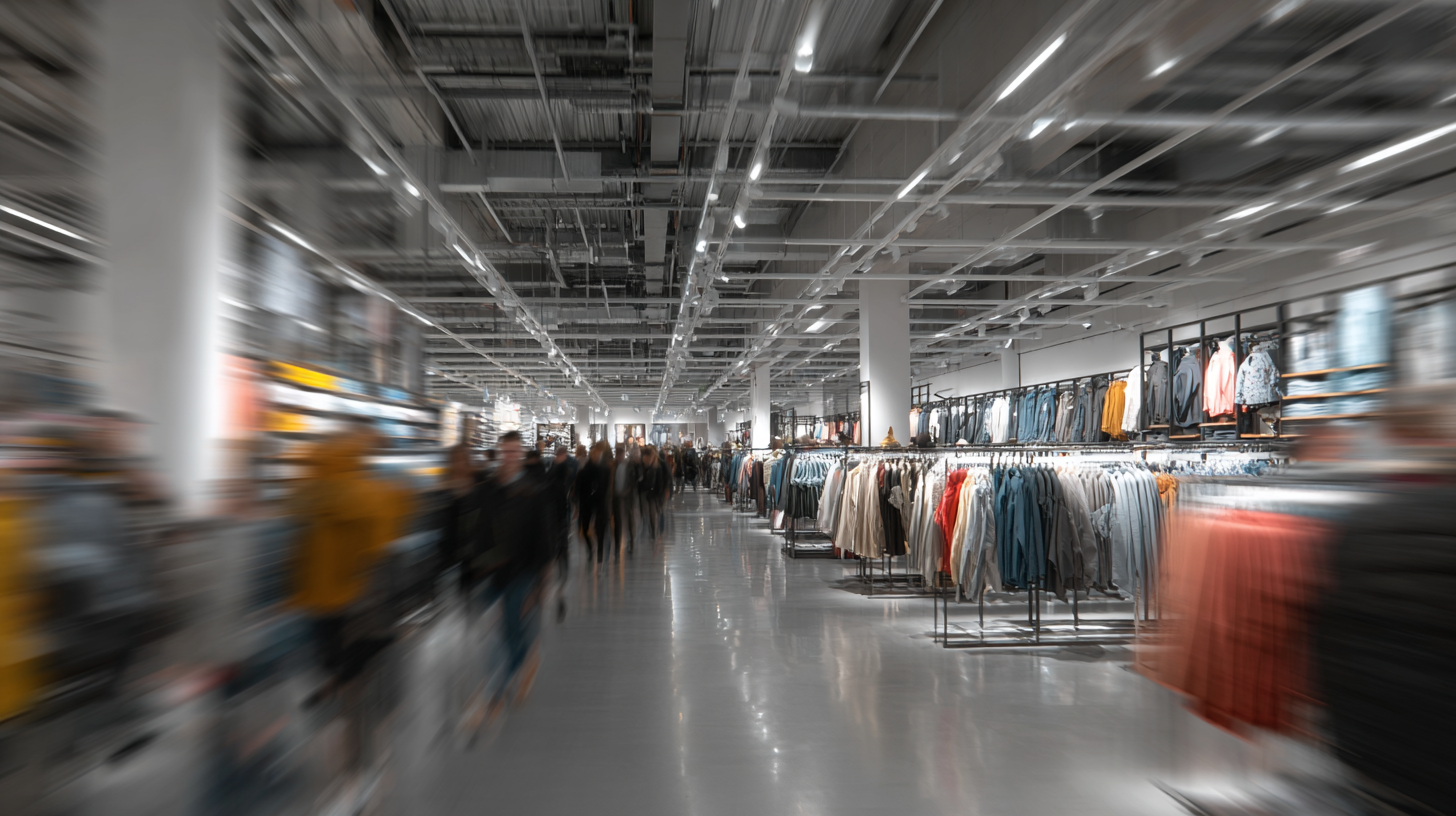
Zalando's Amazon plan: How the fashion giant is secretly becoming a tech company – Symbolic image: Xpert.Digital
Behind the scenes of the merger: What the closure of Erfurt reveals about Zalando's new plans
Shock for the logistics industry: Zalando is cutting 2,700 jobs – Is this just the beginning?
Zalando's Amazon plan: How the fashion giant is secretly becoming a tech company
The announcement of January 7, 2026, marks a symbolic turning point in the history of German online retail. Zalando, Europe's largest fashion retailer, will close its logistics center in Erfurt at the end of September 2026, eliminating 2,700 jobs. The site, which opened in 2012 with considerable investment and was a milestone in the company's history as its first in-house developed logistics center, is falling victim to the new strategy following the acquisition of its Hamburg-based competitor, About You. What at first glance appears to be a simple optimization of warehouse locations reveals, upon closer inspection, the profound shifts within an entire industry. The closure marks the end of the unconditional expansion model of the 2010s and the transition to a phase in which profit and efficiency through consolidation take precedence.
The Erfurt site was long considered a flagship project. With 130,000 square meters of warehouse space and an investment of €170 million, it became the largest distribution center for fashion and shoes in Europe in 2012. Thuringia's central location, excellent transport connections via the Erfurt ICE hub, and proximity to major highways made the city an ideal distribution center for the European market. Zalando not only built up warehouse capacity here but also used the site as a testing ground for new technologies. TORU robots from Magazino, self-driving transport robots from idealworks, and intelligent inventory management systems were tested in Erfurt. The fact that this particular location is now being abandoned underscores the severity of the company's new strategy.
The About You acquisition as a trigger for a reorganization
The decision to close the Erfurt store is inextricably linked to the acquisition of About You, which was announced in December 2024 and completed in July 2025. For €1.13 billion, Zalando secured over 91 percent of the shares in its Hamburg-based competitor, thus merging two of Germany's largest online fashion retailers. The rationale behind this purchase only becomes clear upon closer examination. On the surface, it appears to be a classic case of market consolidation in an increasingly saturated environment. Despite their dominance, the combined market share of both companies in the European online fashion market is only in the single digits of a total market worth €450 billion. However, the true motivation lies deeper: Zalando aims to transform itself from a pure online retailer into a provider of a technical platform for other companies.
About You, through its subsidiary Scayle, is contributing a highly profitable software platform that technically powers over 200 online shops in Europe and North America. This rental software perfectly complements Zalando's own business customer offering, Zeos, which allows brands and retailers to utilize Zalando's logistics. The combination of the two systems creates, for the first time, a complete ecosystem that offers retailers all services from a single source – from shop software and payment processing to shipping. Zalando expects this collaboration to generate additional operating profits of €100 million annually in the long term. This business customer segment already became a growth driver in the first quarter of 2025, with a revenue increase of 11.6 percent and stable profit margins.
The merger of the two companies' logistics networks, however, necessitates painful cuts. Before the integration, Zalando and About You together operated more than 17 warehouse locations in Europe. Following the restructuring, only 14 centers in seven countries will remain. In addition to Erfurt, three other locations outside Germany, operated by external partners, will be discontinued. This reduction follows a clear economic logic: Consolidating goods in fewer, but larger and more modern locations enables cost advantages through scale, reduces complexity, and lowers the cost per shipped package. Zalando is relying on flexible warehousing, allowing orders for Zalando, About You, and external partners to be processed from the same centers.
The economic logic of location decisions
The choice to close the Erfurt branch in particular initially seems contradictory. The location boasts good infrastructure, experienced employees, and a central geographic position. However, the decision can be explained by several factors that together paint a clear picture. First, Erfurt is located in eastern Germany, a region that, despite progress, suffers from structural disadvantages compared to western German locations. Per capita economic output in Thuringia is still below the western German level, and industrial productivity is often lower. For a logistics company, these differences can translate into disadvantages in networking with suppliers or the availability of specialized service providers.
Secondly, the focus on Western Europe plays a crucial role. Zalando's most important growth markets are in France, the Netherlands, Italy, and Spain. The remaining German locations in Mönchengladbach, Lahr, and the center currently under construction in Gießen are geographically much closer to these core markets. Mönchengladbach, for example, benefits from its immediate proximity to the Netherlands and Belgium, while Lahr serves the French and Swiss markets. Erfurt, on the other hand, was primarily focused on supplying Eastern Europe and Germany – markets that are either already well served by other locations, such as Szczecin in Poland, or are growing less rapidly than the West.
Thirdly, the cost structure also plays a role. Although eastern Germany sometimes has lower labor costs, these advantages are often offset by higher logistics costs. Zalando has invested heavily in automation at its more modern locations, such as Lahr. Numerous robots and state-of-the-art sorting systems are in use there. While Erfurt also used technology in a test phase, it did not achieve the same level of automation as the newer facilities. The cost of completely retrofitting the 14-year-old site would not have been economically viable given the planned downsizing of the network.
Fourthly, this illustrates the principle of network utilization. In logistics, a well-utilized warehouse is far more cost-effective to operate than several half-full ones. Erfurt had capacity for significantly more packages than were being processed recently. After the integration of About You, overlaps across the entire network resulted in unused capacity. Instead of continuing to operate all low-utilization locations, Zalando is concentrating its volume on the most efficient sites. The combined "empty space" on the shelves of several locations justifies, from a business perspective, the closure of an entire center if its work can be taken over by others.
Our EU and Germany expertise in business development, sales and marketing

Our EU and Germany expertise in business development, sales and marketing - Image: Xpert.Digital
Industry focus: B2B, digitalization (from AI to XR), mechanical engineering, logistics, renewable energies and industry
More about it here:
A topic hub with insights and expertise:
- Knowledge platform on the global and regional economy, innovation and industry-specific trends
- Collection of analyses, impulses and background information from our focus areas
- A place for expertise and information on current developments in business and technology
- Topic hub for companies that want to learn about markets, digitalization and industry innovations
The new power of platforms: What Zalando's transformation means for all retailers
The drive to profit as a driving force
The location decision must be seen in the context of Zalando's shift from growth at any cost to profitability. After years of aggressive expansion, which often resulted in losses, the company changed course in 2020. Operating profit (EBIT) improved from €166 million in 2020 to a projected €510 million in 2024. The profit margin rose to 1.9 percent in the first quarter of 2025. This development is not accidental, but rather the result of cost-cutting measures and strategic focus.
Online retail in Europe is consolidating. Following the boom during the pandemic, difficult years with inflation and consumer restraint ensued. In 2024, many German online retailers reported declining sales. Competitive pressure increased due to Chinese discount platforms like Temu and Shein, which put established providers under pressure with aggressive pricing. Temu achieved enormous sales in Germany in a very short time.
In this environment, only providers who either have very low costs due to their size or can command higher prices through special offers can survive. Zalando is attempting both. Streamlining its logistics network reduces the cost per order. At the same time, the company is positioning itself as an indispensable infrastructure provider for other retailers through its service division. This model is similar to Amazon's: profitable infrastructure is not only used internally but also leased to others, generating additional profits and improving capacity utilization.
The advantage of this platform model is enormous. The more retailers use Zalando's infrastructure, the better the warehouses are utilized and the more cost-effective it becomes for everyone. The more shops use the software, the more valuable it becomes through continuous improvements. Zalando is thus transforming itself from a pure retailer into a technology company. This transformation also explains the willingness to pay over one billion euros for About You – whose software division is considered highly profitable and future-proof.
The costly problem of returns
A frequently underestimated factor contributing to profit difficulties in the fashion industry is returns. In Germany, 40 to 50 percent of ordered clothing is sent back, and even more so for purchases on account. The cost per return is around 20 euros when you factor in transport, inspection, repackaging, and depreciation. For German fashion retailers, this burden amounted to billions of euros in 2024. This explains why many online fashion retailers barely make a profit despite high sales.
While Zalando is trying to reduce its return rate through improved sizing advice and artificial intelligence, returns remain a fundamental problem. Consolidating its logistics centers will allow for more efficient processing of these returns. In a large, modern center, returned goods can be refurbished and resold more quickly through specialized processes than in many smaller locations. These efficiency gains are another reason for the closure.
The pure processing costs in online retail are comprised of many components: storage costs, costs for order picking and packaging (approximately €1.20 to €1.70), and shipping costs. For an average order of €50, logistics costs amount to eight to ten euros – not including returns. If almost half of the items are returned, the actual cost per item sold increases significantly. Since profit margins are already tight in the fashion industry, every saving in logistics has a substantial impact on company profits.
Consequences for the region: Structural weakness meets corporate strategy
The closure is a heavy blow for Erfurt and Thuringia. With 2,700 jobs, Zalando was one of the largest private employers. The logistics sector had developed into a major economic sector in Erfurt, thanks in part to the establishment of Amazon and other companies. Its central location and transport connections offered ideal conditions.
The forecasts for the labor market in Thuringia are bleak. Experts predict a decline in employment by 2026. Thuringia is struggling with structural problems and demographic change. In this context, the loss of 2,700 jobs is particularly devastating. Not all of the affected employees will quickly find new work in the region. While Zalando is offering support and relocation assistance, the willingness to leave the state for a job is likely to be limited.
The closure also highlights the limitations of government subsidy policies. Erfurt had attracted Zalando with financial incentives. These funds were intended to strengthen the region and create lasting jobs. Fourteen years later, it's clear: subsidies can attract companies, but they can't keep them in the long run if the economic situation changes. Policymakers are faced with the question of whether to continue investing in direct business development or to focus on general location factors such as education and infrastructure.
Social plan and responsibility
Zalando has announced it will negotiate a social plan with the works council. Management is promising financial aid and support in finding new jobs. Transfer companies are being considered, and opportunities to relocate to other sites are being offered. However, the remaining warehouses are located far away or in other German states.
Here, entrepreneurial logic and social responsibility clash. On the one hand, the closure is understandable from an economic perspective, in order to maintain the company's long-term competitiveness. Preserving inefficient structures could ultimately jeopardize even more jobs. On the other hand, the employees in Erfurt have invested years of their lives and contributed to the company's success. The closure abruptly shatters these expectations.
In Germany, there is a traditional attempt to balance the interests of employees and companies. Works councils and social plans are legally mandated. Nevertheless, the conflict persists: A globally operating corporation must remain flexible, which often conflicts with employees' desire for security in their place of residence.
The new map of European online retail
The closure of the Erfurt branch is more than just a corporate decision. It represents a new era in e-commerce. The time of rampant growth and rapid capacity expansion is over. Now it's about professionalization and profit optimization. Zalando is increasingly becoming a technology provider. The integration of About You is accelerating this process in order to compete against giants like Amazon and new challengers like Shein.
The new focus on business customers promises more stable revenue than the fluctuating sales to end consumers. While traditional retail struggles with returns and price wars, software licenses generate regular income. The combination of logistics services and shop software is a unique selling point in Europe. This could increase Zalando's stock market value, as technology companies are often valued higher than pure retailers.
For logistics in Europe, this means a shift. Eastern Germany is losing its appeal, while locations closer to the affluent western markets are being strengthened. This follows the logic of short delivery routes, but also shows that the economic disparities between East and West still exist. The hope of creating permanently equal living conditions through logistics centers is not being fulfilled here. Logistics is a volatile business that reacts quickly to cost changes.
The 2,700 employees in Erfurt are bearing the brunt of this transformation. Their future is determined by a decision made at the Berlin headquarters to optimize profits and the share price. This conflict between economic expediency and human destiny is typical of our modern market economy. The question of how to mitigate such hardships will occupy policymakers for a long time to come. Erfurt serves as a sad but instructive example.
🎯🎯🎯 Benefit from Xpert.Digital's extensive, five-fold expertise in a comprehensive service package | BD, R&D, XR, PR & Digital Visibility Optimization

Benefit from Xpert.Digital's extensive, fivefold expertise in a comprehensive service package | R&D, XR, PR & Digital Visibility Optimization - Image: Xpert.Digital
Xpert.Digital has in-depth knowledge of various industries. This allows us to develop tailor-made strategies that are tailored precisely to the requirements and challenges of your specific market segment. By continually analyzing market trends and following industry developments, we can act with foresight and offer innovative solutions. Through the combination of experience and knowledge, we generate added value and give our customers a decisive competitive advantage.
More about it here:
Your global marketing and business development partner
☑️ Our business language is English or German
☑️ NEW: Correspondence in your national language!

Konrad Wolfenstein
I would be happy to serve you and my team as a personal advisor.
You can contact me by filling out the contact form or simply call me on +49 7348 4088 965 (Munich) . My email address is: wolfenstein ∂ xpert.digital
I'm looking forward to our joint project.










