Merkel's toxic legacy: Why Germany is now being presented with the bill
Xpert pre-release

Language selection 📢
Published on: December 29, 2025 / Updated on: December 29, 2025 – Author: Konrad Wolfenstein

Merkel's toxic legacy: Why Germany is now being presented with the bill – Image: Xpert.Digital
Cut to the bone for the sake of a "balanced budget": The true price of the Merkel years
From export world champion to restructuring case: The unsparing assessment of the Merkel era
How the illusion of stability eroded the economic foundations of the republic
Was the Merkel era truly a golden age of stability or the beginning of a gradual decline? A critical analysis looks behind the facade of supposed calm and reveals how 16 years of stagnation eroded the substance of the German economy.
In historical retrospect, Angela Merkel's chancellorship often appears as a rock in turbulent times. But anyone looking at the economic situation of Germany today can see the cracks in its foundation, which were long masked by a policy of "asymmetric demobilization" and mere administration. While Germany basked in the glory of past reforms, the digital revolution and geopolitical shifts passed by unnoticed.
From crumbling infrastructure and fatal energy dependence to a sluggish transition to sustainable mobility: this analysis ruthlessly exposes the failures of a political system that prioritized short-term compromises over long-term strategy. It demonstrates why the investment backlog was not accidental but a calculated political maneuver, and issues a stark warning that continuing this leadership style could spell final economic decline. Read on to discover why Germany no longer needs "calm," but rather the courage for genuine transformation.
Deindustrialization in fast forward: An assessment of the destruction of resources
Angela Merkel's sixteen-year chancellorship is often romanticized in historical retrospect as an era of calm and apparent prosperity. But beneath the surface of this supposed stability, a creeping process of erosion was underway, the full force of which is only now impacting the German economy. Economically speaking, it was not an era of development, but rather one of depletion. Germany lived off the reform dividends of Agenda 2010 without replacing them with new, future-oriented structures. While the global economy was being reshaped by the digital revolution and geopolitical shifts, the Federal Republic remained in a state of complacent saturation.
The figures speak for themselves. While Germany was still celebrating itself as an export world champion, its public investment rate fell for years to a level that was shamefully low compared to other OECD countries. The country basked in the success of its balanced budget, conveniently overlooking the fact that this balanced budget was not achieved through efficiency gains, but rather through the deterioration of public infrastructure. The country was living off its resources – in terms of roads, railways, schools, and especially digital infrastructure. What is being sold today as a "turning point" is, in reality, the inevitable price for a decade and a half of strategic inaction.
Wear and tear instead of prevention: The anatomy of the investment backlog
Perhaps the most toxic legacy of the Merkel era is the systematic investment backlog. Infrastructure, once a hallmark of Germany's competitiveness, has been systematically neglected and starved of funds. A look at the data reveals the extent of this failure: net government investment—that is, what remains after depreciation is subtracted from gross investment—has been negative for years. This effectively means that the government invested less in maintaining its assets than was lost through wear and tear. Germany has literally cut itself into poverty.
This had a particularly disastrous impact in the digital realm. While countries like South Korea, the Baltic states, and Scandinavia consistently invested in fiber optics and digital administration, the Merkel administration relied on copper cables and "vectoring"—a bridging technology that served solely to protect Deutsche Telekom's dominant market position. The result is a digital wasteland: In 2021, Germany lagged far behind in Europe with fiber optic coverage (FTTH) at just under 15.4 percent, while the EU average was already at 50 percent. This technological backwardness is now one of the biggest disadvantages for German SMEs.
In retrospect, energy policy also resembles a series of strategic missteps. The hasty nuclear phase-out in 2011, implemented not out of technical necessity but as electoral opportunism following Fukushima, destroyed the planning security of an entire industrial sector. Worse still, it drove Germany into a fatal dependence on cheap Russian pipeline gas. The share of Russian gas imports rose to around 55 percent by 2021. The business model of Germany's energy-intensive industries was made dependent on a geopolitical rival, and warnings from Eastern Europe and the USA were dismissed as mere interference. In this logic, Nord Stream 2 was not an economic project but the symbol of a geo-economic denial.
Our EU and Germany expertise in business development, sales and marketing

Our EU and Germany expertise in business development, sales and marketing - Image: Xpert.Digital
Industry focus: B2B, digitalization (from AI to XR), mechanical engineering, logistics, renewable energies and industry
More about it here:
A topic hub with insights and expertise:
- Knowledge platform on the global and regional economy, innovation and industry-specific trends
- Collection of analyses, impulses and background information from our focus areas
- A place for expertise and information on current developments in business and technology
- Topic hub for companies that want to learn about markets, digitalization and industry innovations
The calm before the decline: Why Merkel's governing style became a ticking time bomb
From export world champion to restructuring case: The macroeconomics of stagnation
Germany's lost decade: Why we need unrest now, not false stability
The automotive industry, the heart of the German economy, was not forced to innovate under Merkel, but rather politically sedated. Instead of accelerating the painful transition to electromobility and software expertise, the Chancellor's Office protected combustion engine technology and thus the short-term profits of the corporations. This led to a false sense of security. While Tesla and Chinese manufacturers like BYD created technological realities, VW, BMW, and Mercedes relied on their excellent mechanical engineering – a fatal error in a world where software determines a car's value.
During this period, dependence on China was seen not as a risk, but as an engine of growth. German automakers doubled their sales share in China between 2011 and 2021 to almost 40 percent. Today, as China transforms from a partner into a systemic rival and aggressive competitor, this concentration of risk has become an existential threat. Industrial production in Germany has not only been stagnating since the war in Ukraine; it has been in a structural downward trend since 2018. The boom years, in which Germany profited from globalization and cheap energy, were not used to make the "Germany Inc." business model more resilient. Instead, the welfare state was expanded and bureaucracy inflated – costs that an eroding industrial base can now barely bear.
The physicist of power: Why moderation is not leadership
Angela Merkel was undoubtedly a brilliant political strategist, but she was not the chancellor Germany needed for the future. Her governing style was characterized by the method of “asymmetric demobilization.” The goal was not the competition of the best ideas, but rather the neutralization of the political opponent by adopting their positions. This led to a hollowing out of political debate and a paralysis of the will to reform.
Merkel didn't govern with a vision, but rather "by sight." As a natural scientist, she analyzed power dynamics and often waited until a majority opinion had crystallized before positioning herself at its head. This opportunistic pragmatism may secure short-term stability and guarantee the retention of power, but it is poison for long-term strategic decisions. True leadership means making necessary but unpopular decisions, even against resistance, and being honest with the public.
Germany needed a leader with the courage to implement an “Agenda 2030”—a chancellorship that understood digitalization, deregulation, and the energy transition not as mere administrative acts, but as radical transformation projects. Merkel, on the other hand, managed the status quo. She was the perfect chancellor for “business as usual,” for the feeling that while the world outside was chaotic, everything in Germany could remain the same. This psychological pacifier severely weakened the adaptability of German society and the economy. Risk avoidance became the highest priority, and ambition was perceived as unrest.
The epigones of stagnation: Why a Merkel renaissance would be fatal
The greatest danger to the German economy today lies in the fact that Merkel's political legacy did not pass away with her. It lives on in a political class that prioritizes administration over shaping policy. Olaf Scholz is, in many respects, the logical heir to this style – he even presented himself during the election campaign as the legitimate successor to Merkel's signature diamond gesture. His hesitant, uncommunicative manner (“Smurf-like”) and adherence to bureaucratic processes are a direct continuation of the Merkel doctrine, only without its initial aura of invulnerability.
But even within the CDU/CSU alliance, the "Merkelites" are lurking. State premiers like Hendrik Wüst and Daniel Günther exemplify that wing of the CDU which prioritizes conflict-free consensus over substantive debate. They represent a policy that seeks to avoid alienating anyone and therefore inspires no one. A return to this style, a "Merkel successor era 2.0," would be devastating for Germany's economic standing.
Why? Because the challenges of the 2020s – deglobalization, artificial intelligence, demographic collapse, climate change – can no longer be solved with a policy of small steps and a checkbook approach. We are in a phase of disruptive upheaval. Those who merely moderate and navigate by sight in such times will be overwhelmed by the dynamics of events. Germany no longer needs calm, but rather restlessness in a productive sense. It needs a "founding-era mentality" that rewards a willingness to take risks and accepts failure as part of progress.
A continuation of Merkel's consensus-driven framework would mean that necessary structural reforms—such as radical tax reform, labor market flexibility, or a significant streamlining of building regulations—would once again become bogged down in the thicket of federalist compromises and naysayers. Merkel's successors represent a policy that seeks to avoid the pain of change. But without this pain, there is no healing. The German economy simply cannot afford to be governed for another decade by a chancellor whose primary goal is to avoid alarming the population. The calm of recent years was the calm before the decline.
Your global marketing and business development partner
☑️ Our business language is English or German
☑️ NEW: Correspondence in your national language!
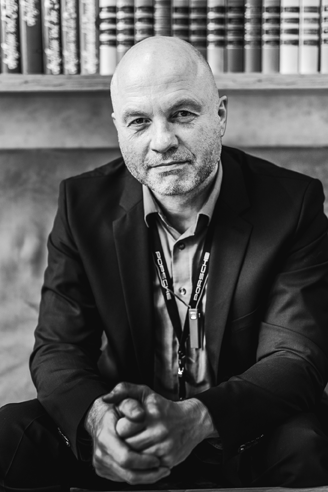
Konrad Wolfenstein
I would be happy to serve you and my team as a personal advisor.
You can contact me by filling out the contact form or simply call me on +49 89 89 674 804 (Munich) . My email address is: wolfenstein ∂ xpert.digital
I'm looking forward to our joint project.
☑️ SME support in strategy, consulting, planning and implementation
☑️ Creation or realignment of the digital strategy and digitalization
☑️ Expansion and optimization of international sales processes
☑️ Global & Digital B2B trading platforms
☑️ Pioneer Business Development / Marketing / PR / Trade Fairs
🎯🎯🎯 Benefit from Xpert.Digital's extensive, five-fold expertise in a comprehensive service package | BD, R&D, XR, PR & Digital Visibility Optimization

Benefit from Xpert.Digital's extensive, fivefold expertise in a comprehensive service package | R&D, XR, PR & Digital Visibility Optimization - Image: Xpert.Digital
Xpert.Digital has in-depth knowledge of various industries. This allows us to develop tailor-made strategies that are tailored precisely to the requirements and challenges of your specific market segment. By continually analyzing market trends and following industry developments, we can act with foresight and offer innovative solutions. Through the combination of experience and knowledge, we generate added value and give our customers a decisive competitive advantage.
More about it here: