What you can earn in the digital advertising industry and more (compact information)

Language selection 📢
Published on: August 23, 2018 / Updated on: August 31, 2018 – Author: Konrad Wolfenstein
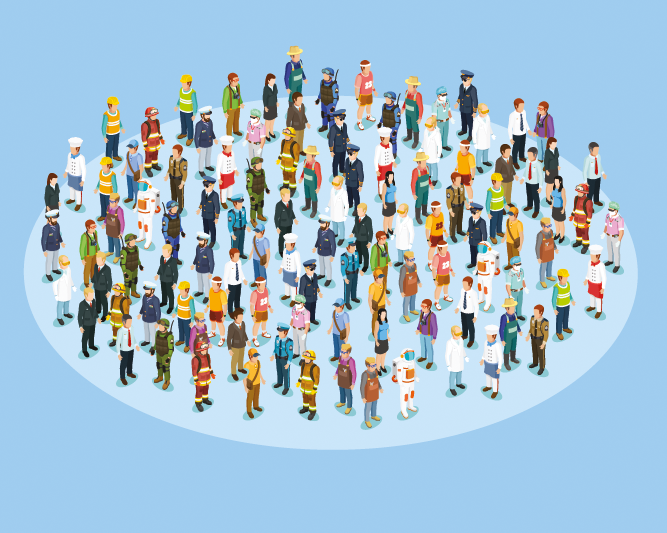
Salary comparison @shutterstock | Macrovector
+++ What you earn in the digital advertising industry +++ Salary comparison: The top industries for executives +++ These companies pay the best +++ How much less women earn +++ Gender pay gap: The regional differences in the wage gap +++ Gender equality in the Swiss workplace +++ The number of female CEOs is significantly overestimated +++ Salary comparison: The economic impact of the capital city +++ The influence of the capital city +++ Stuttgart top, Schwerin flop +++ Salary comparison: How much people earn in the German states +++ New Bitkom study: What start-up employees earn +++ Good salary prospects? +++ Where graduates in the EU find it difficult/easy to get a job +++ Who works the most hours per year? +++ Longer working hours do not lead to higher productivity +++ At what age do you earn the most? +++ Where you earn the most +++ Board members earn 71 times more than their employees +++ Who knows what I earn? +++ Only about half receive holiday pay +++ The most boring jobs +++ Who receives holiday pay? +++ People in the East work more but earn less +++ Full-time and part-time work in Germany +++ What skilled workers would give up for more free time +++ Where the minimum wage is often not paid +++ Why skilled workers say "no" +++ Unlimited vacation for everyone? +++ Compensation is the biggest motivator for Europeans +++ It must be nice to be a football coach +++
How much you can earn in the digital advertising industry
Those working in the digital advertising industry won't get rich – that's the conclusion of a joint study by the online portal Gehalt.de, the trade journal Werben und Verkaufen, and the HR consultancy Designerdock. According to the study, the average salary level is exactly 100 percent, with mechanical engineering leading the way at 125.2 percent.
However, salaries at agencies vary significantly depending on the job, as the Statista graphic shows. According to the data, a business development manager earns around €50,000 gross per year, while an art director's media value is around €41,000. Designers and copywriters fare considerably worse, with a gross annual salary of approximately €33,000.
 You can find more infographics at Statista
Salary comparison: The top industries for executives
What does the boss actually earn? A question many employees ask themselves is now answered by the salary data platform Gehalt.de . According to their data, bank management salaries are the highest. Executives there earn almost €187,000 gross per year. Management in the chemical industry also earns over €180,000, as the Statista graphic shows. Bringing up the rear in the ranking of 24 sectors are healthcare with €90,500 and retail with €82,500.
The study analyzed salary data from 4,825 managing directors. All employees are managers with personnel responsibilities.
 You can find more infographics at Statista
These companies pay the best
Anyone working for Intel in Germany can consider themselves lucky: The electronics manufacturer pays the highest salaries in the country. This is the result of an analysis by the job review platform Glassdoor, as reported by Business Insider . The data for the ranking covers the last two years. All companies with more than 20 job applications on Glassdoor were included. The median salary at Intel is €77,500. Airbus Group follows in second place with €76,500, as the Statista graphic shows. IT giant IBM from the USA secures third place with a median salary of €66,918. In total, the 12-ranked company includes nine German and three international firms. Automaker Audi pays the "lowest" salary at €60,270 per year and ranks 12th.
 You can find more infographics at Statista
Women earn so much less
Women in Germany earn an average of 21 percent less than men – a wage gap that is rare among European countries. The general difference in earnings, also known as the gender pay gap, varies across industries. The 2017 salary report from the online job portal Stepstone illustrates the extent of this gap. While doctors and medical professionals earn the most overall, the gap is also greatest in this sector. Women earn an average of over 30 percent less than their male colleagues, as the Statista graphic shows. The difference is smallest in IT professions, where women earn an average of just over €7,000, or about 11 percent less per year.
 You can find more infographics at Statista
Gender Pay Gap: Regional Differences in Wage Disparities
Women in Germany earn significantly less than men. However, a closer look at individual cities, districts, and federal states reveals that the figures vary considerably. In some of the former East German states, women even have the upper hand, as the Statista graphic shows. The differences are most extreme in the districts of Dingolfing-Landau, where women earn 38 percent less, and Cottbus, where women earn 17 percent more than men.
The significant differences can be attributed to regional economic structures. In states with a strong industrial base, the gender pay gap is particularly high, according to the Institute for Employment Research (IAB), which conducted the study . In the case of Dingolfing-Landau, this is the automotive industry and several large companies, where almost half of all men are employed. In states with a stronger focus on the service sector and public service, as in Cottbus, which has a less developed industrial sector, women earn more.
According to the Federal Statistical Office, the gender pay gap in Germany is 21 percent, higher than in most other European countries. According to calculations by the Institute for Employment Research (IAB), which are based solely on data from full-time employees, women in Germany earn 14.2 percent less overall. However, the IAB points out that the regional pay differences reflected in these calculations are likely understated, as women are more likely to work part-time than men.
 You can find more infographics at Statista
Gender equality in the Swiss workplace
Even in Switzerland, women still face disadvantages compared to men in the workplace. In almost all sectors, women are underrepresented in higher positions and earn up to 21 percent less than their male colleagues. Legal equality in the workplace has only been enshrined in Swiss law since 1996. Nevertheless, the country ranks first among United Nations member states with the lowest gender inequality, placing it ahead of exemplary countries like Sweden and Norway.
As this graphic shows, while women are overrepresented in traditionally female-dominated fields such as domestic work, caregiving, teaching, and retail, particularly promising sectors and higher-paying positions in IT and management remain firmly in male hands. However, according to a historical analysis of the development of gender equality in the labor market by the news platform swissinfo, the increase in women's employment since 1970 has primarily occurred in highly skilled professions – often, however, only on a part-time basis.
 You can find more infographics at Statista
The number of female CEOs is significantly overestimated
Only three percent of the world's 500 largest companies have a female CEO. However, respondents in an Ipsos survey : the percentage is significantly overestimated in all 27 participating countries.
As the Statista graphic shows, respondents in Mexico were furthest off the mark, with 29 percent of respondents reporting female CEOs. In Germany, the figure was estimated at 15 percent. South Koreans were closest to the truth, reporting that nine percent of CEOs are women.
 You can find more infographics at Statista
Salary comparison: The capital city as an economic factor
In many German states, the capital city is also the economic center. What would Bavaria be without Munich? Or Baden-Württemberg without Stuttgart? According to an analysis by the online platform Gehalt.de , both cities significantly drive up the average salary of their residents. While Bavarians would lose a full 17 percent of their average salary without Munich, the figure is even higher in Baden-Württemberg, at 19 percent.
The situation is different in Hesse, for example, where Frankfurt is a strong economic center separate from the state capital. Similarly, Schwerin's influence is relatively small in Mecklenburg-Western Pomerania: employees there earn around €33,000 per year with the state capital, compared to just over €1,000 less without it. The situation is similar in Thuringia, where Erfurt makes only a three percent difference.
 You can find more infographics at Statista
The influence of the capital
Capital cities are the economic engines in many German states, according to a recent analysis by the salary comparison portal Gehalt.de. Munich leads the pack: including data from the Bavarian capital, the average salary is €44,605 per year – without Munich's data, it drops by over seven percent. In Thuringia, excluding its capital Erfurt, the average salary is 3.4 percent lower, as the Statista graphic shows. The differences are smallest in the states bordering the city-states. These were not included in the analysis, but likely have an impact on the surrounding areas, particularly in the cases of Berlin and Hamburg. Only Wiesbaden, the capital of Hesse, shows no such difference. Here, the entire Rhine-Main region, especially the financial hub of Frankfurt, is responsible for the high salary levels.
 You can find more infographics at Statista
Stuttgart is great, Schwerin is a flop
Salary levels in Germany vary significantly between the federal states. But what happens when only the state capitals are compared? Do people earn more in Kiel than in Erfurt? Or more in Wiesbaden than in Hanover? The online platform Gehalt.de analyzed more than 750,000 salary data points for its latest salary atlas .
According to the study, employees in Stuttgart earn the most compared to other German cities. Their wage level is 127.6%. In Munich, it's 126.1%. At the bottom of the list are Schwerin, Erfurt, and Potsdam. Even the capital city doesn't exactly shine: Berlin's wage level is only 93.6% of the national average.
 You can find more infographics at Statista.
Salary comparison: How much people earn in the German states
Professionals and managers in Germany earn an average gross annual salary of €52,000, according to the latest salary report from Stepstone. A comparison of the German states shows that Hesse has the highest salaries, followed by Bavaria and Baden-Württemberg. The lowest salaries are found in Saxony-Anhalt and Saxony, as the Statista graphic illustrates.
However, salary levels are not solely determined by location, but also by industry, professional group, and degree. For example, a degree in medicine (€79,500) or law (€74,000) generally leads to high salaries later in one's career, while graduates with degrees in design (€46,000) or education (€45,100) are paid below average.
 You can find more infographics at Statista
New Bitkom study: This is what start-up employees earn
Entry-level employees at startups earn less than those at established companies. This is the result of a survey conducted by the industry association Bitkom among 143 founders. They were asked what they pay their employees on average. A junior employee at an IT or internet startup earns an average of €31,400 gross per year, as the Statista graphic shows. Nevertheless, startups remain attractive to many young employees thanks to flat hierarchies and flexible working arrangements. Added to this is the opportunity to be involved in innovations from the very beginning and thus gain professional experience, says Bitkom Managing Director Niklas Veltkamp. And this experience is reflected in their paychecks: According to the survey data, a senior employee earns an average of €46,500 per year. Those who even rise to a management position earn almost €56,000. C-level executives bring in an average of €71,500.
 You can find more infographics at Statista.
Good salary prospects?
Before graduation comes the aftermath: choosing the right job, considering not only personal interests but also the job market and salary potential. As the Statista graphic shows, according to StepStone's latest salary report the highest earners among university graduates, taking home an average gross annual salary of nearly €80,000. Law graduates earn an average of €74,000 later in their careers. At the bottom of the ranking are educationalists and social workers with only around €45,000 per year. Designers are just ahead with a little over €46,000. The report analyzed the salary data of 60,000 professionals and managers, including all bonuses, commissions, and premiums.
 You can find more infographics at Statista
Where graduates in the EU find it difficult/easy to find a job
In Germany, many students dread entering the workforce. While vocational training usually prepares students directly for their future job, only a few university programs offer direct career preparation. However, at least in Germany, this doesn't hinder the job prospects for university graduates. Over 90 percent of all graduates from vocational schools or universities in Germany find a position corresponding to their training within the first three years. Only in Malta and Iceland are the chances even better.
 You can find more infographics at Statista
Who works the most hours per year?
Swiss workers worked an average of 1,590 hours in 2015, according to the OECD Employment Outlook 2017. This puts them ahead of Germany (1,371 hours) and France (1,482 hours). Mexicans worked the most hours per employee in 2015.
In recent years, the South Korean government has attempted to reduce the high workload of its citizens. However, this has not yet been entirely successful. South Koreans still work an average of 2,213 hours. Contrary to popular belief, Greeks, partly due to the financial crisis, work the most hours in Europe, averaging 2,042 hours. Japan, with 1,719 working hours, is just behind the USA (1,779 working hours).
 You can find more infographics at Statista
Longer working hours do not lead to higher productivity
In Germany, the 40-hour week formally applies to most sectors. In reality, the average person in Germany works five hours less per week than this regulation stipulates. Our graphic shows that this doesn't necessarily have a negative impact on our labor productivity. With 34.9 hours per week and a productivity index value of 127.2 per hour, Germany ranks fourth among the most productive EU countries per working week. Interestingly, countries with fewer working hours per week score higher on the productivity index than countries where people work particularly long hours.
 You can find more infographics at Statista
At what age does one earn the most money?
Those working as specialists or managers in Germany can expect a steadily increasing salary until the age of 45, as the Statista graphic illustrates. The salary comparison platform Gehalt.de analyzed data from nearly 218,000 specialists and managers in Germany for its 2017 salary report. For specialists, gross annual salaries rise continuously until the age of 40, while managers can expect increases even until the age of 60. However, differences are not limited to job position; the gender pay gap, meaning lower pay for female employees, is also clearly evident. Women earn less right from the start of their careers. This gap then widens over the course of their professional lives and is particularly pronounced among managers. Furthermore, academic qualifications are important for earnings. According to Gehalt.de, graduates with a master's degree have above-average salary prospects.
 You can find more infographics at Statista
Where you can earn the most
According to the latest OECD report, "Taxing Wages 2018," Switzerland is the country within the organization where employees receive the highest average salary, both gross and net. Luxembourg ranks second, followed by Iceland in third place. Germany comes in fourth in terms of gross salary. However, when considering what employees actually take home after taxes and social security contributions, the picture is less rosy for German workers: of an average gross salary of US$64,000, only about US$38,000 actually ends up in their bank accounts. As the Statista graphic shows, this difference is more pronounced in Germany than in almost any other country. Among OECD countries, only Belgians have less net income than Germans.
 You can find more infographics at Statista
Executives earn 71 times more than their employees
In 2017, the board members of DAX 30 companies earned, on average, 71 times the salary of their employees. This is according to a survey by the Hans Böckler Foundation, a research institute affiliated with the German Trade Union Confederation. This is significantly higher than in previous years, as the Statista graphic illustrates. The difference is most pronounced at Deutsche Post, where the average manager earns 159 times the salary of their employees, and the CEO earns 232 times. The differences are smallest at Commerzbank, with managers earning 20 times their salaries and CEOs 25 times their salaries. Among regular board members, Adidas leads the way with 107 times the salary, while SAP earns 17 times. For the analysis, the foundation calculated the companies' personnel costs and compared them to the salaries of their board members.
 You can find more infographics at Statista
Who knows what I earn?
More than three-quarters (76 percent) of employees in Germany would be okay with their colleagues knowing what they earn. This is one of the findings of a representative study by the job site Indeed , commissioned by the market research company respondi, which surveyed 1,035 people in Germany about their attitudes toward salary. Young people between 16 and 29 years old are particularly relaxed about this, with 86 percent of them saying they would be okay with it. However, only 29 percent of those surveyed actually say that their colleagues know what they earn.
 You can find more infographics at Statista
The most boring jobs
Another week spent bored at the office? This seems to be a common experience, especially in legal professions, according to a study by the salary comparison platform emolument.com . A full 81 percent of those working in this field reported being bored at work. Project management also appears to offer less than captivating tasks, with 78 percent reporting boredom, as shown in the Statista graphic. The most exciting professions are found in education, management, and research and development. These fields have the lowest rates of boredom among their employees. The survey polled 1,300 professionals from ten countries, including France, Spain, and the UK.
 You can find more infographics at Statista
Only about half receive holiday pay
Approximately 43 percent of employees in Germany receive holiday pay from their employer. The proportion is higher for men (50.7 percent) than for women (38.7 percent), and higher in western Germany than in eastern Germany. This is according to a survey by the Hans Böckler Foundation , which analyzed data from around 6,600 employees. The manufacturing sector has the highest proportion of employees receiving holiday pay, followed by transportation and warehousing. The lowest proportions are found in the information and communication technology sector and in education, as illustrated in the Statista graphic.
 You can find more infographics at Statista
Who receives holiday pay?
One in two employees in Germany receives holiday pay – 71 percent in companies with collective bargaining agreements, compared to only 38 percent in companies without such agreements. This is according to an analysis by the Hans Böckler Foundation. The highest likelihood of receiving holiday pay is in the manufacturing sector, at 64 percent. In the energy sector, 55 percent of respondents receive a 13th-month salary, as the Statista graphic shows.
 You can find more infographics at Statista
People in the east work more, but earn less
Employees in eastern Germany earn significantly less than those in the west of the country – but they work more. This is according to data from the Federal Statistical Office and the state statistical offices, which the Left Party parliamentary group analyzed. The data shows that employees in Thuringia work the most hours, averaging 1,371, but earn only an average of €28,728 gross per year. Employees in Rhineland-Palatinate work 1,255 hours per year and earn €31,998. The highest earners are those in Hamburg, with almost €41,000. Their 1,334 hours of work place them in the upper middle range, as the Statista graphic illustrates.
 You can find more infographics at Statista
Full-time and part-time work in Germany
Whether longer working hours lead to greater efficiency is a matter of debate. From a labor market policy perspective, it would certainly make sense if all employees worked fewer hours, as this would theoretically allow for more people to be employed overall. As our infographic shows, the proportion of employees in Germany working part-time has increased since 1996.
However, the average annual working hours of these employees have increased by 66 hours per year over the past 20 years, from 644.8 to 711.2 hours. Overall, the number of employed workers has risen by 5.2 million since 1996 to 39.3 million in 2016, of whom almost 24 million worked full-time and 15.3 million part-time.
 You can find more infographics at Statista
What skilled workers would forgo for more free time
More money or more free time – the job portal meinestadt.de to know what motivates employees more. Overall, 52.5 percent of respondents stated they would prefer more free time, while 47.7 percent would prefer more money. The enthusiasm for more free time is greatest among 30- to 40-year-olds. Among the various sectors, those working in retail most frequently expressed a desire for more free time, while those working in purchasing and procurement most often expressed a wish for more money.
But what would the respondents give up, or what would they do, to have more free time? 22.5 percent stated they would be more dedicated during working hours – meaning they wouldn't mind increased workload if working hours were reduced. 20.7 percent would forgo benefits such as a company car or mobile phone, or free coffee. 20 percent would like to shorten their break times, as the Statista graphic shows. Only one in ten indicated they already have enough free time.
 You can find more infographics at Statista
Where often no minimum wage is paid
A statutory minimum wage was introduced in Germany on January 1, 2015. To ensure its enforcement in the German labor market, the Financial Control Unit for Undeclared Work (FKS) conducts targeted inspections nationwide. An infographic from Statista, based on data published by the Federal Government in May 2018 , the highest number of criminal proceedings, relative to the total number of targeted inspections in each sector, occurred in the drywall and assembly construction, hotel and restaurant, scaffolding, and general construction industries. Companies in these sectors were therefore particularly likely to violate the minimum wage law. A comparatively low proportion of criminal proceedings occurred in retail, hairdressing salons, and the taxi industry. Members of the Bundestag from the Left Party criticize the fact that compliance with the minimum wage is not sufficiently monitored in Germany overall. They claim that only 2.3 percent of all businesses have been inspected to date. This would mean that, theoretically, each business would only be audited every 40 years.
 You can find more infographics at Statista
Why skilled workers say “no”
New challenges, the next step on the career ladder, or simply a change of scenery – there are many reasons for a new job. Even when candidates and companies have connected to the point where an interview is scheduled, things can still go wrong.
The online job platform Stepstone surveyed more than 20,000 professionals in Germany about the criteria that can lead them to reject a job offer after the interview. The biggest factor: supervisors. 72 percent cited a negative impression of their prospective boss as the deciding factor in making a job offer uninteresting. Salary came in a close second: 71 percent would reject an offer if the compensation did not meet their expectations.
Applicants are tolerant when it comes to punctuality, as the Statista graphic shows. Very few would turn down a job offer if they had to wait too long for their interviewers.
 You can find more infographics at Statista
Unlimited vacation for everyone?
Flexible, new work models are becoming increasingly popular. Some companies, usually startups, are even trying a completely flexible approach: employees determine their own vacation time and salary. In the context of everyday German work, this sounds like something from the distant future, because not everyone can have an annual salary of €100,000 with 50 days of vacation – but would employees actually take such excessive amounts of time off?
According to a recent study by the career network Xing, this isn't the case. While young people are certainly interested in taking a self-determined vacation of their desired length, older people tend not to consider this approach practical, as the Statista graphic shows. When it comes to vacation length, they would even stay below 30 days. But even young people don't dream of three months of vacation a year: they would take around 34 days off annually.
 You can find more infographics at Statista
Compensation is what motivates Europeans the most
What do employees expect from their employers, and how can companies motivate their employees? The study "The Workforce View in Europe 2018" by the HR services provider ADP explores these questions. It was conducted last year among nearly 10,000 Europeans in Germany, Spain, France, Italy, the Netherlands, Poland, the UK, and Switzerland.
Twelve percent of respondents say that holiday pay increases their motivation, 18 percent need recognition from management to stay motivated, and for 21 percent, the relationship with colleagues is paramount. A good work-life balance is a driving force for 22 percent. However, as the Statista graphic shows, by far the most motivating factors for employees in Europe are compensation and employer benefits.
 You can find more infographics at Statista
It would be nice to be a football coach
Germany's national team coach, Joachim Löw, is the reigning World Cup champion – but he's not only leading the pack on the pitch; he also tops the list of highest-paid coaches. With an annual salary of €3.8 million, he earns more than Brazil's Tile or France's Didier Deschamps – both of whom receive €3.6 million per year, according to the British newspaper Daily Mirror. Spain's national coach, Julen Lopetegui, was in fourth place with €2.9 million, but was dismissed the day before the World Cup began. His place is now held by Russia's Stanislav Cherchesov, who earns €2.5 million per year. Egypt's Héctor Cúper takes tenth place with €1.5 million, as the Statista graphic shows. Incidentally, the lowest salary, according to the analysis, goes to Aliou Cissé of Senegal, at €200,000.
 You can find more infographics at Statista
Keep in touch