A commodity trader's warning: How control over rare earths is bringing Europe's industry to its knees – Creative image: Xpert.Digital
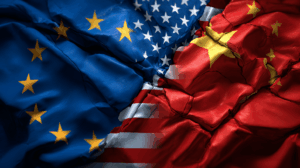
China's strategic scarcity of rare earths as a geopolitical weapon and the threat to Germany as an industrial location
A wake-up call from Beijing: China's show of force and its consequences
The warning issued by Frankfurt-based commodities trader Matthias Rüth in the fall of 2025 possesses a rare clarity, one seldom found in economic crisis scenarios. His statement that production lines in Germany will eventually grind to a halt is not rhetorical exaggeration, but rather the sober assessment of a man who has observed the global markets for critical commodities for a quarter of a century. As managing director of Tradium, a company with over €200 million in annual revenue and 40 employees, Rüth is one of the few experts in Europe with direct insight into the dynamics of a market that is increasingly becoming a geopolitical weapon.
In October 2025, the People's Republic of China further tightened its export controls on rare earth elements. Five more elements were added to the seven already subject to controls since April: holmium, erbium, thulium, europium, and ytterbium. This means that twelve of the seventeen rare earth elements are now subject to Chinese licensing requirements. What at first glance appears to be an administrative adjustment, upon closer examination reveals itself to be a strategic realignment of Chinese raw materials policy with far-reaching consequences for European and, in particular, German industry.
Rare earth elements are no longer a peripheral issue in raw materials policy, but have moved to the center of the economic vulnerability of highly developed industrial societies. They are the invisible building blocks of modern technology, without which neither electromobility nor wind power, neither smartphones nor precision weapons would function. Their scarcity threatens not individual production lines, but entire industrial ecosystems. This analysis examines the historical roots of this dependency, the technical and economic mechanisms of the rare earth market, the current crisis situation, and possible future scenarios for Europe.
Related to this:

The planned rise: China's strategy and the West's failure
The history of rare earth elements as a strategic resource did not begin in the 21st century, but is rooted in the second half of the 20th century. Until the 1990s, the United States was the world's leading producer of rare earth elements. The Mountain Pass mine in California, operated by Molycorp, supplied the majority of global demand. However, the shift was gradual and was underestimated by Western industry for a long time.
The Chinese reformer Deng Xiaoping recognized the strategic importance of these raw materials as early as 1987 when he coined his now-famous dictum: "The Middle East has oil, we have rare earths." This statement was more than just rhetorical. It marked the beginning of a decades-long strategy that would systematically make China the dominant player in the rare earth market. Beijing pursued three parallel strategies: massive state investment in domestic extraction and processing, the targeted development of processing capacities along the entire value chain, and the acquisition of raw material sources abroad.
Western industrialized nations reacted to this development with a disastrous mix of ignorance and economic calculation. The mining of rare ores is a technically complex and ecologically highly problematic undertaking. The production of just one ton of rare earth oxides generates between 9,600 and 12,000 cubic meters of toxic emissions containing dust, hydrofluoric acid, sulfuric acid, and sulfur dioxide, as well as approximately 75 cubic meters of acidic wastewater and about one ton of radioactive sludge. The ratio of pure rare earths to processing residues is 1:2000. This enormous environmental cost made mining increasingly uneconomical and politically unfeasible in Western countries with stricter environmental regulations.
The US closed its Mountain Pass mine in 2000 due to environmental concerns and economic unviability. This marked a historic turning point. The Western market opened completely to Chinese suppliers willing to bear the environmental and social costs of mining. Between 2000 and 2010, China's market share rose from approximately 70 percent to over 95 percent. The Bayan Obo deposit in Inner Mongolia became the world's largest source of light rare earth elements and symbolized China's rise to resource power.
A pivotal moment came in 2010 when China first demonstrated its market power. Following a diplomatic incident with Japan, Beijing drastically reduced export quotas for rare earth elements. Prices exploded tenfold to twentyfold within a few months. Suddenly, Western industry and policymakers realized the extent of their dependence. Research programs were launched, and efforts were made to develop alternative sources. Germany alone invested €200 million in 40 research projects. But when prices fell again in 2011, interest waned, and the dependence became even more entrenched.
China's consistent industrial policy has led to a situation where China now controls not only 60 percent of global rare earth magnet production, but, more importantly, 90 percent of global processing and 92 percent of production. This dominance in processing is the real strategic problem. Even if other countries develop deposits, they lack the processing infrastructure. Only three refineries outside of China process rare earths on an industrial scale, and none of them specialize in heavy rare earths.
Related to this:

The DNA of high technology: Why rare earths are irreplaceable
Rare earth elements, contrary to their name, are not geologically exceptionally rare. They occur in the Earth's crust about as frequently as copper or zinc. The term refers instead to the historical difficulty of isolating them and the fact that they rarely occur in economically viable concentrations. They comprise 17 chemical elements: the 15 lanthanides, as well as scandium and yttrium. Technically, a distinction is made between light rare earth elements, which include lanthanum, cerium, praseodymium, and neodymium, and heavy rare earth elements such as dysprosium, terbium, europium, and yttrium.
The importance of these elements stems from their unique physical and chemical properties. Neodymium possesses the highest magnetic moment of all naturally occurring elements and is therefore indispensable for high-performance magnets. A neodymium-iron-boron magnet can support many times its own weight and retains its magnetic properties permanently without an external energy input. These permanent magnets are the core component of modern electric motors in vehicles, wind turbines, hard drives, and countless other applications.
Dysprosium and terbium are added to neodymium magnets to increase their temperature resistance. In an electric motor operating under high thermal loads, a pure neodymium magnet would lose its magnetic properties. Only the addition of up to eight percent by weight of dysprosium makes these magnets suitable for high-temperature applications. Dysprosium is therefore one of the most critical elements of all, as it belongs to the heavy rare earth elements, which are even rarer and more expensive than their lighter counterparts.
Europium is found in phosphors and is responsible for the red component in screens and LEDs. Terbium provides the green component. Yttrium is used in LED lighting, lasers, ceramics, and superconductors. Lanthanum and cerium serve as catalysts in catalytic converters for cars and in oil refining. The list of applications reads like a catalog of modern high technology: from medical imaging techniques and fiber optic amplifiers for telecommunications to precision weapons and radar systems.
The technical irreplaceability of rare earths stems from a combination of properties that no other material offers in a comparable way. While intensive research is being conducted into alternatives, even promising approaches like tetrataenite, an iron-nickel alloy that can be produced in the laboratory, are still in the experimental stage and years away from industrial mass production. For the next ten to fifteen years, there are no economically viable alternatives to rare earths in most applications.
The value chain from the ore deposit to the finished magnetic material comprises several highly complex stages. First, the ore must be mined and mechanically processed. This is followed by the chemical separation of the individual elements, a complex process requiring specialized expertise. The individual oxides must then be reduced to metals and processed into alloys. Finally, the magnets are manufactured by sintering or bonding. Each of these stages requires significant investment in infrastructure and expertise. China has built up this know-how over decades, while it has largely been lost in the West.
The crisis in the engine room: production stoppages and the acute threat situation
The current situation on the rare earth market is characterized by an unprecedented shortage. Since April 2025, China has imposed export controls on seven heavy rare earth elements: samarium, gadolinium, terbium, dysprosium, lutetium, scandium, and yttrium. In October 2025, these were expanded to include five additional elements. The effects are dramatic and immediately noticeable. Matthias Rüth reports that the supply situation has become relatively unpredictable. While quantities are being released, they are very limited and often delayed.
The European Chamber of Commerce in Beijing describes the situation as extremely tense. Hundreds of European companies are affected. A survey conducted in September 2025 among the Chamber's members predicted 46 production stoppages for that month alone due to a lack of export permits for critical raw materials. The European automotive suppliers' association CLEPA reports initial shutdowns, and the German Association of the Automotive Industry warns of widespread production losses.
In 2024, German industry imported approximately 5,900 tons of rare earth elements, of which about 65.5 percent came directly from China. For certain elements, such as neodymium, which is needed for permanent magnets in electric motors, the dependence is almost 100 percent. According to expert estimates, the stockpiles of automotive manufacturers and suppliers will only last for four to six weeks. Christian Grimmelt of the management consultancy Berylls warns that the situation is more serious than during the 2021 chip crisis, as there are currently hardly any alternatives.
A conventional car contains up to 100 magnets, while a modern electric car has more than twice that number. These magnets are needed for power windows, seat adjustments, ventilation, windshield wipers, and, most importantly, the traction motors. This puts the automotive industry particularly at risk. The Japanese automaker Suzuki has already had to halt production of its Swift subcompact. The German supplier ZF reports noticeable effects on its supply chain. The first production lines in medical technology, electronics, and defense manufacturing have already been shut down.
The shortage coincides with a period of accelerated transformation. Electromobility is to be massively expanded, as is wind power. According to the German government's plans, wind power capacity in Germany is to increase from the current 65 gigawatts to 145 gigawatts by 2030. This corresponds to an average addition of 10 gigawatts per year, a fivefold increase over the current rate. Installed photovoltaic capacity is to grow from 60 to 215 gigawatts during the same period. Each modern gearless wind turbine requires approximately 200 to 600 kilograms of neodymium and dysprosium for its generator.
Demand for rare-earth magnets is projected to more than quintuple by 2030, according to estimates by the International Energy Agency. Annual global consumption of neodymium magnets could reach 229,000 tons by 2030, according to the CRE Rare Earth Report. At the same time, supplies are becoming increasingly scarce. Experts warn that for heavy rare earth elements like dysprosium, only one-fifth of the demand could be met by 2030 if alternative sources are not developed.
Commodity traders like Tradium act as a buffer between supply and demand. The company maintains a stockpile of over 300 tons of critical raw materials in Frankfurt am Main and handles 170 tons annually. But even these strategic reserves are insufficient to offset the current shortage. Rüth reports that the situation has become so serious that even regular customers can no longer be fully supplied. Even larger traders are currently only able to deliver to a limited extent. Industrial customers are starting to get nervous.
From wind turbines to electric cars: Where the shortage hits hardest
The abstract figures regarding the scarcity of rare earth elements gain significance when considering concrete applications. The first example concerns the German wind power industry, which is central to the energy transition. Modern, state-of-the-art offshore wind turbines, such as those being built off the German North Sea coast, use direct-drive generators with permanent magnets. This technology has crucial advantages: it requires less maintenance, is more efficient, and more reliable than geared systems. The magnets typically contain an alloy of neodymium, praseodymium, dysprosium, and terbium.
Siemens Gamesa, a leading manufacturer, has attempted to reduce the dysprosium content in its magnets from over five percent to about one percent, but the company cannot completely eliminate the element. With an annual addition of ten gigawatts of wind power in Germany alone, several thousand tons of neodymium and several hundred tons of dysprosium are required. If supply chains are disrupted, not only will the construction of individual plants be delayed, but the entire energy transition will be jeopardized. The industry is frantically searching for alternatives, but electrically excited generators without permanent magnets are heavier, require more maintenance, and are less efficient.
The second case illustrates the impact on the automotive industry even more clearly. A modern electric motor in a mid-range electric vehicle contains approximately one to two kilograms of neodymium and 100 to 200 grams of dysprosium in its permanent magnet rotor. For a long time, German automakers relied on Chinese suppliers who provided not only the magnets but often also the complete electric motors. When the first export restrictions came into effect in April 2025, the weaknesses of this strategy became apparent.
A medium-sized German automotive supplier that produces electric motors for several vehicle manufacturers reported in the summer of 2025 that lead times for procuring magnetic materials had increased from the usual six to eight weeks to several months. In some cases, deliveries were being canceled without warning or postponed indefinitely. The company had tripled its inventory, but this tied up significant capital and did not solve the underlying problem. Management was now considering discontinuing production of certain motor variants or switching to alternative technologies without permanent magnets, which would, however, result in significantly heavier and larger motors.
The consequences extend far beyond individual companies. If automotive suppliers have to reduce their production, this directly impacts vehicle manufacturers. Production lines designed for just-in-time manufacturing cannot simply be switched to other components. A missing electric motor means a vehicle cannot be completed. The automotive industry employs more than one million people directly and indirectly in Germany. According to calculations by the German Economic Institute, approximately one million jobs in Germany are directly or indirectly dependent on the supply of rare earth elements.
Our global industry and economic expertise in business development, sales and marketing
Our global industry and economic expertise in business development, sales and marketing - Image: Xpert.Digital
Industry focus areas: B2B, digitalization (from AI to XR), mechanical engineering, logistics, renewable energies and industry
More information here:
A thematic hub offering insights and expertise:
- Knowledge platform covering global and regional economies, innovation and industry-specific trends
- A collection of analyses, insights, and background information from our key areas of focus
- A place for expertise and information on current developments in business and technology
- A hub for companies seeking information on markets, digitalization, and industry innovations
Strategic raw materials: How the EU wants to secure supply chains and autonomy
The price of progress: ecological costs and ethical dilemmas
The issue of rare earth elements is multifaceted and raises fundamental questions about the organization of global value chains, the sustainability of industrial development, and the limits of economic efficiency logic. A primary point of contention concerns responsibility for the resulting dependency. Critics accuse Western governments and companies of having outsourced production to China for short-sighted cost reasons, thereby relinquishing their own strategic autonomy. The US decision to close the Mountain Pass mine in 2000 appears, in retrospect, to have been a grave mistake.
But this criticism falls short. The mining of rare earth elements is associated with significant environmental damage. The decision by Western societies to no longer bear these environmental costs was based on understandable ecological and political considerations. The real problem lies deeper: in the illusion that global markets always function flawlessly and that political considerations play no role. Globalization was understood as a techno-economic process, not as a politically shaped and therefore potentially fragile system. China has systematically exploited this naiveté and established its resource power as a geopolitical instrument.
A second controversy concerns the environmental costs of rare earth mining. The situation in the Chinese mining areas is dire. In Inner Mongolia, gigantic lakes of toxic and radioactive sludge have formed. The lagoon in Baotou is estimated to cover several square kilometers. Local residents report increased cancer rates, respiratory illnesses, and contaminated water sources. In Jiangxi province, where ion-absorbing clays are leached to extract rare earths, vast areas have been devastated by primitive mining methods. Trees have been felled, the soil is contaminated with chemicals, and groundwater and rivers are polluted.
The question is: Is it ethically justifiable for the West to externalize the ecological and social costs of its technologies and shift them onto Chinese regions? Electromobility and wind power are celebrated as pillars of the energy transition, yet their environmental friendliness is only regional, not global. The downsides occur far from the end users. This spatial and temporal shift in the problem areas is characteristic of many sustainability narratives and raises the question of the actual environmental impact of supposedly green technologies.
A third line of conflict runs between the pursuit of diversification and economic realities. The European Union has formulated ambitious targets with the Critical Raw Materials Act: by 2030, ten percent of the demand for strategic raw materials should come from European mining, 40 percent should be processed in Europe, and 25 percent should come from European recycling. Furthermore, dependence on no third country should exceed 65 percent. These benchmarks sound impressive, but their implementation faces enormous hurdles.
The largest deposit of rare earth elements in Europe was discovered in Sweden in 2023. The Per Geijer deposit near Kiruna is estimated to contain more than one million tons of rare earth oxides. The state-owned mining company LKAB has already begun exploration. However, it will be another ten to fifteen years before actual mining begins. Environmental impact assessments must be carried out, permits obtained, and processing plants built. Furthermore, the mining areas lie within the territory of the Sami, Europe's only indigenous people, which is likely to lead to significant conflicts.
Vietnam, Brazil, and Russia possess significant deposits, but they too lack the necessary processing infrastructure. Vietnam increased its rare earth production tenfold between 2021 and 2022, from 400 to 4,300 tons. However, these quantities are marginal on a global scale and cannot break China's dominance. Moreover, Vietnam exports a large portion of its production to China for further processing. Developing its own processing capacity would require billions in investment and years of capacity building.
The recycling of rare earth elements is still in its infancy worldwide. Less than one percent of rare earth elements are currently recycled. In 2024, Heraeus commissioned Europe's largest recycling plant for rare earth magnets in Bitterfeld-Wolfen, with a capacity of 600 tons per year, expandable to 1,200 tons. This is an important step, but given the European annual demand of several tens of thousands of tons, it is a drop in the ocean. Furthermore, there is a lack of sufficient quantities of end-of-life products for recycling. The wind turbines and electric vehicles that will be decommissioned in the coming years will not be available in relevant quantities until the mid-2030s.
Related to this:

Four paths to the future: Between escalation and technological innovation
The future of rare earth supply depends on several factors, some of which are contradictory and open up different development paths. One scenario is a continuation and worsening of the current situation. China could further expand its export controls and use rare earths even more extensively as a geopolitical tool. In this scenario, deliveries to Europe would be further reduced, prices would skyrocket, and production losses in European industry would increase. The energy transition would slow down significantly, as wind turbines and electric vehicles could not be produced in the planned quantities.
The economic consequences would be severe. Experts estimate that a complete halt to Chinese rare earth supplies would plunge European industry into a serious crisis within a few months. The automotive, wind power, and electronics industries would be particularly affected. Hundreds of thousands of jobs would be at stake. Matthias Rüth's warning that production lines in Germany would eventually grind to a halt would become a reality.
A second scenario involves gradual diversification and the development of alternative supply chains. In this more optimistic scenario, Europe succeeds in building its own production capacity and establishing partnerships with third countries. The Swedish deposit is developed, recycling capacities are massively expanded, and new refineries outside China begin operations. The US has taken a first step with the reopening of the Mountain Pass mine by MP Materials. The company currently produces about 38,000 tons of rare earth oxides per year, a fraction of China's production of 210,000 tons, but a start.
Australia, through its company Lynas Rare Earths, operates a mine in Western Australia and a processing plant in Malaysia. Following the bankruptcy of its American competitor Molycorp in 2015, Lynas was temporarily the only processor outside of China. The company plans to build a processing center in Western Australia to reduce its dependence on Malaysia. Canada and India are also investing in exploration projects. The US, Japan, and South Korea agreed to a trilateral cooperation in June 2024 to build resilient supply chains. Japan and the European Union are exploring joint public-private partnerships to source critical raw materials.
These initiatives are important and necessary, but they will not have a significant impact until the mid-2030s at the earliest. Until then, Europe will remain highly dependent on China. The danger is that political attention will wane once the acute crisis eases. This already happened after 2011, when prices fell again after a brief rise and many alternative projects were abandoned.
A third scenario involves technological breakthroughs in material substitution. Researchers worldwide are working on alternatives to rare earth elements. The most promising project is the development of tetrataenite, an iron-nickel alloy previously found only in meteorites. In 2022, scientists from the Austrian Academy of Sciences and the University of Cambridge succeeded in producing tetrataenite in the laboratory. By adding small amounts of phosphorus and carbon to a melt of iron and nickel, a material is created with magnetic properties comparable to neodymium magnets, but without rare earth elements.
The process has been accelerated by 11 to 15 orders of magnitude, so that production takes place in milliseconds instead of millions of years. The technology company Heraeus has already filed a patent application. However, there is still a long way to go from laboratory development to industrial mass production. Experts estimate that it will take ten to fifteen years before such alternatives are ready for market. They do not offer a solution to the current crisis.
Parallel developments concern increasing the efficiency of rare earth element use. Engineers are working to further reduce or completely eliminate the dysprosium content in magnets. Siemens has already reduced the content in its offshore wind turbines to about one percent. The goal is zero percent. Similarly, electric motors are being developed that operate with electrical excitation instead of permanent magnets. While these are heavier and less efficient, they could serve as an interim solution.
Research into organic light-emitting diodes (OLEDs) without rare earth elements is also progressing. OLEDs do not require rare earth phosphors and are already used in smartphone displays. However, for other applications such as permanent magnets in motors, there are currently no comparable alternatives. The substitutability of rare earth elements is limited and will remain so for the foreseeable future.
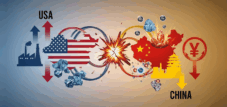
A fourth scenario is geopolitical in nature: a de-escalation of the trade war between China and the US, which would also benefit Europe. Export controls on rare earth elements are primarily China's response to American tariffs and export restrictions on semiconductors. Should a compromise be reached between Washington and Beijing, these export controls could be eased. In fact, the US and China agreed to a temporary reduction in tariffs in May 2025. However, the export restrictions on rare earth elements were not lifted.
The likelihood of a lasting détente is low. Systemic rivalry between China and the West is more likely to intensify in the coming years. China has recognized that its control over critical raw materials is an effective tool for pursuing geopolitical goals. It would be naive to expect Beijing to relinquish this instrument. Rather, it is to be expected that China will further expand its market power, and the export controls in October 2025 are simply another step in this strategy.
Time to act: Europe's answer to the raw materials challenge
The rare earth supply crisis is more than just a resource policy problem. It is a symptom of more fundamental distortions in the architecture of the globalized economy. For decades, the West has relied on the efficiency of global supply chains without adequately considering their political fragility. The illusion was that economic interconnectedness automatically leads to stability and interdependence. China has refuted this assumption and demonstrated that resource power is an instrument of geopolitical assertiveness.
Matthias Rüth's statement that production lines in Germany will eventually grind to a halt is not pessimism, but a realistic assessment of the situation. German and European industry are in a state of acute vulnerability. The dependence on Chinese rare earth supplies is so high that even short-term disruptions have serious consequences. The current shortage coincides with a period of accelerated transformation, in which electromobility and renewable energies are to be massively expanded. The demand for rare earths will increase exponentially in the coming years, while supply is being restricted for political reasons.
While European policymakers are taking a step in the right direction, their responses are far too slow and hesitant. The European Union's Critical Raw Materials Act sets ambitious goals, but their implementation faces enormous hurdles. Developing new mines takes ten to fifteen years, and building processing capacity requires billions in investment and significant political will. Recycling is still in its infancy and cannot meet the immediate demand. Research into alternatives is progressing, but will not yield industrially viable solutions in the foreseeable future.
The ecological dimension must not be forgotten. The mining of rare earth elements is one of the dirtiest industries in the world. Those who celebrate electromobility and wind power as green technologies must be aware of their downsides. The environmental costs are externalized both spatially and temporally. This is a form of problem displacement, not a solution. A truly sustainable energy transition would also have to consider the raw material side and find ways to reduce the demand for critical materials.
The current crisis is a wake-up call. It demonstrates how dependent highly developed industrial societies are on a few critical raw materials and how vulnerable global value chains are to geopolitical upheavals. The next few years will be crucial. Either Europe succeeds in substantially reducing its dependence on China and building alternative supply chains, or Matthias Rüth's warnings will become a bitter reality. Production lines could indeed grind to a halt, and with them, a central element of industrial value creation in Europe would collapse.
The answer to this challenge requires a three-pronged approach: forward-looking industrial policy, massive investments in research and infrastructure, and a willingness to ask even uncomfortable questions about the sustainability of the energy transition. China has systematically built up its raw material power over three decades. Europe cannot reverse this development in just a few years. But it can begin to lay the groundwork for a more resilient supply of raw materials. Time is of the essence.
Your global marketing and business development partner
☑️ Our business language is English or German
☑️ NEW: Correspondence in your native language!

Konrad Wolfenstein
I and my team are happy to be available to you as your personal advisor.
You can contact me by filling out the contact form here wolfenstein@xpert.digital:or simply call me at +49 7348 4088 965. My email address is
I'm looking forward to our joint project.
☑️ SME support in strategy, consulting, planning and implementation
☑️ Creation or realignment of the digital strategy and digitization
☑️ Expansion and optimization of international sales processes
☑️ Global & Digital B2B trading platforms
☑️ Pioneer Business Development / Marketing / PR / Trade Fairs
🎯🎯🎯 Benefit from Xpert.Digital's extensive, five-fold expertise in one comprehensive service package | BD, R&D, XR, PR & Digital Visibility Optimization

Benefit from Xpert.Digital's extensive, five-fold expertise in a comprehensive service package | R&D, XR, PR & Digital Visibility Optimization - Image: Xpert.Digital
Xpert.Digital possesses in-depth knowledge across various industries. This allows us to develop tailored strategies precisely aligned with the requirements and challenges of your specific market segment. By continuously analyzing market trends and monitoring industry developments, we can act proactively and offer innovative solutions. The combination of experience and expertise generates added value and provides our clients with a decisive competitive advantage.
More information here: