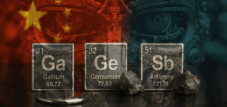
Tungsten and antimony: How a naively pursued raw materials policy drove Western industry into dependence on China – Image: Xpert.Digital
The secret raw materials trap: How China is putting pressure on the West regarding two extremely important metals
From semiconductors to munitions: Why the West is now urgently investing in these raw materials
For decades, the West ignored the warning signs, and now the geopolitical trap is snapping shut: Western industry has become almost entirely dependent on China for the strategically vital metals tungsten and antimony. Whether in cutting-edge semiconductor production, state-of-the-art battery technologies, or armor-piercing munitions – without these raw materials, key military and civilian industries worldwide grind to a halt. While Beijing has long since weaponized its monopoly and driven prices to unprecedented levels through radical export controls, the US and Europe are frantically searching for solutions. Billions in investment and new global alliances are intended to establish a Western-controlled raw materials infrastructure in record time. But the path out of dependency is a relentless race against time. Read here how a naively pursued raw materials policy led the Western world to the brink of an unprecedented supply crisis – and what drastic strategies are now being employed to counteract it.
When raw materials become weapons: The West's strategic vacuum – and what is being done about it now
Throughout human history, geopolitical conflicts have always sharpened the focus on strategic resources. What is currently happening in the Persian Gulf and in the trade war between Washington and Beijing is no exception in this respect – rather, it is the dramatic culmination of a development that has been building up for decades. At its heart are two metals that are barely present in the public consciousness: tungsten and antimony.
Both are indispensable for modern industry. Tungsten has the highest melting point of all metals and a density that significantly exceeds that of lead. These extreme physical properties make it the preferred choice in armor-piercing ammunition, aircraft engines, semiconductor processes, and cutting-edge battery technologies. Antimony, a silvery-white metalloid, is found in military ignition systems and ammunition alloys, flame retardants for electronics and textiles, infrared sensors, photovoltaic glass, and lead-acid batteries. Both metals are difficult to substitute—for many of their key applications, there are simply no equivalent alternatives.
For decades, the Western world largely ignored how completely dependent it had become on a single supplier of these raw materials. China did not leave this development to chance, but strategically promoted it: through targeted subsidies for domestic production, systematic acquisitions of foreign mines, and the consistent development of the entire value chain from ore to finished specialty product. The result is a concentration of power that can be used as a geopolitical lever in times of crisis – and is currently being used.
The anatomy of a dependency: China's dominance in Wolfram
The figures are clear and sobering. According to the US Geological Survey (USGS), China accounted for approximately 82 percent of global tungsten mine production in 2025. Adding in the contributions of Russia and North Korea, the combined share approaches 95 percent of global production. Global tungsten production in 2023 amounted to around 78,000 tons, with the second-largest producer, Vietnam, contributing only about 3,500 tons. This discrepancy illustrates the extent to which the market is dominated by a single supplier.
The price trends of the past two years directly reflect the consequences of this dependence. According to analyses by Fastmarkets, prices for Chinese tungsten concentrate rose by approximately 216 percent during 2025. The export price for ammonium paratungstat (APT), an important intermediate product, nearly tripled from around US$340 to over US$1,100 per metric ton. In February 2026, the price in Europe and the US even reached peak values of up to US$1,550 per metric ton. The development for wolframite ore was even more dramatic: The China Tungsten Industry Association (CTIA) documented an increase of almost 150 percent at times compared to the beginning of 2025. Since the beginning of 2026, according to consistent market reports, the price of tungsten has accelerated significantly once again, reaching levels that are historically unprecedented, even for market experts.
This price explosion is not a market failure in the classical sense. It is the calculated result of a policy that China has been gradually tightening for years. In February 2025, the People's Republic implemented export controls on tungsten, tellurium, bismuth, indium, and molybdenum without any transition period. At the same time, China's tungsten exports fell by 24 percent in the first half of 2025 compared to the same period of the previous year – and even halved compared to the first half of 2021. For EU industry, this meant that tungsten imports from the People's Republic fell by around 36 percent in 2025. The global tungsten market, valued at approximately US$7.3 billion in 2025 and projected to grow to US$11.6 billion by 2035, is thus experiencing a structural supply crisis.
Antimony: The underestimated weakness in weapons and technology
The situation regarding antimony is structurally similar, but even more geopolitically sensitive. According to the US Geological Survey, China produced approximately 48 percent of global antimony in 2023, while Tajikistan was the second-largest producer with 25.3 percent. Global annual output in 2024 was around 100,000 tons. Furthermore, China controls approximately 70 to 80 percent of antimony processing capacity, i.e., the midstream market, which is crucial for further processing into industrially usable products. Together with Russia and Tajikistan, the value chain controlled or influenced by Beijing is estimated to account for 80 to 90 percent of the global antimony supply.
Antimony is by no means a niche material. As an alloying element, it significantly increases the hardness and dimensional stability of ammunition: even an addition of two to five percent antimony to lead noticeably improves the penetration and accuracy of projectiles. In primers and ignition mixtures, antimony(III) sulfide ensures the reliable ignition of the propellant. Overall, an estimated 18 percent of global antimony demand is directly attributable to military applications. Furthermore, antimony trioxide is an indispensable synergist in flame retardants for plastics, textiles, and electronic components, while indium antimonide and gallium antimonide are important compounds for infrared detectors and solar cells.
China recognized the systemic importance of this raw material early on and introduced export licenses for antimony and related compounds in September 2024. In December 2024, Beijing extended the export ban to include shipments directly to the US. The market reaction was immediate: Antimony prices reached all-time highs in Rotterdam on December 31, 2024, between US$39,500 and US$40,000 per ton, having already increased by approximately 250 percent in 2024 alone. In 2023, antimony was still available for around US$5,200 per kilogram; the extent of the price increase over the past three years thus surpasses even the precious metals gold and silver in its percentage growth.
The geopolitical accelerant scenario: conflicts as a catalyst
The geopolitical turmoil in the Middle East is further exacerbating the structural raw materials crisis. The military conflict in the Persian Gulf is driving up military demand for tungsten and antimony even further, while simultaneously leading to geopolitical risk premiums being factored into commodity prices. The global arms industry, already under pressure from a massive arms buildup in Europe and North America, requires both metals in steadily increasing quantities.
This creates a particularly explosive situation for the US: its main adversary in this conflict – the People's Republic of China, which supports Iran – is also the near-monopolistic supplier of the raw materials essential for American arms production. While there is no official confirmation that China has completely halted deliveries of critical metals to the US as a result of the conflict, it is a fact that Beijing has gradually tightened export controls in recent years, and market observers agree that the actual availability of Chinese metals in the US has drastically decreased since 2024.
The message of the Greek tragedy, that truth is the first casualty of war, takes on an economic dimension here: The security policy costs of decades of Western naiveté regarding raw materials are only now becoming fully apparent. The US has not produced a single ton of tungsten domestically since 2015. At the same time, a strict ban will come into effect in 2027: The US Department of Defense has stipulated that rare-earth magnets or critical metals of Chinese origin may no longer be used in US defense systems – neither as finished products nor as raw materials at any stage of processing. For defense contractors like Lockheed Martin, this means massive pressure to restructure their supply chains within a matter of months.
The American counter-strategy: Billions for a new healthcare architecture
The US has recognized the existential dimension of this dependence and is responding with a resource policy initiative of historic proportions. "Project Vault," announced by President Donald Trump on February 2, 2026, is the centerpiece of this strategy: With total funding of nearly $12 billion – comprised of a $10 billion loan from the US Export-Import Bank (EXIM) and approximately $1.67 billion in private capital – a strategic reserve of all 60 critical minerals on the USGS list is to be established. The focus is on a 60-day supply, intended to protect key civilian industries such as the automotive sector from shortages while simultaneously providing planning security for the defense industry.
Tungsten and antimony are among the highest-priority raw materials. EXIM CEO Jovanovic emphasized that the reserve will encompass all minerals needed for critical technologies – with a particular focus on rare earth metals and those raw materials whose processing chains are controlled by China. Analysts at Benchmark Mineral Intelligence estimate that battery materials alone for a 60-day supply would cost around US$991 million, with copper adding another US$3.7 billion. However, Project Vault has also been met with criticism: A strategic reserve does not solve the fundamental problem of upstream supply concentration, cautions Benchmark Mineral Intelligence. It is only one of many tools and must be complemented by the active development of domestic mines and processing capacities.
In parallel, Washington has forged a broader geopolitical raw materials alliance. In October 2025, President Trump and Australian Prime Minister Anthony Albanese signed a bilateral framework agreement totaling US$8.5 billion to secure the supply of critical minerals and rare earth elements. The agreement includes provisions for accelerated permitting processes, combined financing commitments of at least US$3 billion, and the establishment of a ministerial investment panel. The focus is on supporting Western resource projects that can operate independently of China—Australia offers stable legal frameworks, an established mining regime, and significant domestic resources.
At the multilateral level, the G7 countries and the European Union are discussing the introduction of minimum prices for rare earths and selected critical metals to protect Western producers from state-subsidized price dumping from China. US Vice President JD Vance presented the concept to ministers from more than 50 countries in Washington in early 2026. German Finance Minister Lars Klingbeil expressed openness to the debate but warned against taking measures that would harm national economies. The basic logic of a price floor is economically sound: it would increase investment security for exploration companies, as it would eliminate the risk of a price collapse due to Chinese dumping – a crucial factor for developing new deposits.
Tungsten: An irreplaceable metal between industry and armaments
To fully grasp the strategic importance of tungsten, it's worth considering its industrial indispensability. With a melting point of approximately 3,422 degrees Celsius, tungsten has the highest melting point of all metals – a property that makes it essential for high-temperature applications in aerospace and gas turbines. Tungsten carbide is currently the world's most widely used hard metal for cutting tools, drills, and milling cutters; the global manufacturing industry relies on these tools to produce precision parts.
Tungsten plays an increasingly important role in the semiconductor industry: It is used in chemical-mechanical planarization (CMP) processes and as a metallization material in integrated circuits, as it is compatible with state-of-the-art manufacturing technologies down to 7-nanometer nodes. In battery technology, tungsten shows potential for accelerating charging cycles—an aspect of growing importance for e-mobility. For the defense industry, tungsten is the preferred alternative to depleted uranium in armor-piercing munitions: Tungsten carbide cores are used in numerous NATO standard ammunition types because they leave no radioactive contamination while offering comparable ballistic properties.
The price development of tungsten thus reflects not only geopolitical tensions but also a fundamental structural shift in demand: The combination of increased arms production, growing semiconductor demand, and the ramp-up phase of e-mobility is meeting a supply artificially restricted by Chinese export policies. The German Mineral Resources Agency (DERA) confirmed that prices for tungsten concentrate more than doubled at times in 2025, with the DERA price monitor documenting a monthly increase of over 20 percent for ferrotungstal in September 2025.
🎯🎯🎯 Global Sourcing & Commodity Trading with integrated logistics


Raw materials, global procurement & trade - Image: Xpert.Digital
State-of-the-art cargo planes, optimized transport routes, and multimodal logistics chains are interchangeable—they can be bought, leased, or outsourced. What money can't buy are direct contacts with producers in Peruvian mines, reliable supply relationships in the CIS countries, and years of built-up trust in markets that are unfamiliar to outsiders. The decisive competitive advantage in global commodity trading lies not in transporting the good from A to B, but in knowing where the good comes from, who produces it, and how to gain access before others even know the market exists. Whoever owns the network sets the price. Everyone else pays it.
More information here:
From Nevada to Australia: New fronts in the race for tungsten and antimony
Antimony: From niche material to key raw material for security policy
Antimony has long remained in the shadows of the public consciousness and the perception of many industrial policymakers. However, the reality of its industrial importance is far more dramatic. As a flame retardant, antimony trioxide is generally irreplaceable: it protects plastics and electronic components worldwide from fire, and its unique synergy with halogenated compounds has yet to find an equivalent substitute. In the photovoltaic industry, antimony is used as a refining agent to produce particularly transparent glass for solar modules – a growing market that is structurally increasing demand.
In 2025, the global supply-demand gap for antimony widened to between 34,000 and 39,000 tons, reaching a five-year high. The price spread between the Chinese domestic market and the international market temporarily exceeded 80 percent. Of particular relevance to strategic planners in the defense ministries of Western nations is the fact that approximately 18 percent of global antimony demand is directly attributable to military applications. When a single state like China exerts de facto control over this raw material, structural vulnerabilities arise in Western arms production that cannot be bridged in the short term during times of crisis.
The pattern of China's raw materials policy regarding antimony follows a familiar script: First, competitors are driven out of the market through state-subsidized low prices. Once market dominance is achieved, export controls are introduced, restricting supply and driving up prices. In the case of gallium and germanium, where China proceeded similarly, exports temporarily collapsed to zero because export licenses took weeks or even months to process. The EU and the US therefore officially classify antimony as a critical raw material, but currently have no significant primary production of their own.
The exploration landscape in North America: Between historical heritage and modern resource assessment
Given this supply crisis, investor interest in tungsten and antimony projects outside China has intensified considerably over the past two years. For the Western world, it is crucial that not only are new deposits developed, but also that historical projects with existing geological data are reactivated. In the USA, Canada, and Australia, there are a number of tungsten and antimony projects that, while not economically viable during a period of cheap Chinese imports, are now being reassessed under changed price conditions and political priorities.
Nevada is considered a geologically interesting region. The Tennessee Mountain tungsten project in Elko County is classified as a large-scale tungsten-molybdenum skarn system extending over a strike length of more than five kilometers. Historical drilling results from the 1950s and 1970s document grades of up to 2.06 percent WO₃, which is considered high-grade. The strategic advantage of such reactivated projects is clear: extensive historical exploration data significantly accelerates the evaluation of the deposit, while the fact that it is already disturbed terrain simplifies the permitting process compared to greenfield projects.
For antimony, the American Southwest, particularly Utah, offers interesting prospects for hydrothermal deposit types due to its geological history. Such systems have the potential to host very large deposits, as hydrothermal fluids can transport mineralizing solutions over wide areas and deposit antimony in high concentrations. The fact that the US Bureau of Mines has compiled historical data for such structures provides a valuable starting point for modern exploration. In Australia, JORC-compliant antimony resources already exist, assessed according to internationally recognized standards, thus providing a sound basis for production decisions.
The structural obstacles to the Western catch-up process
However, it would be illusory to believe that the West's combined political and financial resolve can eliminate its dependence on China for raw materials in the short term. The path from exploration to production is long, expensive, and fraught with regulation. In the mining sector, the average time between discovering a deposit and starting production is 15 to 20 years – although political will and simplified permitting processes can shorten this timeframe in individual cases.
The US faces a particular challenge: since 2015, it has had no domestic tungsten production. Establishing an independent processing chain – from ore through concentrate preparation to the finished metal product – requires not only investment in mines but also the construction of smelters and processing plants, which have been concentrated in China over the past decades. Project Vault addresses the symptom of this gap through strategic stockpiling, but without resolving the underlying structural dependency. Benchmark Mineral Intelligence has explicitly stated this criticism: a reserve is not a substitute for domestic production.
Europe finds itself in an even less favorable position. As recently as autumn 2025, European companies reported that increasing licensing shortages for Chinese rare earth exports threatened to trigger further production stoppages. The EU is almost entirely dependent on imports for antimony and tungsten and lacks its own strategic reserve system comparable to the American Project Vault. The European Critical Raw Materials Act, which came into force at the beginning of 2024, sets benchmarks for supply chain diversification – however, achieving these goals by 2030 remains a significant challenge given the realities of exploration and production.
Australia as a strategic pillar: The raw materials partnership with the USA
Australia plays a key role in the West's new resource architecture. The country possesses significant geological resources, a stable political and legal environment, and an established mining industry. The bilateral agreement with the US from October 2025, valued at US$8.5 billion, is the largest and most comprehensive of its kind in the history of both countries. In addition to combined investments of at least US$3 billion, it also provides for the development of price support mechanisms designed to protect mining projects from government-driven price dumping.
The strategic logic of this partnership is clear: Australia contributes resources and mining expertise, while the US provides market access, financing through the EXIM Bank, and security guarantees. This significantly improves the environment for Australian exploration companies: financing commitments, faster permitting processes, and political backing reduce investment risk. A first concrete step is the support for a gallium refinery in Western Australia, which is intended to reduce dependence on Chinese gallium for semiconductor and defense electronics. For Australian projects involving critical metals such as tungsten and antimony, this agreement opens direct access to the US defense market.
The connection to military-technological cooperation agreements—including the sale of nuclear-powered submarines under the AUKUS Pact—illustrates that the resource partnership is not an isolated economic agreement, but rather part of a broader geopolitical realignment in the Indo-Pacific. China views this development with suspicion: Every independent Western tungsten or antimony project in stable countries weakens the geopolitical leverage that Beijing wields with its resource power.
Market dynamics and investment prospects: What drives demand in the long term?
Beyond the acute geopolitical crisis, long-term structural factors point to continued high demand for tungsten and antimony. For tungsten, there are three key drivers: first, the global arms race, which has gained momentum following the Russian attack on Ukraine and in light of tensions in the Middle East; second, the ongoing expansion of the semiconductor industry, where tungsten is used as an essential process chemical in modern manufacturing processes; and third, the growing potential in battery technology for fast-charging applications.
The global tungsten market, valued at US$7.3 billion in 2025, is projected to grow to US$11.6 billion by 2035, according to Global Market Insights, representing a compound annual growth rate (CAGR) of 4.8 percent. North America, which held a market share of approximately 18.9 percent in 2025 and had a US market value of US$1.2 billion, is expected to grow to nearly US$3 billion by 2035 – an indication of the significant substitution potential if domestic production can be established. Other market researchers, using different valuation approaches, estimate the global market at US$1.71 billion in 2026, with an expected increase to US$3.57 billion by 2035, representing a CAGR of 8.54 percent.
The demand drivers for antimony are also structural and long-term: Global solar energy capacity is being rapidly expanded through massive government-funded programs in Europe, the US, and India – every new gigawatt-hour of photovoltaic capacity requires antimony-containing specialty glass. The electrification of road transport is further driving demand for lead-acid batteries used as jump-start and auxiliary power systems, all of which contain antimony-containing lead. And the ongoing arms buildup by NATO and its partners is increasing the need for antimony-containing munitions.
Skarn systems and hydrothermal deposits: The geology of opportunity
Tungsten skarn deposits are considered one of the most significant tungsten deposit types worldwide and are often characterized by high grades, extensive zones of mineralization, and good metallurgical properties of the ore. Skarns form through the contact of intrusive igneous rocks with carbonate rocks, with hydrothermal fluids carrying tungsten and other metals into the margins of the contact. The fact that Nevada, like many well-known tungsten districts in China, has favorable geological conditions for such skarn systems lends particular geological credibility to historical projects in this region.
The thickness and extent of such skarn systems over several kilometers provide the basis for significant resource potential. When historical drilling documents grades between 0.65 and 2.06 percent WO₃ over substantial intervals, this corresponds to tungsten grades considered high-grade internationally. For comparison, the world's best-known operating tungsten skarn mines—such as the Cantung Project in Canada or historical producing sites in Portugal—exhibit grades in a similar range. The next phases of exploration must demonstrate the geometric continuity of the mineralization along strike and at depth to enable JORC-compliant resource estimates.
For antimony deposits occurring as part of larger, multi-epoch hydrothermal systems, the spatial extent and vertical persistence of the mineralization are crucial parameters. When sampling reveals peak values exceeding 30 percent antimony, and modern drilling indicates that the mineralization extends more widely than initially thought, this suggests a mineralogically complex but potentially very large system. The challenge in resource assessment lies in delineating high-grade zones within the broader mineralization, as the metallurgy and achievable recovery rates for antimony are highly dependent on the geological characteristics.
Assessment and outlook: Between strategic necessity and geological reality
A balanced economic analysis must clearly identify both the structural opportunities and the systemic risks of the current environment. On the opportunity side, the following are clearly evident: historically unprecedented price levels for tungsten and antimony, which make exploration economically attractive; the changing political willingness of Western governments to promote and finance domestic mining projects, a shift that will continue for decades to come; and structurally increasing demand from the defense industry, semiconductors, and renewable energies.
On the risk side, realities must be factored in soberly. The path from exploration projects to full production typically takes many years and requires significant capital and infrastructure investments. Geological results, however promising, must be validated through systematic drilling programs and JORC-compliant resource estimates before reliable production forecasts are possible. Political frameworks can change—as demonstrated by the temporary truce between Trump and China at the end of 2025, which temporarily suspended export controls. Such geopolitical signals can put short-term downward pressure on commodity prices.
This leads to a clear recommendation for Western industrial policy: Diversifying raw material supplies must be understood not as short-term crisis management, but as a long-term strategic investment. The instruments for this – from Project Vault and price floors to bilateral commodity agreements – are well-conceived. However, their effectiveness depends on whether they are implemented consistently and with sufficient long-term commitment to channel private capital into expensive and lengthy mining projects. The clock is ticking: From 2027, the use of Chinese supply chains for US defense products will be prohibited, and the half-life of the geopolitical status quo is shorter than the time required to build alternative supply structures.
Resource geopolitics as a turning point
The crisis surrounding tungsten and antimony is not an isolated supply problem that can be solved through tactical measures. It is a symptom of a systemic miscalculation that has persisted for decades: the illusion that global markets guarantee security of supply without the need for active political and strategic diversification. China has deliberately exploited this illusion and established a position of power that has now become a serious security risk for the Western world.
The G7 countries, the US, and their allies have recognized the scale of this challenge and are responding with a combination of strategic stockpiling, bilateral commodity partnerships, price support mechanisms, and investment promotion. Australia, with its significant mineral resources and stable political framework, plays a key role in this. In North America, reactivated exploration projects in Nevada and other mining regions offer the potential to close part of the strategic deficit in the medium term.
The market for critical metals is undergoing a structural transformation, accelerated but not caused by geopolitical tensions. The fundamental drivers—rising arms demand, the energy transition, and semiconductor growth—remain constant regardless of short-term geopolitical volatility. The price signals are clear: tungsten and antimony are not overpriced today—they were underpriced for decades because Chinese cost dumping masked the true supply risks. The revaluation of these raw materials is economically justified and geopolitically inevitable.
Your contact for raw materials ⛏️ Global sourcing 🚢🌐 & trading 📦

Dmitry Kovalenko
I would be happy to serve as your personal advisor.
Dmitry Kovalenko
Tel: +49 7348 4088 961
Your contact for raw materials ⛏️ Global sourcing 🚢🌐 & trading 📦

Konrad Wolfenstein
I would be happy to serve as your personal advisor.
Konrad Wolfenstein
Email: wolfenstein@xpert.Digital
Our global industry and economic expertise in business development, sales and marketing

Our global industry and economic expertise in business development, sales and marketing - Image: Xpert.Digital
Industry focus areas: B2B, digitalization (from AI to XR), mechanical engineering, logistics, renewable energies and industry
More information here:
A thematic hub offering insights and expertise:
- Knowledge platform covering global and regional economies, innovation and industry-specific trends
- A collection of analyses, insights, and background information from our key areas of focus
- A place for expertise and information on current developments in business and technology
- A hub for companies seeking information on markets, digitalization, and industry innovations