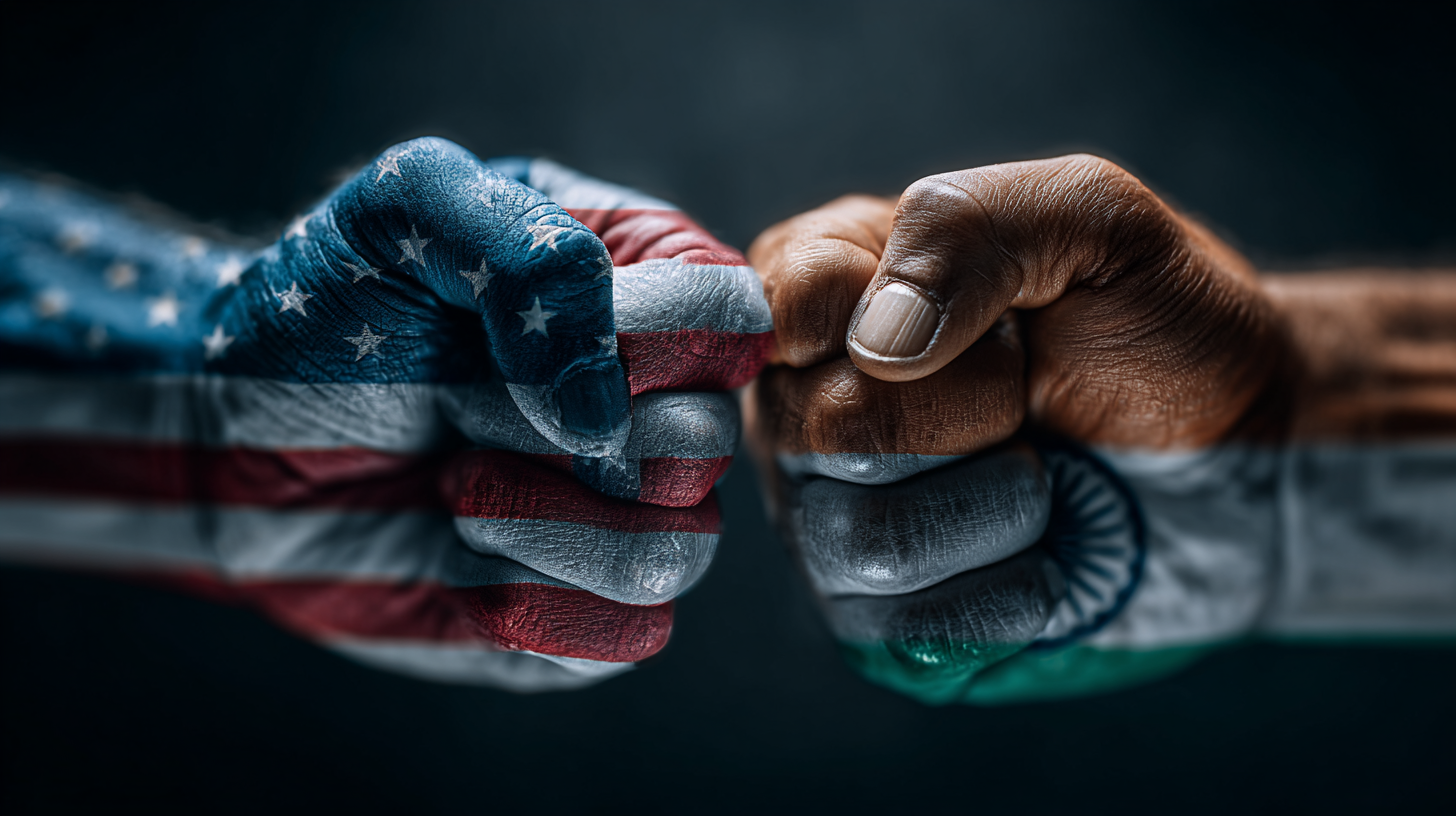
Trade agreement between the USA and India: Tariff reduction and strategic realignment – Image: Xpert.Digital
Coincidence or strategy? Why India has now convinced the USA after the EU agreement
The geopolitical puzzle – India between Brussels and Washington
Within just one week, the global trade architecture has shifted dramatically, and India is at the epicenter of this upheaval. On February 2, 2026, US President Donald Trump announced a monumental trade agreement with New Delhi, encompassing not only massive tariff reductions but also Indian purchase commitments worth over $500 billion. This breakthrough did not come in isolation: it followed just six days after the historic signing of the free trade agreement between the European Union and India on January 27, 2026.
The fact that these two mammoth agreements – each of which had been stalled for years – were finalized almost simultaneously raises the question: Is this pure coincidence or part of a highly complex geopolitical strategy?
Experts see this as a masterful positioning by Indian Prime Minister Narendra Modi. While the EU sought a deal with India to diversify its supply chains away from China and to protect itself against Trump's protectionist "America First" policy, India apparently used this success as leverage in negotiations with Washington. The message to the White House was clear: India has alternatives. Trump, in turn, responded with his usual mix of maximum pressure (punitive tariffs of up to 50 percent) and the offer of a "Great Deal" to free India from Russia's economic stranglehold and its strategic proximity to China.
The link between trade and energy policy is particularly explosive: While the EU agreement focuses primarily on regulatory standards and industrial tariff reductions, the US deal forces India to radically shift away from Russian oil. India is thus attempting the risky, but potentially highly profitable, balancing act of becoming an indispensable partner for both the Europeans and the US administration.
Here we discuss the details of the US-Indian breakthrough, the hidden clauses on Russian oil, and the question of why the “detour” via Brussels may ultimately have paved the way to Washington for India.
Related to this:

What agreement was reached between the USA and India?
On February 2, 2026, US President Donald Trump announced a major trade agreement with India, reached after a phone call with Indian Prime Minister Narendra Modi. The agreement stipulates that the US will reduce its reciprocal tariffs on Indian goods from 25 percent to 18 percent. This reduction takes effect immediately, ending a period of significant trade tensions between the world's two largest democracies.
In return, India committed to far-reaching concessions. Prime Minister Modi pledged to gradually reduce Indian import tariffs and non-tariff trade barriers on US products to zero. Furthermore, India announced plans to purchase more than $500 billion worth of American goods. These purchases are to cover various strategic sectors, including energy, technology, agricultural products, coal, and other key commodities.
What role does Russian oil play in this agreement?
A key and particularly contentious aspect of the agreement concerns India's oil imports from Russia. Trump stated that Modi had pledged to cease purchasing Russian oil and instead rely more heavily on US oil and potentially Venezuelan oil. The US president directly linked this pledge to the Ukraine conflict, claiming it would help end the war there.
This commitment is of considerable geopolitical importance, as India has become one of the largest consumers of Russian oil since the beginning of Russia's war of aggression against Ukraine. While India imported hardly any oil from Russia before 2022, by 2024 the country was importing around 1.9 million barrels per day from Russia. This represented more than a third of India's total oil demand. India benefited from price discounts of approximately 5 percent compared to the world market price.
However, it should be noted that Prime Minister Modi did not explicitly confirm the issue of Russian oil imports in his statement on the agreement. He merely expressed enthusiasm for the tariff reduction and emphasized the importance of the partnership with the US, without addressing the alleged commitment regarding Russian oil purchases.
How did this trade agreement come about?
The agreement marks a significant turning point in bilateral relations, which have been under considerable strain in recent months. In August 2025, President Trump initially imposed an additional 25 percent tariff on Indian goods, in addition to an existing reciprocal tariff of the same amount. Half of this punitive measure was explicitly aimed at India's purchases of Russian oil, which the US believed contributed to financing the Russian war against Ukraine.
Trump even threatened to double the tariffs to as much as 50 percent if India did not change its position. In fact, the tariffs were temporarily raised to 50 percent, massively threatening India's annual exports to the US, worth about $85 billion. These tariffs were among the highest in the world and posed a serious threat to India's rapidly growing economy.
The breakthrough in negotiations came after intensive diplomatic efforts. The newly appointed US ambassador to India, Sergio Gor, played a key role. Shortly before Trump's announcement, Gor hinted on the social media platform X that important news was imminent. Indian Secretary of State for Commerce Rajesh Agarwal also confirmed that the difficult issues in the negotiations had been addressed and that there had been significant progress on the tariff issue.
What is the economic significance of the agreement?
The trade agreement between the US and India comes at a time when bilateral economic relations already carry considerable weight. The US is India's largest trading partner. In 2024, total trade in goods between the two countries amounted to approximately $128.9 billion. The US exported goods worth $41.5 billion to India, while US imports from India totaled $87.3 billion.
India has a trade surplus of approximately $28 billion with the US, making it one of the few countries with which it maintains a positive trade balance. This asymmetry was a major reason for Trump's aggressive tariff policy, as he fundamentally views trade deficits as a disadvantage for the US.
Ambassador Sergio Gor commented on the agreement as the beginning of a new era in relations between the two countries. He emphasized the importance of the high-level dialogue and personal relationship between Trump and Modi for the breakthrough achieved. Trump himself has repeatedly referred to Modi as one of his greatest friends and a powerful and respected leader.
What strategic considerations underlie the agreement?
The trade agreement is not merely an economic arrangement, but has significant geopolitical dimensions. The US views India as a crucial strategic partner in the Indo-Pacific region, particularly as a counterweight to China. Security cooperation within the framework of the QUAD initiative, which includes the US, India, Japan, and Australia, underscores this strategic importance.
For the US, it is of central importance to bind India more closely to itself while simultaneously limiting its dependence on Russia and its rapprochement with China. The demand to halt Russian oil imports is therefore not only an economic one, but above all a strategic one, aimed at reducing Russia's oil revenues and undermining India's neutrality in the Ukraine conflict.
From India's perspective, the agreement allows for a continuation of its economic growth trajectory without being hampered by prohibitively high US tariffs. At the same time, India is attempting to maintain its traditional foreign policy balancing act, cultivating good relations with both Western democracies and Russia and China. This position of strategic autonomy is of fundamental importance to India, which could explain Modi's cautious reaffirmation of commitments regarding Russian oil imports.
Our global industry and economic expertise in business development, sales and marketing


Our global industry and economic expertise in business development, sales and marketing - Image: Xpert.Digital
Industry focus areas: B2B, digitalization (from AI to XR), mechanical engineering, logistics, renewable energies and industry
More information here:
A thematic hub offering insights and expertise:
- Knowledge platform covering global and regional economies, innovation and industry-specific trends
- A collection of analyses, insights, and background information from our key areas of focus
- A place for expertise and information on current developments in business and technology
- A hub for companies seeking information on markets, digitalization, and industry innovations
A “deal” with many question marks: Why experts remain skeptical about the US-India agreement
Which products and sectors are particularly affected?
The tariff reduction from 25 to 18 percent affects a wide range of Indian exports to the US. India's main exports include petroleum products, polished diamonds, pharmaceuticals, jewelry, and frozen shrimp. These industries will directly benefit from the tariff reduction and can improve their competitiveness in the US market.
On the import side, India has committed to purchasing significant quantities of US products. Particularly in the energy sector, India plans to import more liquefied natural gas (LNG) and crude oil from the US. Imports of technology products, agricultural goods, and industrial products will also increase. The announced purchases, valued at over $500 billion, represent an enormous volume, though they are expected to be spread over several years.
The Indian pharmaceutical industry, which plays a significant role globally and supplies the US with generic drugs, is likely to particularly benefit from stable trade relations. The Indian IT and service sectors, which are closely intertwined with the US market, will also benefit from reduced trade barriers, even though the current agreement primarily concerns trade in goods.
Related to this:

How does this agreement differ from other trade agreements?
The US-India agreement is interestingly linked in time to the free trade agreement between the European Union and India, negotiations for which were successfully concluded on January 27, 2026. After 18 years of negotiations, with some interruptions, the EU and India agreed on a comprehensive free trade agreement that provides for tariff reductions or complete tariff elimination on 96.6 percent of EU goods exports to India.
Observers view the EU-India agreement as a geopolitically significant step, one that was also accelerated by Trump's aggressive trade policies. Without the threat posed by Trump, the EU-India agreement might not have been reached, or at least not at this time. Both sides felt compelled to diversify their trade relations and become less dependent on the US.
Compared to the comprehensive EU-India free trade agreement, the US-India agreement is less detailed. It is more of a political framework agreement with specific tariff reductions and purchase commitments, whereas the EU agreement includes precise timelines for gradual tariff reductions in various sectors. For example, Indian import tariffs on motor vehicles are to be gradually reduced from 110 percent to as low as 10 percent, while tariffs on auto parts are to be completely eliminated after five to ten years.
What challenges exist in the implementation?
Despite the positive announcements, significant questions remain regarding the practical implementation of the agreement. The greatest uncertainty concerns India's alleged commitment to completely halt Russian oil imports. Given that India sources more than a third of its oil from Russia and benefits from substantial price reductions, a complete cessation of these imports would pose a massive economic and logistical challenge.
Russian officials have already expressed doubts about India's willingness to actually halt oil imports. Russia's Deputy Trade Representative to India, Evgeny Griva, stated in August 2025 that India's imports of Russian crude oil would likely remain at current levels. He pointed out that Russia sells oil to India at a discount of approximately 5 percent, leaving India with few alternatives.
Another problem is the question of how the announced Indian purchases of US goods worth over $500 billion will be structured in concrete terms. It remains unclear over what period these purchases will extend and whether they will be in addition to existing trade flows or simply replace them. The question of financing such large purchases also remains unresolved.
Finally, it remains to be seen whether the Indian Parliament will take the necessary steps to ratify and implement the agreement. India's customs structure is complex and multifaceted, and a reduction to zero percent would require significant legislative changes. Furthermore, non-tariff trade barriers such as technical standards, certification requirements, and import quotas must be addressed.
What impact will the agreement have on the stock markets?
The announcement of the trade agreement was received positively by the financial markets. US-listed shares of major Indian companies saw significant price gains following the news. This reflects the expectation that Indian companies will benefit from reduced tariffs and be able to expand their export business to the US.
Prime Minister Modi reacted enthusiastically to the tariff reduction, emphasizing that products bearing the "Made in India" label would now be subject to a reduced tariff of 18 percent. He thanked Trump on behalf of India's 1.4 billion people for this decision, underscoring the agreement's importance to the Indian economy.
The agreement also presents significant opportunities for US companies. As the world's third-largest consumer market and the fastest-growing major economy, India is an attractive target market. The commitment to reduce trade barriers and purchase large quantities of American products could open up substantial new sales opportunities for US exporters in the energy, agriculture, and technology sectors.
How do experts assess the agreement?
Trade experts have mixed opinions on the agreement. Jacques Shore, a trade specialist, described the agreement as highly significant and strategic for the US, particularly given India's massive previous purchases of Russian oil. The agreement is seen as an attempt to bind India more closely to the West while simultaneously making it more difficult for Russia to finance its wars.
However, critics point out that President Trump's characterization of reciprocal tariffs is a questionable concept. While Trump presents these tariffs as compensation for alleged imbalances and disadvantages in international trade, many economists argue that trade deficits are not inherently detrimental and that tariffs primarily burden domestic consumers.
Rick Rossow of the Center for Strategic and International Studies acknowledges that Trump has a point in his criticism of Indian protectionism. India does indeed maintain a complex system of import tariffs and non-tariff trade barriers that makes foreign products more expensive and protects Indian manufacturers. However, Trump's language is too harsh and his pressure tactics too aggressive, which is straining diplomatic relations.
What significance does the agreement have for the global trading order?
The US-India trade agreement is symptomatic of a fundamental shift in the global trading order. While the multilateral World Trade Organization (WTO) is increasingly losing ground, the US under Trump is relying more heavily on bilateral agreements where it can leverage its economic power. This strategy allows the US to secure specific concessions that would be more difficult to achieve in multilateral negotiations.
For India, the agreement represents part of its strategy to diversify trade relations and cooperate with several major economic blocs simultaneously. In addition to the agreement with the US, India has also concluded a free trade agreement with the EU and maintains intensive economic relations with China, even though these are politically complex. This multi-pronged approach is intended to ensure India maximum freedom of action.
The agreement also underscores the increasing entanglement of trade, geopolitics, and security policy. The issue of Russian oil imports is primarily not a trade policy matter, but a security policy issue linked to the conflict in Ukraine. The fact that Trump is making this issue the centerpiece of a trade agreement demonstrates the extent to which economic policy is now being used as an instrument of geopolitical strategy.
What's next for US-Indian relations?
Despite the agreement, the long-term development of US-Indian relations remains fraught with uncertainty. While both sides have a fundamental interest in close cooperation, structural differences persist. In addition to trade policy, tensions exist regarding irregular migration, with Indians constituting the third-largest group of undocumented immigrants in the US.
India's balancing act in foreign policy between various major powers remains a challenge. While the US wants to position India as a counterweight to China, India is also striving to improve relations with China. Prime Minister Modi, for example, announced a visit to China, his first in seven years, which was met with unease in Washington.
Nevertheless, in both capitals, there is a prevailing conviction that the partnership between the US and India will be among the defining relationships of the 21st century. Shared interests in areas such as technology, defense, and security in the Indo-Pacific region are so strong that both sides have a fundamental interest in functioning relations. The current trade agreement can be seen as an important step in this direction, even if its practical implementation will still present challenges.