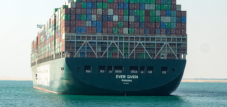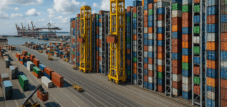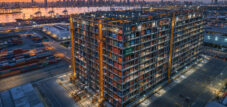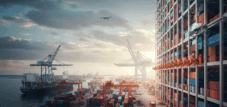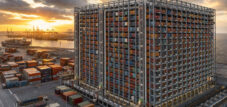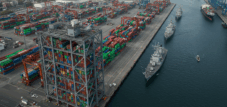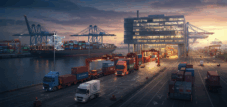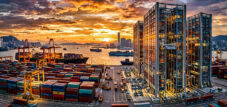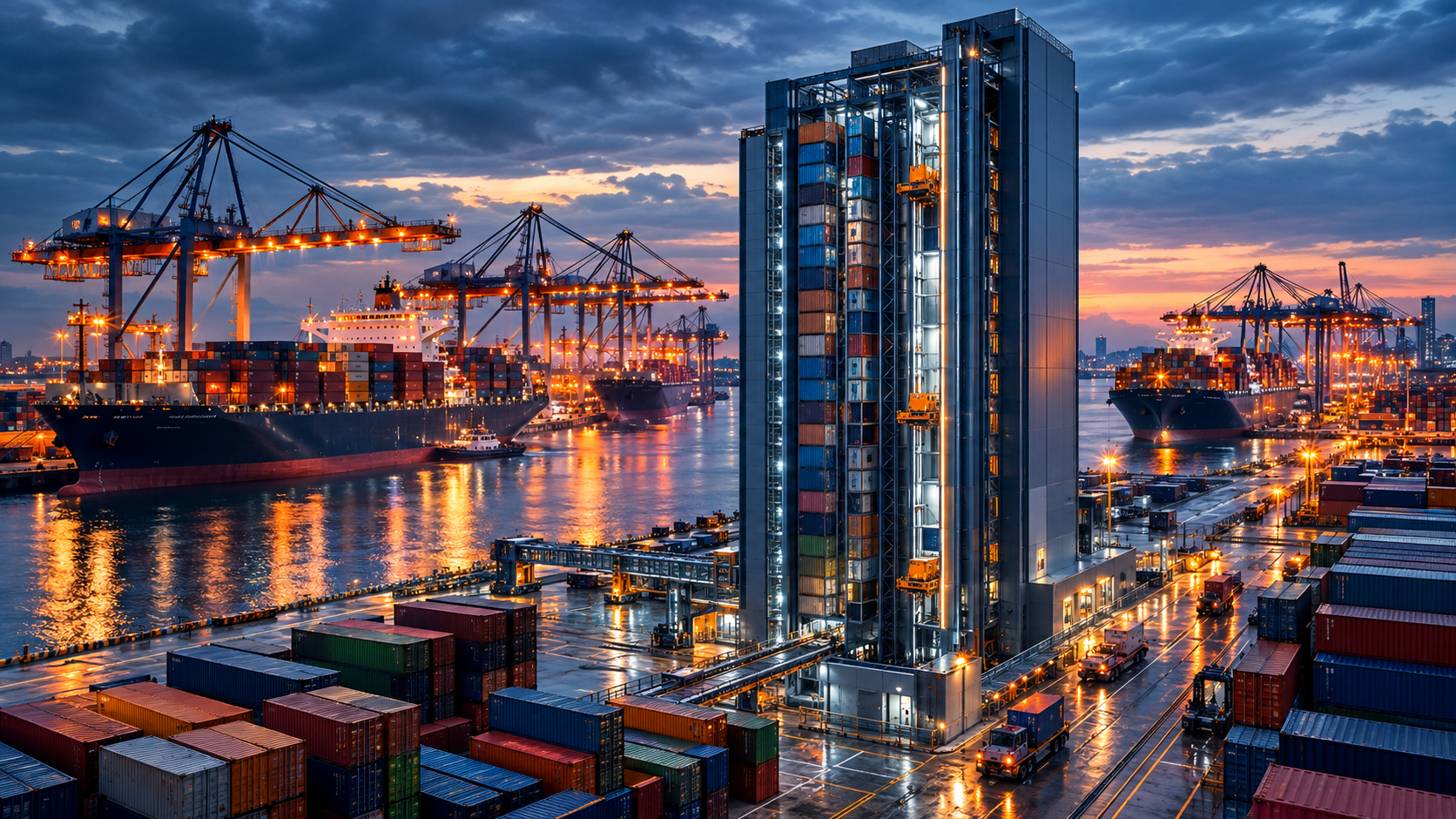
Billions in traffic jams at Europe's quays: This strategy aims to free the port bottleneck – creative image on the topic, created with AI: Xpert.Digital
Container chaos 2026: Why Europe's ports now need to build upwards
Traffic jams, fines, standstill: How expensive will the port chaos really be for the economy?
When space at the quay is lacking: Are vertical buffer warehouses the salvation of supply chains?
Europe's seaports are under constant strain. Whether it's extremely low water levels on the Rhine, pilot strikes on the Elbe, or simply overloaded terminals in Rotterdam and Antwerp – the image of dammed container ships and overflowing quays will be commonplace in logistics by 2026. These chronic bottlenecks are far more than just seasonal anomalies; they reveal the structural weaknesses of the existing port and hinterland system. For companies, the delays mean not only massive losses in planning certainty but also exploding costs due to exorbitant demurrage and detention charges, which quickly amount to hundreds of euros per day and container. Since traditional, ground-level storage areas around the ports are strictly limited and extremely expensive, a new approach is coming into focus for the industry: vertical buffer concepts. The following analysis shows why expanding storage capacity vertically could be the urgently needed answer to the container chaos, what investments logistics will face, and where the strategic limits of this technology lie.
When the port becomes a bottleneck: Why Europe's supply chains need vertical integration
Waiting times at major North European container terminals reached a level in spring 2026 that starkly exposed the structural weaknesses of the existing port and hinterland system. During the week of March 6-13, 2026, the average waiting time for ships in Hamburg was 2.14 days, an increase of 56 percent compared to the previous week, while the CTA terminal reached an 89 percent capacity utilization rate, compared to a normal operating level of around 75 percent. At the same time, historically low water levels on the Rhine forced inland shipping to reduce cargo by up to 45 percent, while waiting times for inland vessels outside Rotterdam and Antwerp reached 72 to 75 hours, compared to a typical 12 to 24 hours. Three seemingly unrelated crises – a pilots' strike in Hamburg, extremely low water levels on the Rhine, and terminal overload in the ZARA ports – coincided within the same timeframe, triggering a cascade that forced enormous volumes of freight onto the roads. This simultaneity is not a statistical coincidence, but a recurring pattern that systematically amplifies seasonal demand peaks, limited infrastructure capacity, and external shocks.
Even in the summer of 2026, the situation had not eased significantly. Analysts expected an improvement no earlier than August 2026, with Rhine corridor barges experiencing average congestion-related delays of over 96 hours at the deep-sea terminals, while waiting times in Rotterdam and Antwerp remained at 72 to 75 hours. This development coincides with the accelerated acceleration of imports, a move many companies are making to address tariff uncertainties, further straining existing capacity. Anyone still planning with transit times from three years ago is out of touch with reality. Freight forwarders now recommend allowing five to seven additional days for shipments via Rotterdam or Antwerp and requesting up-to-date berth and barge information before booking.
Structural problem rather than seasonal outlier: Why congestion in the port can no longer be planned away
Market monitoring by the Federal Office for Logistics and Mobility (BALM) already indicates that container traffic in and out of seaports is concentrated primarily between 8 a.m. and 8 p.m., regularly resulting in peak traffic and waiting times. A significant number of container ships are also unloaded on weekends, leading to a considerably increased volume of traffic at terminals, customs offices, and veterinary offices at the beginning of the week. This pattern is not exceptional but follows the operational logic of shipping lines, whose schedules are determined independently of the actual traffic volume in the hinterland. It is precisely during these recurring peak periods, the so-called peak weeks, that the hinterland transport system regularly reaches its capacity limits.
Studies of the major German container ports of Hamburg and Bremerhaven, which handle approximately 97 percent of Germany's total container traffic, show that both road and rail freight transport suffer from structural capacity bottlenecks that hinder the reliable supply and disposal of goods to and from the ports. To alleviate these bottlenecks, recommendations include making container arrival and departure windows more flexible in order to smooth out daily and calendar-related peaks. In Rotterdam and Antwerp, the increasing volume of containers combined with limited handling capacity regularly leads to delays in ship processing, particularly affecting inland waterway transport, as seagoing and feeder vessels are generally given priority during bottlenecks. Delays at a single terminal can have a domino effect because inland vessels typically have to call at several terminals during their port stay. According to the Federal Office for Logistics and Mobility, hinterland hubs are becoming increasingly important to alleviate these bottlenecks, complemented by the digitalization of logistics chains and digital access and berth management systems.
Construction sites, strikes, low water levels: A systematic mix of crises
In addition to cyclical demand peaks, structural modernization measures exacerbate the system's vulnerability. For years, the North German ports have been undergoing extensive modernization projects at port facilities, hinterland terminals, and the Deutsche Bahn rail network. While necessary in the long term, these projects cause repeated disruptions and delays. Construction sites in ports and terminals, strikes related to labor disputes, and natural barriers such as the Upper Rhine, which becomes unnavigable during periods of sustained high water, simultaneously impair the availability and reliability of rail and truck transport. A newly introduced slot booking system for trucks in major ports like Hamburg and Bremerhaven, intended to better coordinate arrivals and departures, further restricts flexibility during its implementation phase and leads to additional short-term delays.
Historically, this situation is nothing new. During the supply chain crisis of 2021 and 2022, container ships were backed up in the German Bight, while import containers remained uncollected at terminals, and the effects rippled far inland. At that time, it was estimated that around 60,000 containers were waiting to be unloaded in the German Bight alone, corresponding to approximately 45,000 customs declarations. The planning horizon of a container packing company in Hamburg shrank from 14 days to 48 hours during this period, while customers had to postpone loading appointments for export containers up to a dozen times due to ship delays. Containers also had to be temporarily stored then, pushing private depots to their capacity limits and creating additional congestion even within the ports themselves. The recurrence of such patterns in different years, triggered by different factors but with the same symptoms, points to a systemic rather than an episodic problem.
LTW Intralogistics Solutions

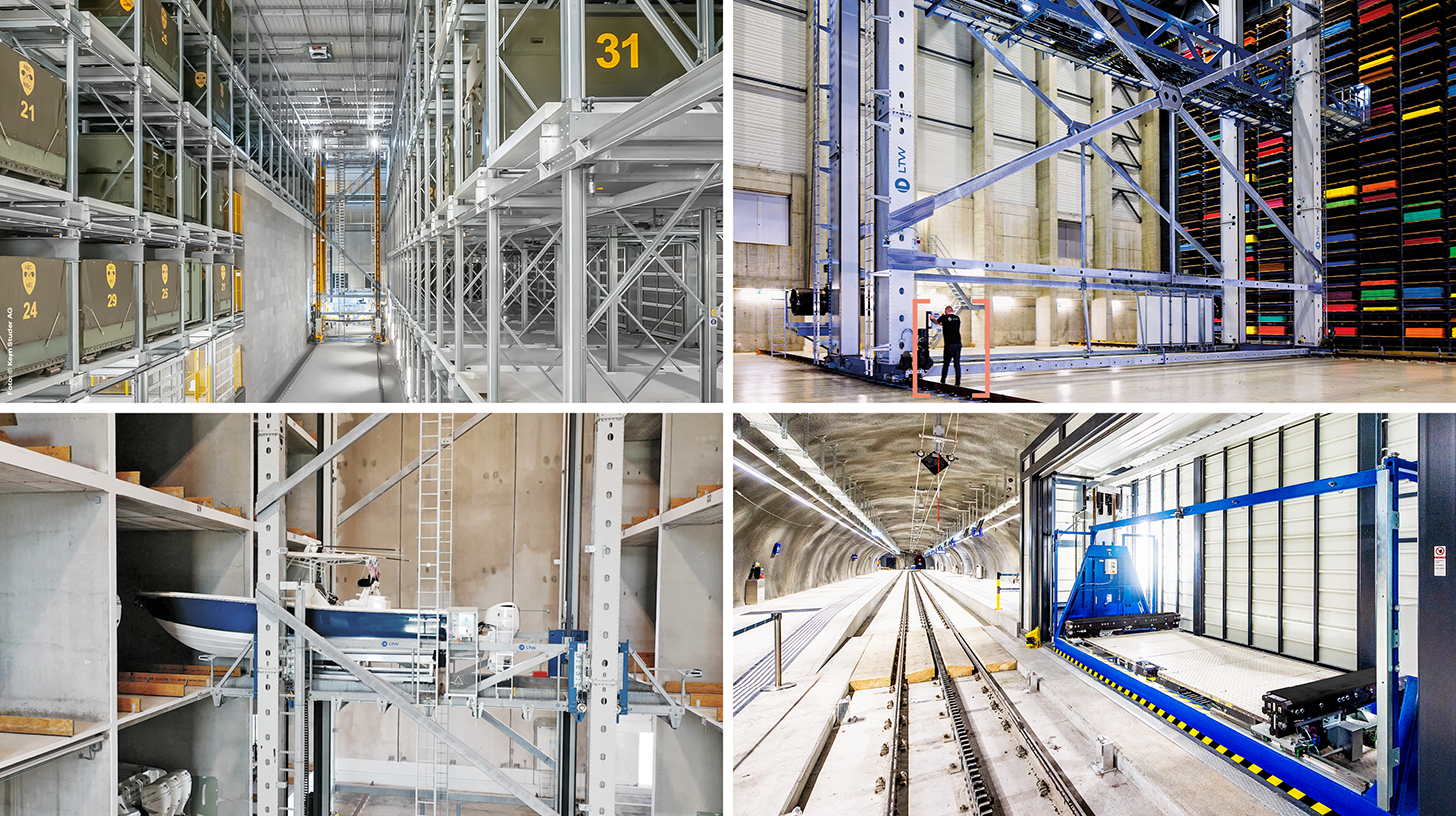
LTW Intralogistics – Engineers of Flow - Image: LTW Intralogistics GmbH
LTW offers its customers not individual components, but integrated complete solutions. Consulting, planning, mechanical and electrotechnical components, control and automation technology, as well as software and service – everything is networked and precisely coordinated.
In-house production of key components is particularly advantageous. This allows for optimal control of quality, supply chains, and interfaces.
LTW stands for reliability, transparency, and collaborative partnership. Loyalty and honesty are firmly anchored in the company's philosophy – a handshake still means something here.
Related to this:
High port fees in congestion: Why vertical buffer storage is crucial today
The bill no one likes to pay: demurrage, detention, and the cost of standstill
Every day a container remains in the terminal or outside the port beyond its agreed leisure time incurs immediate costs. Demurrage charges, levied for loaded containers in the port terminal, typically range from €50 to €200 per container per day in Europe, increasing with longer overruns. At major international terminals, initial charge levels of US$75 to US$150 per day were observed in 2026, escalating to US$250 to US$300 and more. Detention charges, incurred when a container is used outside the terminal beyond the permitted time, are in a similar range, from US$50 to US$175 per container per day. The leisure time allowances themselves are tight with major shipping lines, often ranging from three to ten days, depending on the container type, shipping line, and route.
The following overview illustrates the magnitudes that shippers must consider in the event of ongoing congestion:
| Type of fee | Typical leisure time | Cost range per container/day | Escalation level |
|---|---|---|---|
| Demurrage (standard dry container) | 3–10 days | 50–200 euros | up to 250–350 euros |
| Demurrage (refrigerated container) | 2–5 days | 100–300 euros | +50–75% surcharge |
| Detention | 3–7 days | 50–175 US dollars | up to 250 US dollars |
These fee structures can be understood economically as a scarcity price for space: they are intended to incentivize the prompt collection of containers and the reserving of terminal space. However, during periods of structural overload, this mechanism is largely ineffective because even willing shippers simply cannot collect their containers on time due to slot bottlenecks, strikes, or a lack of connecting transport. In such cases, the fees no longer have a regulatory effect but instead become an additional burden, further increasing the overall costs of the supply chain without resolving the underlying capacity problem.
Why traditional ground-based warehouse logistics is reaching its limits
The obvious business response to delays at the port is to build up buffer capacity. However, in the cramped, densely populated port and urban fringe areas, it is becoming increasingly difficult to develop sufficient and economically viable ground-level storage and distribution areas. Land near the port is scarce, expensive, and severely limited by competing uses such as terminals, railway facilities, and urban infrastructure, meaning that horizontal expansion of storage capacity is hampered by physical and planning regulations. This is precisely where the economic logic of vertical storage and buffer concepts comes into play: They allow for a significant increase in storage capacity per square meter of floor space without the need to develop additional, often unavailable, land.
Automated high-bay warehouses and vertical buffer storage modules, such as vertical lift modules or vertical carousel systems, allow containerized or palletized goods to be stored vertically rather than horizontally, thus utilizing the available space many times more efficiently. The investment costs for a medium-sized, fully automated high-bay warehouse typically range between €5 and €20 million, while smaller, semi-automated systems are feasible starting at around €1 million, and large-scale projects, expanded into European distribution centers, can require investments exceeding €30 million. A more detailed cost overview of different automation levels demonstrates how significantly the investment amount depends on the degree of automation.
| Project type | Investment framework | Amortization period |
|---|---|---|
| Pilot with a vehicle (FTS/AMR) | 60,000–150,000 euros | 2–4 years |
| Partial automation of a warehouse area | 350,000–900,000 euros | 3–5 years |
| Automated small parts warehouse (shuttle/container) | 1.5–5 million euros | 5–8 years |
| Fully automated high-bay warehouse in the new building | from 10 million euros | 7–12 years |
Smaller vertical buffer modules, such as vertical hub modules or carousel systems, are available starting at US$70,000 to US$150,000 and are particularly suitable for decentralized buffer points in hinterland areas where capacity needs to be created at short notice to cope with fluctuating congestion peaks. This range of solutions allows companies to adapt their buffer strategy modularly to the actual risk and volume profile, instead of resorting to expensive emergency solutions like improvised outdoor storage areas or extended terminal dwell times during crises.
From reaction to strategy: Vertical buffer concepts as a response to peak weeks
The core economic idea behind vertical buffer concepts is to increase the supply chain's capacity to absorb peak demand without proportionally increasing fixed costs for space. While horizontal storage areas grow linearly with required capacity, vertical densification allows for capacity expansion that is less dependent on land availability. In port areas, where land prices regularly exceed construction costs several times over, this significantly shifts the economic viability calculation in favor of automated vertical storage facilities, even if their investment costs per cubic meter are higher than those of conventional warehouses.
Another strategic advantage lies in decoupling arrival and collection times. If companies have their own or leased vertical buffer capacity in the hinterland, they can collect containers from the terminal immediately after unloading and transfer them to their own interim storage facility, instead of using the scarce and expensive terminal space as a de facto storage location. This significantly reduces the risk of costly demurrage payments because the most expensive dwell time—that in the terminal itself—is minimized, while the actual warehousing is shifted to a more cost-effective and predictable environment. At the same time, terminal utilization itself improves, as newly available storage space can be used more quickly for newly arriving cargo, which directly contributes to relieving overall capacity during congested periods such as spring 2026.
From the perspective of rail and inland waterway logistics, there is also an argument for vertical buffer structures at hinterland hubs. Since seagoing and feeder vessels are regularly given priority over inland vessels in the event of capacity bottlenecks, inland waterway operators need reliable buffer points where cargo can be temporarily stored without blocking valuable turnaround time at the terminal itself. Vertical buffer warehouses at strategically located hinterland hubs could act as decoupling points, increasing the temporal flexibility between arrival by sea and onward transport by land, without requiring the creation of additional waterway or rail capacity.
Not every solution is suitable: Limits and risks of the vertical strategy
Despite its compelling underlying logic, the vertical buffer strategy is not a panacea. Automated high-bay warehouses require significant lead times for planning, permitting, and construction, typically two to four years, while acute congestion crises often arise and subside within a few weeks. Investing in a vertical buffer solution today addresses a structural, multi-year pattern of recurring bottlenecks, not a single, isolated crisis. Furthermore, amortization periods of seven to twelve years for fully automated new buildings are only economically viable if the underlying freight volume remains stable over this period, which is by no means guaranteed given volatile global trade flows and uncertainties in tariff policies.
Another risk lies in the concentration of capital tied up in a few hinterland locations, while the actual cause of congestion often lies elsewhere, such as insufficient rail capacity, staff shortages in customs, or inadequate digitalization of slot allocation. Investments in automation and vertical integration without accompanying improvements in time slot management, rail connections, and digital berth systems risk simply creating a new bottleneck elsewhere. For this reason, the Federal Office for Logistics and Mobility also points out that, in addition to physical hinterland hubs, the digitalization of logistics chains and intelligent traffic management are crucial for easing congestion.
A structural realignment
The recurring peak weeks and congestion phases at European ports are not a temporary phenomenon, but rather an expression of a structural imbalance between growing freight volumes, limited physical infrastructure, and volatile external disruptions such as strikes, low water levels, and geopolitically driven front-loading. Vertical warehousing and buffer concepts offer an economically viable solution to this problem because they allow capacity to be created where horizontal expansion is hampered by land scarcity and cost, and because they can shorten the expensive time window at the terminal itself. At the same time, they are not a substitute for structural investments in rail capacity, digitalization, and time slot management, but rather a valuable complement whose economic viability depends significantly on whether the underlying congestion patterns are indeed structural and not merely episodic. For companies that regularly use European ports as import or export hubs, the ability to scale capacity flexibly and vertically is increasingly becoming an independent competitive factor in supply chain resilience.
Consulting - Planning - Implementation

Konrad Wolfenstein
I would be happy to serve as your personal advisor.
You can contact me at wolfenstein∂xpert.digital or
Just call me on +49 7348 4088 965 .
Your intralogistics experts

Consulting, planning and implementation of complete solutions for high-bay warehouses and automated storage systems - Image: Xpert.Digital
More information here: