Solar tax: The solar industry demands its abolition and a solar acceleration law

Language selection 📢
Published on: September 1, 2020 / Updated on: September 26, 2020 – Author: Konrad Wolfenstein
The business community warns against new solar brakes – plans by the Federal Ministry for Economic Affairs and Energy to only subsidize new solar roofs for companies under an amendment to the Renewable Energy Sources Act (EEG) in the autumn if they no longer consume a proportion of the solar power themselves and participate in auctions are, however, a misguided approach and a cost driver.
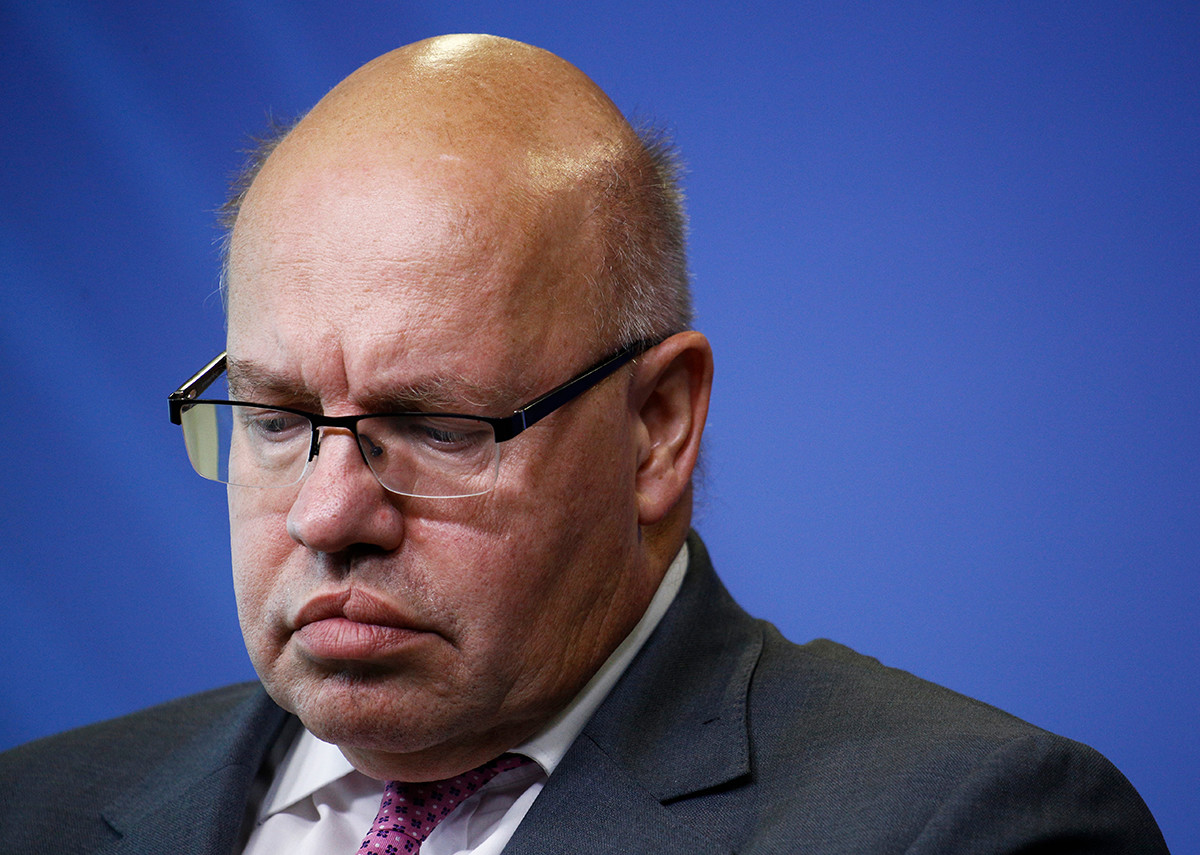
Federal Minister for Economic Affairs Peter Altmaier – Image: Alexandros Michailidis|Shutterstock.com
Without a significant acceleration of photovoltaic expansion, the recently decided phased coal phase-out will become meaningless in terms of climate policy, warns the German Solar Association (BSW), referring to a first draft of the amendment to the Renewable Energy Sources Act (EEG) that surfaced at the beginning of the week. If this acceleration fails to materialize, market researchers believe a power generation gap could emerge within just a few years. Too slow an expansion of renewable energies would inevitably lead to extended operating lives for fossil fuel and nuclear power plants in Europe.
The German Solar Association (BSW) is therefore calling on the federal government to finally remove the obstacles to this now affordable climate protection technology by enacting a solar acceleration law and to refrain from further delays. The expansion of photovoltaics (PV) must proceed twice as fast as planned by the federal government in its current 2030 climate protection program. To accelerate the annual PV installation from the current four gigawatts to at least ten gigawatts, significantly more unused commercial rooftops must be utilized for solar power generation than has been the case so far.
However, the exact opposite is now threatened if the alleged plans of the Federal Ministry for Economic Affairs should become reality, warns the BSW in its initial brief assessment of the EEG draft, which is to be discussed in the Federal Government, the Bundestag and the Bundesrat in the coming weeks.
The German Solar Association (BSW) has criticized plans by the Ministry of Economic Affairs to subsidize new photovoltaic systems only if businesses no longer consume a portion of the solar power themselves and have previously participated successfully in an auction as misguided. “These conditions are oppressive and the opposite of what the energy transition needs and drives forward. It would be like forcing farmers to market their entire harvest and no longer allowing them to consume it themselves,” explains BSW Managing Director Carsten Körnig.
The Association of German Chambers of Industry and Commerce (DIHK) agrees with the German Solar Association (BSW) in a memorandum that a system change to auctions for solar roofs will dampen companies' willingness to invest, rather than stimulate it. Experiences in neighboring France also support this view. "The French solar roof auctions are considered a failure and a deterrent for investors. They are regularly undersubscribed and also expensive. The funding requirement is 20 percent higher than in Germany," says Körnig.
Sun tax abolition: Eliminating this market barrier
Business and consumer protection associations have long been calling for increased investment in solar technology by finally eliminating market barriers such as the EEG surcharge on locally consumed solar power, introduced in 2014. Körnig: “The solar tax is blocking billions in investments in the energy transition in the electricity, heating, and mobility sectors. Besides hindering the expansion of photovoltaics, it is also impeding the market launch of urgently needed intelligent and decentralized storage and sector coupling solutions, and in some cases even violates EU law.”
The removal of this market barrier is also the top priority in a recent industry survey by the BSW and the Intersolar Europe trade fair on the most important reform requests in connection with the upcoming amendment to the law on building photovoltaics, in which over 500 solar companies participated.
The German Solar Association (BSW) warns of avoidable cost increases associated with the latest plans from the Federal Ministry for Economic Affairs and Energy and calls for a thorough revision of the draft legislation. This would allow for a rapid further reduction in the costs and dependence on subsidies for Germany's most popular form of energy. The first solar parks in Germany can now be built without subsidies, and investors can also be found for rooftop installations with market premiums of just a few cents. In 2017 – at the time of the last major amendment to the Renewable Energy Sources Act (EEG) – comparable solar power plants received subsidies that were a third higher. Over the past ten years, these subsidies have fallen to a quarter of their former value.
Suitable for:
- Planned solar brake: EEG and the Federal Cabinet
- 97 percent of solar entrepreneurs warn of a decline in demand for solar roofs
Keep in touch