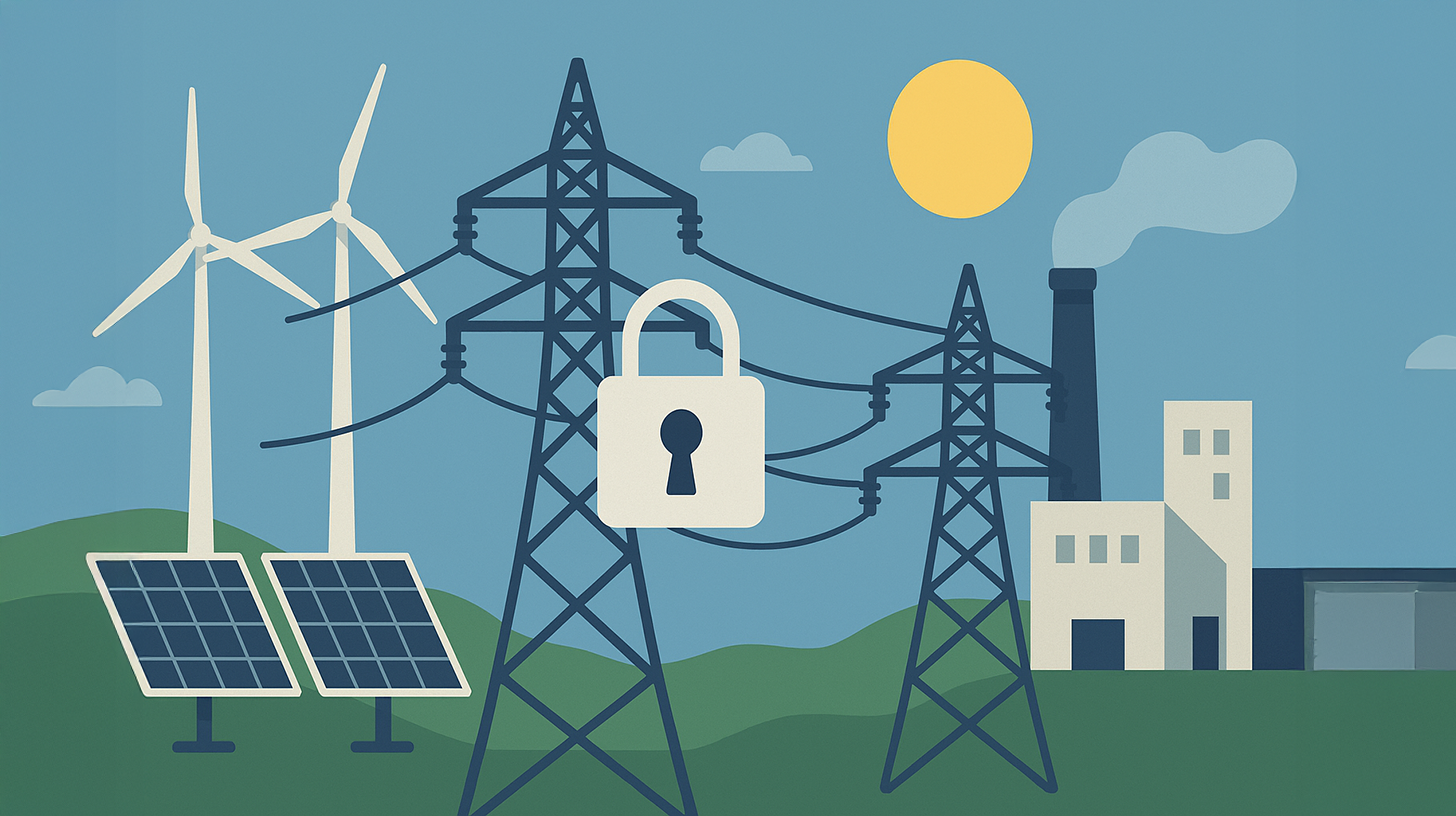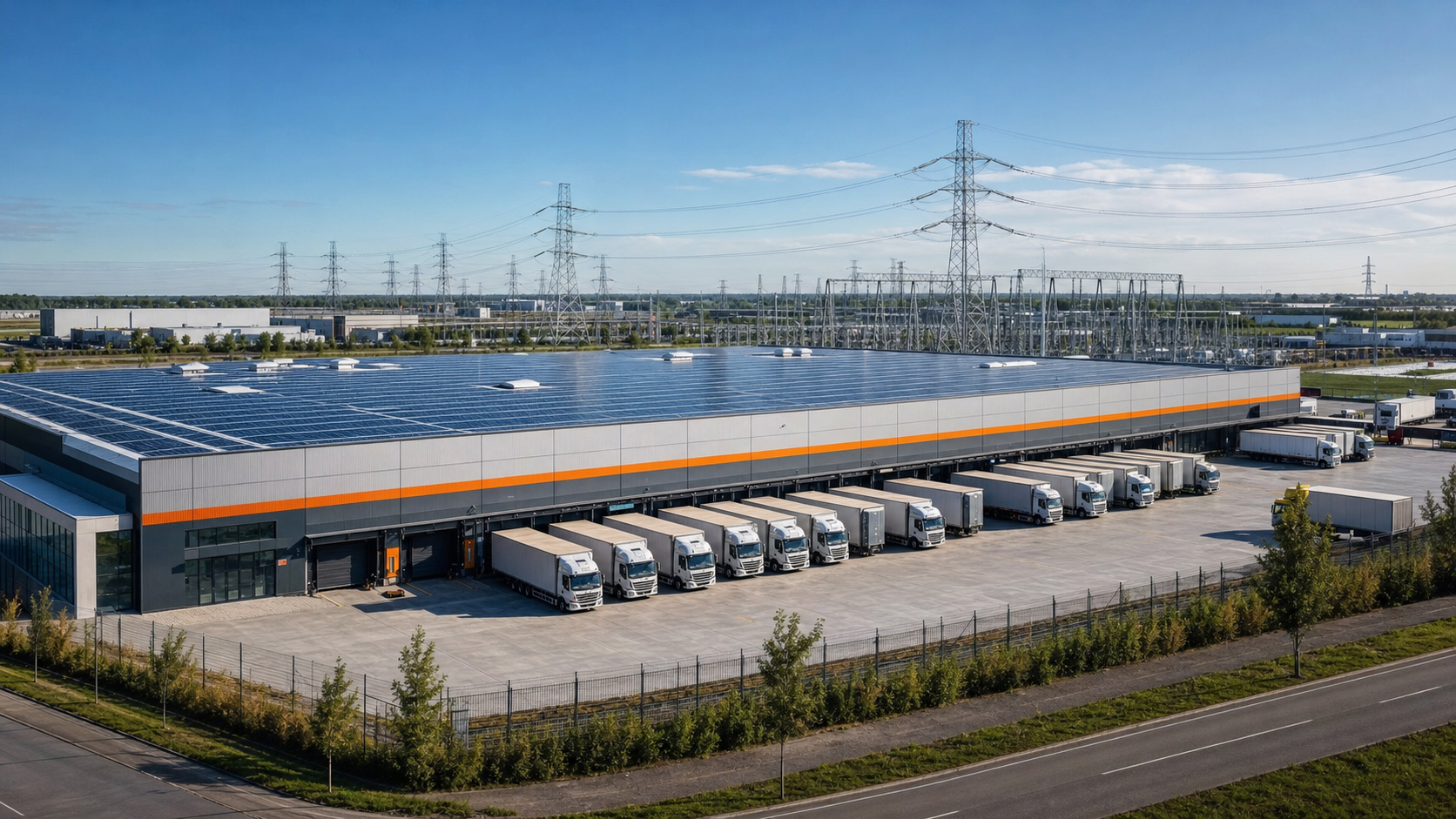
When the energy transition needs storage space: The new logistics center of Netze ODR in Ellwangen – creative image on the topic, with AI: Xpert.Digital
High-performance logistics: Transformers, cables and switchgear just in time – The logistical masterpiece for thousands of construction sites
More than just a warehouse: Blackout protection and a billion-dollar boom – What's really behind the new ODR center?
The hidden heart of the energy transition: Why this plot of land in Ellwangen is so important
Germany's energy transition isn't just about wind turbines and solar parks – it primarily requires a gigantic infrastructure behind the scenes. An impressive example of this is currently under construction in Ellwangen, Swabia: Netze ODR GmbH is planning a state-of-the-art logistics center there, covering 60,000 square meters. But appearances as a simple warehouse are deceiving. The new building will house material logistics, a backup data center, and an emergency control center under one roof. It thus perfectly symbolizes the enormous logistical and financial efforts required to transform our electricity supply. What does this mega-project mean for the region's economy, the security of our power grids, and, not least, our wallets? A closer look at a construction project that represents the future of the German energy industry.
Why a wrench will determine the future of electricity supply
A land purchase agreement for 60,000 square meters in the Swabian town of Ellwangen might seem at first glance like a minor detail in local politics. In reality, however, it points to one of the most fundamental transformations currently underway in the German energy sector. Netze ODR GmbH, the grid subsidiary of EnBW Ostwürttemberg DonauRies AG, has finalized the purchase of a site in the Neunheim industrial park with the city of Ellwangen, where a central logistics center is to be built. Managing Director Matthias Steiner, Commercial Director Günther Baur, and Mayor Michael Dambacher have thus launched a project that goes far beyond an ordinary warehouse, as it will combine materials logistics, IT security, and crisis management under one roof.
This decision is not made in a vacuum. It reflects a structural pressure weighing on all German distribution network operators: The transformation of the energy system from a few large, centralized power plants to millions of decentralized generation facilities requires a grid expansion on a scale unprecedented in the post-war history of electricity supply. Those who want to manage this expansion need not only capital and skilled workers, but also efficient logistics that can deliver cables, transformers, switchgear, and spare parts just in time to thousands of construction sites.
A single plot of land as a symptom of a much larger investment boom
To understand the scope of the Ellwangen project, it's worth looking at the figures published by EnBW ODR and its network subsidiary in recent years. In 2023, around €30.6 million flowed into the electricity distribution network, while an increase to €35 million was projected for 2024. According to current plans, an additional €90 million is to be invested by 2030, after which the company anticipates annual investments of approximately €100 million. Extrapolating to the entire timeframe up to 2045, EnBW ODR is calculating an investment volume of around €4.2 billion for network expansion alone in its relatively small supply area in East Württemberg.
The EnBW ODR Annual General Meeting in the summer of 2026 impressively confirmed this trend: Together with its grid subsidiary, around €114 million was invested in infrastructure in 2025, an increase of approximately 44 percent compared to the previous year. A further increase to around €130 million is planned for 2026, and long-term investment needs of up to €1.5 billion are projected by 2035. The focus is clearly on the electricity grids, into which around €67 million flowed in 2025, while at the same time land was secured for around 40 wind turbines with a total capacity of approximately 300 megawatts.
These regional figures are not an isolated case, but reflect a nationwide pattern. According to calculations by the Federal Network Agency based on the 2024 grid expansion plans, around €110 billion will be needed for the expansion of distribution networks in Germany alone by 2033. The German Association of Energy and Water Industries (BDEW) estimated investments in distribution networks for 2024 at around €8.6 billion, with the expectation that this sum could rise to €15.4 billion annually by 2030. The parent company EnBW itself plans to invest at least €40 billion gross between 2024 and 2030, of which around 60 percent will be allocated to system-critical infrastructure. Against this backdrop, the Ellwangen logistics center appears as a microcosm of a macroeconomic effort that spans the entire country.
From toolbox to strategic resource
What makes this new building economically attractive is less the sheer size than the logic behind it. Historically established network operators like Netze ODR typically have several warehouses for cables, transformers, switchgear, and small parts, often built up over decades at different locations. This decentralized structure was unproblematic for a long time because network expansion was a leisurely, predictable process. With the boom in renewable energies, electromobility, and heat pumps, this has fundamentally changed: construction projects must run in parallel at many locations simultaneously, material shortages become a risk to entire schedules, and the ability to react to disruptions determines the security of supply for an entire region.
This is precisely where the economic logic of centralization comes into play, a trend that has been observed in general warehouse logistics for years. Logistics real estate experts point out that operating several small, decentralized warehouses is increasingly proving more expensive than a single, large, and automated central warehouse. Management effort decreases because fewer locations need to be coordinated, while at the same time, automated conveyor technology enables the economies of scale of a high-bay warehouse that smaller forklift warehouses cannot achieve. Maintenance costs for energy and building technology are also lower for a large central warehouse than for the sum of many smaller facilities, and better utilization of truck loading capacity further reduces transportation costs.
For a network operator like Netze ODR, this means specifically: centrally consolidating 60,000 square meters allows for optimal inventory management, shortens distances between warehouses and construction sites, and enables faster response times in the event of disruptions. This is not merely a cosmetic efficiency improvement, but a business necessity given an investment volume that has more than doubled within just a few years.
Your intralogistics experts

Consulting, planning and implementation of complete solutions for high-bay warehouses and automated storage systems - Image: Xpert.Digital
More information here:
Critical infrastructure of the future: Why Ellwangen is becoming a role model for utility companies
When warehouse and crisis center become one
The true strategic core of the project, however, lies not in logistics alone, but in the deliberate integration of material storage with critical IT and control infrastructure. The planned new building will house a backup data center and a backup control center. This combination is anything but arbitrary, as it addresses a vulnerability that many energy suppliers have only recognized as a systemic risk in recent years.
A control center is the nerve center of a network operator: From here, load flows are monitored, switching operations are initiated, and disruptions are coordinated. If such a center fails, for example due to a power outage, a cyberattack, a fire, or a natural disaster, the ability to control an entire distribution network is at risk in extreme cases. A redundant backup control center at a second, physically separate location is therefore not optional, but, given the importance of electricity and gas networks as critical infrastructure, a necessity for security of supply. The same applies to the data center: In an increasingly digitized network control system, where smart metering systems, automated switchgear, and real-time data on load flows determine operations, the IT infrastructure itself becomes a core component of security of supply.
The decision to link these two highly sensitive functions specifically within a logistics center follows a logical location principle. A newly constructed, modern building on a greenfield site can be planned from the outset according to current safety, redundancy, and energy efficiency standards, rather than being retrofitted into existing buildings. Furthermore, the risk of a single incident crippling several critical functions simultaneously is reduced when these functions are physically separated from the headquarters in Ellwangen but redundantly maintained within the same new complex.
Ellwangen as a winner in energy transition logistics
The regional economic effects of this project can be clearly seen in the existing Neunheim/Neunstadt industrial park. Developed since the late 1980s, this area along the A7 motorway, with a total area of approximately 2,000,000 square meters, is the largest contiguous industrial park in the region and is currently home to more than 200 companies with a total of around 3,500 to 4,000 jobs. Located directly on the motorway, the area has become an economic engine that has transformed the former administrative and judicial town of Ellwangen into one of the most important industrial centers in East Württemberg.
With approximately 24,900 inhabitants and an unemployment rate of 2.6 percent in August 2026, Ellwangen boasts an exceptionally robust labor market for a rural region. With over 14,200 employees subject to social security contributions working in the town, and a significantly smaller number of residents of working age, the town relies heavily on commuting, with around 8,500 people commuting daily from a radius of up to 100 kilometers. In this industrially dominated environment, EnBW ODR is one of the largest employers in the area, alongside battery manufacturer Varta, IT service provider Inneo Solutions, and other medium-sized companies with more than 200 employees.
The new logistics center joins a series of major investments that have shaped the Neunheim industrial park in recent years, including Varta's Gigafactory for energy storage systems, which created around 120 new jobs, and Inneo Solutions' IT campus with capacity for up to 450 employees. This concentration of activity is of great economic importance to the city of Ellwangen, as the industrial park is already one of the most important sources of municipal business tax revenue. A central logistics center for an energy supplier with connected critical infrastructure is likely to continue this trend and simultaneously increase the attractiveness of the location for further development in the energy sector.
Network charges as the flip side of the investment offensive
As sensible as the centralization of logistics may seem from a business perspective, it cannot be considered in isolation from its financing. In Germany, investments by distribution network operators are primarily refinanced through network charges, which households and businesses pay via their electricity bills. The enormous investment surge reflected in the figures of EnBW ODR and ultimately in projects like the Ellwangen logistics center is therefore not a free benefit for the region, but rather will be co-financed by electricity customers for decades to come.
This dynamic affects not only the ODR networks but the entire industry. Energy industry observers are already warning that without a reform of the network charge system, electricity grid fees for low-voltage customers could more than double by 2045 if the necessary investments are passed on in the usual way. For a board member like Sebastian Maier of EnBW ODR, who publicly warns of the potential fallout of southern Germany in wind power, the balancing act between necessary grid expansion and acceptable costs for consumers is therefore a key business and political challenge. While a central, efficient logistics center cannot eliminate this cost pressure, it at least provides a building block for using investment funds as effectively as possible, instead of tying them up in inefficient, decentralized warehouse structures.
What the Ellwangen case reveals about the German energy transition
The new building in Ellwangen is ultimately more than just a local location decision; it's a prime example of how the demands on energy infrastructure in Germany have fundamentally changed. Where power grids were once considered static, relatively undynamic supply lines, they are now subject to a constant transformation that requires enormous logistical, digital, and human resources. The integration of material storage, data center, and control center under one roof exemplifies that security of supply in the 21st century is no longer solely a matter of copper cables and transformer stations, but also depends on functioning IT, redundant control systems, and a robust logistics chain.
For the Ostalb region, this represents a continuation of a successful economic trajectory that began with the expansion of the Neunheim industrial park: Where once purely administrative structures dominated, an ecosystem of energy, battery technology, and information technology is increasingly emerging, benefiting from the structural requirements of the energy transition. For the German energy sector as a whole, this case is further proof that the much-discussed energy transition does not depend solely on wind turbines and solar parks, but crucially on the often invisible yet indispensable infrastructure behind them, which includes a well-stocked spare parts warehouse with an integrated data center. Those who underestimate these interrelationships risk that ambitious expansion targets will fail due to very practical bottlenecks in materials, personnel, and control capacity, long before any shortage of kilowatt-hours arises.
Your global marketing and business development partner
☑️ Our business language is English or German
☑️ NEW: Correspondence in your native language!

Konrad Wolfenstein
I and my team are happy to be available to you as your personal advisor.
You can contact me by filling out the contact form here wolfenstein@xpert.digital:or simply call me at +49 7348 4088 965. My email address is
I'm looking forward to our joint project.