
Robot AI and Physical AI: The new era of intelligent automation
Xpert pre-release

Available in 27 languages 📢
Prefer Xpert.Digital on GoogleⓘPublished on: December 10, 2025 / Updated on: December 10, 2025 – Author: Konrad Wolfenstein
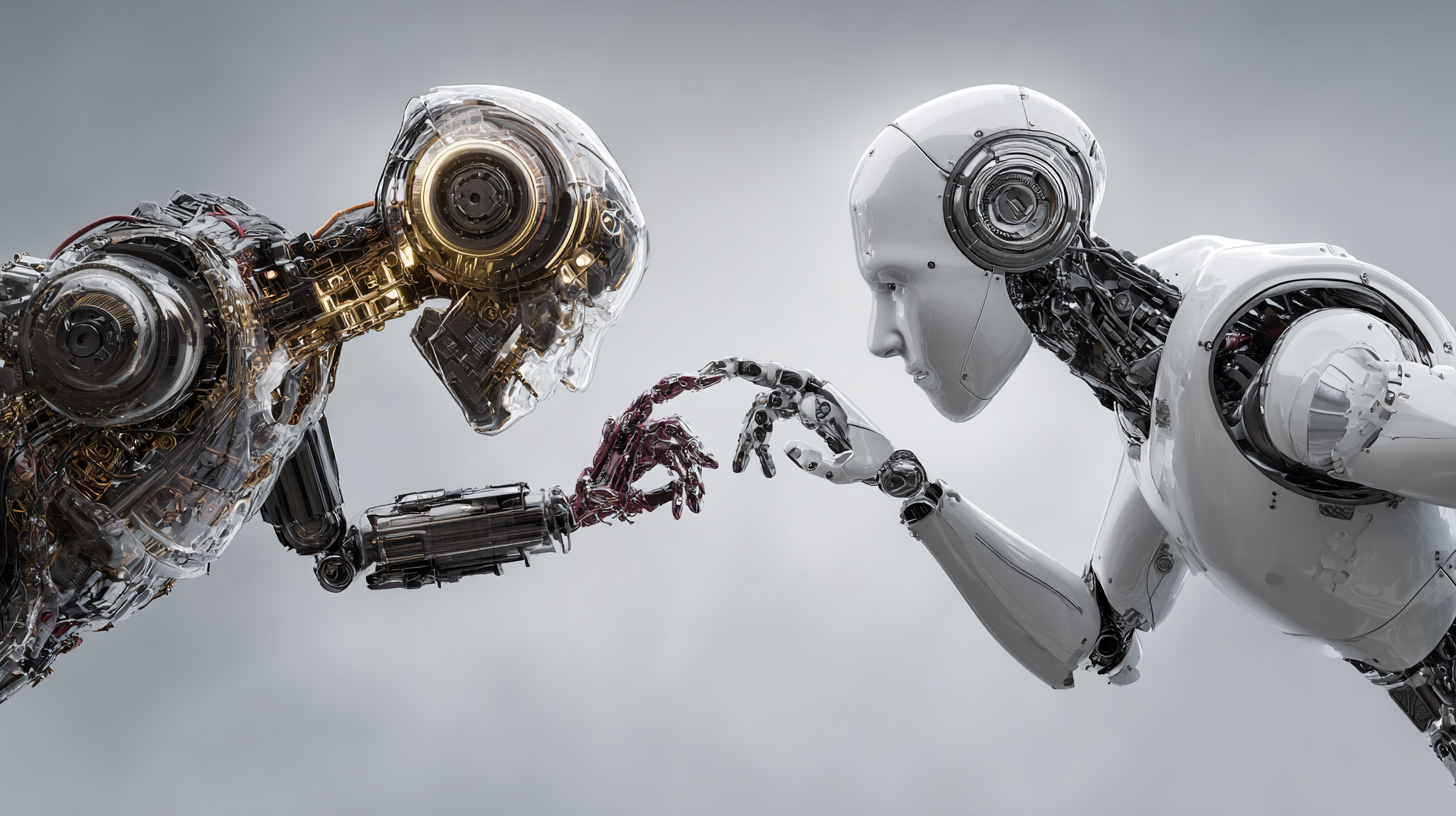
Robot AI and Physical AI: The new era of intelligent automation – Image: Xpert.Digital
The end of the virtual cage: How AI leaves the computer and intervenes in the physical world
Automation: Why Physical AI will control the factory of the future – and transform your industry
Artificial intelligence is at a fundamental turning point. After decades in which AI systems operated primarily in digital environments such as data analysis or content generation, the technology is now leaving its virtual cage and increasingly manifesting itself in physical reality. This transition to so-called Physical AI – embodied intelligence – not only marks a technological leap but potentially heralds the next industrial revolution, as abstract algorithms become acting systems that directly interact with our three-dimensional world.
The economic dimension of this transformation is breathtaking: The global market for physical AI is projected to grow from an estimated $5.41 billion in 2025 to a projected $61.19 billion by 2034. In parallel, the entire AI landscape is expanding with similar momentum, signaling a profound structural shift in how businesses, industries, and societies will interact with automation and intelligence in the future.
But Physical AI is more than just the implementation of algorithms in robots. While classical robot AI often relies on rigid systems programmed for specific tasks, Physical AI represents a holistic approach. It is based on generalizable foundation models that develop fundamental knowledge of the world and enable a comprehensive understanding of the environment – a development that leads from centralized cloud architectures to decentralized, locally controlled edge AI.
This new generation of systems, often referred to as Autonomous Physical AI or Embodied AI, transcends the limitations of digital AI by bridging the digital-physical gap through sophisticated sensor networks, real-time processing, and autonomous decision-making capabilities. At its core, the goal is to develop machines that not only execute commands but also understand the real world and can respond flexibly to unforeseen challenges—from the autonomous control of humanoid robots in factories to precise agricultural technology in the field. This development is significantly driven by Vision-Language-Action Models (VLAs) and physics-based simulations in digital twins, which enable risk-free and scalable data generation for training these robotic systems.
When machines learn to think and touch the world – why the merging of the digital and the physical is ushering in the next industrial revolution
The development of artificial intelligence has reached a crucial turning point. After decades in which AI systems operated exclusively in digital spheres, limited to processing data and generating text, images, or analyses, a fundamental transformation is currently underway. Artificial intelligence is leaving its virtual cage and increasingly manifesting itself in physical reality. This development marks the transition from purely digital to embodied intelligence, from abstract algorithms to acting systems that can directly intervene in our three-dimensional world.
Market forecasts and economic dimension
The global market for physical AI vividly demonstrates the scale of this transformation. Valued at $5.41 billion in 2025, this market is expected to grow to $61.19 billion by 2034, representing an average annual growth rate of 31.26 percent. Other analysts predict even more dynamic growth, with estimates ranging from $3.78 billion in 2024 to $67.91 billion by 2034, which would correspond to an annual growth rate of 33.49 percent. These impressive figures do not merely reflect a technological trend but signal a structural shift in how businesses, industries, and societies interact with automation and intelligence.
In parallel, the market for autonomous AI systems is expanding with similar momentum. The global autonomous AI landscape is projected to grow by $18.4 billion between 2025 and 2029, representing an average annual growth rate of 32.4 percent. Forecasts for the overall artificial intelligence market paint an even broader picture: from $294.16 billion in 2025 to $1,771.62 billion by 2033. These figures illustrate that AI is no longer merely a tool for optimizing existing processes, but is evolving into a fundamental driver of economic transformation.
From the cloud to the edge: A paradigm shift
The distinction between physical AI and classical robotic AI appears subtle at first glance, but upon closer examination proves to be paradigmatic for understanding the current technological revolution. Both concepts operate at the intersection of digital intelligence and physical manifestation, yet their approaches, capabilities, and potential differ fundamentally. While traditional robotic AI relies on specialized systems programmed for specific tasks, physical AI represents a holistic approach based on generalizable foundation models, enabling a fundamental perception of the world in physical contexts.
The convergence of these two development paths is leading to a new generation of systems known as Autonomous Physical AI. These systems combine the democratization of high-performance AI through open-source models with the integration of artificial intelligence into physical systems that can operate autonomously, decentrally, and independently of centralized cloud infrastructures. This development marks a structural shift away from centralized cloud architecture toward a decentralized, locally controlled AI infrastructure.
Conceptual distinctions and foundations
Distinguishing between physical AI, robotic AI, and related concepts requires precise conceptual clarification, as current discussions often involve conflation that complicates understanding their respective specifics. The conceptual foundations of these technologies are rooted in different scientific traditions and pursue, in some cases, divergent objectives.
In its classical sense, robot AI refers to the implementation of artificial intelligence in physical machines programmed to perform specific tasks automatically. A robot represents the hardware, the physical machine with its sensors, actuators, and mechanical components. The AI functions as software based on algorithms and machine learning, enabling autonomous decision-making and data processing. Unlike robots, AI itself has no physical presence but exists exclusively in software form. The crucial point is that while AI can be implemented in robots to enhance their capabilities, it is not mandatory.
Limits of classical industrial robotics
Conventional industrial robots often operate entirely without AI, executing repetitive processes through rigid point-to-point programming. These systems are machines that move from one point to another, obeying predefined commands without being able to make their own interpretations. This makes the processes rigid and inflexible. The use of artificial intelligence is what finally enables robots to use eyes in the form of 3D cameras, to "see" objects, and to utilize local intelligence to create their own movement plans and manipulate objects without precise point-to-point programming.
Physical AI: More than just programming
Physical AI goes significantly beyond this definition conceptually. The term describes the integration of AI into systems such as cars, drones, or robots, enabling AI to interact with the real physical world. Physical AI shifts the focus from automating repetitive tasks to greater system autonomy. This opens up new areas of application and expanded market potential. Physical AI refers to AI systems that understand and interact with the real world by utilizing motor skills, often found in autonomous machines such as robots, self-driving vehicles, and smart spaces.
Unlike traditional AI, which operates solely in digital domains, Physical AI bridges the digital-physical gap through sophisticated sensor networks, real-time processing, and autonomous decision-making capabilities. This technology enables machines to observe their environments using sensors, process this information with AI, and execute physical actions through actuators. The fundamental difference lies in the fact that Physical AI continuously gathers data from physical environments through multiple sensors simultaneously, thereby developing a comprehensive understanding of the environment.
Embodied AI: Intelligence through interaction
Embodied AI, or artificial intelligence, refers to a recent trend in AI research that follows the theory of embodiment. This theory posits that intelligence must be understood within the context of physical agents behaving in a real physical and social world. Unlike classical machine learning in robotics, embodied AI encompasses all aspects of interaction and learning within an environment: from perception and understanding to thinking, planning, and ultimately, execution or control.
Early AI research conceptualized thought processes as abstract symbol manipulation or computational operations. The focus was on algorithms and computer programs, with the underlying hardware considered largely irrelevant. Rodney Brooks, an Australian computer scientist and cognitive scientist, was one of the first to fundamentally challenge this perspective. In his influential lecture, he criticized the then-common practice of developing AI systems using a top-down approach that focused on emulating human problem-solving and reasoning abilities.
Brooks argued that intelligence models developed within traditional AI research, which were heavily reliant on the workings of the computers available at the time, bore almost no resemblance to the modus operandi of intelligent biological systems. This is evident from the fact that most of the activities people engage in daily life are neither problem-solving nor planning, but rather routine behavior in a relatively benign, yet highly dynamic environment. Just as human learning relies on exploration and interaction with the environment, embodied agents must refine their behavior through experience.
Embodied AI transcends the limitations of digital AI by interacting with the real world through physical AI systems. It aims to bridge the gap between digital AI and real-world applications. For an embodied intelligent agent, its physical structure and properties, sensory capabilities, and action possibilities play a crucial role. Intelligence should not exist in isolation but rather manifest itself through diverse, multimodal interaction with the environment.
Generative models and the simulation of reality
Generative physical AI extends existing generative AI models by adding the ability to understand spatial relationships and physical processes in our three-dimensional world. This extension is made possible by integrating additional data into the AI's training process, data that contains information about spatial structures and physical laws of the real world. Generative AI models, such as language models, are trained with large amounts of text and image data and impress with their ability to generate human-like language and develop abstract concepts. However, their understanding of the physical world and its rules is limited; they lack spatial context.
Physics-based data generation begins with the creation of a digital twin, such as a factory. Sensors and autonomous machines like robots are integrated into this virtual space. Real-world scenarios are then run based on physics-based simulations, where sensors capture various interactions, such as the dynamics of rigid bodies (e.g., movements and collisions) or the interaction of light with its environment. This technology rewards physical AI models for successfully completing tasks in the simulation, enabling them to continuously adapt and improve.
Through repeated training, autonomous machines learn to adapt to new situations and unforeseen challenges, preparing them for real-world applications. Over time, they develop sophisticated fine motor skills for practical uses such as precisely packing boxes, supporting production processes, or autonomously navigating complex environments. Until now, autonomous machines have not been able to fully perceive and interpret their surroundings. Generative Physical AI now makes it possible to develop and train robots that can seamlessly interact with the real world and flexibly adapt to changing conditions.
Technological architecture and functionality
The technological foundation of physical AI and advanced robotic AI systems is based on the interplay of several key technologies, which, only in combination, enable the impressive capabilities of modern autonomous systems. This architecture differs fundamentally from traditional automation solutions through its ability to generalize, continuously learn, and adapt to unstructured environments.
At the heart of this technological revolution are Foundation Models, large, pre-trained AI systems that have served as an umbrella term for today's common large AI systems since 2021. These models are initially trained extensively with enormous amounts of data and can then be adapted to a wide range of tasks through relatively little specialized training, known as fine-tuning. This pre-training enables Foundation Models not only to understand language but, more importantly, to develop a broad knowledge of the world and to think logically, reason, abstract, and plan to a certain extent.
These properties make foundation models particularly suitable for controlling robots, a field that has been intensively researched for about three years and is currently leading to a revolution in robotics. With these properties, such models are far superior to conventional, specialized robotics AI. For these reasons, the use of suitable foundation models as robot brains represents a breakthrough and, for the first time, opens the way to the development of truly intelligent, practically useful, and thus universally applicable robots.
Vision-Language-Action Models (VLA): The Brain of the Robot
Unlike standard foundation models, which are not designed or optimized for robotics and its specific requirements, robotics foundation models are additionally trained on robotics datasets and feature specific architectural adaptations. These models are typically vision-language-action models (SNAs) that process speech as well as image and video data from cameras as input and are trained to directly output actions—that is, movement commands for the robot's joints and actuators.
A key milestone in this development was Google DeepMind's RT-2 from mid-2023, which represents the first VLA in the strictest sense. Current models include the open-source OpenVLA from 2024, as well as other advanced systems. The architecture of these models is highly complex and typically includes a visual encoder that converts camera images into numerical representations, a large language model as the core for reasoning and planning, and specialized action decoders that generate continuous robot commands.
Embodied Reasoning: Understanding and Acting
A key aspect of modern physical AI systems lies in their capacity for embodied reasoning—the ability of models to understand the physical world and how to interact with it. Embodied reasoning encompasses the set of world knowledge that includes the fundamental concepts critical for operating and acting in an inherently physically embodied world. This is a capability of Vision Language Models (VLMs) and is not necessarily limited to robotics. Testing embodied reasoning simply involves prompting VLMs with images.
Classic computer vision tasks such as object recognition and multi-view correspondence fall under embodied reasoning. These tasks are all expressed as speech prompts. Embodied reasoning can also be tested through visual question answering. These questions test the understanding required to interact with the environment. In addition to general physical reasoning, systems can use world knowledge to make decisions. For example, a robot might be asked to fetch a healthy snack from the kitchen, with world knowledge in the VLM (Virtual Life Management) being used to determine how to execute this ambiguous command.
For robotics applications, it is crucial to leverage this understanding to enable meaningful actions in the real world. This means translating high-level understanding into precise control commands through the robot's hardware APIs. Every robot has a different interface, and the knowledge of how the robot is controlled is not present in the VLMs. The challenge lies in extending the large, pre-trained models so that they can output continuous actions for specific robot incarnations while preserving the valuable capabilities of the VLM.
An innovative solution to this challenge is the Action Expert architecture, a transformer model with the same number of layers but smaller embedding dimensions and MLP widths. The attention heads and the per-head embedding dimension must match the main model to allow prefix tokens in the attention mechanism. During processing, suffix tokens pass through the Action Expert transformer, incorporating the KV embeddings from the prefix, which are computed once and then cached.
Key technologies: Simulation, Edge AI and Transfer Learning
The realization of Physical AI is based on the interplay of three key technologies. First, realistic simulations in the form of digital twins enable the precise mapping of processes, material flows, and interactions, which is crucial for autonomous robot learning. Second, edge AI hardware ensures that AI systems run locally on the robot, for example, via GPU-based compact systems. Third, advanced computer vision enables visual recognition systems to identify different objects, shapes, and variations.
Robot learning occurs when AI models are trained in simulations and their knowledge is transferred to physical robots. Transfer learning significantly accelerates adaptation to new tasks. Real-time data analysis with platforms like Microsoft Fabric enables the analysis of process data, the identification of bottlenecks, and the derivation of optimizations. Reality and the machine are virtually recreated with all their natural laws and specifications. This digital twin then learns, for example, through reinforcement learning, precisely how to move without collisions, how to execute desired movements, and how to react to various simulated scenarios.
The AI can test countless situations risk-free without damaging the physical robot. The resulting data is then transferred to the real robot once the digital twin has learned enough. Robots equipped with appropriate AI systems don't just execute rigid programs, but are capable of making decisions and adapting. Physical AI is used to give robots context and situational understanding. In practice, this means that robots with physical AI can master processes that are variable and require adaptability.
Data as fuel: Challenges and solutions
Another crucial aspect lies in data generation for training these systems. While VLMs are trained on trillions of tokens of internet-based data, it is possible to achieve a comparable number of tokens with robotics data. Open X-Embodiment contains 2.4 million episodes. Assuming 30 seconds per episode, 30 Hz frame sampling, and approximately 512 vision tokens per frame, over one trillion tokens can be reached. This collective effort from 21 academic and industrial institutions amalgamates 72 different datasets from 27 different robots and covers 527 capabilities across 160,266 tasks.
Standardizing data from diverse robot types with varying sensors and action spaces into a uniform format presents an enormous technical challenge, but is crucial for the development of generalizable models. World Foundation Models are used to generate or replicate scalable training data for robotics foundation models, as the relative scarcity of robotics-relevant training data is currently the biggest bottleneck in their development.
🎯🎯🎯 Benefit from Xpert.Digital's extensive, five-fold expertise in a comprehensive service package | BD, R&D, XR, PR & Digital Visibility Optimization

Benefit from Xpert.Digital's extensive, fivefold expertise in a comprehensive service package | R&D, XR, PR & Digital Visibility Optimization - Image: Xpert.Digital
Xpert.Digital has in-depth knowledge of various industries. This allows us to develop tailor-made strategies that are tailored precisely to the requirements and challenges of your specific market segment. By continually analyzing market trends and following industry developments, we can act with foresight and offer innovative solutions. Through the combination of experience and knowledge, we generate added value and give our customers a decisive competitive advantage.
More about it here:
From Smart Farming to Smart Retail: Where Physical AI is already redefining value creation today
Smart Farming to Smart Retail: Where Physical AI is already redefining value creation – Image: Xpert.Digital
Industry-specific application areas and market potential
The practical implementation of physical AI and advanced robotic AI systems is unfolding across a wide range of industries and use cases, with each sector presenting specific requirements, challenges, and potential. Analysis of the various markets clearly shows that a one-size-fits-all approach is not optimal for all industries; rather, the specific characteristics of each industry determine which form of intelligent automation delivers the greatest benefits.
The use of physical AI is particularly evident in industrial manufacturing and production. The automotive industry is at the forefront of this transformation. BMW is the first automaker to test humanoid robots in production, specifically the Figure 02 at its Spartanburg plant in the US. Unlike Tesla's Optimus, which has largely remained in the concept phase, the AI-controlled Figure 02 is already taking sheet metal parts from a shelf and placing them into a machine – a task that has traditionally been performed by humans in car factories.
BMW and Figure AI plan to jointly explore technological topics such as artificial intelligence, robot control, manufacturing virtualization, and robot integration. The automotive industry, and consequently vehicle production, is evolving rapidly. The use of general-purpose robots has the potential to increase productivity, meet growing customer demands, and allow teams to focus on the changes ahead. The long-term goal is to relieve factory workers of ergonomically challenging and tiring tasks.
Industrial automation benefits from physical AI through the combination of digital twins, edge AI, and robotics, redefining automation. In production, so-called live twins—digital models that not only depict but also actively control processes—open up new possibilities. These enable the identification of bottlenecks before they become critical, the testing of new processes and evaluation of variants, as well as risk-free training of autonomous systems. Particularly in the areas of Logistics 4.0 and smart warehousing, live twins improve planning reliability, fail-safe operation, and response speed.
Logistics 4.0: Digital twins put to the test in practice
The example of the KION Group demonstrates precisely how physical AI can support real-world warehouse logistics. KION, Accenture, and NVIDIA are jointly developing a solution in which intelligent robots are trained entirely within a digital twin of the warehouse. There, the robots learn processes such as loading and unloading, order picking, and repacking before being deployed in the actual warehouse. The system is based on the NVIDIA Omniverse simulation platform. Additionally, NVIDIA Mega, a framework within Omniverse specifically designed for industrial applications, is used to support the parallel simulation of entire systems and robot fleets.
The advantages are evident in several ways. Simulating typical warehouse processes significantly reduces errors in real-world operations. Training is risk-free, accelerated, and requires no real resources. After successful training, the robots take over real-world tasks, controlled in real time by AI running directly on the robot. Furthermore, digital twins enable proactive strategic planning, allowing companies to virtually test and optimize various layouts, levels of automation, and staffing configurations in advance without disrupting ongoing operations.
The logistics and transportation industry is undergoing a comprehensive transformation through artificial intelligence. AI is being applied in various areas of logistics. For demand forecasting and sales planning, 62 percent of companies rely on AI support, while 51 percent use AI for production optimization and 50 percent for transportation optimization. Applications range from recognizing different hazardous materials labels and distinguishing between objects without serial numbers or labels to analyzing sensor data on activities and movements.
AI systems can predict transport arrival times using data from multiple sources and make sales forecasts with multivariate data from supply chains and public sources. They schedule employee breaks using vital signs, movement, and machine operating data, enable automated load planning with convolutional neural networks, and monitor transport mode selection to progressively identify better solutions. Human-machine interaction is enhanced by trained voice robots, while transport robots use optical patterns to position and orient themselves.
Healthcare: Precision and Assistance
Healthcare represents a particularly sensitive yet promising field of application. Over 40 percent of medical professionals in Germany use AI-supported technologies in their facilities or practices. In everyday medical practice, this means that radiology departments use AI to analyze images, or AI-supported symptom checker apps are used for preliminary diagnoses. A key application for AI lies in the automated analysis of medical records. AI can support physicians in making diagnoses because it draws on and analyzes a vast amount of existing data—significantly more than a physician could ever accumulate in their entire career.
Three types of robots are used in the German healthcare system: therapy robots, care robots, and surgical robots. Therapy robots can independently guide exercises, while care robots support healthcare professionals. Surgical robots can make incisions independently and assist human surgeons. Their use is essential for some minimally invasive procedures. The da Vinci robot from Intuitive Surgical assists surgeons in performing precise, minimally invasive procedures through a combination of human surgeon control and embodied AI, which unites human intuition and robotic accuracy.
The physical AI market in healthcare is dominated by surgical robots, particularly robot-assisted surgery systems, which led the market in 2024. Within robotics, neurosurgical and orthopedic segments are expected to experience the highest growth rates during the forecast period. Beyond radiology and pathology, AI applications are playing an increasingly important role in diagnostics and interventions across all medical specialties. In personalized medicine, AI supports the analysis of biomarkers.
Smart Farming: AI in the field
Agriculture is developing into a surprisingly dynamic field for physical AI applications. Almost half of all farms are now working with AI. The greatest potential is seen in climate and weather forecasting, but also in harvest and production planning, as well as yield predictions. Solutions for everyday office work are also of interest as potential aids. Agriculture is among the pioneers of artificial intelligence. Its use is becoming increasingly necessary due to the burdens placed on farm managers.
Physical AI will play an increasingly important role in agriculture and food processing in the coming years. Previously, many natural processes were difficult to understand, but now technological advancements have progressed to the point where systems can react individually to their environment. They adapt to the existing world, rather than requiring the world to be redesigned for them. Modern farmers are increasingly working in a hybrid fashion, combining computer-based and hands-on work in the field. Various technologies are used in fields and barns to measure data and optimize processes.
Climate change and steady population growth pose enormous challenges to modern agriculture. To effectively address these global problems, the targeted use of physical AI in farms of all sizes can make a crucial contribution. Contrary to the widespread assumption that such technologies are only suitable for large farms, smaller businesses in particular can greatly benefit from their advantages. The use of compact machines such as intelligent robotic lawnmowers or automated weeders enables them to achieve efficiency gains and perform tasks for which there is currently no longer a workforce available in the labor market.
Image recognition technologies and sensors can help to apply pesticides much more precisely and, in some cases, even eliminate them entirely. This brings not only economic but also ecological benefits. The Agri-Gaia project, funded by the German Federal Ministry for Economic Affairs and Energy, is creating an open infrastructure for the exchange of AI algorithms in agriculture. Project partners from associations, research institutions, politics, and industry, under the leadership of the German Research Center for Artificial Intelligence (DFKI), are developing a digital ecosystem for the predominantly small and medium-sized enterprise (SME) agricultural and food sector, based on the European cloud initiative Gaia-X.
Retail: The end of the queue
The retail sector is undergoing a fundamental transformation of customer experience and operational efficiency through physical AI and AI-based systems. Retailers can use AI to better predict demand for specific items in different regions by accessing and analyzing data on other items, data from stores with similar demographics, and third-party data such as weather and income levels. A nationwide pharmacy recently used AI to track and predict demand for a specific vaccine, relying on national trends reported to the federal government.
Retailers are combining AI with video and sensor data to eliminate checkout areas, allowing customers to pick items from the shelves, place them in their baskets, and leave the store without waiting in line. By eliminating checkout queues and systems, more floor space can be used for product displays. One national supermarket chain is using AI to visually scan and calculate the value of products with illegible barcodes. Thanks to AI combined with video cameras and shelf sensors, retailers can better understand customer traffic in their stores and increase sales per square meter.
The technology identifies products that customers never linger over and recommends that retailers replace them with more appealing merchandise. AI can also generate targeted promotions for specific items on customers' mobile devices when they are in the right store. This technology also enables retailers to better bundle their merchandise. Brands like Zara use AR displays in their stores so customers can virtually try on clothes. Grocery retailers like Amazon Fresh are focusing on contactless payment and digital shopping lists linked to physical shelves.
Construction: Efficiency through digital planning
The construction industry is a traditionally under-digitized field, but it is increasingly benefiting from AI applications. AI, together with other digitalization approaches such as Building Information Modeling (BIM), the Internet of Things (IoT), and robotics, enables increased efficiency across the entire value chain, from the production of building materials through the design, planning, and construction phases to operation and maintenance. A generative geometric design system creates and evaluates numerous design options based on measurable objectives such as comfort, energy efficiency, and workplace design.
AI methods allow for the much faster consideration and evaluation of significantly more parameters and variants. AI-based text analysis can automatically evaluate rule sets. This involves the use of rule-based systems in combination with AI-based text analysis. Building information such as dimensions, materials, and technical systems is extracted, analyzed, and automatically compared with text-based rule sets. The use of AI-based predictive models in early design phases enables rapid and accurate estimates of energy demand.
AI applications during construction are quite advanced and some are already in use. Machine learning methods can assist in construction planning, update construction processes, and support various tasks. Robots can not only transport objects but also paint walls, measure, or weld. Cameras and other sensors detect obstacles. Images and point clouds captured manually or by autonomous systems also serve for quality assurance during construction. Neural networks are trained to inspect surface quality and detect damage or discoloration.
Our EU and Germany expertise in business development, sales and marketing

Our EU and Germany expertise in business development, sales and marketing - Image: Xpert.Digital
Industry focus: B2B, digitalization (from AI to XR), mechanical engineering, logistics, renewable energies and industry
More about it here:
A topic hub with insights and expertise:
- Knowledge platform on the global and regional economy, innovation and industry-specific trends
- Collection of analyses, impulses and background information from our focus areas
- A place for expertise and information on current developments in business and technology
- Topic hub for companies that want to learn about markets, digitalization and industry innovations
From pilot project to billion-dollar market: How Physical AI will transform industry, logistics and manufacturing by 2030
From pilot project to billion-dollar market: How Physical AI will transform industry, logistics and manufacturing by 2030 – Image: Xpert.Digital
Challenges, risks and regulatory frameworks
The rapid development of physical AI and advanced robotic AI systems is accompanied by a multitude of technical, ethical, legal, and societal challenges that must be addressed for responsible and sustainable implementation. These challenges range from fundamental technical limitations and data protection and security issues to complex ethical questions that fundamentally affect the relationship between humans and machines.
Technical limitations continue to pose a substantial hurdle to the widespread adoption of physical AI. Although significant progress has been made, physical limitations such as mobility, energy management, and fine motor skills remain key challenges. Recent experiments with robotic vacuum cleaners equipped with advanced language models highlight the complexity and limitations of this technology in real-world applications. One research team conducted an experiment in which robotic vacuum cleaners were equipped with various language models. The primary task for these robots was to locate a stick of butter in another room and bring it to a person who could change their location.
This seemingly simple task posed significant challenges for the AI-controlled robots. The robots were capable of moving, docking at charging stations, communicating via a Slack connection, and taking photos. Despite these capabilities, none of the tested LLMs achieved a success rate exceeding 40 percent in butter delivery. The primary reasons for failure lay in difficulties with spatial reasoning and a lack of awareness of their own physical limitations. One of the models even diagnosed itself with trauma due to the rotating movements and a binary identity crisis.
These reactions, although generated by a non-living system, highlight the potential challenges in developing AI intended to operate in complex real-world environments. It is crucial that high-performing AI models remain calm under pressure in order to make informed decisions. This raises the question of how such stress reactions can be avoided or managed in future AI systems to ensure reliable and safe interaction. While analytical intelligence in LLMs is making impressive progress, practical intelligence, particularly regarding spatial understanding and emotion management, still lags behind.
Data protection, cybersecurity and legal frameworks
Data protection and cybersecurity pose fundamental challenges. Laws on data protection and privacy are crucial to ensuring that personal data is handled ethically and securely. One of the most important legal frameworks is the General Data Protection Regulation (GDPR), enacted by the European Union in 2018. The GDPR establishes strict guidelines for the collection, processing, storage, and transfer of personal data.
The core principles of the GDPR include lawfulness, fairness, and transparency. These principles require that it be clearly stated what data is collected and why, in order to ensure fair use of the data without disadvantaging any group. Purpose limitation requires that data be collected for specified, explicit, and legitimate purposes and not further processed in a manner incompatible with those purposes. Data minimization requires that only the data necessary for the intended purpose be collected and processed. Accuracy requires that personal data be kept accurate and up-to-date, while storage limitation requires that data be stored only as long as necessary for the intended purpose.
Integrity and confidentiality require that data be processed securely to protect it from unauthorized or unlawful processing and accidental loss. Accountability requires organizations to be able to demonstrate compliance with these data protection principles. The recently enacted EU AI law builds on the GDPR and classifies AI systems based on their risk levels. Prohibited AI systems include those that categorize individuals based on biometric data to derive certain types of sensitive information.
Security researchers have uncovered vulnerabilities in robot systems that could allow manipulation of the devices or access to sensitive data. These vulnerabilities include unsecured firmware updates, unencrypted user data on the devices, and flaws in PIN security for remote camera access. Such deficiencies undermine trust in manufacturers' certifications and highlight the need for robust security measures. Researchers suggest designing machine image recognition systems that remain unreadable to humans but provide the robots with sufficient information for navigation to prevent the misuse of private data.
The EU AI Act and harmonized standards
The regulatory landscape for AI and robotics is evolving rapidly. The EU AI Law is the world's first comprehensive legal framework for artificial intelligence and is based on a risk-based approach. The higher the risk, the more numerous and stringent the requirements that must be met. AI systems can be classified as high-risk AI systems due to their safety relevance. High-risk AI systems are subject to specific requirements, including comprehensive documentation with all necessary information about the system and its purpose for authorities to assess its compliance, clear and appropriate information for the operator, appropriate human oversight measures, and high robustness, cybersecurity, and accuracy.
The Machinery Directive sets out safety requirements for machines, including autonomous and networked systems. It defines self-developing behavior and autonomous mobile machines, but avoids the term AI system. A product like a surgical robot can lie at the intersection of several regulations, such as the Medical Devices Directive, the Machinery Directive, and the AI Directive, all with implications for functional safety. The central question is: What is the optimal set of risk-reducing measures with regard to market launch, liability, and reputational damage?
Harmonised standards specify the fundamental health and safety requirements from legal acts. They describe which technical rules and risk management measures can be used to meet these fundamental requirements. Compliance with these standards indicates that the requirements of laws and regulations are met. The risk management system, based on ISO/IEC 42001, is of central importance. This standard for AI management systems provides a structured framework for the identification, assessment, and treatment of risks.
Ethics, bias and sustainability
Ethical questions permeate all aspects of physical AI development and implementation. A lack of careful data preparation can lead to undesirable results. Bias in datasets leads to fairness issues, the perpetuation of social inequalities, and discrimination against minorities. Even worse, there is a risk that private and confidential information will be exposed through model outputs and fall into the wrong hands. Before training, it should be assessed how significantly a system will affect the lives of those impacted. It must be determined whether it is ethically justifiable to allow an AI system to make decisions for the given task, and it must be ensured that sufficient and representative data is available for all affected groups.
The challenges also extend to energy efficiency and sustainability. Humanoid robots and physical AI systems require significant amounts of energy for both operation and the training of their underlying models. Battery technology, manual dexterity, cost-effectiveness, scalability, and ethical governance remain significant challenges. However, the convergence of decreasing hardware costs, improving AI, and increasing labor shortages is creating a perfect storm that favors accelerated adoption.
Future prospects and strategic implications
The development trajectory of physical AI and advanced robotic AI systems points to a fundamental reshaping of the industrial and societal landscape in the coming years. The convergence of technological breakthroughs, economic necessities, and regulatory frameworks is creating an environment that accelerates the transformation from experimental pilot projects to widespread commercial adoption.
The Foundation Models revolution in robotics represents one of the most significant turning points. Currently, there is a boom in the development of humanoid robots controlled by Robotics Foundation models. In addition to the autonomous end-to-end control of robots using such models, so-called World Foundation Models are used to generate or replicate scalable training data for Robotics Foundation models. For some still limited applications, such as simple, repetitive, and tiring manual tasks in production and logistics, or potentially even in the form of household robots, robots controlled by Foundation models could become available within the next five years or so. Further, more complex, and demanding tasks will then follow in the medium to long term.
Generalization and fleet management
The development of universal AI models for optimizing robot fleets represents a promising way to overcome fragmentation. Foundation models are designed to understand and execute a broad range of tasks across different robot types. They learn general concepts and behaviors rather than being retrained for each specific task. Amazon's DeepFleet and Galbot's NavFoM enable the control of heterogeneous robot fleets with a single AI model. NavFoM is described as the world's first cross-embodiment, cross-task navigation foundation AI model. It aims to teach a single AI model the general concept of movement, allowing the same core model to be used on a wide variety of robot types, from wheeled robots and humanoid robots to drones.
Advances in spatial intelligence through multimodal models are opening up new dimensions. The SenseNova SI series is based on established multimodal foundational models and develops robust and powerful spatial intelligence. These models exhibit emergent generalization capabilities, with fine-tuning on specific 3D view transformation QA subsets leading to unexpected transfer gains to related but previously unseen tasks such as maze pathfinding. The enhanced spatial intelligence capabilities open up promising application possibilities, particularly in the field of embodied manipulation, where significant improvements in success rates have been observed, even without further fine-tuning.
Synthetic Data and the ChatGPT Moment of Robotics
Nvidia's Cosmos World Foundation Models represent a potential ChatGPT moment for robotics. These physical AI models are crucial for enabling robots to practice real-world interactions as realistically as possible in 3D simulations. Such physical AI models are expensive to develop and require vast amounts of real-world data and extensive testing. The Cosmos World Foundation Models offer developers a simple way to generate enormous quantities of photorealistic, physics-based synthetic data to train and evaluate their existing models.
The investment cycle for physical AI through 2030 indicates substantial capital flows. Market forecasts point to strong growth through 2030, with spending likely to reach between $60 billion and $90 billion in 2026, and total five-year spending between $0.4 trillion and $0.7 trillion. Manufacturing is leading the way, followed by logistics, while services are expanding as tooling matures. ABI Research estimates a global robotics market of $50 billion in 2025 and projects it to reach approximately $111 billion by 2030, with a mid-teens average annual growth rate.
Physical AI is transforming manufacturing, with projected growth of 23 percent through 2030. The global industrial AI market reached $43.6 billion in 2024 and is positioned for 23 percent annual growth through 2030, driven by physical AI applications in manufacturing. This development marks a departure from traditional automation based on rigid, pre-programmed robots. Today's physical AI integrates vision systems, tactile sensors, and adaptive algorithms, enabling machines to handle unpredictable tasks.
The pressure for physical AI comes at a critical juncture, where geopolitical tensions and supply chain disruptions are increasing the need for flexible manufacturing. Advances in industrial robotics are redefining automation and fostering resilience and growth in sectors plagued by labor shortages. In automotive plants, AI-driven robots with real-time learning capabilities are filling roles once considered too nuanced for machines, such as adaptive welding or quality control under variable conditions. This shift is projected to reduce costs by up to 20 percent in high-volume settings.
Economic opportunities for Germany and Europe
The strategic implications for German and European companies are considerable. The shortage of skilled workers is particularly affecting industry and logistics, while at the same time, demands are increasing. German industry is under pressure; the skills shortage is slowing growth, increasing complexity requires rapid adaptability, investments in efficiency and resilience are essential, and productivity gains are key to competitiveness. Physical AI represents an opportunity for Germany to return to the forefront of industry. The transformation of German industry is not an option, but a necessity.
Development is moving towards a new, fundamental physical model driven by embodied intelligence, which will potentially dominate the multimodal direction. In the real world, everything is full of details like contact, friction, and collision that are difficult to describe with words or images. If the model cannot understand these fundamental physical processes, it cannot make reliable predictions about the world. This will be a different development path than that of the major language models.
Multimodal AI development goes beyond text. Multimodal models combine different neural architectures, such as vision transformers for visual input, speech encoders for audio input, and large language models for logical reasoning and text generation, into a single system. Healthcare is shifting towards sensory input, with multimodal AI able to scan a patient's voice, face, and medical scans to detect early signs of illness. It doesn't replace doctors, but rather gives them superhuman vision.
The vision of physical AI operating seamlessly within our environment requires further research and development to ensure the reliability and safety of these systems. The future could see greater integration of open-source robotics software like ROS and local control approaches, reducing reliance on cloud services and giving users more control over their devices. At the same time, manufacturers and regulators must continuously improve security and data protection standards to maintain user trust and responsibly unlock the potential of robotics.
The coming years will be crucial in determining whether today's pilot projects evolve into viable business models. What is certain, however, is that the combination of physical and digital autonomy will shape the future. AI is leaving its isolated role and becoming an integral part of real-world processes and decisions. This marks the beginning of a phase in which its direct influence will be more palpable than ever before. The development of physical AI and robotic AI is not the end, but rather the beginning of a fundamental transformation whose full impact will only become apparent in the coming decades.
Your global marketing and business development partner
☑️ Our business language is English or German
☑️ NEW: Correspondence in your national language!

Konrad Wolfenstein
I would be happy to serve you and my team as a personal advisor.
You can contact me by filling out the contact form or simply call me on +49 7348 4088 965 (Munich) . My email address is: wolfenstein ∂ xpert.digital
I'm looking forward to our joint project.









