The end of organic reach: Why your LinkedIn success is a mathematical illusion
Xpert pre-release

Language selection 📢
Published on: December 8, 2025 / Updated on: December 8, 2025 – Author: Konrad Wolfenstein

The end of organic reach: Why your LinkedIn success is a mathematical illusion – Image: Xpert.Digital
The experts' "puppet show": How the marketing bubble lies to itself
The illusion of digital visibility: When hamster-wheel capitalism becomes self-deception
Algorithm Trap: Why Authenticity is Punished and Polarization is Rewarded
The attention economy of the 21st century has created a myth that has little in common with reality. While supposed media experts entertain themselves in a grand puppet show, a fundamental economic redistribution is taking place, concealing a highly asymmetrical system under the guise of democratization and equal opportunity. The problem doesn't begin with a lack of reach, but with a fundamentally flawed understanding of how value creation actually works in this new economy.
Suitable for:

The reality of organic reach and the illusion of controllability
According to recent analyses, organic reach on platforms like LinkedIn, Instagram, TikTok, and others is clearly declining, although the specific figures vary depending on the network and study. The following numbers should therefore be understood as guidelines and illustrative benchmarks, not as exact, platform-independent industry standards.
In the period leading up to the third quarter of 2025, various analyses indicate that organic reach on some major networks could fall by orders of magnitude, up to about two-thirds, below previous peaks (e.g., on LinkedIn, and to some extent on meta-platforms), while other channels would be less affected. For typical business or creator accounts, this often translates to a decline in average reach of roughly 10 to 20 percent within a year, roughly between 2024 and 2025. A practical illustration of this: someone who previously achieved an average of around 10,000 views per post now often sees only a fraction of that, for example, 3,000 to 5,000 views – depending on the platform, niche, and posting quality.
What is particularly striking is the unequal distribution of this reach: A very small portion of accounts – roughly the top one to a few percent – grows significantly faster than the broad average and receives a disproportionately large share of visibility. Specific multiples such as "100-fold" or "150-fold" should be understood as illustrative approximations based on individual data sets or model calculations, not on a globally standardized metric. However, the underlying mechanism is largely undisputed: The algorithms prioritize content that quickly generates strong interactions, optimized for dwell time and advertising revenue, thus reinforcing "winner-takes-most" effects in favor of already high-performing creators.
LinkedIn stands out as an exception, where personal profiles can still achieve 20 to 30 percent organic reach. But even here, participating in this game comes with significant hidden costs. The fact that reach is measurable doesn't answer the crucial question: What does generating this reach actually cost? Most media experts are deluding themselves when they claim their visibility stems from their expertise. They stubbornly ignore the fact that LinkedIn, Meta, and TikTok have deliberately limited access to the attention of their existing contacts.
The irony is that many of these so-called experts are simultaneously the beneficiaries of this system. They produce content via digital marketing and social media, while they themselves are caught in the clutches of the very system they claim to understand. It's a circular game in which the players fail to realize that they themselves are the pieces of the game.
Suitable for:

The platform economy as the perfect extraction machine
The business models of the major social media platforms are based on an elegant form of exploitation that is self-justifying and perfectly legal. Meta earned more than $160 billion in 2024, 97.5 to 98.3 percent of which came from advertising. In the first quarter of 2025, revenue increased by 16 percent to $42.31 billion. These figures demonstrate not cyclical growth, but rather a systemic dominance over alternative information and communication channels.
The platform provides users and content creators with free tools. In return, it collects data, creates behavioral profiles, and, most importantly, content—not its own, but that of its platform users and content creators. This user-generated content is the real product: it is not monetized for the benefit of its creators, but rather marketed to advertisers. The platform is not a neutral intermediary, but a parasitic system that transforms the attention and content of its users into advertising space for advertisers and largely skims off the revenue itself.
What was considered "organic reach" ten years ago has been gradually displaced by advertising placements. Sponsored content grew from five percent to eleven percent of the feed on Meta. Promoted company posts rose from sixteen to 25 percent. This isn't organic change, but rather a calculated creation of scarcity to drive up advertising prices.
Meta internally projected that around ten percent of its 2024 advertising revenue would come from ads for fraudulent and prohibited products, but publicly denies that this estimate accurately reflects the actual situation. Internal documents suggest that the company deliberately allows some of these risky ads to remain in the system and charges higher fees for them, while simultaneously reinforcing the financial incentive not to block such advertisers too aggressively through internal revenue guardrails. Economically, Meta initially profits from running such ads, while the majority of the direct damage is inflicted on users and legitimate competitors – however, this exposes Meta itself to increasing legal and reputational risks.
Since their inception, Facebook and Instagram have focused on generating attention as a commodity. In 2024, average revenue per user was $13.12 globally, and $68.44 in the US and Canada. This is remarkable not because it's high, but because it demonstrates that every single user who uses the platform for free has a measurable market value. An hour of user time, whether for content creation or consumption, is transformed into a marketable asset.
The biggest innovation of these platforms lies in their monetization strategy for creators. TikTok typically pays creators significantly less than ten dollars per thousand views under its current Creativity/Creator Rewards program; typical estimates range from about 0.40 to around 2 dollars per thousand views, with a few outliers for particularly high-performing videos. Instagram usually pays only cents per thousand views for Reels views through its own bonus and advertising programs (often roughly 0.01 to 0.10 dollars), while higher figures, reaching into the single or low double digits, are usually only achieved through well-paid brand collaborations and sponsorships. But these figures obscure the fact that the platforms are actually only incentivizing a small minority to produce content at all. The financial incentive is low enough not to be classified as employment, yet high enough to motivate millions to work for free.
The Psychology of the Hamster Wheel: The Exploitation Cycle
Herein lies the true psychological root of the system. Content creators find themselves in a specific trap. They have two unattractive options: Either they invest massive amounts of time and energy to build reach organically, which is unrealistic given average odds, or they pay real money for advertising. Both options lead to the same result: The platform profits.
The so-called media experts on LinkedIn are particularly prone to falling into this trap. They preach that authenticity and added value are the recipe for reach. But the algorithms demand something entirely different: emotional appeal, clickbait, controversy. Content containing moral or emotional language receives 17 to 24 percent more engagement per word than neutral content. The system, therefore, rewards not truth or added value, but provocation and emotional manipulation.
Media experts on LinkedIn are doing exactly what the algorithm rewards: they're recycling information that's already been circulating dozens of times across all digital media. They present it as new, as insider knowledge, as their own analysis. The algorithm rewards this with reach because it generates engagement. Their followers see that others are reacting to and following this post. It's a self-reinforcing cycle.
But this circle doesn't serve the truth or the genuine dissemination of knowledge. It serves the algorithm. And the algorithm serves the business model. The system favors those who already have a reach because they react faster and therefore generate engagement more quickly. A new content creator would have to land a viral hit to even get a foothold. For the average person, it's a hopeless endeavor.
The experts who preach this have themselves become part of the lie. They earn their money advising on how to gain reach, while the reality is that reach can practically be bought, not earned. They sell the dream narrative of self-made success in a world where success depends on initial capital and existing reach.
The genre that only entertains itself
A fascinating phenomenon in the digital media landscape is that a large group of media experts essentially only entertains themselves. There are hundreds, no, thousands of accounts on LinkedIn that share content daily about digital marketing, growth hacking, reach, and visibility. They comment on each other's posts, like each other's, and share each other's.
The true audience for this content isn't potential customers or interested laypeople, but other media experts and aspiring marketing professionals looking for the same trap. It's an echo chamber phenomenon, where people with similar interests circulate their attention among themselves.
It becomes particularly absurd when you ask these experts: Have you built your own platform? Do you have an email list that functions independently of LinkedIn? Do you have a blog with organic search traffic? The answer is usually no. Many of these experts are completely dependent on the platforms they supposedly understand so well. They claim they can achieve reach in the millions with the push of a button, but they can't even build a modest, independent audience.
That is the defining characteristic of charlatans in this game: they sell expertise in something they themselves don't understand. They are like financial advisors who have no money, fitness trainers who are overweight themselves, or business experts who don't run a successful business.
These people don't create. They curate and replicate. They take information that has already been published, rearrange it, add a personal commentary, and post it again on LinkedIn. In doing so, they generate what the platform deems valuable: engagement. Engagement is measured, and this metric becomes reach. It's a game of metrics, not of truth or supposed expertise.
The immeasurability of real costs and the rationalization of lies
Herein lies the central paradox: While much in digital marketing is trackable – impressions, clicks, conversions, cost per acquisition – what a content creator actually invests is completely immeasurable. An hour of work on LinkedIn isn't recorded. Mental burnout goes unreported. The constant tension between authenticity and algorithmic manipulation remains unquantified.
A person who spends two hours a day working on LinkedIn might generate 500 impressions. At an average hourly rate of €50 (which isn't unrealistic for a consultant), that costs €100 per day, or €2,000 per month. That's for 15,000 impressions per month. That's about 13 cents per impression. In digital marketing, that's disastrous. A decent CPM (cost per mille) on LinkedIn is between $30 and $50. This means that organic growth costs three times as much as paid advertising.
But this calculation isn't made. Instead, it's claimed that one only needs to be "consistent" and "provide added value." It's a rationalization of wasted time.
Marketing experts are fooling themselves because they have no other choice. They don't say, "Pay for visibility on LinkedIn," because they know many can't. They say, "Build authentic content," because that offers hope without any guarantee. Hope where, if it doesn't pan out, it's not the platform's fault, but the individual's. Lack of consistency, poor quality, no proper strategy.
The system is psychologically perfectly designed. It makes the user responsible. The user invests time and receives no guaranteed output. This is not entrepreneurship, this is gambling with extremely unfavorable odds.
Instagram, TikTok and Co. – The hamster wheel Olympic Stadium
TikTok is one of the extreme examples of this dynamic. Through creator programs, earnings for many accounts are only in the range of roughly cents to one or two dollars per thousand views. A creator who achieves 100,000 views per month often earns only double-digit to low triple-digit dollar amounts. No one can build a stable business model on that alone – it remains, in effect, pocket money. Instagram exacerbates this dependency because direct payouts per view hardly play a role, and reach must primarily be monetized through external deals.
Instagram is increasingly targeting influencers. Micro-influencers with 10,000 to 50,000 followers can earn between $300 and $1,200 per post when working with brands. But this is concentrated on the top performers. An average Instagram account with 5,000 followers is ignored by brands.
The system is perfectly tiered. It rewards those who are already successful. They gain more reach, which makes them easier for brands to find, and therefore they get better deals. A newcomer with 50 followers can't even imagine that brands might ever consider them.
What's particularly bad is that there are markets for fake followers. Creators buy artificial followers to feign credibility. Their content then receives preferential treatment from the algorithm because the first visible metric is met. They see increased engagement because thousands of fake accounts are reacting to their content. It's a complete charade.
And the platforms know this. They could take action against it, but they don't really, because it's not in their interest. More accounts mean more data sources, more advertisers, more complex networks. A system that tolerates artificiality is more complex and therefore harder to understand.
🎯🎯🎯 Benefit from Xpert.Digital's extensive, five-fold expertise in a comprehensive service package | BD, R&D, XR, PR & Digital Visibility Optimization

Benefit from Xpert.Digital's extensive, fivefold expertise in a comprehensive service package | R&D, XR, PR & Digital Visibility Optimization - Image: Xpert.Digital
Xpert.Digital has in-depth knowledge of various industries. This allows us to develop tailor-made strategies that are tailored precisely to the requirements and challenges of your specific market segment. By continually analyzing market trends and following industry developments, we can act with foresight and offer innovative solutions. Through the combination of experience and knowledge, we generate added value and give our customers a decisive competitive advantage.
More about it here:
How platforms exploit creators: Why your content is the raw material in the network monopoly
The exploitation craze: Asymmetry becomes the norm
The real problem lies not in individual bad decisions, but in the structure of the system itself. Platforms have users, and users generate value. This value is extracted and monetized by the platform. The original value creator – the content creator – receives a minimal portion of the generated value back.
A creator generating 100,000 views could easily generate a value of around $3,000 from an advertiser's perspective – at a CPM of approximately $30, as is common in many advertising environments. However, on platforms like Instagram or TikTok, the creator often only sees a fraction of this, for example, $100 to $500 in direct payouts. The difference largely remains with the platform, which argues that it provides the infrastructure, hosts the videos, sells the ad space, handles targeting, and processes payments.
But that's a twisted argument. The platform didn't build an especially expensive video infrastructure. It built a matching system. And that matching system thrives on network effects: the more creators, the more content, the more reasons for users to stay, and the more advertising space. The creator isn't the beneficiary of this system; they're the input, the raw material.
If creators could directly monetize their followers, the platform would become obsolete. Therefore, the platform cements its control: it defines who can earn money, how much, and under what conditions. Creators are not allowed to access their audience to monetize it independently.
LinkedIn Premium and the Creator Monetization Program are merely a distraction. They offer minimal revenue to create the illusion that the platform supports creators. But the real monetization happens elsewhere: LinkedIn earns money from advertisers who pay to use the platform to reach creator audiences.
Suitable for:

The absence of exploration: From the hamster wheel to nowhere.
This is where the fundamental strategic error comes into play. In innovation theory, there is a well-known concept: ambidexterity. It states that organizations must simultaneously engage in exploitation (utilizing existing resources) and exploration (searching for new opportunities) in order to survive in the long term.
Media professionals on LinkedIn and Instagram are operating in pure exploitation mode. They're trying to get the most out of their existing presence and network. They recycle content, they repost, they "repurpose" (rework) existing ideas for different platforms. Content recycling is touted as strategically valuable. But it's just a redistribution of existing resources.
What's missing is exploration. The attempt to tap into new channels, create independent platforms, build direct-to-consumer models. Most of these experts don't have an email list (or a tiny one). They don't have a YouTube channel with real substance. They don't have a podcast audience. They don't have a blog with organic search traffic. They're focused on a single platform.
That's the opposite of true entrepreneurship. A real entrepreneur would diversify. They would build their audience across multiple channels to become more independent. But that's time-consuming, and the algorithm doesn't reward it immediately. So the person stays on the treadmill and calls it strategy.
The irony is that these experts advise others on growth and scaling. Yet they themselves are prisoners of a system that rewards scaling on the same platform, but not diversification or independence.
Suitable for:

The entire ecosystem: A game with invisible rules
When you combine all three perspectives – the creators, the platforms, and the market – a coherent picture emerges. It's not a market lacking transparency. It's a market with asymmetric information favoring the platform.
The platform knows the algorithms, the creators don't. The platform constantly changes the rules to maximize its monetization. Creators have to constantly adapt without knowing if the adaptation will work.
95 percent of LinkedIn users report stagnant or declining reach. This isn't an anomaly; it's the result of a deliberate algorithm shift. The platform wants creators to pay for visibility. The reduction in organic reach isn't a bug, but a feature.
The system is also vertically integrated. A new competitor for LinkedIn would be virtually impossible today. LinkedIn has 900 million users and completely dominates the B2B professional segment. TikTok dominated the short-form video market until China began regulating the platform. Instagram has Facebook's resources. YouTube has Google's infrastructure.
A new entrant would have no chance against these existing network effects. The market is effectively closed. Creators, advertisers, and consumers are trapped in a system they cannot leave without sacrificing their investments.
For creators, this means: They've spent generations building a following on Instagram or LinkedIn. This following isn't portable. They can't simply move their audience to a new platform. The platform holds them hostage.
The core paradox: Expertise in a system that doesn't need expertise
The biggest paradox lies in the self-perception of these media experts. They position themselves as experts in visibility and growth. But their expertise isn't transferable. A true expert in marketing would use their expertise to build independent channels. A genuine expert in reach wouldn't depend on a platform recognizing their reach.
Instead, the opposite is observed: Media experts are hyper-dependent on the platforms. They constantly have to optimize, constantly adapt, constantly hope that the algorithm will remain in their favor. That's not expertise, that's dependence.
A person with genuine expertise in digital marketing could generate more reach with a blog, an email list, and strong SEO skills than with LinkedIn optimization. But these skills aren't immediately visible. They're built up over months and years. The LinkedIn algorithm offers instant gratification—a few responses, a few comments. That's psychologically far more addictive than writing a 2,000-word blog post and waiting three months for Google to rank it.
So the experts prefer the addictive but subversive activity. They optimize for immediate platform metrics, not for long-term independence.
The measurability that measures nothing
A popular argument is: “LinkedIn is great because everything is measurable.” But that’s a trap. What’s measurable isn’t what counts. Impressions are measurable, but the quality of the impression is immeasurable. A user scrolls quickly past – is that an impression? A user pauses – is that also an impression? The system counts both equally.
Engagement is measurable, but it's often artificial. A post with a polarizing opinion generates more engagement than one that's informative and valuable. But this doesn't measure truth or usefulness; it measures the ability to provoke controversy.
The ROI argument is also flawed. Marketers are instructed to measure LinkedIn ROI. They track how many leads come from LinkedIn and divide that by the time they invest. But the calculation doesn't account for the psychological burden, the opportunity costs (that time could have been used elsewhere), or the dependency that develops.
A freelance entrepreneur who spends four hours a day on LinkedIn instead of four hours on their own blog would have a functioning blog with passive reach after two years. Instead, they would have LinkedIn followers who disappear when the algorithm changes.
The measurement is precise, but misleading. It tells a person: “See, your strategy works!” While simultaneously failing to say: “But it only works because the platform allows it, and only as long as the platform allows it.”
The laboratory-like nature of content production
Another invisible cost factor is the psychological strain of content production on social media. Content creators are under constant surveillance. Their performance is ranked numerically. They know that every post is ranked and that rankings determine their visibility. This is a kind of panopticon work environment.
Studies show that 78 percent of full-time creators suffer from burnout. This isn't surprising. They work in a system where rest is impossible. The algorithm never sleeps. If a person stops posting, they immediately lose visibility. There are no weekends in social media marketing. There are no breaks.
This is a new form of precariousness that isn't captured by traditional concepts of the gig economy. An Uber delivery driver at least has a clear beginning and end to each trip. A content creator has a workday that, theoretically, never ends.
And these platforms offer “mental health resources” as if burnout could be solved with a few meditation videos, instead of changing the underlying structure. In short: The platforms create a structural problem, then offer superficial mental health support, but don't change the system that produces burnout in the first place.
The genre problem: echo chamber and self-affirmation
Back to the core problem: The genre of media experts entertains itself. This isn't inherently harmful, but it's symptomatic of the isolation of this group. They communicate with themselves about topics that concern themselves.
It's like a group of marketing consultants advising each other on the best way to sell marketing consulting. It's a Möbius loop. The endpoint of the system is itself.
A truly informative ecosystem would be dominated by users who say, "This doesn't work for me." But such users have less incentive to post. They are less visible. Those who are visible are the ones for whom it "worked"—or who claim it does.
This is a classic survival bias problem. The path to visibility leads through visibility itself. Those who don't make it are invisible. So the world only sees those who have succeeded.
That doesn't mean the system works, though. It only means the system rewards those for whom it does work. The survival rate can still be terrible.
The information recycling economy
A particularly interesting phenomenon is how information is handled on social media. An idea originates somewhere – perhaps in an article, a podcast, or a conference. Then, someone picks up this idea and posts it on LinkedIn. A few days later, another person sees this LinkedIn post and writes a Medium article about it. Another creator makes a TikTok video about it. A fourth writes a newsletter article.
This isn't knowledge generation, it's knowledge circulation. Information circulates, constantly being digested and repackaged, but not truly expanded. The "media experts" play the role of circulators. They are not sources, but filters. They select what becomes visible from the vast flood of information within their filter bubble.
That's fine if the people spreading this information are honest. It becomes problematic when they present themselves as experts. A true expert generates new insights, instead of simply recycling well-known ideas in new wording.
The platforms reward the dissemination of ideas more than the invention of new ones. Content that someone simply repackages or reposts often gains reach faster than truly original thoughts that initially receive little attention. This creates an incentive system in which non-originality is more lucrative than genuine innovation.
The precariat in digital form
One final point: Content creators represent a new form of precarity. They are not traditional employees with contracts and benefits. Nor are they true entrepreneurs with assets and independence. They are precariat in the classic sense: insecure, flexible, and easily replaceable.
And, as in classic precarious employment, they are told that insecurity is a feature, not a bug. They are “flexible.” They can manage their own time. They are “independent.” They are “entrepreneurs.”
The reality is: They are employees of a platform that refuses to classify them as such. The platform can change its algorithms and thereby reduce their revenue to zero. They can be demonetized without cause or recourse. They have no bargaining power.
A real business would have diversification as a core principle. A content creator who is dependent on a single platform has no business. That's gambling.
The top creators (the 1% who actually earn money) know this. They build courses, products, newsletters. They diversify. But that's only possible if you have enough initial capital. The average creator doesn't even get that far.
The term "precariat" refers to a social group of people whose living and working conditions are insecure, poorly protected, and characterized by poverty or the risk of poverty. Typical characteristics include unstable or poorly paid jobs, a lack of social security, and limited opportunities for advancement, meaning that those affected often live below the socially accepted level of income, protection, and social integration.
A system with no way out
The situation, at its core, is a system with no obvious way out. The platforms have network monopolies. Creators depend on the reach that only the platforms provide. Advertisers depend on creator audiences to achieve their goals. The cycle is complete.
And within this closed cycle, there is a subgroup—the media experts—who play a particular game. They earn money by telling others how to succeed within the system. They themselves are so dependent on the system that they fail to see that they are selling others an illusion.
The puppet shows on LinkedIn aren't proof that the system works. They're proof of its sophistication. The system has managed to convince people that their dependence is independence. That their exploitation is entrepreneurship. That their insecurity is flexibility.
This is the true achievement of the attention economy: it has not only monetized attention, it has distorted self-perception. People think they are successful when the platform gives them visibility. They think they are experts when they have learned how to feed the algorithm.
The madness of the hamster wheel lies not in the physical exertion. It lies in the psychological deformation. People train themselves to be dependent and call that success.
Our EU and Germany expertise in business development, sales and marketing

Our EU and Germany expertise in business development, sales and marketing - Image: Xpert.Digital
Industry focus: B2B, digitalization (from AI to XR), mechanical engineering, logistics, renewable energies and industry
More about it here:
A topic hub with insights and expertise:
- Knowledge platform on the global and regional economy, innovation and industry-specific trends
- Collection of analyses, impulses and background information from our focus areas
- A place for expertise and information on current developments in business and technology
- Topic hub for companies that want to learn about markets, digitalization and industry innovations
Advice - planning - implementation
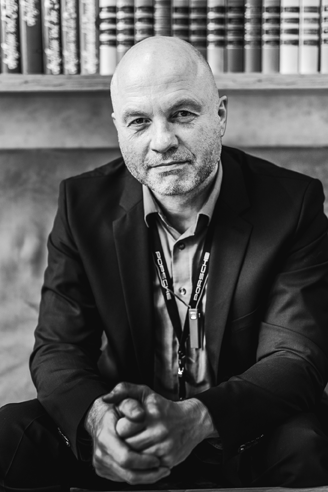
Konrad Wolfenstein
I would be happy to serve as your personal advisor.
contact me under Wolfenstein ∂ Xpert.digital
call me under +49 89 674 804 (Munich)