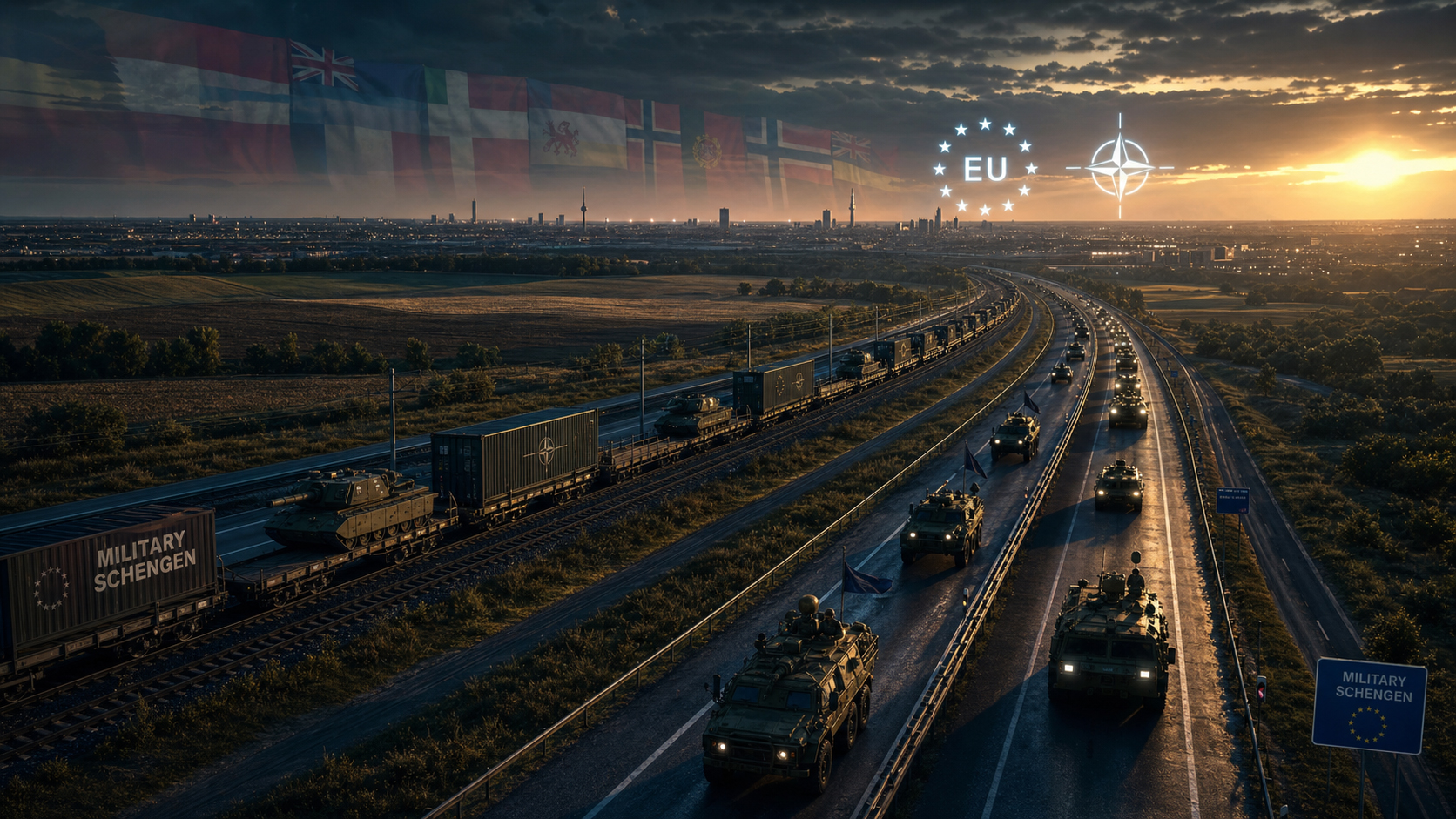
Military Schengen and the EMERS emergency plan – Europe's strategic turning point in defense logistics – Image: Xpert.Digital
The “military Schengen”: This is how the EU wants to redeploy its troops at breakneck speed
Emergency plan EMERS: What happens when the EU shuts down national borders in a crisis?
Why a battle tank waits 45 days at the border in Europe
Europe possesses some of the world's most modern armed forces, yet in a crisis, a disastrous logistical scenario looms: an armored unit urgently needed on the eastern flank could be stranded in bureaucratic limbo or in front of a bridge that cannot bear its weight. Months-long approval processes and an incompatible patchwork of 27 national regulations currently make rapid troop deployments across the continent virtually impossible. Faced with the Russian threat, the European Union is now taking drastic measures. The concept of "military Schengen" aims to end this logistical chaos and radically restructure the continent's defense infrastructure. With standardized approval procedures completed within days, the Emergency Recovery and Operational Restriction System (EMERS), and a massive expansion of roads, ports, and railways based on the dual-use principle, Europe is striving for a strategic paradigm shift. However, this ambitious project is encountering enormous obstacles: a funding gap of nearly €100 billion, concerns about national sovereignty, and the bitter realization that Germany, as the most important hub, is the biggest bottleneck. The following text highlights the gigantic task facing Europe – and explains why civilian logistics is decisive over military deterrence.
When Europe finally gets serious: Why borders can kill
A continent in a state of limbo: The structural paralysis of European troop mobility
Europe faces a paradox: it possesses some of the world's most capable armed forces, yet cannot deploy them quickly enough to where they are needed in a crisis. A single battle tank crossing another member state can require a lead time of 45 days in certain countries. In some cases, the transport of heavy equipment has failed simply because the bridge on the intended route could not bear the weight – necessitating a significant detour. These are not academic footnotes, but real-world scenarios documented by the European Court of Auditors in its Special Report 04/2025.
This structural paralysis is the result of decades of political inaction and a naive peace dividend mentality that viewed defense as a problem of the past. Over the decades, EU member states developed their own divergent authorization procedures for military transport. The 27 member states have 27 different legal systems, 27 different bureaucracies, and sometimes 27 different definitions of what constitutes permissible military cargo on their roads. The result is a patchwork of regulatory obstacles that undermines Europe's collective defense capability to an extent that is only now becoming fully apparent in light of Russian aggression against Ukraine.
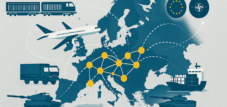
The concept of a military Schengen Area addresses precisely this point. Analogous to the civilian Schengen Area, which established the free movement of persons for EU citizens, a military Schengen Area is intended to enable the free and rapid movement of troops and military equipment throughout Europe – not as an end in itself, but as a strategic foundation for credible deterrence. The term is a political signal that encapsulates the urgency and scale of the undertaking in a single, easily understandable way.
From motto to doctrine: The historical development of the concept
The issue of military mobility is by no means new in Europe, but its political prioritization has changed dramatically within just a few years. As early as 2017, Commission President Jean-Claude Juncker, in his State of the Union address, recognized the need for a European Defence Union by 2025. In November of the same year, the Commission and the European External Action Service published a joint communication on improving military mobility in the EU, which was followed in March 2018 by the first formal action plan.
This initial action plan focused on four key areas: military infrastructure requirements, legal and procedural simplifications, the harmonization of customs and value-added tax regulations for military goods, and measures for cross-border movements. It was a modest but necessary first step – shaped by the logic of a peaceful continent that viewed defense as an optional exercise.
The turning point came on February 24, 2022. The Russian attack on Ukraine fundamentally changed European security policy and rapidly accelerated the learning curve. In November 2022, the Commission and the High Representative jointly published the Action Plan on Military Mobility 2.0, covering the period from 2022 to 2026 and comprising four main pillars: multimodal corridors and logistics hubs, regulatory support measures, resilience and preparedness, and partnerships with NATO and strategic third countries. The decisive qualitative leap compared to the first Action Plan lay in the inclusion of resilience issues and the explicit integration of NATO as a strategic partner.
In parallel, the “Military Mobility” project was launched within the framework of Permanent Structured Cooperation (PESCO), involving 25 member states and non-EU countries to coordinate relevant national measures. At the intergovernmental level, Germany, the Netherlands, and Poland signed a declaration of intent to establish a trilateral military movement corridor from the deep-sea ports of the North Sea to NATO’s eastern flank – a project explicitly intended to serve as a model for further corridors.
The November 2025 Plan: The Military Mobility Package in Detail
On November 19, 2025, the European Commission presented its most far-reaching package of measures to date on military mobility, which was immediately described as a "decisive step towards a military Schengen." The package responds to a key strategic insight: Moving military equipment and troops within the EU currently takes months, not days. And months are not an acceptable unit of time in an armed conflict.
The centerpiece of the package is a standardized approval procedure that would be valid for all 27 member states. Instead of the current nationally diverse and sometimes extremely lengthy processes, a single permit for cross-border military transports would apply, issued within a maximum of three working days. This parameter may sound trivial, but it is not: it represents a paradigm shift from national to Europeanized defense logistics.
For crisis situations, the package includes the European Military Mobility Enhanced Response System (EMERS) – an emergency framework that could be activated within 48 hours and, in a crisis, would replace the regular authorization procedure with a simple notification system. EMERS would guarantee the military priority access to transport infrastructure and related services, and grant exemptions from driving and rest time regulations, national reporting rules, and environmental and noise protection regulations. The system is modeled on the proven EU Civil Protection Mechanism, which enables rapid multinational assistance in the event of natural disasters.
The package is complemented by a solidarity pool for military mobility, in which member states will provide transport capacities such as freight trains, ferries, or strategic air transport for shared use, and by a catalog of military mobility, which lists dual-use transport and logistics resources from the civilian sector. A digital information system will accelerate data exchange and coordination, while national coordinators for military transport will be responsible for implementation in each member state.
The four corridors: Europe's strategic axes
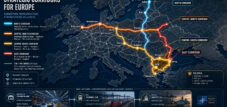
A key element of the military Schengen concept is the definition of four priority cross-border military corridors, whose precise geographical routes are not publicly disclosed for security reasons, but whose basic orientations are known. In March 2025, the Council identified four priority corridors: the Northern Corridor, the Central-Northern Corridor, the Central-Southern Corridor, and the Eastern Corridor.
The Northern Corridor essentially follows the North Sea-Baltic Sea axis and is crucial for strengthening the Baltic flank. The Baltic states of Estonia, Latvia, and Lithuania do not share land borders with the rest of NATO territory, making their logistical connectivity a top strategic priority. The major Rail Baltica project, which will create a standard-gauge railway connection from Tallinn via Riga and Vilnius to Warsaw and is scheduled for completion by 2030, is the most concrete example of the integration of civilian and military infrastructure planning.
The trilateral corridor between the Netherlands, Germany, and Poland embodies the alliance's west-east axis. The ports of Rotterdam and Amsterdam serve as strategic entry points for transatlantic reinforcements, Germany is an indispensable logistical hub, and Poland is the transit country to the immediate eastern flank. The NATO Joint Support and Enabling Command (JSEC), headquartered in Ulm, coordinates these deployment corridors and has systematically mapped the physical infrastructure for military movements.
Along these four corridors, the Commission has already identified around 500 bottlenecks in need of modernization: dilapidated bridges that cannot support the weight of heavy military vehicles, tunnels that are too narrow or too low for military equipment, ports without sufficient ramps and loading capacity, railway lines with insufficient load-bearing capacity or inadequate track profiles, and airports lacking suitable military infrastructure. Eliminating these 500 bottlenecks is the real physical challenge of the military Schengen project.
The investment problem: Between trillions in demand and billions in reality
The economic dimension of military Schengen is enormous – and the disparity between need and funds provided so far is breathtaking. EU Transport Commissioner Apostolos Tzitzikostas estimated the total investment required to eliminate the 500 infrastructure bottlenecks at around €100 billion and described the funds provided to date as "a drop in the ocean".
In fact, the current Multiannual Financial Framework (MFF) 2021–2027 included, for the first time ever, dedicated funding for dual-use infrastructure – but only €1.69 billion, just 1.7 percent of the identified need. This amount, originally set by the Commission at €6.5 billion (at current prices), was drastically reduced during the MFF negotiations, partly due to the fiscal consequences of the COVID-19 pandemic. In three rounds of calls for proposals (2021, 2022, and 2023), 95 projects were approved with a total of approximately €1.7 billion in EU co-financing – thus committing all available funds from the current MFF.
For the next Multiannual Financial Framework (MFF) 2028–2034, the Commission is explicitly allocating €17.65 billion for military mobility under the Connecting Europe Facility – a tenfold increase compared to the current period, but still far below the identified total need. The discrepancy between political ambition and fiscal reality is obvious: €17.65 billion will, at best, eliminate barely one-fifth of the identified bottlenecks, assuming total costs of €100 billion.
This funding gap makes private and institutional investors indispensable partners. German insurers and other institutional investors have increased their infrastructure investments from €10 billion to €100 billion in recent years, positioning themselves as natural long-term partners in financing dual-use infrastructure. Furthermore, in 2023, the European Investment Bank increased its funding for security and defense through the Strategic European Security Initiative (SESI) to €8 billion. Public-private partnerships, project-related bonds, and specialized infrastructure funds are being discussed as complementary instruments.
At the NATO summit in June 2024, NATO member states committed to allocating 1.5 percent of their gross domestic product to defense-related expenditures – explicitly including infrastructure. The Commission's ReArm-Europe plan envisages, as a further step, the mobilization of a total of €800 billion for European defense spending, with member states able to invoke an escape clause in the Stability and Growth Pact to take on additional debt for defense purposes.
The dual-use principle: Where defense becomes a civilian dividend
A conceptually significant aspect of the military Schengen approach is the dual-use principle: infrastructure upgraded for military purposes always benefits the civilian economy as well. The European Court of Auditors found that around 94 percent of the military mobility network overlaps with the Trans-European Transport Network (TEN-T). This means that virtually every investment in military mobility is simultaneously an investment in civilian transport infrastructure.
Specifically, this means that a bridge reinforced to support 62-ton battle tanks will also be able to accommodate heavier truck loads, larger industrial transports, and more efficient freight trains. A port that receives military landing equipment will also gain civilian transshipment capacity. Railway lines upgraded to meet military requirements will allow for higher transport weights and faster transit times for freight. The overall economic return on these investments is therefore significantly greater than a purely military cost-benefit analysis would suggest.
Germany provides the most striking example of this. As Europe's central logistical hub, the Federal Republic is the most important transit country for troop movements towards Eastern Europe in virtually all conceivable NATO scenarios. At the same time, the German rail network is struggling with a massive investment backlog: dilapidated bridges, outdated signaling systems, and a lack of flatcars for transporting heavy tracked vehicles paradoxically make Germany a strategic bottleneck in NATO's defense alliance. Modernizing Germany's rail infrastructure would therefore be both a civilian economic necessity and a security policy imperative.
Integrating military requirements into transport planning, however, necessitates a fundamental rethinking of infrastructure policy. Until now, roads, bridges, and railway lines have been planned according to civilian standards and priorities. In the future, these planning processes must incorporate military usage scenarios from the outset – requiring new coordination structures between transport, defense, and finance ministries.
The Court of Auditors concludes: Structural deficiencies and conceptual weaknesses
In its special report 04/2025, the European Court of Auditors delivered a scathing assessment of the EU's efforts to date on military mobility. The central finding is that Action Plan 2.0 lacked a sufficiently solid foundation, and progress in achieving its objectives varied.
The Court of Auditors' core criticisms are numerous and systemic. First, the action plan lacked a sound estimate of the resources required to achieve its objectives. The project was essentially launched without a reliable financing plan. Second, there is no central coordinating body at EU level: the Commission, the European External Action Service (EEAS), the European Defence Agency (EDA), PESCO projects, and national governments operate with partially overlapping responsibilities and without clear accountability. Representatives from five visited Member States confirmed to the Court of Auditors that the governance structures are difficult to understand.
Thirdly, the action plan contains too many measures, some of which are not sufficiently operationally defined and lack measurable indicators, concrete targets, and binding deadlines. Only four of the 29 key EU measures could be considered fully completed at the end of the audit. The first progress report from November 2023, in the auditors' opinion, was more of a chronological list of events than a systematic monitoring document.
Fourth, the selection of EU-cofinanced infrastructure projects was not sufficiently based on military priority: Military criteria constituted only a small part of the overall assessment, and geopolitical aspects were hardly considered. This carries the risk that funds will flow to projects that are not the most relevant from a strategic perspective. A concrete example illustrates the absurdity of the status quo: The same member state that generally requires 45 days' notice for military transport permits issued permits for equipment transfers to Ukraine within a single day in urgent cases. This proves that the bureaucratic hurdles are politically motivated – and can be politically dismantled.
Hub for Security and Defense - Advice and Information


Hub for Security and Defense - Image: Xpert.Digital
The Security and Defence Hub offers expert advice and up-to-date information to effectively support companies and organizations in strengthening their role in European security and defence policy. Working closely with the SME Connect Defence Working Group, it particularly promotes small and medium-sized enterprises (SMEs) that wish to further develop their innovative capacity and competitiveness in the defence sector. As a central point of contact, the Hub thus creates a crucial bridge between SMEs and European defence strategy.
Related to this:
2027 as the deadline: Can Europe make its mobility ready for use in time?
Sovereignty versus solidarity: The political dimension of conflict
Every project aimed at deepening European defense integration encounters the same fundamental tension: the relationship between national sovereignty and collective capability. No state wants to tolerate foreign troops on its territory without its explicit consent – this is not merely political calculation, but a fundamental principle of state sovereignty.
The military Schengen concept attempts to resolve this tension through a clever institutional design: Under normal circumstances, member states retain their authority to grant authorizations, but commit to issuing these authorizations within a maximum of three working days. In the EMERS emergency mechanism, authorization is replaced by mere notification – which de facto means that national veto rights are suspended in a crisis. This is precisely the politically sensitive issue.
Smaller neutral states such as Ireland, Malta, Austria, and Cyprus—which are EU members but not NATO members—are particularly skeptical of the concept. For Austria, for example, whose permanent neutrality is enshrined in the State Treaty, an obligation to allow foreign armed forces to transit through its territory in a crisis would raise legally and politically precarious questions. The Commission's regulation must therefore include opt-out mechanisms and exceptions for these countries, which in turn undermines the uniformity of the system.
Critical voices from both the left and right of the political spectrum also point to the question of democratic legitimacy: If EMERS can be activated within 48 hours and national parliaments are bypassed in the process, significant deficits in parliamentary oversight arise. A parliamentary question in the European Parliament in April 2025 raised the question of whether intelligence reports about Russian offensive intentions are being used to justify debt-financed rearmament programs. This debate reflects a legitimate concern regarding democracy, even though the strategic basis of the military Schengen project has been factually confirmed by Russian aggression against Ukraine.
The legal dimension: contractual basis and regulatory challenges
The military Schengen project operates in a legally complex area. The EU treaties do not explicitly mention military mobility – territorial defense legally falls under the jurisdiction of the 27 member states. The EU finances civilian and dual-use projects, but not purely military undertakings. The legal basis for the package of measures from November 2025 therefore relies primarily on the EU's competence in the area of the trans-European transport network and infrastructure policy.
The proposed regulation envisions a uniform approval procedure for all 27 member states – which represents a direct intervention in national administrative procedures. The Tagesspiegel reported that Europe faces significant legal constraints regarding military Schengen, as national legal systems, bilateral agreements, and the NATO Status of Forces Agreement (SOFA) form a complex web of legal sources that must be harmonized. The interrelationship with the NATO SOFA, which governs the legal status of armed forces of one NATO member in the territory of another, is particularly complex.
The EMERS emergency system also raises questions of national emergency law and the proportionality of interventions in civilian infrastructure. If military transports are granted priority access to rail networks in a crisis – potentially at the expense of civilian passenger and freight traffic – this will raise questions of liability, compensation claims, and political tensions with civil society actors. The German Armed Forces themselves have pointed out that, in the context of Military Mobility, it may become necessary to temporarily prioritize military transports over civilian rail traffic – with corresponding restrictions for the population.
Germany's key role: Hub with risk of bottlenecks
No EU member state is more important to the military Schengen project than Germany. Due to its central geographical location, the Federal Republic is the logistical hub for troop movements in virtually all conceivable NATO scenarios. Its ports on the North and Baltic Seas, its dense rail and road network, and its proximity to the Eastern European flank make Germany an indispensable transit country.
At the same time, Germany is a strategic bottleneck in terms of infrastructure. Hundreds of railway bridges are not designed to support the weight of heavy military vehicles. The rail network suffers from a massive backlog of investment, digital railway control systems are vulnerable to cyberattacks, and the availability of flatcars for transporting 62-ton tracked vehicles is limited. Current planning periods for infrastructure projects—typically ten to twenty years from conception to commissioning—are unacceptably long in a crisis.
The German Armed Forces' Territorial Command in Berlin, responsible for coordinating Host Nation Support, has clearly identified this contradiction: Credible deterrence requires that allies can quickly reach their areas of operation on the eastern flank through Germany – but the physical infrastructure is not equipped for this. The Operations Plan Germany, which the German Armed Forces have developed for the first time since the Cold War, addresses precisely this issue and defines the establishment of deployment routes as a national responsibility.
The German-Dutch Military Mobility Office (DNO) in Ulm, together with Polish partners, analyzed 20 specific areas of action within the trilateral corridor over an 18-month period and developed proposed solutions – ranging from standardized application procedures and harmonized infrastructure requirements to the optimization of information exchange. This operational work at the bilateral and trilateral levels forms the concrete foundation upon which the abstract concept of military Schengen is built.
The geopolitical timeline: Russia, 2030 and the factor of time
Behind the military Schengen project lies a hard-nosed geopolitical timeline. Several European intelligence agencies consider the scenario that Russia could be capable of testing NATO's collective defense commitment by 2030 to be realistic. EU Defense Commissioner Andrius Kubilius called speed a "cornerstone of warfare" and described Europe's inability to rapidly deploy troops as a core strategic problem. EU High Representative for Foreign Affairs and Security Policy Kaja Kallas succinctly summarized the connection: the faster Europe can move its armed forces, the stronger its deterrence and defense will be.
The White Paper on European Defence – Ready 2030, presented by the Commission in March 2025, defines military mobility as one of seven priority investment areas, alongside air defence, artillery systems, munitions, drones, AI-based warfare and the protection of critical infrastructure. The ReArm Europe plan frames the entire rearmament program with a volume of €800 billion, a significant portion of which is earmarked for infrastructure investments.
The timeline is thus defined: The military mobility corridor is to be established by 2027; the critical infrastructure projects are to be completed by 2030. An EU military mobility corridor, a harmonized permitting landscape, and an operational EMERS system by 2027 at the latest – that is the political roadmap. Whether this timeline is realistic in light of the implementation difficulties documented by the Court of Auditors remains to be seen.
PESCO, NATO and the coordination question: Who is in charge?
One of the most significant structural challenges of the military Schengen project is the question of coordination: Who is actually responsible? The answer is soberingly complex. Those involved in military mobility at the EU level include: the European External Action Service, including the EU Military Staff; several Commission Directorates-General (DEFIS, MOVE, TAXUD, CNECT); the CINEA Executive Agency; the European Defence Agency; the PESCO project "Military Mobility"; the European Investment Bank; and, outside the EU, NATO.
The Court of Auditors found that there is no single central point of contact to coordinate all these activities. This finding is not merely a bureaucratic nuisance, but a strategic risk: if coordination between all these actors fails in a crisis, the practical benefit of all theoretical plans is rendered useless. The new package of measures addresses this deficiency to some extent by creating a Military Mobility Group comprised of national coordinators and strengthening the TEN-T Committee structure.
The relationship with NATO is constructive, but not without tension. 23 of the 27 EU member states are NATO members, creating significant structural overlap. The Commission and the EEAS emphasized that the military requirements for EU mobility overlap with NATO requirements by approximately 94 to 95 percent. Nevertheless, there are distinct institutional logics: NATO operates on an intergovernmental basis without EU funding, while the EU co-finances infrastructure but has no armed forces of its own. The Joint Security Office (JSEC) in Ulm coordinates NATO deployment transports but has no authority to issue directives to EU institutions. This institutional fragmentation is the Achilles' heel of the entire project.
Economic analysis: What military Schengen really costs and brings
A sober economic analysis of the military Schengen project must differentiate between various dimensions. On the cost side, there is first the investment requirement of around €100 billion to eliminate the 500 identified bottlenecks. Added to this are ongoing operating costs for the new coordination system, the digitization projects, and the institutional structures. The next Multiannual Financial Framework (MFF) for 2028–2034 allocates €17.65 billion for military mobility – an amount that must be significantly supplemented by national budgets, NATO investments, and private capital flows.
On the benefits side, there is first and foremost the security policy value of credible deterrence, which, while not directly monetizable, can be considered an avoided risk from a macroeconomic perspective. A functioning military Schengen Area reduces the likelihood of Europe being drawn into a conflict whose costs—as Ukraine demonstrates—run into the trillions. There are substantial estimates of the direct economic costs of the war in Ukraine on European economies through energy price shocks, trade diversions, and arms aid, which already exceed the scale of infrastructure investments.
The dual-use effect also generates direct economic returns: Improved transport infrastructure accelerates freight traffic, reduces logistics costs, and increases the attractiveness of industrial locations along the corridors. The Commission has quantified estimated productivity gains from improved TEN-T infrastructure at several hundred billion euros over the project horizon in various studies. The targeted integration of military requirements with civilian infrastructure plans is therefore not only prudent from a security policy perspective but also economically rational.
According to EDA data, EU member states' defense spending totaled €240 billion in 2022 alone. Against this backdrop, the planned €17.65 billion for infrastructure over seven years appears to be a relatively modest, but strategically highly leveraged contribution: without functioning mobility, the remainder of these defense investments will be worthless in a crisis.
Critical appraisal: What's missing, what's threatening, what remains
The military Schengen concept is fundamentally sound and necessary. The basic diagnosis – that Europe cannot deploy its armed forces quickly enough – is empirically proven, and the proposed solutions address the main bottlenecks. Nevertheless, the project deserves critical evaluation beyond mere political back-patting.
First, the speed of implementation remains the key risk. The history of EU action plans on military mobility is one of falling short of their own ambitions. Of the 29 key measures in Action Plan 2.0, only four were fully completed at the time of review. If the new package from November 2025 achieves similar implementation rates to its predecessors, the 2027 target is unrealistic.
Secondly, the dependence on national willingness to implement is a structural problem. The Commission can create frameworks and provide funding, but the actual modernization of bridges, railways, and ports remains a national responsibility – with all its political, budgetary, and bureaucratic implications. Experience with Action Plan 2.0 shows that non-binding calls to action for member states have little effect.
Thirdly, the democratic legitimacy of EMERS deserves serious public debate. A system that, in a crisis, effectively bypasses national parliaments and approval processes and prioritizes military access over civilian infrastructure use constitutes a profound infringement on the rule of law. These mechanisms must be subject to parliamentary control and be reversible – something that is currently not sufficiently guaranteed.
Fourth, the financing question remains fundamentally unresolved. €17.65 billion is less than a fifth of the €100 billion required. The expectation that private investors and national budgets will close the gap is not inherently wrong, but so far it is more wishful thinking than a strategy. A precise financing structure with firm commitments from all stakeholders is a prerequisite, not a consequence of the political decision.
Fifth, the resilience of the infrastructure itself must become a design principle. The military value of a corridor is zero if, in the event of conflict, it can be rendered inoperable by hybrid attacks – cyber, physical sabotage, disinformation. The increasing number of sabotage attacks on Baltic submarine cables, Nord Stream pipelines, and railway facilities in recent years demonstrates that this threat is real and not hypothetical.
On the way to a genuine European defense union?
The military Schengen project is more than a logistics undertaking – it is a litmus test for the European Union's political capacity to act on a matter of vital importance. If Europe succeeds in creating a functioning military mobility area by 2027, it will underscore the seriousness of the European defense commitment and send a clear signal of deterrence. If it fails or gets bogged down in bureaucratic slowness, it will confirm doubts about Europe's strategic capabilities.
The institutional conditions are better today than ever before: a dedicated defense commissioner, an explicit budgetary approach, an EU Commission that claims defense as a core competency, and unprecedented political motivation stemming from the Russian threat. EU High Representative for Foreign Affairs and Security Policy Kaja Kallas, herself Estonian and thus from a country that knows the Russian threat firsthand, has declared the matter a priority.
In its resolution of 17 December 2025, the European Parliament endorsed the Commission's proposals by a large majority and called for a further increase in ambition – including a 24-hour response time instead of three days in a crisis, and a European coordinator for implementation. This is a strong parliamentary signal and an indication of the political consensus that exists in Europe on this issue.
Military Schengen is a must, not an option. The question is not whether, but how quickly Europe achieves this goal. And the answer to this question will not be given solely by politicians and bureaucrats – but by engineers, infrastructure planners, logistics experts, private investors, and ultimately by the collective decision of European societies to take their defense seriously.
Consulting - Planning - Implementation

Markus Becker
I would be happy to serve as your personal advisor.
Head of Business Development
Chairman SME Connect Defense Working Group
Consulting - Planning - Implementation
Konrad Wolfenstein
I would be happy to serve as your personal advisor.
You can contact me at wolfenstein∂xpert.digital or
Just call me on +49 7348 4088 965 .