
The nation-state in a permanent crisis: The great alienation – Why more and more citizens are losing faith in “those in power”
Xpert Pre-Release

Available in 27 languages 📢
Prefer Xpert.Digital on GoogleⓘPublished on: February 23, 2026 / Updated on: February 23, 2026 – Author: Konrad Wolfenstein
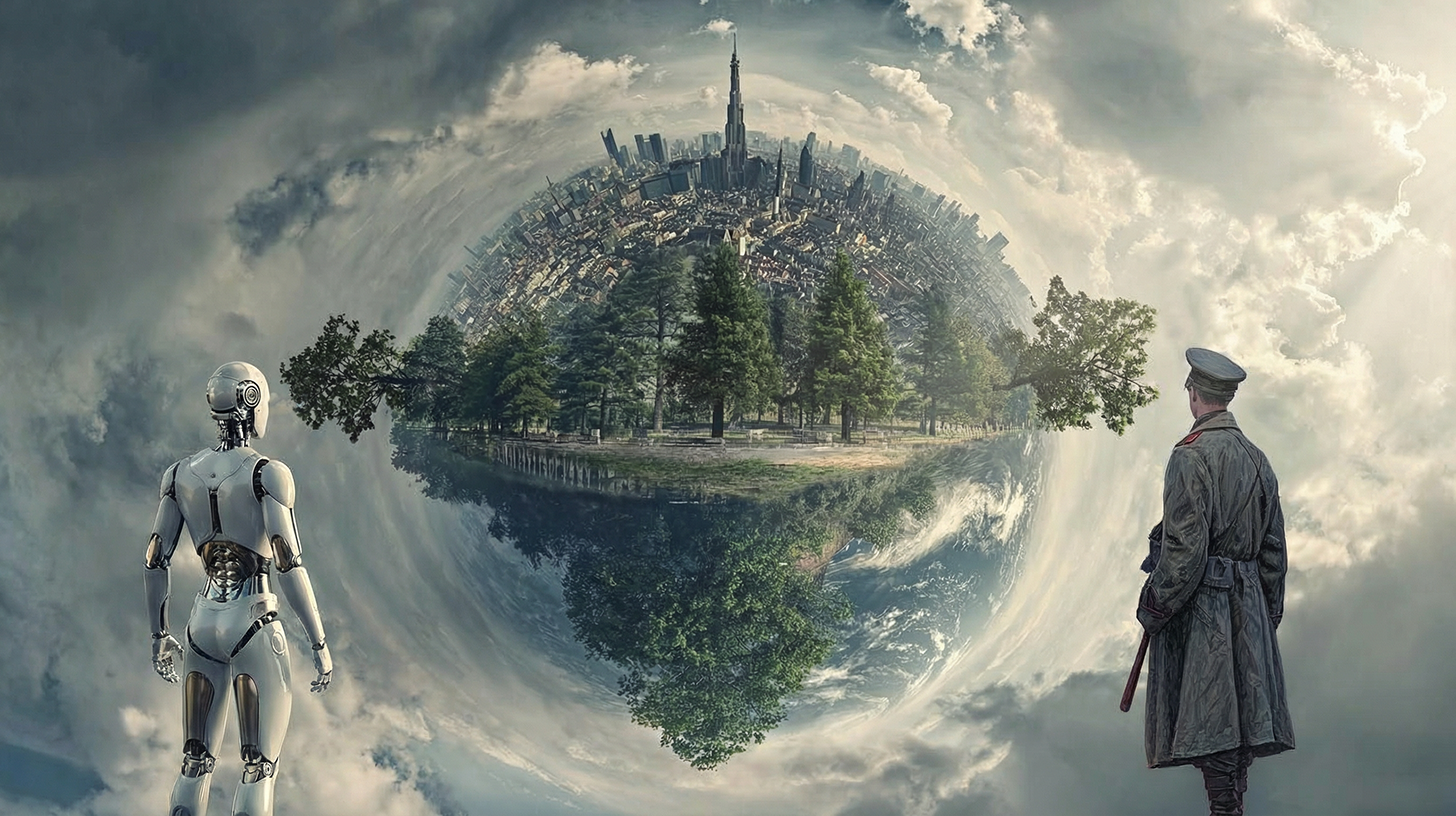
The nation-state in a perpetual crisis: The great alienation – Why more and more citizens are losing faith in "those in power" – Image: Xpert.Digital
The Great Alienation: Why 52 Percent of Citizens Feel Politically Powerless
The taboo subject of migration: Why precisely well-integrated immigrants are demanding a radical change
Between reform paralysis, loss of identity, and the failure of political alternatives
The nation-state is seen by many as an outdated model – too small for the global crises of our time and too cumbersome for the rapid developments of a digitally networked world. Nevertheless, we cling to it, simply for lack of viable alternatives. But the price of this adherence is becoming increasingly tangible for citizens in their daily lives: a burgeoning bureaucracy that costs the economy billions annually, creeping economic stagnation, and a profound sense of political powerlessness.
While politics still thinks in classic left-right paradigms, society has long since reshaped itself. Along new fault lines, a massive distrust of the elites is growing – an alienation that permeates all social strata and, paradoxically, has even affected those with a migration background themselves. In an attempt to manage the irresolvable tension between democratic participation, the global economy, and national sovereignty, politics resorts to ever more regulations. The result is a dangerous erosion of public trust. This analysis illuminates the true extent of institutional stagnation and explores the crucial question: How can democratic agency be regained before the state loses its legitimacy completely?
Why the foundations of modern statehood are crumbling and no one has the courage to build a new one
The end of left and right: The new conflicts that are truly dividing our society
The idea of the nation-state as a regulatory framework for economic, social, and cultural processes has been under attack for decades. From the left, it is criticized as an outdated relic that hinders the globalized economy. From the right, it is defended as a threatened bastion of a culturally homogeneous community. Both sides have grasped parts of the truth, but neither has yet presented a viable alternative model that could meet the complex challenges of the 21st century. In practice, the nation-state proves remarkably resilient, even as its institutional weaknesses become increasingly apparent. The real crisis lies not in the concept itself, but in the inability of the political class to adapt this concept to a changed reality without undermining its democratic legitimacy.
The insoluble triangle: democracy, sovereignty, and global interconnectedness
Harvard economist Dani Rodrik, with his political trilemma of the global economy, has created an analytical tool that pinpoints the structural overextension of the nation-state. His finding is that democracy, national self-determination, and complete economic globalization are incompatible. Only two of these three goals can be achieved simultaneously. In the second half of the 20th century, Western states sacrificed aspects of globalization in favor of democracy and national autonomy, leading to an unprecedented period of prosperity. Over the past three decades, this relationship has reversed: globalization and national autonomy have been prioritized, while democratic participation has been increasingly eroded.
This finding is far more than an academic exercise. It explains why, in almost all Western democracies, a growing segment of the population feels disconnected from political decision-making processes. In Germany, the Allensbach survey reveals a dramatic trend: While the proportion of those who said they had an influence as citizens on local affairs rose from 22 to 47 percent between 1992 and 2021, this figure fell back to 29 percent by 2023. Simultaneously, feelings of powerlessness increased from 30 to 52 percent. In East Germany, as many as 63 percent reported feeling powerless as citizens. Rodrik's practical conclusion is to abandon hyperglobalization as a desirable political goal in order to preserve the social cohesion created by the nation-state and democracy. Whether this proposal is still feasible in the age of digital capital flows and global value chains remains one of the central open questions of our time.
The astonishing resilience of an institution that was thought to be dead
Despite all the criticism, the nation-state has not only not disappeared, its number has actually multiplied dramatically. Between 1946 and 2018, the number of states worldwide rose from 74 to 202. The vice-like thesis of Harvard economist Alberto Alesina states that economic integration leads to political disintegration: More open markets, fewer wars, and more democracy enable smaller entities to benefit from the international division of labor without having to pay the price of forced membership in larger entities. This empirical development contradicts the thesis that the nation-state is becoming obsolete. In fact, the opposite is evident, especially in times of crisis: During the 2008 financial crisis, it was not the IMF, the G20, or the EU Commission that prevented the worst, but rather the nation-states in conjunction with their central banks.
Supranational institutions have thus far proven structurally too weak to serve as a viable alternative. The WTO has faced a systemic deadlock for years, the World Bank and the IMF have lost their influence, and even the European Union struggles with a chronic democratic deficit that undermines its legitimacy among its citizens. According to critical economists, the experiment of so-called global governance, with its free movement of capital and people, has undermined democracy and concentrated power in the hands of a few multi-billionaires and the capital markets. Furthermore, as surveys repeatedly demonstrate, the majority of the population prefers national identity to a supranational framework.
The administrative behemoth: How bureaucracy became an end in itself
Perhaps the most tangible symptom of the institutional stagnation of the nation-state is the expansion of its administrative apparatus. Germany is considered a highly bureaucratic country for good reason. According to a 2023 Allensbach survey, 80 percent of the population believes that the Federal Republic is harming itself through excessive bureaucracy. 71 percent of citizens stated that they had been annoyed by excessive bureaucracy at government offices and agencies in the past five years, compared to only 48 percent in 2007. These figures do not merely reflect subjective feelings. The annual costs of bureaucracy to the economy amounted to around 67 billion euros in 2024, approximately 17 billion euros higher than in 2018, when they stood at 50 billion euros. The ifo Institute even quantified the overall economic damage caused by excessive bureaucracy at 146 billion euros per year in lost economic output.
A particularly revealing paradox emerges: Compared internationally, the German administrative apparatus is not particularly large in terms of the number of employees. The real problem lies in the sheer volume of regulations, information obligations, documentation requirements, and approval procedures that burden citizens and businesses. Sabine Kuhlmann, a member of the National Regulatory Control Council, describes the mechanism as follows: Politicians attempt to solve new and complex problems with ever more regulations while striving for maximum individual justice, all embedded within complex federal structures and a highly legalistic administrative culture. The result is poorly drafted regulations that don't work in practice and further exacerbate the bureaucratic problem. The establishment of an independent Ministry for Digital Affairs and Public Sector Modernization under Chancellor Friedrich Merz is an admission of the problem, but also evidence of the knee-jerk reaction of politicians: When familiar approaches fail, a new ministry is created.
In this sprawling thicket of regulations, the political camps have comfortably settled in. Bureaucracy creates dependencies, responsibilities, and distribution structures that ensure the survival of both the administration itself and the political actors who control it. Every new regulatory complex requires personnel, budget, and institutional anchoring. As a result, bureaucracy constantly reproduces itself. Every government for at least two decades has promised to reduce bureaucracy, but success has largely failed to materialize. The long-standing problem of bureaucratic self-referentiality, in which regulation begets further regulation, has reached a point that some municipalities are already describing as a bureaucratic emergency. More and more citizens are asking themselves whom this apparatus actually serves. For many, the answer is sobering.
The new conflict architecture: Vertical division instead of horizontal camps
The traditional division of political conflicts into a left-right spectrum is increasingly losing its explanatory power. Lipset and Rokkan's classic cleavage theory from 1967 identified four fundamental lines of conflict in European societies: capital versus labor, church versus state, city versus country, and center versus periphery. While these lines of conflict have not entirely lost their relevance, they are being overlaid by a new line of tension that is based less on traditional party affiliations than on lived experiences and feelings of belonging.
In their widely acclaimed study "Trigger Points," sociologists Steffen Mau, Thomas Lux, and Linus Westheuser identified four key conflict arenas of the present: top versus bottom in the area of socioeconomic inequality, inside versus outside regarding questions of national affiliation, us versus them in identity debates, and today versus tomorrow in the climate debate. Their central finding is that no clear polarization can be observed in any of these areas. Rather, there is a broad basic consensus in the middle of society. The impression of a divided society arises primarily from the political and media overemphasis on specific debates, which are driven by so-called polarization entrepreneurs.
Beyond academic analysis, however, two distinct group dynamics have emerged in political practice, which are less easily grasped by the classical categories of left and right than by their respective identity-forming narratives. One group organizes itself around the motif: us down here against them up there. Its central concern is social justice, criticism of economic inequality, and the perception that an out-of-touch elite makes decisions that run counter to the interests of the general population. The other group forms around the motif: us in here against them out there. Its concern is the protection of what has been achieved, cultural identity, and demarcation from immigration or globalization perceived as a threat.
Despite their differences in content, both groups share a common structural characteristic: a deep distrust of the institutions and elites they represent. Political scientist Florian Hartleb demonstrated years ago that populism is not an exclusive phenomenon of the right-wing political spectrum, but also appears in comparable forms on the left. Both variants take anti-establishment positions and focus on issues that mobilize the masses. The anti-establishment motive, the opposition to "those in power," is structurally identical, even if the specific demands may be diametrically opposed.
The third perspective: From above and the potential for mistrust to connect with others
In addition to the two group dynamics mentioned, there is a third level of perception, which can initially be categorized as conspiracy theory: the idea of "us versus them," that is, the assumption that a small, powerful group is deliberately acting against the interests of the population. This perspective could easily be dismissed as a fringe phenomenon if it did not empirically extend far deeper into the mainstream of society than public debate suggests.
According to the Friedrich Ebert Foundation's 2019 "Mitte" study, 46 percent of the German population believed that secret organizations exert significant influence on political decisions. Thirty-three percent thought that politicians and other leaders were merely puppets of shadowy powers. Twenty-four percent were convinced that the media and politics were in cahoots. A survey conducted as part of the Statista Religion Monitor revealed that only 45 percent of respondents stated that they did not believe in any of the conspiracy theories posed, while around 36 percent agreed at least partially with two or more conspiracy myths. The Bertelsmann Foundation found in 2025 that while belief in conspiracy theories was declining slightly overall, political distrust had increased. The data does not reveal a clear socioeconomic profile of conspiracy theorists, which is precisely what makes this phenomenon so unique and dangerous: it resonates with a wide range of social groups.
These findings are of considerable significance. The perception that "those at the top" are working against "those at the bottom" is not a typical issue confined to the extreme fringes. It exists subliminally throughout the entire spectrum of society, sometimes more pronounced, sometimes less so, sometimes rationally grounded in understandable experiences of democratic powerlessness, sometimes irrationally charged by conspiracy theories. The historian Nikolai Wehrs has pointed out that the concept of the establishment was inherently simplistic from the outset and always carried a whiff of conspiracy theory: "Those at the top are all in cahoots." Historically, it can be shown that this term is used by both political extremes, left and right, against liberal democracy. For some time now, the elites in politics and society have been experiencing a loss of reputation. In Western post-war democracies, they were still considered indispensable drivers of progressive development. In the current times of crisis, they are more often perceived as overwhelmed crisis managers.
In an analysis published in early 2026, the Konrad Adenauer Foundation clearly identified this problem: The societal divide does not run through the middle of society, but rather between an intellectual elite that dominates the media and the vast majority of the population, a growing segment of whom feels their needs are no longer being considered. This growing polarization is not a phantom pain. It is the logical consequence of a political system that increasingly derives its legitimacy from technocratic expertise rather than democratic feedback. Both of the previously described group logics—the social critique of the bottom versus the top and the identity-based in-versus-outside demarcation—find common ground in the perception of a consciously acting counter-elite. What is dismissed as a conspiracy theory often proves, upon closer examination, to be a distorted, yet entirely understandable, processing of real experiences of powerlessness and being controlled by others.
Our EU and German expertise in business development, sales and marketing

Our EU and German expertise in business development, sales and marketing - Image: Xpert.Digital
Industry focus areas: B2B, digitalization (from AI to XR), mechanical engineering, logistics, renewable energies and industry
More information here:
A thematic hub offering insights and expertise:
- Knowledge platform covering global and regional economies, innovation and industry-specific trends
- A collection of analyses, insights, and background information from our key areas of focus
- A place for expertise and information on current developments in business and technology
- A hub for companies seeking information on markets, digitalization, and industry innovations
The forgotten division: Why old migrants fear the new immigration
Migration as a magnifying glass: The forgotten rift within the immigrant community
The migration debate reveals a dimension of societal tension that is almost entirely ignored in public discourse: the growing skepticism of people with a migration background who have lived in Germany for decades and built lives here, towards newer forms of migration. A YouGov survey commissioned by "Welt am Sonntag" found that 40 percent of Germans with a migration background believed that Germany should accept fewer refugees than it did at the time of their arrival. Twenty-four percent of immigrants even said that no more refugees should be allowed into the country at all. The differences between Germans with and without a migration background are not statistically significant on this issue.
Wolfgang Kaschuba, then director of the Berlin Institute for Empirical Integration and Migration Research, described this situation as an interesting but unintended integration effect: whenever new immigrants arrive, those who arrived first become less foreign. Resources are scarce, and people who have participated in German society for decades, just like the native population, tend to wonder whether it's all becoming too much and whether they will have to share what they have achieved. In 2024, the Bertelsmann Foundation confirmed that 78 percent of respondents expected increased costs for the welfare state due to immigration, 74 percent feared a housing shortage, and 71 percent were concerned about problems in schools. This increased skepticism was not primarily due to a negative attitude toward immigrants, but rather to concerns about the economic and social capacity for successful reception and integration.
For people with an older migration background, a specific fear is added to these general concerns: they fear being equated with the negative consequences of recent migration trends. Those who have integrated over decades, paid taxes, acquired property, and educated their children in German schools feel lumped together with entirely different population groups in sweeping debates about integration or migration crime. These people belong neither to the progressive camp, which brands any criticism of migration as racism, nor to the nationalist camp, which portrays migration as an existential threat. They find themselves in a discursive no-man's-land where their experiences and concerns are not adequately represented by either side. The demographic dimension exacerbates the problem: in 2010, 1.5 million, or 9.4 percent, of people with a migration background were 65 years of age or older. This figure is expected to rise to 15 percent by the early 2030s. This growing group of older migrants, whose intentions to return home generally do not materialize and who remain permanently in Germany, does not find an appropriate place in the political debate.
Economic stagnation as a catalyst for alienation
According to the German Council of Economic Experts, the Federal Republic of Germany will be experiencing economic stagnation in 2025, following a recession in 2023 and 2024. This current weakness is caused not only by cyclical factors but also by profound structural changes and geopolitical shifts that threaten the German export model. The Council forecasts a price-adjusted increase in gross domestic product of only 0.2 percent for 2025 and 0.9 percent for 2026. This economic weakness is not merely a statistical problem; it provides fertile ground for distrust of institutions and elites.
When the pie stops growing, distribution conflicts intensify. The general public's concern about their economic future is real and measurable. The bureaucratic costs of €67 billion per year are just the tip of an iceberg of structural inefficiencies that are developing into a competitive disadvantage. According to the ifo Institute, if Germany were to catch up with Denmark in the digitalization of its public administration, its economic output would be €96 billion higher annually. These figures illustrate the extent of the missed opportunities. At the same time, public debt is rising, and according to model calculations by the German Council of Economic Experts, it could exceed 85 percent of GDP by 2035 if the funds from the special fund for infrastructure and defense are used for consumption rather than investment.
The protectionist and erratic trade policies of the US under Donald Trump are further dampening global economic growth and forcing the export-oriented German economy to make painful adjustments. In such an environment of economic uncertainty, people are searching for explanations and scapegoats. The question of whether national politics still possesses any capacity to act, or whether it is trapped in a web of supranational dependencies and global market mechanisms, is becoming a crucial question for the legitimacy of the nation-state. Many citizens perceive the political response—that international agreements must be awaited before undertaking national reforms—as an evasive maneuver.
Europe's special path: Between deepening and disintegration
The European Union represents the most ambitious attempt to transform the nation-state into a supranational order. The results are mixed. On the one hand, model-based analyses by the Council of Economic Experts show that further deepening of the EU single market through the reduction of trade barriers could increase the real gross domestic product of the European Union to a significantly greater extent than has been achieved by the integration steps taken so far. A key obstacle lies in the insufficient integration of European capital markets. On the other hand, the process of centralization, which has been further accelerated by the European Monetary Union, has increasingly eroded democratic feedback loops to national sovereignty.
A counter-movement formed with the so-called New Hanseatic League, a group of EU member states including Ireland, the Netherlands, the Baltic states, and Scandinavian countries, which united against Franco-German dominance. Their aim is a reorganization of the vertical distribution of competences: only tasks that bring genuine added value to the European Union should be the responsibility of the EU Commission. Furthermore, competences that currently reside at the EU level and lead to inefficiencies there should be transferred back to the nation-states. This struggle over the distribution of competences between the national and supranational levels is more than an institutional dispute. It is about the question of at which level democratic legitimacy can be most effectively established.
The economist Werner Vontobel put it succinctly: the experiment of global governance with free capital movement and freedom of movement has failed spectacularly. It is producing ever more powerful multi-billionaires, destroying the prosperity of others, undermining democracy, and endangering social peace. This assessment may be exaggerated, but it resonates with a population that had hoped for greater prosperity and security from European integration and is now discovering that the benefits are being distributed very unequally.
The polarization of powerlessness: Why the center remains silent
The sociological study "Trigger Points" revealed that the broad middle class is largely free of ideological constraints and only weakly affiliated with political parties, which weakens its capacity for mobilization and expression. Conflict formation in the public sphere unfolds primarily at the fringes, creating the false impression that society is descending into antagonistic camps. A study by the Free University of Berlin empirically refuted the widespread assumption of a structural polarization between the progressive, educated middle class and the marginalized proletariat. While blue-collar workers are, on average, more critical of migration and the European Union than highly skilled employees, the diversity of opinions within occupational groups is so great that talk of a homogeneous polarization is out of the question.
Nevertheless, the diagnosis of a lack of polarization falls short. The real problem lies not in a division of the center, but in its silencing. When 52 percent of the population feels politically powerless, when bureaucracy is perceived as an insurmountable wall between citizen and state, and when the established parties appear as interchangeable variations on the same problem, a vacuum is created that is filled by those who shout the loudest. The two group dynamics described—the social bottom-versus-top narrative and the identity-based inside-versus-outside narrative—gain strength not because they represent the majority opinion, but because the majority itself can no longer find a voice.
Political science speaks of a new conflict line that can no longer be located along the classic socioeconomic or religious-cultural fault lines, but rather along the question of whether one sees oneself as a winner or loser of modernization. This conflict line cuts through all social classes, all milieus, and all age groups. It is not identical to the dividing line between rich and poor, between city and country, or between Germans with and without a migration background. Rather, it marks the boundary between those who feel they still have access to decision-making structures and those who feel left behind, regardless of their actual socioeconomic position.
Neither reform nor revolution: The dilemma of political design
The central tragedy of the current situation lies in the fact that both defenders and critics of the nation-state have largely become entrenched in their respective positions. Nationalists engage in a romanticized idealization of a time that never existed in this form. Cosmopolitans propagate a supranational order for which neither the institutional prerequisites nor the democratic legitimacy exist. Caught in the middle is a pragmatic center that believes in neither one nor the other, but is unable to formulate its own vision.
The Swiss publicist Rainer Hank captured the essence of the problem in a single term: sovereign rent. In the heyday of nation-states, large nations offered larger economic markets and greater military security. The price was often a dictatorial sovereign rent, the return that political actors derive from their control over the state apparatus. In modern democracies, this sovereign rent has become more subtle, but it persists: in the form of bureaucratic responsibilities that secure jobs, in the form of regulatory complexity that feeds consulting industries, and in the form of transfer systems that create dependencies. The bloated administrative apparatus is not the result of a conscious plan, but rather the product of a self-reinforcing process in which every actor defends its position and every reform must expect resistance from within the system itself.
The debate about the nation-state thus becomes a sham debate. Neither its abolition nor its nostalgic restoration are realistic options. What is missing is a sober analysis of which tasks can be fulfilled most efficiently and with the greatest democratic legitimacy at which level. The answer will not be uniform: some problems require global cooperation, others national governance, and still others regional autonomy. The real challenge lies in designing a multi-level system that is flexible enough to respond appropriately to different problem situations without sacrificing democratic control. So far, such an alternative has not established itself anywhere. The nation-state remains the default option "faute de mieux," a familiar evil that is retained because the unknown better solution has not yet been invented.
Trust as a scarce resource: The real currency of the crisis
All the phenomena described—bureaucratic rigidity, social alienation, distrust of elites, tensions within the migrant population, and economic stagnation—point to a common foundation: the erosion of social trust. Trust is the invisible foundation of every functioning democracy and every high-performing economy. When citizens believe that the state represents their interests, they pay taxes, abide by laws, and accept even decisions that are not personally convenient for them. When this trust erodes, the erosion of the entire institutional framework begins.
In 2025, the Bertelsmann Foundation found that political distrust in Germany had increased, even though belief in conspiracy theories had declined slightly overall. These seemingly contradictory findings can be resolved by distinguishing between irrational belief in conspiracy theories and rational political distrust. The latter is not fueled by paranoia, but by concrete experiences: the feeling of not being heard in political decisions, the observation that the gap between political promises and their actual implementation is widening, and the perception that the costs of crises and structural change are distributed unequally. The fact that 87 percent of the population believes the state should ensure that refugees are allowed to work quickly demonstrates that the majority is indeed open to pragmatic solutions when they feel their concerns are being taken seriously.
Reconstructing trust requires more than communication strategies or symbolic gestures. It demands a structural reform of the relationship between state and citizen: less regulation, more transparency, shorter decision-making processes, and a policy that doesn't depoliticize its decisions by invoking international constraints, but rather openly names the considerations underlying them. The nation-state can fulfill this task, but only if it abandons the illusion that governance can be achieved through ever more regulations. Instead, the focus must be on restoring democratic agency, on the ability not only to regulate problems, but to solve them.
The void of modernity: Why no successor is in sight
Perhaps the most telling feature of the current debate is its lack of results. For decades, the nation-state has been declared obsolete, without a convincing alternative emerging. The European Union, in its current form, is more a symptom of the problem than its solution. Global governance structures fall far short of the requirements. Regional autonomy models work in small, homogeneous societies, but are hardly transferable to the complex conditions of an economy with 84 million inhabitants.
The core of the dilemma lies in the fact that the nation-state is simultaneously too large and too small: too large for the local and regional differences that demand differentiated policies, and too small for the global challenges that render unilateral national action ineffective. Operating within this tension is a political system entrenched in a bureaucratic apparatus that prioritizes self-preservation over problem-solving. The two major societal currents—vertical critiques of justice and horizontal defenses of identity—articulate, albeit in different ways, the same fundamental problem: the loss of control over one's own life circumstances. And the widespread intuition that "those at the top" pursue their own interests, upon sober examination, proves to be less a conspiracy theory than a simplified, yet fundamentally plausible, description of a system that has become increasingly detached from its citizens.
The future of the nation-state will not be decided in abstract debates about sovereignty and supranationality, but in the very concrete question of whether it will be possible to restructure political institutions in such a way that citizens can see themselves reflected in them. This requires a fundamental shift in political culture: away from the technocratic administration of the status quo and toward a democratic shaping of the possible. The nation-state may be an imperfect vessel, but it is the only one that has thus far possessed the democratic legitimacy to make binding decisions on behalf of its citizens. Preserving this legitimacy while simultaneously restoring the capacity for action that has been lost through bureaucracy, globalization, and institutional rigidity remains the crucial challenge of the coming decades. The answer to this challenge is still pending.
Consulting - Planning - Implementation

Konrad Wolfenstein
I would be happy to serve as your personal advisor.
contact me at wolfenstein ∂ xpert.digital
Just call me on +49 7348 4088 965 (Munich) .










