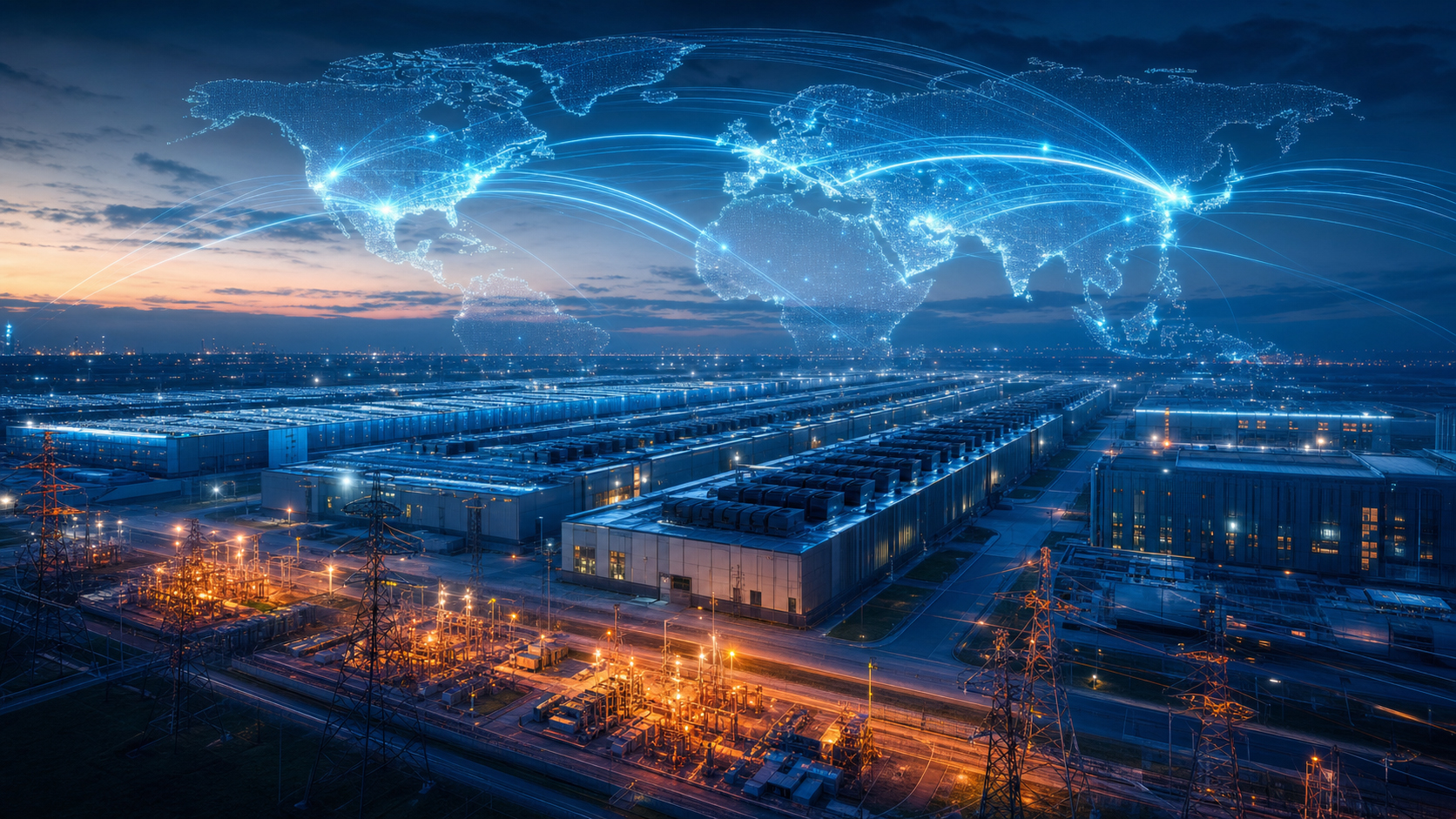
The global race for AI data centers: Is a major bubble looming? The closely guarded secret of the true utilization rates of the AI giants – a creative image on the topic, featuring AI: Xpert.Digital
America's Gigafactories vs. China's Secret Chips: The New Geopolitical Race for AI Power
Renting instead of building: Why the secret AI winner Anthropic doesn't own its own data centers
By 2026, the decisive battleground of artificial intelligence has shifted dramatically. It's no longer just about which language model generates the most intelligent texts, designs the most creative images, or writes the most error-free code. The true, far more relentless race is now taking place in the physical world: in the form of gigantic data centers, scarce power capacity, and trillions of dollars in infrastructure investments. Tech giants like Microsoft, Google, and Meta, as well as emerging Chinese players, are currently pumping unimaginable sums into the construction of so-called "AI gigafactories." The global investment volume now exceeds the economic output of entire nations. But behind the scenes of this unprecedented battle of resources, serious structural problems are emerging. While startups like Anthropic are forced to rely on flexible rental models, a dramatic bottleneck is becoming apparent worldwide, stemming not primarily from the highly touted AI chips, but from the mundane issue of power supply, soaring cooling costs, and a lack of network connections. In this titanic struggle between the US and China, Europe risks falling definitively behind due to strict regulations and a shortage of capital. The most pressing question, however, is: Is this where the indispensable physical foundation of the future global economy is being built – or is the biggest and most expensive investment bubble of our decade inflating before our very eyes?
Related to this:

When computing power becomes more important than the model itself
Anyone following the news surrounding artificial intelligence in the summer of 2026 quickly gets the impression that the real competition has long since shifted. Market power is no longer solely determined by which language model delivers the most intelligent answers, but rather by the simple physical availability of computing power, electricity, and cooling capacity. The announcements from OpenAI, Anthropic, Google, xAI, Meta, and a growing number of Chinese providers like Alibaba, DeepSeek, Moonshot, and Z.ai now read less like product launches and more like construction reports from heavy industry. Gigawatt figures, transformer delivery times, and grid connection applications have become the true metrics of the AI race, while the models themselves, however powerful they may be, increasingly appear as interchangeable software on a scarce and expensive physical foundation. This shift is economically significant because it is reshaping the balance of power across the entire technology sector and tying up capital on a scale that would have been unthinkable just a few years ago.
Why capacity can no longer be measured in units
A central methodological problem plagues any serious analysis of this field. Anyone attempting to determine the number of "AI data centers" per vendor or model quickly encounters a limit that even specialized market observers like Epoch AI or the AI Data Center Index cannot resolve. The reason lies in the nature of the infrastructure itself. A single data center campus often serves multiple purposes simultaneously, carrying training loads for one model and inference loads for another, being operated by a hyperscaler but partially leased to a competitor, and changing its allocation as new contracts are signed. Anthropic, for example, owns virtually no training campuses of its own, but leases capacity from Amazon via its proprietary Trainium chips, from Google via gigawatt-scale TPU commitments, from Microsoft, from specialized neocloud providers like CoreWeave, Fluidstack, and Nscale, and even from its direct competitor xAI, whose Colossus cluster in Memphis allocates capacity to multiple customers concurrently. A reliable figure for how many of its own data centers Anthropic operates simply doesn't exist because its business model is based on leasing rather than ownership. This lack of clarity is prevalent across virtually the entire industry and makes it clear that reliable statements must be based on megawatt and gigawatt figures, specific locations, and contractually documented deals, not on supposedly precise numbers.
The trillion-dollar dimension of the infrastructure bet
The scale of investment flowing into this sector can hardly be grasped using traditional corporate finance categories anymore. Market observers anticipate a cumulative investment volume by the major hyperscalers in 2026 ranging from $630 billion to $830 billion. While the exact figures vary depending on the methodology, all estimates share a common underlying message: this represents an increase of approximately 60 percent compared to the previous year. Goldman Sachs puts the cumulative expenditure for the period between 2026 and 2031 at around $7.6 trillion, while McKinsey had previously projected an investment requirement of approximately $5.2 trillion by 2030 for AI-enabled data centers alone. These sums exceed the economic output of medium-sized industrialized nations and raise the fundamental question of whether the expected returns from AI services can ever justify this capital outlay. Amazon plans to invest around $220 billion in capital expenditures this year, Alphabet is in the range of $180 to $200 billion, Microsoft around $175 to $190 billion, and Meta between $125 and $145 billion. Together with Oracle, whose investments amount to roughly $50 to $56 billion, this paints a picture in which five companies are effectively financing the global physical foundation of the AI revolution, while smaller providers like OpenAI and Anthropic remain dependent on their infrastructure or on specialized landlords.
America's gigafactories as a geopolitical statement
The physical reality of this investment wave is most evident in the United States, where the Stargate project by OpenAI, Oracle, and SoftBank is creating a network of data center locations. Its initial announcement of ten gigawatts and $500 billion has proven considerably more complex in practice. The Abilene, Texas, site is now operational, while other locations in Michigan, Wisconsin, Ohio, and New Mexico are under construction or in the planning phase. Trackers estimate the currently realistic planned US capacity to be in the high single-digit gigawatt range, significantly below the original announcement. In parallel, Microsoft launched its own cluster, designed as a single supercomputer and based on the GB200 architecture, at its Fairwater campus in Wisconsin in June 2026, underscoring the company's independence from individual customer relationships such as its partnership with OpenAI. xAI, for its part, has built a capacity of around one gigawatt with its Colossus complex in Memphis and Southaven, constructing several buildings. The company doesn't use the facility exclusively for its own Grok training runs, but also leases computing power to competitors like Anthropic and Google—a fact that reveals the close economic interdependence even between seemingly rival labs. Meta increased its planned capacity for its Hyperion project in Louisiana to five gigawatts and an investment volume of over $50 billion in July 2026, although the first phases of expansion are not realistically expected to take effect before 2028. This time lag is typical for the entire industry, where announcements regularly come years before actual commissioning, and investors are effectively relying on a promise of future capacity.
China's parallel path via domestic chips
While American development relies heavily on Nvidia hardware, China is pursuing a deliberately different path, initially forced by US export restrictions, but which has since evolved into an independent industrial policy strategy. According to Bloomberg reports, Z.ai, formerly known as Zhipu, partially launched a one-gigawatt data center campus in July 2026, operating exclusively with Chinese chips, though its exact location remains undisclosed. The company claims that the GLM-5.3-Flash model trained there will be run on over 100,000 domestically produced chips for inference, a figure that has not yet been independently verified. DeepSeek announced plans in July 2026 to build its own gigawatt data center in Ulanqab, Inner Mongolia, with partial operation targeted for late 2027 or early 2028, highlighting its lag behind the American projects. Moonshot AI, the company behind the Kimi models, opted for a more pragmatic approach, signing a lease agreement with Alibaba Cloud in the summer of 2026 for approximately 20,000 Nvidia graphics processors. This demonstrates that even Chinese vendors, despite political tensions, continue to access Western hardware if a legal or logistical workaround can be found. Investigative reports claiming that Moonshot obtained access to the latest Blackwell generation of Nvidia chips via third countries in Southeast Asia, particularly Thailand, remain unconfirmed allegations, unsupported by reliable supply chain evidence or official statements from the companies involved. Alibaba itself now operates 105 availability zones in 32 regions worldwide and has committed $53 billion to expanding its cloud infrastructure. The Ulanqab supercomputing site is one of five so-called super data centers and is used for both its own Qwen model and external customers like Moonshot. A more concrete example of this scale is the Lingjun Zhenwu M890 supernode in Ulanqab, which launched commercially in August 2026. Its underlying HPN 8.0 architecture increases interconnect scaling from 16 to 64 GPUs per node with a bandwidth of 800 gigabytes per second, theoretically enabling clusters with up to 130,000 heterogeneous GPUs and the potential for expansion to a mesh network with millions of maps. This qualifies the facility for training and inferring models with up to ten trillion parameters. Chinese competitor Z.ai, on the other hand, relies exclusively on domestically produced accelerators from Huawei, Cambricon, and Moore Threads at its gigawatt campus, which has been partially operational since July 2026. This is because the company has been on the US export control list since the beginning of 2025 and is therefore completely cut off from access to Nvidia hardware. Each individual cluster at the facility reportedly comprises more than 10,000 chips. DeepSeek, however, remains undecided and politically controversial regarding the chip mix for its planned Ulanqab site. This follows a US government representative's claim in February 2026 that the company had illicitly used Nvidia Blackwell chips at a facility in Inner Mongolia—an allegation that DeepSeek denies and which cannot be independently verified. As a rough cost estimate for a gigawatt data center with state-of-the-art accelerator technology, Nvidia CEO Jensen Huang cited a figure of approximately $50 billion, a rule of thumb that, however, is not based on a specific investment amount confirmed by DeepSeek itself. An interesting indirect indication of the relative cost-efficiency of the Chinese infrastructure is provided by the API prices of the respective models: While Z.ai's GLM 4.7 Flash, at around $0.06 per million input tokens, and DeepSeek V4 Flash, at around $0.09, are among the cheapest offerings on the market, Moonshot's Kimi K2.7 code, at around $0.74, is significantly more expensive. This can be partly attributed to the reliance on leased Nvidia GPUs, as Moonshot itself does not have any known large-scale facility of its own, but rather, according to its own statements, has leased around 20,000 GPUs from Alibaba Cloud.
Europe's attempt at an independent position
The European Union is in a structurally weaker position in this global race, due both to the lower capital strength of its domestic technology companies and to pronounced regulatory reluctance. The French company Mistral AI currently operates a site near Paris, while a second site in Sweden is under construction, with the stated goal of reaching a capacity of 200 megawatts by 2027 and one gigawatt by 2030. It is noteworthy that in July 2026, Microsoft signed a multi-year lease agreement for European Mistral capacity. While the exact amount was not disclosed, Reuters reports it to be in the tens of billions of euros. This deal sheds a revealing light on the limits of Europe's claim to sovereignty, as a key anchor tenant of the supposedly European AI infrastructure is none other than the American technology giant, whose graphics processors are still predominantly manufactured in the US. In response to this structural dependency, the European Commission launched a process in July 2026 to establish seven so-called AI gigafactories, for which approximately €30 billion in public and private funding has been earmarked. However, this project is currently in the consortium-building stage and has not yet created any operational capacity. At the same time, the regulatory environment for new data centers in Europe is becoming increasingly stringent, as demonstrated by the example of Spain, where a draft law was introduced in August 2026 that would require new facilities with a capacity of more than one megawatt to demonstrate that they generate at least 80 percent additional renewable electricity per hour. Such requirements significantly increase location costs within the European Union and could lead to a growing share of global AI training capacity being permanently located outside the continent.
A new dimension of digital transformation with 'Managed AI' (Artificial Intelligence) - Platform & B2B solution | Xpert Consulting

A new dimension of digital transformation with 'Managed AI' (Artificial Intelligence) – Platform & B2B solution | Xpert Consulting - Image: Xpert.Digital
Here you will learn how your company can implement customized AI solutions quickly, securely and without high entry barriers.
A managed AI platform is your all-inclusive, worry-free solution for artificial intelligence. Instead of dealing with complex technology, expensive infrastructure, and lengthy development processes, you receive a ready-made solution tailored to your needs from a specialized partner – often within just a few days.
The key advantages at a glance:
⚡ Rapid implementation: From idea to ready-to-use application in days, not months. We deliver practical solutions that create immediate added value.
🔒 Maximum data security: Your sensitive data stays with you. We guarantee secure and compliant processing without sharing data with third parties.
💸 No financial risk: You only pay for results. High upfront investments in hardware, software, or personnel are completely eliminated.
🎯 Focus on your core business: Concentrate on what you do best. We take care of the entire technical implementation, operation, and maintenance of your AI solution.
📈 Future-proof & scalable: Your AI grows with you. We ensure continuous optimization and scalability, and flexibly adapt the models to new requirements.
More information here:
Between billions in investments and overcapacities: The new reality of AI infrastructure
Electricity as the real bottleneck of the decade
Those who reduce the public debate surrounding AI infrastructure solely to graphics processing units (GPUs) misunderstand the sector's true dynamics. Numerous experts and analysts now point out that the decisive limiting factor is not the availability of chips, but rather the availability of electricity and the associated grid infrastructure. In June 2026, the American regulatory authority FERC issued directives intended to expedite the connection of so-called large loads to the power grid—a direct admission that existing grid connection approval processes are no longer adequate for the expansion plans of data center operators. Simultaneously, in July 2026, the White House expanded the Ratepayer Protection Pledge, a political commitment by data center operators not to pass on additional grid costs generated by their facilities to residential electricity customers. This policy measure arose as a direct response to growing public resistance to rising electricity prices in regions with a high density of data centers and demonstrates that the expansion of AI infrastructure has long since become a politically sensitive issue. The example of xAI, which temporarily relied on mobile gas turbines in Memphis to ensure the power supply of its facilities without having to wait for a regular grid connection, illustrates how intense the time pressure has become in the race for computing capacity. Analysts at the think tank BloombergNEF estimate that the global data center capacity under construction now exceeds 23 gigawatts, while the investment volume of the largest operators alone is approaching $750 billion in 2026. These figures make it clear that the real bottleneck in the coming years lies not in the semiconductor industry, but in the energy sector and its associated permitting processes, including the delivery times for transformers and other critical grid components, which can now extend over several years.
Related to this:

The mystery surrounding the actual use of the capacity
An often overlooked dimension of the debate concerns the actual utilization of the built capacity relative to the nominal connected load. The gigawatt figures circulating in public reports generally describe the maximum installed capacity of a site, but say little about how much of this capacity is actually used for productive training or inference runs and how much remains unused as a reserve or due to technical bottlenecks. This distinction is economically significant because it directly impacts the actual return on investment for these multi-billion-dollar projects. A data center that formally has one gigawatt of connected load but is only 60 or 70 percent utilized due to cooling problems, software optimization, or simply a lack of demand will naturally generate a significantly lower return than suggested in investor presentations. Reliable, independently verified data on the actual utilization of individual sites is practically non-existent, as operators do not disclose this information for competitive reasons. This lack of transparency not only makes it difficult to externally assess investment decisions, but also fuels the growing skepticism of some market observers who see signs of speculative overreaction in the current capital flows, comparable to earlier phases of excessive infrastructure investment in the telecommunications industry at the beginning of the 2000s.
Anthropic as a prime example of the asset-light approach
Particularly revealing for understanding the economic logic of this sector is the case of Anthropic, whose business model deliberately relies on minimal physical ownership and maximum contractual flexibility. In August 2026, the company signed a contract with the British neocloud provider Nscale for 460 megawatts of capacity in West Virginia, the total value of which, according to Bloomberg reports, is expected to reach around US$45 billion over a six-year term. At the same time, Anthropic maintains parallel capacity agreements with Amazon, whose self-developed Trainium chips are increasingly serving as an alternative to Nvidia hardware; with Google, whose TPU commitments are also in the gigawatt range; and with other specialized providers such as Fluidstack and even with its own competitor xAI, whose Colossus facility leases capacity to multiple customers simultaneously. This strategy allows Anthropic to finance its growth without the enormous upfront investments that companies like Meta or OpenAI have to manage on their own, but at the same time shifts a significant risk to the landlord and makes the company structurally dependent on the negotiating power and capacity decisions of third parties. From an economic perspective, this approach represents a bet that the costs of rented computing capacity will not rise faster than the company's own revenues in the long run—an assumption that is by no means a given considering the current shortage of high-performance chips and power capacity.
Overview of the size of the most important AI data centers
Even though, as explained above, no exact and universally accepted number of AI data centers per model provider can be specified, reliable approximations for performance, investment volume, and chip inventory now exist for the largest clusters. These are documented by specialized trackers such as Epoch AI and the AI Data Center Index, as well as by company data and regulatory documents. The following overview summarizes the order of magnitude of the most important locations, always distinguishing between current operational and projected final capacity.
| Operator / Model | Central plant(s) | Current performance | Planned final capacity | Number of chips (approximately) | Investment volume |
|---|---|---|---|---|---|
| Google / Gemini, Gemma | 44 tracked locations in 26 countries | Approximately 9.0 GW total tracked capacity, of which approximately 75 percent is operational | It is growing continuously; no single end date has been given | TPU-dominated, including around 1 million Ironwood TPUs for the Anthropic deal alone | Individual investments per location are usually between 12 and 17 billion US dollars, e.g., Google New Albany around 17.2 billion US dollars |
| xAI / Grok | Colossus 1-3, Memphis and Southaven | Approximately 1.0 to 1.4 GW of IT capacity, the exact figure varies depending on the source | approximately 2 GW targeted | Between 555,000 and approximately 1.02 million GPUs depending on the count date, predominantly Nvidia GB200/GB300 | Approximately 18 to 38 billion US dollars for hardware alone; total capital costs according to Epoch are currently at 35.8 billion US dollars, projected to reach 58 billion US dollars |
| OpenAI/GPT family (Stargate) | Abilene (Texas) and seven to eight other US locations plus the UAE | Approximately 1.2 GW operational at the flagship site Abilene, with a total of approximately 7 GW in planning or construction | 10 GW nameplate target of the original program, realistically closer to 7 GW by the end of the 2020s | No publicly available total number of chips; individual locations have hundreds of thousands of H100 equivalents | $500 billion nominally committed over four years, plus a $300 billion Oracle Cloud contract, totaling over $1.4 trillion in nameplate commitments |
| Meta / Llama | Hyperion (Louisiana), Prometheus (Ohio) | Hyperion is currently under construction, no phase is fully operational, Prometheus is planned to go online in 2026 | 5 GW for Hyperion by approximately 2030/2032, intermediate step 1.5 GW by the end of 2027 | Projects approximately 4.25 million H100 equivalents for Hyperion by 2028, with over 1.3 million GPUs in the target image | Costs for Hyperion rose from an initial $10 billion to over $50 billion, with other estimates reaching up to $200 billion including energy infrastructure |
| Anthropic / Claude | No own campuses, capacity at Google (TPU), Amazon, Nscale, xAI, etc. | Approximately 1 GW of TPU capacity has already been committed for 2026, with expansion to 3.5 to 5 GW from 2027 onwards | Up to 5 GW TPU capacity according to Google deal from April 2026 | up to 1 million TPUs (Google deal) | Google's investment in Anthropic is up to 40 billion US dollars, with an additional contract from Nscale for approximately 45 billion US dollars over six years for 460 MW |
| Microsoft / Phi (Azure backbone) | Fairwater Wisconsin, Fairwater Atlanta, other Azure locations | Fairwater Wisconsin has been operational since June 2026, with a capacity of approximately 446,000 H100 equivalents according to Epoch | continues to grow with the overall Azure expansion | several hundred thousand GPUs per location | Group-wide capital expenditures of approximately 175 to 190 billion US dollars for 2026 alone |
| Z.ai (GLM family) | a gigawatt campus, location not publicly known | approximately 1 GW, partially operational since July 2026, several clusters with over 10,000 chips each | no published expansion stage | Exclusively Chinese accelerators (Huawei Ascend, Cambricon, Moore Threads), no Nvidia hardware, as Z.ai has been on the US entity list since the beginning of 2025 | No official investment amount; indirectly favorable API prices (GLM 4.7 Flash around US$0.06 per million input tokens) serve as an efficiency indicator |
| DeepSeek | planned campus in Ulanqab, Inner Mongolia | Still under construction, partial operation not expected until the end of 2027 or the beginning of 2028 | 1 GW target capacity | Chip mix undetermined, controversial US allegations of illegally used Nvidia Blackwell chips, denied by DeepSeek | No confirmed figure, but according to the Nvidia CEO, a rough industry rule of thumb is around 50 billion US dollars per gigawatt for top-of-the-line hardware |
| Alibaba / Qwen (including Kimi as a co-user) | Super DC Ulanqab with Lingjun Zhenwu M890 supernode | Commercially available since August 2026, part of five nationwide Alibaba super data centers | HPN 8.0 architecture theoretically scalable to up to 130,000 heterogeneous GPUs per cluster, mesh expansion to the million-card level announced | Interconnect scaling from 16 to 64 GPUs per node, 800 GB/s bandwidth, suitable for models with up to 10 trillion parameters | Part of the company-wide $53 billion investment commitment for cloud infrastructure; no campus-specific figure was released |
| Moonshot AI / Kimi | No known large-scale plant of its own; leasing capacity available at Alibaba Cloud | around 20,000 leased Nvidia GPUs | no published expansion plan | Recommendation for self-operation of Kimi K3: at least 64 accelerators and approximately 1.6 terabytes of aggregated GPU memory per inference cluster | No investment amount is known; API prices are significantly higher than those of competitors (Kimi K2.7 code costs around US$0.74 per million input tokens) |
Caution is advised when interpreting these figures, as virtually every specification regarding performance or capacity is quantified differently by various sources. The example of Colossus vividly illustrates this, where reports vary between 300,000 and over one million graphics processors, and between 500 megawatts and 1.4 gigawatts, depending on the time and counting method. Epoch AI, one of the most methodologically transparent trackers, arrives at a total IT capacity of approximately 13.3 gigawatts and roughly 14.6 million H100 equivalents for its entire dataset of 86 AI data centers worldwide, distributed among 18 different owners. As a rough rule of thumb for capital intensity, Epoch AI calculates a typical investment of approximately 30 to 44 billion US dollars per gigawatt of server capacity, the majority of which is for the actual hardware, with the remainder covering buildings, cooling, and network connectivity. This figure illustrates why a single gigawatt site already achieves an investment volume that exceeds the balance sheet total of medium-sized industrial groups, and why the race for computing capacity is increasingly concentrated on a few financially strong players who have the necessary access to capital.
Regulation as a second front of competition
Alongside physical infrastructure, regulation is increasingly becoming an independent competitive factor, significantly influencing providers' strategic decisions. In the United States, OpenAI initially released its GPT-5.6 model in the Sol, Terra, and Luna variants as a strictly limited pre-release version in June 2026, following consultation with the US government—an unprecedented move that demonstrates the increasingly close relationship between leading American AI labs and political leaders. This government involvement in approval decisions for commercial AI products marks a clear break with the previous practice of relatively open model releases and can be interpreted as a response to security concerns regarding the capabilities of increasingly powerful systems. In the European Union, the so-called AI Omnibus Package entered into force in July 2026. While it postpones the deadlines for compliance with stricter regulations for high-risk AI systems, it leaves the fundamental regulatory architecture of AI law unchanged. This delay is largely welcomed by industry, as it provides additional time for adaptation, but criticized by consumer protection organizations because it further postpones the actual enforcement of important safety regulations. Additionally, in August 2026, the U.S. government issued an executive order concerning foreign grid equipment, the practical consequence of which could be that the already lengthy delivery times for transformers and other critical grid components will increase even further, which in turn is likely to slow the expansion of new data center capacity in the United States.
The limits of publicly available information
Despite the meticulous detail of the reporting, it must be noted that a significant portion of the publicly circulated figures on AI data centers ultimately relies on anonymous sources, company-related announcements, or methodologically diverse trackers whose composition cannot be readily compared. The exact number of buildings at xAI's Colossus site, the precise number of graphics processors there, and whether the facility has actually reached two gigawatts or significantly more are all quantified differently depending on the source, without any possibility of independent verification. The same applies to the exact location of the Chinese Z.ai gigawatt campus, whose existence has been reported by several media outlets, but whose geographical location has not yet been publicly confirmed. Similarly, the training infrastructure of smaller, but commercially relevant providers like MiniMax from Shanghai, whose financial figures show strong revenue growth coupled with high losses and research expenditures, remains beyond any reliable public assessment because the company does not disclose its data center resources. This systematic lack of transparency is not a coincidence, but follows the competitive logic of an industry in which the physical infrastructure itself has become a strategic secret, comparable to the secrecy surrounding industrial production capacities in other high-tech industries.
What this development means for the coming years
A comprehensive review of the available information suggests a nuanced yet clearly justifiable assessment. The current construction boom in AI data centers undoubtedly represents one of the largest industrial investment waves in recent economic history, its scale already surpassing, in absolute terms, investments in earlier technology cycles such as the expansion of fiber optic networks in the late 1990s or the electrification of entire regions in the early 20th century. At the same time, closer examination reveals that a significant portion of the publicly communicated capacity figures are more a matter of announcements than reliable reality, that the actual utilization of the constructed facilities remains hidden, and that the real limiting factor is increasingly no longer the availability of semiconductors, but rather the availability of electrical energy and grid connection capacity. For Europe, this development poses a structural challenge, as the continent lacks both the capital resources of the American hyperscalers and the state-directed investment power of Chinese providers, while simultaneously accepting additional competitive disadvantages due to stricter environmental and energy regulations. Whether the immense sums of investment in the coming years can be justified by corresponding economic returns from AI applications remains an open question, the answer to which will depend significantly on whether the built infrastructure is actually used productively or whether parts of it prove to be excess capacity, the economic depreciation of which is likely to burden the companies involved for years to come.
📈🚀 From visibility to trust 👀🤝 Your scalable path with Xpert.Digital

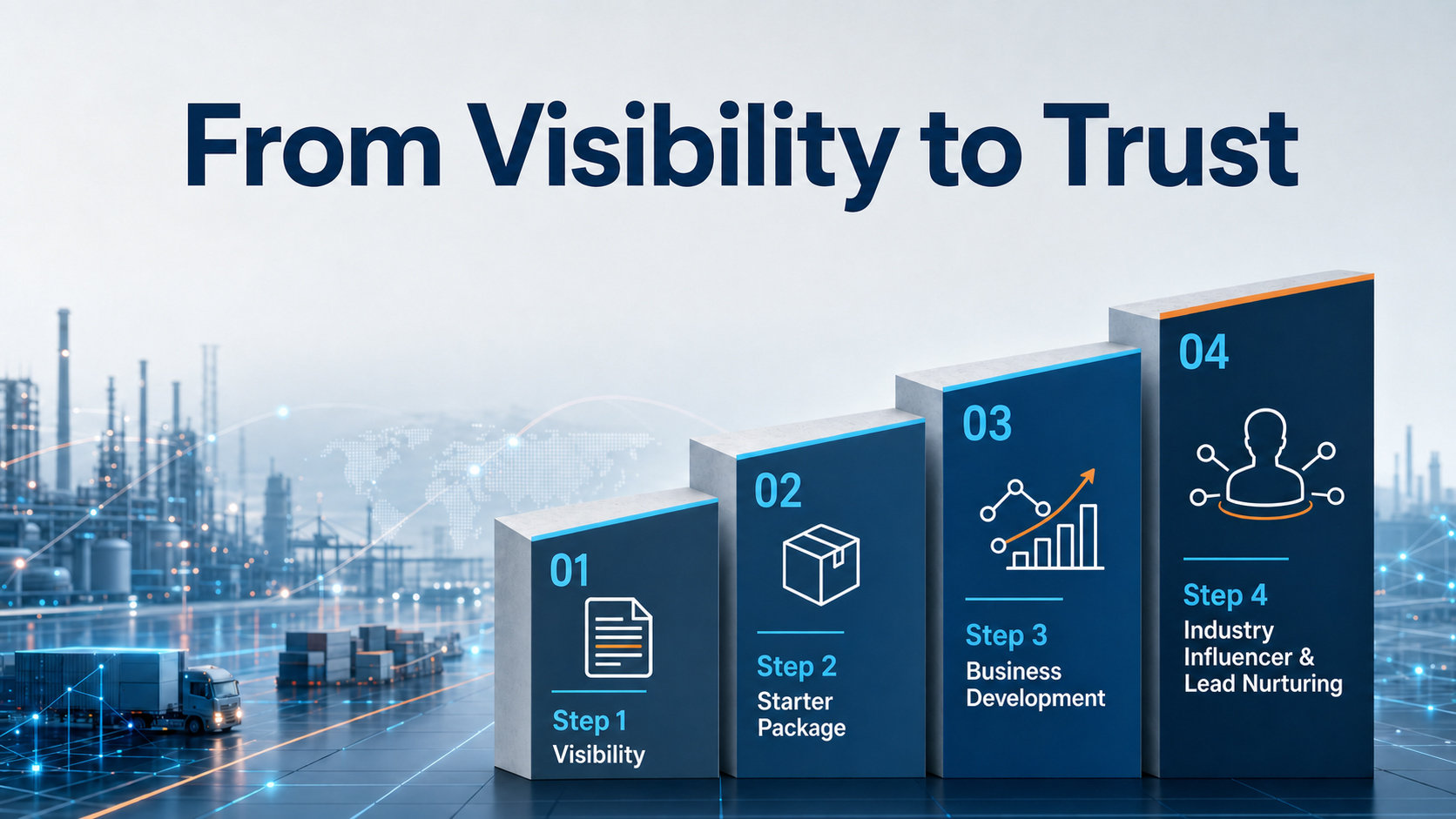
From visibility to trust: Your scalable path with Xpert.Digital - Image: Xpert.Digital
In industrial B2B, sustainable business relationships rarely emerge overnight. They develop step by step – through visibility, professional relevance, recurring touchpoints, and growing trust. Xpert.Digital's 4-stage model addresses precisely this: It offers a structured path that begins with a manageable entry point and can evolve into deeper collaboration in business development if needed.
Instead of relying on loud marketing promises, this model puts the relationship at the forefront. Companies start with clearly defined, easily calculable measures and then decide, based on their own experience, how far they want to expand the collaboration. A key factor for this undisturbed trust-building process: The platform completely avoids annoying advertising ads, so the editorial focus remains solely on the companies' expertise.
More information here:
Your global marketing and business development partner
☑️ Our business language is English or German
☑️ NEW: Correspondence in your native language!

Konrad Wolfenstein
I and my team are happy to be available to you as your personal advisor.
You can contact me by filling out the contact form here wolfenstein@xpert.digital:or simply call me at +49 7348 4088 965. My email address is
I'm looking forward to our joint project.