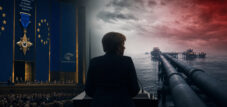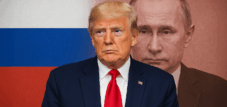
The fundamental lie of Russia policy: Could Merkel have prevented the war? Sigmar Gabriel's audacious Putin theory – Image: Xpert.Digital
Nord Stream, Minsk and a fatal error: Who bears the real blame for Putin's war?
How Gabriel's nostalgia obscures his own responsibility for Nord Stream 2
A former vice-chancellor's reckoning: Why Gabriel suddenly praises Friedrich Merz – and warns the SPD
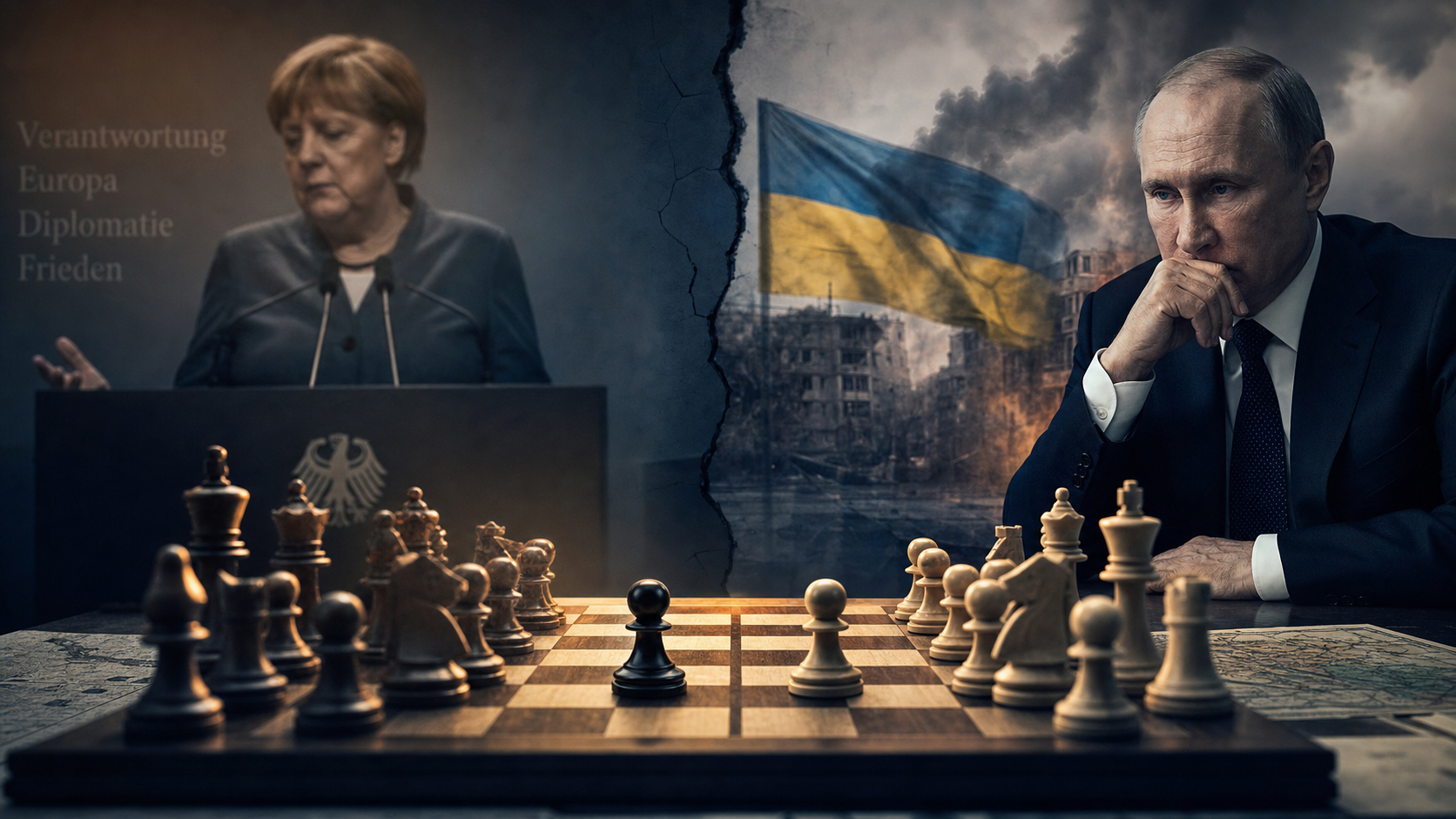
Did Angela Merkel secure peace in Europe – or, on the contrary, did her policies enable the Russian attack on Ukraine? A provocative thesis by former Vice Chancellor Sigmar Gabriel is currently reigniting the debate about the historical legacy of German policy toward Russia. Gabriel is certain: Had Merkel still been in office in the spring of 2022, Vladimir Putin would not have attacked. But upon closer analytical examination, this nostalgic look back at the Merkel era reveals a dangerous blind spot. From the disastrous energy dependence caused by Nord Stream 2 to the veto against Ukraine's NATO accession, to the dogmatic adherence to the SPD-influenced policy of détente – the German strategy of perpetual dialogue did not moderate Putin, but rather systematically gave him leeway. This is a profound analysis of strategic naiveté, the Kremlin leader's coldly calculated timing, and the question of why the SPD, of all parties, is still on the verge of collapsing under the contradictions of its own foreign policy.
Gabriel's bold thesis: A chancellor as a war preventer? Who made the war possible – and who is making excuses today?
The shared responsibility of German policy towards Russia for the war in Ukraine
Sigmar Gabriel, former Foreign Minister, Economics Minister, and Vice Chancellor of the Federal Republic of Germany, has recently offered a remarkably pointed analysis: Had Angela Merkel still been Chancellor in 2022, the Russian war of aggression against Ukraine would not have occurred. This thesis, which Gabriel initially voiced on the ARD talk show "Maischberger" and has now reiterated and elaborated upon in a detailed interview with the "Neue Zürcher Zeitung," is far more than a nostalgic tribute to his long-time political leader. It is an implicit critique of everything that came after Merkel – and simultaneously a defense of the SPD-influenced policy of détente, which Gabriel himself helped to shape.
Gabriel even goes so far as to suggest Merkel as a potential mediator for a ceasefire. While she has stated her unwillingness, Gabriel is certain that if the Europeans asked her, she would certainly not refuse. He recalls that at her last EU Council summit in 2021, Merkel attempted to send a European negotiating team to Moscow to maintain dialogue with Russia. With her departure from office, a driving force has disappeared.
However appealing this thesis may sound, it raises a fundamental and uncomfortable counter-question: If Merkel was indeed the decisive guardian of peace, wasn't she also partly responsible for the fact that the situation arose in the first place, from which Putin launched his war of aggression in February 2022? This is not a rhetorical trick, but an analytically compelling consequence of Gabriel's own logic.
The legacy of appeasement policy: Merkel and Putin
Angela Merkel governed Germany from 2005 to 2021, a period of 16 years. During this time, German policy towards Russia developed into a prime example of so-called "change through trade"—the conviction that economic integration and dialogue foster political moderation. This concept had a long tradition in German foreign policy, dating back to Willy Brandt's Ostpolitik. And for a time, it had worked—or so it seemed.
But under Merkel's leadership, this principle became a dogma, upheld even as signs mounted that Putin was pursuing fundamentally different goals. Merkel played a key role as early as the 2008 NATO summit in Bucharest: together with then-French President Nicolas Sarkozy, she prevented Ukraine and Georgia from being granted so-called MAP status (Membership Action Plan) – that is, candidate status for NATO membership. US President George W. Bush had explicitly advocated for this. Merkel, however, believed it was still too early and feared provoking Russia.
In her memoirs, published only in 2024, Merkel justified this decision with remarkable self-assurance: she considered it an illusion that MAP status would protect Ukraine from Russian aggression. At the same time, she admitted that Putin had interpreted even the general prospect of membership expressed by the Ukraine summit as a "declaration of war." This admission carries a consequential internal logic: if even a moderate membership perspective was considered a provocation by Putin, then keeping Ukraine out of NATO was not a concession to security concerns, but a capitulation to a revisionist power politician.
Numerous Eastern Europe experts share this assessment. Stefan Meister of the German Council on Foreign Relations (DGAP) argues that Merkel, as an East German, understood the logic of Russian politics and even noticed when Putin was lying to her – yet she drew no conclusions. He believes she ultimately acted opportunistically, in the interest of her own power and the German economy. Ralf Fücks, head of the think tank "Center for Liberal Modernity," adds that Merkel was never willing to shift from partnership and dialogue to deterrence and containment – even though that was precisely what was needed. Stephan Bierling, a political scientist from Regensburg, draws an even harsher conclusion: "Ultimately, the record of her Ostpolitik is a complete catastrophe.".
Nord Stream 2: Energy as a geopolitical failure
The most visible and, to this day, most controversial symbol of Germany's Russia policy under Merkel is the Nord Stream 2 pipeline. Merkel approved the construction of this gas pipeline after Russia's annexation of Crimea in 2014—a clear violation of international law that could have already sent a clear message about Putin's ambitions. Eastern European partners, above all Poland and the Baltic states, issued urgent warnings about growing energy dependence on Russia. The US government under various presidents—Obama, Trump, Biden—exerted massive pressure on Germany. Merkel remained unmoved.
Her justification was recorded: The aim was to secure cheap gas for the German economy, and she lacked the political majority to ban the pipeline. Furthermore, Merkel argued, no gas ever flowed through Nord Stream 2 – Russia started the war without using the pipeline. Therefore, it was not a mistake. This is a remarkable construction: The proof that an instrument of dependency was harmless is supposed to be precisely that this war broke out without this instrument. What is being concealed is the crucial question: What signal did the continued construction of Nord Stream 2 after 2014 send to Putin regarding the West's resolve?
Federal President Frank-Walter Steinmeier – for decades a key architect of German policy toward Russia as Chancellor's Chief of Staff, Foreign Minister, and Merkel's coalition partner – at least drew a more personally honest conclusion in 2022. His insistence on Nord Stream 2 had been "clearly a mistake." He had been wrong in his assessment of Putin. The conviction that Putin would not accept the economic and political ruin of Russia for "imperial delusion" had proven false. Merkel, on the other hand, has insisted to this day that she sees no mistakes.
This is more than a rhetorical distinction. It reveals a fundamental refusal to acknowledge the structural responsibility of German policy towards Russia. Anyone who has built up 16 years of energy dependence, blocked NATO accessions, and ignored warnings from Poland, the Baltic states, and Ukraine has not moderated Putin through dialogue – they have given him leeway.
Minsk: Peace policy or strategic naivety?
Another chapter in Merkel's foreign policy legacy is the Minsk agreements of 2014 and 2015. Merkel negotiated these ceasefire agreements for eastern Ukraine together with then-French President François Hollande. They were long considered proof of Merkel's negotiating skills and her diplomatic will to de-escalate. However, in 2022, shortly after the outbreak of war, Merkel admitted in a Spiegel interview that the Minsk agreements had also been "an attempt to give Ukraine time"—time to strengthen itself militarily.
This statement sparked a storm of outrage – not least from Putin himself, who expressed his “absolute disappointment” and said he hadn't expected to “hear such a thing from the former Chancellor.” One might dismiss this as a Putin-driven stunt. But the diplomatic implications of the statement are real. Gabriel and many others had defended Minsk as a genuine peace process. Merkel herself had described the agreement as the basis for a lasting solution. If it was in reality primarily a tool for buying time, then this turns the entire détente rhetoric of the era on its head.
Gabriel, for his part, sees Minsk as a credit to Merkel: she thereby "postponed the war for eight years." This is an interesting formulation that unintentionally acknowledges the limitations of diplomacy. The war was not prevented, but delayed. And the question remains: What consequences did Germany draw during these eight years to create the conditions under which Putin would one day refrain from a new escalation? The answer is sobering: Germany did not supply weapons to Ukraine, failed to meet the NATO two percent spending target, further increased its energy dependence on Russia, and, together with France, blocked a more serious security architecture for Eastern Europe.
Merkel's resignation as Putin's opportunity: Opportunism instead of a master plan
Here, an analytical dimension comes into play that receives too little attention in the German debate: the question of whether Putin's timing of the start of the war in February 2022 was deliberately aligned with the end of the Merkel era. Eastern Europe expert André Härtel of the German Institute for International and Security Affairs (SWP) has offered a remarkably sober assessment: "Angela Merkel's resignation as Chancellor was a key moment for Putin. Along with other factors, he probably saw this as a good time to escalate the conflict."
According to Härtel's analysis, Putin is not a man with a rigid master plan, but a realistically minded power politician who waits for opportune moments. What made the late 2021 and early 2022 opportune moment? First, the transition from Merkel to Olaf Scholz, which ushered in a period of foreign policy reorientation and eliminated Germany's clear leadership profile in the Normandy Format. Then, the perceived weakness of Europe as a whole, grappling with migration policy, populism, and the aftermath of the COVID-19 pandemic. Added to this was the internal paralysis in the US following the Afghanistan debacle and a weakening Biden administration.
Merkel herself implicitly acknowledged this. She said that during her visit to Putin in Moscow in August 2021 – her last visit there – the feeling was clear: "In terms of power politics, you're finished." For Putin, only power counts. And she admitted that when trying to establish a European dialogue format with Russia, she no longer had the strength to prevail, "because everyone knew: She'll be gone in the fall." This sounds like an explanation intended to exonerate Merkel. In reality, it confirms Gabriel's core thesis – and its politically inconvenient flip side.
Gabriel is right: A Chancellor Merkel would very likely have had more room to maneuver and more trust from Putin in the spring of 2022 than the new and still untested Chancellor Scholz. But this finding also means that Putin saw Merkel's departure as an opportunity. An opportunity that could only arise because he had experienced the Merkel era not as a period of strength, but as a period of Western hesitancy and willingness to negotiate without consequences. In other words: Merkel may have postponed the cost of war through her policies – but through those same policies, she helped create the conditions under which Putin considered the risk calculable.
Our EU and German expertise in business development, sales and marketing

Our EU and German expertise in business development, sales and marketing - Image: Xpert.Digital
Industry focus areas: B2B, digitalization (from AI to XR), mechanical engineering, logistics, renewable energies and industry
More information here:
A thematic hub offering insights and expertise:
- Knowledge platform covering global and regional economies, innovation and industry-specific trends
- A collection of analyses, insights, and background information from our key areas of focus
- A place for expertise and information on current developments in business and technology
- A hub for companies seeking information on markets, digitalization, and industry innovations
How Gabriel's nostalgia obscures his own responsibility for Nord Stream 2
Structural co-responsibility: What Gabriel's nostalgia conceals
Gabriel's glorification of Merkel has a blind spot that cannot be ignored analytically: As Minister of Economic Affairs, Gabriel himself played a key role in ensuring that Nord Stream 2 was completed after the annexation of Crimea in 2014. The taz newspaper clearly identified this connection: "One year after the annexation of Crimea, she [Merkel] waved through the construction of Nord Stream 2 despite international warnings – also under pressure from the then SPD Minister of Economic Affairs, Sigmar Gabriel." When Gabriel raves about Merkel's astute Russia policy today, he is implicitly defending his own role in that very policy.
The SPD as a party bears a particular burden in this story. It was Gerhard Schröder who laid the political foundation for a strategic partnership with Russia, and whose personal friendship with Putin became a symbol of the entanglement of economic interests and foreign policy blindness. It was the SPD that, in coalition negotiations and governments under Merkel, repeatedly insisted on maintaining energy cooperation with Russia. And it is the SPD that, even after the start of the war of aggression, hesitated for a long time to revise its fundamental convictions.
Gabriel partially acknowledges this contradiction: he himself admitted to having made mistakes. However, the magnitude of these admissions is disproportionate to the determination with which he simultaneously promotes a German mediating role and negotiations with Russia. The logic that a dialogue with Putin is possible and necessary is the same logic that was applied for 16 years – with the result of a full-scale war of aggression.
Who really encouraged Putin? The lessons from Bucharest and what came after
One of the most crucial analytical questions is: What did Putin actually experience as encouragement? It is an irony of history that Merkel's famous veto against Ukraine's NATO accession in 2008 – which she justified by saying she did not want to provoke Russia – was not understood by Putin as a gesture of goodwill, but in his own words as a "declaration of war" against the fundamental prospect of accession that was simultaneously being offered.
This leads to a fundamental insight that the German debate has not yet fully processed: Putin does not respond to Western concessions with moderation, but rather interprets them as a sign of weakness. This assessment is also found in a scientific analysis published in the journal Sirius in 2024: Putin did not invade Ukraine in 2022 because he feared NATO, but because he considered it weak. He assessed it as safe and easy to install a pro-Russian government in Kyiv. This is the opposite of Gabriel's diagnosis.
Anyone who argues that Merkel prevented the war must also explain how her willingness to negotiate could have been interpreted if research concludes that Putin simply saw Western willingness to negotiate as a sign of weakness. The Ukrainian government clearly articulated this point after Chancellor Scholz's phone call with Putin in November 2024: such talks were, for Putin, "appeasement," which he "sees as a sign of weakness and uses to his advantage.".
Historian Jan Behrends has formulated this line of argument even more pointedly: the policy of appeasement led directly to the war in Ukraine. This is a harsh assessment, which is naturally open to challenge because counterfactuals always remain speculative. But the thrust of the criticism is coherent: anyone who, for decades, conveys to a revisionist autocrat that his transgressions will have no serious consequences—be it the annexation of Crimea, the war in Donbas, or the poisoning of opposition figures on European soil—cannot simultaneously claim to have done everything possible to prevent this war.
The SPD in everyday coalition life: opposition in government responsibility
It's interesting to see how Gabriel assesses his own party. In an interview with the NZZ, he draws a sharp line between his appreciation for Merkel's Russia policy and his criticism of the current SPD in the coalition under Friedrich Merz. The Social Democrats, he says, "still behave as if they have ministers in a foreign government." They send their ministers into the coalition and then simultaneously play the opposition. Gabriel calls this behavior "naturally suicidal." Because the SPD has only one chance: to help this government succeed.
This self-criticism is remarkable and deserves closer examination because it points to a deeper structural problem within German social democracy. Historically, the SPD is a party that derives its identity largely from its opposition to bourgeois politics, even when it actively shapes those policies. This pattern was observable in the grand coalition under Merkel, as well as in the current black-red coalition under Merz: One agrees, publicly distances oneself, emphasizes what has been prevented, and thereby systematically weakens the ability of the government to which one belongs to act.
Gabriel and de Maizière, also former ministers under Merkel, spoke out jointly in the summer of 2026, criticizing shortcomings in the coalition's work. Gabriel accused the SPD of consistently seeking the wrong balance between coalition and opposition strategy: "It's important to represent issues together. The Social Democrats always get this wrong. Regardless of whether they lead the coalition or not, they want to be both opposition and government rolled into one." Anyone who supports a decision and then publicly declares they were actually against it is exploiting political disillusionment using public funds.
What Gabriel doesn't explicitly state, but which is nonetheless implied, is that this stance of the SPD is not new. It has been a recurring theme throughout the history of the Berlin Republic and has had a particularly devastating effect on its Russia policy. Pushing through Nord Stream 2 on the one hand while ignoring warnings from Eastern Europe, and simultaneously upholding peace rhetoric – that is precisely the mixture of government and opposition identity that Gabriel is so sharply criticizing today.
Friedrich Merz and foreign policy: An unexpected appreciation
Also noteworthy is Gabriel's praise for Friedrich Merz, whom he credits with "above all, conducting a good foreign policy." Merz, he says, took a position in the Iran conflict vis-à-vis Donald Trump that annoyed the US president but was necessary. This is not a given for an old-school SPD politician – and it is an indirect indication of what Gabriel thinks of the SPD-led foreign policy under Scholz.
The turning point that Scholz proclaimed after February 24, 2022, was a radical break with everything the SPD had previously stood for in foreign policy. However, many observers saw it less as a genuine change of heart than as a pragmatic adjustment under pressure from global public opinion. Scholz hesitated on arms deliveries, avoided clear commitments, and even had a phone call with Putin in November 2024, which Zelenskyy described as "opening Pandora's box." This is precisely the profile that Gabriel implicitly criticizes: a party that can never fully decide who it wants to be.
Merz, on the other hand—trained in Merkel's school but rhetorically clearer and more decisive in his support for Ukraine—represents a foreign policy course that leaves behind the appeasement legacy of the grand coalitions. Gabriel, who in times of doubt was always more pragmatic than a programmatic left-winger within the SPD, acknowledges this. And it shows how far the German foreign policy debate has shifted in just a few years.
Negotiations with Russia: Sensible pragmatism or consequential miscalculation?
Gabriel's call for negotiations with Russia and his proposal to use Merkel as a mediator deserves a nuanced examination. On the one hand, a willingness to engage in diplomacy is not inherently flawed. Every war eventually ends with negotiations, and the question of timing, format, and conditions is complex. Gabriel's skepticism toward exaggerated fear-mongering scenarios—he assesses Russia's military strength as limited after five years of war and with only twenty percent of Ukrainian territory under Russian control—is not irrational.
On the other hand, this argument carries a considerable risk. Negotiations with an aggressor who still occupies parts of foreign territory are not a neutral diplomatic act. Depending on how they are structured, they legitimize plunder. The "magic triangle" of economic strength, military deterrence, and diplomacy that Gabriel claims for the West sounds convincing—but it presupposes that all three elements are actually present and credibly employed. This is precisely what was lacking during the Merkel era: economic dependence instead of economic strength, military neglect instead of deterrence, and a diplomacy that repeatedly shifted the red lines without enforcing any consequences.
The question of whether Merkel could truly have prevented what Putin unleashed in 2022 is ultimately unanswerable. However, what can be said with well-founded analytical certainty is this: the policies Merkel and Gabriel jointly championed instilled in Putin for decades the conviction that his revisionism was cost-effective. And when Merkel relinquished office in 2021, she was acutely aware of how weak her own position had become – “in terms of power politics, you're finished.”.
A verdict that doesn't completely exonerate anyone
The primary and ultimate responsibility for the war in Ukraine lies with Vladimir Putin. This is undeniable and must be the starting point for any analysis. However, the political decisions made by European and German politicians in the decades leading up to February 24, 2022, significantly shaped the strategic environment in which Putin made his decision.
Merkel knew who she was dealing with. She said so herself: For "many, many years" she had been aware that Russia posed a serious threat. Nevertheless, she increased energy dependence, blocked Ukraine's NATO accession, and pursued a diplomacy based on dialogue without consequences. This is not malicious intent—it is a strategic miscalculation of historic proportions.
Gabriel, in turn, has employed the same logic through his involvement in Nord Stream 2 and his promotion of negotiation formats lacking clear leverage. When he praises Merkel today as a potential war preventer, he is defending a policy for which he himself bears some responsibility. This does not diminish the intellectual seriousness of his contribution to the current debate – but it does color it.
And the SPD, which Gabriel accuses of being "suicidal" for playing the opposition role in a coalition, carries the oldest legacy of this tradition: a rhetoric of peace that at times served its own identity more than the actual security of Europe. The call for negotiations, for dialogue, for a mediator like Merkel – all this sounds like a sense of responsibility. However, in a world where appeasement is interpreted as weakness and weakness provokes war, this rhetoric is precisely what the history of German policy towards Russia represents: the best-intentioned path in the wrong direction.