
The end of iPhone sovereignty? Why Apple's $1 billion deal with Google's AI Gemini amounts to a capitulation
Xpert Pre-Release

Available in 27 languages 📢
Prefer Xpert.Digital on GoogleⓘPublished on: January 13, 2026 / Updated on: January 13, 2026 – Author: Konrad Wolfenstein
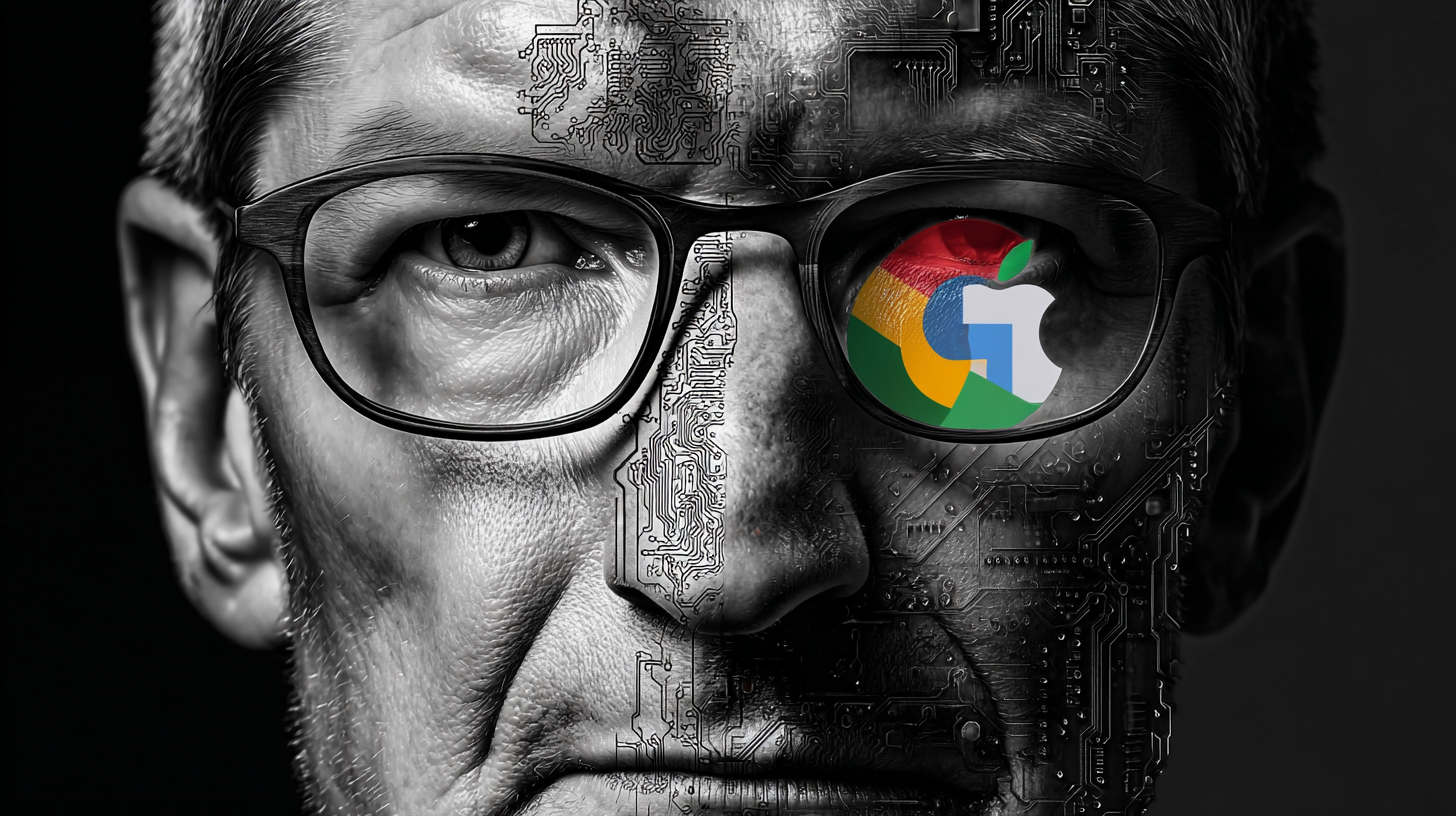
The end of iPhone sovereignty? Why Apple's $1 billion deal with Google's AI Gemini amounts to a capitulation – Image: Xpert.Digital
Across 2 billion devices: With this move, Google secures total AI dominance
Internal panic and “Code Red”: How the Apple-Google alliance is pushing OpenAI to the brink – and ChatGPT is the big loser
What long seemed unthinkable has become reality: Apple, the synonym for technological independence and vertical integration, has abandoned its bid for artificial intelligence in the crucial race and entered into a far-reaching partnership with its arch-rival Google.
This alliance is far more than a pragmatic business decision; it's an admission of a failed in-house AI strategy and symbolizes the end of an era in which Apple could independently control every aspect of its user experience. While Google gains access to over two billion additional devices and increases its market value to over four trillion dollars by integrating its Gemini models into the iOS ecosystem, the once-pioneer OpenAI is increasingly sidelined.
The following report sheds light on the profound background of this deal: from the internal turmoil and technical hurdles in Cupertino to the astronomical costs of the AI infrastructure and the dramatic consequences for competition. It shows how the balance of power is shifting between the tech giants, why antitrust regulators are alarmed, and why this development will permanently alter the technological sovereignty of the iPhone.
Samsung has already integrated Google Gemini across its entire smartphone ecosystem and plans a massive expansion of this partnership. By the end of 2025, Gemini-powered AI features were already available on approximately 400 million Samsung devices, including the entire Galaxy S series from S21 to S25, the Z Fold/Flip series, the Tab series, and select A-series models. Samsung Co-CEO TM Roh announced in January 2026 that this number would be doubled to 800 million devices by the end of the year. The integration is so deep that Gemini is activated directly on the Galaxy S25 series by a long press of the side button, effectively replacing the existing assistants Bixby and Google Assistant. The AI works seamlessly with Samsung's own apps such as Samsung Notes, Calendar, and Reminder, offering multimodal capabilities ranging from text and speech processing to the analysis of live video feeds. This strategic partnership is valuable for both sides: Google gains enormous reach through Samsung's device sales, while Samsung gains access to leading AI technology to compete with Apple and Chinese manufacturers. Awareness of Samsung's Galaxy AI brand rose from 30 to 80 percent within a year, demonstrating the growing acceptance of this integration.
When competitors become partners and the iPhone loses its technological sovereignty
The announcement from January 2026 marks a turning point in the economic history of the technology sector. Apple, long the symbol of vertical integration and technological independence, has entered into a multi-year partnership with Google, in which the next generation of Apple Foundation Models will be based on Google's Gemini models and cloud infrastructure. This decision not only reveals Apple's difficulties in the field of artificial intelligence but also documents a fundamental shift in the balance of power in the global technology market. What at first glance appears to be a pragmatic collaboration turns out, upon closer inspection, to be a strategic capitulation by a corporation that has failed to realize its own ambitions in the field of AI.
The hidden price of dependency
The financial dimensions of this agreement underscore the economic significance of the decision. According to multiple media reports, Apple is paying Google approximately one billion dollars annually for access to the Gemini models. Compared to the astronomical development costs of modern AI systems, this amount initially appears moderate. The development of Google's Gemini cost an estimated 191 million dollars, while OpenAI's GPT-4 came in at around 78 million dollars. However, these pure development costs represent only a fraction of the actual expenditures. The ongoing operating costs for AI infrastructure have now reached astronomical proportions. Elon Musk's xAI reportedly has monthly operating costs of one billion dollars, while Microsoft announced AI investments of 80 billion dollars for fiscal year 2025.
In this context, Apple's one billion dollars a year almost seems like a bargain. But the true cost of this agreement lies not in the immediate financial outlay, but in the strategic relinquishment of technological sovereignty. Apple developed its own Foundation Models, which comprise roughly three billion parameters on the device, while the server-based version is significantly more extensive. However, these in-house developments were insufficient to compete with the performance of Google's Gemini, which boasts over 1.2 trillion parameters. This ratio illustrates the extent of the technological gap. While Apple invested considerable resources in developing models with 150 billion parameters, Google's systems surpassed this performance by a factor of eight.
This dependency is also evident in the solution's architecture. Apple will not run Gemini directly on its devices, but rather a specialized version on its own private cloud computing infrastructure. This hybrid solution attempts to address privacy concerns by ensuring that personal data never reaches Google. Nevertheless, the fundamental dependence on Google's core technological expertise remains. The new Siri architecture is comprised of three components: a query scheduler, a knowledge search system, and a summarizing function. Two of these three components are powered by Gemini models, while only on-device processing remains with Apple's own models.
Google's strategic triumph in the platform war
For Google, this agreement marks a far more significant strategic success than the immediate financial returns would suggest. With one fell swoop, the company gains an installed base of more than two billion active devices through Apple. This reach is invaluable, as it gives Google access to one of the most valuable user ecosystems in the technology industry. The stock market immediately rewarded this prospect: Alphabet's market capitalization surpassed the four trillion dollar mark on the day of the announcement, making it the second most valuable company in the world, overtaking Apple. Only Nvidia, with a valuation of over five trillion dollars, remains ahead of Google.
This development fits seamlessly into Google's broader strategy to establish AI dominance through partnerships with hardware manufacturers. Samsung, the world's largest smartphone manufacturer, has already equipped 400 million mobile devices with Gemini-powered AI capabilities and plans to double that number to 800 million by the end of 2026. Brand awareness of the Galaxy AI brand, which is largely based on Gemini, rose from approximately 30 to 80 percent within a year. Together with Apple, Google thus covers virtually the entire global premium smartphone market. While Android devices already utilize Google's ecosystem, the Apple partnership now also opens up the iOS universe to Gemini.
The parallels to the existing search engine agreement between Apple and Google are obvious and intentional. For years, Google has paid Apple approximately $20 billion annually to remain the default search engine in the Safari browser. This agreement was at the center of an antitrust case brought by the US Department of Justice, which resulted in a ruling in September 2025. Judge Amit Mehta ruled that while Google had established an illegal monopoly in the search engine market, he did not order the company's breakup. Instead, he merely prohibited exclusive agreements but allowed continued payments for default placements. Ironically, this ruling paved the way for the Gemini partnership by removing the legal uncertainty.
The AI agreement with Apple is likely to prove even more valuable to Google in the long run than the search engine deal. While search engines are increasingly being supplemented or replaced by AI-powered answer services, Google is positioning itself with Gemini as the fundamental infrastructure for the next generation of digital assistants. The usage data generated from its integration with Siri and Apple Intelligence will accelerate Gemini's further development and extend its technological lead. This self-reinforcing effect is characteristic of platform economies: those who reach critical mass automatically attract more users, data, and developer resources.
The erosion of OpenAI's pioneering position
For OpenAI, the pioneer of the generative AI revolution, Apple's decision represents a significant strategic setback. The ChatGPT developer had achieved integration into Apple's operating systems at the end of 2024, allowing Siri to access ChatGPT for complex queries. This partnership seemed to confirm OpenAI's technological leadership. Now, OpenAI is relegated to a subordinate role. While ChatGPT remains available as an option, it no longer forms the default intelligence layer for Apple's AI functions. Instead, Gemini takes over the central role, while ChatGPT remains reserved for optional, particularly demanding queries.
The shift in power dynamics is also reflected in market share trends. While OpenAI continues to dominate the market for generative AI tools with ChatGPT, its lead is systematically eroding. In January 2025, ChatGPT's market share was 86.7 percent; a year later, it had fallen to 64.5 percent. Google Gemini quadrupled its share from 5.7 to 21.5 percent during the same period. This dynamic accelerated particularly in the second half of 2025, when Gemini alone increased its share from 8.6 to 18.2 percent between June and December. The absolute number of users illustrates the extent of the shift: OpenAI reported approximately 800 million weekly users in October 2025, while Google recorded 650 million monthly Gemini users in the third fiscal quarter of the same year.
Competitive pressure also manifested itself in public reactions. When Google unveiled Gemini 3 at the end of 2025, OpenAI CEO Sam Altman reportedly declared a "Code Red" internally to drive development teams to accelerate their work. This frenzy resulted in the early release of new model versions. But OpenAI's challenges extend beyond technological competition. Its relationship with its most important investor and partner, Microsoft, is increasingly strained. Microsoft has invested approximately $13 billion in OpenAI and, in return, received exclusive access to its models and technologies. However, the original contract included an AGI clause: once OpenAI develops a system with general-purpose artificial intelligence, Microsoft's access rights would end. In ongoing negotiations regarding OpenAI's planned restructuring from a non-profit organization to a for-profit corporation, Microsoft is demanding the removal of this clause. OpenAI is refusing, and the talks are in danger of collapsing.
OpenAI's strategic isolation is exacerbated by structural disadvantages. Unlike Google and Microsoft, OpenAI lacks its own large-scale cloud infrastructure and relies on Azure, Microsoft's cloud platform. It also lacks an established hardware ecosystem through which AI models can be delivered directly to end users. While Google controls Android, Chrome, and now Apple devices, and Microsoft manages Windows and Office applications, OpenAI remains limited to app stores and web access. This structural asymmetry is increasingly becoming a decisive disadvantage in the race for AI dominance.
Apple's failed AI ambitions and internal crisis
The decision to use Gemini is a public admission of a deeper crisis at Apple. The company, which for decades stood for vertical integration and control over all the essential technologies of its products, has failed to realize its AI ambitions. The problems go back a long way. Apple developed one of the first voice-controlled assistants, Siri, as early as 2011, but systematically lost touch with technological developments. While Google Assistant, Amazon's Alexa, and later ChatGPT became increasingly powerful, Siri remained on a functional plateau and increasingly became the subject of public ridicule.
Apple Intelligence's announcement in June 2024 was intended to rectify this oversight. Apple promised a completely redesigned Siri with AI capabilities that could understand screen content, utilize personal data, and seamlessly interact with apps. The launch, originally planned for April 2025, was first postponed to May, then to an unspecified 2026. Internal reports paint a picture of technical incompetence and organizational problems. Robby Walker, the manager in charge, admitted internally that even under the most optimistic scenario, the software only functioned reliably 80 percent of the time. He described the delays as ugly and embarrassing and criticized management's decision to publicly promote the technology before it was ready for deployment. These statements point to a demotivated development team and strategic miscalculations at the highest levels.
The consequences of these delays are evident in the sales figures. Apple had heavily promoted Apple Intelligence, but iPhone sales were disappointing. The situation is particularly dramatic in China, Apple's second-largest market. In the first quarter of 2025, iPhone shipments there fell by nine percent to 9.8 million units, representing a market share of just 13.7 percent. Apple was the only major manufacturer to experience a decline, while Xiaomi increased its shipments by 40 percent. Analysts attribute Apple's problems to several factors: its pricing structure is outside the scope of government subsidy programs, local competitors like Huawei are gaining traction with their own AI capabilities, and Apple Intelligence is not yet available in China due to regulatory hurdles.
Seven consecutive quarters of declining sales in China underscore the strategic importance of functioning AI features. According to market researchers, Chinese consumers place particular value on AI capabilities, yet Apple cannot deliver them. The integration of a local Chinese AI provider, which would be legally required, is being further delayed. This situation exemplifies how technological shortcomings directly translate into losses in market share and revenue. While the partnership with Google may address these issues in the medium term, the lost time and damaged reputation will have lasting consequences.
Our US expertise in business development, sales and marketing

Our US expertise in business development, sales and marketing - Image: Xpert.Digital
Industry focus: B2B, digitalization (from AI to XR), mechanical engineering, logistics, renewable energies and industry
More about it here:
A topic hub with insights and expertise:
- Knowledge platform on the global and regional economy, innovation and industry-specific trends
- Collection of analyses, impulses and background information from our focus areas
- A place for expertise and information on current developments in business and technology
- Topic hub for companies that want to learn about markets, digitalization and industry innovations
Your smartphone is getting smarter, but who really has control?
Competition law implications and regulatory risks
The agreement between Apple and Google raises significant antitrust concerns. Elon Musk, whose own AI company xAI operates the chatbot Grok, criticized the deal as an unacceptable concentration of power. He pointed out that Google already controls Android and Chrome and, through the Apple partnership, now effectively dominates the entire mobile ecosystem. This criticism is not unfounded. The combination of Google's control over Android, its dominant position in browsers through Chrome, and now access to Apple's iOS user base creates an extraordinary concentration of power in the field of mobile AI assistants.
The European Commission has already launched an investigation into Google for potential competition violations in the field of AI. In December 2025, the Commission opened a formal antitrust investigation focusing on the AI Overview feature in Google Search and the AI Mode. The Commission accuses Google of using web content for training AI models without adequate compensation and of not giving website operators the opportunity to object to this use. EU Competition Commissioner Teresa Ribera emphasized that progress must not undermine the principles of a free and democratic society. If violations are confirmed, Google faces a fine of up to ten percent of its global annual revenue.
The Apple-Google AI partnership could be examined from a similar perspective. The existing search engine agreement was already at the center of the US antitrust case that found Google to have an illegal monopoly. While the September 2025 ruling still allowed payments for standard placements, it prohibited exclusive agreements. According to a person familiar with the matter, the Gemini partnership is non-exclusive, meaning that Apple could theoretically integrate other AI providers. Nevertheless, practical implementation creates de facto barriers: Gemini's deep integration into the Siri architecture and the significant investments in private cloud computing infrastructure make switching providers complex and unlikely.
Regulatory risks also arise from data privacy concerns. Apple promotes Private Cloud Compute as the most advanced security architecture for cloud-based AI processing. The system is designed to ensure that user data is used solely for processing requests and is never stored. Google is also supposed to have no access to the data. However, these promises are difficult to verify independently. While Apple has published parts of the PCC source code and invited security researchers to review it, not the entire code has been disclosed. Critics point out that complete transparency would be necessary for independent verification of the data privacy claims. As long as this transparency is lacking, doubts remain as to whether the data privacy standards promoted by Apple are actually being upheld.
The fragmented AI market and the search for balance
Despite Google's growing influence, the AI market as a whole is significantly more fragmented than the search engine market, where Google holds a quasi-monopoly. This fragmentation presents both opportunities and challenges. Besides Google and OpenAI, numerous other providers have established themselves. Anthropic, with its Claude model, is perceived as a technologically powerful alternative and has received substantial investment from Amazon. Meta is developing an open-source alternative with its Llama models, which is steadily gaining in performance. The Chinese company DeepSeek gained international attention with its R1 model, demonstrating that high-performance AI can be developed outside of Silicon Valley as well.
Elon Musk's xAI, with its chatbot Grok, increased its market share from zero to 3.4 percent within a year, driven by its integration into the social media platform X. However, in early 2026, xAI was rocked by a massive scandal when users abused its image generation capabilities to create sexualized deepfakes, including images of minors. Inadequate moderation and Musk's refusal to implement effective safeguards led to international investigations and severely damaged its reputation. This incident illustrates the challenges that arise with the rapid scaling of AI services when security and ethical standards are neglected.
In the field of AI-powered search, specialized providers like Perplexity are establishing themselves, specifically addressing the weaknesses of traditional search engines. Perplexity generates direct answers to user queries and integrates information from various sources, including social media and videos. The company has been named one of the leading AI platforms for feature maximalists by a technology magazine and recently integrated Google's Gemini 3 Flash for Pro subscribers. OpenAI has also developed its own search function, SearchGPT, which is directly integrated into ChatGPT. This diversification demonstrates that different use cases favor different AI approaches.
Token costs, or the price for using AI models via APIs, vary considerably between providers. Google's Gemini Flash is the cheapest model on the market at $0.35 per million tokens, while OpenAI's GPT-4.5 costs 214 times as much at $75 per million input tokens. For high-volume companies, these price differences can be crucial: With 10,000 users and 100 monthly requests per user, the annual cost with Gemini Flash is approximately $46,200, while GPT-4.5 would cost $8.1 million. These price differences necessitate a smart model mix, routing simple requests to cheaper models while utilizing more expensive but powerful systems for complex tasks.
Strategic options and long-term scenarios
Further developments depend on several factors that are currently difficult to predict. Apple's strategy will be significantly shaped by whether the company can expand its own AI capabilities sufficiently in the medium term to enable a return to technological independence. The multi-year agreement with Google suggests that Apple is anticipating a longer timeframe, but the company continues to invest heavily in its own research and development. The published Apple Foundation Models show that the company certainly possesses AI expertise, but that this is currently insufficient to compete with the leading providers.
An alternative strategy could be to diversify reliance on Google by integrating multiple AI providers. The agreement is non-exclusive, and Apple could theoretically integrate Anthropic's Claude or other models in parallel. This multi-vendor strategy would preserve negotiating power and spread technological risks, but it requires significant integration effort. The Siri architecture would need to be designed so that different backend models are seamlessly interchangeable, which introduces additional layers of abstraction and complexity.
For Google, the question is how the company can defend and expand its hard-won market position. While partnerships with Apple and Samsung create enormous reach, they also tie up considerable resources. Developing specialized Gemini versions for different partners and continuously refining the models requires massive investments. Alphabet announced AI spending of $91 to $93 billion for 2025, with a significant increase expected in 2026. These sums exceed the capabilities of most competitors and cement the dominance of the tech giants.
OpenAI must decide whether a reconciliation with Microsoft is possible or whether seeking alternative partners and investors seems advisable. The planned restructuring into a for-profit corporation is intended to facilitate new funding rounds, but valuation expectations are ambitious. SoftBank and other investors have signaled interest, but the AGI clause issue remains unresolved. An escalation of the conflict with Microsoft through antitrust complaints, which is being discussed internally as a nuclear option, would shake the industry and provoke regulatory intervention.
The regulatory framework will also continue to evolve. The European Commission's ongoing investigations against Google could lead to requirements that fundamentally alter business models in the AI sector. Demands for fair compensation for content creators whose material is used to train AI models could significantly impact cost structures. Data protection requirements are also expected to tighten, particularly affecting cloud-based AI services. The question of how to reconcile privacy with the performance of AI systems remains a key challenge.
Economic dimensions and innovation dynamics
The shifts in the AI market have repercussions that extend far beyond the companies involved. The concentration of AI capabilities in the hands of a few tech giants poses macroeconomic risks. When critical infrastructures such as intelligent assistants, which are increasingly becoming the everyday interface between humans and the digital world, are controlled by two or three companies, systemic dependencies arise. This concentration can stifle innovation because smaller providers have little chance of accessing the necessary resources. Training costs for state-of-the-art models are rising exponentially, and only companies with access to enormous data center capacity and multi-billion-dollar budgets can compete.
The regional distribution of AI power is also shifting. The US dominates with 61 newly developed leading AI models in 2023, while Europe lags significantly behind with 21 models, and China is even further behind with 15. However, China leads in AI patents, holding 61 percent of the global share. This discrepancy between patent activity and market relevance suggests that Chinese AI developments have so far been primarily focused on the domestic market, but that the potential for global expansion exists. Europe struggles with fragmented markets, regulatory hurdles, and a lack of tech giants that could serve as anchors for AI ecosystems. While promising startups like Mistral in France or Aleph Alpha in Germany exist, their resources are modest compared to Google, Microsoft, or Meta.
Investment dynamics exacerbate these asymmetries. In 2023, US companies invested approximately $67.2 billion in artificial intelligence, 8.7 times the amount invested by China. While investments declined in China and most other regions, they increased by 22 percent in the US. This concentration of capital attracts talent, accelerates development, and further widens the gap. The self-reinforcing nature of this dynamic makes it increasingly difficult for lagging regions to catch up.
AI has ambivalent effects on labor markets and employment. On the one hand, it is expected to create approximately 133 million new jobs by 2030, while on the other hand, existing jobs will be automated. This transformation requires massive training efforts, and according to surveys, 37 percent of executives plan to provide their employees with the necessary qualifications within the next two to three years. Productivity gains from AI are estimated at up to $15.7 trillion by 2030, but the distribution of these gains is highly unequal. The primary beneficiaries are the tech giants and companies that can effectively utilize AI, while others fall behind.
The paradox of convergence and the future of digital assistants
The Apple-Google partnership illustrates a fundamental paradox of the digital economy: despite intense competition, systems are converging on a few dominant platforms. While a diverse range of offerings exists on the surface, they are increasingly based on the same technological foundation. Apple's Siri, Samsung's Galaxy AI, and potentially other assistants are all powered by Gemini, merely with different user interfaces. This convergence reduces genuine diversity and creates systemic risks. If a technical problem or security vulnerability occurs in Gemini, potentially billions of devices are affected simultaneously.
The role of digital assistants will fundamentally expand in the coming years. While they are currently used primarily for simple queries and tasks, they are evolving into comprehensive agents capable of autonomously conducting complex interactions. Google announced Gemini Deep Research, a feature that independently performs extensive research. Apple is planning similar features where Siri understands screen content, uses personal data, and acts proactively. This development is fundamentally changing the relationship between users and the digital world. The assistant will become the primary interface through which all interactions are filtered.
This gatekeeper position wields enormous economic power. AI assistants increasingly decide which products are recommended, which information sources are preferred, and which services are accessible. For companies, optimizing for AI assistants is becoming the new frontier of digital marketing, comparable to search engine optimization of past decades. However, while SEO still operates relatively transparently and rule-based, the decision-making criteria of AI systems are often opaque and difficult to influence. This lack of transparency strengthens the power of the platform operators.
The long-term vision of autonomous AI agents making decisions and conducting transactions on behalf of users raises fundamental questions of responsibility and control. If an AI assistant makes a purchase decision that proves disadvantageous, who is liable? The user who issued the instruction, the platform operator providing the AI, or the model provider whose algorithm generated the decision? These legal and ethical questions remain largely unresolved and are becoming increasingly pressing as autonomous AI capabilities become more widespread.
Apple's decision to rely on Google Gemini may be pragmatic and economically sound in the short term. However, it also demonstrates the diminishing ability of even the world's most profitable technology company to maintain technological sovereignty in one of the defining areas of the digital future. For the technology sector as a whole, this moment marks a turning point: The era in which vertical integration and in-house development were considered the best path is giving way to a phase of strategic alliances and dependencies, in which only a few players possess the resources to keep pace with the development of AI. The consequences of this realignment will shape the digital economy of the coming decade and determine who controls the architecture of the intelligent future.
Your global marketing and business development partner
☑️ Our business language is English or German
☑️ NEW: Correspondence in your national language!

Konrad Wolfenstein
I would be happy to serve you and my team as a personal advisor.
You can contact me by filling out the contact form or simply call me on +49 7348 4088 965 (Munich) . My email address is: wolfenstein ∂ xpert.digital
I'm looking forward to our joint project.
☑️ SME support in strategy, consulting, planning and implementation
☑️ Creation or realignment of the digital strategy and digitalization
☑️ Expansion and optimization of international sales processes
☑️ Global & Digital B2B trading platforms
☑️ Pioneer Business Development / Marketing / PR / Trade Fairs
🎯🎯🎯 Benefit from Xpert.Digital's extensive, five-fold expertise in a comprehensive service package | BD, R&D, XR, PR & Digital Visibility Optimization

Benefit from Xpert.Digital's extensive, fivefold expertise in a comprehensive service package | R&D, XR, PR & Digital Visibility Optimization - Image: Xpert.Digital
Xpert.Digital has in-depth knowledge of various industries. This allows us to develop tailor-made strategies that are tailored precisely to the requirements and challenges of your specific market segment. By continually analyzing market trends and following industry developments, we can act with foresight and offer innovative solutions. Through the combination of experience and knowledge, we generate added value and give our customers a decisive competitive advantage.
More about it here:









