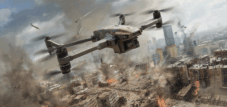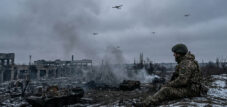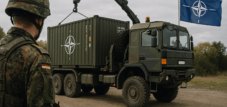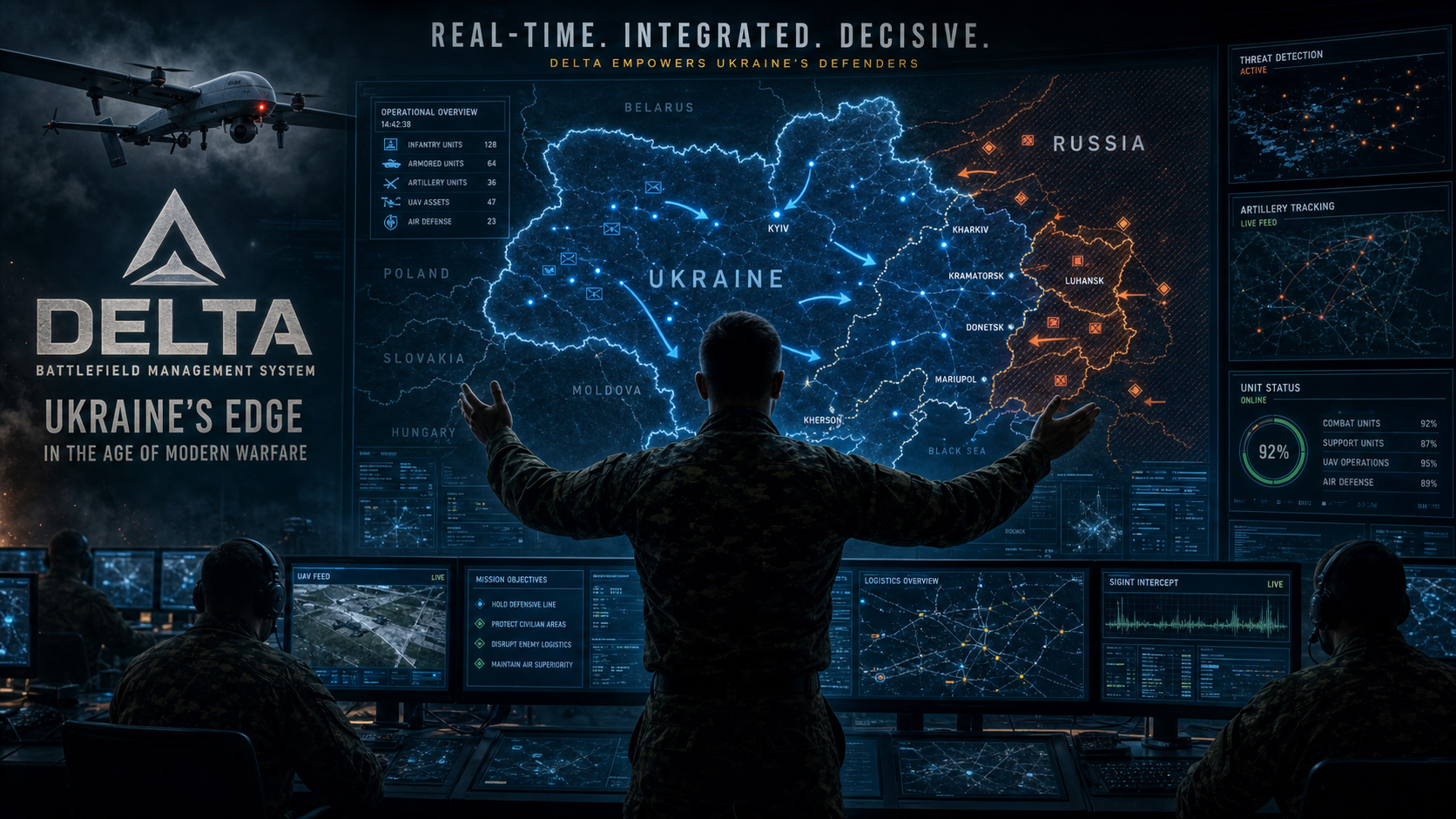
Ukraine's Delta System: "We're at the top" – How 10 Ukrainian soldiers eliminated two entire NATO battalions – Image: Xpert.Digital
Russia | From 72 hours to 2 minutes: The secret app Ukraine is using to repel Putin's army
The invisible revolution: How the Ukrainian “Delta” system could change the global arms industry
In May 2025, the Western military alliance experienced an unprecedented wake-up call during a large-scale exercise in Estonia: A small team of ten Ukrainian drone pilots disabled two fully equipped NATO battalions within a matter of hours. Their weapon of choice was not a state-of-the-art stealth bomber or a revolutionary missile, but software. The system, called "Delta"—a cloud-based combat management ecosystem reverently dubbed "Google for the military" by NATO insiders—reduces the time between enemy target acquisition and destruction from 72 hours to a mere two minutes. Running on standard smartphones and laptops, it connects drones, satellite data, and ground troops in real time, suddenly rendering expensive conventional weapons vulnerable. This analysis shows how the Ukrainian digital doctrine takes the concept of asymmetric warfare to a new level, why the system is not only striking fear into the Russian army – and why Europe now needs to rethink its approach more urgently than ever if it wants to survive in 21st-century warfare.
When ten soldiers defeat an entire army: How digital warfare is shifting the balance of power in Europe
The battlefield as a data stream: What Delta really is
In the early morning hours of May 2025, something happened in the forests of Estonia that still fascinates military experts today: A small team of ten Ukrainian drone pilots, during the major NATO exercise "Hedgehog 2025," rendered two entire NATO battalions—units with several thousand soldiers each, modern tanks, and years of training—combat-ineffective within half a day. Seventeen armored vehicles were destroyed in a simulated attack, and more than thirty other attacks were carried out. A NATO commander succinctly summarized the exercise: "We're screwed."
What sounds like a miracle was actually the result of a system called Delta – a digital warfare ecosystem that Ukraine developed and continuously tested in the war against Russia. Delta is not a secret weapon in the traditional sense. It is not a tank, a missile, or a bomb. It is software – but software that fundamentally changes the way war is fought.
The Delta system was originally developed in 2021 by the Ukrainian military unit A2724 and first presented to the world in October 2022. It is a cloud-based platform that aggregates real-time data from satellite imagery, radar, drone reconnaissance, and human sources on the front line, displaying it on an interactive digital map. Ukrainian Defense Minister Denys Shmyhal described it as a "digital battle management ecosystem that gives the Ukrainian army a technological advantage: it allows them to see the battlefield in real time, plan operations, and share information within a unit, brigade, group, and, if necessary, with allies."
The system requires no special hardware, runs on laptops, tablets, or smartphones, and is therefore usable by any commander – from the infantryman on the front line to the general staff. NATO experts from Allied Command Transformation (ACT) aptly describe it as "Google for the military": After a single login, the user gains access to all tactically relevant modules of the system.
From 72 hours to two minutes: The decisive time revolution
Perhaps the most striking measure of Delta's strategic importance is a simple metric. Before the system was implemented, the cycle between the detection of a Russian target and the relaying of this information for an attack averaged up to 72 hours. During this time, the target had long since changed location, gone into hiding, or received reinforcements. The information was outdated, the attack useless.
Delta has reduced this cycle to approximately two minutes. Lieutenant Colonel Yurii Myronenko, Ukrainian Deputy Defense Minister for Innovation and a former drone commander, explained to Business Insider what this means in practice: Ukrainian forces can detect, target, and attack Russian positions almost instantly. The system supports the target acquisition of more than 2,000 enemy objects daily. Over a year, this adds up to more than half a million verified destroyed or damaged targets.
The operating principle is as simple as it is effective: A Ukrainian soldier spots a Russian tank, marks it on the digital map, the signal is immediately transmitted via satellite to all connected units in the vicinity, commanders see the target in real time and initiate the attack. What previously involved multiple levels of the command chain and took minutes or hours now happens in seconds. For Austrian military expert Colonel Markus Reisner, this shared situational awareness is the decisive advantage: "Whoever shoots faster, hits faster."
The architecture of digital superiority: The five core modules
The Delta system has a modular design, making it both flexible and scalable. Each module solves a specific problem in modern warfare:
Delta monitor
This is the heart of the platform. Friendly troops, enemy targets, and ongoing attacks appear in real time on a digital map. Friendly forces and enemy positions are immediately visible; duplication of effort and mutual fire – a classic problem in complex battles – are thus virtually eliminated.
Secure chat
It enables encrypted communication between units without having to use traditional and vulnerable radio networks. Protection against Russian electronic warfare is a crucial factor.
Vezha
This is the system's video platform. It sends live images and videos from drones directly to the front lines, allowing commanders to observe combat situations in real time without being physically present.
Target Hub
It allows soldiers to mark targets and plan coordinated attacks. Different units can work together on the same target without knowing about each other.
Mission Control Module
Finally, it enables the planning of larger drone and military operations, the allocation of areas of responsibility, and coordination with electronic warfare and air defense. This module is particularly relevant for the mass drone coordination that has become characteristic of the modern Ukrainian war.
NATO experts from the ACT emphasize that systems of this kind do not exist in this form in any other Western country because none of the NATO members has ever fought a war of this type and intensity with so many drones simultaneously. Ukraine developed its system under the fire of the front lines, while Western systems are still based on design blueprints from the 1990s.
The coefficient of asymmetry: What connects economics and strategy
Delta is not just a military tool – it is an instrument of economic asymmetry. This asymmetry is perhaps the most significant structural feature of modern warfare and deserves in-depth economic analysis.
In the traditional war paradigm, larger armies with more equipment and more soldiers always have a structural advantage. Delta breaks with this logic. If ten Ukrainians, using commercially available drones and a software platform on a smartphone, can take out two fully equipped NATO battalions, then economically speaking, the capital factor becomes less important compared to the information factor. The value of an integrated information system far exceeds the value of conventional armaments in certain scenarios.
This thesis is supported by concrete figures. According to President Zelenskyy, Ukrainian drone attacks caused at least six billion euros in damage to the Russian oil industry in 2026 alone. Individual Russian Mi-28 attack helicopters, worth around 15 million euros, were destroyed by comparatively inexpensive Ukrainian drones. The cost-benefit ratio is completely reversed: cheap attack drones are hitting extremely expensive defense systems and military equipment.
NATO is increasingly recognizing this problem. During drone incidents in Poland, the alliance was forced to combat Russian or Iranian drones, worth around €50,000 each, with F-35 jets and interceptor missiles – and to deploy German Patriot systems, costing €1 billion per unit, for target acquisition. This is not sustainable in the long term, strategically, militarily, or economically. Economists at the Kiel Institute for the World Economy warn that if this imbalance is not addressed through technological advancements leading to more cost-effective countermeasures, "it will have a significant impact on NATO's budget and result in costs that are no longer politically acceptable."
Delta fundamentally alters this cost equation. Instead of fighting expensive weapon systems with even more expensive counter-systems, Delta allows enemy infrastructure to be targeted with precisely deployed, cost-effective means, while protecting one's own expensive systems. The target selection process becomes so efficient that even small units can achieve disproportionately large strategic impacts.
The NATO debacle at "Hedgehog 2025": A wake-up call in real time
The events of "Hedgehog 2025" are of paramount importance for the European security architecture. The exercise took place in Estonia in May 2025 and, with more than 16,000 soldiers from twelve NATO countries – including Great Britain, Germany, and the USA – was one of the alliance's largest maneuvers in recent times.
The scenario: A battle group of several thousand soldiers, including a British brigade and an Estonian division, was to attack in a simulated, overcrowded, and contested area. Opposing them was a small team of Ukrainian drone pilots acting as the "enemy"—soldiers who, in some cases, had fought on the real front against Russia just weeks before. The Ukrainian specialists deployed their Delta system.
The result: devastating. Within about twelve hours, the Ukrainian team simulated the destruction of seventeen armored vehicles, some of them uncamouflaged, and carried out more than thirty additional attacks. The British brigade was completely "annihilated" in the simulation. Several sources quoted a NATO commander as saying: "We're screwed."
The reason for the disaster was both illuminating and terrifying: NATO troops simply failed to consider how radically transparent the battlefield had become due to modern drone use. Participants reported that the attacking forces were "simply walking around without any camouflage, with tents set up and armored vehicles." "Everything was destroyed," one participant summarized. NATO's air defense coordination failed, attempts to shoot down enemy drones were a complete failure, and NATO's characteristic doctrine of withholding sensitive information proved to be a systemic disadvantage compared to the real-time information density available in Ukraine.
The Estonian Defence League's coordinator for unmanned aerial systems, Aivar Hanniotti, commented: "Overall, the results were catastrophic." The former commander of Estonian military intelligence, Sten Reimann, described the results as "shocking" – and added that this was also an example of how Ukraine could contribute to European security.
Information superiority as strategic capital: The doctrine of network-centric warfare
What Delta embodies is the practical implementation of a military doctrine known in the English-speaking world as Network-Centric Warfare (NCW). This doctrine posits that information superiority is more decisive than numerical or material superiority in modern conflicts.
The classic logic of warfare—more soldiers, more tanks, more rifles equals more power—is only partially valid when one side sees in real time what the other is doing and can react precisely within minutes. NCW (Close Countermeasures Warfare) is not a new concept; the US military has been working on it since the 1990s. But Ukraine has developed the first large-scale, combat-proven NCW system under wartime conditions, running on commercially available hardware and operable by any soldier.
The implications for understanding military power arithmetic are profound. If NATO countries primarily calculate their defense spending based on the scale of conventional armaments—more tanks, more aircraft, more ships—they may be missing a crucial dimension of modern warfare. The Wall Street Journal, which first reported on the results of “Hedgehog 2025,” described the exercise as a demonstration of “brutal reality.”.
It is noteworthy that the ratio of NATO's defense spending to Russia's is 12:1 at nominal exchange rates – meaning NATO spends twelve times as much on defense as Russia. However, when military purchasing power parity is taken into account – the fact that Russia can buy significantly more armaments for every dollar than Western countries – this ratio shrinks to approximately 4:1. Delta shows that there is also a third dimension: the effectiveness of information and data use in combat. Here, Ukraine is far ahead of its Western NATO members.
Colonel Polevyi and the men who redefined the battlefield
Behind the technical system are people. One of the key architects of Delta's integration into the Ukrainian army is Colonel Volodymyr Polevyi, who serves in the 7th Rapid Reaction Corps and is involved in the defense of the front line near Pokrovsk. Polevyi describes Delta as a shared digital screen where reconnaissance, artillery, drones, and terrain control converge in real time. The platform helps to stay constantly up-to-date and coordinate activities.
Before the introduction of Delta, Polevyi explains, it was simply difficult to know the location of a neighboring unit. This fundamental information gap is not a modern problem in itself—it has preoccupied generals and strategists since antiquity. But Delta solves it in a way that is unprecedented in military history: software-based, inexpensive, scalable, in real time, and on a standard smartphone.
The system has already proven its worth in some of the most significant operations of the Ukraine war. Delta was a key operational tool in the defense of Kyiv in 2022, the destruction of the Russian Black Sea Fleet, the liberation of Snake Island, and the liberation of Kherson. These successes are all the more remarkable given that the system was still in its early stages of development at the time. Since then, it has been continuously updated, including the integration of an artificial intelligence platform that automatically detects enemy equipment online.
Hub for Security and Defense - Advice and Information

Hub for Security and Defense - Image: Xpert.Digital
The Security and Defence Hub offers expert advice and up-to-date information to effectively support companies and organizations in strengthening their role in European security and defence policy. Working closely with the SME Connect Defence Working Group, it particularly promotes small and medium-sized enterprises (SMEs) that wish to further develop their innovative capacity and competitiveness in the defence sector. As a central point of contact, the Hub thus creates a crucial bridge between SMEs and European defence strategy.
Related to this:
Armaments 2.0: Between cyber risk and interoperability — The limits and opportunities of Delta for NATO and the EU
The AI revolution in combat: Delta as a learning platform
The integration of artificial intelligence is one of the most significant developments in Delta's evolution. Using AI algorithms, the system now analyzes large amounts of battlefield data in real time, automatically identifies targets, and coordinates attacks across command and unit boundaries. This enables a "kill chain"—the sequence of detection, sharing, and execution—that can be completed in minutes or less.
What this means can be illustrated by a concrete scenario: A swarm of more than thirty unmanned drones is deployed in an area of less than four square kilometers. Without an AI-supported management system, coordinating these drones would be chaotic and dangerous. With Delta, areas of responsibility are automatically assigned, flight routes are planned, collisions are avoided, and targets are prioritized – all in real time and largely automated.
The military-strategic community is intensely debating whether this form of AI-supported warfare will usher in a fundamental shift in military doctrine. Unlike autonomous weapon systems that kill without human oversight, Delta remains a decision support system: humans make the final decision, but the system makes that decision faster, more precise, and more informed. This distinction is not only ethically relevant but also practical: systems with the so-called "human-in-the-loop" in the decision-making process are more likely to garner political consensus and are legally more robust.
Export potential and NATO integration: The Delta system as a geopolitical commodity
Delta's strategic importance has long since attracted the attention of NATO as an organization and its member states. In July 2024, the system was tested for compatibility with NATO systems at the ACT's Coalition Warrior Interoperability eXploration (CWIX24) – and passed. In August 2024, Ukrainian Defense Minister Shmyhal ordered the introduction of Delta at all levels of the Ukrainian Armed Forces.
In January 2025, a NATO officer indicated to the defense magazine Janes that the alliance might use the Delta system for planning joint military operations of varying sizes and levels of complexity. US Navy Lieutenant Colonel Danielle Moser of the ACT emphasized that while the system had not yet been officially adopted by NATO, it could potentially serve as a tool for joint operational planning.
More specifically: In April 2025, the Ukrainian Deputy Minister of Defense for Digitalisation, Kateryna Chernohorenko, announced that an unnamed NATO member state had submitted a formal request to procure the Delta system. Ukraine is currently developing an export model – with various licensing approaches for intergovernmental agreements. Lieutenant Colonel Yelyzaveta Boyko, head of development at the Delta Center in the Ukrainian Ministry of Defense, succinctly summarized the competitive situation: Western partner countries developed their systems in the 1990s and have continued to develop them ever since – de facto outdated systems that consume enormous resources for maintenance and updates. For exporting Delta, this would mean: It is a more proven, flexible, and cost-effective system than what most NATO members currently operate.
This situation is economically significant. If Delta enters the global defense market as an export of Ukraine, a new category will emerge in the arms industry: battle-proven combat management software from a country that developed and tested this software under real war conditions. No NATO test site can provide this kind of practical proof.
Europe's defense investments in the age of digital warfare
The financial dimensions of Europe's adaptation to the new reality of warfare are immense. The eight NATO member states on the eastern flank – Finland, Estonia, Latvia, Lithuania, Poland, the Czech Republic, Slovakia, and Romania – already spent over €60 billion on defense in 2024. At the NATO summit in The Hague at the end of June 2025, they committed to increasing their defense spending to 5 percent of GDP within ten years – with subdued economic growth of 2 percent, this will approach €150 billion by 2035.
At the European level, the ReArm Europe/Readiness 2030 initiative aims to mobilize up to €800 billion for defense investments, supplemented by €150 billion in loans under the Security Action for Europe (SAFE) instrument. An EY/DekaBank study calculated that European NATO countries need to spend approximately €770 billion annually to meet NATO's targets by 2035 – of which around €220 billion is for pure defense spending.
The economic impact of this spending orientation is considerable. In Germany alone, increased defense spending could boost GDP by at least 0.9 percent and secure or create approximately 360,000 jobs annually. Across all European NATO countries, investments in defense and military equipment secure around 1.9 million jobs, almost 600,000 of which are directly in the defense industry.
But the crucial question is where these billions are flowing. If Europe primarily invests in conventional armaments—tanks, aircraft, artillery systems—without modernizing the digital infrastructure that provides the operational backbone for these weapons, then European armed forces will miss perhaps the most important lesson of the Ukraine war. Delta demonstrates that information superiority is not solely a matter of budget—it is a matter of conception, architecture, and operational will.
Drone warfare and its economic logic: Asymmetry as a strategy
The war in Ukraine has drastically demonstrated the economic logic of drone warfare. In 2026, according to Zelenskyy, Ukrainian drone attacks caused at least six billion euros in damage to the Russian oil industry. The strategy behind this is explicitly economic: Putin's oil industry is the primary source of funding for the war. Whoever hits it hits the war chest.
Ukrainian drones now fly as far as the Ural Mountains, 2,000 kilometers from the border. This range would be logistically and operationally almost impossible to manage without a combat management system like Delta – the Mission Control Module coordinates drone flights and crews in areas that no other military system has ever had to cover.
The German drone industry is reacting to this shift. According to the German Aerospace Industries Association (BDLI), the war in Ukraine has acted as a catalyst for the sector: The number of employees in the German drone industry rose by 24 percent within a year to 7,700, sales increased by nine percent, and approximately 70 percent of German drone manufacturers are now active in the military sector. Major contracts are expected.
This presents a new industrial policy opportunity for Europe as a whole: The combination of Delta technology and European drone production could create an independent European layer in the defense architecture that is neither dependent on US nor Israeli systems.
Limitations, risks and critical perspectives: What Delta can't do
A serious analysis cannot ignore the system's limitations. Delta has structural weaknesses that are strategically relevant. The most important of these is its dependence on the internet. In a so-called "internet-denied environment"—a battlespace where the enemy deliberately cuts or disrupts the internet connection—Delta loses considerable functionality. Russia has deployed significant electronic warfare capabilities in certain phases of the war in Ukraine, and the disruption of digital systems is a central element of Russian military doctrine.
Furthermore, Delta relies on a continuous data supply. If one of the data sources – satellite, drone, human reconnaissance – fails, gaps in the situational awareness emerge. Troops could be lulled into a false sense of security and rely on outdated data. This risk is all the greater the more units depend on the platform and the less experience they have with analog communication and navigation.
A third weakness is data security. A cloud-based system with thousands of users—from infantrymen to the general staff—is an attractive target for hostile cyber operations. Ukraine recognized this and subjected the system to an information security audit according to NATO standards. Nevertheless, the risk of a breach remains, which in the worst-case scenario would provide the enemy with a complete, real-time situational picture of one's own armed forces—the worst possible outcome of any intelligence operation.
Experts from the 16th Council UK also emphasize that Delta is not a one-size-fits-all solution: it is a tool that unfolds its full potential in the hands of experienced, well-trained operators. NATO forces in "Hedgehog 2025" failed not only because they lacked Delta – they also failed because they had not internalized the principles of modern drone tactics. The system alone is no guarantee of tactical superiority.
Delta and the future of European security architecture
The lessons learned from the war in Ukraine, and especially from "Hedgehog 2025," are fundamentally transforming European defense doctrine. Sten Reimann, the former commander of Estonian military intelligence, put it succinctly: the exercise's outcome serves as an example of how Ukraine can contribute to European security. This is not a mere formality—it is a fundamental assessment of security policy.
The integration of Ukraine into the European defense structure – formally not yet a NATO member, but operationally merged with the alliance in many areas – presents a paradox: The country fighting the toughest conventional war on European soil since 1945 has simultaneously developed and tested the most advanced technologies for network-centric warfare. NATO could learn more from Ukraine in this respect than vice versa.
In a resolution from February 2026, the European Parliament reaffirmed the need for strategic EU security and defence partnerships. Within this partnership discussion, Delta is a concrete use case: a technology that is battle-proven, NATO-compatible, exportable, and future-proof. The question is no longer whether Europe should learn from Delta, but how quickly and in what form.
Several European defense experts see Delta as a model for a new generation of European command and control systems. The EU aims to provide all member states with an advanced early warning and anti-drone system by 2027. Delta could become a core technology for the digital layer of this architecture – not as a copy, but as a blueprint for what modern combat management software must be able to do.
The geopolitical dimension: Delta as a power shift beyond the battlefield
Delta's strategic significance extends far beyond the military sphere. It touches upon fundamental questions of power distribution in the 21st century. In a world where technology has become the decisive strategic resource, Ukraine possesses in Delta an asset that gives it considerable weight in negotiations, partnerships, and alliances.
The active negotiation of Delta exports – at least one NATO country has already submitted a formal request – signals that Ukraine intends to leverage its technological lead economically. Monetizing military technology through licenses and intergovernmental agreements is a logical step for a country facing massive reconstruction costs while simultaneously seeking to establish its defense industry as a strategic export sector.
Furthermore, there is the geopolitical symbolism: A Ukraine that sells key military technology to its Western allies is a different geopolitical entity than a Ukraine that receives Western aid. It is a country that could become a security supplier to Europe – with all the diplomatic and economic consequences that entails.
For Russia, this development is threatening in several respects. Delta strengthens Ukraine's combat capabilities in the ongoing conflict. It paves the way for deeper NATO integration of Ukraine through interoperability. And it establishes a Ukrainian role as a technology exporter in the European defense architecture – a long-term safeguard against Russian influence that will outlast conventional balances of power.
Conclusion: The lesson of Delta and what Europe must make of it
Ukraine's Delta system is more than a tool of war. It is the clearest empirical evidence that 21st-century warfare is no longer primarily a matter of steel and explosives, but of data, algorithms, and networked intelligence. Reducing the target acquisition cycle from 72 hours to two minutes—that's not just an improvement in efficiency, that's a paradigm shift.
This results in a clear strategic agenda for Europe. A significant portion of the massive defense investments initiated by ReArm Europe, NATO decisions, and national budgets must be directed toward digital warfare capabilities. Not instead of tanks and aircraft – but consistently alongside and interconnected with them. The "Hedgehog 2025" exercise demonstrated that conventional superiority in numbers and equipment is rendered meaningless without the digital networking necessary to translate that superiority into tactical effectiveness.
Ukraine has proven, under the harshest imaginable conditions, that this interconnectedness is feasible, affordable, and crucial. Europe would be well advised to learn less from Russia about how to wage conventional warfare and more from Ukraine about how to win it in the 21st century. Delta is not the endpoint, but the starting point of a military-technological revolution whose full impact on strategy, doctrine, and the arms economy will take years to fully grasp.
Consulting - Planning - Implementation

Markus Becker
I would be happy to serve as your personal advisor.
Head of Business Development
Chairman SME Connect Defense Working Group
Consulting - Planning - Implementation
Konrad Wolfenstein
I would be happy to serve as your personal advisor.
You can contact me at wolfenstein∂xpert.digital or
Just call me on +49 7348 4088 965 .