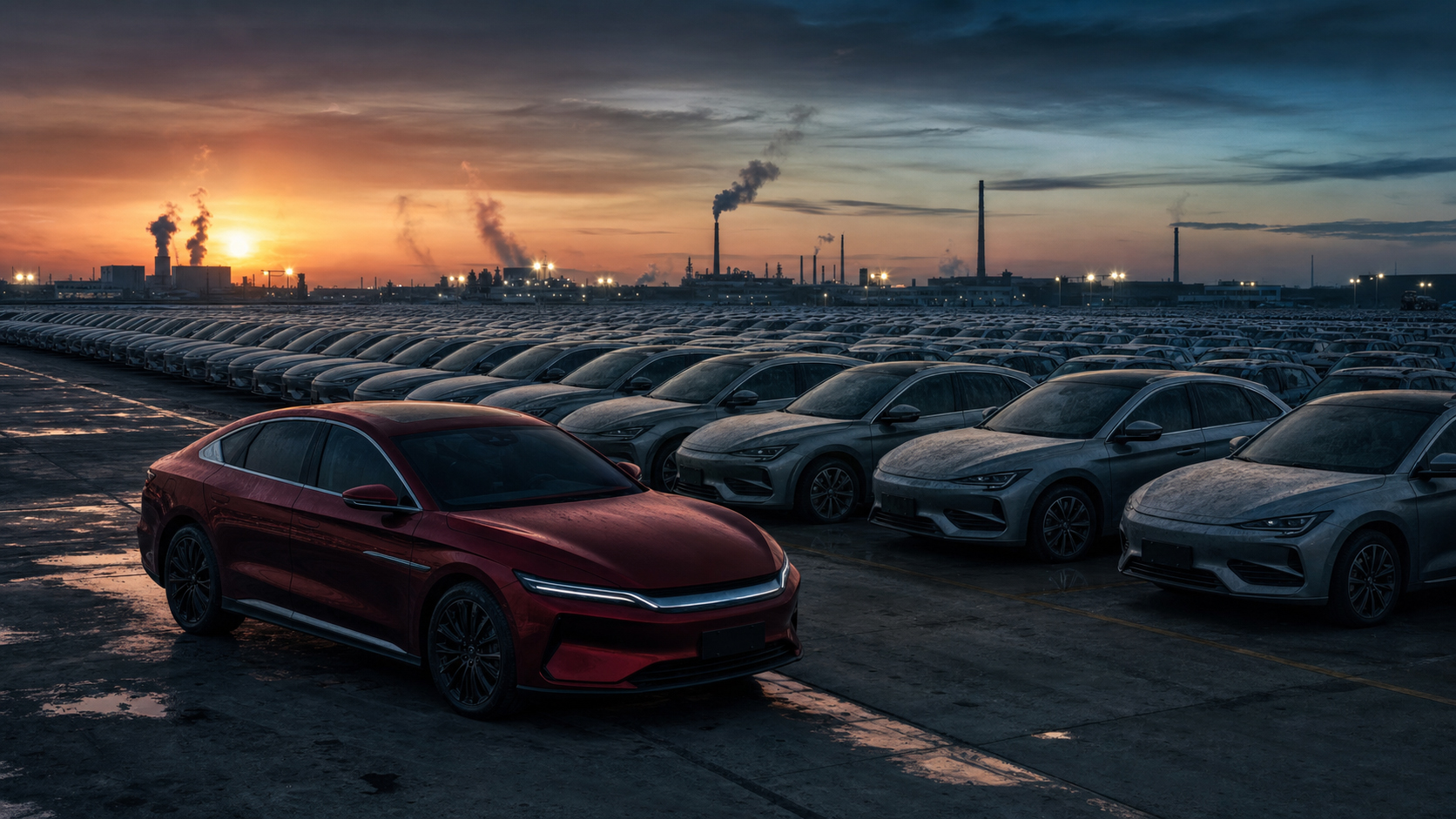
The BYD Myth: Secret Debts and Fake Sales – Is the Chinese car giant BYD about to be exposed? – Creative image on the topic, created with AI: Xpert.Digital
The BYD myth is crumbling: Why VW and BMW's biggest competitor is suddenly faltering
The downfall of a flagship company: Why China's electric car empire is currently imploding
For years, the Chinese automaker BYD was considered an unstoppable electric mobility marvel, effortlessly overshadowing established brands like VW, BMW, and Mercedes-Benz. But behind the glittering facade of global sales records and technological dominance, massive chasms open up. Current research and market developments reveal that the industry giant's unprecedented rise is largely based on concealed debt, an opaque web of state subsidies, fabricated sales figures, and unscrupulous exploitation. Added to this are devastating quality defects and a ruinous price war that is increasingly eroding the Chinese auto industry from within and causing profits to plummet. Is the automotive world witnessing the beginning of the end of the untouchable BYD myth? And does this shaky house of cards now offer the struggling German auto industry a historic opportunity to finally turn the tide in the global market? An in-depth analysis of the true state of affairs at the electric car giant.
Economic miracle or house of cards? A giant is tottering behind the facade of success
While VW, BMW, and Mercedes-Benz are struggling with declining sales, factory closures, and job cuts in Germany, the Chinese automotive industry appears to be celebrating a historic triumph. Leading the charge is BYD, a company that has risen to become the world's largest seller of electric and hybrid vehicles in just a few years. In Thailand, the brand achieved a market share of 40 percent within a year and a half; in Singapore, one in five new cars is now a BYD; and in Brazil, the company boasts a market share of 72 percent. At first glance, these figures seem to prove a superior business model. However, closer examination reveals a far more complex and contradictory picture, characterized by ongoing government subsidies, concealed debt, questionable sales practices, and serious ethical failings.
How Western knowledge enabled the rise
BYD's success is officially attributed to a clever corporate strategy. The company is said to have focused early on affordable plug-in hybrids and controlled virtually the entire value chain itself, from semiconductors to battery cells. However, this narrative overlooks a crucial structural factor. For decades, Western automakers wanting to produce in China were required to enter into mandatory joint ventures with Chinese partner companies. This gave Chinese firms deep insights into production processes, development methods, and technical know-how that was supposed to be strictly confidential. BYD benefited from this systematic knowledge transfer from its very inception, long before it became a global industry giant. Industrial espionage is not a fringe phenomenon, but rather a recurring pattern in almost all economically relevant sectors in China.
The state as a secret co-owner
Besides technology transfer, it is primarily the massive state support that has enabled BYD's growth. Between 2015 and 2020, the company received direct subsidies totaling around €4 billion, and this trend did not diminish in subsequent years. In 2022 alone, approximately €2.1 billion in state subsidies flowed into the company. In some years, these subsidies even exceeded BYD's total net profit, revealing the company's actual economic dependence on the Chinese state. Added to this are free land for new factories, guaranteed large orders for taxi fleets, and structural cost advantages that allow BYD to produce vehicles for around €4,000 less than its Western competitors. This support is not based on altruism, but rather pursues a clear geopolitical goal: BYD is intended to serve as a strategic instrument to push Western automakers out of the market and establish China as the global leader in the automotive industry.
A mountain of debt that officially doesn't even exist
Despite enormous government support, BYD's financial situation is far from sound. Officially, the company reports debts of approximately €5.4 billion. However, the research firm GMT Research arrives at a significantly more alarming conclusion, estimating the actual debt to be many times higher than this official figure. The reason for this massive discrepancy lies in a specific payment practice with suppliers. Instead of settling invoices in cash, BYD forces its suppliers to accept electronic promissory notes via a specially established internal payment platform called Dilian. Invoices are typically paid only after 275 days, and sometimes even after a full year. In this way, thousands of small and medium-sized suppliers effectively function as interest-free lenders for BYD, while the entire risk of insolvency is shifted onto them. This practice is structurally reminiscent of mechanisms that have led to dramatic collapses at other large Chinese corporations in the past.
Sales records that exist only on paper
Even BYD's much-touted sales records only partially stand up to closer scrutiny. On paper, the demand for BYD vehicles appears enormous, but in practice, the picture is considerably less rosy. Car dealerships and sales partners are contractually obligated to purchase large quantities of vehicles that cannot be sold on the regular market. These surplus vehicles are then registered through shell companies established specifically for this purpose, so that they appear in official sales statistics as regular new car sales. In the next step, these technically brand-new vehicles are declared as used cars with zero kilometers driven. This trick allows exports abroad without having to pay the actually high import duties on new cars. The result is a system that generates impressive sales figures on paper, while in reality, huge quantities of unsold vehicles accumulate. Satellite images and drone footage of areas near major Chinese cities like Hangzhou show gigantic piles of brand-new electric vehicles rotting away unused.
Quality defects despite technological progress
In addition to financial and statistical discrepancies, serious quality problems are also mounting with BYD vehicles. In September 2024, nearly 100,000 vehicles had to be recalled due to a critical defect in the steering column, which posed an acute fire hazard. In October 2025, another recall of 115,000 vehicles followed because insufficiently sealed battery casings allowed water to penetrate the cells. In November 2025, approximately 90,000 plug-in hybrids experienced a defect in their battery cells, causing vehicles to suddenly lose all drive power while driving on the highway, posing an immediate danger to the occupants. This accumulation of safety-related recalls contradicts the publicly conveyed narrative that Chinese electric vehicles have already fully caught up technologically with those of Western manufacturers.
Our China expertise in business development, sales and marketing

Our China expertise in business development, sales and marketing - Image: Xpert.Digital
Industry focus areas: B2B, digitalization (from AI to XR), mechanical engineering, logistics, renewable energies and industry
More information here:
A thematic hub offering insights and expertise:
- Knowledge platform covering global and regional economies, innovation and industry-specific trends
- A collection of analyses, insights, and background information from our key areas of focus
- A place for expertise and information on current developments in business and technology
- A hub for companies seeking information on markets, digitalization, and industry innovations
Is the BYD boom over? Why the Chinese strategy is failing
Exploitation behind the green facade
While BYD presents itself in Europe as a sustainable and responsible model company, conditions on a construction site in Brazil reveal a completely different side of the corporation. In December 2024, Brazilian labor authorities uncovered slave-like conditions and human trafficking during an inspection of the new BYD factory in Camaçari. More than 160 Chinese workers, illegally brought into the country, were forced to live and work in degrading conditions. Subcontractors systematically confiscated the workers' passports to prevent escape attempts, demanded illegal deposits, and made the men work up to 14 hours a day, including weekends. The accommodations were filthy; in some cases, more than 30 people had to share a single bathroom. These conditions led to BYD being officially placed on Brazil's list of forced labor companies in April 2026. What happened next is remarkable: The chief labor inspector who had uncovered the scandal was dismissed just days later under massive political pressure without any comprehensible explanation, before a court provisionally ordered his removal from the list. In December 2025, BYD and the construction companies involved finally reached a court-approved settlement of approximately US$7.5 million for the affected workers.
A price war devours its own children
All these practices ultimately serve one overarching goal: the systematic displacement of Western automakers from the global market. However, the chosen method of massive overproduction is increasingly backfiring. Chinese automakers now have production capacities of more than 30 million vehicles per year, while actual demand is below 19 million units. This structural overcapacity of around 11 million vehicles is forcing manufacturers to offer increasingly aggressive discounts, which in turn are eroding the margins of the entire industry. The CEO of competitor Chery aptly compared this development to drinking poison to quench one's thirst. The consequences of this downward spiral are now clearly visible. Smaller manufacturers like Neta Auto have already gone bankrupt, leaving behind billions in losses and substantial debt. Even industry leader BYD has not been spared this development. In the first quarter of 2026, the company's net profit plummeted by more than 55 percent year-on-year, while global sales figures suffered a dramatic decline. The business model, celebrated for years, of conquering market share through sheer production volume, is thus clearly reaching its natural limits.
Can German manufacturers take advantage of this crisis?
The crucial question now is whether German automotive groups can leverage these visible weaknesses of BYD and the entire Chinese auto industry to regain lost market share, or whether the technological and economic gap has already become too large. An objective assessment requires a differentiated consideration of several levels simultaneously.
First, it's important to note that BYD's current problems don't prove a fundamental technological inferiority of Chinese manufacturers. The uncovered practices regarding subsidies, payment terms, and statistical manipulation primarily affect the financial sustainability of the business model, not necessarily the actual vehicle quality or technical expertise in battery technology and software integration. BYD and other Chinese manufacturers have made significant progress in recent years in battery costs, charging performance, and vehicle software, surpassing German manufacturers in many areas. Simply pointing to subsidy fraud or accounting tricks would therefore be insufficient when assessing their true competitiveness.
At the same time, the current period of weakness for BYD and the entire Chinese industry presents real opportunities for European manufacturers. Plummeting profits, increasing debt within the supply network, and growing international skepticism towards Chinese manufacturers due to human rights violations and customs avoidance practices are creating an environment in which trust and brand reputation could regain importance. Particularly in Europe, where consumers are increasingly sensitive to ethical supply chains and production conditions, the damage to BYD's image could prove to be a strategic disadvantage. German manufacturers traditionally enjoy a head start in terms of trust, which they could leverage through credible communication about their own production standards.
Nevertheless, it would be naive to rely solely on the competitor's weakness without addressing one's own structural deficiencies. German automotive groups continue to struggle with high production costs, complex supply chains, comparatively slow software development, and a hesitant pricing policy in the mass-market electric vehicle segment. As long as VW, BMW, and Mercedes-Benz are unable to offer competitive electric vehicles in the mid-price segment, they will hardly benefit from the current BYD crisis, since this customer group tends to favor cheaper Chinese alternatives rather than German premium brands anyway.
A realistic scenario therefore likely lies somewhere between unconditional optimism and resigned surrender. German manufacturers are not hopelessly out of the running; they still possess technological strengths in chassis, build quality, and brand image, particularly in the premium segment. However, to truly regain lost ground, they would have to radically overhaul their cost structures, significantly accelerate development cycles, and invest more heavily in their own battery cell production and software expertise. BYD's weakness buys them more time, but no guarantee. Should the current crisis at BYD and other Chinese manufacturers lead to a sustained market consolidation, the strongest and most financially sound Chinese companies could ultimately emerge even stronger, while China's politically motivated subsidy practices continue to create structural distortions of competition against which European manufacturers have little recourse. The answer to the initial question is therefore that Germany can seize the current opportunity, but only if profound structural reforms in its own industry are implemented in parallel with the observed weakness of its Chinese competitor.
📈🚀 From visibility to trust 👀🤝 Your scalable path with Xpert.Digital
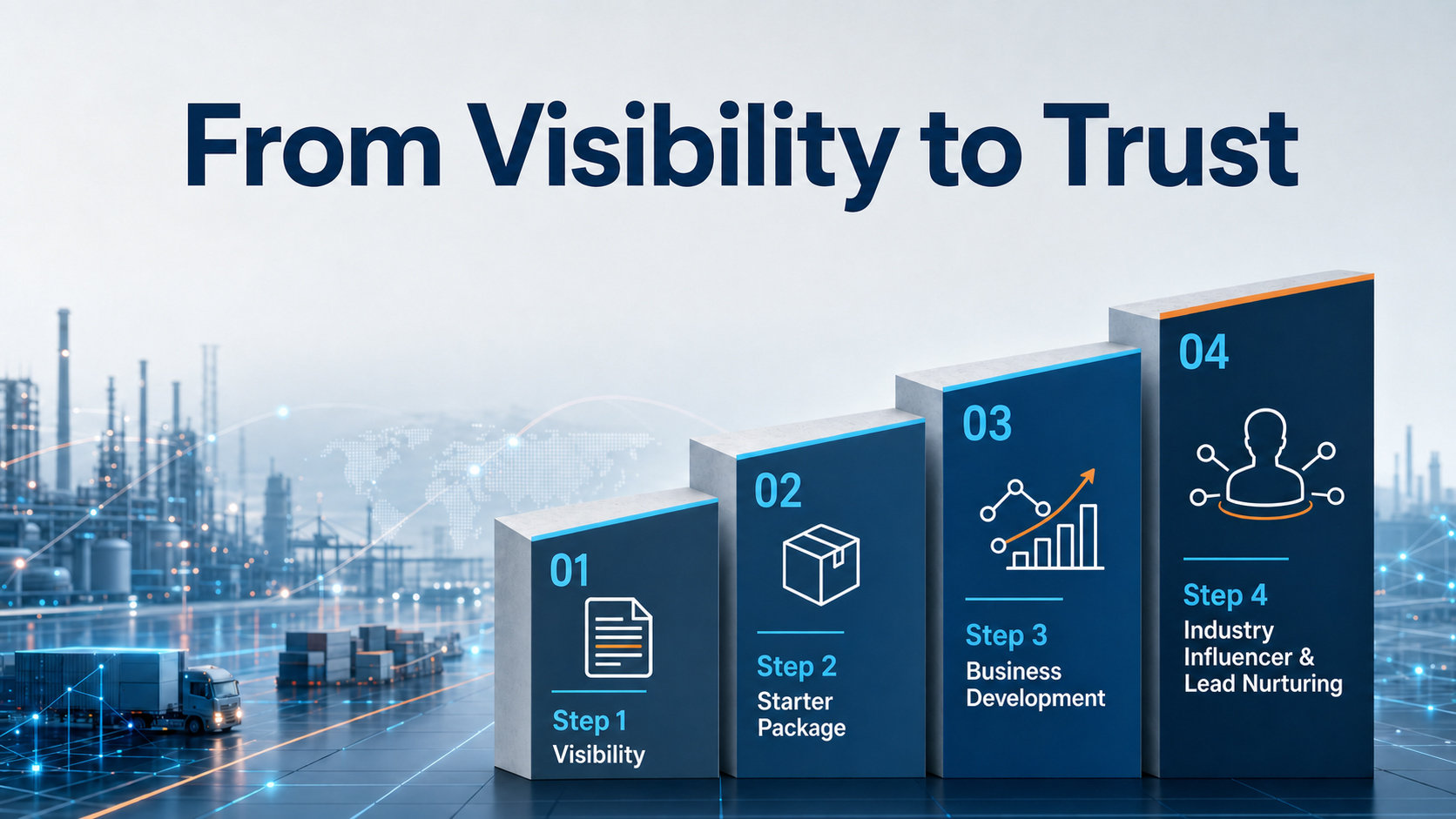
From visibility to trust: Your scalable path with Xpert.Digital - Image: Xpert.Digital
In industrial B2B, sustainable business relationships rarely emerge overnight. They develop step by step – through visibility, professional relevance, recurring touchpoints, and growing trust. Xpert.Digital's 4-stage model addresses precisely this: It offers a structured path that begins with a manageable entry point and can evolve into deeper collaboration in business development if needed.
Instead of relying on loud marketing promises, this model puts the relationship at the forefront. Companies start with clearly defined, easily calculable measures and then decide, based on their own experience, how far they want to expand the collaboration. A key factor for this undisturbed trust-building process: The platform completely avoids annoying advertising ads, so the editorial focus remains solely on the companies' expertise.
More information here:
Your global marketing and business development partner
☑️ Our business language is English or German
☑️ NEW: Correspondence in your native language!

Konrad Wolfenstein
I and my team are happy to be available to you as your personal advisor.
You can contact me by filling out the contact form here wolfenstein@xpert.digital:or simply call me at +49 7348 4088 965. My email address is
I'm looking forward to our joint project.