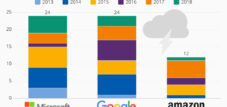
The big reckoning in the AI race: Which tech giant is now overreaching – and who is cashing in – Image: Xpert.Digital
Quarterly results from the giants: Why Microsoft's strategy is currently overshadowing all others
It's no longer just about growth: Tech investors are suddenly focusing on this one crucial metric
Over 100 billion for AI: How Amazon, Microsoft and Alphabet are risking their own future
The latest earnings season from the tech giants has sent an unmistakable signal to the financial markets: Unconditional growth at any cost is a thing of the past. Although Alphabet, Amazon, and Microsoft all reported impressive revenue jumps in the second calendar quarter of 2026 and drove their cloud divisions to historic record levels thanks to the artificial intelligence boom, the reactions on Wall Street were wildly different. While Microsoft and Amazon were rewarded with double-digit share price gains, investors initially sent Alphabet's stock into a tailspin despite its rapid rise. The reason lies buried deep in the balance sheets: It's about the gigantic capital expenditures for AI infrastructure and the crucial question of how much free cash flow remains after deducting these costs. The following look at the quarterly figures reveals why the stock market is suddenly setting new standards and how the strategic positioning of the world's three most valuable companies differs fundamentally in the ultimate AI race.
Major reckoning after the quarterly results: This is what separates Alphabet from Amazon and Microsoft
One quarter, three narratives: When billions in capital expenditures turn stocks into winners and losers overnight
The three largest American technology companies released their figures for the second calendar quarter of 2026 within a week, and anyone following the market reactions might have gotten the impression that they represent three completely different sectors. Alphabet, Amazon, and Microsoft all share the commonality of double-digit growth, citing their cloud divisions as the growth engine, and investing enormous sums in artificial intelligence. And yet, the market reactions were anything but uniform. While Microsoft's stock rose by double digits and Amazon's jumped by double digits after its report, Alphabet initially struggled despite impressive growth rates, as investors viewed the exploding capital expenditures with skepticism. This divergence is the crux of the matter, because it shows that the stock market no longer solely asks how fast a company is growing, but above all how it finances this growth and whether it keeps the resulting costs under control.
Alphabet is growing the fastest, but is paying the highest price
Alphabet reported revenue of $119.8 billion in the second quarter of 2026, a 24 percent increase year over year and marking its twelfth consecutive quarter of double-digit growth. Particularly noteworthy was the acceleration in its cloud business, which surged 82 percent to $24.8 billion, driven by strong demand for enterprise artificial intelligence solutions and traditional Google Cloud services. Operating income climbed 30 percent to $40.8 billion, with the operating margin improving to 34 percent. The most spectacular, yet also misleading, figure was the 298 percent jump in net income, which translated to earnings per share of $9.11. This extraordinary increase was largely the result of a $98 billion non-operating one-off gain from unrealized gains on equity investments, leading analysts to largely disregard this figure when assessing the company's true operational strength.
Investors' primary concern, however, lay with the investment side. Alphabet increased its capital expenditures in the quarter to $44.9 billion, double the figure for the same period last year, driven almost entirely by the expansion of its artificial intelligence infrastructure. Consequently, free cash flow slipped into negative territory, reaching a negative $5.9 billion for the quarter, while remaining positive at $53.3 billion over the past twelve months. The combination of rapidly rising expenses and a short-term negative free cash flow initially caused the stock to fall by more than three percent, despite strong operating results, as investors were still uncertain about the return on these enormous investments. It was also noteworthy that Alphabet's cloud order backlog increased sequentially by more than $50 billion, now reaching $514 billion, indicating enormous future revenue potential, provided the capacity can be deployed in time. The “Other Bets” division, which includes the autonomous driving project Waymo, continued to record an operating loss of $1.8 billion on revenue of just $382 million, demonstrating that Alphabet is still making significant investments outside its core business without a short-term return prospect.
Amazon impresses with the fastest cloud acceleration in years
Amazon delivered total revenue of $200.6 billion in the second quarter of 2026, surpassing the $200 billion mark in a single quarter for the first time in the company's history – a 20 percent increase compared to the previous year's figure of $167.7 billion. However, the real star of the report was once again Amazon Web Services (AWS), the company's cloud division, which grew by 37 percent to $42.2 billion, its fastest growth rate in eighteen quarters. This brought AWS to an annualized revenue of $169 billion, significantly exceeding analysts' expectations, which had averaged around $40.5 billion. AWS's operating profit climbed to $16.6 billion with an impressive operating margin of around 39 percent, meaning that the cloud division now generates about 61 percent of Amazon's total operating profit, even though it only accounts for a fraction of the group's revenue.
At the group level, operating income rose by 43 percent to $27.5 billion, while net income exploded, reaching $62.6 billion – more than triple the previous year's figure. Here, too, a significant portion of this jump was attributable to a one-off non-operating effect, specifically a $53.4 billion gain from the company's investment in the AI firm Anthropic. Adjusted for this effect, however, the solid operating growth remains, which convinced investors. Amazon's advertising business, now one of the group's most lucrative segments, grew by 26 percent to $19.8 billion, underscoring how successfully Amazon has established its third pillar alongside retail and cloud computing. Amazon also saw a massive increase in capital expenditures: Management raised its forecast for full-year investments to around $220 billion, citing continued high demand for artificial intelligence capacity, which is expected to remain scarce through 2027 and 2028. Unlike Alphabet, however, investors reacted to this news not with sell-offs, but with a share price jump of around nine to twelve percent, because the market placed greater emphasis on operational strength, particularly at AWS, than on the short-term burden of the investments.
Microsoft provides the most convincing answer to the capital expenditure question
Microsoft released its results for the fourth quarter of fiscal year 2026, which ended on June 30, delivering perhaps the most compelling report of the three companies. Revenue rose 18 percent to $90 billion, significantly exceeding analysts' expectations, which averaged around $87.7 billion. Operating income also grew 18 percent to $40.6 billion, while net income according to US GAAP increased 31 percent to $35.8 billion. Earnings per share reached $4.81 according to GAAP, or $4.74 on an adjusted basis, well above the consensus estimate of approximately $4.24.
The real highlight, however, was the Azure cloud division, which grew by 43 percent in the quarter, clearly exceeding both the company's own forecast and market expectations of around 40 percent. Looking at the entire fiscal year, Azure surpassed the $100 billion mark in annual revenue for the first time – a historic milestone for the company. Microsoft's total cloud revenue, which includes Azure, Microsoft 365, and other services, rose by 27 percent to $59.3 billion. Particularly noteworthy was the increase in commercial order backlogs, which jumped by 84 percent to $678 billion, although a significant portion of this increase was attributable to a large commitment from OpenAI, and the growth rate without this effect would have been around 25 percent.
The crucial difference with Alphabet, however, lay in the communication and details regarding capital expenditures. Microsoft spent $41 billion on investments in the quarter, exactly in line with its previous forecast, and projected expenditures of approximately $175 billion for the coming fiscal year, consistent with its previously communicated calendar-year forecast of around $190 billion. This predictability, combined with the news that efficiency gains in its existing data center fleet were higher than expected, convinced investors that the multi-billion-dollar investments would indeed translate into revenue and margins. The stock subsequently surged by more than 16 percent in a single trading day, an extraordinary move for a company of this size and the most pronounced positive reaction of the three companies.
Our US expertise in business development, sales and marketing


Our US expertise in business development, sales and marketing - Image: Xpert.Digital
Industry focus areas: B2B, digitalization (from AI to XR), mechanical engineering, logistics, renewable energies and industry
More information here:
A thematic hub offering insights and expertise:
- Knowledge platform covering global and regional economies, innovation and industry-specific trends
- A collection of analyses, insights, and background information from our key areas of focus
- A place for expertise and information on current developments in business and technology
- A hub for companies seeking information on markets, digitalization, and industry innovations
The end of the growth fantasy: Why investors are now demanding real returns from AI giants
The key figures in direct comparison
AI investments under scrutiny: Why free cash flow now determines stock prices
A look at the key figures shows how similarly the three companies operate structurally and how different the results were in detail.
| Key figure | Alphabet Q2 2026 | Amazon Q2 2026 | Microsoft Q4 FY2026 |
|---|---|---|---|
| Group revenue | 119.8 billion US dollars, plus 24 percent | 200.6 billion US dollars, plus 20 percent | 90.0 billion US dollars, plus 18 percent |
| Cloud revenue | $24.8 billion, an increase of 82 percent | $42.2 billion, plus 37 percent | $59.3 billion, up 27 percent (Azure alone up 43 percent) |
| Operational outcome | $40.8 billion, plus 30 percent | $27.5 billion, plus 43 percent | $40.6 billion, plus 18 percent |
| Capital expenditures in the quarter | $44.9 billion, plus 100 percent | approximately US$53.1 billion (cash basis) | 41.0 billion US dollars, according to forecasts |
| Free cash flow in the quarter | negative 5.9 billion US dollars | negative, margin pressure due to investments | US$19.6 billion, positive |
| Price reaction | slightly negative, around minus 3.7 percent | Clearly positive, around plus 9 to 12 percent | very clearly positive, around plus 16 percent |
This table clearly shows that while Alphabet boasts the highest growth rate in its cloud business, it simultaneously has to cope with the most significant doubling of capital expenditures, resulting in negative free cash flow in the short term. Amazon scores points with the size of its business and the acceleration of AWS, while Microsoft delivers the most compelling overall performance of the three reports through a combination of strong growth, a high operating margin, and continued positive free cash flow.
Why the stock market is suddenly looking so closely at free cash flow
The reason for the differing reactions lies in a shift in investor sentiment that has emerged over the past few quarters. As long as investments in artificial intelligence could be sold as a pure growth story, it was sufficient to present high growth rates in revenue and cloud business. Now, however, investors are increasingly demanding concrete evidence that these enormous sums are actually being used profitably and are not simply disappearing into a capacity bubble. Free cash flow has become the key metric because it shows how much money actually remains in the company after all investments have been deducted. For Alphabet and Amazon, this figure slipped into negative territory in the quarter under review, while Microsoft, despite also high expenditures, reported a positive free cash flow of $19.6 billion. This difference explains a significant portion of the divergent market reactions and demonstrates that investors are no longer willing to reward unlimited spending growth without a clear prospect of return.
Added to this is the aspect of communication and the reliability of the forecasts. Microsoft had already explicitly warned of the now-realized high investments in the previous quarter and delivered precisely the previously announced figures in this report, which inspires confidence in management's planning ability. Alphabet, on the other hand, surprised the markets more with the doubling of its capital expenditures, without providing a similarly concrete statement regarding the future return on these investments, leading to greater uncertainty. Amazon, in turn, was able to overshadow the high expenditures with its exceptionally strong operational performance in AWS and its advertising business, so that the positive operational news outweighed concerns about capital intensity.
Strategic positioning in the AI race
Beyond the raw figures, the three reports also reveal differing strategic priorities in the race for artificial intelligence. Alphabet is consistently pursuing the vertical integration of its own AI models, chips, and cloud infrastructure, demonstrating that this strategy is already delivering impressive initial growth results in its cloud business, even if the return on investment is not yet fully apparent. Amazon is pursuing a more diversified approach, relying not only on its own chip development but also on strategic investments in external AI companies like Anthropic. This recently resulted in substantial one-off gains and further expanded AWS's customer base. Microsoft, in turn, is benefiting from its close, albeit increasingly complex, partnership with OpenAI and is simultaneously developing its own, more affordable alternative with the MAI models to avoid being entirely dependent on an external partner. All three companies report ongoing capacity bottlenecks in data centers and chips, suggesting that demand for AI infrastructure continues to significantly exceed available resources and that high investment levels are likely to persist for the foreseeable future.
A pattern that has been repeating itself for months
Interestingly, this pattern of diverging share price reactions, despite overall strong figures, was already observable in previous quarters this year. Back in April, when the first-quarter results were released, the markets reacted very differently to the comparatively strong operating results of the major technology companies. Alphabet rose by around six to seven percent, while Microsoft initially declined before stabilizing, and online retailer Amazon, after initial losses, turned positive by the end of the trading day. This recurring volatility surrounding the quarterly reports of the major technology companies illustrates that the market now distinguishes very precisely between the nuances of the respective business models, instead of lumping all cloud and AI providers together.
What will decide the coming quarters
Despite recent strong figures, the question of whether the enormous investments in artificial intelligence will pay off in the long run remains unanswered and will significantly influence the share price performance of the three companies in the coming quarters. Crucially, Alphabet and Amazon's currently negative or highly volatile free cash flows will stabilize in upcoming reports once the current waves of investment translate into usable capacity and thus additional revenue. Microsoft's latest forecast already indicates that its capital expenditures will remain at a similarly high level in the coming fiscal year, but with clearer guidance. This gives the company a boost in investor confidence, something Alphabet has not yet fully received this quarter. For Amazon, the key question is whether AWS growth continues at its current high level of 37 percent or whether, similar to Microsoft's Azure, a slowdown emerges once the comparison base from the previous year becomes more challenging. Ultimately, the latest earnings season demonstrates that size and growth rates alone are no longer sufficient to convince investors. It is the ability to translate gigantic investments into demonstrable operating returns and a stable cash flow that now determines winners and losers on the stock market. Microsoft performed most convincingly in this area this quarter, while Alphabet, despite its impressive growth, still has some convincing to do, and Amazon, with its operational strength in AWS and its advertising business, was able to regain the trust of investors.
🎯🎯🎯 Data-driven B2B industry hub as a quasi-in-house solution


The quasi-in-house solution: How Xpert.Digital closes operational gaps in B2B marketing and sales – Smart Content-Driven Business - Image: Xpert.Digital
Xpert.Digital is a data-driven B2B industry hub led by Konrad Wolfenstein . The company acts as an external, quasi-in-house solution for industrial partners, closing operational gaps in marketing, content, and sales – without requiring additional resources on the client side.
More information here:
Your global marketing and business development partner
☑️ Our business language is English or German
☑️ NEW: Correspondence in your native language!

Konrad Wolfenstein
I and my team are happy to be available to you as your personal advisor.
You can contact me by filling out the contact form here wolfenstein@xpert.digital:or simply call me at +49 7348 4088 965. My email address is
I'm looking forward to our joint project.