
The chaos on the screen and the battle for attention: Too many streaming services? Why choosing is so difficult.
Xpert pre-release

Available in 27 languages 📢
Prefer Xpert.Digital on GoogleⓘPublished on: May 4, 2025 / Updated on: May 4, 2025 – Author: Konrad Wolfenstein
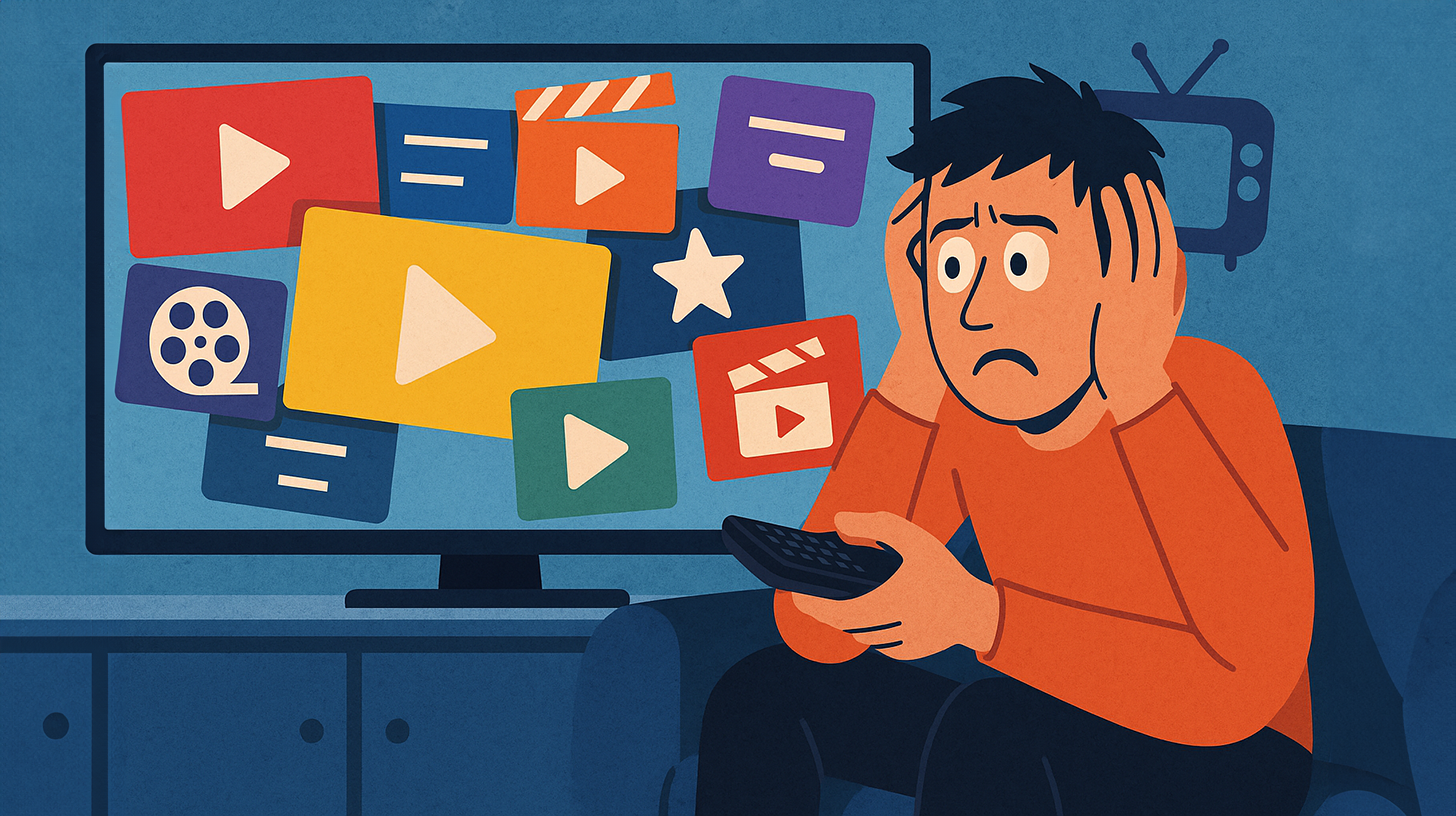
The chaos on the screen and the battle for attention: Too many streaming services? Why choosing is so difficult – Image: Xpert.Digital
Why prompt engineers disappear faster than they came
The fragmentation of the television and streaming market: A comprehensive analysis
The increasing fragmentation of the media market, particularly in television and streaming, is a key phenomenon in today's media landscape. Consumers have more choices than ever before, while media companies face the challenge of reaching their target audiences across an ever-expanding range of platforms. This report analyzes the current situation, causes, and effects of this development.
Suitable for:

Definition and causes of fragmentation in the media market
The fragmentation of the media market describes a progressive splitting and diversification of the media landscape into many parallel segments. This development is not new, but has been significantly accelerated by digitization.
“The fragmentation of the media and entertainment industry has a huge impact on media consumption,” Adobe states in its analysis. One of the most important consequences is a significant “shift in power away from media and entertainment companies” and toward consumers, who “decide for themselves which content they want to consume, when, and where.”.
This development is driven by several factors:
Digitalization and technological progress
Digitization has drastically reduced the production and distribution costs of media content and lowered the barriers to market entry for new providers. At the same time, new technologies enable media consumption independent of time and location.
Multiplication of the supply
The number of available TV channels and streaming services is constantly growing. While previously there were only a handful of television channels, today there are dozens of linear programs and numerous streaming platforms available.
Mobility and flexibility of use
Mobile devices allow media content to be consumed anywhere and anytime. “In fact, studies by Adobe Digital Insights show that consumers are increasingly watching television outside their living rooms. And this trend is growing stronger.”.
The current situation of the television market in Germany
The German television market is showing increasing fragmentation, although the major public broadcasters continue to dominate.
TV channel market shares
In 2024, ZDF achieved its highest market share since 1994, reaching 15.3 percent among the total audience. ARD followed with 13.0 percent. Among the private broadcasters, RTL led with 8.1 percent, followed by VOX and Sat.1.
In the advertising-relevant target group of 14- to 49-year-olds, the distribution looks different: Here, RTL achieved the highest market share with over ten percent, followed by ARD with 9.4 percent.
The current market shares illustrate a long-term trend: While the major broadcasters continue to lead, many of them have lost significant market share over the last 20 years
- The first channel lost more than two percentage points
- RTL even lost seven percentage points
- Sat.1 and ProSieben each lost at least five percentage points
Decline of linear television
The ARD/ZDF media study 2024 shows a significant decline in linear television viewing. The daily reach of linear television programming fell by 6 percentage points to 58 percent among the target audience. This trend is particularly pronounced among younger viewers
- Among 14- to 29-year-olds, only about one in four (24%) still watches linear television daily (a decrease of 10 percentage points)
- In the 30 to 49 age group, the daily reach fell by 10 percentage points to 43 percent
A Nielsen study confirms this trend and concludes that in 2024, the use of streaming services in Germany was higher than that of linear television for the first time.
Suitable for:

The growing streaming market in Germany
The streaming market in Germany is experiencing considerable growth. According to Statista, revenue in the video-on-demand market is estimated at approximately €5.96 billion for 2024, representing an increase of about 10.4% compared to the previous year.
Market shares of streaming services
The German streaming market is currently dominated by two major providers:
- Amazon Prime Video leads Netflix by approximately 2 percent
- Disney+ follows at a considerable distance, leading Apple TV+ and WOW by 12 percent
In terms of newly concluded streaming subscriptions in the third quarter of 2024, Amazon Prime Video recorded the largest market share with around 17 percent, followed by Disney Plus and Netflix with approximately 14 percent each.
Growth and user numbers
The number of streaming video-on-demand subscribers in Germany has risen sharply in recent years:
- From 15.0 million in 2019 to 21.1 million in 2023 (an increase of over 40 percent)
- Further growth is expected for 2024
- Statista predicts that the number of video streaming users in Germany will rise to 41.8 million by 2027
According to Nielsen, 77% of Germans use video streaming services weekly, representing an increase of 7 percentage points compared to the previous year and 13 percentage points over the last three years.
Streaming usage varies greatly by age group:
- 92% of 18-34 year olds use streaming services weekly
- The largest annual increase is in the 35- to 54-year-old age group, with a rise of 10 percentage points to 83%
- An increase of 8 percentage points compared to the previous year can also be observed among 55- to 69-year-olds
🎯🎯🎯 Benefit from Xpert.Digital's extensive, five-fold expertise in a comprehensive service package | BD, R&D, XR, PR & Digital Visibility Optimization

Benefit from Xpert.Digital's extensive, fivefold expertise in a comprehensive service package | R&D, XR, PR & Digital Visibility Optimization - Image: Xpert.Digital
Xpert.Digital has in-depth knowledge of various industries. This allows us to develop tailor-made strategies that are tailored precisely to the requirements and challenges of your specific market segment. By continually analyzing market trends and following industry developments, we can act with foresight and offer innovative solutions. Through the combination of experience and knowledge, we generate added value and give our customers a decisive competitive advantage.
More about it here:
Endless streaming options: How users and providers are reorienting themselves
Factors influencing the streaming market
A key factor influencing the German streaming market was the abolition of the ancillary cost privilege in July 2024, which ended the practice of automatically billing cable connection costs through ancillary rental costs. Many households faced the decision of either signing their own contract or using alternative services, which led to a significant increase in streaming subscriptions.
Impact on consumer behavior
The fragmentation of the media market has profound effects on consumer behavior.
Changed usage habits
The ARD/ZDF Media Study 2024 shows that the fragmentation of media consumption will continue in 2024, with daily reach and usage times for all media categories declining slightly. The decline is particularly pronounced for linear media, while non-linear offerings remain relatively stable or even grow.
The change is particularly pronounced among younger users:
- Among the target group of 14- to 29-year-olds, the daily reach of music streaming services (54%) has been higher than that of traditional radio (37%) for the third year in a row
- The 30 to 49 age group shows the largest increase in the use of music streaming services, from 17% to 27%
Challenges for users
Fragmentation brings not only advantages but also challenges for consumers:
“The main problem from a user's perspective is the fragmentation of the market. Those who want to stream often have to invest a lot of time to find content they like,” said Michael Schmid in an interview with WirtschaftsWoche.
This leads to a higher churn rate for streaming services: “Three out of four streaming users canceled at least one of their subscriptions last year […]. Around half even canceled two or more streaming subscriptions.”.
Overlaps and stable usage patterns
Despite the fragmentation, stable usage patterns are also emerging:
“However, the assumption of a pronounced fragmentation of the audience should also be critically examined. Significant overlaps exist between different media and media offerings, and thus, in turn, shared audiences.”.
“Furthermore, consumers develop stable usage routines that are similar for large groups of consumers and are likely to change only slowly.”.
Suitable for:

Challenges for media companies and advertisers
Increasing fragmentation presents media companies and advertisers with complex challenges.
Monetization and advertising revenue
“This power shift hits media companies at a very sensitive point – advertising revenue. Monetization can become a challenge when your own content has to be made available on all platforms and channels used by your target audience.”.
Fragmentation makes it more difficult to achieve broad reach, which puts pressure on the traditional advertising model. At the same time, it offers the opportunity for more targeted advertising to specific audiences.
Measurement and analysis of media usage
“Media fragmentation is greater than ever, and agencies are looking for unified tools to measure and reach fragmented target groups.”.
New measurement and analysis instruments like Nielsen ONE are being developed to:
- To standardize cross-media measurement for agencies
- To achieve greater range
- Predicting future audience trends
Strategies for a fragmented media landscape
Adobe recommends six measures for media companies to succeed in the fragmented media landscape:
- “A cross-channel or cross-device strategy is more important than ever before.”
- “Capture, consolidate, and manage online and offline audience data.”
- “Provide personalized experiences at all touchpoints at the right time.”
- “Manage the customer journey, from anonymous prospect to loyal advocate.”
- “Older measurement tools don’t capture viewers at all touchpoints. And what isn’t captured can’t be used.”
- "Earn customer loyalty through outstanding content and experiences."
Suitable for:

Social and political implications
The fragmentation of the media landscape also has social and political consequences.
“The fragmentation of the public poses a particular challenge for the political system, because its continued existence depends on a certain basic social consensus.”.
The increasing spread of specialized content and the formation of separate sub-audiences can lead to a “Balkanization” of public discourse, in which common points of reference are lost.
“To prevent the fragmentation of the public, the political system must therefore resort to increased communication management, which actively attempts to influence the communication of politics and socially relevant topics.”.
Outlook and future developments
The fragmentation of the media market is expected to continue in the coming years, albeit with some differentiating aspects.
Continuation of the trend towards non-linearity
“Due to the declining use of linear media, it can be assumed that the media landscape will become even more fragmented in the future. This development leads to users' attention being distributed across many different channels.”.
The continued existence of linear media
Despite fragmentation, linear media remain relevant: “Even though the use of classic linear media is steadily declining, both linear television programming and classic radio remain by far the most used offerings within their respective genres.”.
“Despite the overabundance of media and the increasing fragmentation, significant usage shares can still be recorded for classic linear TV.”.
Opportunities through personalization
Fragmentation also offers opportunities: “Fragmentation makes marketing more complex, not simpler. The great opportunity: to get closer to and better reach the target groups.”.
The increasing personalization of content and advertising allows for more precise targeting of audiences and can lead to higher relevance and engagement.
Data-driven and flexible: Media innovation in the age of platform diversity
The fragmentation of the television and streaming market is a multifaceted phenomenon with far-reaching implications for consumers, media companies, and society as a whole. While it offers consumers more choice and flexibility, it also presents media companies with the challenge of monetizing their content across multiple platforms and reaching their target audiences.
The trend towards fragmentation is expected to continue, with non-linear media gaining further importance. At the same time, linear media will play a significant role, especially for older audiences and for events with broad societal relevance.
For media companies, the future lies in cross-media strategies that encompass both linear and non-linear offerings and are tailored to the specific needs of different target groups. Success will increasingly depend on their ability to leverage data to deliver personalized experiences across all platforms while simultaneously managing audience fragmentation.
We are there for you - advice - planning - implementation - project management
☑️ SME support in strategy, consulting, planning and implementation
☑️ Creation or realignment of the digital strategy and digitalization
☑️ Expansion and optimization of international sales processes
☑️ Global & Digital B2B trading platforms
☑️ Pioneer Business Development

Konrad Wolfenstein
I would be happy to serve as your personal advisor.
You can contact me by filling out the contact form below or simply call me on +49 7348 4088 965 (Munich) .
I'm looking forward to our joint project.
Write to me

Xpert.Digital - Konrad Wolfenstein
Xpert.Digital is a hub for industry with a focus on digitalization, mechanical engineering, logistics/intralogistics and photovoltaics.
With our 360° business development solution, we support well-known companies from new business to after sales.
Market intelligence, smarketing, marketing automation, content development, PR, mail campaigns, personalized social media and lead nurturing are part of our digital tools.
You can find out more at: www.xpert.digital - www.xpert.solar - www.xpert.plus
Keep in touch









