System terminals buffer storage: Multifunctional buffer storage zones for containers and complete truck and trailer combinations (semi-trailers/semi-trailers)
Xpert pre-release

Language selection 📢
Published on: April 18, 2025 / Updated on: July 20, 2025 – Author: Konrad Wolfenstein

System terminals buffer storage: Multifunctional buffer storage zones for containers and complete truck and trailer combinations (semi-trailers/semi-trailers) – Image: Xpert.Digital
Expansion of system terminals as buffer storage to increase efficiency and minimize CO2 emissions in intra-European freight transport (Reading time: 34 min / No advertising / No paywall)
Optimization of intra-European freight transport through expanded terminal buffering
The steadily growing volume of intra-European freight transport, projected to increase by almost 50% by 2050, poses significant challenges to existing logistics infrastructure. This increasingly leads to bottlenecks, delays, and associated CO2 emissions. The efficiency of terminal operations is therefore crucial for the performance of the entire supply chain. Terminals often act as bottlenecks due to limited temporary storage capacity (buffer zones) and inefficient handling processes, particularly during peak periods or operational disruptions. This situation is exacerbated by the demands of just-in-time logistics, which favors flexible but often less sustainable road transport.
This report examines the strategic concept of expanding and utilizing terminal areas, particularly potentially available sealed surfaces, as dedicated or multifunctional buffer storage zones for containers and complete truck and trailer combinations (semi-trailers/trailers). The aim is to decouple arrival and departure flows from the immediate handling processes, thereby streamlining operations.
This report presents an expert assessment based on the points (1-8) formulated in the user request. It evaluates the feasibility of the concept, its potential to increase logistical efficiency (Q4), and its potential to reduce CO2 emissions (Q5). This includes identifying key nodes (Q1), analyzing the current infrastructure (Q2), examining technical concepts (Q3), analyzing challenges (Q6), and reviewing relevant case studies (Q7) to enable a well-founded overall assessment (Q8).
Suitable for:
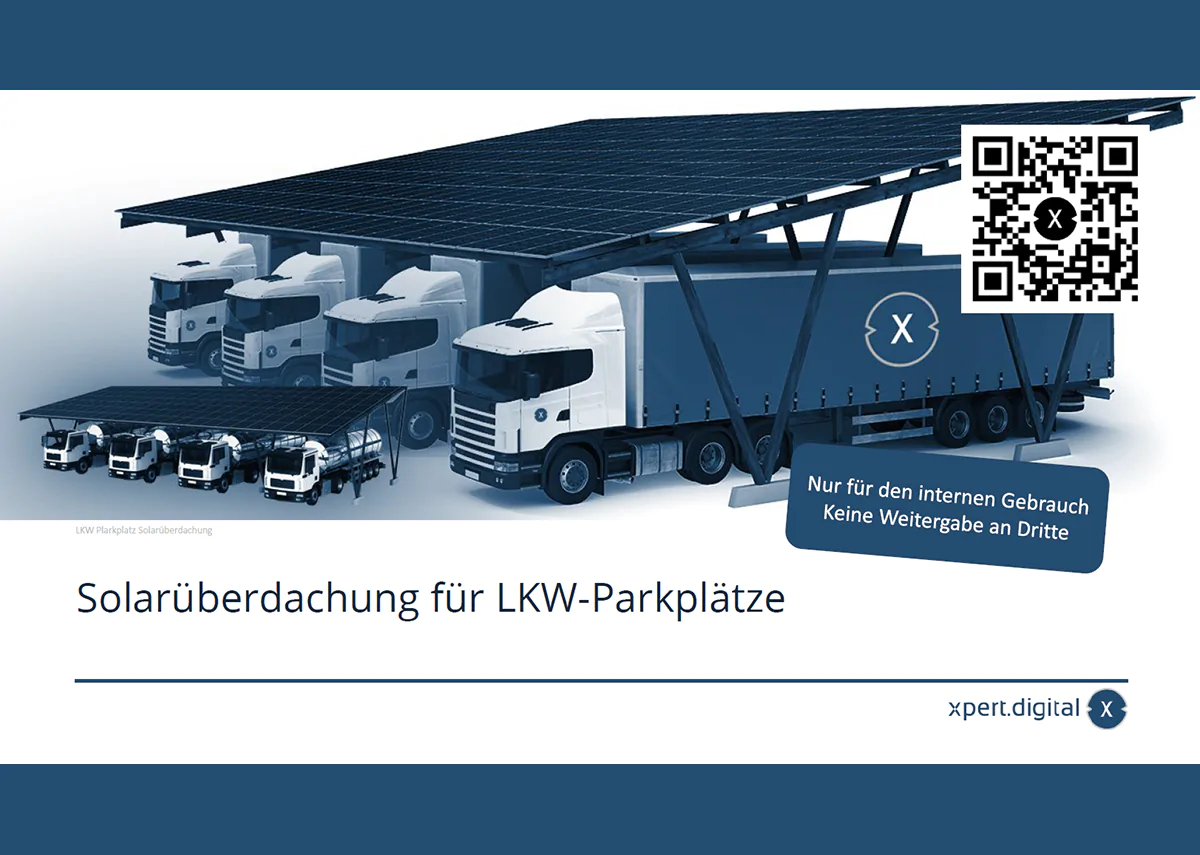
- Individual photovoltaic (PV) parking solutions for trucks and cars reduce unnecessary costs and increase amortization
- Truckport & Truckport: A solar port with a height of up to 10 meters - solar carport for adults

Mapping of key logistics hubs and system terminals in Europe
The TEN-V framework as a strategic backbone
The Trans-European Transport Network (TEN-T) policy, recently updated by Regulation (EU) 2024/1679, provides the overarching strategic framework for identifying and developing key European transport infrastructures. Its aim is to ensure network coherence, reduce the environmental impact of transport, and increase resilience. The TEN-T comprises a multi-layered network (core network, extended core network, and overall network) with staggered completion targets (2030, 2040, and 2050, respectively), connecting major cities and hubs. It explicitly includes various modes of transport such as rail, road, inland waterways, ports, airports, and freight terminals.
Nine European transport corridors, including strategically important axes such as the Rhine-Alps, Scandinavia-Mediterranean, and Baltic-Adriatic, structure the development and management of the network. Corridors relevant to the study area include, for example, the Baltic-Adriatic, Mediterranean, and Scandinavia-Mediterranean corridors. Austria's main transport axes (Danube, Brenner, Baltic-Adriatic axis) are part of the core network. TEN-T explicitly includes freight terminals and aims to promote multimodal transport, expand the infrastructure for alternative fuels, and enable military mobility through the dual civil-military use of infrastructure. Financing instruments such as the Connecting Europe Facility (CEF2) prioritize projects in the TEN-T core network, including intermodal terminals and infrastructure adaptation measures.
Identification of key intermodal terminals
While the TEN-T defines strategic hubs (criteria for ports, airports, multimodal terminals, and urban hubs are established), identifying specific operational terminals suitable for buffer expansion requires more detailed data. Major European container ports such as Rotterdam, Antwerp, and Hamburg are primary hubs. However, inland terminals along key rail and waterway corridors are equally crucial for intra-European traffic.
Resources such as the SGKV Intermodal Map and the map from intermodal-terminals.eu offer comprehensive directories that potentially include information on equipment and services. However, explicit data on buffer capacity is often limited. Industry reports and databases list major operators and terminals in Europe. Examples include Container Terminal Dortmund (CTD), terminals operated by DP World, Rail Cargo Group, METRANS, etc.
A key issue is the discrepancy between the high-level strategic hubs defined by TEN-T and the specific operational characteristics of individual terminals, including available space for expansion or buffer storage. TEN-T identifies hubs based on strategic importance and connectivity objectives. However, the core question concerns the physical expansion of terminals for buffer storage, which requires knowledge of specific site conditions (available space, existing sealing, layout). Although TEN-T includes terminals, its primary focus is not on granular site data. Databases such as the Intermodal Map or operator lists provide locations, but often lack detailed capacity or area information. Identifying suitable terminals therefore requires bridging this gap between TEN-T's strategic map and site-specific operational realities. This necessitates targeted assessments or the analysis of case studies, such as that of the Duisburg Gateway Terminal.
Selection of key European intermodal terminals for potential buffer expansion

Selection of key European intermodal terminals for potential buffer expansion – Image: Xpert.Digital
This table synthesizes information from strategic frameworks (TEN-T) and operational data sources to identify terminals that are both strategically important and potentially relevant for the buffer concept. It directly addresses Q1 by listing key terminals and filters the large number of European terminals according to relevant criteria: strategic importance (TEN-T connectivity), operational size (implied by port rankings or being named as a main operator), and relevance to intra-European traffic (focus on rail/inland hubs and major ports). This provides a manageable list of candidates for applying the buffer concept.
A selection of key European intermodal terminals demonstrates potential opportunities for buffer expansion. The Duisburg Gateway Terminal (DGT) in Duisburg, Germany, is a major inland port with multimodal access via rail, water, and road. Located on the Rhine-Alpine and North Sea-Baltic Sea corridors, it features a new construction project focused on efficiency, digitalization, and climate neutrality, while offering high capacity. The Port of Rotterdam (Maasvlakte II) in the Netherlands is a highly automated seaport of considerable size, handling sea, rail, and road transport. Situated on the North Sea-Rhine and North Sea-Baltic Sea corridors, it is committed to electrification and efficiency. The Port of Antwerp-Bruges in Belgium is a significant hub on the North Sea-Rhine and North Sea-Baltic Sea corridors, investing in EV infrastructure and truck buffer parking.
The Port of Hamburg, with its HHLA terminals, is also a very large seaport in Germany, distinguished by its automation (CTA), a strong intermodal network operated by Metrans, and a clear sustainability goal. In Italy, Quadrante Europa in Verona serves as a major rail hub in the Scandinavian-Mediterranean and Mediterranean corridors and is a key node for high-frequency Alpine transit. METRANS terminals, such as those in Prague, Czech Republic, and Dunajská Streda, Slovakia, form a network of inland terminals in Central and Eastern Europe and are a significant player in the Middle East and Eastern Mediterranean. Rail cargo terminals, such as those in Vienna and Wels, Austria, focus on rail and road transport and play a vital role in the Baltic-Adriatic corridor.
Finally, CTD Dortmund in Germany is a trimodal hub in the Rhine-Alpine Corridor, integrating rail, road, and water transport and serving as a central inland terminal in the Ruhr region. All these intermodal terminals, due to their strategic location, efficient processes, and multimodal access, offer potential opportunities for buffer expansion within the European freight transport system.
Suitable for:

Current status of terminal infrastructure: capacities and bottlenecks
Evaluation of existing buffer capacities
Container terminals naturally have storage areas (yards) that serve as temporary buffer zones. The required size of these areas depends on the size of the vessels handled and the terminal's throughput. However, existing infrastructure varies considerably. Some terminals may have underutilized paved areas, while others, particularly smaller terminals, face significant space constraints and require the intelligent use of every available square meter. Studies from the Alpine region provide examples of terminal areas and infrastructure data, such as total or storage areas. For instance, the Port of Trieste has approximately 925,000 m² of storage space, and the Quadrante Europa hub in Verona handles around 16,300 trains annually.
Data availability and limitations
A key challenge in assessing the current situation is the lack of centralized, standardized, real-time data on terminal capacities, including buffer zones and available sealed surfaces. The European Commission lacks a comprehensive overview of terminal needs in the EU. Existing tools such as the Intermodal Map or intermodal-terminals.eu provide location and basic infrastructure information, but detailed and up-to-date data on capacities or buffer zones are often missing. Although national mapping initiatives exist (e.g., in Germany and the Netherlands), these are not available EU-wide.
This lack of comprehensive, accessible data on existing terminal capacities and buffer zones across the EU poses a significant obstacle to the strategic planning and implementation of network-wide improvements such as the proposed buffer expansion. Effective planning requires an understanding of the current situation – where are the bottlenecks, where are there unused capacities or areas for expansion? The European Court of Auditors explicitly notes that the Commission lacks this overview. Without this data, there is a risk that investments (e.g., via CEF2) will be made suboptimally, potentially funding projects where the need is not greatest or overlooking opportunities where expansion would be most feasible and effective. This data gap forces reliance on fragmented information, case studies, or costly individual assessments and hinders a coordinated EU-wide approach.
Identified bottlenecks and challenges
The report by the European Court of Auditors (ECA) highlights key problems: lack of overview of terminal needs, unequal distribution of terminals, project delays affecting capacity, insufficient track lengths in terminals (which necessitates time-consuming shunting operations) and bottlenecks in the connecting infrastructure (rail, waterway).
Operational inefficiencies result from information that is difficult to access (lack of real-time data on terminal status/capacity), insufficient digitization, complex ownership structures that lead to delays, and more general problems in the rail network (interoperability, capacity management). Traffic congestion around the terminals is also a major problem that affects turnaround times and efficiency.
🎯🎯🎯 Benefit from Xpert.Digital's extensive, five-fold expertise in a comprehensive service package | BD, R&D, XR, PR & Digital Visibility Optimization

Benefit from Xpert.Digital's extensive, fivefold expertise in a comprehensive service package | R&D, XR, PR & Digital Visibility Optimization - Image: Xpert.Digital
Xpert.Digital has in-depth knowledge of various industries. This allows us to develop tailor-made strategies that are tailored precisely to the requirements and challenges of your specific market segment. By continually analyzing market trends and following industry developments, we can act with foresight and offer innovative solutions. Through the combination of experience and knowledge, we generate added value and give our customers a decisive competitive advantage.
More about it here:
Efficient terminal management through modern buffer zones - reduction of waiting times and emissions
Technical and logistical concepts for the expansion of terminal buffer zones
Strategies for developing buffer zones
Buffer zones act as decoupling points in the logistics chain. They absorb fluctuations in arrivals and departures, thus smoothing material flows between different modes of transport or process steps within the terminal. Existing sealed surfaces (e.g., underutilized parking areas, shunting yards) can be repurposed or redesigned to create such zones. Alternatively, new areas must be developed and sealed, which incurs costs (estimated at €25/m² for new systems) and requires environmental impact assessments (see Section 8). The design of buffer zones must consider traffic flows, access for handling equipment, and safety aspects. Block layouts served by gantry cranes (RMGs/RTGs) enable high container stacking density.
Design for multiple uses (containers & trucks)
Accommodating standard containers and complete trucks (semi-trailers) within the same buffer system presents a challenge due to differing handling requirements, dimensions, and dwell times. This necessitates flexible handling equipment and sophisticated management systems. Potential solutions include establishing designated zones within the buffer area, deploying flexible equipment such as reach stackers or specialized automated vehicles, and implementing advanced yard management systems (YMS) capable of managing various load carrier types. Truck parking areas, such as those strategically deployed in Antwerp, can be explicitly used as buffer zones.
Use of automation and yard management systems (YMS)
Efficiently managing large, complex buffer zones requires the use of technology. Manual systems quickly reach their limits in dynamic environments when it comes to optimization and real-time tracking. Modern yard management systems (YMS) integrate real-time data, automated tracking technologies (e.g., RFID, DGPS), space optimization algorithms, and inventory management. They improve transparency, reduce errors, optimize yard space utilization, and prevent bottlenecks. Artificial intelligence (AI) can help predict traffic flows and suggest optimal storage locations.
Automation technologies play a key role:
Automated stacking cranes (ASCs/ARMGs)
They increase storage density and enable automated yard operations. They are used in advanced terminals such as Maasvlakte II and are planned for the DGT. Life cycle assessments (LCAs) indicate potential for emission reduction when powered by renewable energy.
Automated Guided Vehicles (AGVs) / Automated Terminal Trucks (ATTs)
They handle horizontal transport between the quay/gate and the buffer/stacking area. Electrically powered versions contribute to sustainability. Maasvlakte II uses L-AGVs and is expanding the fleet with ATTs.
Automated straddle carriers / portal pallet trucks
They offer flexibility in stacking and transporting and can increase buffer capacity compared to terminal tractors.
For smooth operation, YMS must be integrated via interfaces (APIs) with Terminal Operating Systems (TOS), gate automation systems and potentially also truck time slot management systems (TAS) to ensure a seamless data flow.
Advanced automation (ASCs, AGVs) combined with intelligent YMS is not only a driver of efficiency but also a prerequisite for effectively managing the increased complexity of large, potentially multifunctional (containers and trucks) buffer zones. The proposed concept involves larger buffer areas that may accommodate both containers and trucks. This increases the number and variety of units, as well as the complexity of operations. Manual or simple systems would be overwhelmed by tracking, optimal placement, and efficient retrieval. Advanced automation such as ASCs/RMGs enables dense, organized stacking. AGVs/ATTs ensure efficient, automated horizontal transport. Crucially, a sophisticated YMS acts as the "brain," managing this complexity using real-time data and algorithms (potentially AI), optimizing space, minimizing handling, and ensuring that units are available when needed. Without this technological layer, there is a risk that large multi-purpose buffers will become inefficient and chaotic, negating the intended benefits.
Comparison of buffer expansion concepts

Comparison of buffer expansion concepts – Image: Xpert.Digital
This table helps decision-makers understand the trade-offs between different implementation approaches for the buffer concept. It addresses Q3 by outlining technical/logistical concepts. It breaks down the general idea of “buffer expansion” into different operating models (containers only, trucks only, mixed), based on information about container stacking, truck parking, and supporting technologies. Comparing the advantages and disadvantages, as well as the required technologies, provides a structured framework for evaluating which approach best suits the context of a particular terminal.
The comparison of buffer expansion concepts encompasses three approaches. The dedicated, high-density container buffer is based on key technologies such as ASCs/RMGs and AGVs/ATTs. It is characterized by high storage density and optimized container handling, but offers limited flexibility for other units. This concept is particularly suitable when there is a high proportion of containers, sufficient space availability, and a high willingness to invest. Another approach is the dedicated truck buffer parking area, supported by intelligent parking management and potentially security features. Advantages include easy implementation and clear separation for trucks, while the lower space density and exclusive use for trucks are considered disadvantages. Suitability depends on a high proportion of trucks, the need for waiting areas, and the availability of separate spaces. Finally, there is the mixed-use buffer zone, which utilizes flexible handling equipment such as reach stackers, an advanced yard management system (YMS), and potentially AGVs. This concept offers high flexibility for various units but entails high management complexity and potentially lower density. It is particularly suitable for a variable mix of containers and trucks, as well as a need for flexibility.
Efficiency improvement: Effects of expanded buffer storage
Optimization of terminal processes
Buffer zones decouple different process steps within a terminal. This allows quay cranes, yard equipment, and gate operations to operate more independently and continuously, reducing idle times caused by uneven flow rates. Storage optimized through YMS and automation reduces unproductive container rehandles in the yard. Sufficient buffer capacity enables pre-stacking of containers according to their onward transport mode, as practiced at Maasvlakte II, and improves throughput and immediate container availability.
Reduction of waiting times and improvement of turnaround times
Truck turnaround time (TTT) is a crucial performance indicator for terminals. Long queues and waiting times at the gates and within the yards are major causes of inefficiency and costs. Sufficient buffer capacity prevents congestion in the yard from backing up to the gate, enabling smoother truck handling. For incoming or outgoing trucks, a designated waiting/buffer area (such as the truck parking areas in Antwerp) prevents vehicles arriving too early from blocking terminal access routes. Shorter waiting times result in faster TTT, better vehicle utilization for transport companies, and lower operating costs.
Synergies with truck time slot management systems (TAS)
Truck appointment systems (TAS) aim to smooth truck arrivals by avoiding peaks and troughs. This is achieved by requiring transport companies to book time slots for deliveries or pickups. This improves planning and workload management for the terminal operator.
Expanded buffer capacities make the terminal more resilient to deviations from TAS schedules (e.g., delayed or early arrivals). They provide the physical space to absorb these fluctuations without causing immediate downtime. Conversely, a TAS helps manage the demand for buffer space and prevent congestion. Studies show that TAS reduces TTT and congestion. Combining TAS with optimized buffer management (potentially using models such as the proposed MILP model) can improve service quality not only for trucks but also for other modes of transport (trains, inland waterways) by enabling better resource allocation (e.g., of straddle carriers). Cooperation between terminals and transport companies via TAS can increase overall efficiency.
Extended buffer capacity and truck time slot management systems (TAS) are therefore highly complementary tools. Buffers provide physical resilience to fluctuations in traffic flow, while TAS enables the planning and control of demand. Implementing both systems promises greater efficiency gains than either solution alone. TAS aims to control the flow of truck arrivals. However, operational reality involves variability (traffic, delays), making perfect adherence unlikely. Without sufficient buffer space, even minor deviations in a TAS-controlled flow can lead to congestion. Conversely, a large buffer without demand management (such as TAS) could become overloaded during sustained peaks. Buffers provide the physical capacity to absorb imperfections in the TAS schedule. TAS provides the planning framework to prevent constant buffer overload and helps the terminal effectively allocate resources based on expected arrivals. Therefore, they work best together by addressing both physical capacity and flow management.
Suitable for:

Environmental benefits: Assessment of CO2 reduction potential
Reduced idle emissions
Trucks waiting at gates or within terminals consume fuel while idling and emit CO2 and other pollutants. Yard equipment such as cranes and tractors also contribute significantly to emissions, especially if they are diesel-powered. By reducing waiting times and smoothing traffic flows, enhanced buffers combined with TAS minimize idling for both trucks and internal handling equipment. Studies establish an explicit link between TAS implementation and the reduction of carbon emissions through reduced idling and optimized scheduling. Models exist to quantify these savings. Case studies demonstrate significant potential; optimizing truck speeds and energy mixes could save megatons of CO2 equivalents over time. Collaborative logistics approaches to reduce empty runs also lead to substantial CO2 savings.
Facilitating modal shift
Efficient and reliable intermodal terminals are crucial for making rail and inland waterway transport competitive with road transport alone. By improving terminal efficiency and reducing delays associated with intermodal transshipment, enhanced buffers can make combined transport more attractive. Shifting freight from road to rail or water offers significant CO2 reduction potential. TEN-T policy explicitly supports this modal shift.
Although the direct emission reductions from less idle time are significant, a potentially greater long-term environmental benefit of expanded buffer capacity lies in its ability to improve the efficiency and reliability of intermodal terminals. This facilitates a greater shift of goods from road to lower-emission modes of transport such as rail and water. The immediate benefit of buffers/TAS is reduced idle emissions. However, the overarching goal is to minimize CO2 emissions across all intra-European transport (user request). A key lever for achieving this is modal shift. The attractiveness of intermodal transport depends heavily on the efficiency and reliability of terminal operations (transshipment points). If terminals are congested and slow, shippers prefer direct road transport despite higher emissions. By improving terminal throughput and reducing delays (Section 6), expanded buffers make intermodal options more competitive. This encourages a shift away from long-haul trucking, potentially leading to greater overall CO2 savings across the entire transport chain than just the savings from reduced idle time at the terminal itself.
Synergy with electrification and automation
Modern buffer expansion projects often go hand in hand with automation and electrification (e.g., DGT; Maasvlakte II). Automated equipment such as ASCs and AGVs is frequently electrically powered. Using renewable energy to power this equipment, as planned at DGT with hydrogen and photovoltaics, drastically reduces the terminal's operational carbon footprint compared to diesel-powered operations. Life cycle assessments confirm the advantages of electrification.
Implementation hurdles: challenges, costs and regulatory aspects
Operational and logistical hurdles
Space constraints: Finding sufficient space for expansions within existing terminal boundaries can be difficult, especially in densely populated port areas.
Integration complexity: Integrating new buffer zones and their associated technologies (automation, YMS) into existing terminal processes and IT systems requires careful planning and execution.
Coordination: Effective use, especially of multi-purpose buffers or shared truck parking areas, requires coordination between terminal operators, freight forwarders, rail operators, and shipping companies. Data exchange is crucial, but often inadequate.
Disruptions during implementation: The redesign of existing areas or new construction can disrupt ongoing operations.
Investment needs
High capital costs: Automation and large-scale infrastructure expansions represent significant, often irreversible investments. The costs for Phase 1 of the DGT amounted to approximately €120 million. This includes land acquisition/preparation, paving/sealing (estimated at €25/m² for new systems), equipment (cranes, AGVs), and technology (YMS, sensors).
Costs of land sealing: In addition to the pure construction costs, the sealing of land causes follow-up costs for drainage systems and potentially for environmental mitigation measures.
Funding sources: EU funds such as CEF2 can support projects, particularly within the TEN-T core network and for innovation/sustainability. The DGT, for example, received funding. However, the total investment needs for TEN-T far exceed the available EU funds.
The regulatory environment
TEN-T/CEF regulations: These govern network planning and the eligibility of projects for funding. Projects must comply with TEN-T objectives (efficiency, sustainability, multimodality).
Transport operating regulations: EU regulations govern market access for road freight transport (Community licence), potentially weights and dimensions (mentions alternative propulsion systems/craneable semi-trailers) and combined transport (Directive 92/106/EEC, possibly under revision).
Environmental Impact Assessment (EIA): EU Directive 2011/92/EU, as amended by 2014/52/EU, mandates an EIA for projects expected to have significant environmental impacts. This applies to the construction or modification of major infrastructure projects. The process includes screening (determining the requirement for an EIA), scoping (defining the scope of the investigation), the preparation of an EIA report, public participation, and the authority's decision. There are thresholds (e.g., size, location in protected areas) that trigger a mandatory EIA or screening. Expansion projects can also trigger an EIA. Cumulative effects with other projects must be considered. This process incurs additional time and costs and creates uncertainty in the project approval process.
While securing financing (e.g., via CEF2) presents a challenge, navigating the Environmental Impact Assessment (EIA) process for physical terminal expansions is a significant, potentially lengthy, and complex regulatory hurdle that must be factored into project timelines and feasibility studies. The concept of a user request involves expanding terminal areas, often implying construction work and potentially sealing new land. The sources clearly describe the EU EIA Directive and its national implementation. This is not a mere formality but a legally mandated procedure for projects above a certain size or with potential impacts. It requires detailed environmental studies, public consultations, and may be subject to legal challenges. This process can consume considerable time and resources, regardless of financing or compliance with transport regulations. Therefore, the feasibility of physically expanding terminals for buffer use depends not only on technical and economic factors but critically on addressing the complex EIA requirements.
Overview of relevant EU regulations/directives

Overview of relevant EU regulations/directives – Image: Xpert.Digital
This table provides a structured overview of the complex regulatory environment affecting terminal expansion projects. It addresses Q6 in terms of regulations. It consolidates key legal acts mentioned in the snippets that directly impact the planning, financing, construction, and operation of expanded terminal facilities. This helps stakeholders quickly grasp the most important legal frameworks and requirements.
The TEN-T Regulation (EU) 2024/1679 defines the network and sets requirements for infrastructure and corridors. It is crucial for strategic relevance and forms the basis for eligibility for funding. The CEF2 Regulation (EU) 2021/1153 establishes financing criteria, maximum funding rates, and the prioritization of the core network. This regulation serves as the main source of funding for TEN-T projects and enables co-financing of network expansion. The EIA Directive 2011/92/EU, as amended by 2014/52/EU, governs the triggers for an Environmental Impact Assessment (EIA), the procedural steps, and public participation. It mandates an assessment for significant new construction and modification projects, thereby influencing both the schedule and costs. Directive 92/106/EEC on combined transport defines and promotes this type of transport and establishes a framework for intermodal operations, which are to be supported by the establishment of buffer zones. Finally, road transport regulations, such as 1072/2009, govern market access through Community licenses, cabotage, and, where applicable, weights and dimensions. They thus establish fundamental operational rules for truck traffic to and from the terminal.
🎯📊 Integration of an independent and cross-data source-wide AI platform 🤖🌐 for all company matters

Integration of an independent and cross-data source-wide AI platform for all company matters-Image: Xpert.digital
Ki-Gamechanger: The most flexible AI platform-tailor-made solutions that reduce costs, improve their decisions and increase efficiency
Independent AI platform: Integrates all relevant company data sources
- This AI platform interacts with all specific data sources
- From SAP, Microsoft, Jira, Confluence, Salesforce, Zoom, Dropbox and many other data management systems
- Fast AI integration: tailor-made AI solutions for companies in hours or days instead of months
- Flexible infrastructure: cloud-based or hosting in your own data center (Germany, Europe, free choice of location)
- Highest data security: Use in law firms is the safe evidence
- Use across a wide variety of company data sources
- Choice of your own or various AI models (DE, EU, USA, CN)
Challenges that our AI platform solves
- A lack of accuracy of conventional AI solutions
- Data protection and secure management of sensitive data
- High costs and complexity of individual AI development
- Lack of qualified AI
- Integration of AI into existing IT systems
More about it here:
Future-oriented logistics terminals: What Europe can learn from pioneers
Groundbreaking examples: Case studies from European terminals
Duisburg Gateway Terminal (DGT): Climate-neutral, digital inland port hub
The DGT is a new, large trimodal (inland waterway, rail, truck) terminal in the Port of Duisburg, built on a former coal mining island. Upon completion, it will be the largest inland terminal in Europe. It will increase Duisport's handling capacity by 850,000 TEU per year on an area of 235,000 m². The infrastructure includes six (expandable to twelve) block railway tracks over 730 m long and six berths for inland waterway vessels. The investment for the first phase amounted to approximately €120 million. Technologically, the DGT relies on fully digitized processes and automation (crane systems planned) to achieve high productivity and market proximity. A key aspect is the goal of climate neutrality through the 'enerPort II' project. This project utilizes hydrogen (fuel cells, engines), photovoltaics, and battery storage in a smart local energy grid (microgrid). The DGT is highly relevant because it demonstrates a large-scale expansion of an inland terminal, integrates digitalization and automation to increase efficiency, and places a strong focus on climate neutrality – all central aspects of the question under investigation.
Rotterdam Maasvlakte II: Benchmark in automation
The terminals on Maasvlakte II (APMT MVII, RWG) are highly automated deep-sea container terminals built on newly reclaimed land. They feature automated quayside cranes (SQCs) with double-lift spreaders, driverless transport systems (lift AGVs) for horizontal transport, and automated stacking cranes (ARMGs) in the storage area. A contract for 30 additional electric automated terminal trucks (ATTs) was recently awarded. Designed to handle the largest container ships, the terminals achieve rapid throughput through pre-sorting by modality. Automation in fully segregated areas further enhances safety. The equipment is largely electrified, with quayside cranes using energy recovery and L-AGVs being battery-powered. Connection via the Betuwe railway line is essential. The mention of Container Freight Station (CFS) activities indicates buffering and consolidation functions. Maasvlakte II showcases the state of the art in terminal automation and its role in efficiency and capacity, in particular the automated storage areas relevant for buffer concepts, as well as the advantages of electrification.
Port of Antwerp-Bruges: Strategic truck parking spaces as a buffer
The port has established large, secure truck parking areas (Goordijk with 210 spaces, Ketenis with 280 spaces) near the terminal zones. These serve not only as secure rest areas but are also explicitly designed to potentially function as waiting/buffer parking for trucks arriving early for their scheduled terminal appointments. The parking areas offer appropriate facilities (sanitary facilities, Wi-Fi, vending machines) and security features (fencing, cameras). Real-time occupancy data is available. The project addresses known problems caused by illegally parked trucks. Sustainability is a key aspect: the investment included the remediation of the site, and fast-charging stations for electric trucks are planned at both locations to create a "green corridor" between Antwerp and Zeebrugge. This example is directly relevant as it demonstrates the use of dedicated, managed truck parking areas as a buffer strategy for controlling terminal approaches and reducing congestion, which aligns with the question of truck buffering and also establishes a link to sustainability through EV charging infrastructure.
HHLA Hamburg: Network integration, automation & sustainability
Hamburger Hafen und Logistik AG (HHLA) operates several terminals in Hamburg (e.g., CTA, Burchardkai) and internationally (Tallinn, Trieste). It has a strong focus on intermodal transport through its subsidiary Metrans. HHLA is a pioneer in automation; the Container Terminal Altenwerder (CTA) has been almost fully automated since 2002, utilizing automated processes, AGVs, and automated storage blocks. Another key focus is the digitalization of supply chains. HHLA pursues ambitious sustainability goals and aims for climate neutrality by 2040. The CTA is already considered a climate-neutral terminal. Currently, HHLA is testing hydrogen fuel cell technology for handling equipment (empty container stackers, terminal tractors) and offers climate-friendly handling and transport (HHLA Pure). The expansion of storage blocks at the Container Terminal Burchardkai (CTB) has also been completed to increase efficiency and capacity. HHLA is an example of a large European hub that integrates terminal operations with a strong intermodal network, uses automation to increase efficiency and pursues ambitious sustainability goals, including the exploration of hydrogen – all relevant facets of the issue under investigation.
Suitable for:

Overall assessment and strategic recommendations
Synthesized feasibility analysis
Technical feasibility: Expanding sealed surfaces and implementing buffer storage for containers and/or trucks is technically feasible with existing and developing technologies (automation, YMS). Multi-purpose concepts are complex, but achievable with advanced management.
Economic viability: Requires significant investment in construction and technology. Benefits arise from increased efficiency (higher throughput, faster cycle times, better plant utilization) and potentially lower operating costs (labor cost savings through automation, reduced fuel consumption due to less idling). Profitability depends heavily on capacity utilization, efficiency gains achieved, and financing conditions. EU funding can partially cover the costs.
Environmental potential: Clear potential for CO2 reduction through minimized idling (trucks, equipment), optimized processes, and the enabling of electrification/alternative fuels. Significant indirect potential through facilitating modal shift to rail/waterways.
Key factors for success: automation, digitization (YMS, TAS, data exchange), strategic planning, stakeholder collaboration.
Major hurdles: High initial investments, lack of space at existing sites, regulatory complexity (especially EIA for physical expansion), data fragmentation/lack of transparency, integration challenges, potential employee concerns regarding automation.
Recommendations for action
For terminal operators
Conducting site-specific assessments of potential buffer expansion areas (sealed surfaces) and capacity requirements.
Investment in advanced YMS and testing of incremental automation strategies (starting at gate/yard) to manage buffer complexity and increase efficiency.
Implementation or improvement of TAS in coordination with buffer capacity planning.
Collaboration with transport partners in data exchange and operational coordination.
Prioritizing electrification and renewable energy sources for new equipment and expansions.
For political decision-makers (EU & National)
Improved data collection and transparency regarding terminal capacities, bottlenecks, and space availability across the entire TEN-T network. Support for the development of standardized data platforms.
Streamlining and harmonizing approval procedures, especially the EIA, while maintaining high environmental standards (if necessary, consider specific guidelines for logistics infrastructure).
Continued financial support (e.g. CEF) for terminal modernization, digitization, automation and buffer capacity projects, with priority given to projects offering clear efficiency and CO2 reduction benefits.
Promoting standards for interoperability (physical and digital) between terminals, transport systems and IT systems.
Create incentives for the modal shift through supportive policies for intermodal transport and potentially through CO2 pricing mechanisms.
For logistics service providers
Active participation in TAS programs and cooperation with terminals in arrival planning.
Investment in fleet modernization (e.g. Euro standards, alternative drives) to reduce emissions during terminal access and waiting times.
Examination of collaborative logistics models to reduce empty runs (relevant for feeder/pickup traffic in connection with buffer operations).
The future of logistics: Intelligent buffer strategies for sustainability and resilience
The integration of intelligent buffering strategies, enabled by digitalization and automation, will be crucial for improving the resilience, efficiency, and sustainability of the European logistics network. These strategies must be embedded within the overarching development of the TEN-T network and the goals of the Green Deal. The trend toward climate-neutral terminals, such as the DGT, is expected to accelerate, making buffer expansions part of broader sustainability transformations. The ability to effectively buffer and manage traffic flows will be a key competitive advantage for logistics hubs of the future.
Advice - planning - implementation

Markus Becker
I would be happy to serve as your personal advisor.
Head of Business Development
Chairman SME Connect Defense Working Group
We are there for you - advice - planning - implementation - project management
☑️ SME support in strategy, consulting, planning and implementation
☑️ Creation or realignment of the digital strategy and digitalization
☑️ Expansion and optimization of international sales processes
☑️ Global & Digital B2B trading platforms
☑️ Pioneer Business Development
Konrad Wolfenstein
I would be happy to serve as your personal advisor.
You can contact me by filling out the contact form below or simply call me on +49 89 89 674 804 (Munich) .
I'm looking forward to our joint project.
Write to me

Xpert.Digital - Konrad Wolfenstein
Xpert.Digital is a hub for industry with a focus on digitalization, mechanical engineering, logistics/intralogistics and photovoltaics.
With our 360° business development solution, we support well-known companies from new business to after sales.
Market intelligence, smarketing, marketing automation, content development, PR, mail campaigns, personalized social media and lead nurturing are part of our digital tools.
You can find out more at: www.xpert.digital - www.xpert.solar - www.xpert.plus
Keep in touch