Efficient Structured Service Provision (SSP) – With dynamic solutions

Solar service providers, logistics service providers and O&M (Operation & Maintenance) – Image: Xpert.Digital
What is SSP - Structure Service Provider?
Smart Factory , Smart City , Urbanization , Smart Grid , Smart Energy (Photovoltaics) , Industry 4.0 , IoT , and many more are all complex disciplines, yet they share significant common ground with other areas. However, there is a risk that individual disciplines may not (or cannot) think outside the box and that necessary interdisciplinary projects may be poorly implemented or fail due to a lack of expertise.
Several articles have already pointed out this looming discrepancy in relation to B2B:
How we secure the infrastructure of our key industries will be crucial for the future!
Three areas are of particular importance here:
- Digital Intelligence (Digital Transformation, Internet Access, Industry 4.0 and Internet of Things)
- Autonomous power supply (CO2 neutrality, planning security, environmental safety)
- Intralogistics/Logistics (Full automation, mobility of goods and people)
Structural service providers are the 4PL service providers in the logistics AND O&M (Operation & Maintenance) of the solar industry.
This raises the following questions:
- What is O&M (Operation & Maintenance)?
- What is a 4PL service provider in logistics?
Advantages of O&M - Operation & Maintenance - in photovoltaics
Operation and maintenance (O&M) is a crucial component of the solar industry. It is essential for the efficient use of solar energy and the protection of investments in photovoltaic systems. O&M service providers offer comprehensive services for the planning, construction, and operation of photovoltaic systems. These services are vital for extending the system's lifespan and ensuring the quality of the electricity produced.
O&M offers many advantages for solar power plant operators. Some of these are:
1. Reduced operating costs: With the right O&M plan, the costs of operating the plant can be minimized. Therefore, investors can achieve higher profits.
2. Increased efficiency: An O&M plan enables operators to optimize the technical aspects of the plant and thus maximize its electricity yield.
3. Improved safety: Regular maintenance ensures that technical problems are detected and resolved early, before they lead to larger issues. This helps avoid unplanned downtime.
4. Increased knowledge: O&M service providers help operators learn more about their solar power plant, offering insights into its operation and maintenance, as well as practical tips for its optimization.
5. Maintaining value: With the right O&M plan, a solar power plant can still function well even after years, ensuring that investors can get the maximum possible return on their investment.
It is obvious that O&M plays a very important role in the operation of a solar power plant and offers promising benefits – from reduced risk to increased knowledge about the plant – it is therefore necessary for solar power plant operators to engage professional O&M service providers in order to get the full benefit from their photovoltaic system.
4PL Service Provider (Logistics) - What types of logistics service providers are there?
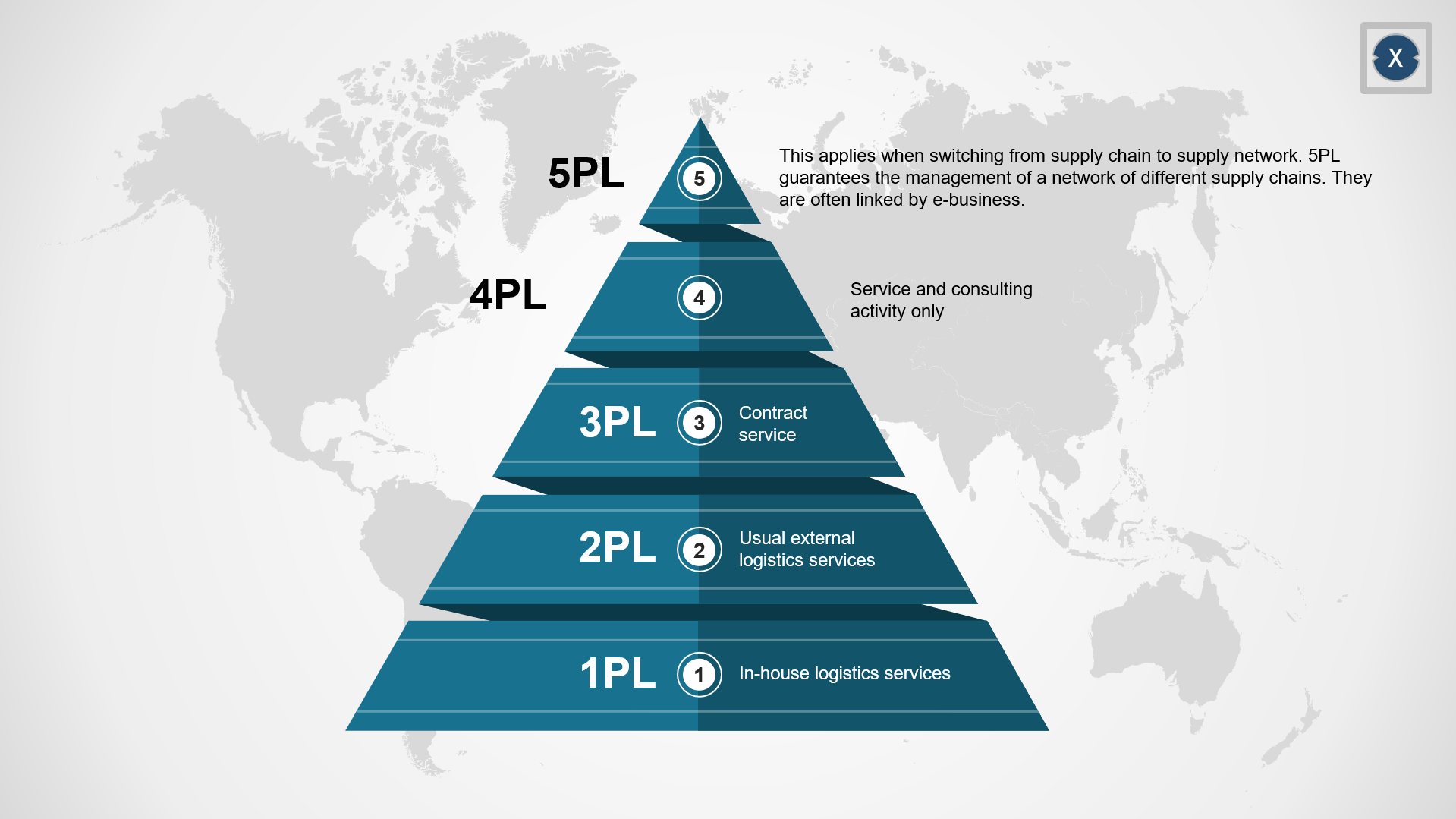
What types of logistics service providers are there? – Image: Xpert.Digital
The classification of logistics service providers into different sectors is rooted in historical development. Their range of services and solutions extends beyond traditional freight forwarding: for example, they offer customer-specific warehousing, order picking, assembly, and invoicing.
Differentiating logistics service providers from one another and from other service companies can be done in numerous, sometimes inconsistent, ways. One possibility is to categorize logistics service providers according to their range of services. This can include, for example, distinctions based on transport, process chain development, supply, order processing (including production and distribution), and disposal.
A second, very common way of differentiating logistics service providers is by classifying them into operational, coordinating, and strategic services, as well as the use of fixed assets, so-called logistics assets. These providers are referred to as "service providers" and are hierarchically structured into areas ("party logistics"), starting with first-party logistics and going up to fifth-party logistics service providers.
First Party Logistics Service Provider (1PL)
For decades, companies handled their logistics processes almost exclusively in-house. These companies are classified as First Party Logistics Providers (1PLs). Here, the majority of core logistics activities, the so-called transport, handling, and storage services (TUL services), are carried out by the companies themselves. This requires suitable storage facilities, an in-house fleet of vehicles, and the necessary personnel to perform the tasks. However, with increasing specialization and the outsourcing of entire departments, this rigid approach has become less rigid. This is primarily due to the costs incurred by companies for maintaining their own logistics services. With the emergence of large logistics service providers, partners quickly developed who could offer the required services more cheaply and quickly – a major reason why the proportion of companies handling all logistics internally has steadily declined since the late 1970s.
1PL concept: This refers to a solution where companies largely handle their own logistics. They only book additional services from external companies in special cases, such as the handling of international transport.
Second Party Logistics Service Provider (2PL)
With the trend toward outsourcing logistics services to external providers, which began in the 1980s, the industry continued to grow steadily. The main reason for this was the Lean Management, which spread from the USA and Asia to Europe. This approach allows companies to focus on their core competencies and seek service providers for downstream processes, including those in logistics. These companies, which offer the aforementioned TUL services, are known as Second Party Logistics Service Providers (2PLs).
This includes, for example, freight forwarders, warehousing and transshipment companies, shipping companies and providers from the CEP industry (operators of courier, express and parcel services), all of which have the necessary resources (warehouses, means of transport, employees).
2PL concept: Clients who do not want to handle parts or all of their logistics using their own facilities and resources choose the 2PL concept. Here, the required individual and combined services are purchased from, or provided by, various 2PL service providers. The goal is to reduce the client's own logistics costs while simultaneously accelerating processes through the expertise of companies specializing in their respective services.
Third Party Logistics Service Provider (3PL)
Third-party logistics (3PL) providers are external logistics service providers with a holistic business approach. Like second-party logistics (2PL) providers, they have their own infrastructure. However, unlike second-party logistics providers, 3PL providers manage their customers' entire logistics chain, not just individual segments. Furthermore, 3PL providers handle tasks such as returns management, financial services, and IT support for their clients.
Three PL service providers evolved from 2PL service providers to so-called system service providers in the 1990s, when they began to take on additional tasks besides organizing the flow of goods and information for their customers. Beyond simply handling goods, customers now receive far more intensive support from their service provider. These sometimes highly complex solutions ensure close collaboration between provider and customer and, due to their close integration, are usually designed for the long term.
Advantages of using external 3PL providers for companies:
- Due to their specialization, the providers work much more efficiently, enabling clients to reduce their logistics costs by an average of 10 percent, according to surveys, due to the high cost and time savings, while delivery times can be reduced by 30 percent.
- In addition, companies can significantly reduce the capital originally tied up in logistics due to the lower fixed costs.
- Furthermore, the increased flexibility with regard to fluctuations in production or demand gives companies greater scope for action.
- Customers benefit from the industry expertise of logistics service providers. These providers have usually built up global networks that the customer can use to their advantage.
3PL concept (contract logistics): Clients who want to outsource a large part of their inter-company logistics on a long-term basis choose the 3PL concept. The goal is to streamline their own processes and transfer the outsourced tasks to an external service provider for a defined period. Controlling and management tasks are handled jointly by the client and the 3PL service provider.
Fourth Party Logistics Service Provider (4PL)
Unlike 3PL providers, 4PL providers do not own their own resources in areas such as transportation, warehousing, or handling. Instead, 4PL providers make their expertise available to the companies that commission them. Fleet management is one service frequently used by 4PL clients. The core competency of a 4PL provider lies in the planning and control of logistics processes on the client's side. They are thus seen as a system integrator, acting as an intermediary between their clients and other logistics service providers to ensure the coordination and organization of all business processes within the value chain. In this respect, a 4PL provider acts as a neutral coordinator between the client and the various service providers, striving to optimize the interaction of all parties involved. Due to the complex structure of these processes, which nowadays can only be managed with high-performance software and hardware, 4PL providers must have a very sophisticated IT infrastructure.
The demand for this concept arose from a broader outsourcing trend aimed at transferring planning and control functions from companies to a fourth, neutral party. This party, acting on behalf of the client, optimizes the company's logistics chain, including the selection of 3PL service providers. Acting as a kind of general contractor, the 4PL provider thus assembles all service components of the logistics chain in a process-optimized manner.
The approach of placing a neutral intermediary between customers and 3PL providers has the advantage for the former that, depending on the requirements, the optimal package is put together for them from across the range of various service providers.
Fifth Party Logistics Service Provider (5PL)
Providers in this category focus on supply chain management and specialize in offering systems-oriented consulting services to their clients. This includes supporting the coordination and expansion of internal supply chains and supplier networks, where 5PL providers ensure that the complex processes within these networks are managed efficiently. As with 4PL providers, the core service lies in providing consulting services.
'Genuine' structural service providers are free and independent

Solar service providers, logistics service providers and O&M (Operation & Maintenance) – Image: Xpert.Digital
Structural service providers are not focused on, limited to, or contractually bound to specific manufacturers or products for a project to be planned.
Our goal is to offer the best and most efficient solution for every project and requirement. Our focus is not on the products for the solution, but on the challenge to be solved.
A structural services provider is a service provider that provides the necessary structures and systems to support an organization. This can include everything from providing office space and IT systems to warehousing and transportation of goods. Structural services providers are generally independent of the industry or company they serve and can therefore work for small businesses as well as large corporations.
The advantages of a structural service provider are obvious: They support an organization in delivering its services without directly interfering with the company's core operations. This means the organization can focus on its core business while the service provider handles the necessary tasks. In many cases, this can lead to cost savings, as using external resources is often more cost-effective than acquiring them internally.
However, there are also some disadvantages to using structured service providers. Firstly, it is often difficult to find the right provider who possesses both the necessary resources and experience. Secondly, dependencies can arise if a company becomes too reliant on the services of a particular provider. In such cases, it can be difficult to switch providers if problems arise or if better offers become available.
Example of structural services in logistics

Solar service providers, logistics service providers and O&M (Operation & Maintenance) – Image: Xpert.Digital
Logistics service providers can play a crucial role in the development, implementation, and support of structured logistics processes. They help to increase the overall efficiency and effectiveness of the logistics chain. Logistics service providers can contribute to improving process efficiency while simultaneously reducing costs.
Structural service providers can, for example, help in developing an efficient warehousing strategy. They can also assist in developing and implementing an efficient inventory management system within the company. Such a system can improve production technology and supply chain logistics.
Furthermore, many logistics service providers also offer consulting services. This consulting enables companies to optimize their logistics processes and simultaneously reduce costs. These consulting services typically include warehouse planning, the implementation of material flow management techniques, the design of transport concepts, and much more.
Some logistics service providers also offer technical services, such as the implementation of an ERP system or the development of a customized inventory management system for a specific company. These systems are useful for uncovering potential savings in logistics costs and improving process efficiency.
Finally, a good logistics service provider also offers training programs to teach its clients how to implement effective logistics processes and how to best utilize them. This is particularly beneficial for smaller companies, as it allows them to increase their knowledge level and learn new techniques.
Utilizing logistics service providers is a great way for companies of all sizes and industries to optimize their supply chain and leverage cost-saving potential. With the right services, every company can increase its efficiency while simultaneously identifying and implementing cost-saving opportunities.
📣 Structural service provider for industry, retail and municipalities
Everything from a single source, specifically designed for all structural solutions.
🎯 For solar installers, plumbers, electricians and roofers
Consultation and planning including a non-binding cost estimate. We connect you with strong partners in photovoltaics.
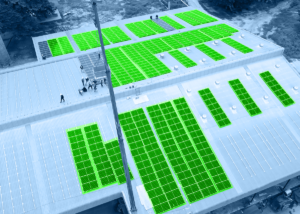
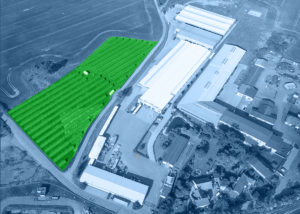


- Planning photovoltaics on warehouses, commercial buildings and industrial buildings
- Industrial plant: Planning a photovoltaic open-field system or open-area system
- Planning solar power systems with photovoltaic solutions for freight forwarding companies and contract logistics
- B2B Solar Systems and Photovoltaic Solutions & Consulting
That's why Xpert.Plus is the right choice for structural planning and consulting!

Konrad Wolfenstein
I would be happy to serve as your personal advisor.
You can contact me by filling out the contact form below. I will get back to you as soon as possible
I'm looking forward to our joint project.
Write to me


Xpert.Digital – Konrad Wolfenstein
Xpert.Digital is a hub for industry focusing on digitalization, mechanical engineering, logistics/intralogistics and photovoltaics.
With our 360° Business Development solution, we support renowned companies from new business to after-sales.
Market intelligence, smarketing, marketing automation, content development, PR, mail campaigns, personalized social media and lead nurturing are part of our digital tools.
You can find more information at: www.xpert.digital – www.xpert.solar – www.xpert.plus
Keep in touch